About the project
Inspiration
Waste management in many growing cities is still reactive.
Authorities often do not know which areas urgently need collection until waste has already overflowed. Collection companies may follow fixed schedules instead of actual demand, citizens have limited incentives to sort waste correctly, and communication between citizens, drivers, companies and local authorities is fragmented.
GreenIQ started with one question:
What if a city could understand its waste situation in real time and act before problems happen?
The first version of GreenIQ focused on helping citizens identify recyclable waste using artificial intelligence and encouraging responsible recycling through rewards.
As we developed the idea, we discovered that helping citizens sort waste was only one part of the problem.
Even when people separate waste correctly, that effort can be lost if collection happens late, trucks follow inefficient routes, authorities cannot monitor operations, or communication between stakeholders breaks down.
That realization transformed GreenIQ from a citizen recycling application into a complete smart city waste management ecosystem.
What it does
GreenIQ connects citizens, smart bins, waste collection companies, drivers and local authorities through one intelligent platform.
Citizens can identify waste using artificial intelligence, learn how to sort it correctly, report environmental issues, request waste collection and earn EcoPoints for sustainable actions.
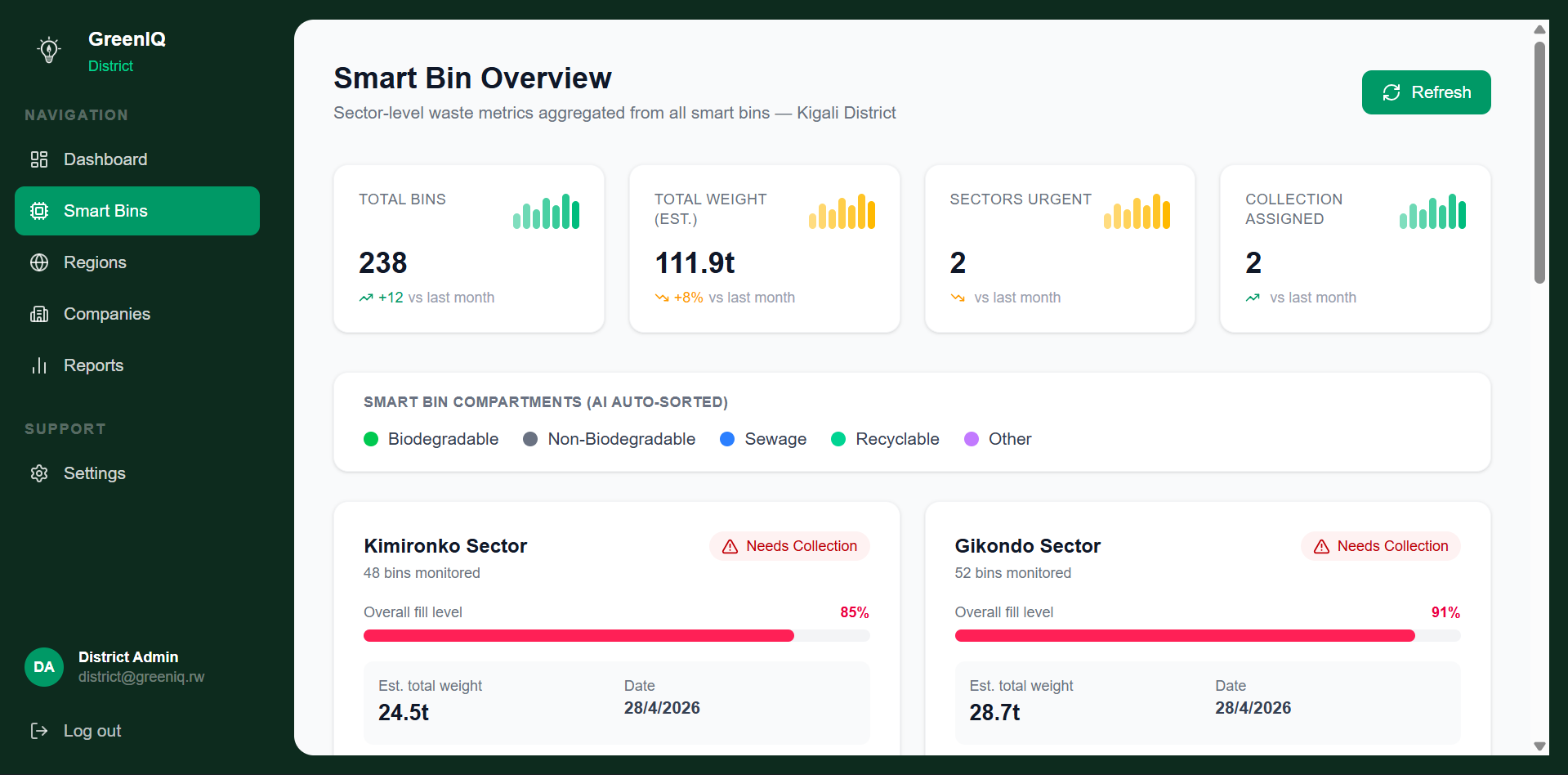
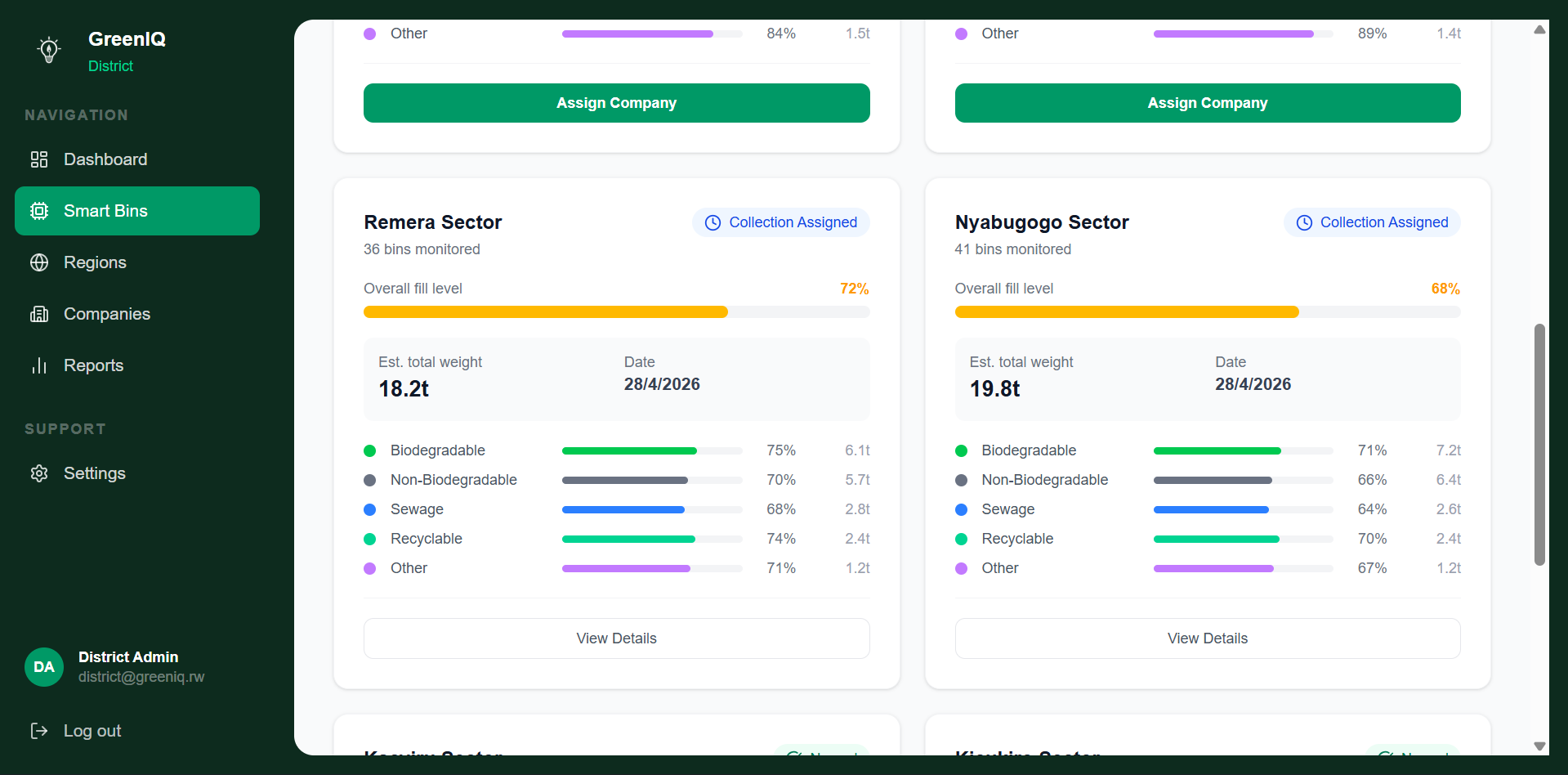
Smart bins monitor their fill levels, location and waste information and send this data to the GreenIQ platform.
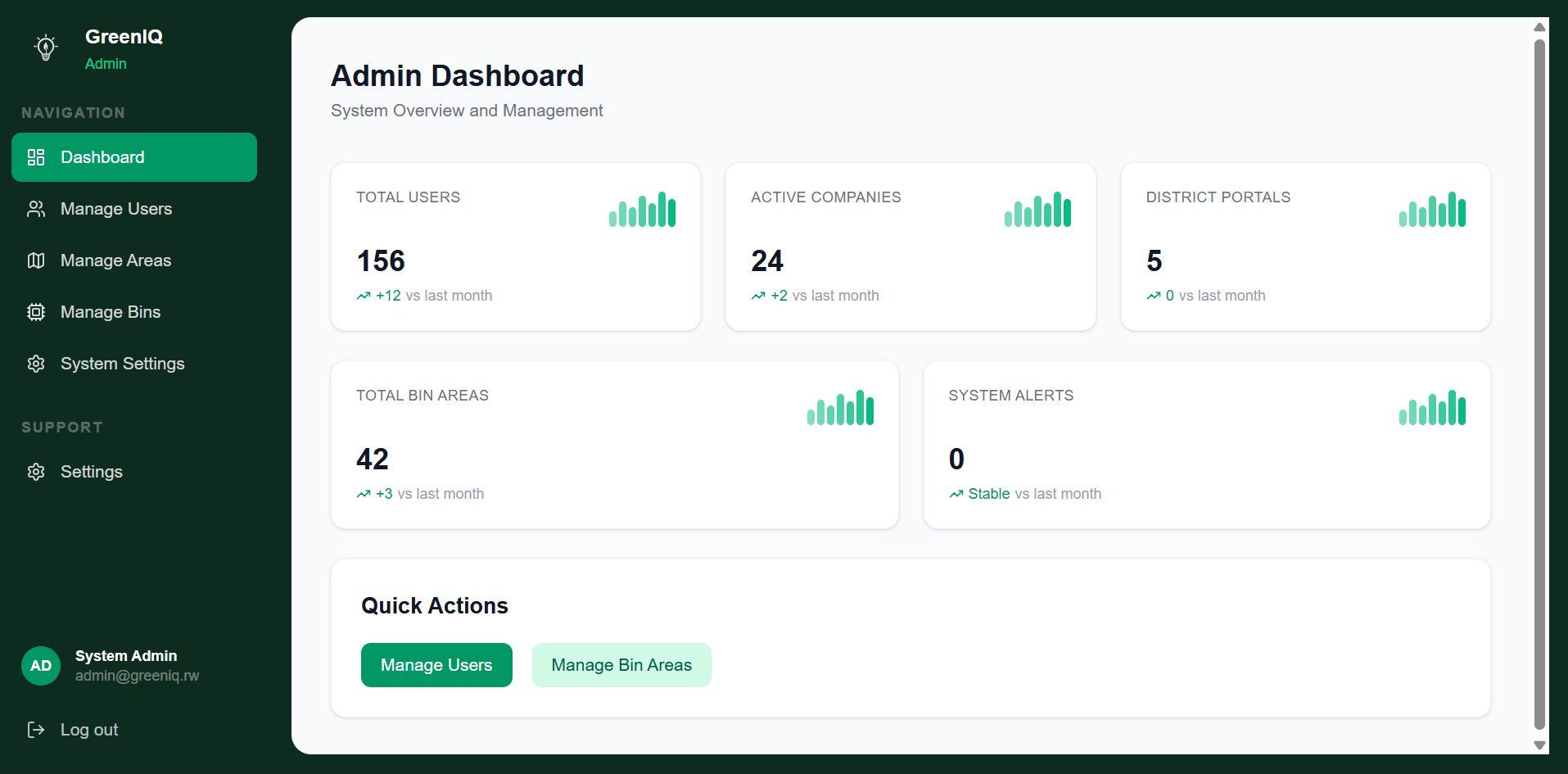
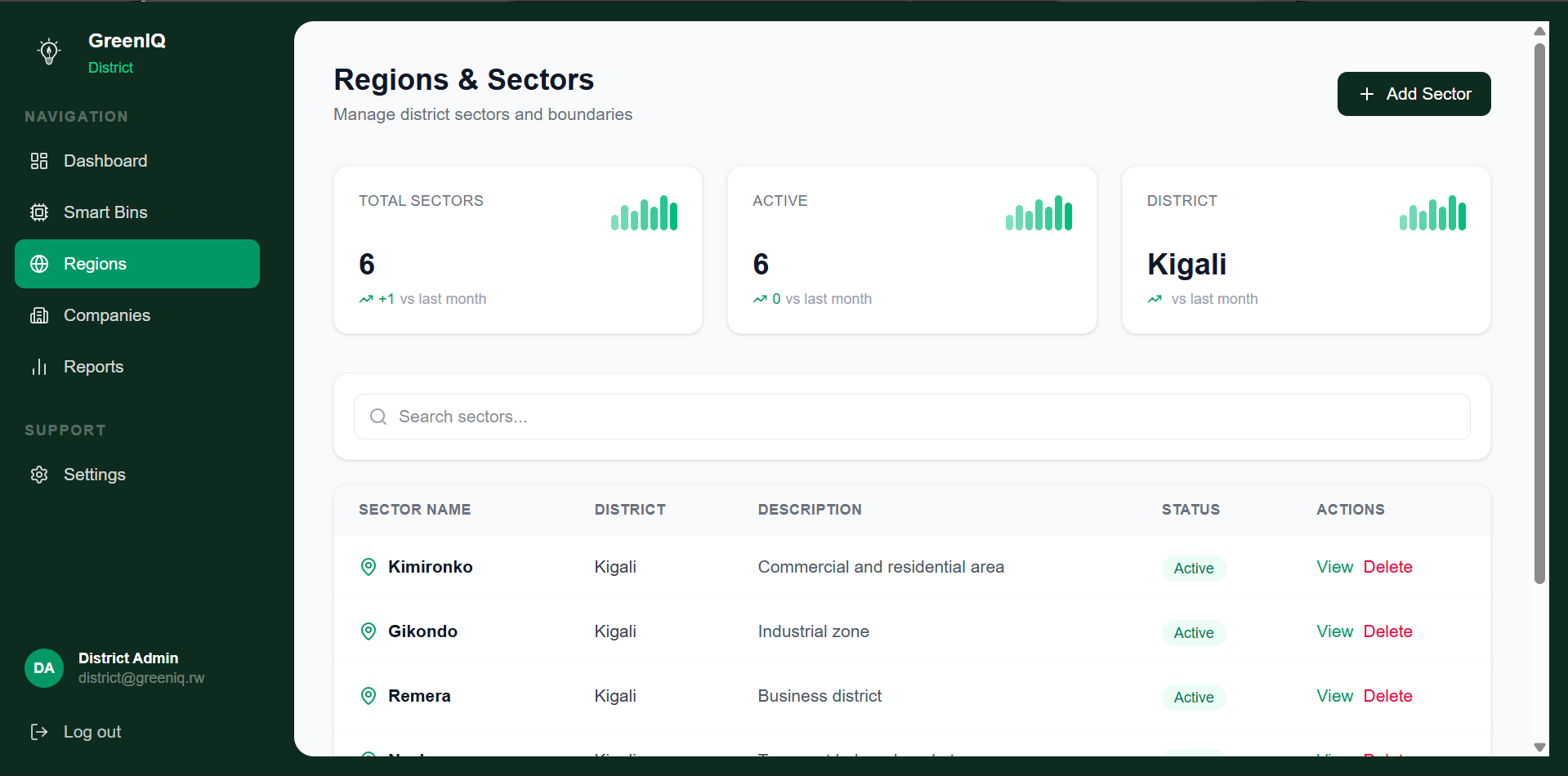
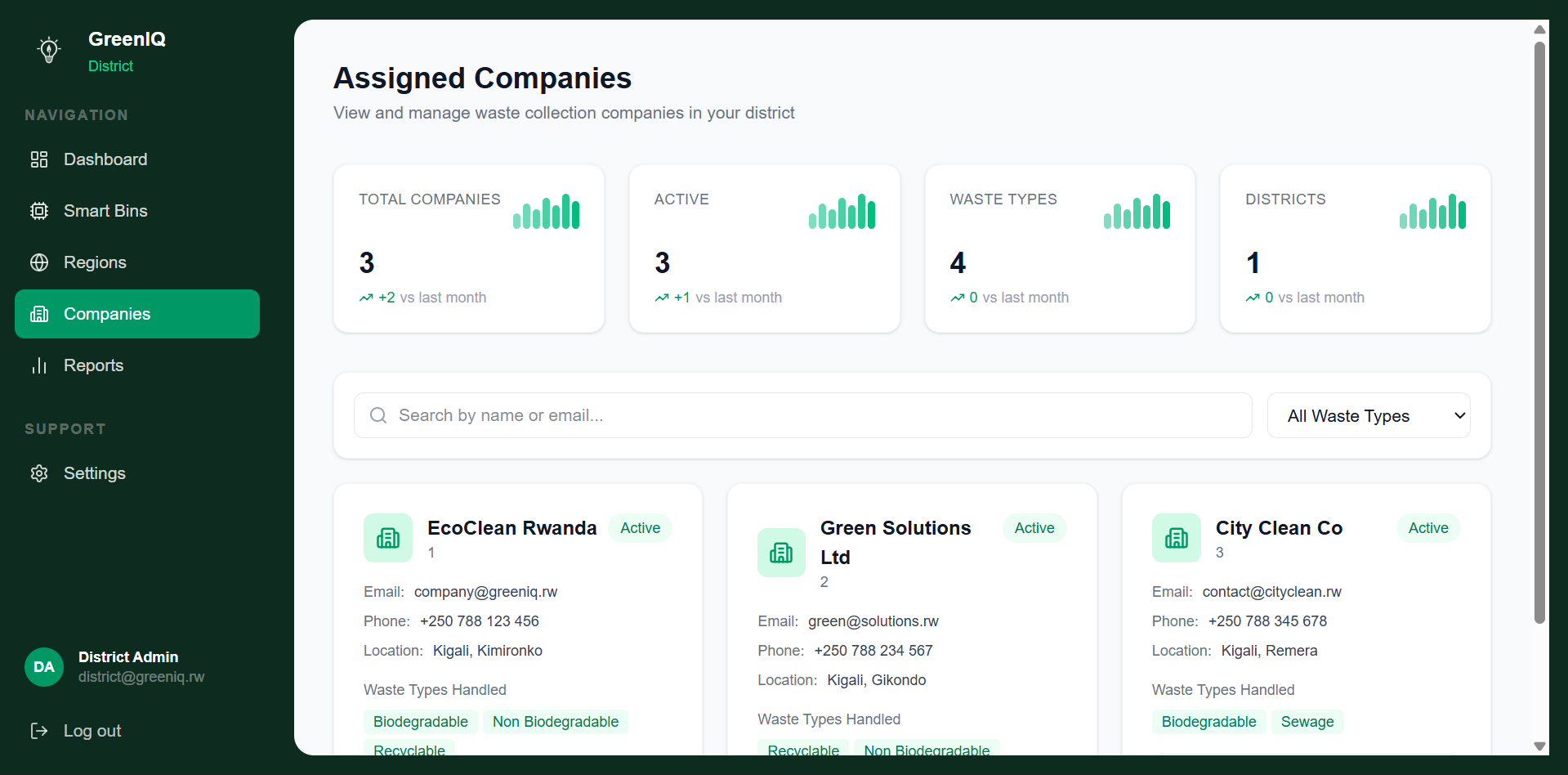
District authorities can monitor waste activity, collection needs, companies and environmental information through dedicated dashboards and maps.
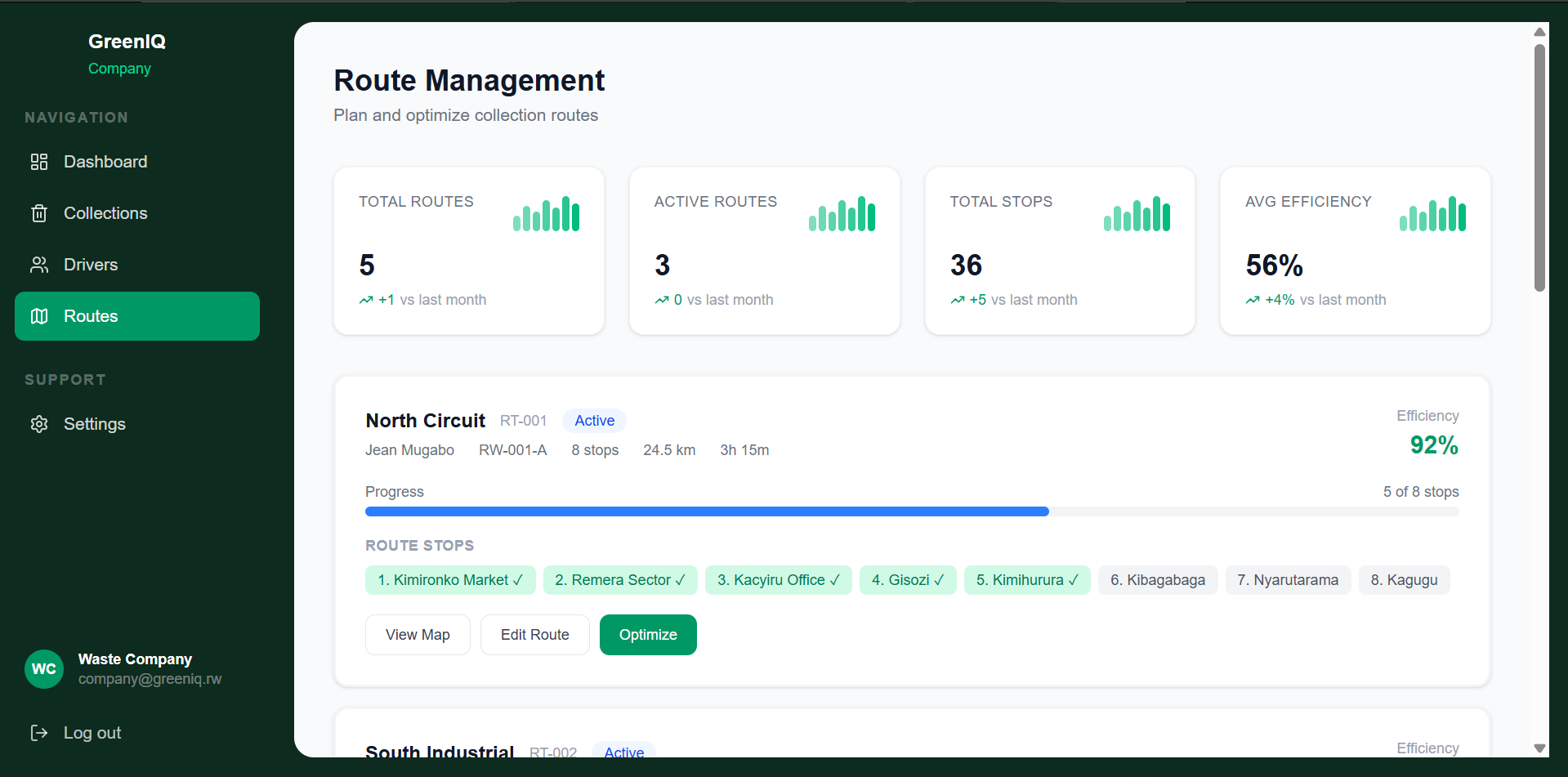
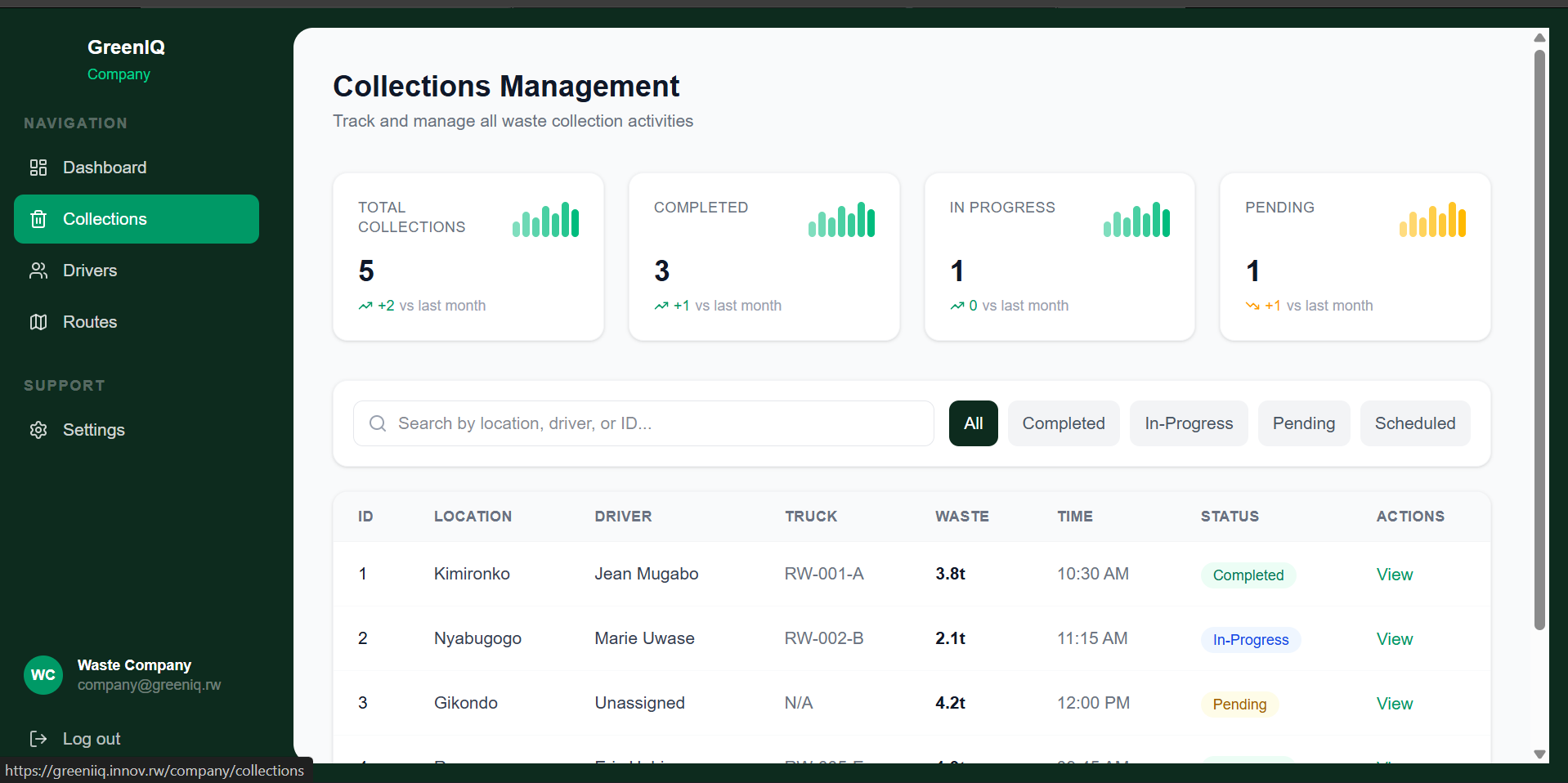
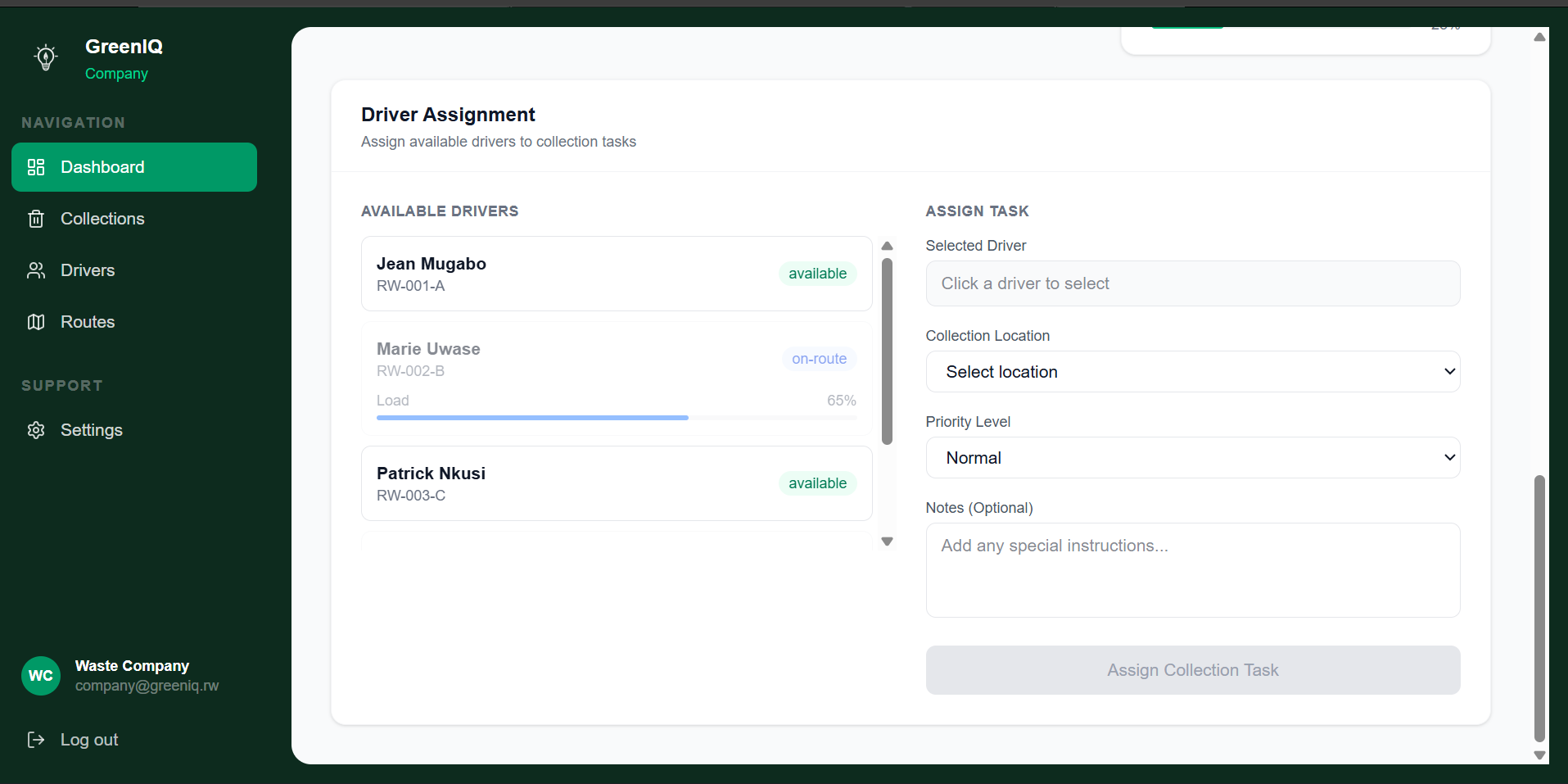
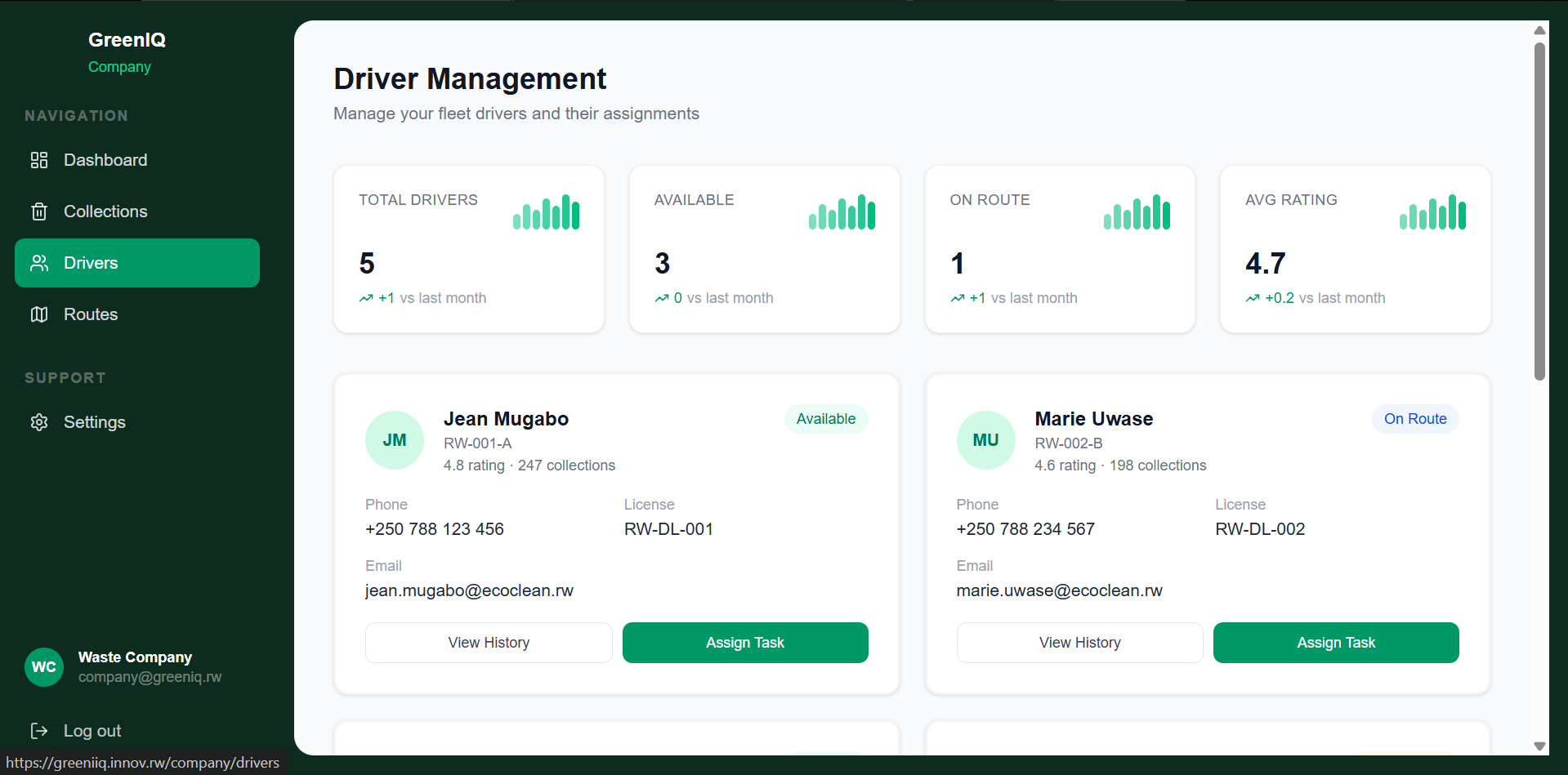
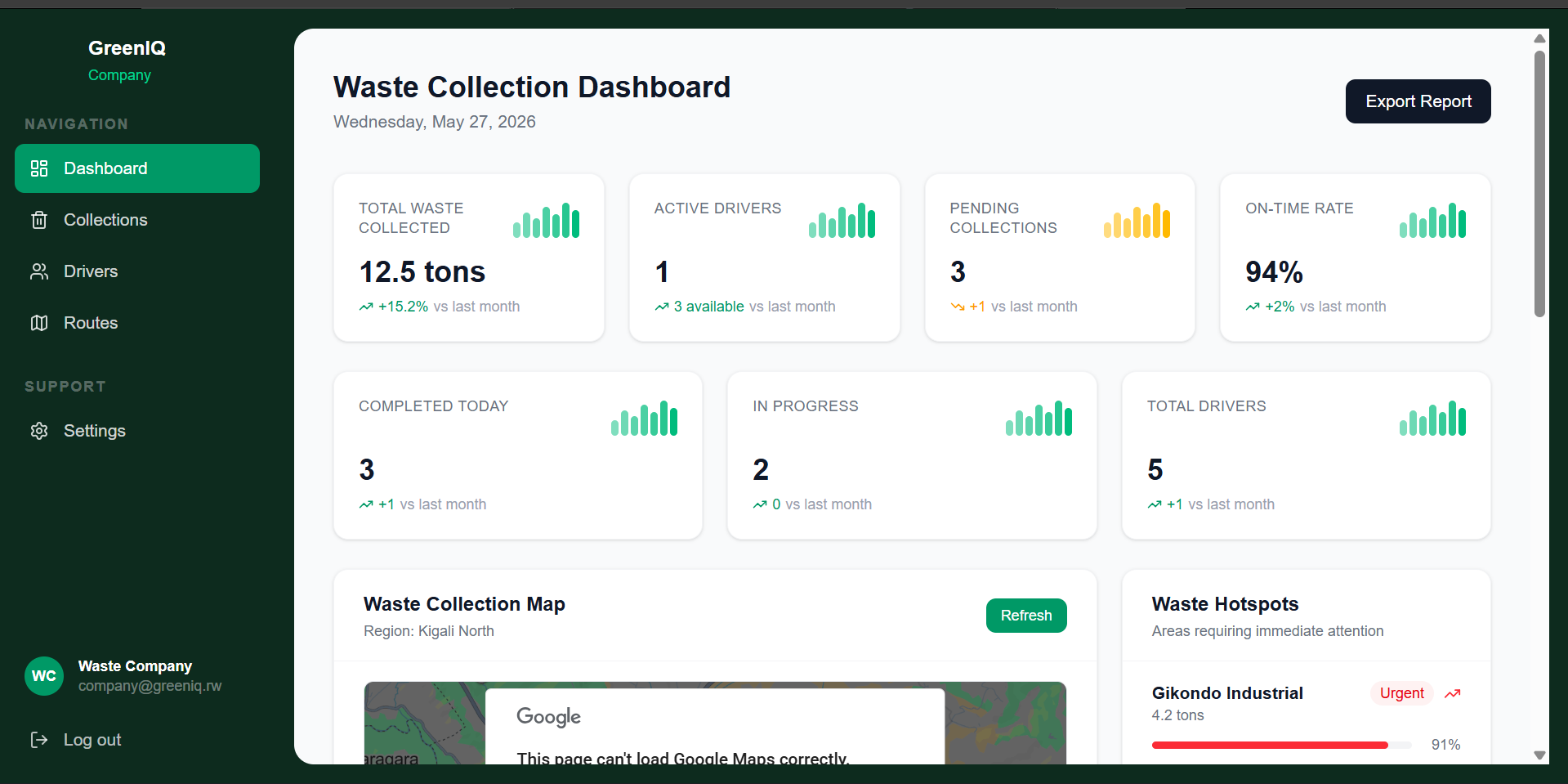
Waste collection companies can manage operations and assign drivers to collection activities.
Drivers receive information about the areas and bins requiring attention.
When waste levels reach defined thresholds, GreenIQ can automatically identify areas that need collection and surface them to the responsible authorities.
Instead of waiting for overflowing waste to become visible, GreenIQ gives cities the information needed to act using real time data.
How we built it
GreenIQ combines web applications, mobile technology, artificial intelligence, geospatial services and IoT infrastructure.
The web portals use Next.js, React and Tailwind CSS.
The backend uses Node.js, Express.js, MongoDB and Mongoose to manage users, districts, companies, drivers, smart bins and collection activity.
Google Maps API provides geospatial visualization of smart bins, collection areas, waste hotspots and operational activity.
The citizen and driver experiences are designed using React Native.
The smart bin infrastructure can use ESP32 and Arduino based devices connected to sensors that monitor fill levels and communicate with the GreenIQ API.
Artificial intelligence supports waste recognition and helps citizens understand how different types of waste should be sorted.
Challenges we faced
One of our biggest challenges was realizing that waste management is not simply a waste detection problem.
It is a coordination problem.
GreenIQ has to serve people with completely different responsibilities while ensuring each person receives the information relevant to their role.
Another challenge was connecting physical infrastructure with software.
Smart bins generate data, but that data only becomes useful when it can trigger real operational decisions such as collection, dispatch and monitoring.
We also had to think carefully about unreliable connectivity. Smart infrastructure should continue operating even when a network connection is temporarily unavailable.
What we learned
Building GreenIQ taught us to think about technology as infrastructure rather than simply as an application.
Artificial intelligence can identify waste.
IoT devices can measure waste.
Maps can show where problems are happening.
APIs can connect different systems.
But the real impact comes when all of these technologies work together to help people make better decisions.
We also learned that sustainability becomes more powerful when environmental activity can be measured through data.
Our goal is to make GreenIQ an intelligent digital layer connecting citizens, waste companies and governments to help cities become cleaner, more efficient and more sustainable.
Built with
Next.js, React, Tailwind CSS, Node.js, Express.js, MongoDB, Mongoose, React Native, Google Maps API, GeoJSON, JWT, Bcrypt.js, SendGrid, ESP32, Arduino, REST API, Artificial Intelligence, IoT
Try it out
Live application
The source repositories are private, so the public Devpost submission focuses on the live application and video demonstration.
Built With
- arduino
- artificial-intelligence
- bcrypt.js
- esp32
- express.js
- geojson
- google-maps
- iot
- jwt
- mongodb
- mongoose
- next.js
- node.js
- react
- react-native
- rest-api
- sendgrid
- tailwind-css

Log in or sign up for Devpost to join the conversation.