Inspiration
Waste collection in many growing cities is still reactive.
Bins overflow before authorities know they need attention. Collection vehicles follow schedules that may not reflect actual demand. Citizens have limited guidance on proper waste sorting, while governments and waste companies often lack real time operational information.
We started GreenIQ with a simple question:
What if waste infrastructure could communicate with the city automatically?
GreenIQ originally began as an AI based recycling application that helped citizens recognize waste and encouraged responsible recycling.
As we developed the project, we realized that identifying waste was only the beginning.
A city also needs to know where waste is accumulating, when it should be collected, who should collect it and whether collection actually happened.
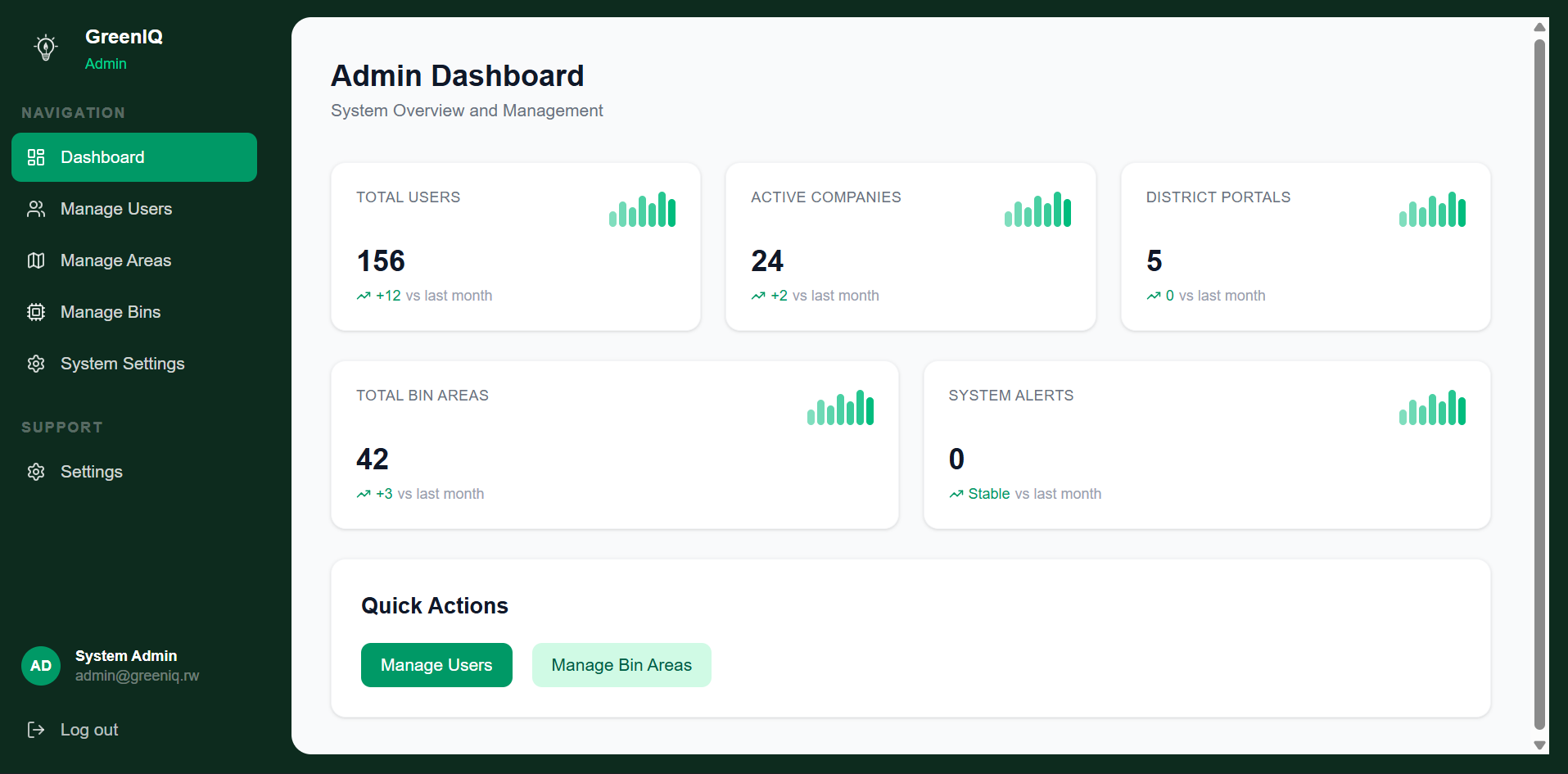
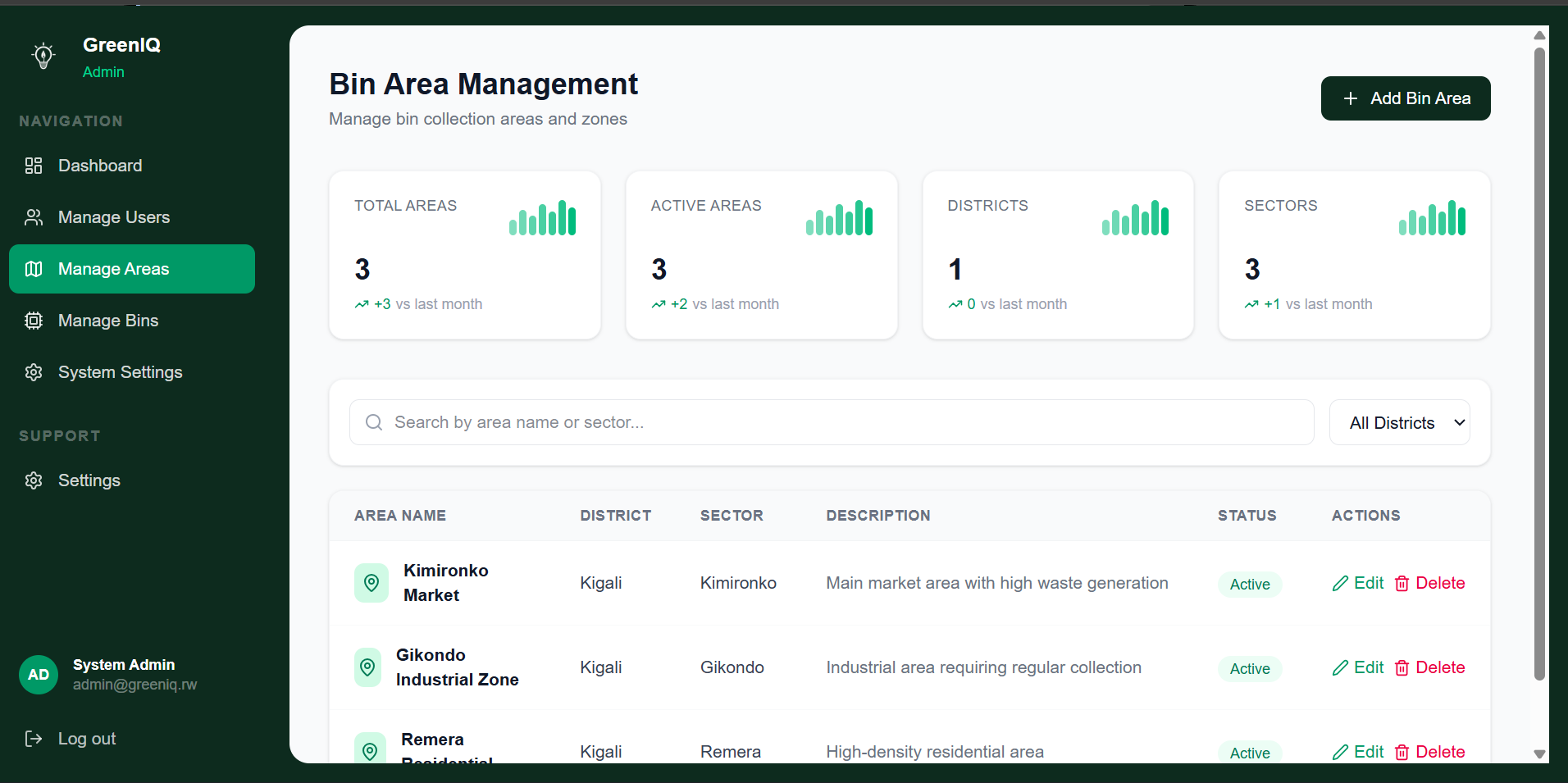
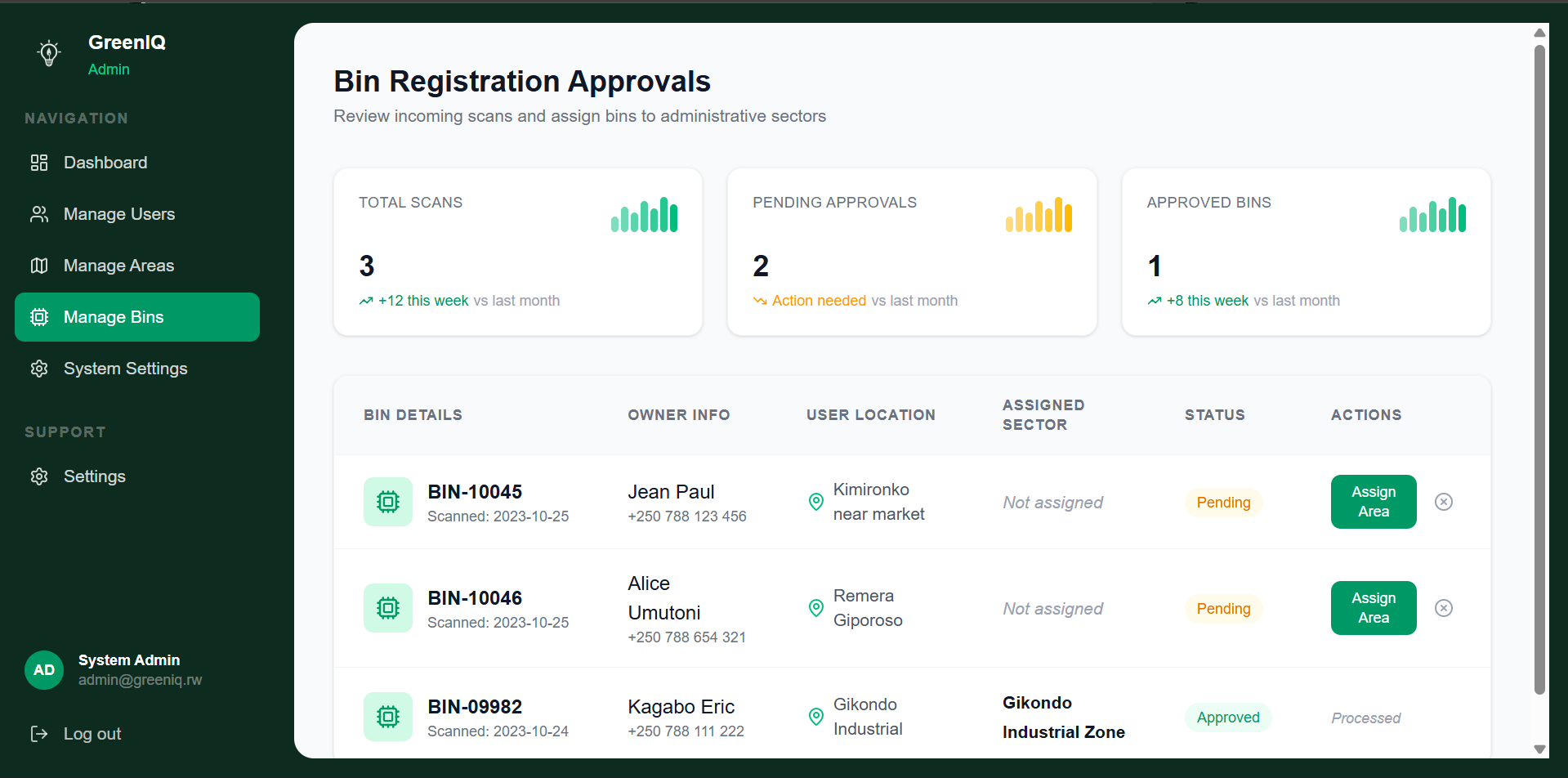
GreenIQ therefore evolved into an intelligent waste management ecosystem connecting citizens, IoT smart bins, drivers, waste companies and local authorities.
What it does
GreenIQ creates a digital connection between physical waste infrastructure and the people responsible for managing it.
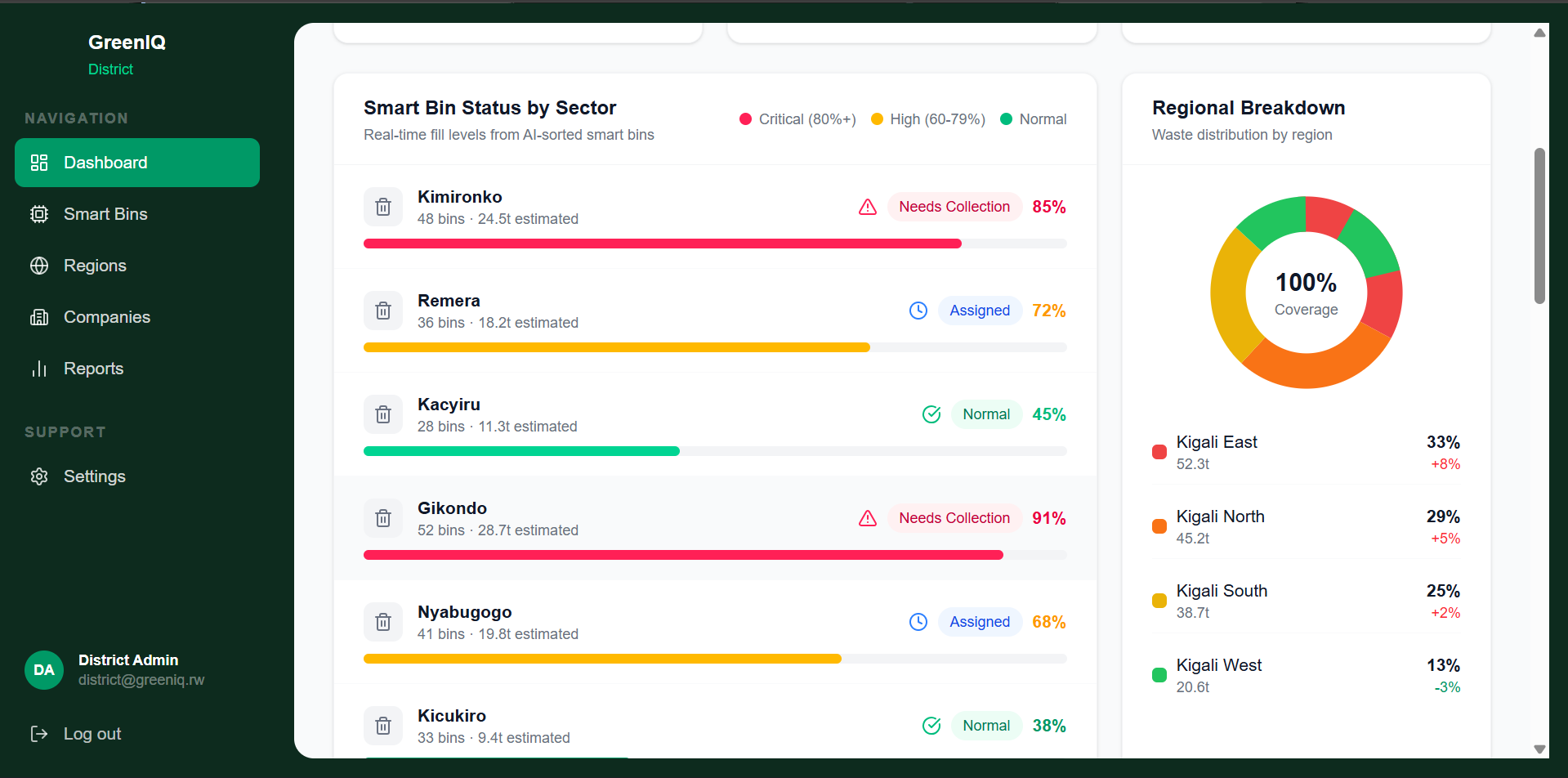
Smart bins monitor their fill levels and send information to the GreenIQ platform.
AI helps identify different types of waste and supports proper waste classification.
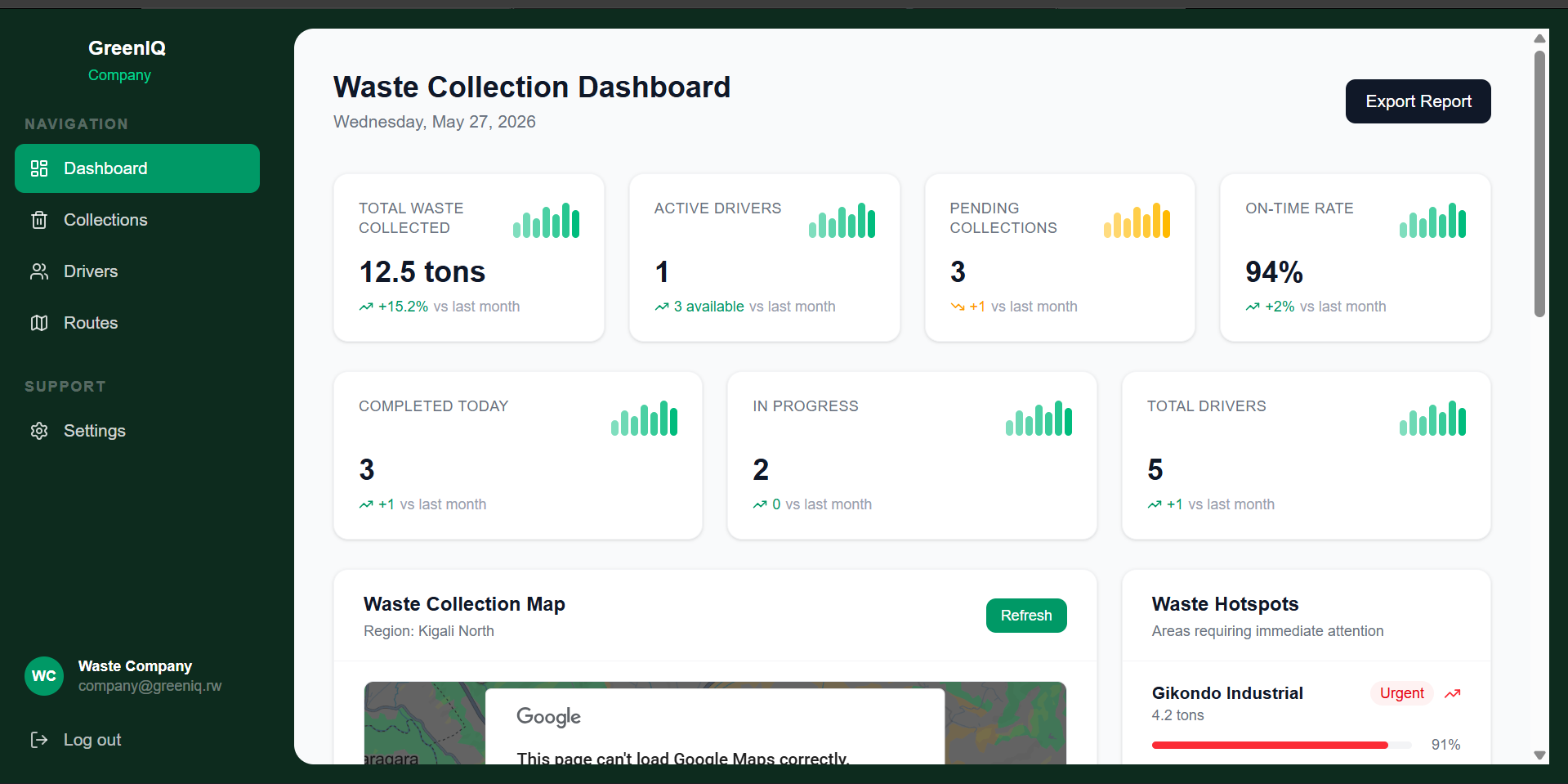
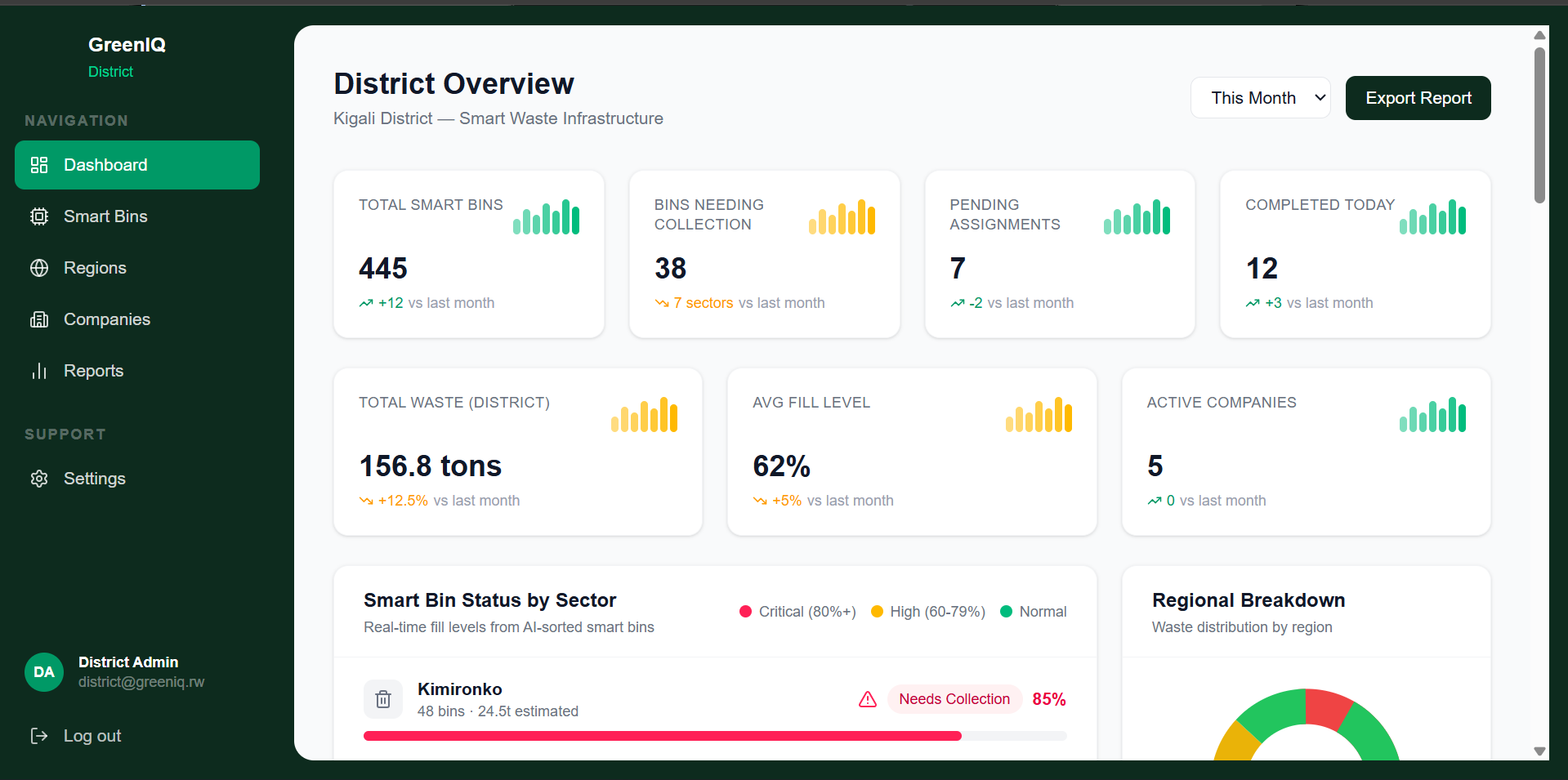
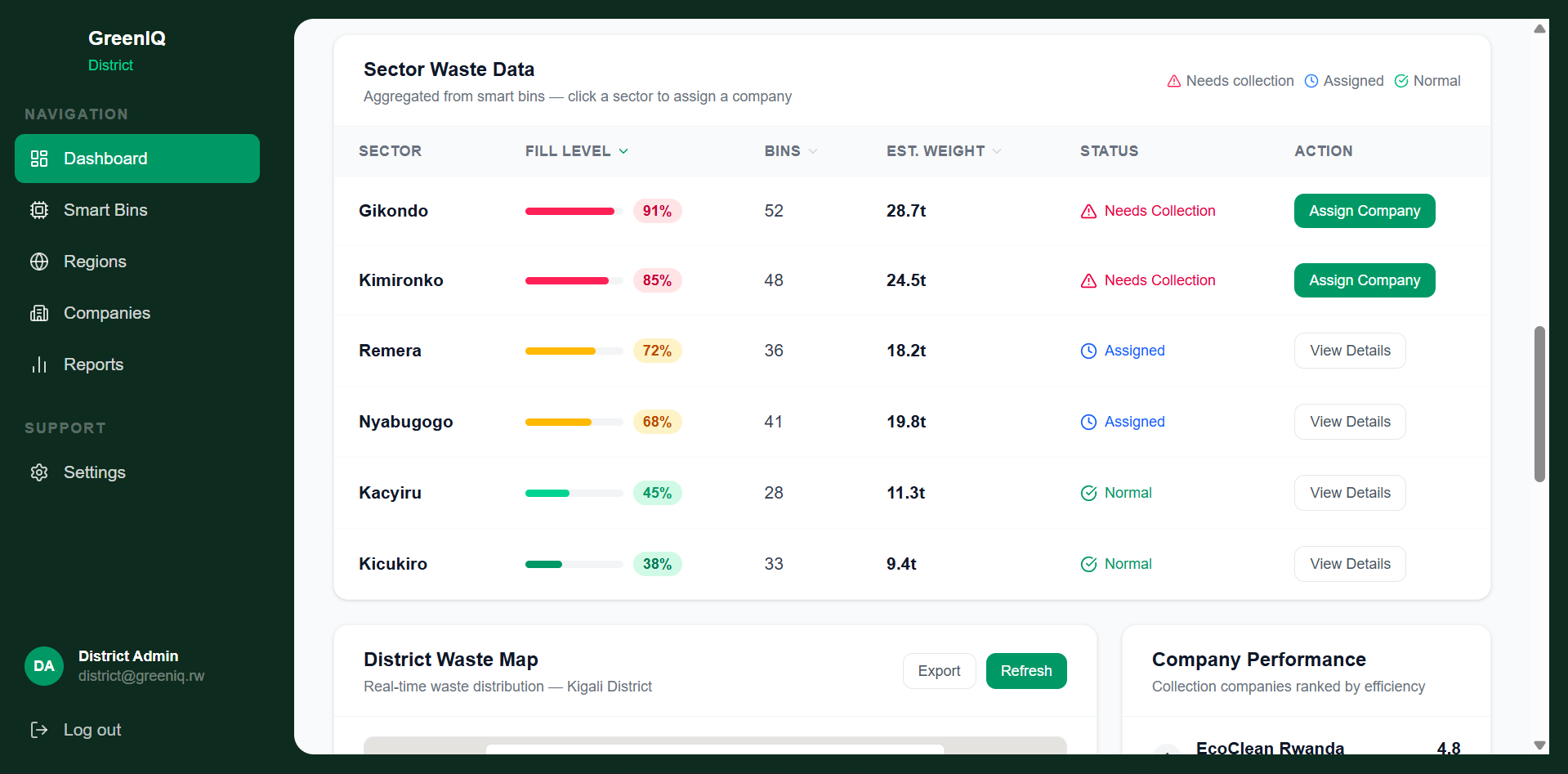
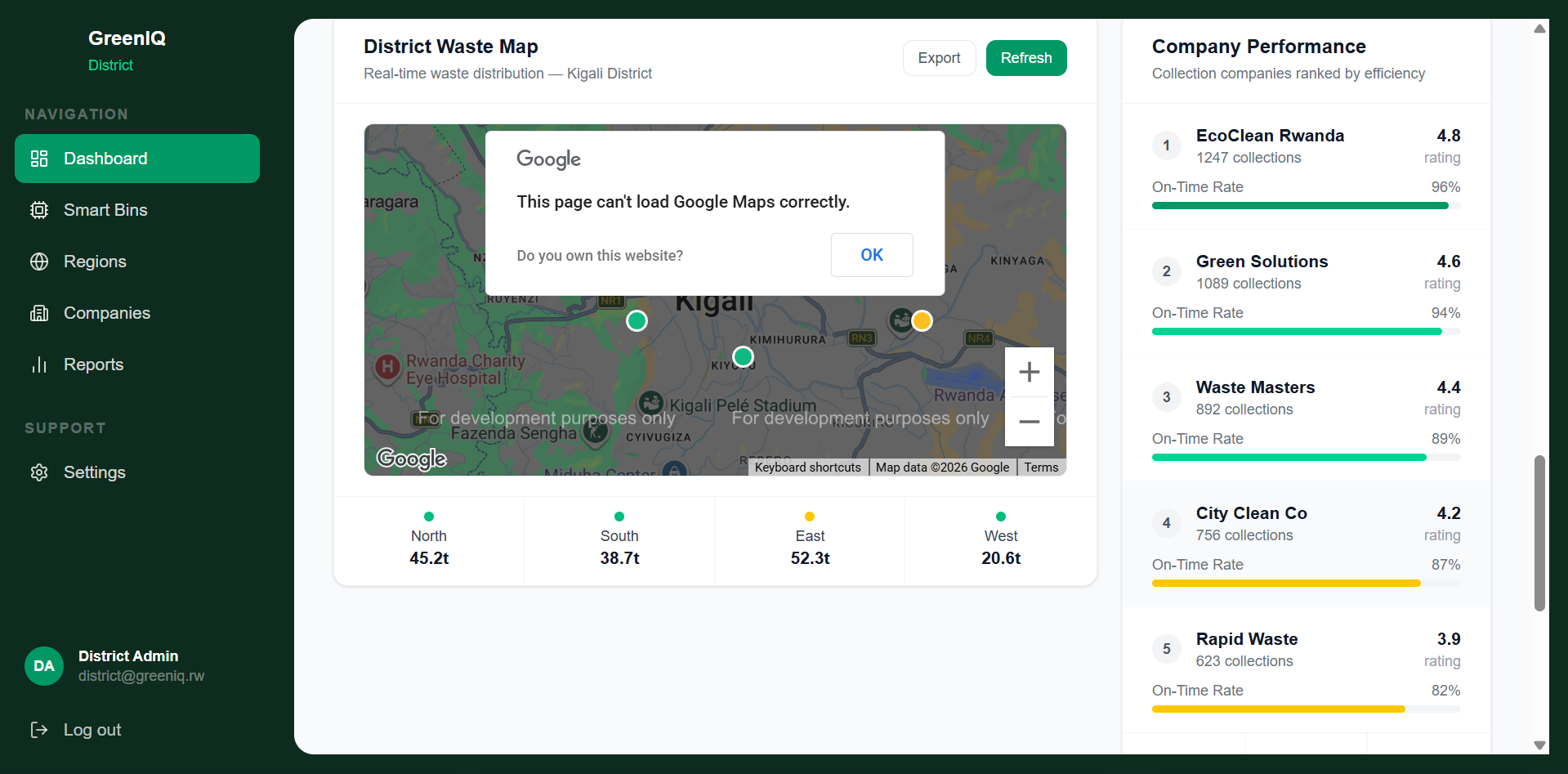
District authorities can see waste activity, collection needs and smart bin information through dashboards and maps.
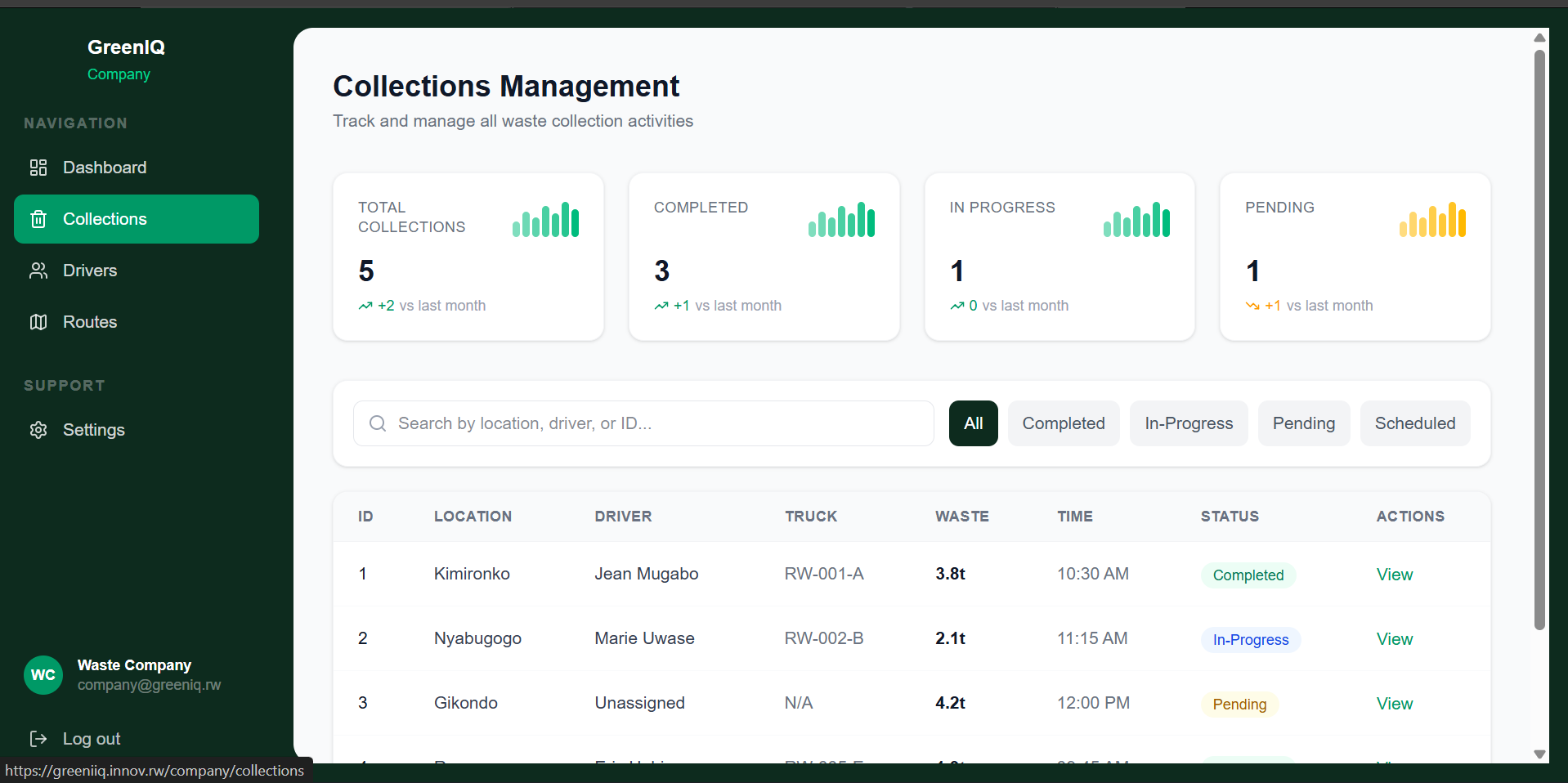
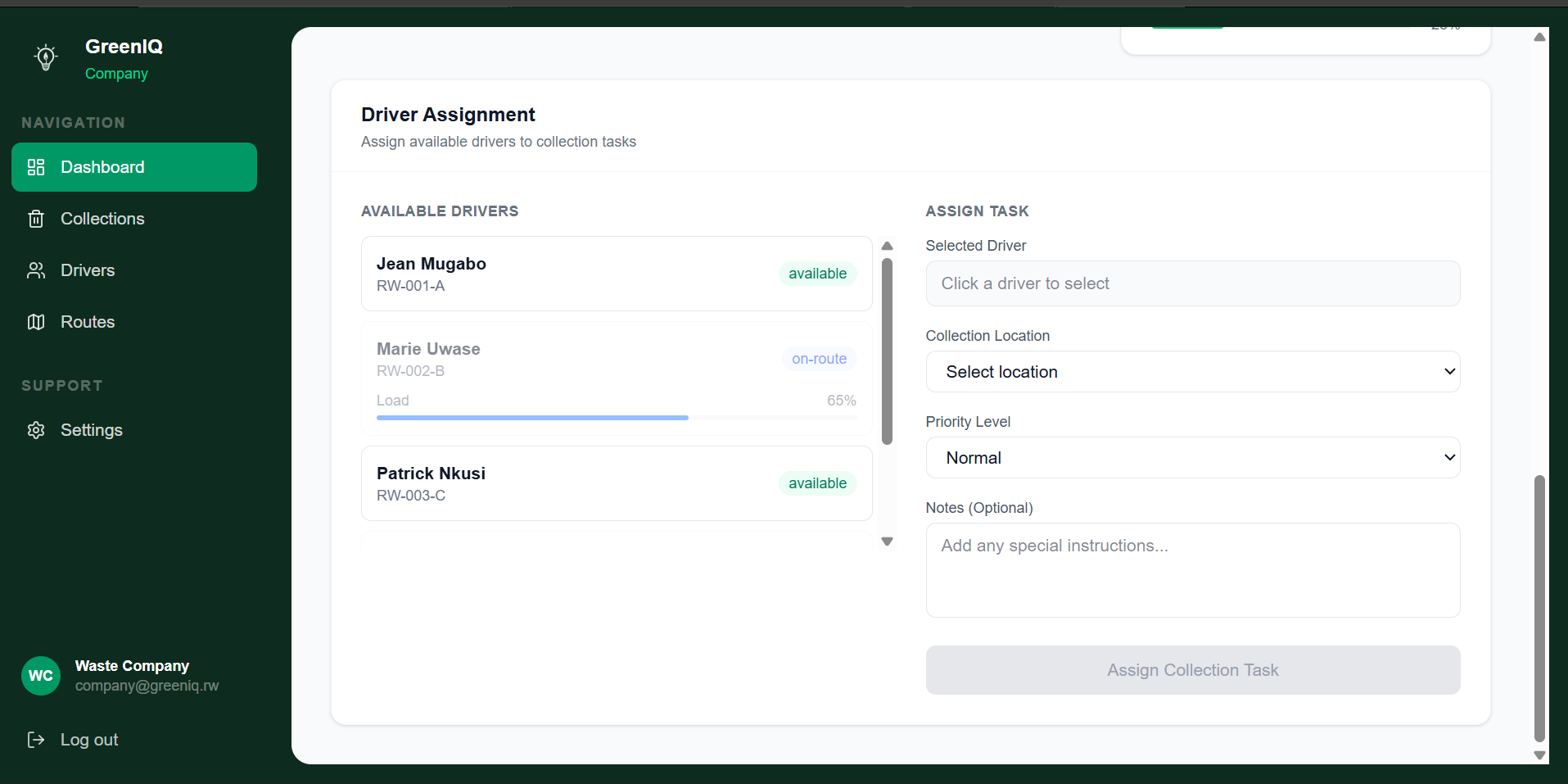
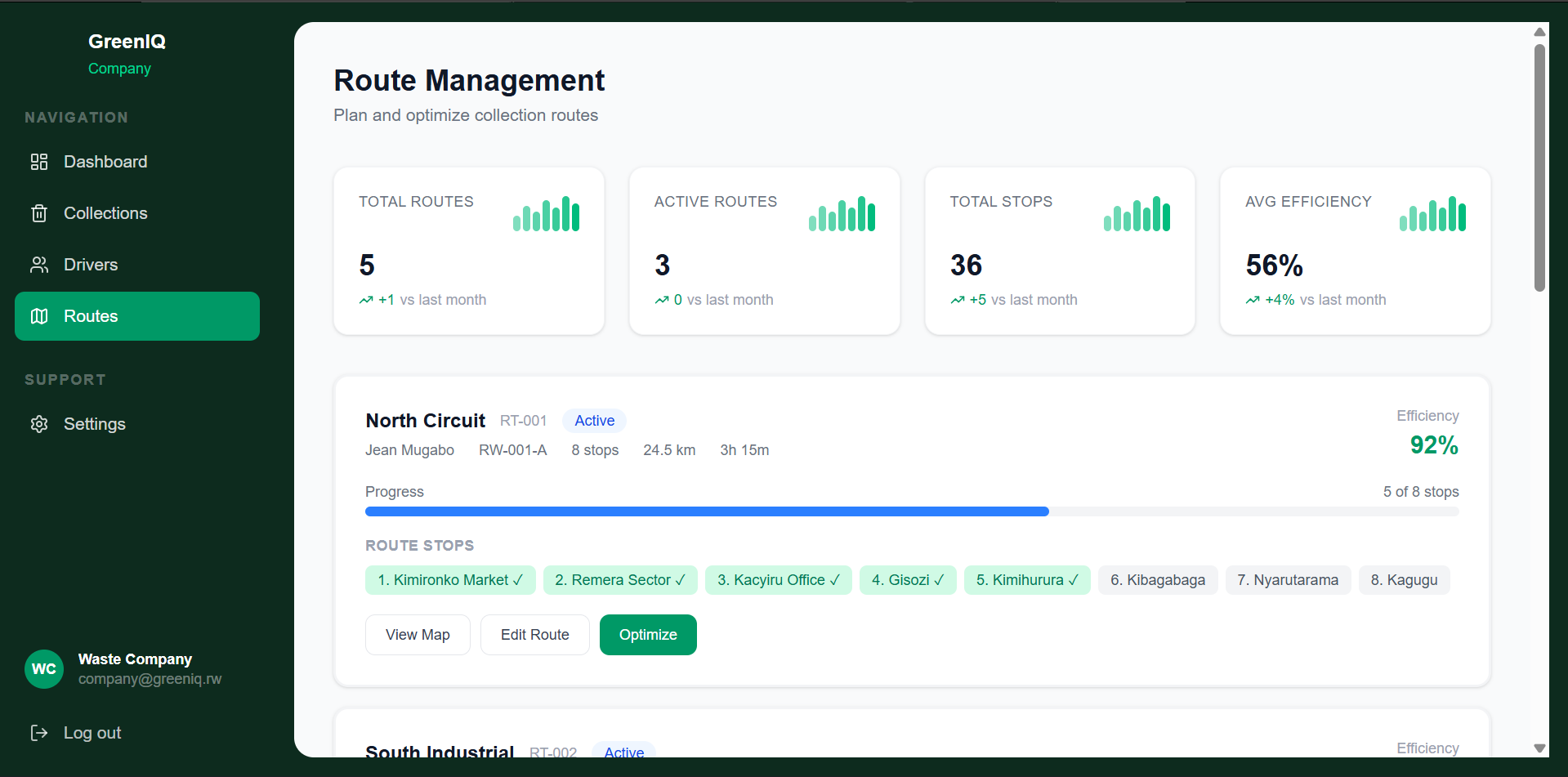
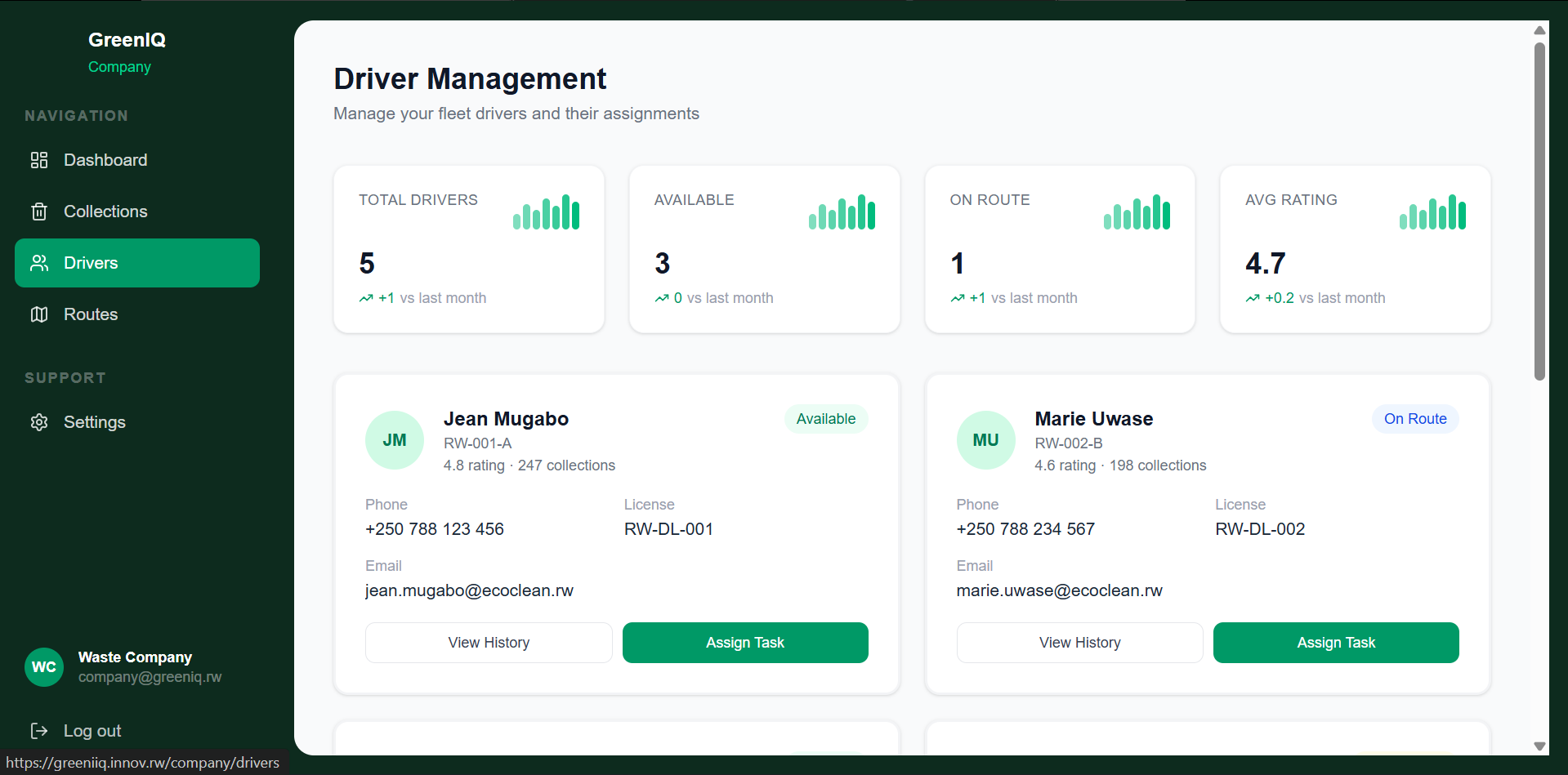
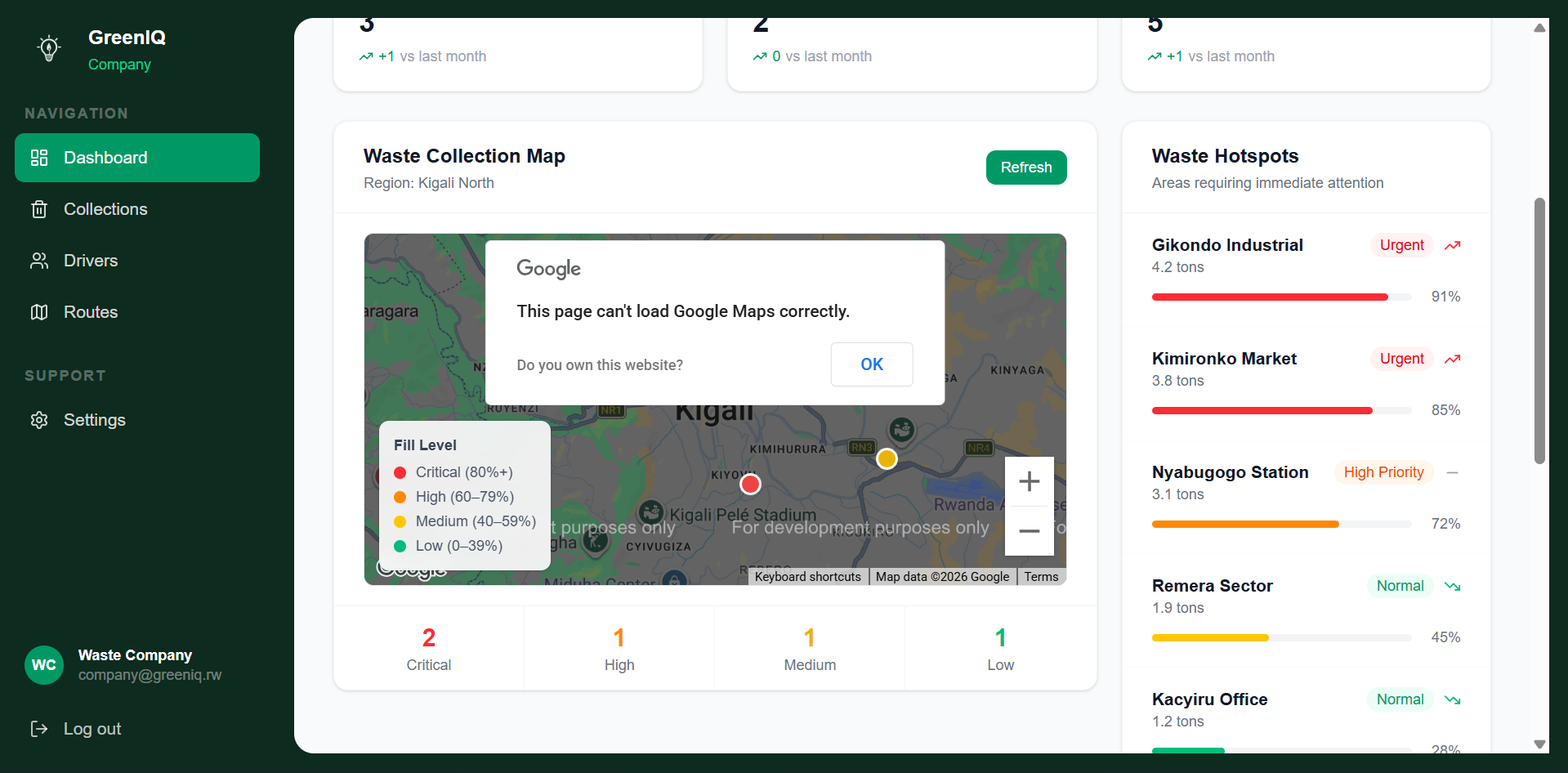
Waste companies can coordinate operations while drivers receive collection assignments.
Citizens can identify waste, report environmental issues, request collection and participate in recycling activities.
When smart bin data reaches defined collection thresholds, GreenIQ can automatically identify areas that require attention.
This changes waste management from:
Wait for a problem, report it, then react
into:
Detect, understand and respond using real time data.
How we built it
GreenIQ combines web development, mobile development, artificial intelligence, geospatial technology and embedded systems.
The web platform uses Next.js, React and Tailwind CSS.
The backend uses Node.js, Express.js, MongoDB and Mongoose.
Google Maps API provides geographic visualization of waste infrastructure, operational areas and collection activity.
The mobile layer uses React Native.
The IoT architecture supports devices such as ESP32 and Arduino connected to sensors capable of measuring bin fill levels and communicating with the GreenIQ API.
Artificial intelligence supports waste recognition and classification.
Together, these technologies create a bridge between physical waste infrastructure and intelligent city operations.
Challenges we faced
One of our biggest challenges was connecting the physical and digital sides of the project.
Receiving a sensor value is easy.
Turning that sensor value into a meaningful city operation is much harder.
The system needs to understand where a bin is located, which authority is responsible for it, whether the data is recent, whether collection is actually required and who should respond.
Connectivity is another challenge.
IoT infrastructure cannot assume that internet connectivity will always be available. We therefore designed the smart bin concept so data can be stored locally and synchronized when connectivity returns.
Another challenge was designing one ecosystem for users with very different responsibilities.
Citizens need simplicity.
Drivers need actionable tasks.
Companies need operational information.
Authorities need oversight and analytics.
GreenIQ must serve all of them without making the platform unnecessarily complex.
What we learned
GreenIQ taught us that IoT becomes valuable when sensor information causes something useful to happen.
AI can recognize waste.
Sensors can measure waste.
Maps can show waste.
But connecting those technologies into an operational workflow creates the real impact.
We also learned that sustainability systems need measurable information.
By collecting data about waste levels, collection activity and recycling behavior, GreenIQ can help cities understand where resources are being wasted and where improvements are needed.
Our vision is to make waste infrastructure intelligent enough to help cities become cleaner, more efficient and more sustainable.
Built With
- arduino
- artificial-intelligence
- esp32
- express.js
- geojson
- google-maps
- image
- iot-sensors
- jwt
- mongodb
- mongoose
- next.js
- node.js
- react
- react-native
- recognition
- rest-apis
- tailwind-css
- waste

Log in or sign up for Devpost to join the conversation.