GPS tracking is widely used in vehicle tracking, fleet management, robotics, and IoT applications. While many GPS projects rely on cloud platforms for visualization, this project demonstrates a lightweight alternative by hosting the tracking interface directly on an Heltec development board. The goal was to build a simple, self-contained GPS tracker that is easy to understand, deploy, and extend for future IoT applications.
What it Does
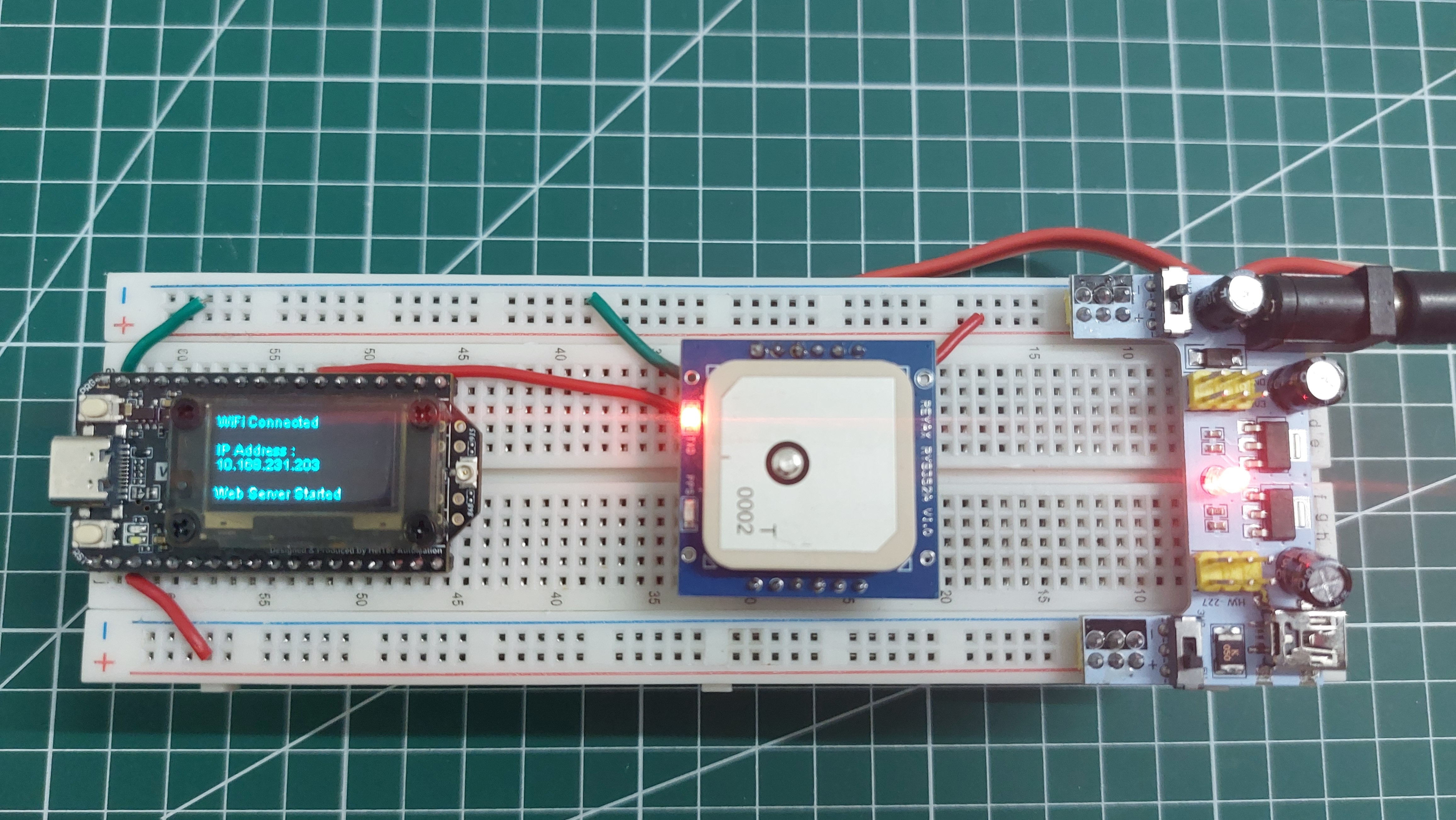
The project uses the Heltec WiFi LoRa 32 V4 and REYAX RYS352A Multi-GNSS module to receive real-time positioning data from multiple satellite constellations.
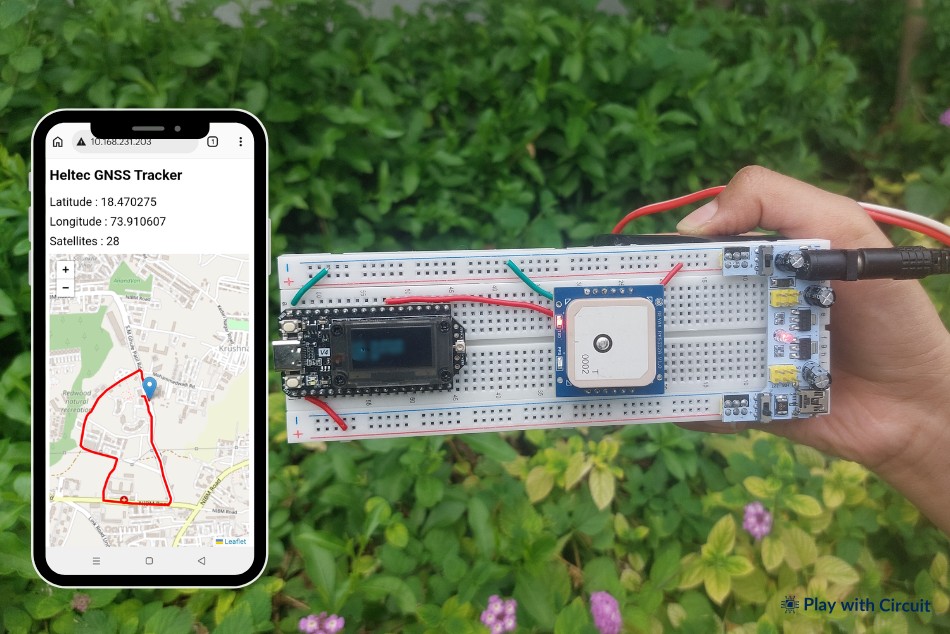
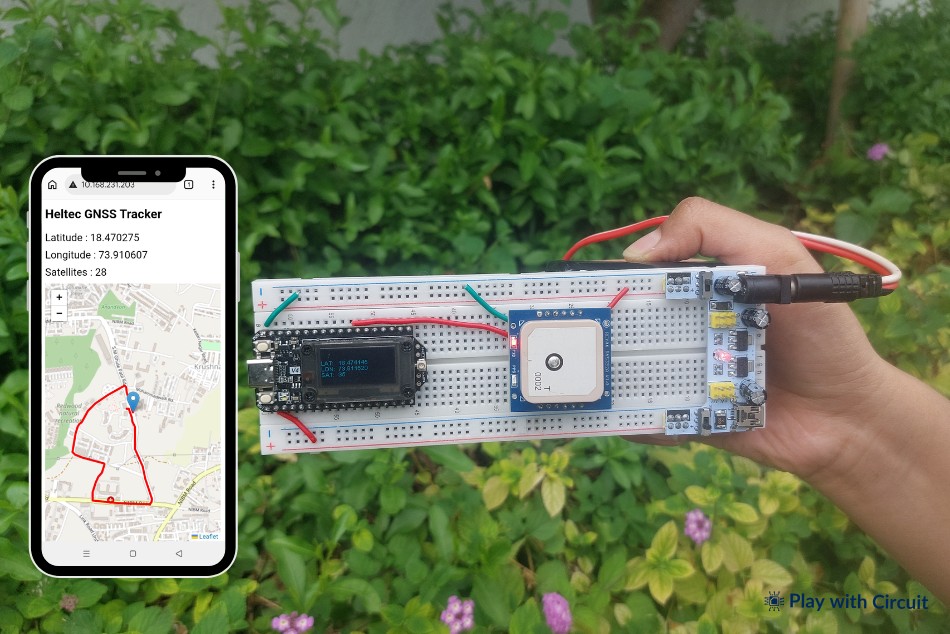
The ESP32 processes the GNSS data, displays the latitude, longitude, and connected satellite count on the onboard OLED display, and hosts a browser-based tracking webpage. Any device connected to the same Wi-Fi network can view the current location and travelled route on an interactive OpenStreetMap interface without requiring any third-party cloud platform.
Hardware Used
- Heltec WiFi LoRa 32 V4
- REYAX RYS352A Multi-GNSS Module
- Breadboard
- Breadboard Power Supply
- 12V Lithium Battery
- USB Type-C Cable
- Jumper Wires
Software Used
- Arduino IDE
- TinyGPS++
- WiFi Library
- WebServer Library
- OpenStreetMap
Circuit Connections
The hardware requires only three primary connections.
- VCC → 3.3V
- GND → GND
- TX → GPIO38 (UART RX)
The RYS352A can also be connected using the dedicated GNSS connector available on the Heltec board.
How It Works
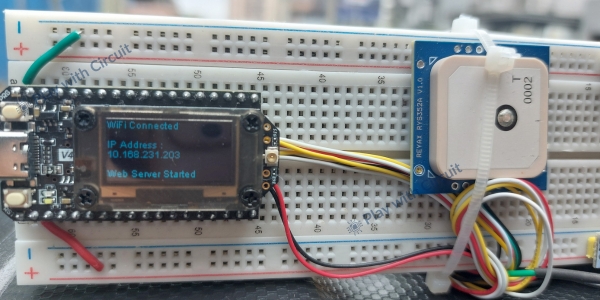
After powering the system, the Heltec board connects to the configured Wi-Fi network and starts an embedded web server. The REYAX RYS352A continuously receives GNSS data and transmits NMEA sentences to the ESP32 over UART.
The firmware extracts the latitude, longitude, and satellite count using the TinyGPS++ library. These values are displayed on the OLED while the browser-based interface updates the current location and travelled route in real time using OpenStreetMap.
Testing
The completed tracker was tested outdoors in a moving vehicle. After acquiring satellite signals, the browser interface successfully updated the vehicle's position in real time while continuously plotting the travelled route. The OLED simultaneously displayed live coordinates and satellite information, demonstrating stable communication between the GNSS receiver and the ESP32.
Future Improvements
- Geofencing Alerts
- LoRa Communication
- Home Assistant Integration
- SD Card Logging
- Mobile Application Support
- Cloud Synchronization
Built With
- esp32
- gps

Log in or sign up for Devpost to join the conversation.