-
-
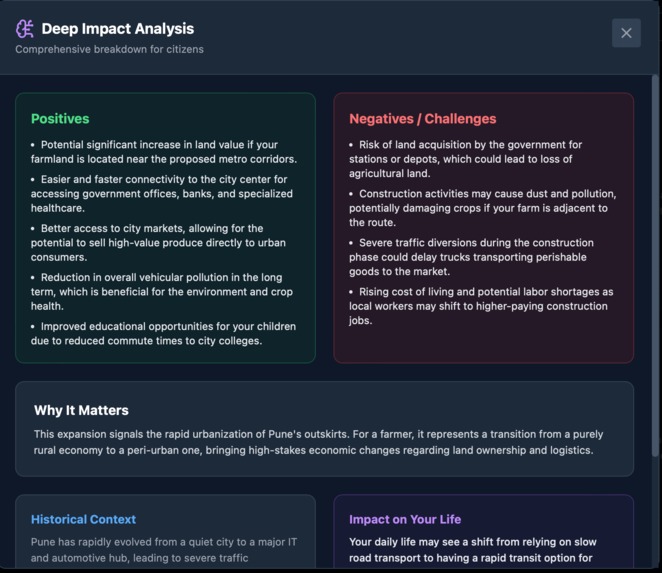
AI analysis of News
-
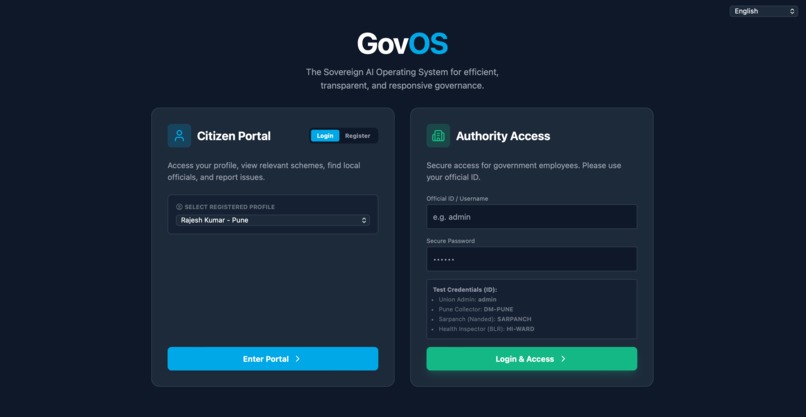
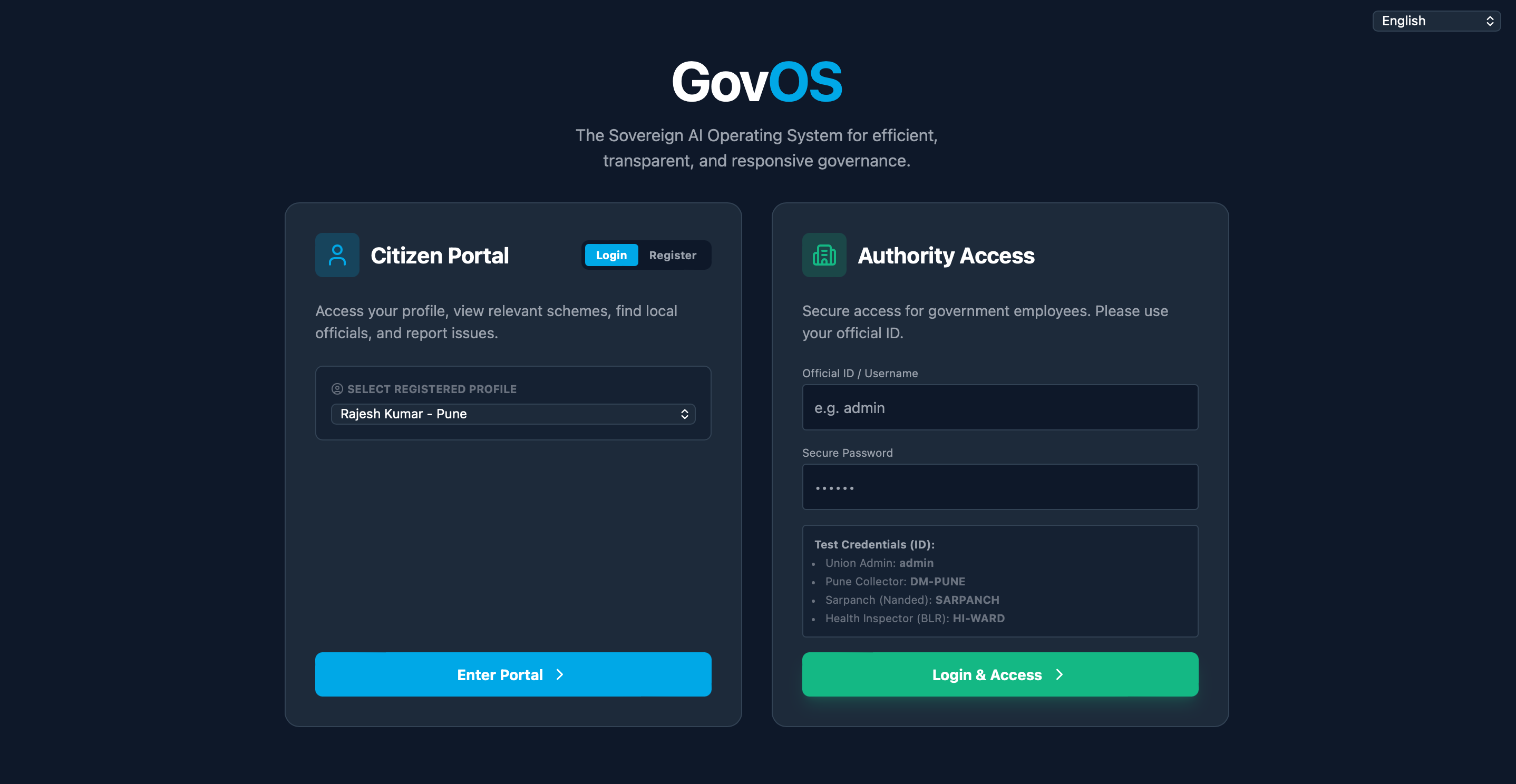
App login
-
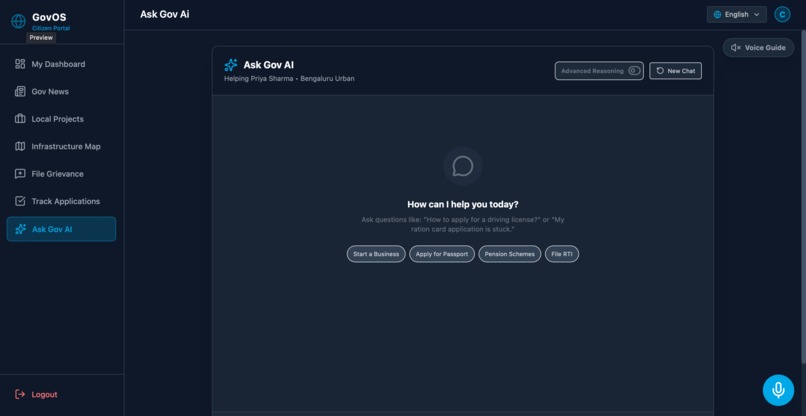
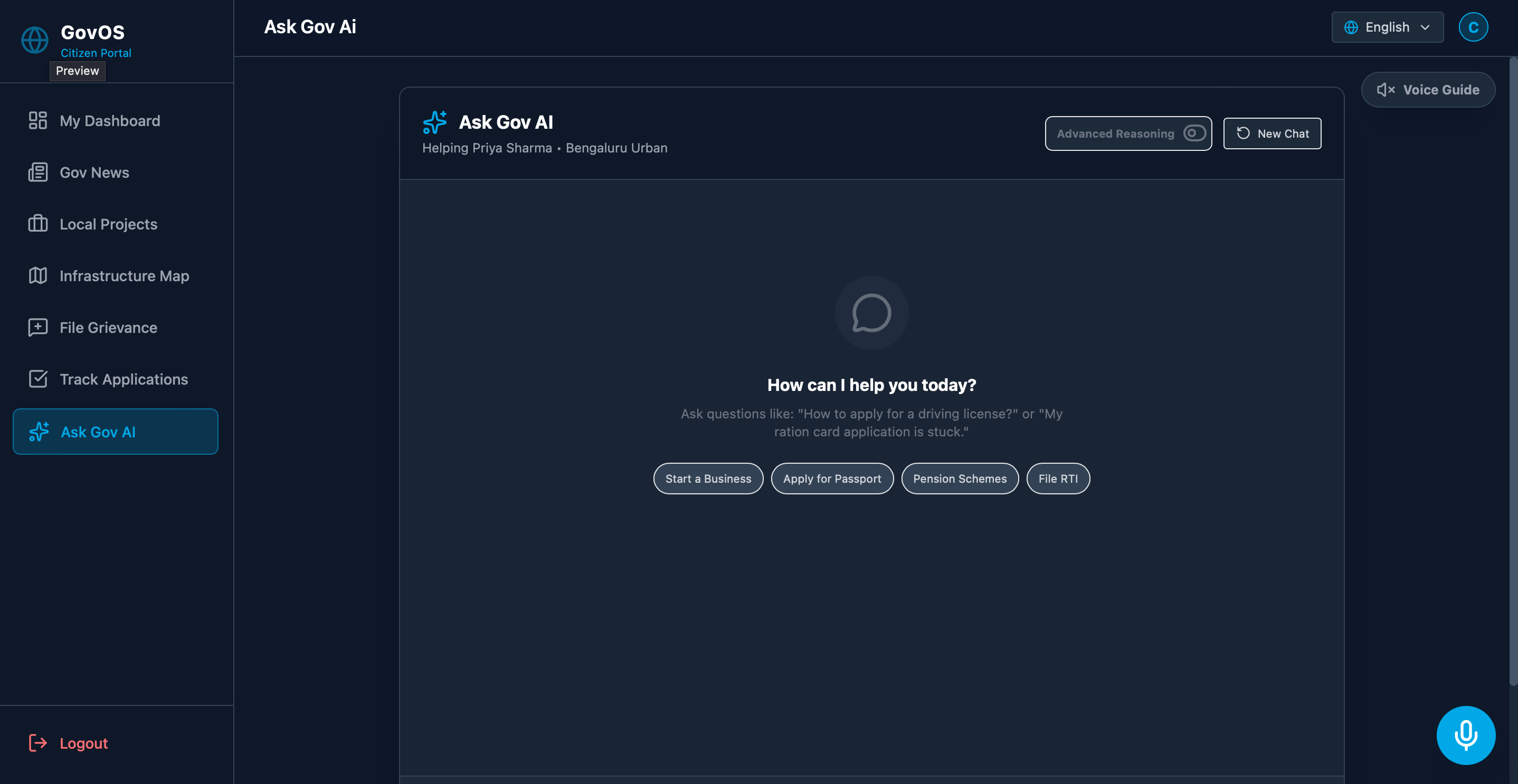
AI chat for information
-
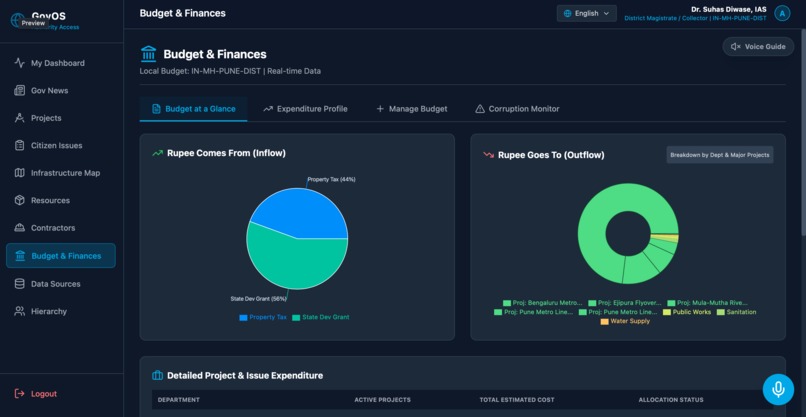
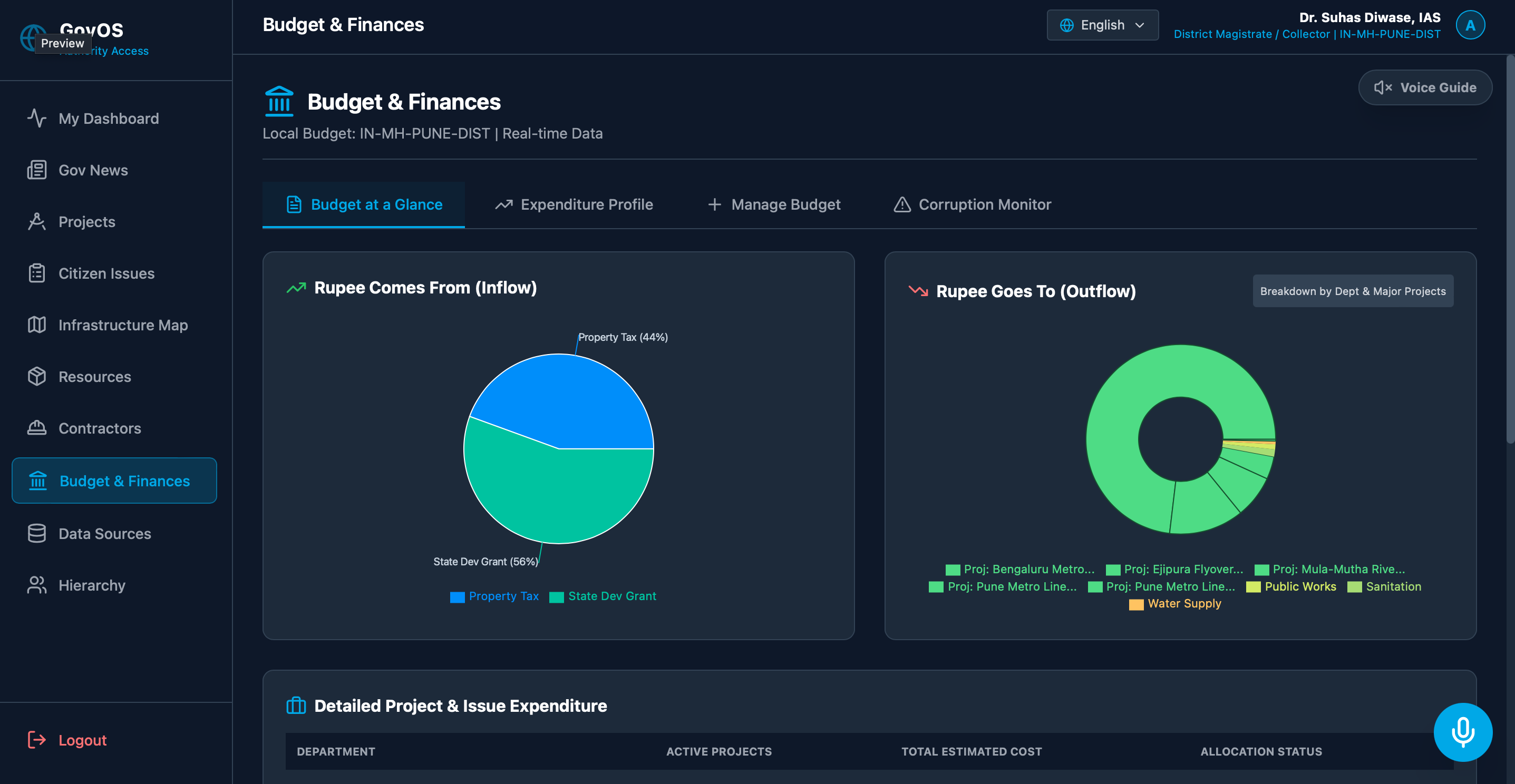
AI budget tracking
-
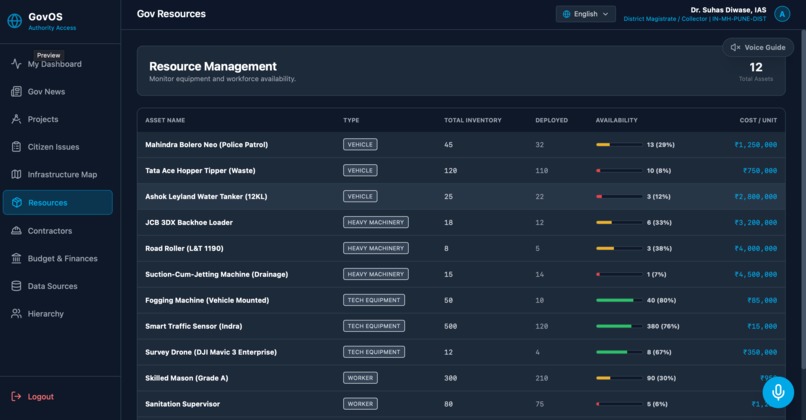
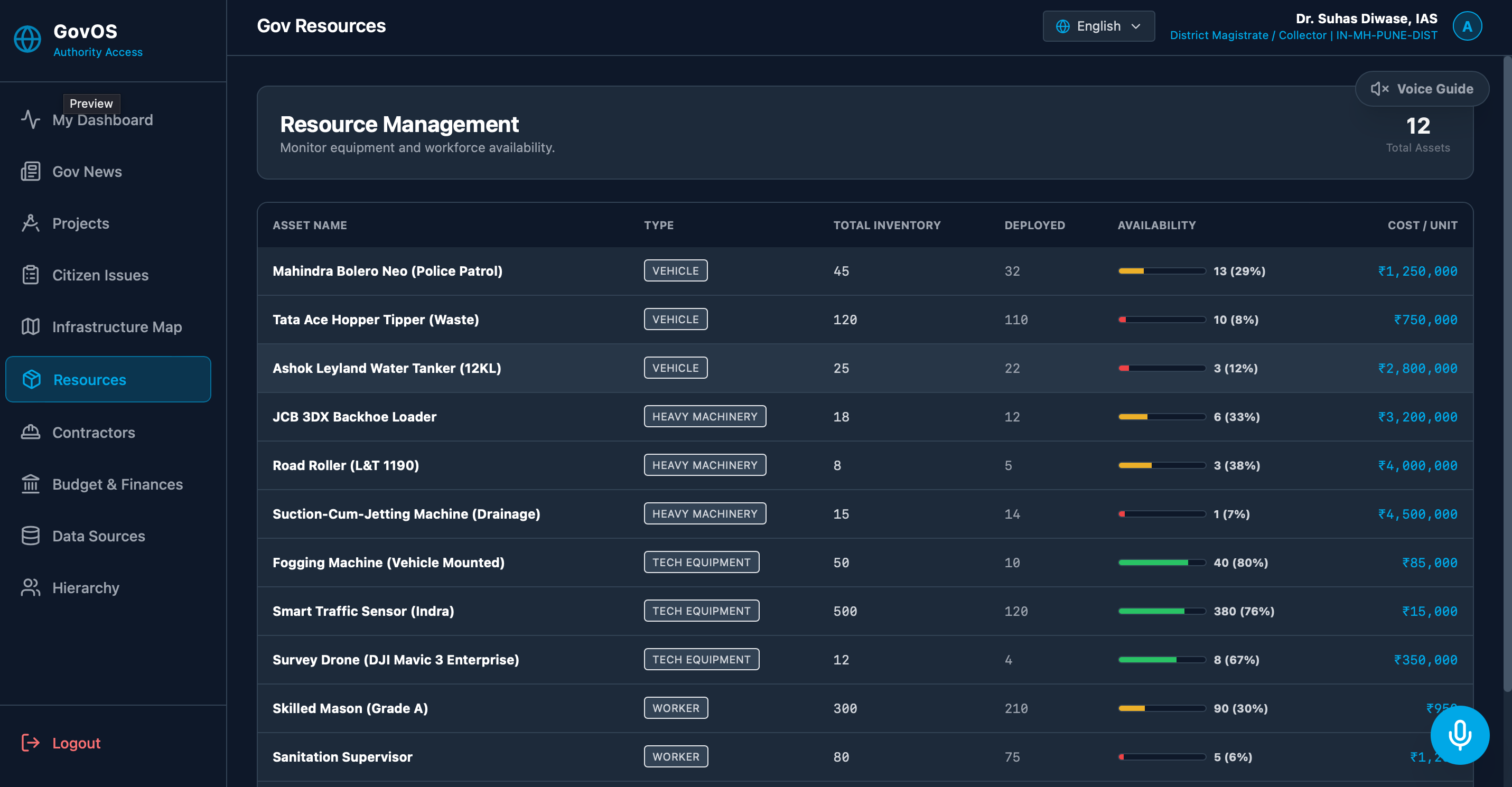
Resources tracking
-
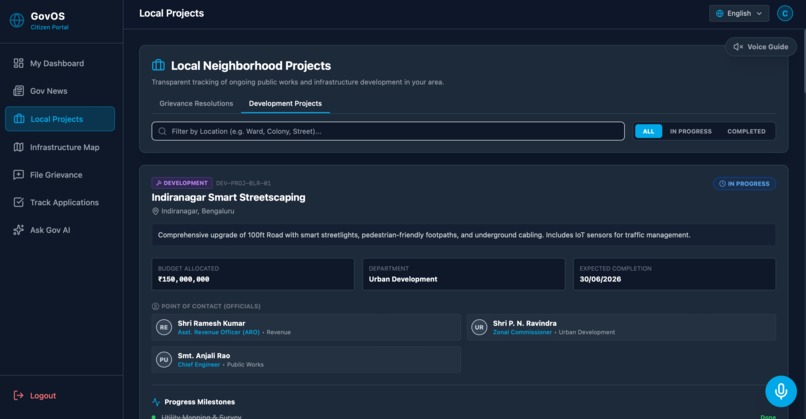
AI project plan generated
-
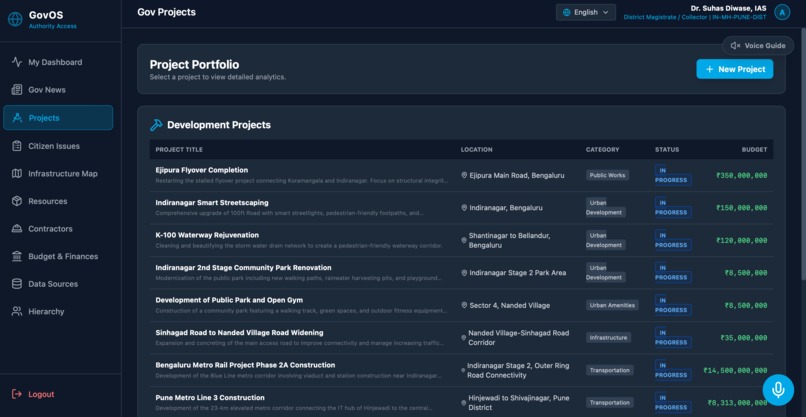
Complaints tracking
-
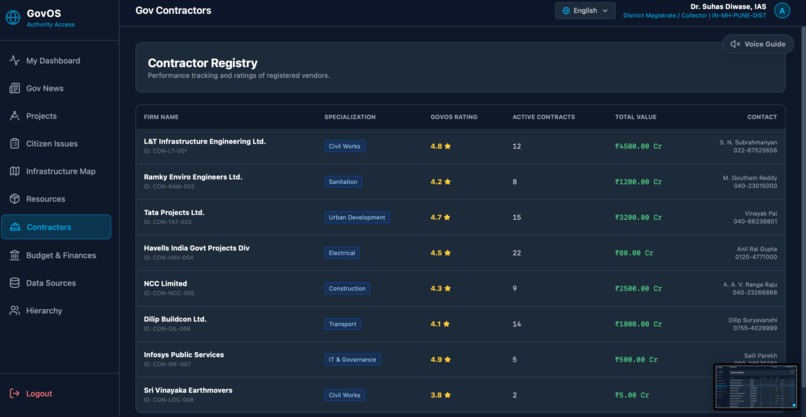
Contractors tracking
-
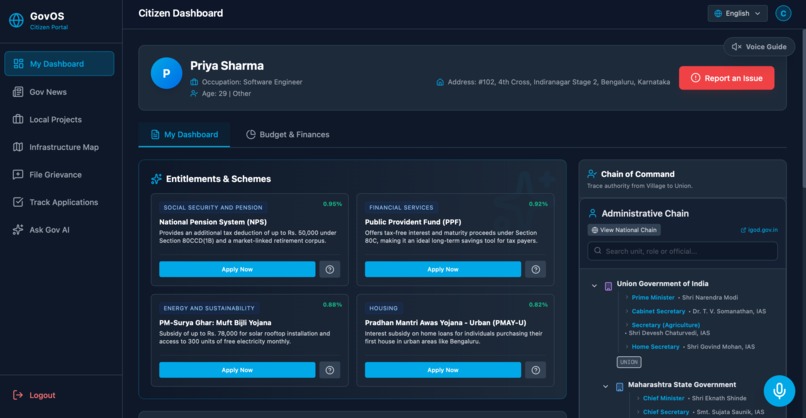
Citizen dashboard
-
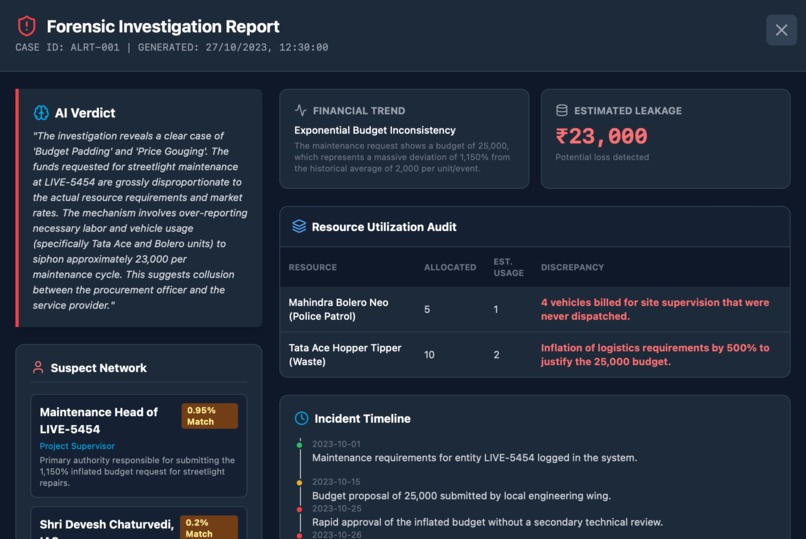
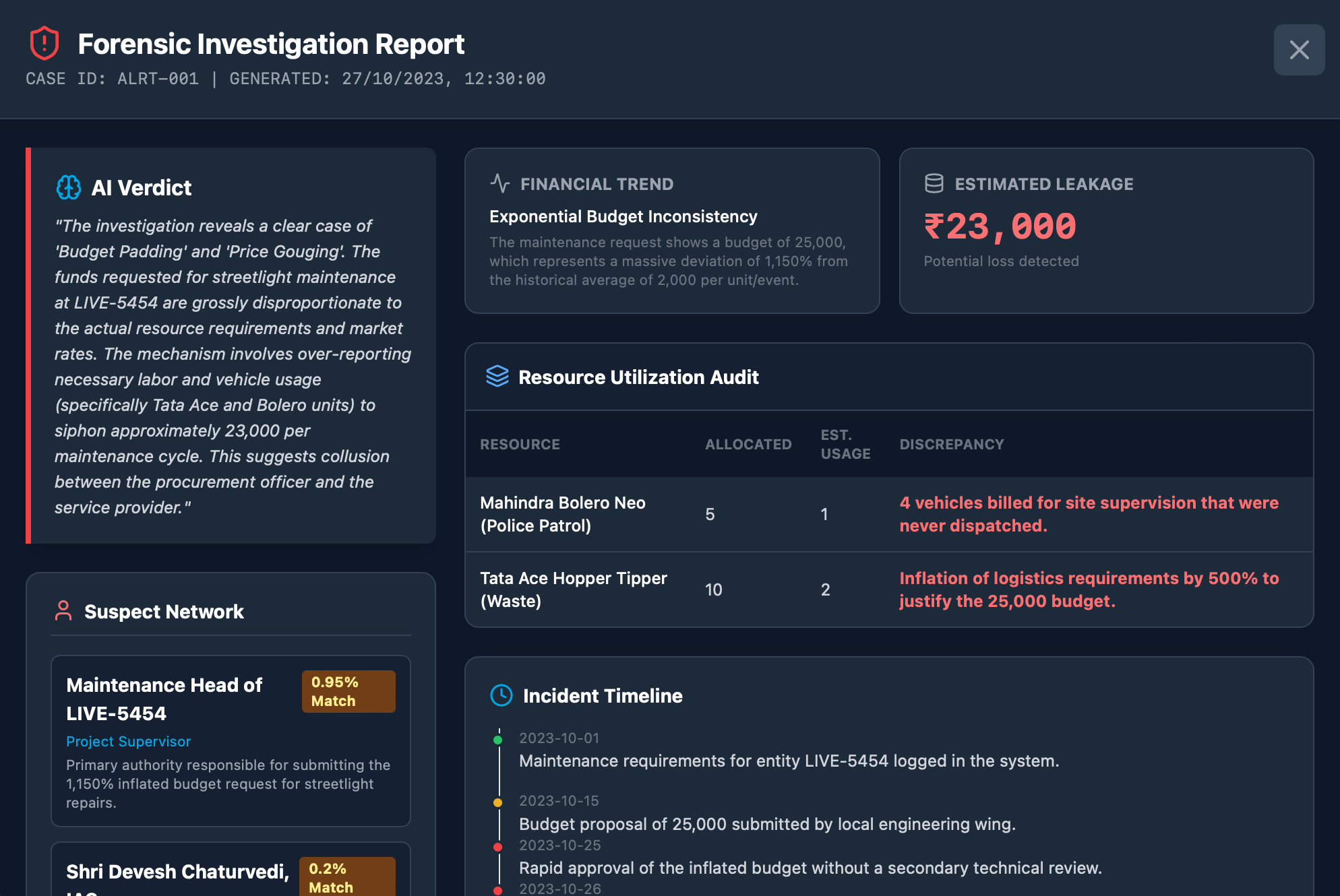
AI analysis of the project flagged
-
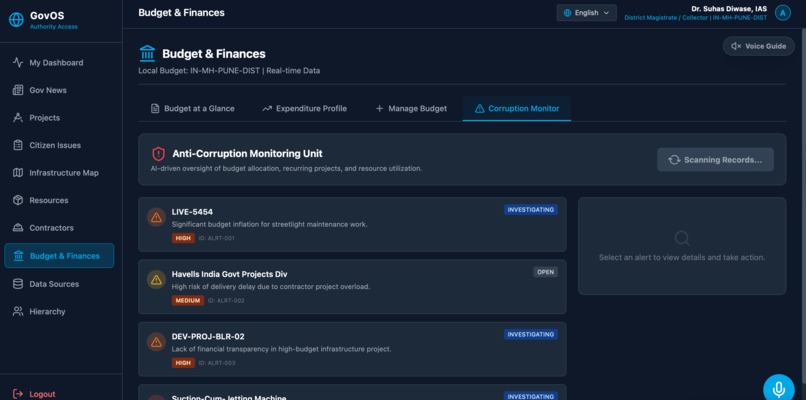
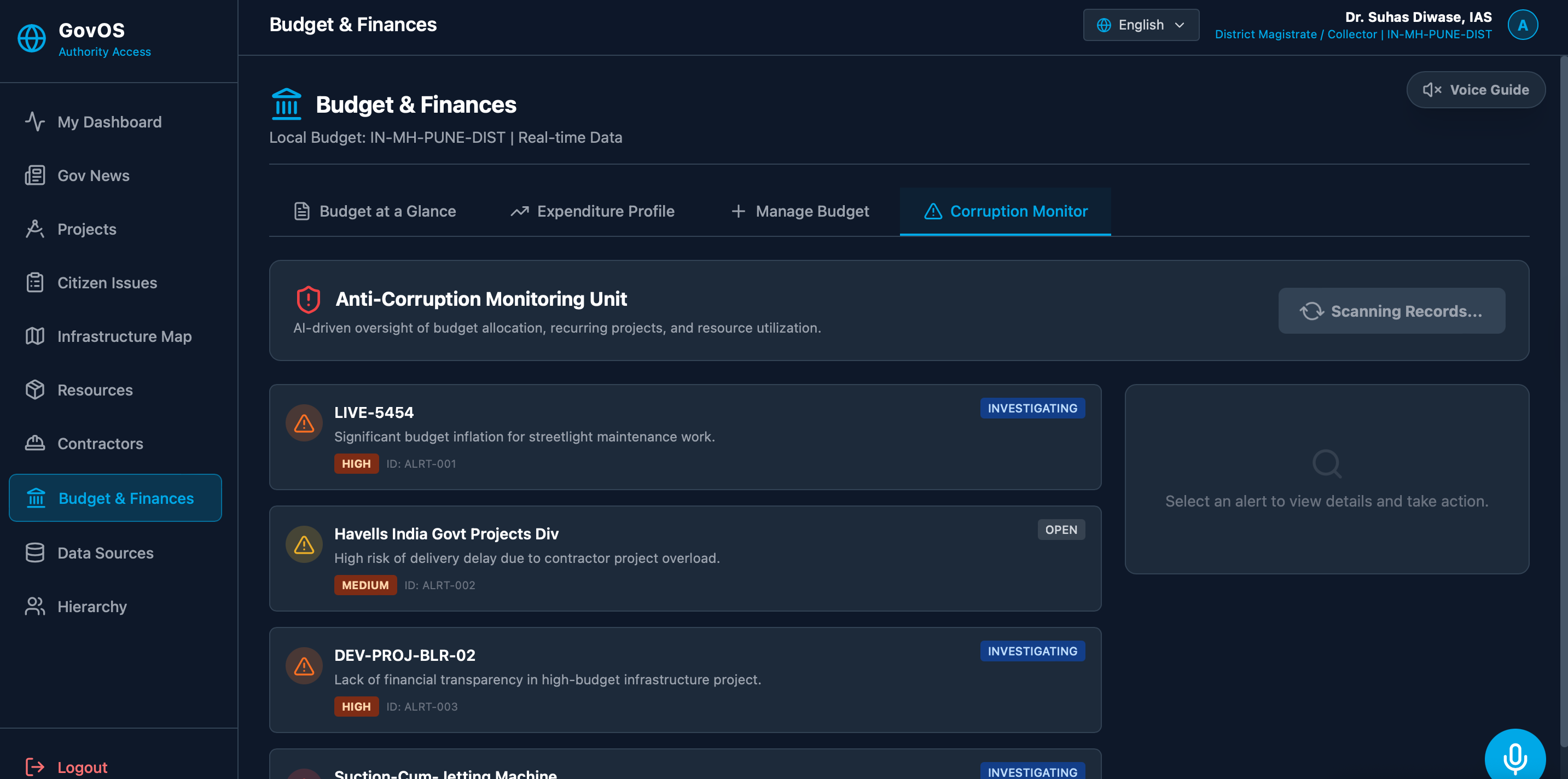
AI Corruption Monitor
Inspiration
Citizens face a problem with the government not being transparent or accountable. The major problems they face are:
- They do not know which officials are in charge of their neighbourhood and who their supervisors.
- The bureaucracy is complicated, and the processes are ambiguous. For example, if you want to apply for a passport, there are too many steps that are not clearly mentioned for citizens anywhere.
- Grievances are not addressed, and the citizens do not know who is responsible.
- There is no awareness of development projects that are being completed in their neighbourhood, nor is there an option to raise concerns about it.
- There is no proper information on the benefits, schemes, and other facilities the government has introduced for the citizens.
- Citizens who have not adopted technology or are not educated cannot use the government websites to access these schemes or obtain information.
- There is a lot of news and information that is not verified. Citizens cannot understand how a particular government decision is affecting them since news articles are focused on educated people.
- There is no explanation of the money being budgeted for a citizen's neighbourhood and how it is being spent.
- Citizens are aware of corruption by officials but cannot prove it since it requires a lot of research.
- There is no option to verify the information that citizens are exposed to through social media or politicians. Governments worldwide struggle with the "Last Mile Problem"—the disconnect between policy intent and actual implementation on the ground. Citizens often face opaque bureaucracies, confusing application processes, and a lack of visibility. Conversely, honest administrators struggle with data silos, resource leakage, and inefficiency.
What it does
GovOS is a dual-interface AI platform serving both Citizens and Government Authorities without having to add any information or configure any settings. It is made for citizens who are uneducated and struggle with their government. For Citizens:
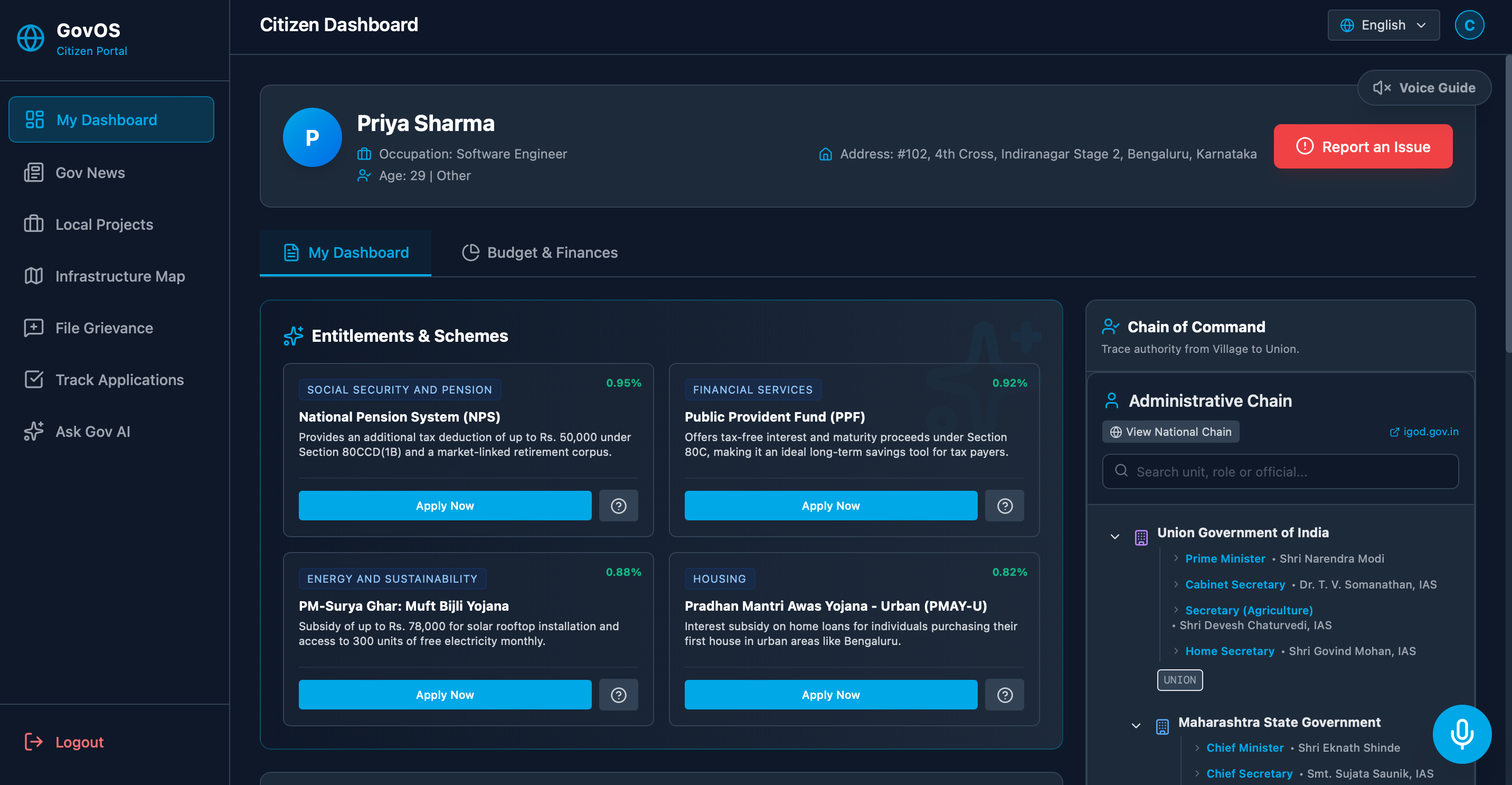
- Schemes and Benefits: AI automatically provides all the schemes and benefits applicable to this citizen, along with a description, option to chat to get more information, links, processes and more.
- Supervising Hierarchy: AI automatically obtains the official hierarchy who is in charge of the citizen's neighbourhood. It provides an option to verify their responsibilities and also to contact them.
- Grievance addressal: Citizens can file their complaints in simple words and add a location. AI will automatically generate the complete details, add tags, assign them to officials, and generate a plan of action.
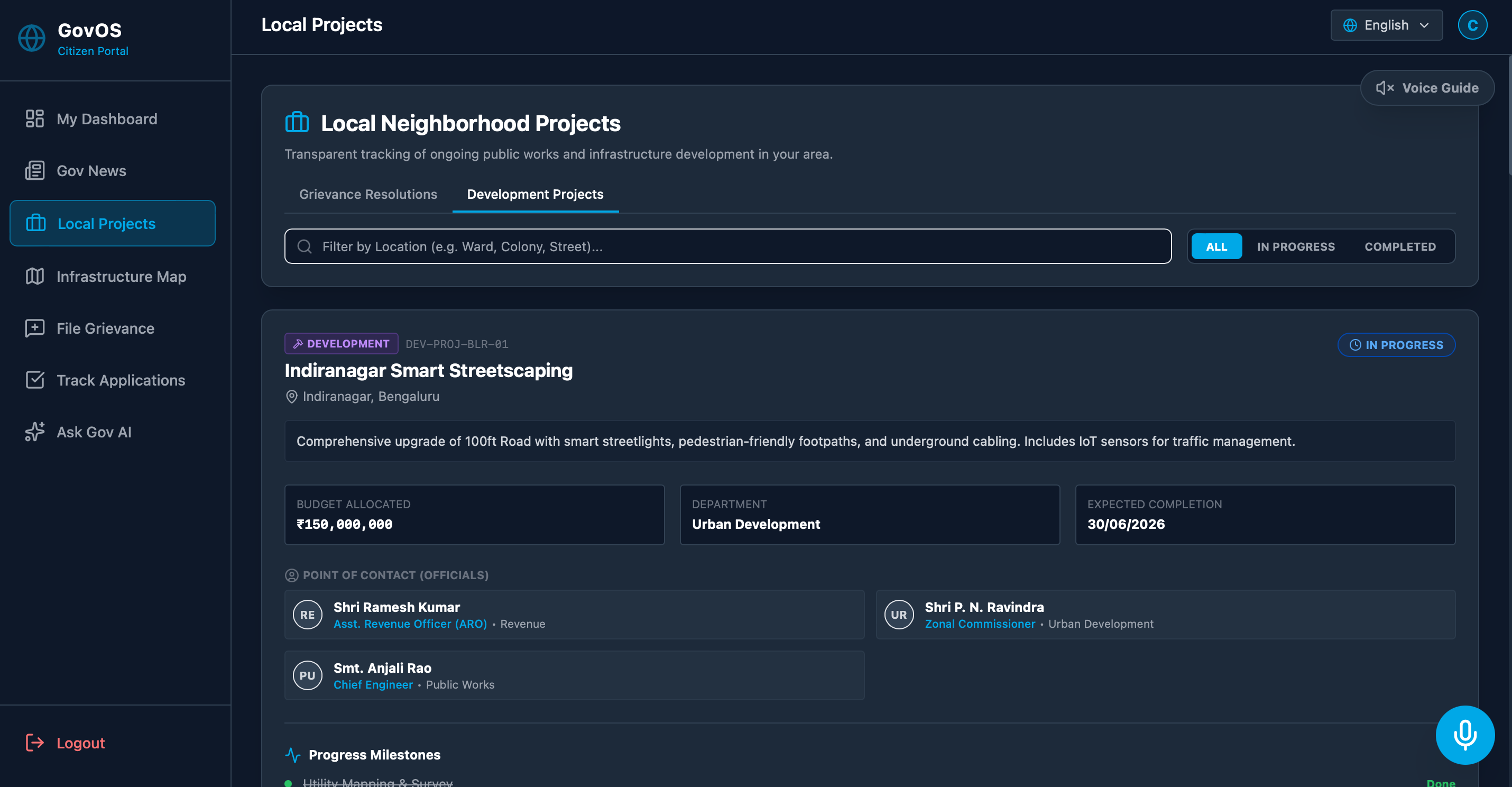
- Infrastructure Map: Provides a simple way to view all the development projects in the neighbourhood and also raise concerns or flag suspicious activities.
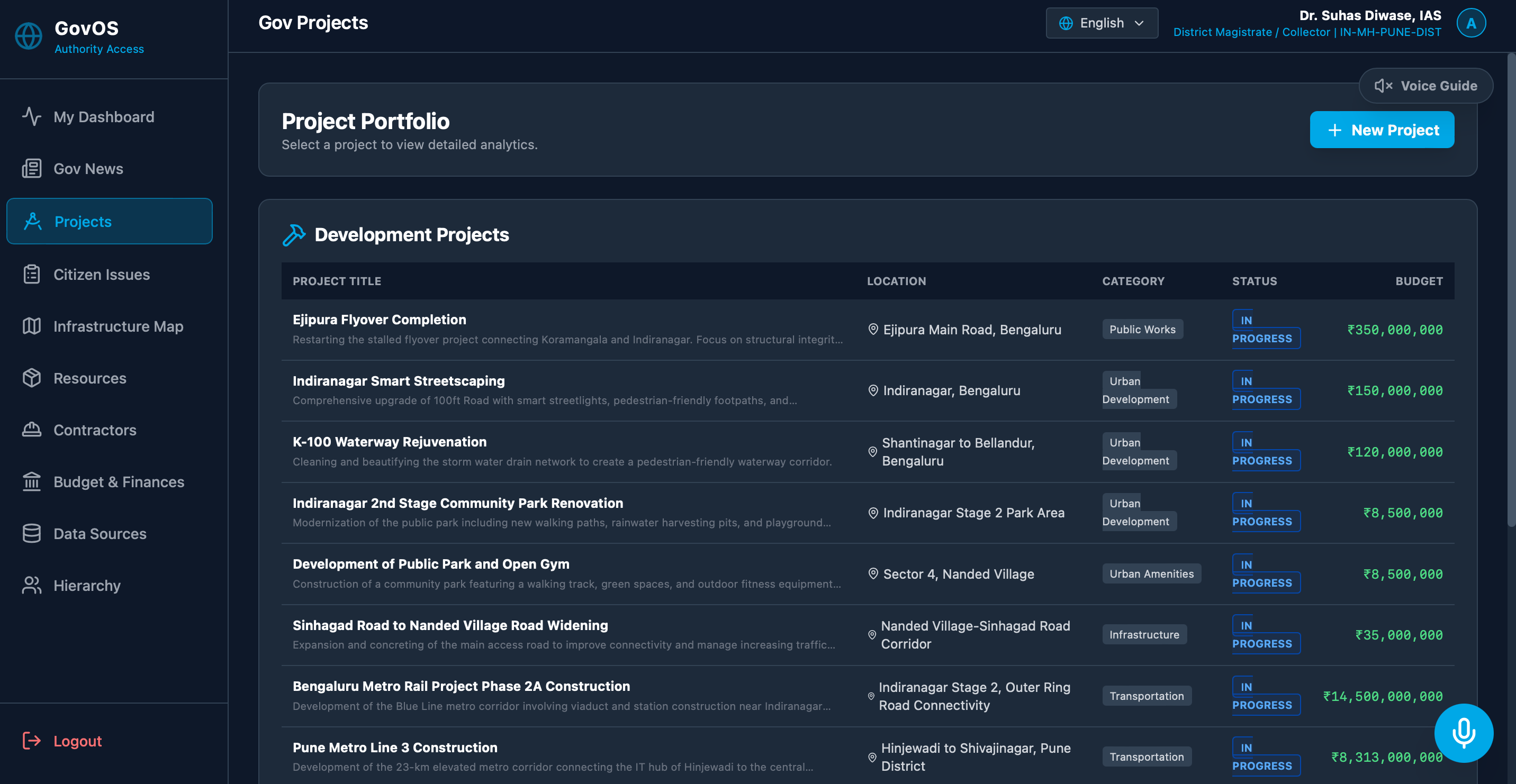
- Development Projects: Provides complete details of the ongoing projects, including the officials.
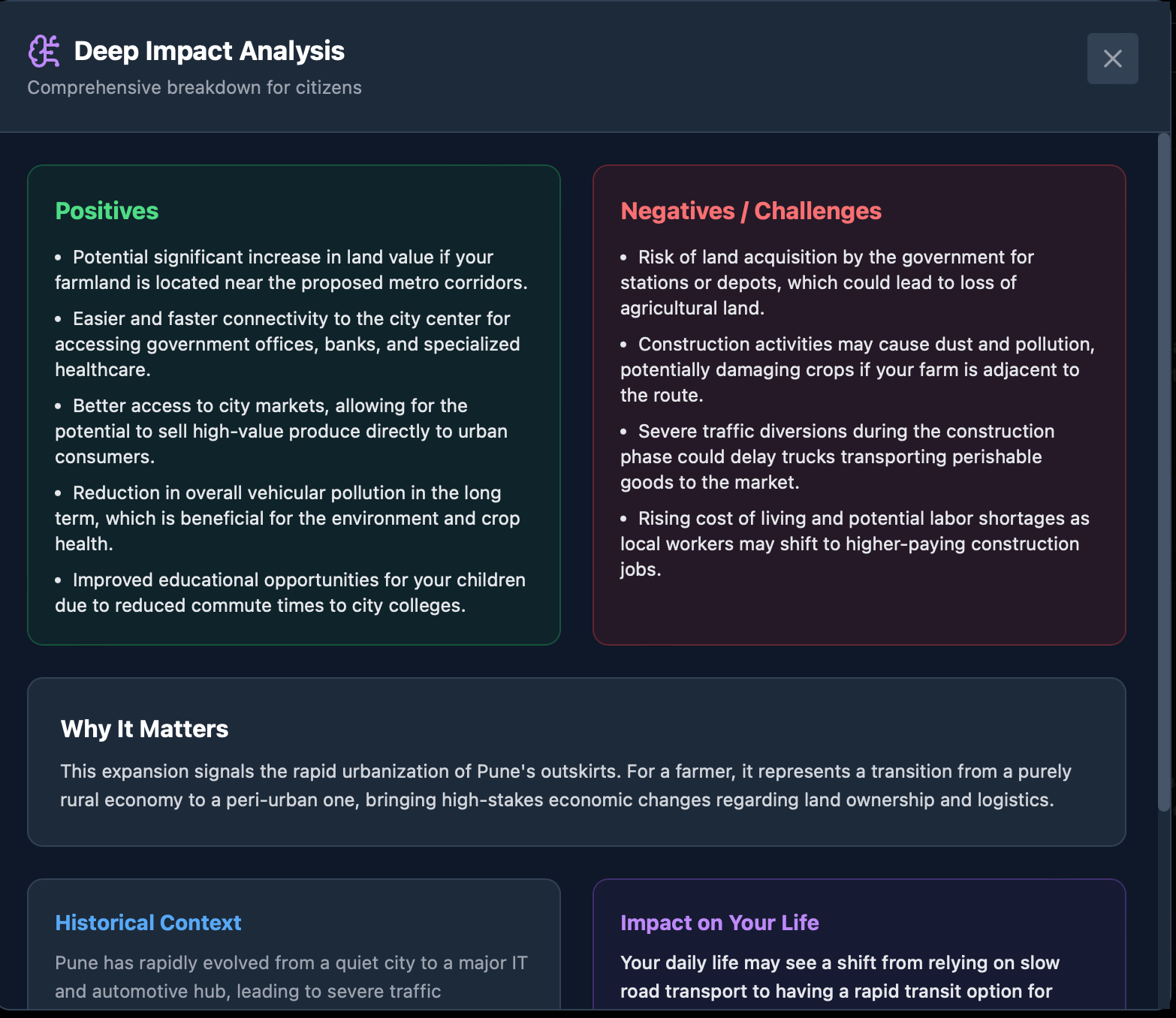
- Gov News: Provides all the latest news, fact-checked by AI, along with Positives, Negatives, Why it Matters, and How it affects the citizen through an in-depth AI analysis.
- News Verification: Provides an option to upload videos, audio, news, etc., to verify and obtain details.
- Chat with GovAI: Provides a personalised AI chatbot that gives any details regarding the government or its officials using online sources, and also helps to create a to-do list to track any applications or processes undertaken by the citizen.
- Budget and Finance: It shows the distribution of the budget for his neighbourhood.
For Authorities:
- Project Tracking and Planning: It provides Gantt charts, work lists, and task lists for all the development projects and departmental projects. Any new projects can be planned using the AI option.
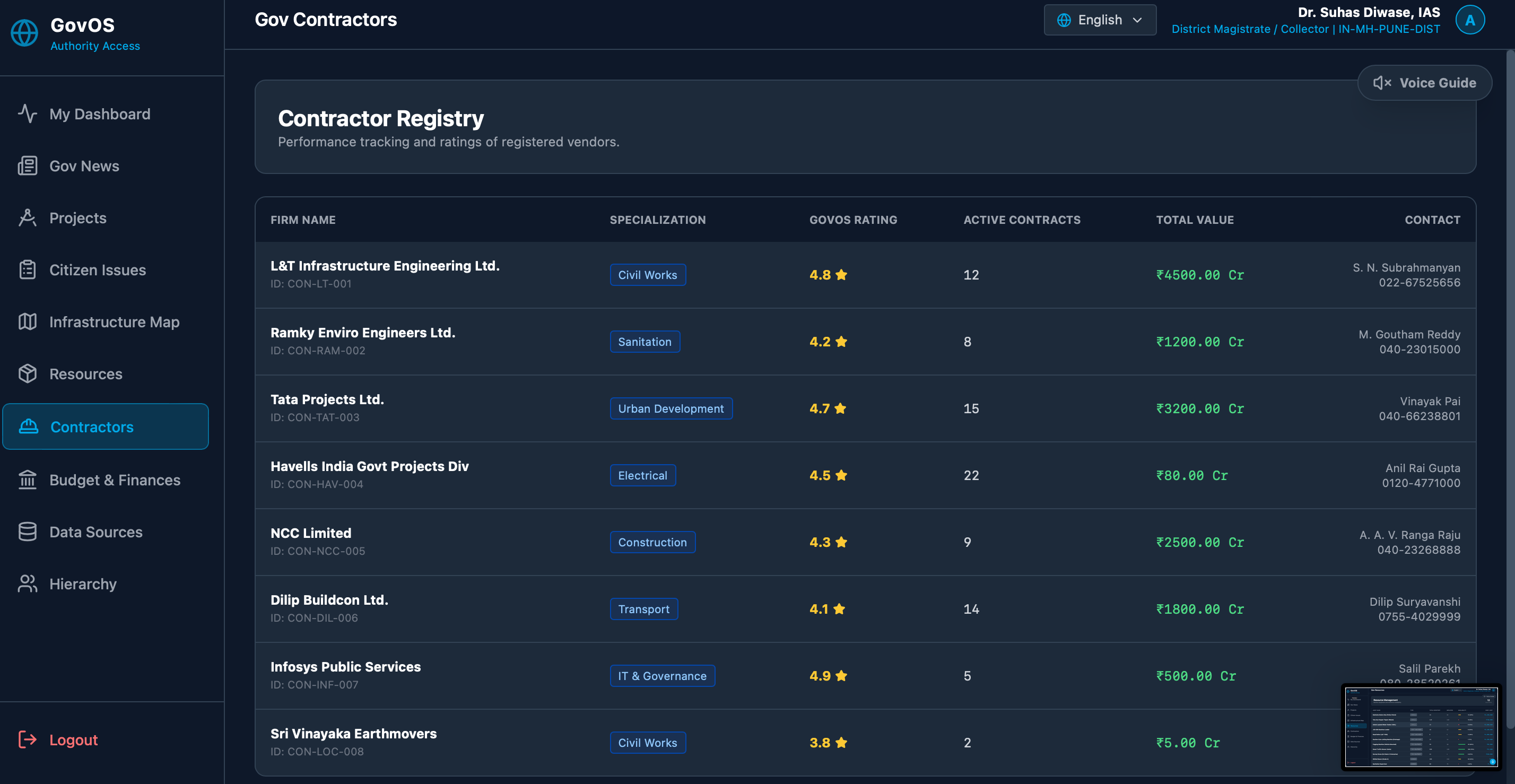
- Resources and Contractors: Provides AI ratings and complete management for resources and contractors.
- Citizen Issues: Provides tracking and management of complaints by citizens, including AI project planning.
- Budget Tracking: Provides a complete analysis of budget inflow, outflow, and the project details.
- Corruption Monitor: Scans all the projects, resources, contractors, and everything present to flag all the activities that seem suspicious or involve corruption. It provides an in-depth analysis including networks, history, extent, and levels of corruption.
The APP also has support for voice guidance and a live voice assistant for citizens. This allows even people who can't read or write to access and obtain information. It also has multi-language support.
How we built it
We built GovOS using a modern, scalable stack completely in AI Studio:
- Frontend: React (v19) with TypeScript for type safety and component modularity.
- Styling: Tailwind CSS for a responsive, government-dashboard aesthetic.
- AI Orchestration: We utilized the Google GenAI SDK (@google/genai) to manage a multi-model architecture.
- Data Visualization: Recharts for financial data and Leaflet (with OpenStreetMap) for geospatial infrastructure mapping.
- State Management: Complex React Context and Hooks to manage the hierarchical data of the Indian administrative structure (Union -> State -> District -> Village).
There is no manual input of data. The AI obtains all the data from official sources.
Challenges we ran into
- Data: Several sites and sources do not allow the public to access easily. Obtaining complete data is still a challenge.
- Hallucination in Governance: In a government app, accuracy is non-negotiable. Early models would invent schemes. We solved this by using Grounding with Google Search to fetch real-time policy data and strictly constraining the AI's context with a "Local Government Directory" seed data.
- Handling Quota and API limits: Heavy use of the Pro model for deep reasoning led to API limits. I had to test the app every day.
- Real-time Voice Latency: Integrating the Gemini Live API via WebSockets for low-latency voice interaction required careful management of AudioContext and buffering to prevent "choppy" speech.
- Maps: We had to use an open source map api instead of google maps due to quota limitations.
- Prompting: The AI studio required multiple in-depth prompts for every task. It often faced a loss of context and changed several sections of the app that were not related. Multiple code restorations and providing highly specific instructions with flags stating that no other parts need to be changed was mandatory to solve the hallucinations and loss of long context.
Accomplishments that we're proud of
- The Corruption Monitor: It genuinely feels like magic when the AI analyzes a JSON dataset of a road project and flags that "Cement usage is 20% higher than industry standard for this length." It was surprising to see the number of projects that were flagged. This is all real-time data.
- The Live Assistant: The AI voice can speak in any language that is selected. It files complaints, obtains schemes and provides all required information without the citizen having to navigate the app.
- Multimodal Interaction: Users can upload a photo of a broken street light, and the AI identifies the location, the responsible official, and drafts the complaint automatically.
- Sovereign Scale: We successfully modeled the hierarchical data structure of the Indian government, provided a map making it easier for citizens to navigate.
- Voice Guide and Multi-language Support
What we learned
- Thinking Models are Game Changers: Using gemini-3-pro's thinkingConfig drastically improved the quality of the "Deep Impact Analysis." The model actually "ponders" the socio-economic downstream effects before generating a summary.
- Audio is the new UI: For rural governance, text interfaces fail. The Live API demonstrated that voice is the most inclusive way to deliver digital services. We need to align our approaches for people who have not adopted technology. The generational gap in adoption is critical.
- Data: The information and sources are critical for Gemini to function efficiently.
- Hallucinations and Context: The AI faced hallucinations and loss of context throughout the development process. This is solved with very precise instructions, with task breakdown and multiple prompting for multiple tasks. Combining prompts to complete multiple tasks causes a breakdown.
What's next for GovOS: Sovereign AI Governance System
- Data: Propose this app to the government to obtain complete access to public databases for serving the citizens properly.
- Blockchain Ledger: Integration of a blockchain layer to make the "Corruption Monitor" logs immutable and publicly verifiable.
- IoT Integration: Connecting the "Infrastructure Map" to real-time IoT sensors (smart streetlights, water level monitors) for automated grievance filing.
- Vernacular Video Generation: Using Google Veo to automatically generate video summaries of government schemes for citizens who cannot read.
The app is an MVP prototype. Adding login options, citizen profiles, and refining the entire system would be important before we can release it to the public.
Gemini Integration
GovOS is built entirely around the Google Gemini 3 & 2.5 ecosystem, gemini-3-pro-preview with thinkingConfig, gemini-2.5-flash-native-audio-preview, gemini-3-pro-image-preview, googleSearch & googleMaps, gemini-2.5-flash-preview-tts, AI Studio.
Please note that the video is 6 minutes, but only the first 3 minutes can be viewed. The rest is provided if more information is required, since the app has 2 portals - one for citizens and one for authorities.
Built With
- css3
- eslint
- gemini
- google-gemini-api-(@google/genai-sdk)
- google-gemini-live-api-(websockets)
- google-search-grounding
- html5
- javascript
- leaflet-(maps)
- lucide-react-(icons)-tools:-vite
- maps
- nominatim
- openstreetmap
- react
- recharts-(data-viz)
- tailwind
- typescript

Log in or sign up for Devpost to join the conversation.