-
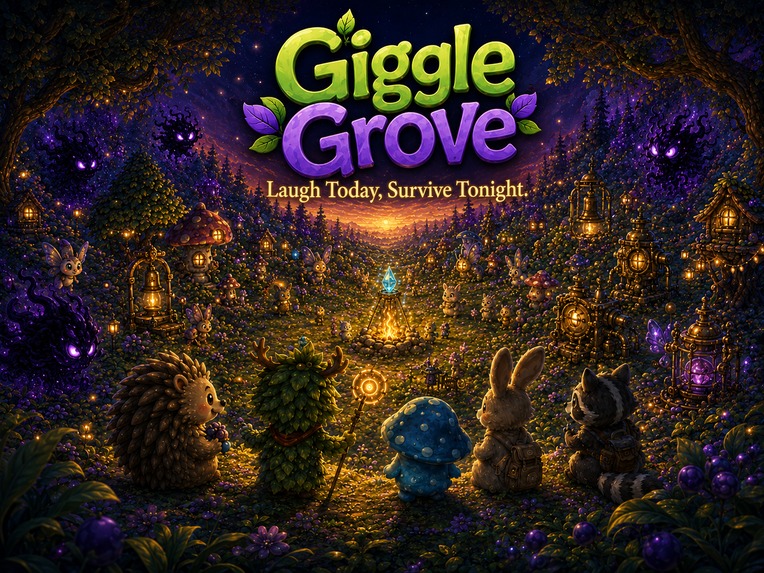
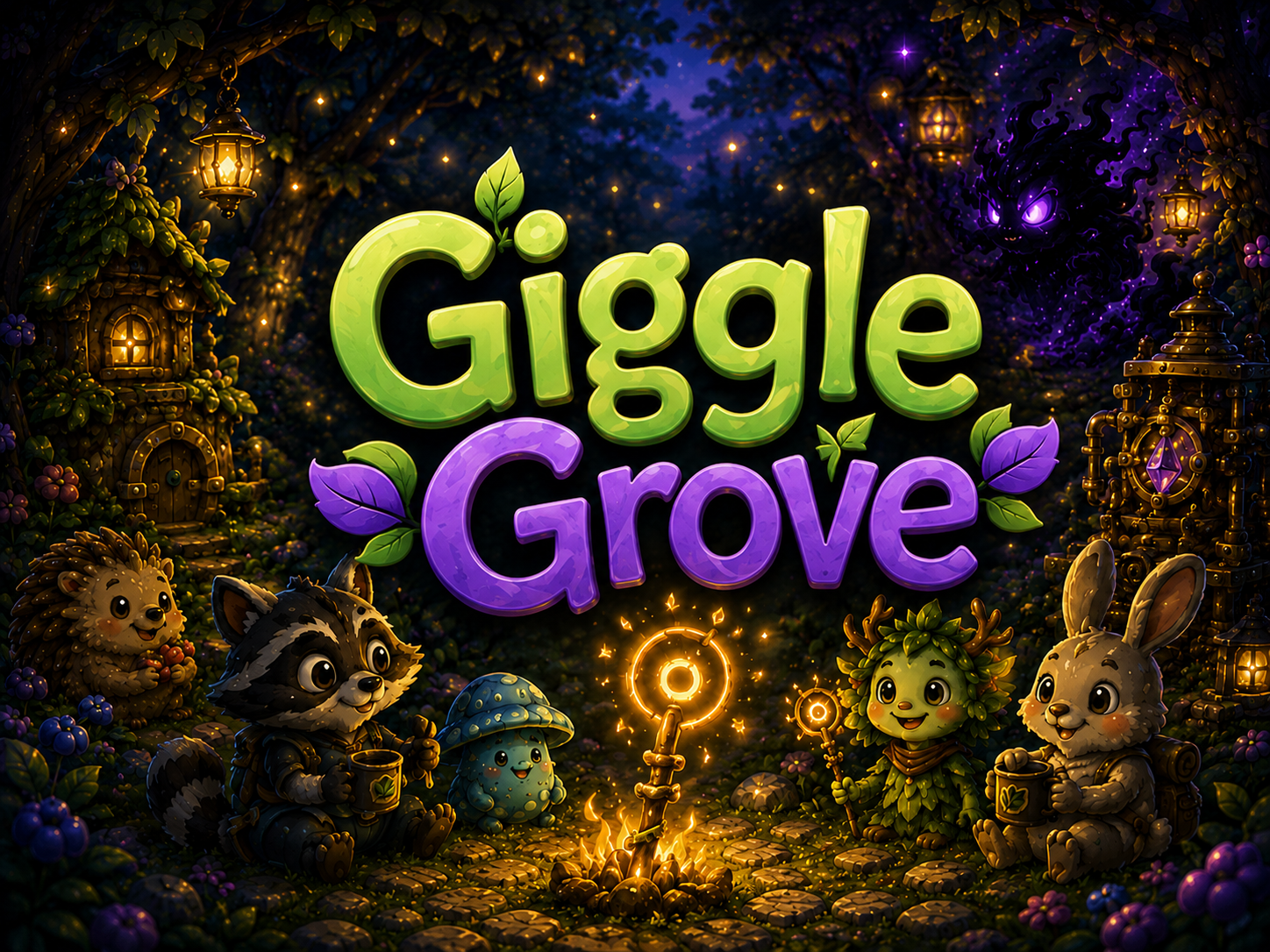
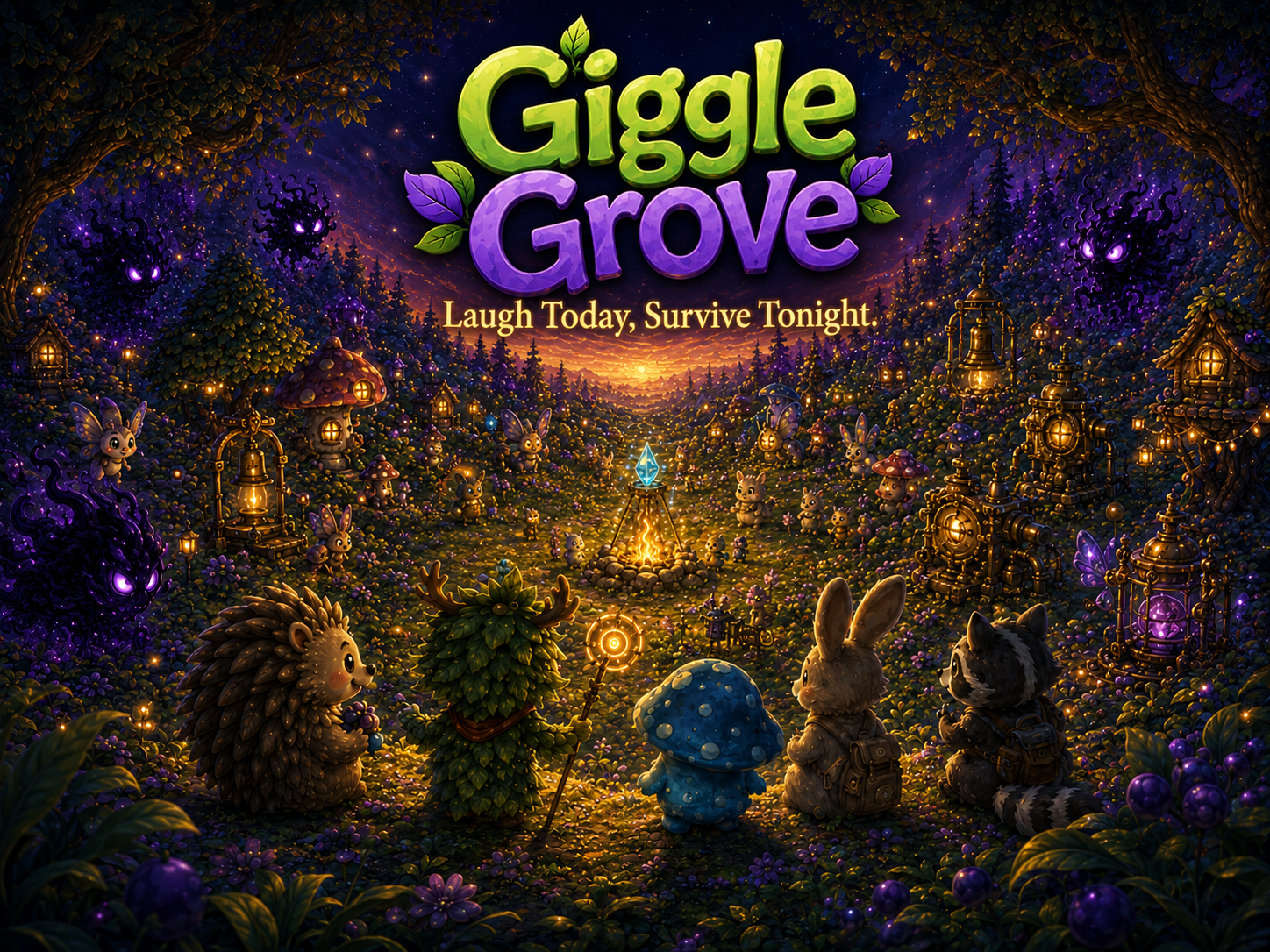
Giggle Grove Logo
-

Creatures
-

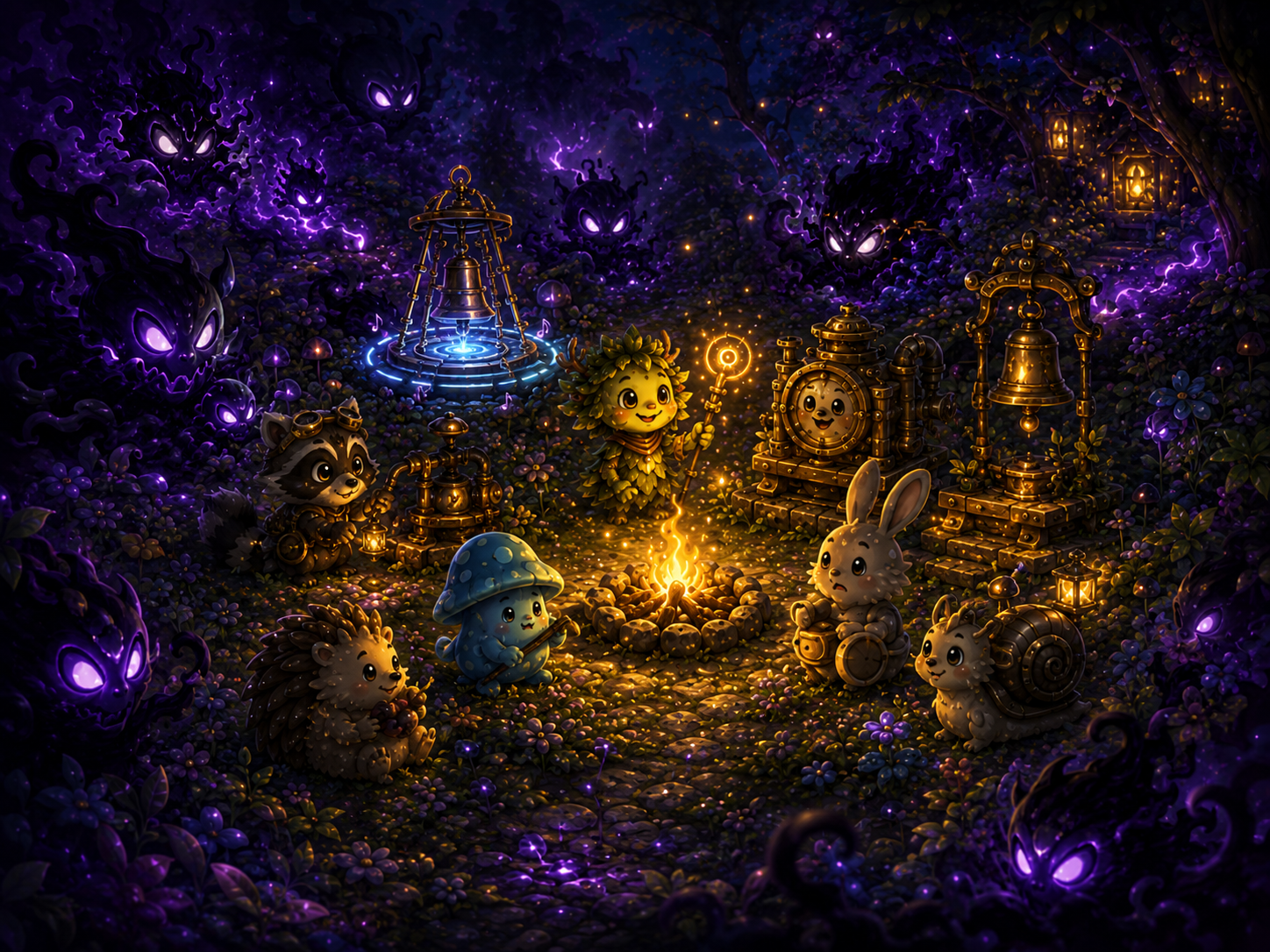
Gloom
-
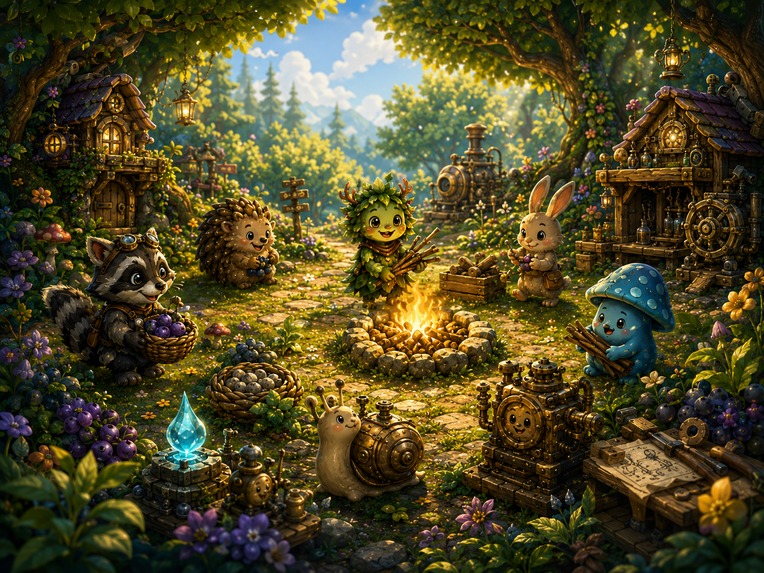
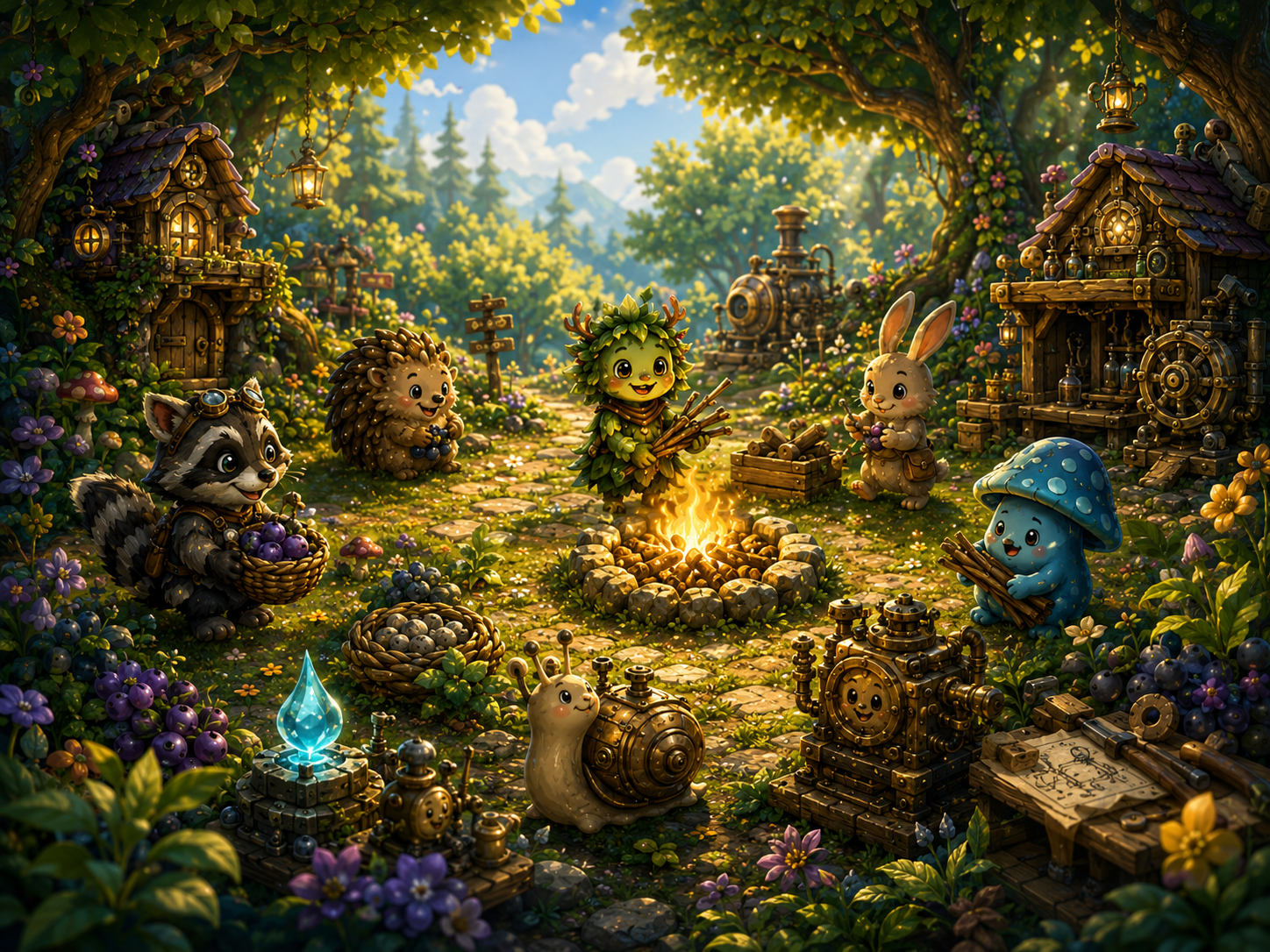
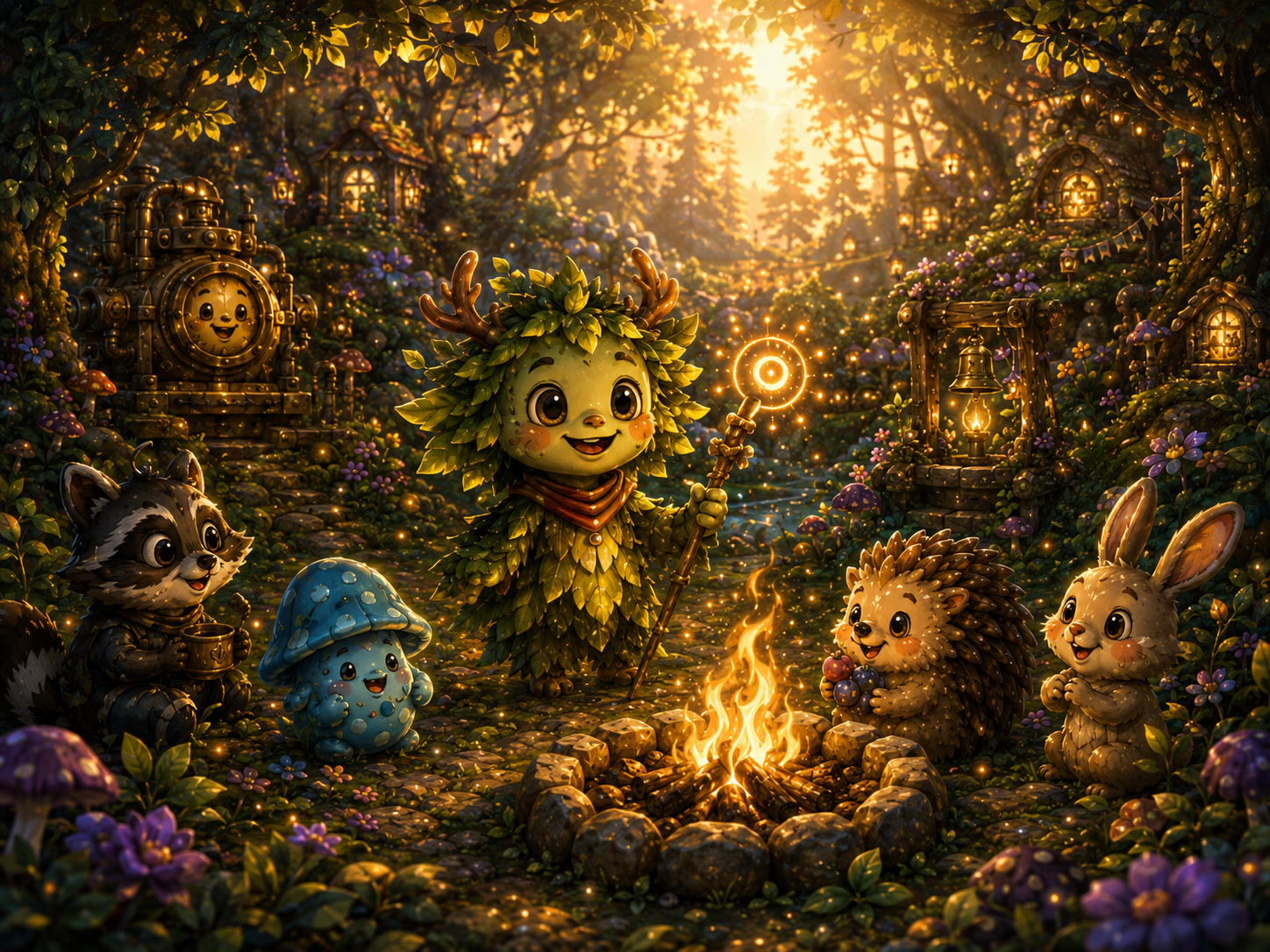
Morning
-
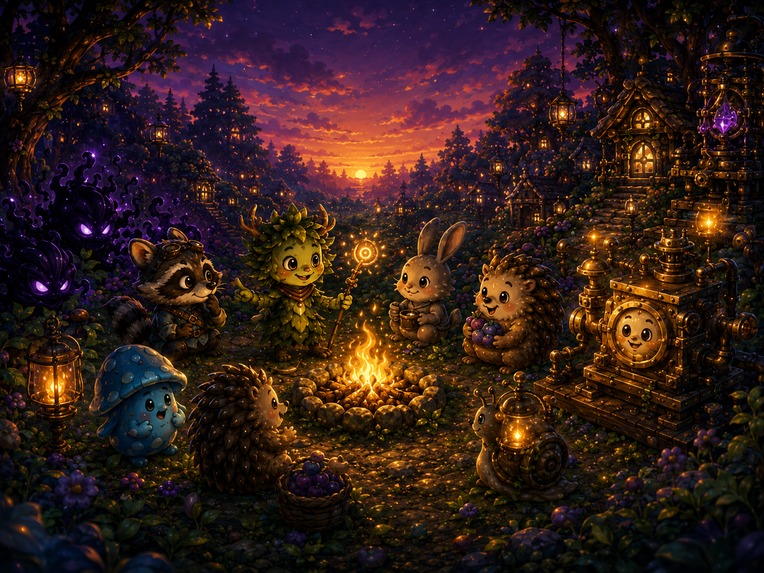
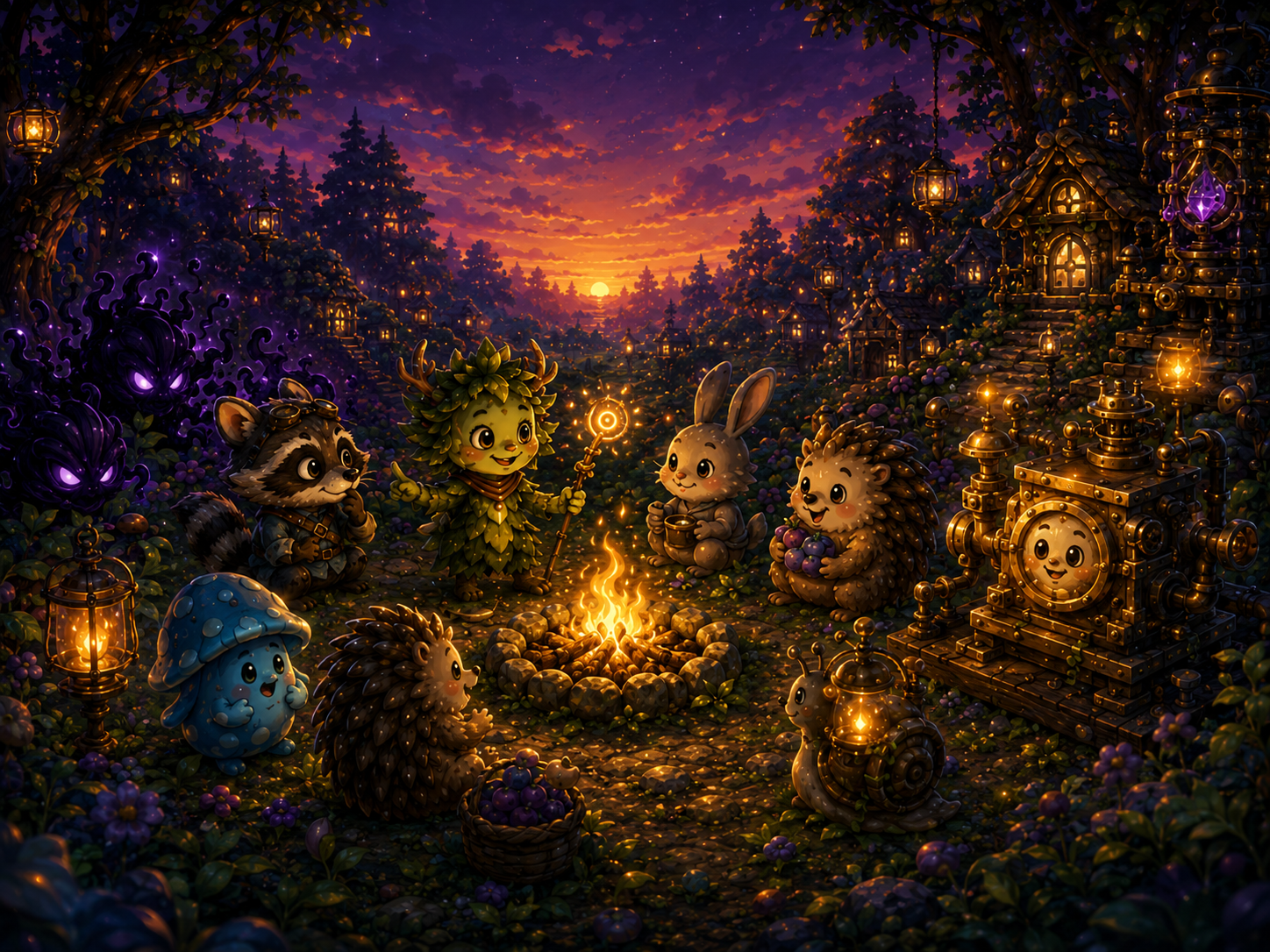
Dusk
-

Night
-
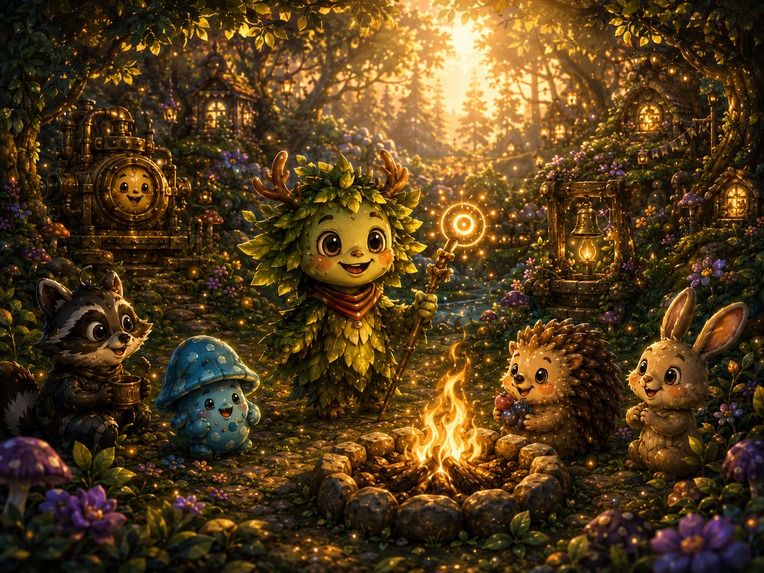
Dawn
-
Journey


Inspiration
Giggle Grove began with a simple design question:
What if laughter was not just the theme of a game, but the thing that kept the world alive?
Survival games are often built around hunger, danger, scarcity, and pressure. We wanted to keep the tension and decision-making of survival, but reframe the emotional experience through warmth, comedy, and restoration. Instead of asking players only to endure a hostile world, Giggle Grove asks them to protect a fragile, funny, living place from being swallowed by the Gloom. The fantasy is simple: laugh today, survive tonight.
What it does
In Giggle Grove, players care for a whimsical forest threatened by an encroaching force called the Gloom. At the center of the grove is the Joyfire, which acts as both a survival meter and the emotional heart of the game. During the day, players explore, gather resources, find frightened creatures, and build whimsical joy-machines. At night, the pressure increases. The Gloom closes in, resources become more important, and players must decide how to spend their limited time and materials.
The core loop is:
- Read the state of the grove.
- Gather useful resources.
- Craft or repair joy-machines.
- Rescue and calm anxious creatures.
- Feed the Joyfire.
- Survive the night and watch the grove recover.
At a systems level, the game is built around a simple emotional equation:
\[ Joy + Choice + Pressure = Survival \]
The goal is to make pressure visible, choices meaningful, and failure instructive rather than punishing.
How we built it
We built Giggle Grove as a production-ready game design package, focusing on the systems, player journey, visual direction, and production plan needed to turn the concept into a playable prototype.
The design is built around three pillars:
1. Laughter as a survival system
Comedy is not just decoration in Giggle Grove. Laughter, joy, and emotional recovery are expressed through mechanics. When the Joyfire is strong, the grove opens up, colors return, creatures become braver, and the player feels momentum. When the Joyfire weakens, the Gloom advances and the world visibly contracts.
2. Cozy pressure
We wanted the game to feel welcoming without becoming frictionless. Giggle Grove should be cute, readable, and family-friendly, but still have meaningful survival tension. Players are not simply collecting for the sake of collecting; they are making decisions under time pressure.
3. A readable first session
The first 15 minutes were designed to teach through play. The player sees a grey grove, a tiny flame, and an anxious creature in danger. By interacting with the Joyfire, the player immediately learns the central rule: the Joyfire equals survival. From there, the session moves from concern, to discovery, to pressure, to relief. The player should understand the goal quickly, make at least one meaningful strategic choice, and end the session feeling that their actions visibly changed the world.
Challenges we ran into
The main challenge was balancing two tones that usually pull in opposite directions: cozy comedy and survival pressure.
If the game is too soft, the survival loop loses urgency. If it is too punishing, the warmth and humor disappear. We had to design the Gloom as a source of pressure without making the experience feel bleak or stressful in the wrong way. Another challenge was making the comedy systemic. We did not want Giggle Grove to rely only on written jokes or random funny dialogue. The humor needed to come from the world, the creatures, the machines, the animations, and the player’s actions.
We also had to keep the scope realistic. Giggle Grove is designed to begin as one strong survival grove rather than an oversized world. The priority is to prove the core fantasy first: read the emotional state of the world, respond under pressure, and watch the grove bloom because of your choices.
Accomplishments that we're proud of
We are proud of creating a survival concept that feels emotionally distinct. Giggle Grove uses the familiar structure of survival games, but replaces the usual bleakness with warmth, humor, and restoration. We are especially proud of the Joyfire and Gloom system. It gives the player a clear goal, creates visible pressure, and ties the entire experience together emotionally and mechanically. We are also proud of the first-session design. The game is built so that players can quickly understand what is at stake, what they can do about it, and how their choices affect the world around them.
Most of all, we are proud that Giggle Grove has a clear identity:
A cozy survival game where laughter is not a bonus, but the resource that keeps the world alive.
What we learned
The biggest lesson was that cozy design still needs sharp systems. A warm art direction and charming premise are not enough on their own. The survival loop has to be legible. The player needs to understand what is at risk, what tools they have, and why each decision matters. We also learned that emotional transformation can be treated like a game mechanic. In Giggle Grove, the grove’s mood is not just aesthetic. It is feedback. The world becomes darker, tighter, and more anxious when the player is losing ground, then brighter and more open when the player makes smart choices.
That emotional readability became one of the most important parts of the design.
What's next for Giggle Grove - Laugh Today, Survive Tonight
The next step is to prototype the core loop in a focused vertical slice.
The MVP would include:
- One playable grove
- One complete day-night cycle
- A small set of resources
- A few joy-machines
- Several rescueable creatures
- A clear Gloom pressure system
The goal is for a new player to understand the objective quickly and complete one satisfying survival loop in a short session. From there, Giggle Grove can expand through new creatures, machines, grove biomes, night events, cooperative features, and deeper progression systems. At its heart, Giggle Grove is about turning anxiety into action and pressure into play. It is a survival game where the reward is not just staying alive, but helping a strange little world feel joyful again.
Built With
- adobe-illustrator
- canva
- claude
- cozy-survival-design
- game-design
- gpt
- level-design
- llama
- mobile-first-ux
- photoshop
- player-journey-mapping
- production-planning
- resource-economy-design
- strategy-game-design
- systems-design
- tower-defense-design
- ui-wireframing
- visual-concept-development
- wave-design


Log in or sign up for Devpost to join the conversation.