
Explain how you used MeDo and highlight the best part it generated.
I used MeDo as a system design and implementation partner to break down our idea into structured and feature components, including Auth, Bounties, AI Signals, bounty management, AI signal detection, geospatial search, payments, and real-time updates. It helped us translate high-level ideas into concrete architecture, database models, and backend logic across multiple iterations. Each session with MeDo helped us break complex systems into implementable steps (e.g., “signal detection pipeline” → keyword extraction → LLM scoring → confidence threshold logic).
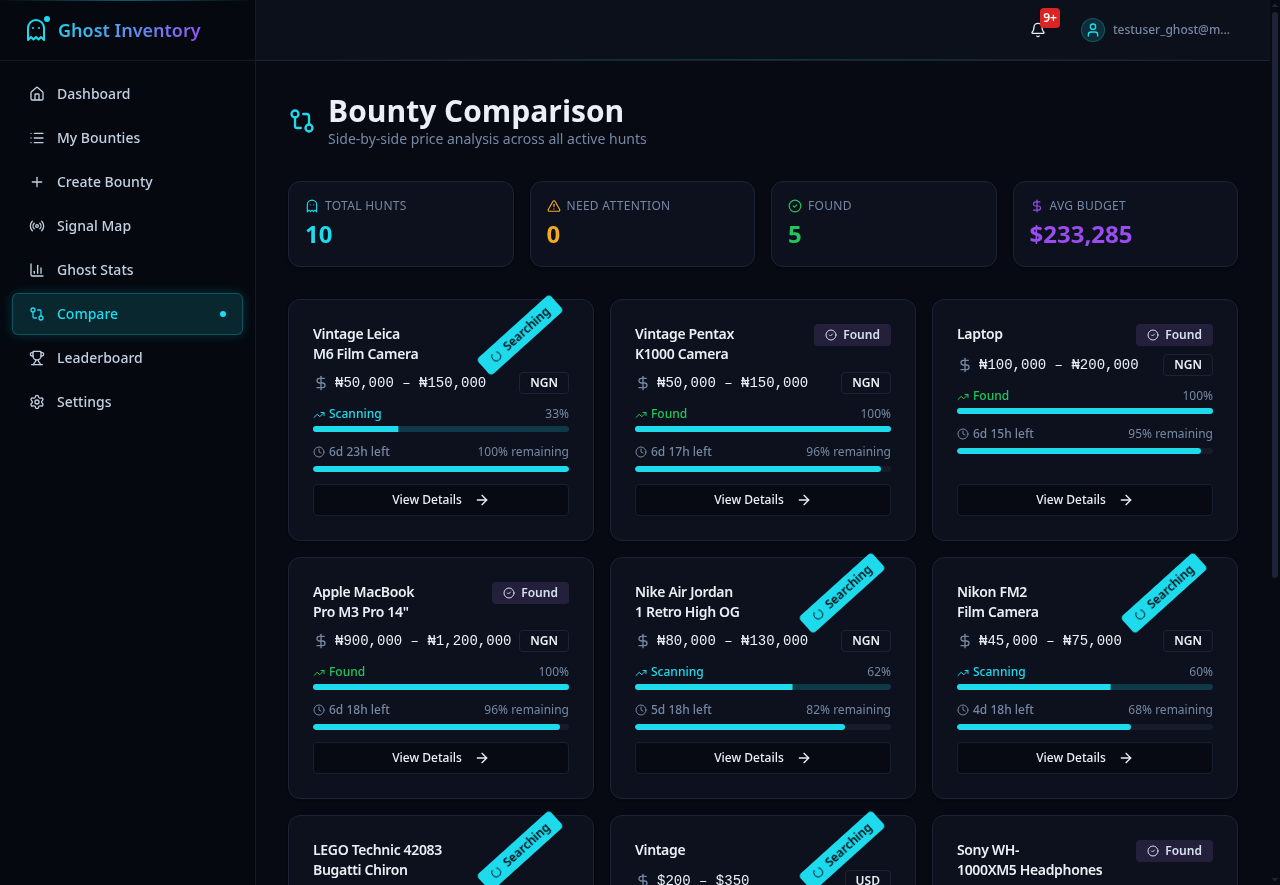
Examples include: • Designing the full bounty lifecycle state machine (Searching → Signal Detected → Verifying → Found) • Structuring the AI signal detection pipeline with confidence scoring, price analysis, and thresholds • Planning the PostGIS geospatial system for “Near Me” radius-based search • Defining Supabase Realtime architecture for live updates across the platform • Breaking down Edge Functions for automation (signal listener, verification bridge, and price analyzer).
The best part MeDo generated was the AI Signal Detection + Flash Verification system, where it helped design how unstructured community data is processed into confidence-scored matches, automatically verified, and transitioned into real-world confirmations. This became the core intelligence layer of Ghost Inventory Finder.
What problem your app solves and why you built it
In many African and global markets, products frequently go out of stock or are only available through fragmented offline channels (WhatsApp groups, local vendors, and informal marketplaces). Users often waste time repeatedly checking stores or relying on word of mouth. Finding rare physical products is still surprisingly difficult despite modern e-commerce systems. Many local shops: • Do not publish inventory online. • Have outdated marketplace listings • Operate outside searchable platforms • Contain hidden inventory unknown to buyers Collectors, hobbyists, enthusiasts, and local shoppers often spend hours manually searching for products that may already exist nearby. As a result, users waste time manually searching for items that may already exist nearby but are invisible digitally. Traditional e-commerce systems only search visible online inventory. • Detect hidden local inventory • Aggregate fragmented marketplace signals • Analyze real-time product availability • Help users negotiate near-budget items • Visualize where inventory is most likely to appear
Ghost Inventory Finder was created to answer one question: “What if autonomous AI agents could hunt down hidden inventory in the real world?”
What it does
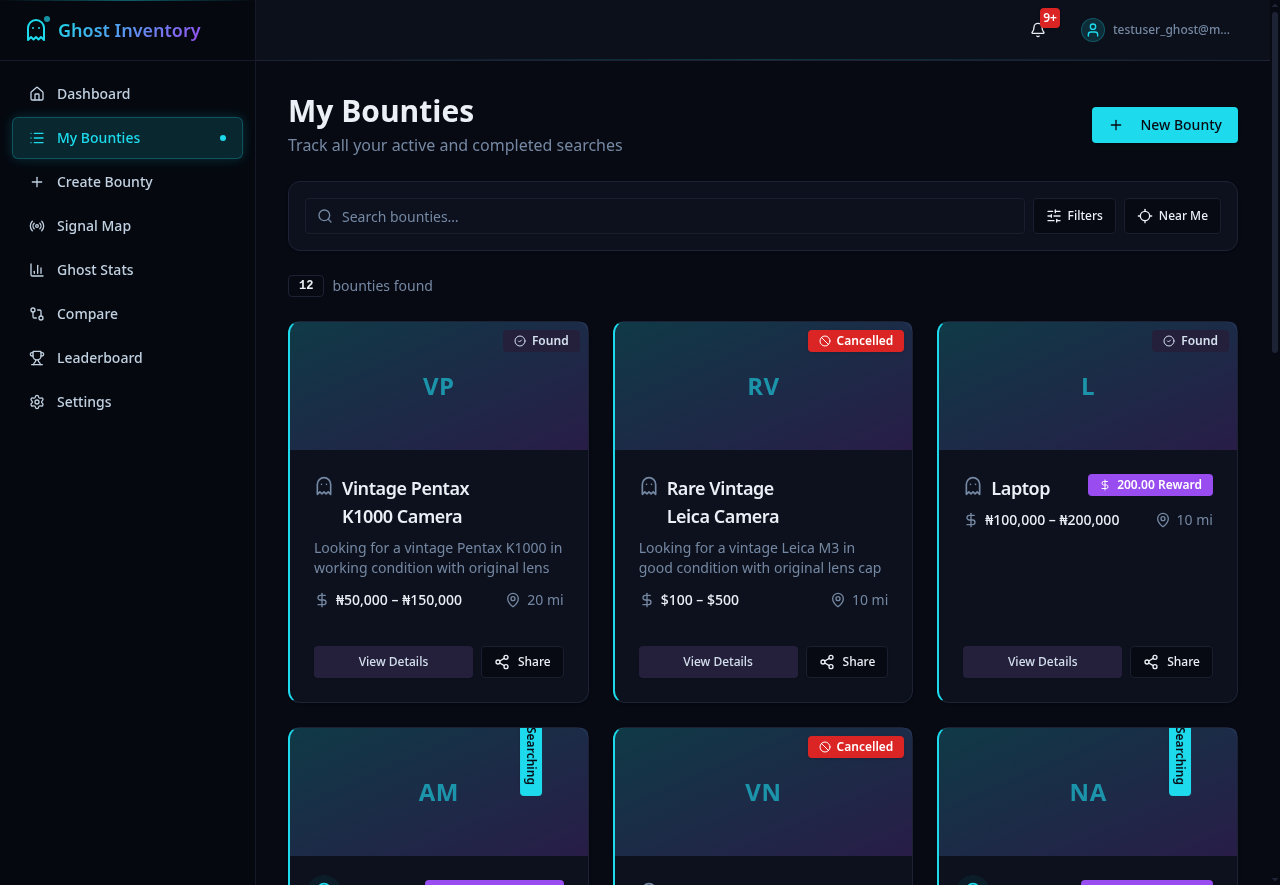
Ghost Inventory Finder is an AI-powered “ghost hunter” for hard-to-find products. It helps users discover items that are out of stock or difficult to source locally by continuously scanning community signals, marketplaces, and social channels, then matching them with user-created “bounties” using AI and geospatial intelligence. We built Ghost Inventory Finder to solve this “invisible inventory problem," turning scattered, unstructured community information into actionable, real-time product discovery. Instead of manually searching, users simply post a bounty and let the system hunt for them. Ghost Inventory Finder acts as an autonomous inventory-hunting system. Users create “bounties” for products they want to find. Once submitted, the platform deploys multiple AI-powered workflows that: • Scan marketplace and community signals • Detect possible inventory matches • Calculate confidence scores using AI. • Analyze detected pricing against user budgets. • Generate negotiation assistance • Verify likely inventory • Visualize inventory density through real-time geospatial heatmaps. • Stream hunt progression live through interactive timelines The result is an immersive inventory intelligence platform that bridges digital AI systems with offline commerce discovery.
How you structured conversations with MeDo to build your project
I structured our conversations with MeDo in a modular, system-design-first way, breaking the project into core components like authentication, bounty management, AI signal detection, payment, and geospatial search. Each MeDo session focused on one subsystem at a time, where we defined data models, API logic, state machines, and edge cases before implementation. We used it heavily to design complex flows such as the AI signal detection pipeline and the bounty lifecycle state transitions. This iterative approach helped us refine the architecture and evolve Ghost Inventory Finder from concept into a fully structured production system. Finally, we iterated continuously with MeDo, treating each response as a design review + implementation guide, which helped us evolve the project from concept into a production-ready system.
The most impressive feature MeDo helped you create
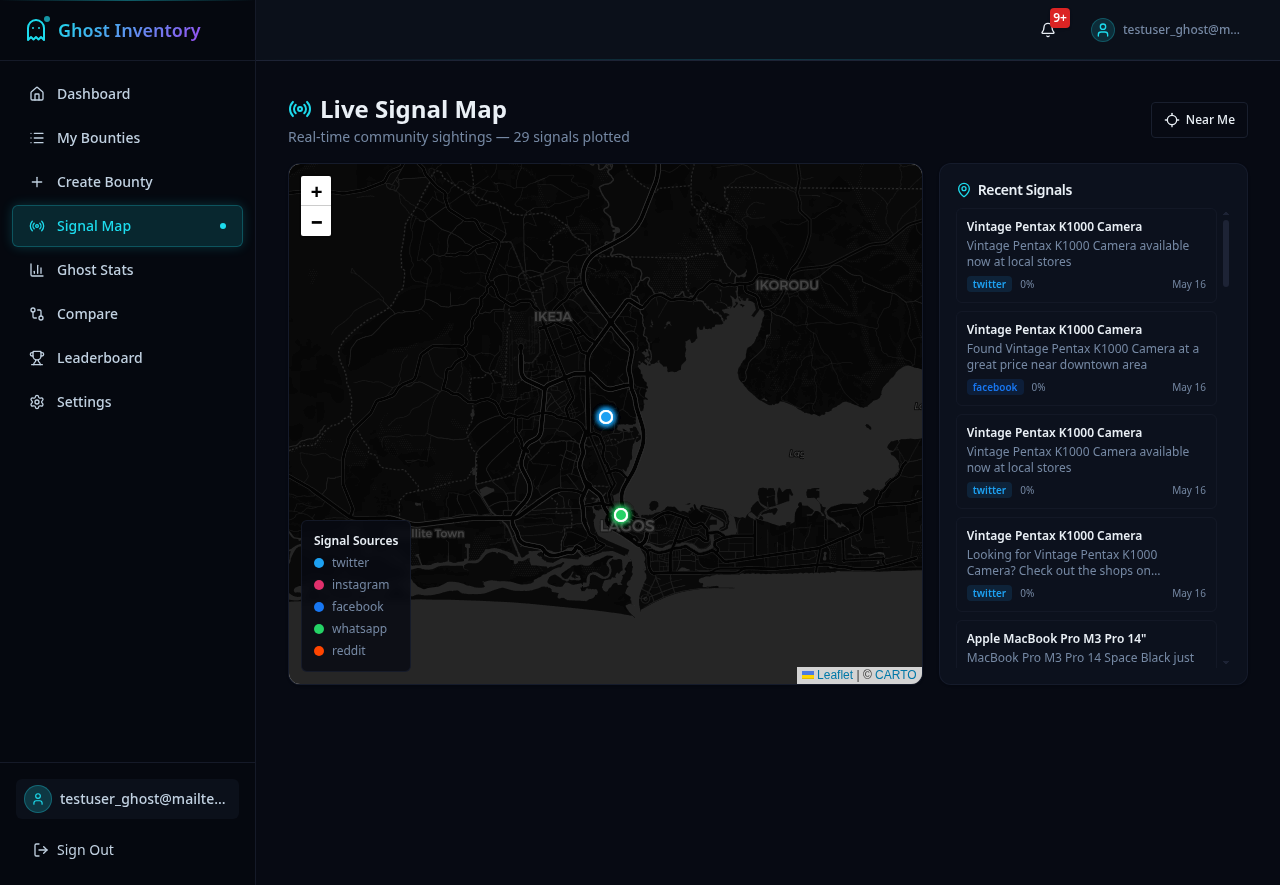
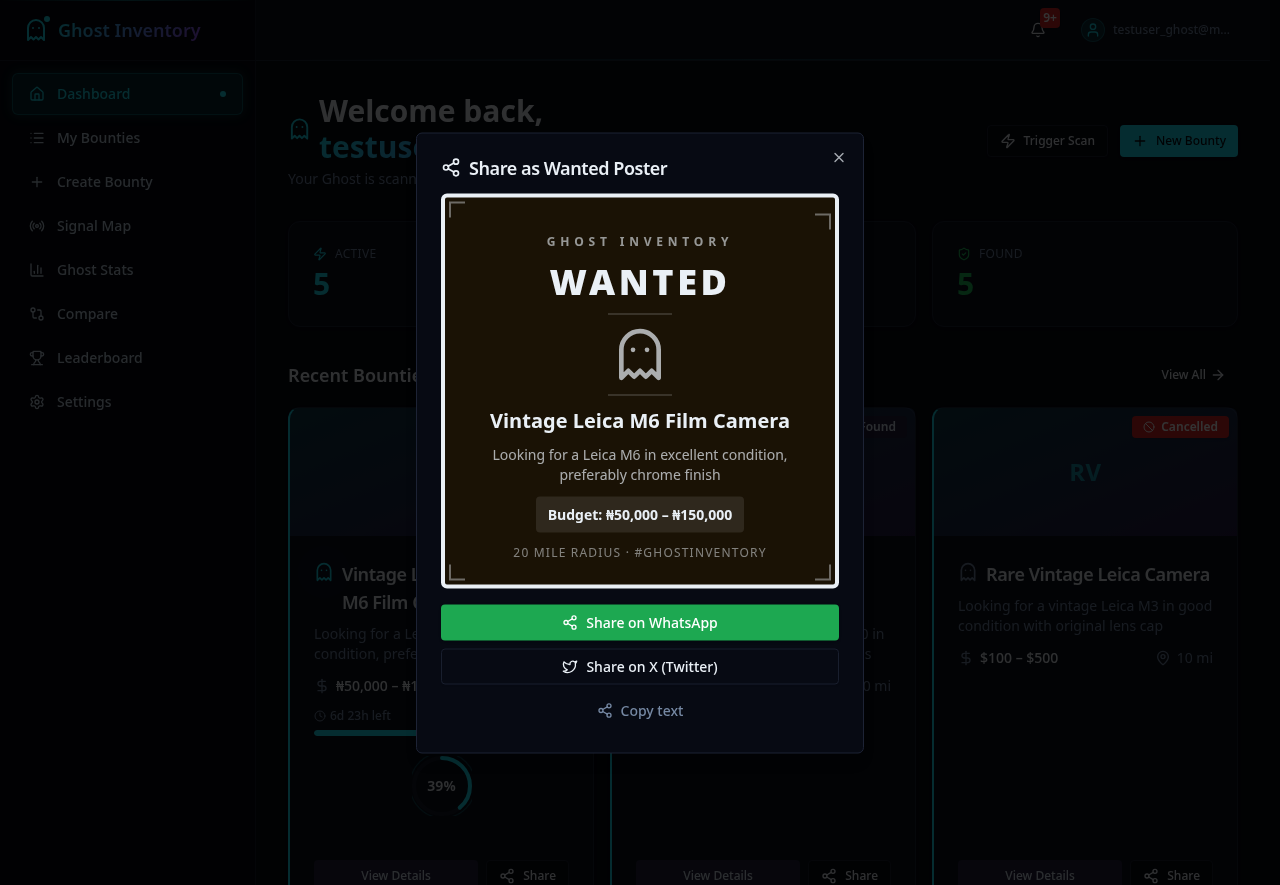
The most impressive feature designed with MeDo is the AI Signal Detection + Verification System and the Ghost Confidence Heatmap, which evolved from a simple map overlay into a real-time geospatial intelligence engine. MeDo helped us design a full intelligence pipeline that: • Scans community data sources every 30 minutes (WhatsApp groups, Twitter/X, marketplaces) • Uses Gemini 2.5 Flash to score matches (0–100 confidence) • Applies price intelligence (including NGN/USD conversion + negotiable detection) • Automatically transitions bounty states based on confidence thresholds • Generates verification codes for real-world confirmation between buyers and sellers • AI Negotiation Chat Log: "The system automatically generates negotiation strategies when items slightly exceed user budgets." • Wanted Poster Sharing where Users can generate stylized social share cards for WhatsApp and Twitter/X • Designing WebSocket-based real-time updates using Supabase Realtime, enabling instant bounty status changes, live notifications, and signal map updates without page refresh This turned a simple search system into a semi-autonomous “AI hunter” that actively tracks and validates product availability in real time.
How you used plugins or API integrations to extend functionality
Ghost Inventory Finder is powered by a full modern stack of integrations: Supabase: Auth, Postgres database, Edge Functions, and realtime subscriptions, which are core backend and real-time state management tools. PostGIS: Geospatial radius search for “Near Me” and signal mapping Gemini 2.5 Flash (LLM): AI scoring, intent parsing, negotiation message generation Stripe API: bounty reward payments, checkout sessions, and webhook verification Leaflet Maps: interactive bounty creation, signal visualization, and live tracking. pg_cron + Edge Functions: scheduled AI scanning and signal processing pipeline. These systems power a real-time, location-aware AI marketplace assistant. Supabase Realtime WebSockets: instant UI updates for bounty status changes and signal detection OpenStreetMap Nominatim API These integrations work together to create a fully autonomous, real-time AI discovery engine for physical products
Built With
- css
- framer
- leaflet-vector-layers-postgis
- motion
- openstreetmap
- postgis
- postgresql
- react
- supabase
- tailwind
- typescript

Log in or sign up for Devpost to join the conversation.