*Prototype link: Prototype * Link
Describe your project.
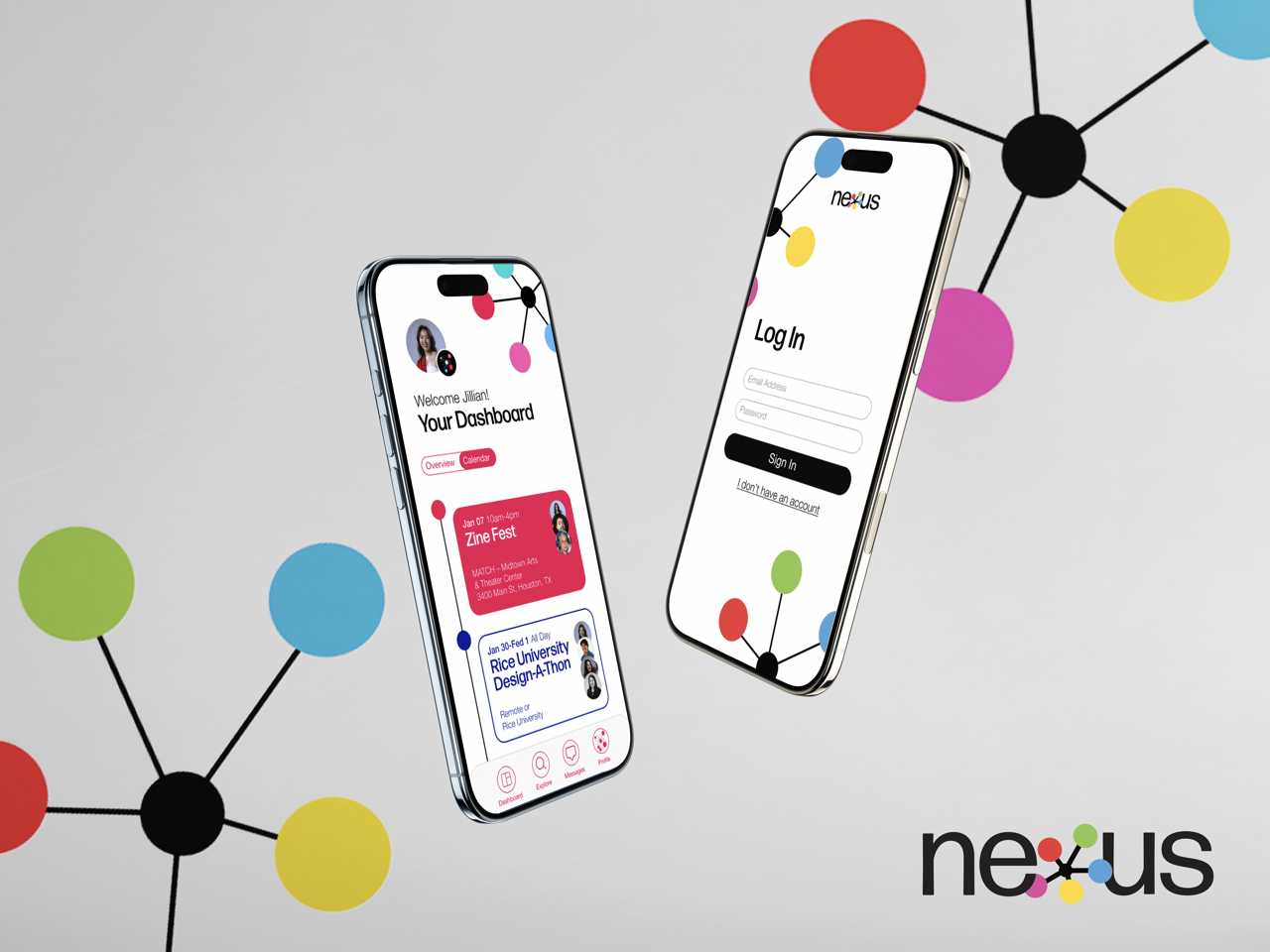
Nexus is a third-space based app designed to help people connect with community spaces. The goal is a more intentional network which supports personal growth and identity through real and varied engagement. Nexus removes some of the anxiety that comes with being in a new place or meeting new people by offering a preliminary step before attending an event via connection. Users can connect and communicate with real people and attendees ahead of time.
Nexus brings people together of different backgrounds and age groups with the hope that empathy forms through shared spaces and experiences. It recognizes how important community is, while also leaving room for individuality. This isn’t a cookie-cutter app meant to place people into boxes. Nexus tunes to each person’s needs and preferences and helps open the door to meaningful connections. While we’re all different, our humanity is shared, Nexus exists to bridge that gap.
Describe your research process and findings.
My research process focused on understanding how people across different age groups experience community spaces, particularly when entering unfamiliar social environments. I conducted a survey link with 41 participants to gather insights on comfort levels regarding social events, social expectations, and openness to intergenerational interaction when attending events where individuals may not know anyone beforehand. A primary goal of this research was to understand how age differences influence feelings of belonging, connection, and willingness to engage.
The survey revealed that discomfort in new social settings is common across age groups. 41% of respondents (17 out of 41) reported feeling either somewhat uncomfortable or very uncomfortable starting conversations with people they do not know, while an additional 27% (11 respondents) reported feeling neutral. These findings indicate that a majority of individuals do not feel immediately confident initiating social interaction in shared spaces, reinforcing the need for empathetic design interventions. Despite this discomfort, the research showed strong potential for intergenerational connection. 46% of respondents (19 participants) indicated they were either open or already participating in activities with people from different age groups, while another 49% (20 participants) responded with maybe. This suggests that while users may be hesitant, there is a clear openness to intergenerational engagement when the environment feels supportive and low-pressure.
Likewise, survey responses highlighted that predictability and social context play a major role in participation. Multiple respondents identified knowing what to expect beforehand and seeing who else might attend as key factors that would make them more likely to attend a local event. These findings directly informed the app’s focus on pre-event connection and visibility, allowing users to ease into new spaces rather than entering them blindly. The research confirms that intergenerational community growth thrives when spaces are designed with intention, empathy, and accessibility. By addressing social discomfort, providing context ahead of time, and encouraging low-pressure interaction across age groups, the app aims to foster camaraderie, reduce isolation, and strengthen community bonds through meaningful, human-centered connections.
Describe your most important design decisions. What research findings and/or user testing results led you to make these decisions?
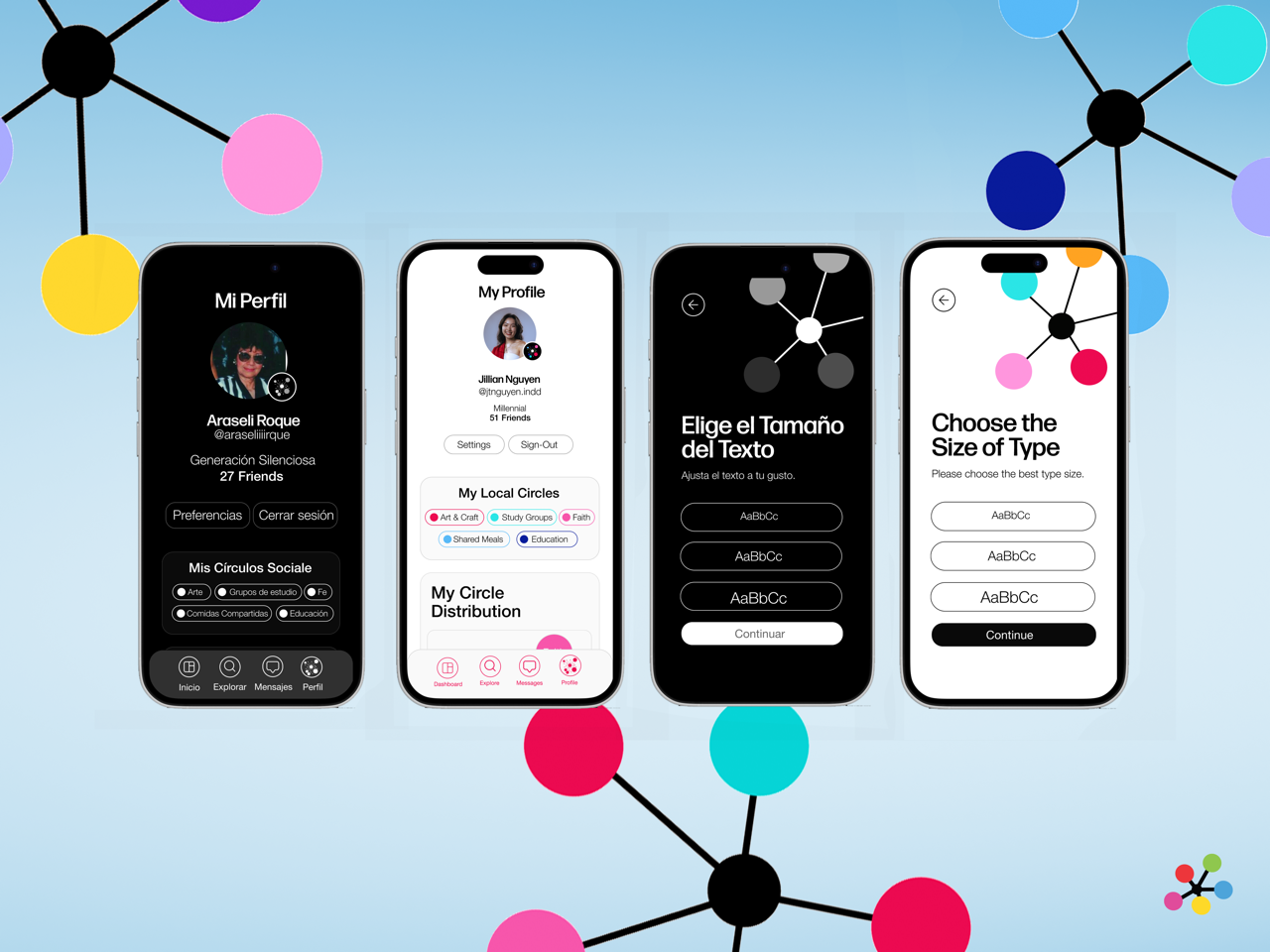
The most important design decisions for this application were centered on accessibility, empathy, and intergenerational connection. Based on my research, it became clear that both younger and older users often feel uncomfortable or excluded in new social environments, especially when technology itself feels overwhelming or impersonal. This led to a strong focus on making the app usable and welcoming regardless of age, experience with technology, or personal interests. To address this, the app includes multiple accessibility options, such as customizable color modes, adjustable type size, and the ability to switch between English and Spanish. These decisions were informed by survey responses that emphasized comfort, clarity, and ease of use as key factors in whether users felt confident engaging with a platform.
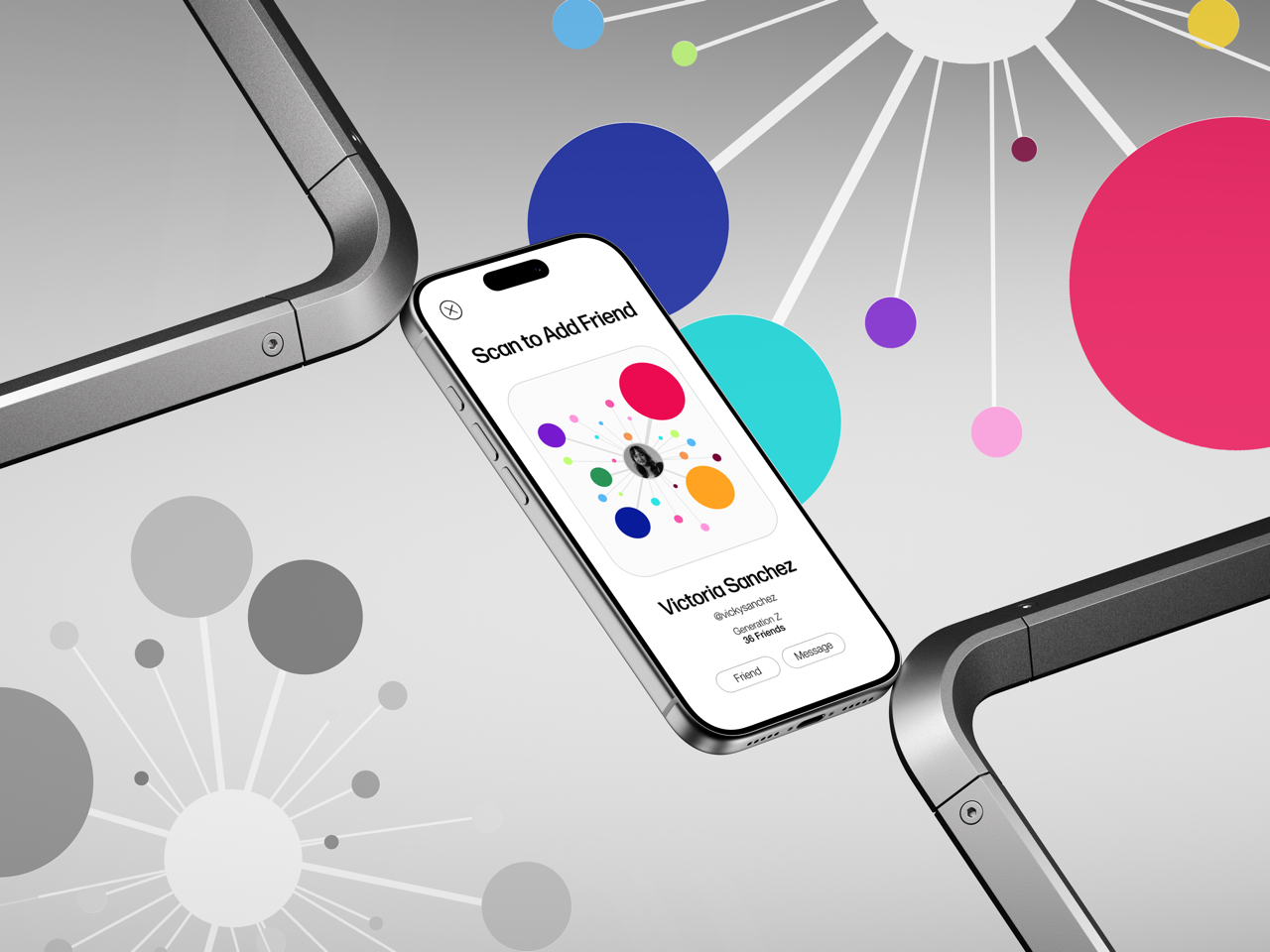
The layout of the app was designed to be straightforward and intuitive. Research showed that overly complex interfaces can discourage participation, particularly for older users, while younger users still valued personalization and self-expression. One of the most impactful design decisions was the inclusion of personalized data metrics based on the third spaces users visit most often. This feature generates a personal QR code that allows users to connect with one another directly. Research and user feedback indicated that people wanted an easier, less awkward way to start conversations—especially across age differences. The QR code functions as both a connection tool and a conversation starter, offering insight into shared interests while respecting personal boundaries.
These design choices were driven by research findings that highlighted the importance of reducing social pressure, encouraging empathy, and creating intentional bridges between individuals. By focusing on accessibility, personalization, and human-centered interaction, the app supports meaningful community growth across generations.
How did you utilize AI in your design process in detail. Include a concrete example of how AI influenced a design decision.
For this particular project, I refrained from the use of AI in any design-based choices, any preliminary research, or any organization or compartmentalization of information with the goal of using it in the work. I wished for the work to feel authentic and man-made. I did, however, utilize AI for the sole purpose of content. I would give it a detailed list of the information I needed, specifically when it came to the event information. AI provided an efficient workflow when it came to thinking about the nuggets of information given in a certain event, and the way that fosters familiarity between a new individual and a new event they are planning on attending.
Built With
- adobe-illustrator
- figma


Log in or sign up for Devpost to join the conversation.