-
-
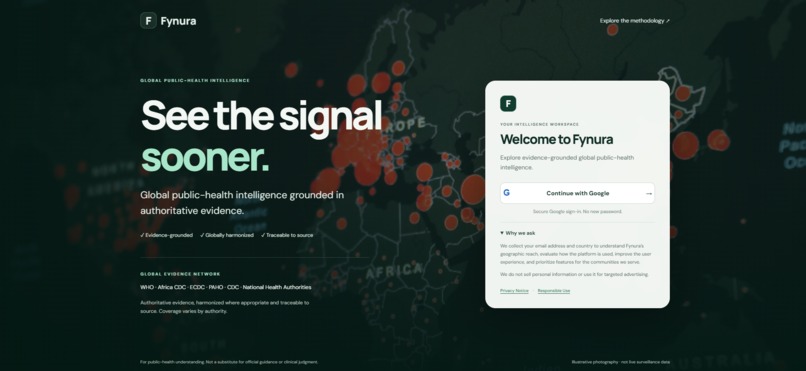
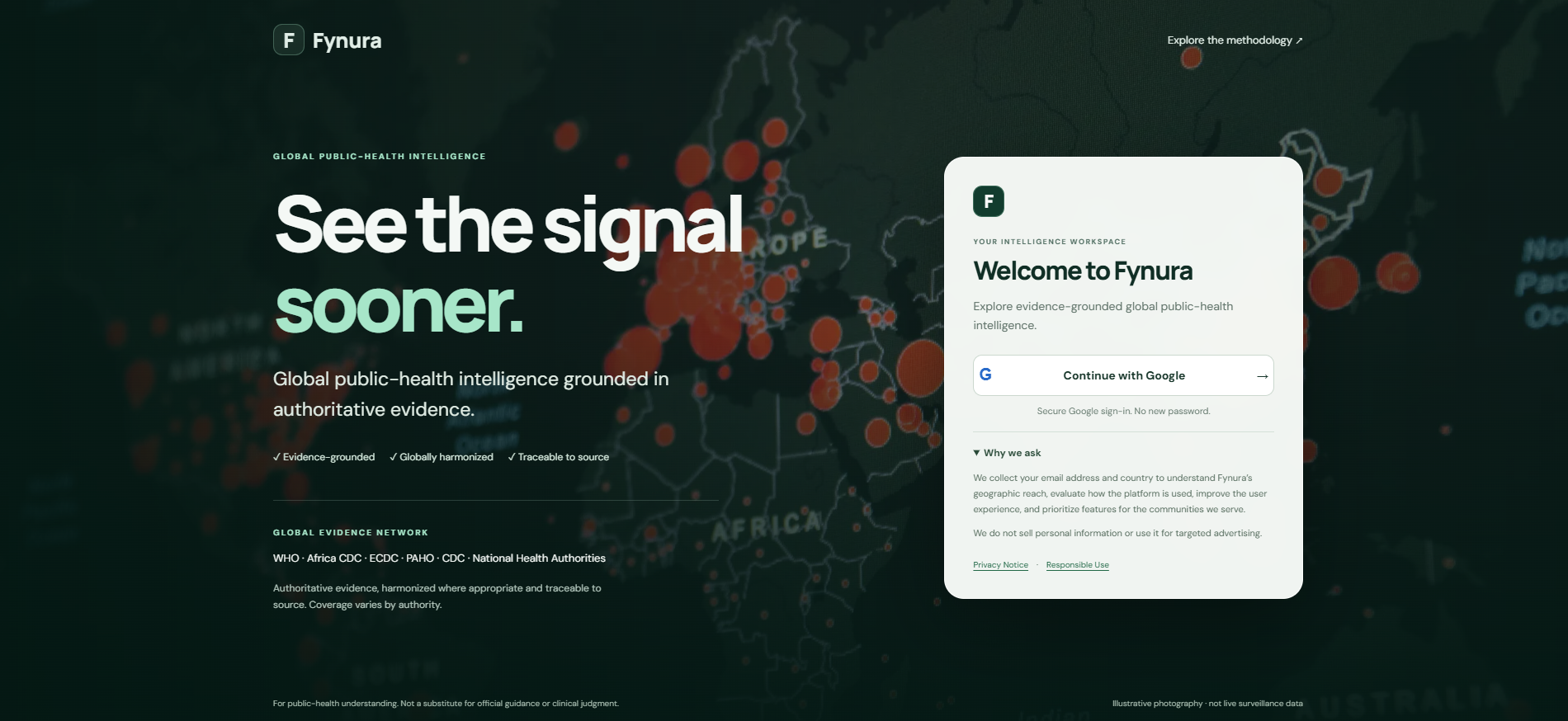
Fynura landing/home page
-
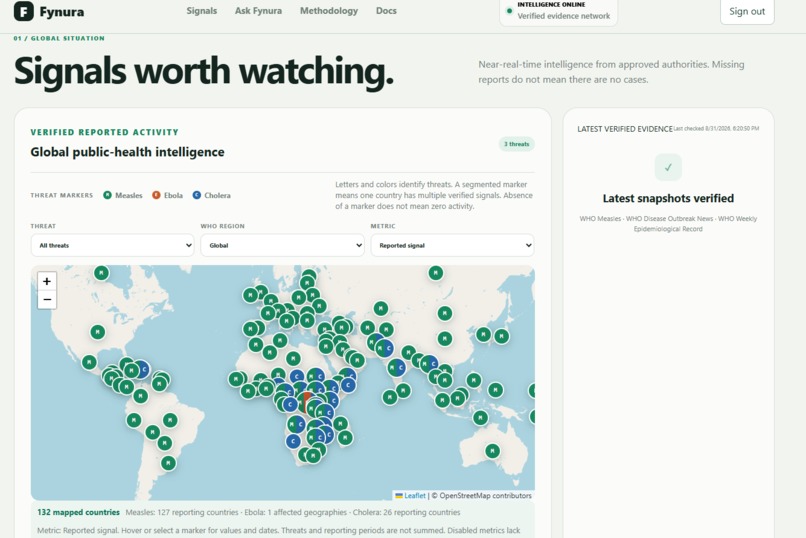
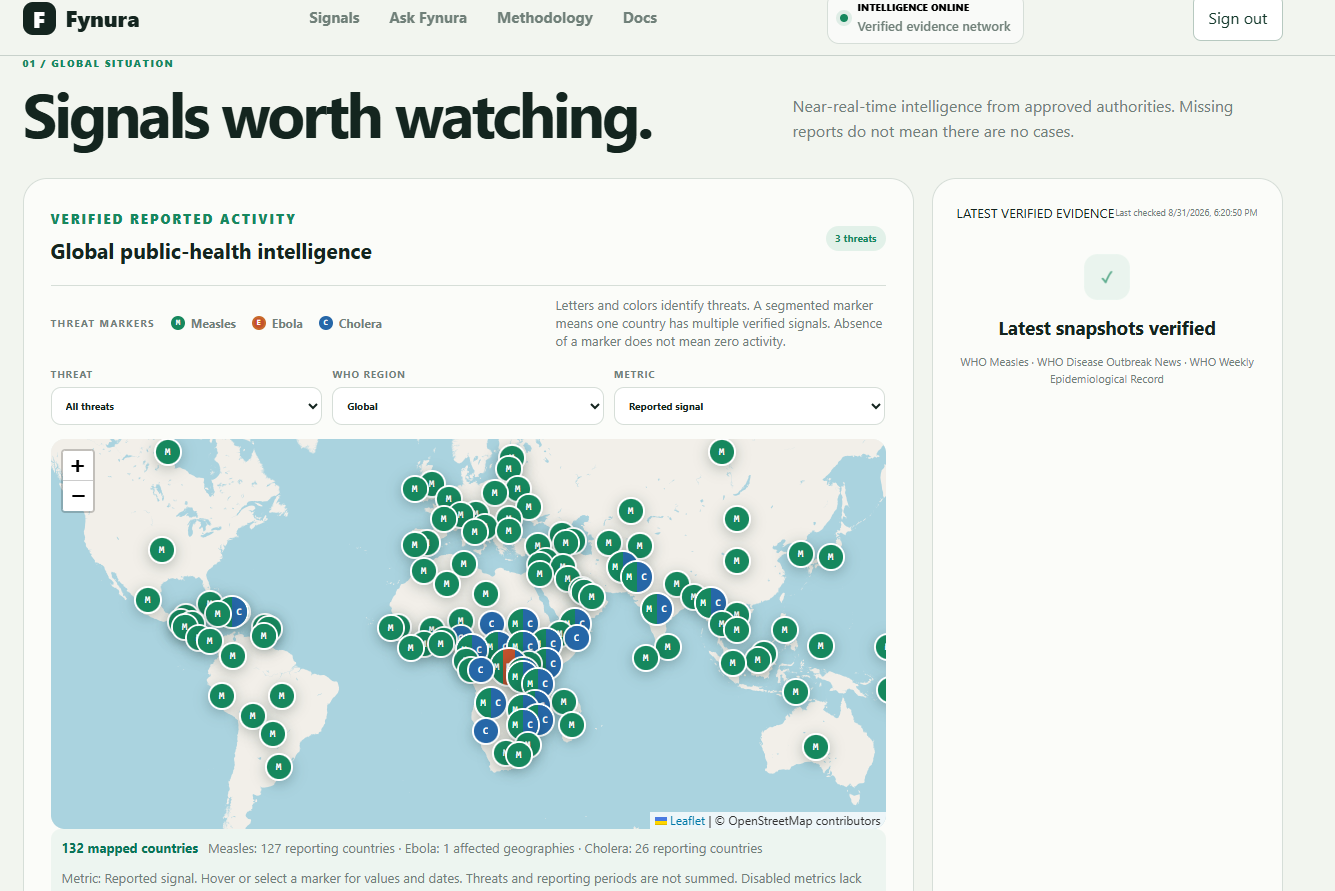
Global Intelligence Map
-
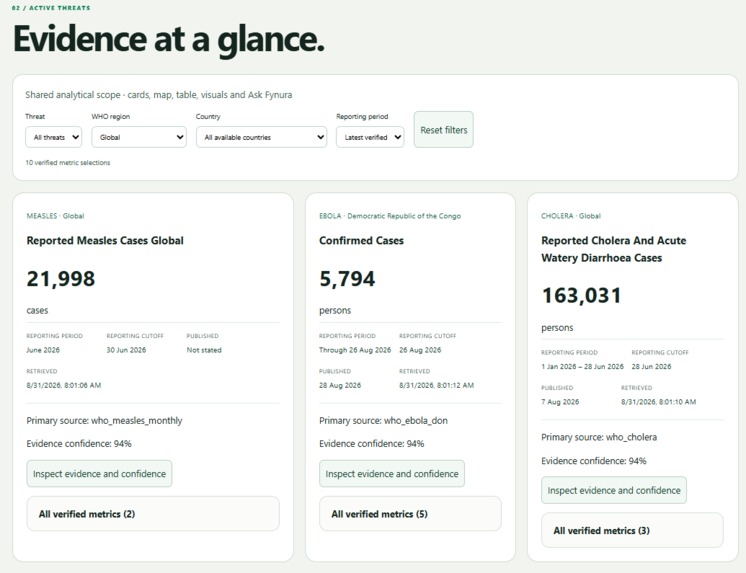
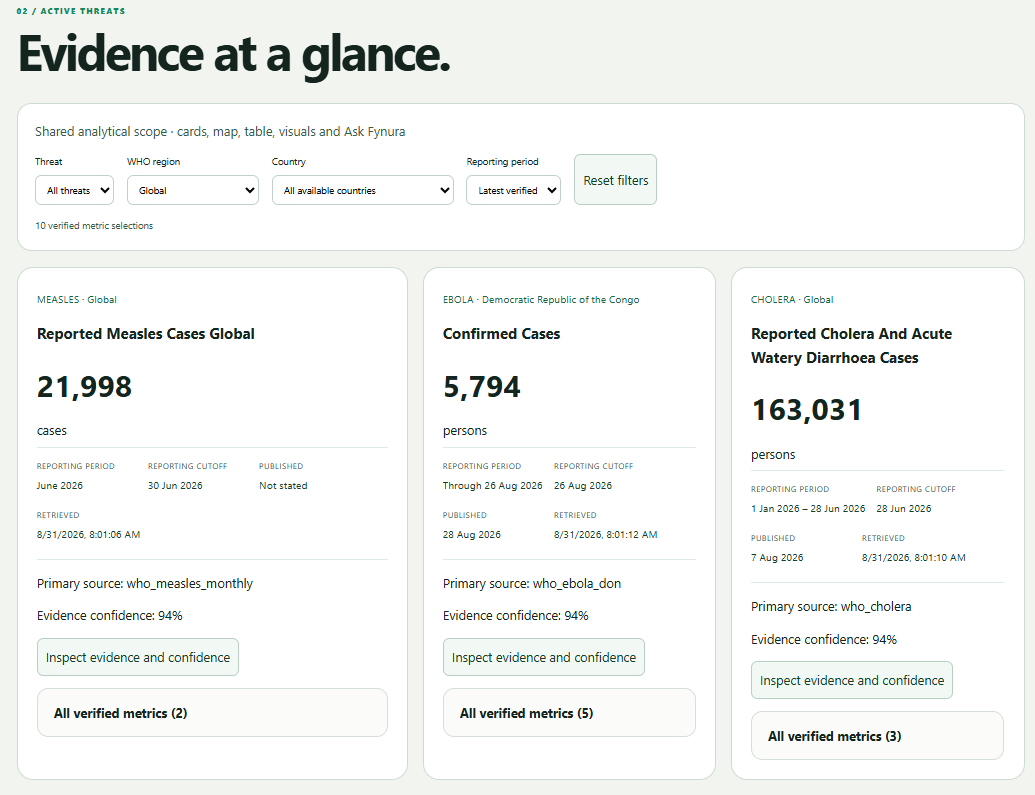
Evidenece at a Glance or provenance view
-
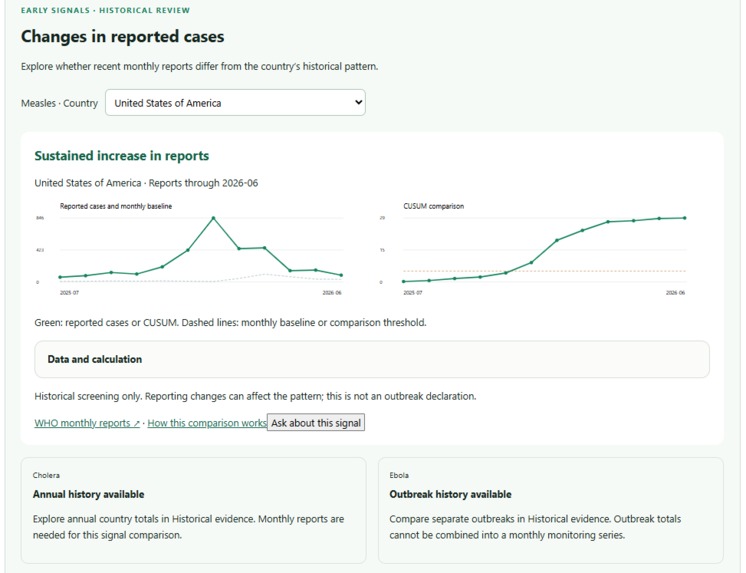
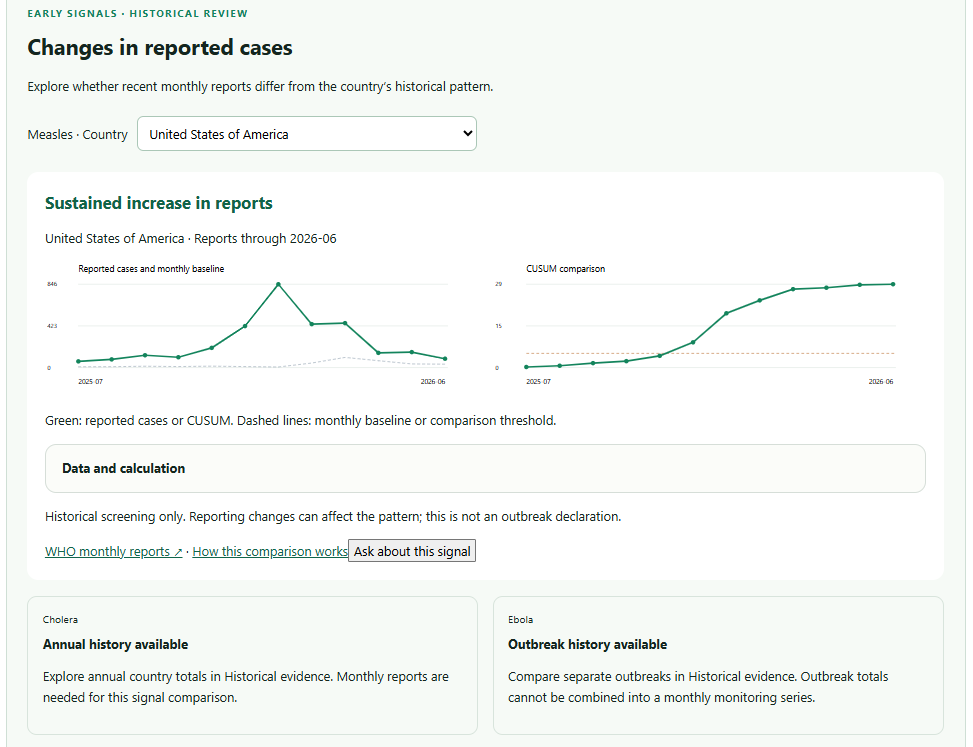
Historical trend or anomaly detection view
-
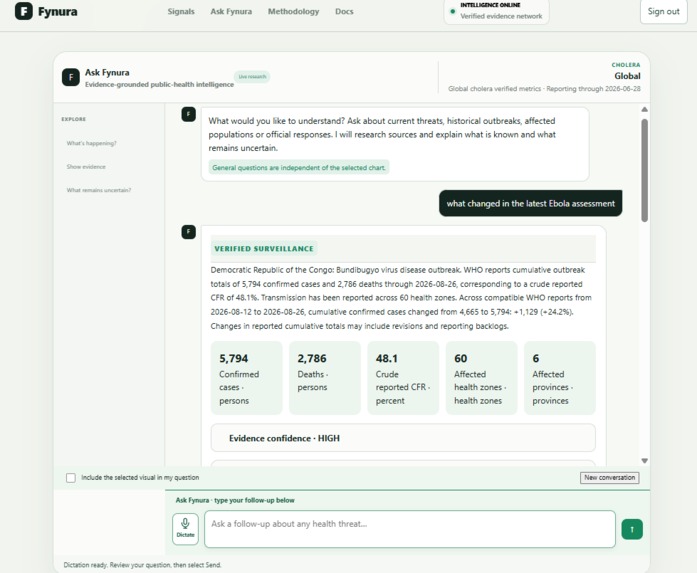
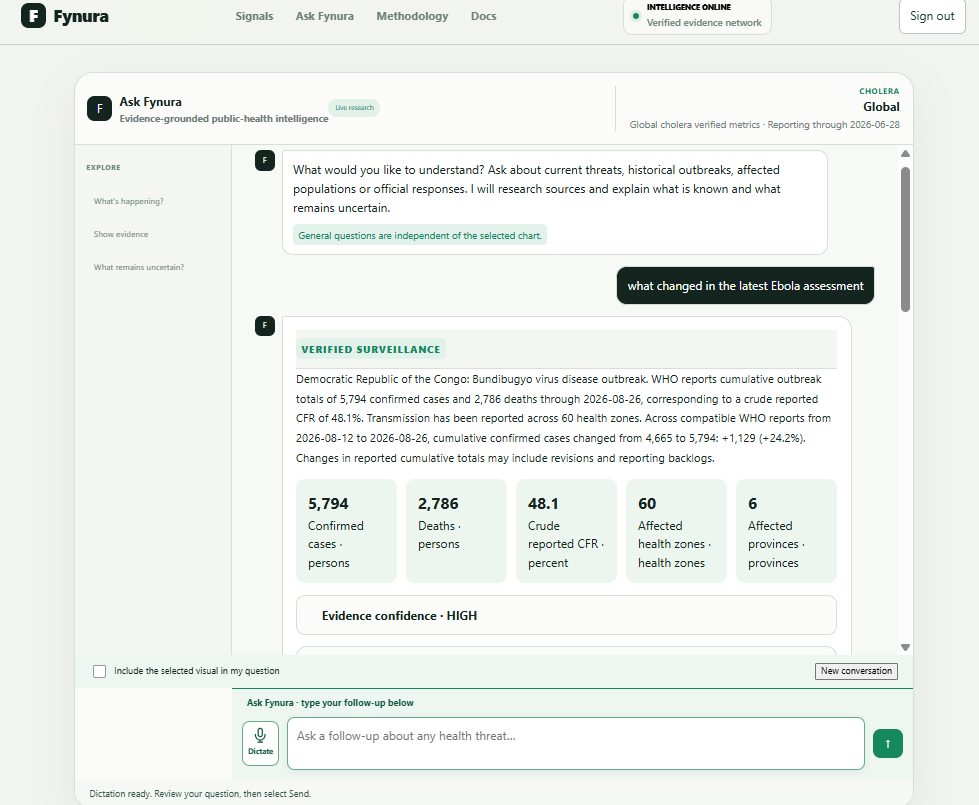
Ask Fynura interaction
Inspiration
An outbreak rarely arrives as one complete, comparable dataset. Public health professionals, journalists, researchers, and communities must navigate reports from WHO, regional agencies, and national authorities, often with different dates, definitions, geographic scopes, and levels of completeness. Fynura began with a practical question: how can people see the signal sooner without losing the evidence behind it?
What it does
Fynura is an agentic public health intelligence platform that brings source-linked surveillance, historical context, epidemiological analysis, and an interactive AI research partner into one workspace.
Users can explore a global intelligence map, filter by threat, WHO region, and eligible metrics, compare country-level signals, examine Evidence at a Glance, follow historical trends, inspect underlying data, and open the source behind a reported number. Current structured surveillance covers measles, Ebola, and cholera.
Ask Fynura supports general and chart-specific questions, follow-up conversations, stakeholder-aware interpretation, report briefs, and infographics. It can also answer broader scientific and capacity-building questions when authoritative evidence supports an answer.
Fynura preserves source provenance, reporting periods, publication and retrieval dates, supporting excerpts, extraction methods, and observation identifiers. Compatible evidence is grouped, overlapping reports are not double-counted, unresolved conflicts remain visible, and missing data are not treated as zero activity.
How we built it
Fynura combines deterministic epidemiological processing with agentic AI.
The scheduled surveillance pipeline is built in Python. Cloud Scheduler invokes an authenticated refresh route on Cloud Run. Source adapters retrieve selected authoritative reports, typed extraction validates observations, compatibility logic groups evidence by disease, indicator, geography, definition, unit, and reporting period, and guarded calculations produce only supported indicators. Firestore stores assessments and their provenance while retaining the last successful evidence when a refresh fails.
The interactive layer uses a shared dispatcher. High-confidence guardrails and intent rules run first, with Gemini resolving remaining intent when needed. Stored surveillance questions use canonical application evidence, while broader scientific questions use Google ADK, Gemini 3.7 Flash on Vertex AI, and Google Search. A conditional second research agent can review important claims before Fynura presents its source-linked response.
Fynura runs on Google Cloud Run, with Firestore for evidence and application state, Cloud Scheduler for refresh checks, Firebase Authentication for Google sign-in, Secret Manager for runtime configuration, Cloud Logging for service activity, and Cloud Build and Artifact Registry supporting deployment.
Challenges we ran into
Authoritative public health sources are highly heterogeneous. Reports use inconsistent formats, some restrict automated access, and reporting cutoffs, case definitions, geographic names, and units require careful normalization.
Another major challenge was preventing apparently similar observations from being incorrectly combined. Overlapping reports cannot simply be summed, historical gaps must remain visible, and epidemiological calculations require compatible numerators, denominators, periods, and geographic scopes.
We also had to make conversational AI useful without allowing it to override the evidence architecture. An unrelated question should not receive an interpretation of whichever chart happens to be selected, and broader scientific usefulness needed to coexist with medical and biological safety guardrails.
Accomplishments that we're proud of
We deployed a working public health intelligence application that connects traceable surveillance, historical comparison, guarded epidemiological calculations, exploratory change screening, and source-linked agentic research.
Users can move from a global signal to its underlying reporting period and source, ask follow-up questions, review supporting evidence, and generate communication products such as briefs and infographics.
Fynura currently implements three structured disease adapters rather than claiming universal disease coverage. Measles demonstrates global comparisons, historical reporting, and exploratory change screening. Ebola demonstrates sequential reporting cutoffs and separate outbreak histories without artificially joining incompatible outbreaks. Cholera demonstrates source-defined cases, deaths, affected countries, and guarded crude case-fatality calculations.
Automated tests cover evidence compatibility, denominator safeguards, historical aggregation, routing, retries, and frontend behavior.
What we learned
Agentic public health intelligence requires an evidence architecture, not just a capable language model.
We learned that deterministic epidemiology and generative AI interpretation work best when they have clearly separated responsibilities. Reporting dates, definitions, geographic scope, and missingness can materially change the meaning of a surveillance signal.
We also learned that multi-source intelligence does not mean combining every available source. Provenance, compatibility, and transparency are more valuable than creating artificial agreement. AI can make complex evidence easier to understand, but the underlying evidence should always remain traceable.
What's next for Fynura
Next, we plan to expand operational source adapters and disease coverage, incorporate more subnational evidence, and prospectively validate change-detection and forecasting approaches with public health partners.
We also plan to evaluate multilingual intelligence, strengthen durable conversation and feedback learning, and assess institutional deployment, reliability, and measurable public health impact.
Our longer-term goal is for Fynura to help transform fragmented public health evidence into timely, traceable, and actionable intelligence while keeping humans and verifiable evidence at the center of decision-making.
Built With
- adk
- agentic-ai
- beautiful-soup
- build
- cloudrun
- css
- docker
- fastapi
- firebase
- firestore
- gemini
- google-genai
- html
- httpx
- javascript
- leaflet.js
- logging
- openstreetmap
- pydantic
- python
- registry
- scheduler
- secrete
- vertex


Log in or sign up for Devpost to join the conversation.