-
-
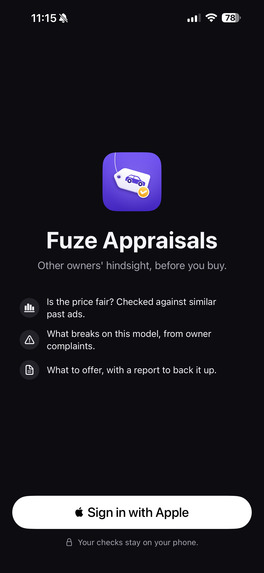
Sign in page
-
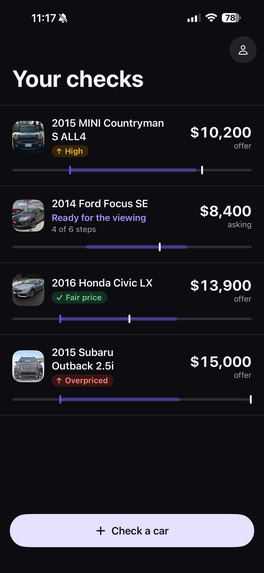
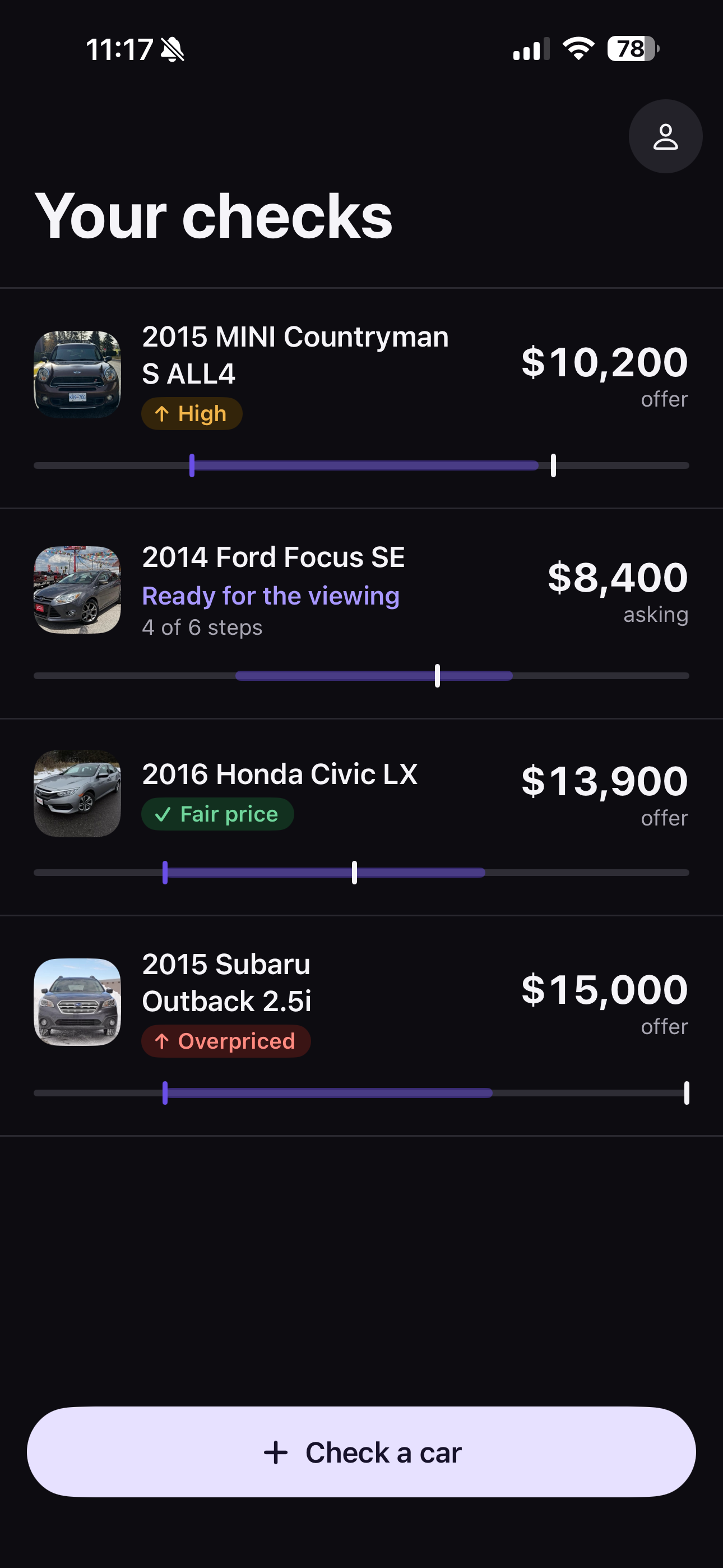
Home page with previously scanned listings
-
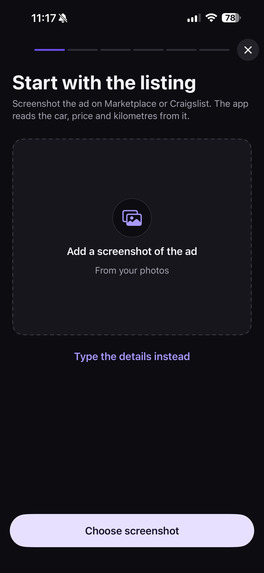
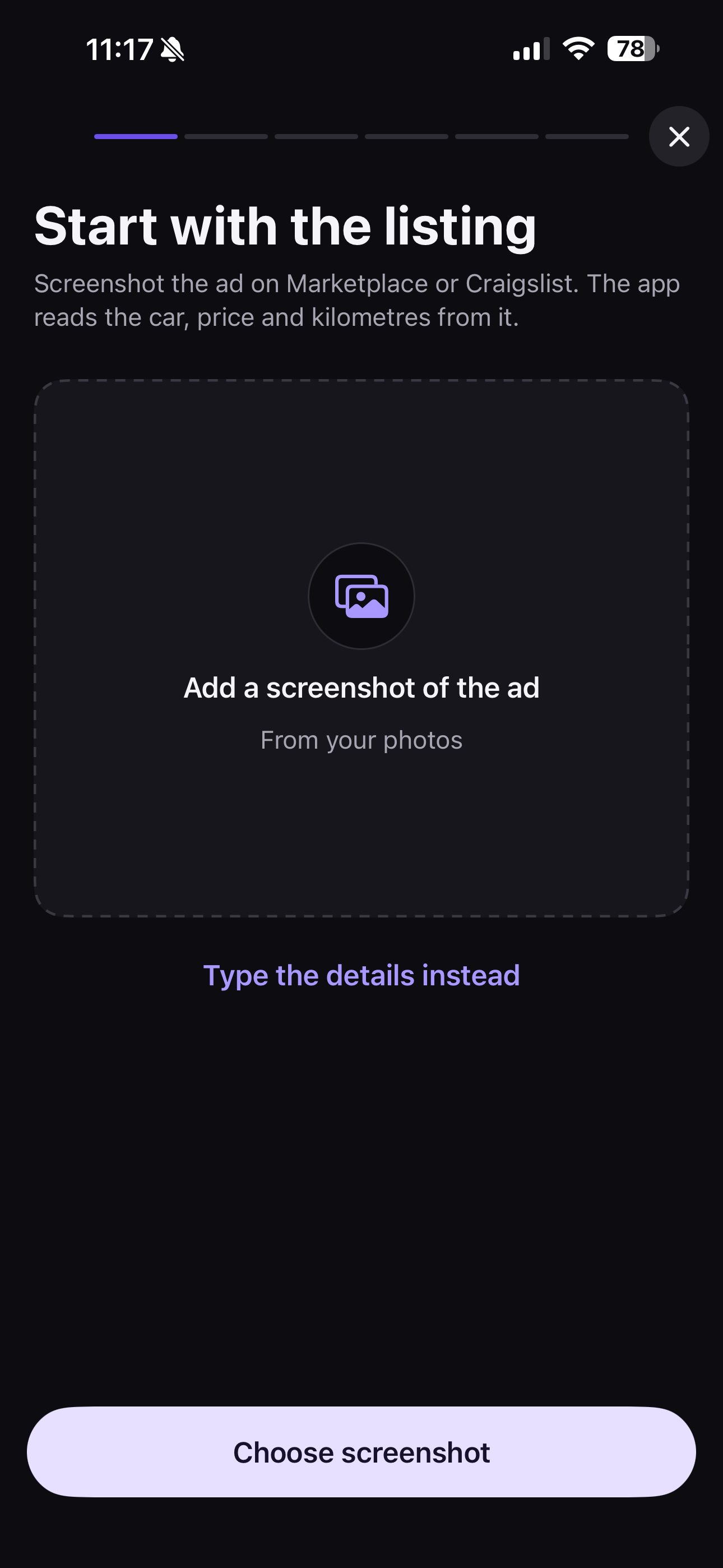
First step when scanning a listing
-
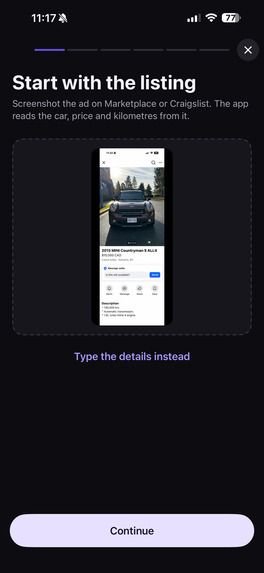
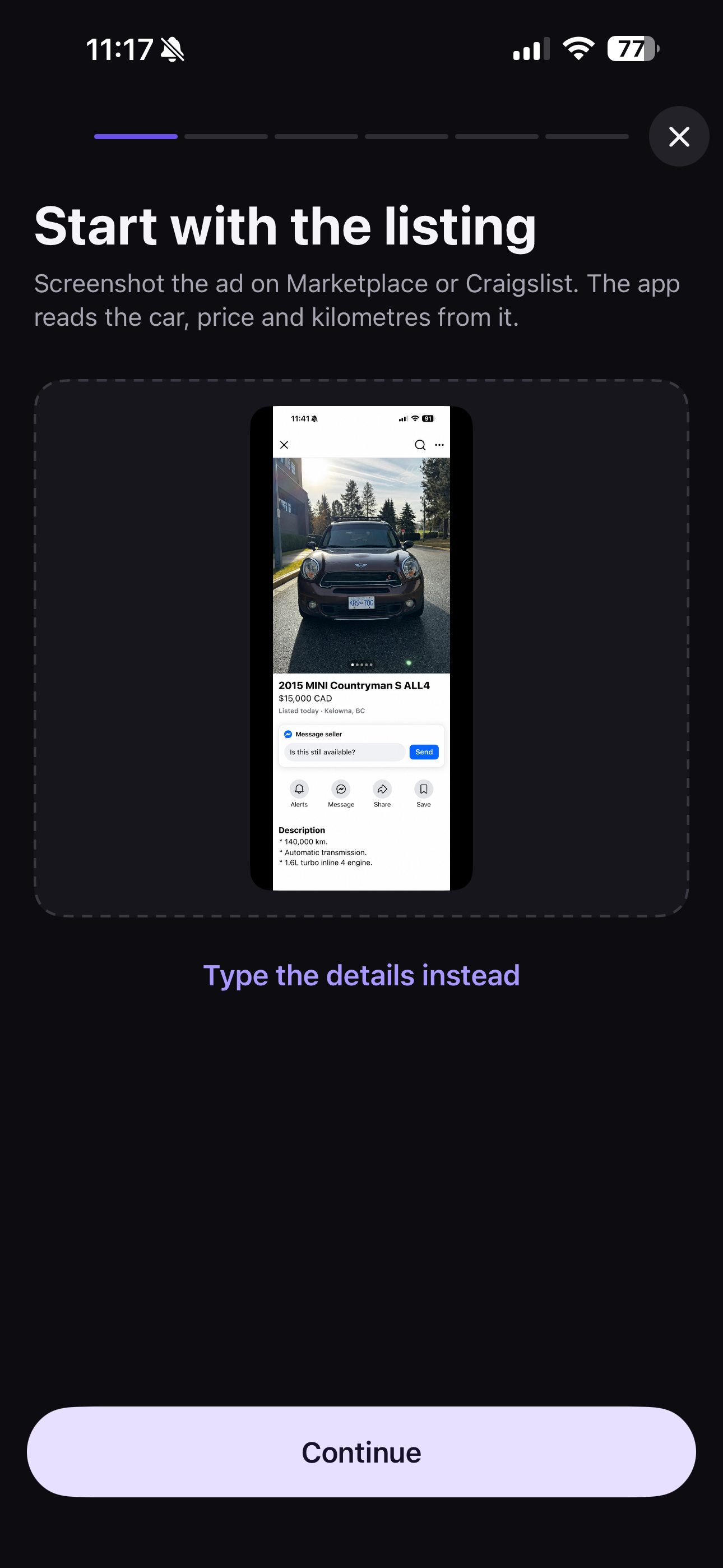
Importing listing photo to scan
-
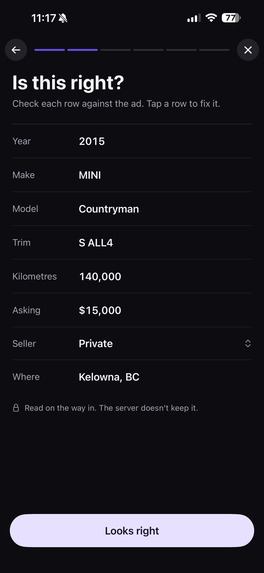
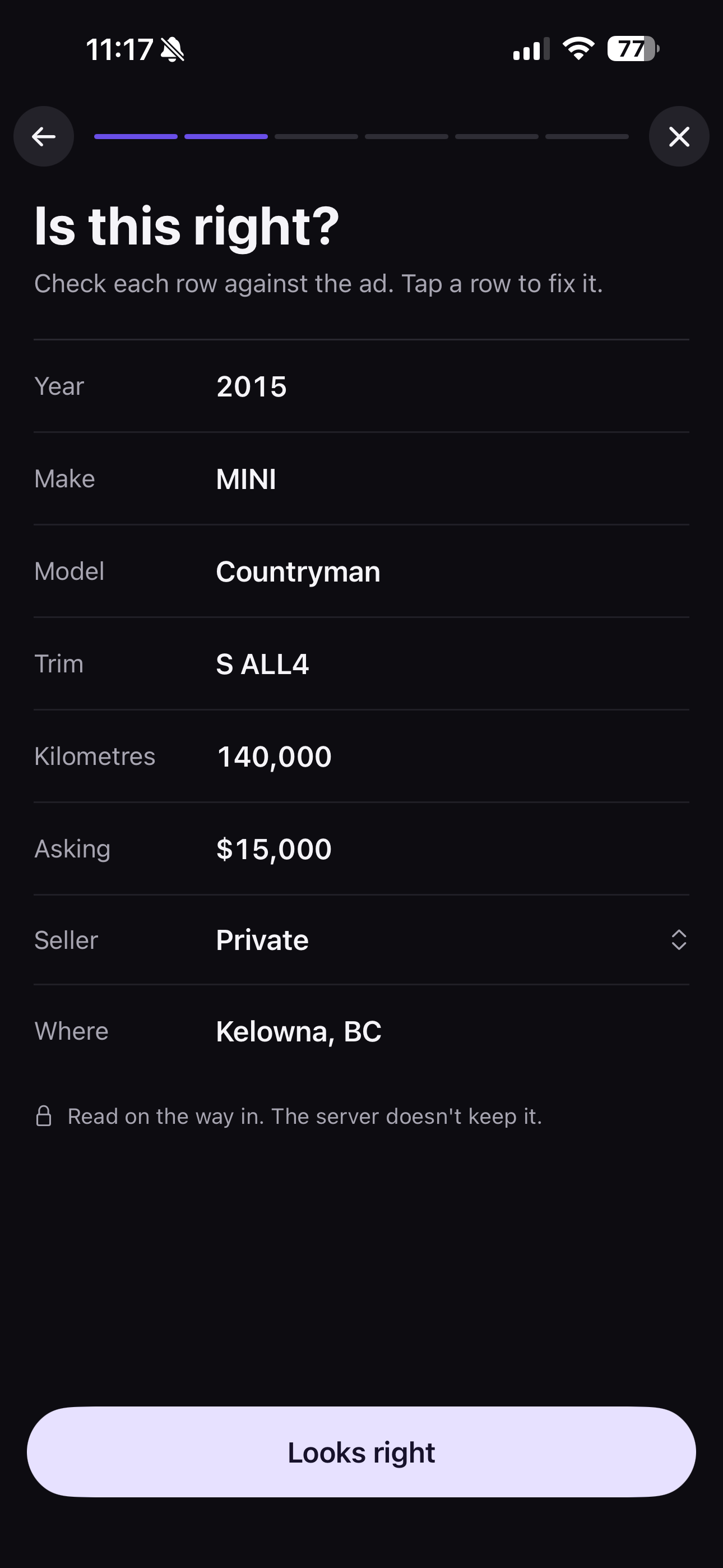
Verify scan data from listing
-
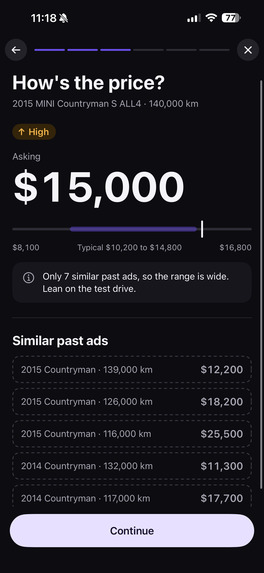
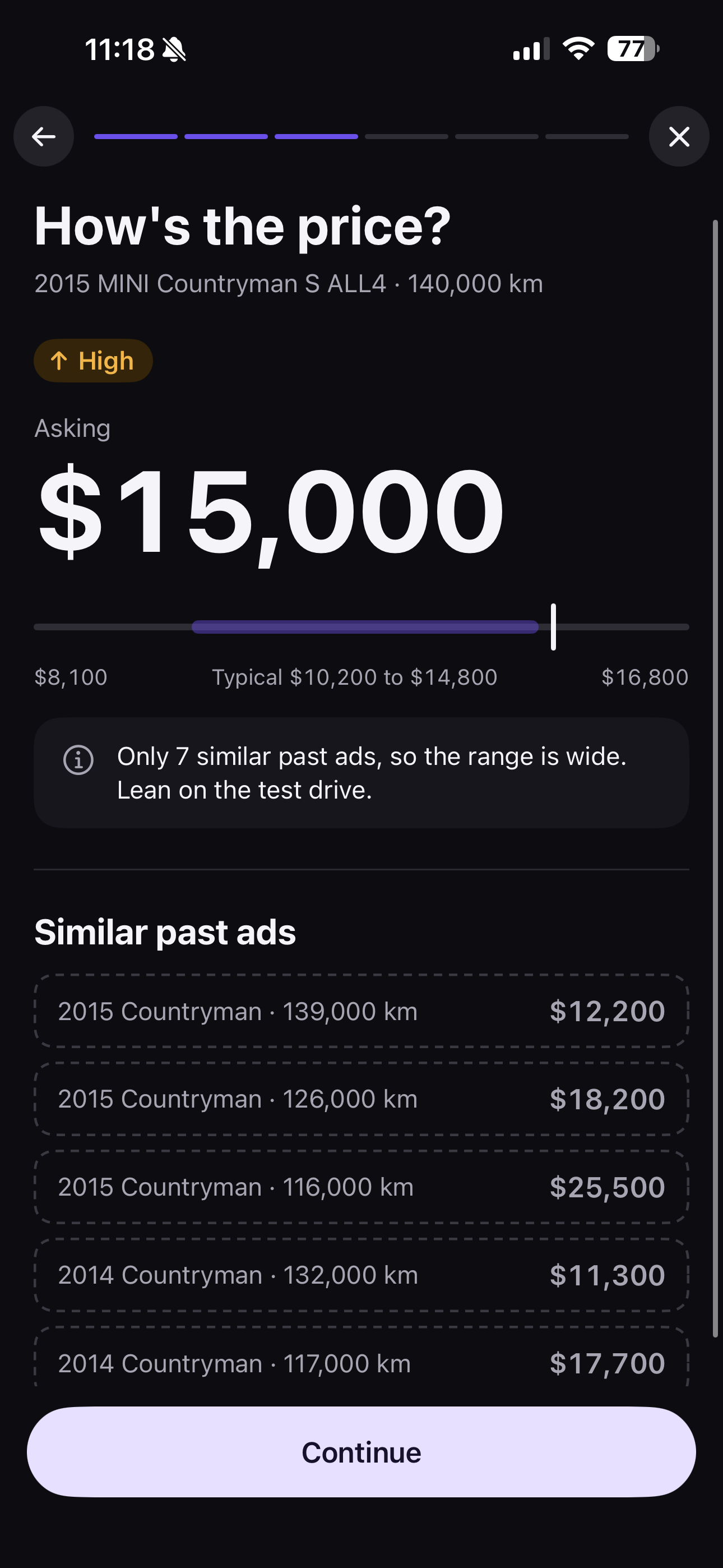
Initial listing report
-
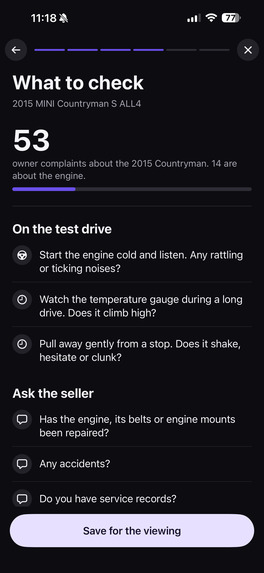
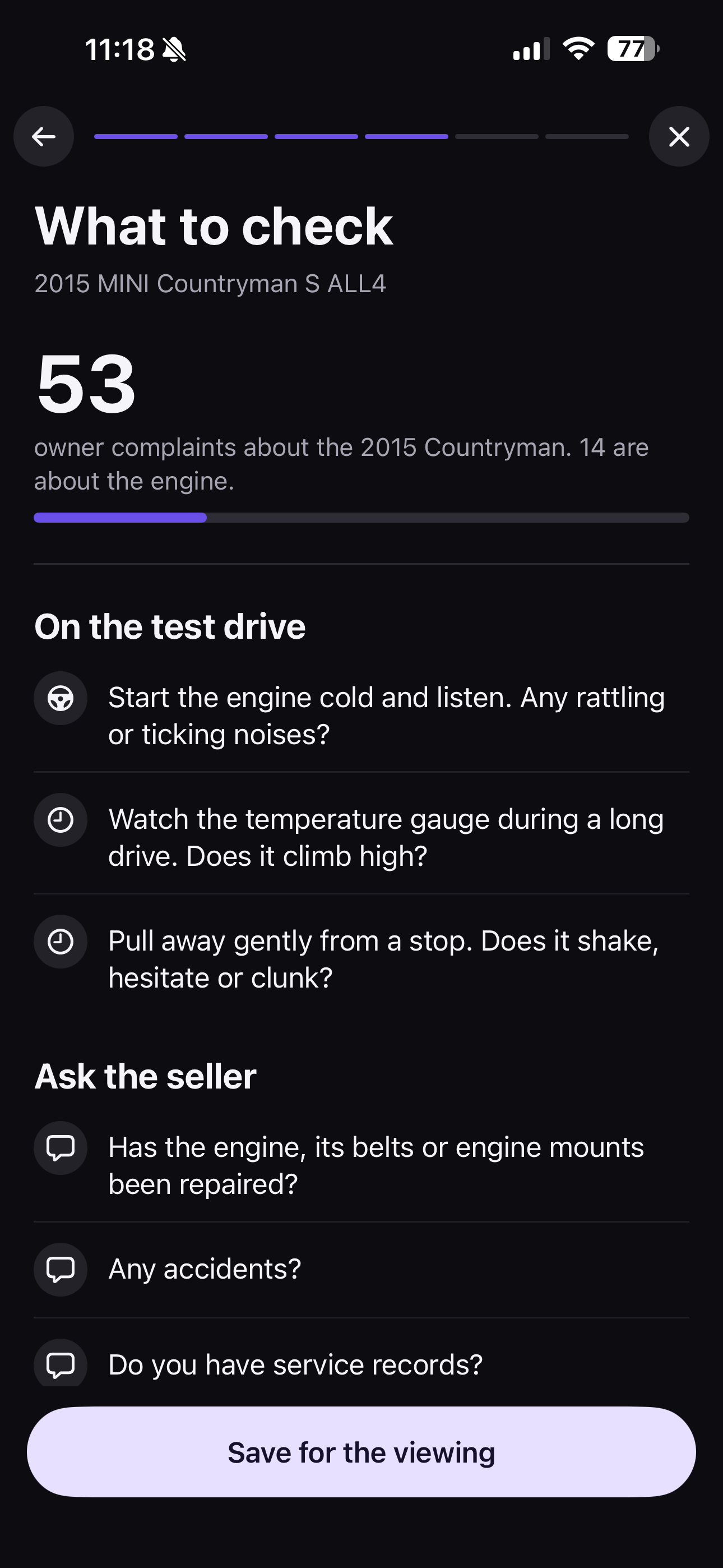
Buyer advice
-
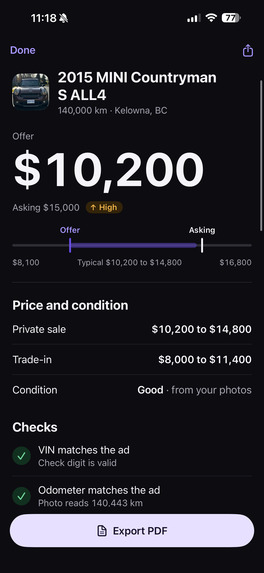
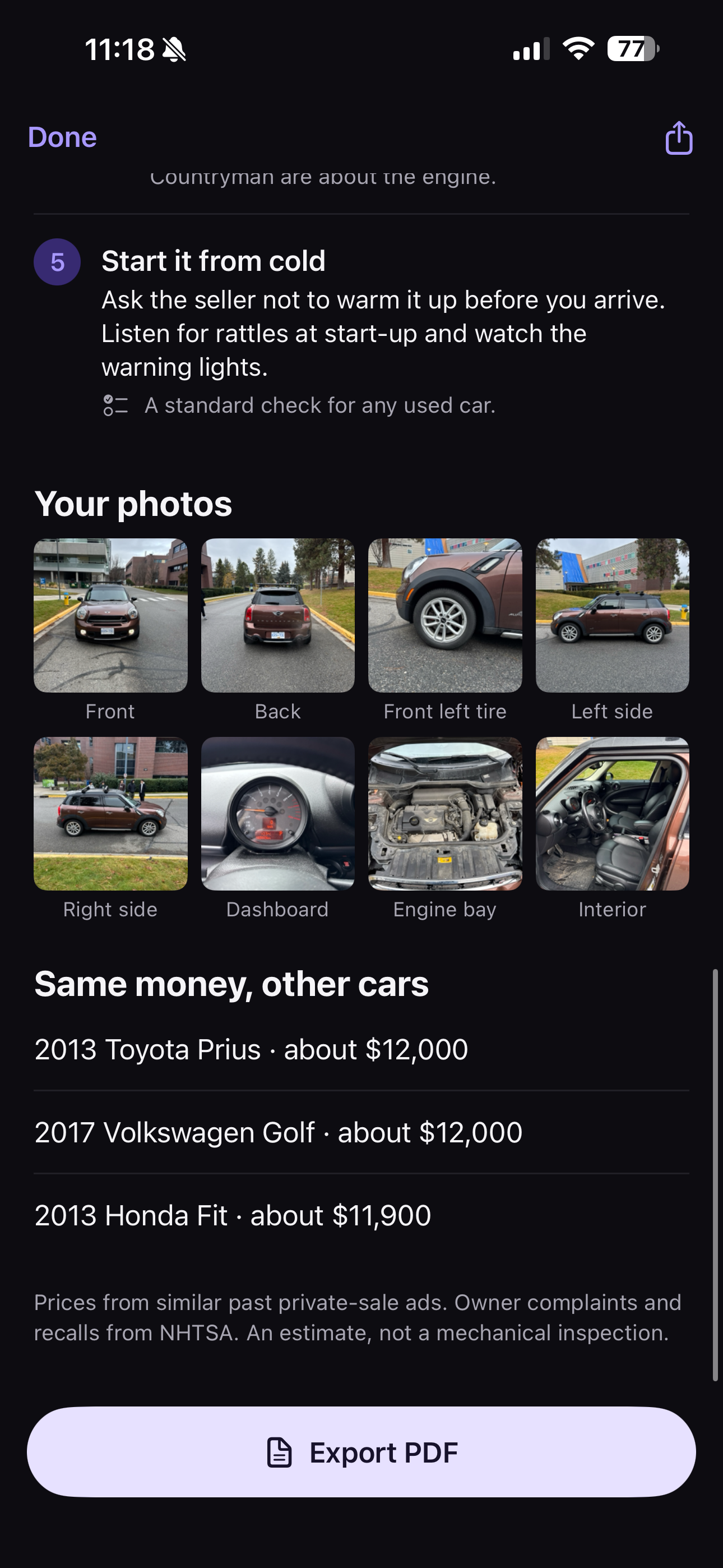
Final listing report once buyer sees car in person and takes photos
-
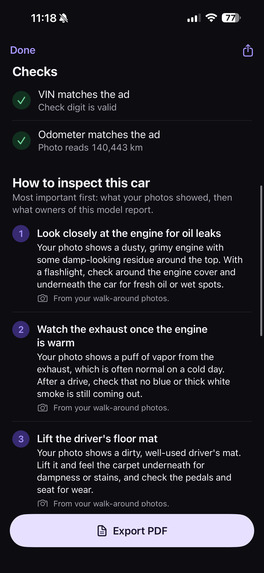
Things for buyer to check once car is fully scanned
-
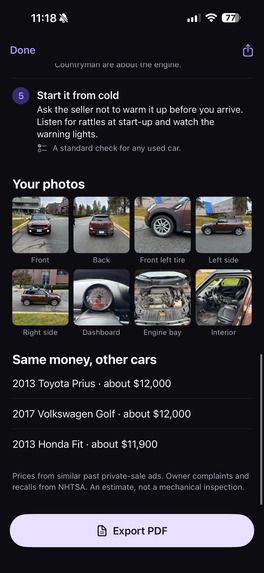
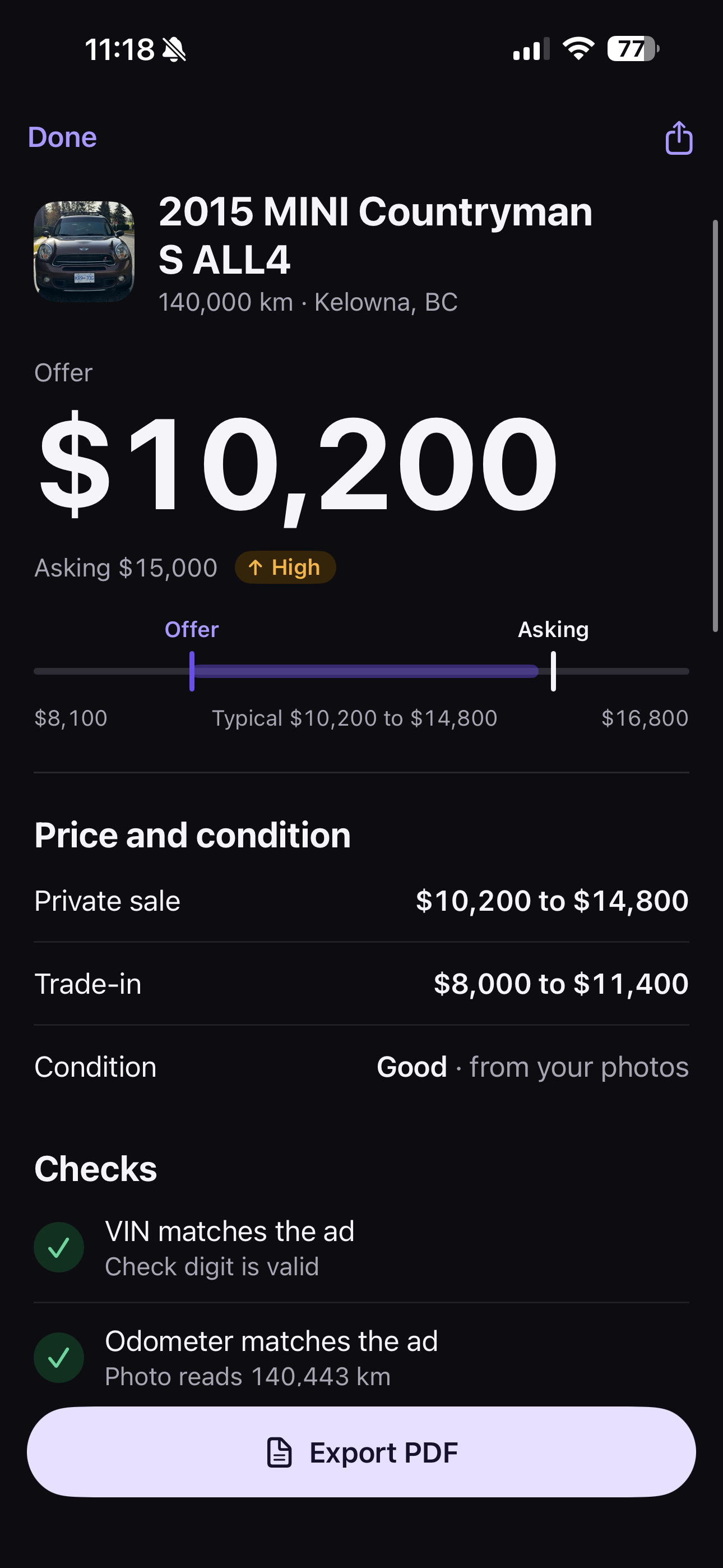
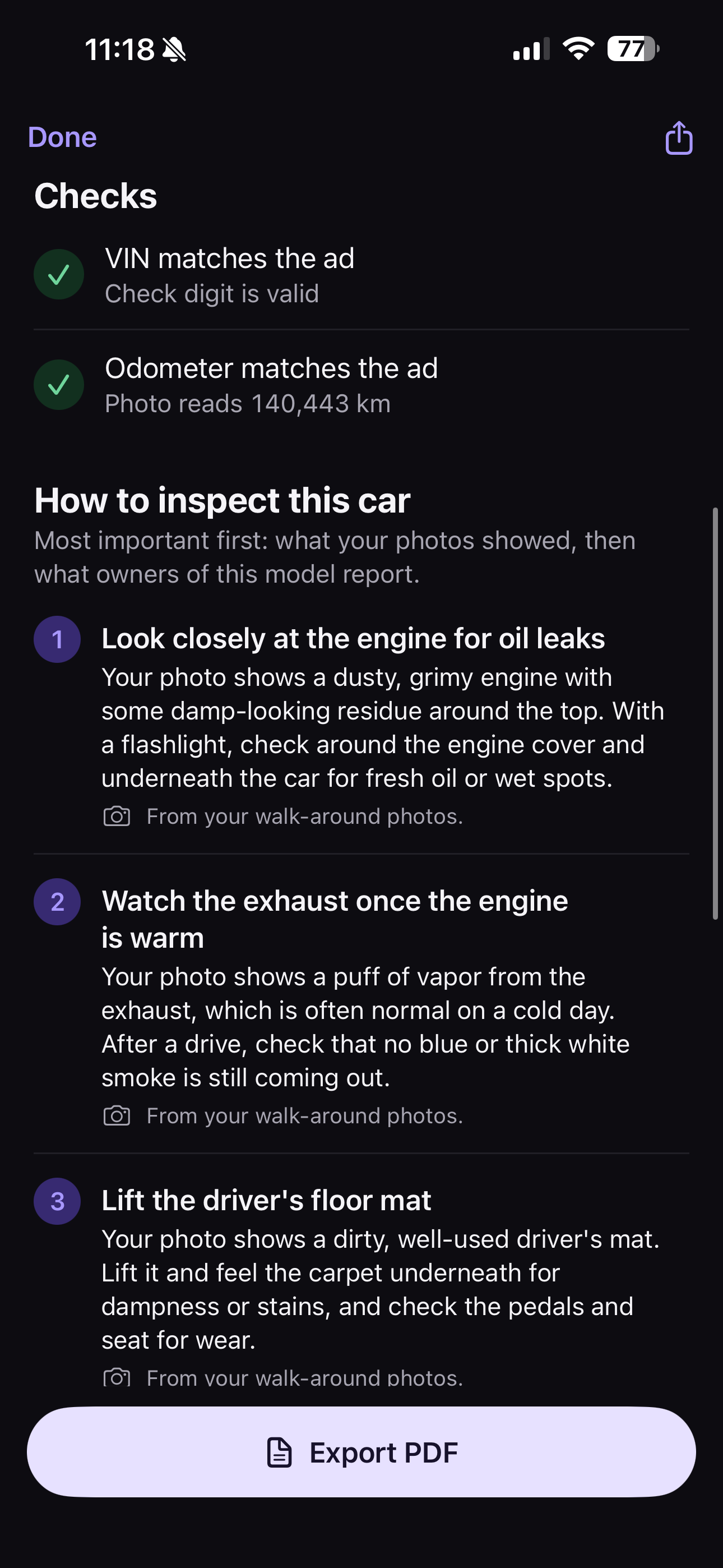
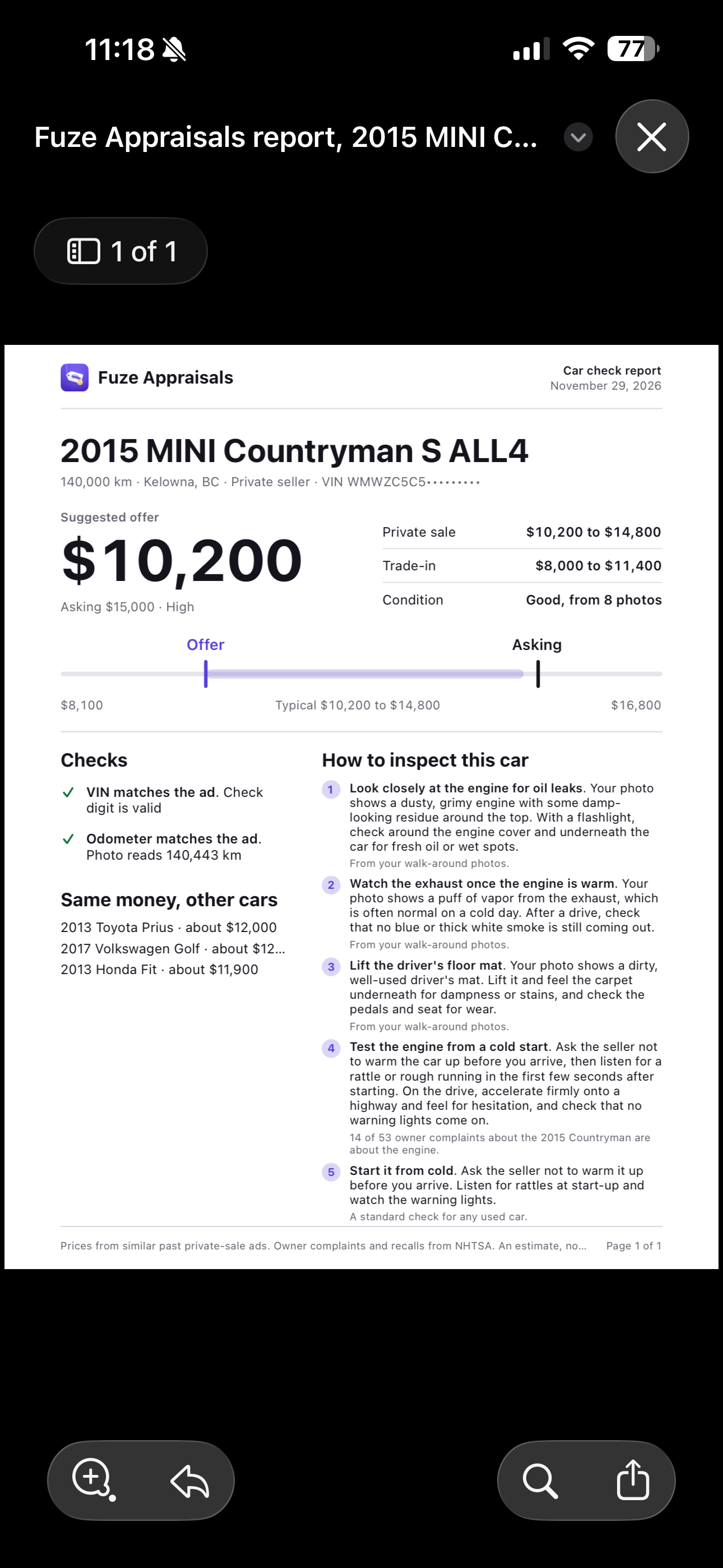
Final scan report
-
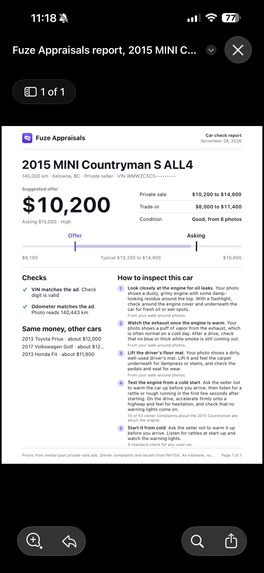
Final scan PDF export
Inspiration
Buying a used car from a stranger is stressful. The seller knows what the car is worth and what's wrong with it, and you get about 20 minutes in their driveway to figure out both. Economists even have a name for it, the "market for lemons", and the original paper used used cars as the example.
When we got the AFTERLIFE theme we started thinking about data that's already "dead". Car ads expire the moment the car sells. Owners have filed thousands of complaints with NHTSA (2,661 for the 2014 Ford Focus alone) and they just sit in a government database nobody reads. We wanted to give all of that a second life by putting it in front of the next buyer.
What it does
Fuze is an iPhone app for people buying a used car from a private seller. It works in two parts.
Before the viewing: you screenshot the ad. The app reads the year, make, model, km and price, shows where the asking price sits against similar past ads (great deal, fair, high, overpriced or suspiciously low), and pulls the NHTSA complaints and recalls for that exact model and year. From the problem owners complain about most, it gives you things to check on the test drive and questions to ask the seller.
At the car: you scan the VIN through the windshield and take eight guided photos. The app checks the VIN's check digit, makes sure the year and make match the ad, reads the odometer off the dash photo and grades the condition. Then you get a report with what to offer, private-sale and trade-in ranges, red flags, what to inspect in person, a few other cars you could get for the same money, and a PDF.
How we built it
- iOS app: SwiftUI with no third-party packages. VisionKit for the VIN scanner, AVFoundation for the photos, ImageRenderer for the PDF, Sign in with Apple.
- Backend: Python + FastAPI, deployed on Render.
- Price model: five LightGBM quantile models (P10, P25, P50, P75, P90) trained on about 50,000 private-seller ads from the Kaggle Craigslist dataset. We converted the US prices to 2026 Canadian dollars with the FRED used-car price index and the Bank of Canada exchange rate.
- Trade-in model: LightGBM trained on about 530,000 wholesale auction sales.
- Safety data: NHTSA's vPIC, complaints and recalls APIs.
- Claude (Opus 5.5): reads the screenshot, grades the photos and writes the advice.
The rule we stuck to all weekend: Claude never sets a price. Every number comes from the models or the data, and if Claude writes a line with a digit in it, we drop it. The offer itself is just
$$\text{offer} = \min(P_{25},\ \text{asking price})$$
and there's no offer at all if something is flagged.
Challenges we ran into
- Government data is messy. The NHTSA complaints API returns zero complaints for the 2015 F-150 no matter how you spell it, even though it lists 14 recalls. So we show "no records found" instead of "no problems", and try a few versions of the model name since ads usually include the trim. Ads saying "Dodge Ram 1500" when the data just says "Ram" was its own headache.
- Our price data isn't perfect. It's US Craigslist asking prices, not what cars actually sold for, and it isn't Canadian. Converting it works, but the ranges are wider than we'd like.
- The trade-in model learns from 2014 to 2015 auctions, and sometimes it predicted a trade-in value above the private-sale range, which makes no sense. We added a fallback for those cases.
- Keeping Claude away from numbers. Prompting alone wasn't something we wanted to trust, so we filter its output in code.
- Six people, very different experience levels, including an econ major who'd never coded. Splitting the work so nobody was stuck waiting took a lot of planning Friday night.
Accomplishments that we're proud of
- Our price model beats just asking Claude. On the same 47 held-out private-sale ads, our median error was 15.2% vs 23.5% for Claude alone.
- The full flow works end to end against our live backend: sign in, screenshot, VIN scan, photos, report, PDF.
- It works for pretty much any car with a 17-character VIN (1981 and newer), not just our demo car.
- We put our real accuracy numbers in the README, including the ones that missed. Our P10 to P90 range catches the listed price 76% of the time, and we were aiming for 80%.
- 128 commits and 39 merged PRs from six people in one weekend.
What we learned
- LLMs are really good at reading messy stuff (screenshots, photos, a dashboard) and not something you want doing math. Splitting the work that way made the app easier to trust and test.
- A price range is only useful if it's right as often as it claims to be, so we had to learn about quantile models and calibration fast.
- Run the baseline early. We tested against Claude on its own Saturday so we'd know the answer before a judge asked.
- Public datasets get you surprisingly far, but you have to read the fine print: asking vs sold prices, US vs Canada, and which sites you're actually allowed to scrape.
What's next for Fuze Appraisal
- Canadian sale data instead of converted US asking prices
- Checking title status (salvage, rebuilt) and showing Canadian recalls in the report
- TestFlight, then the App Store
- Moving jobs out of a single server's memory so it can scale
- A dealer version, so an honest dealer can hand this report to a buyer
