Inspiration
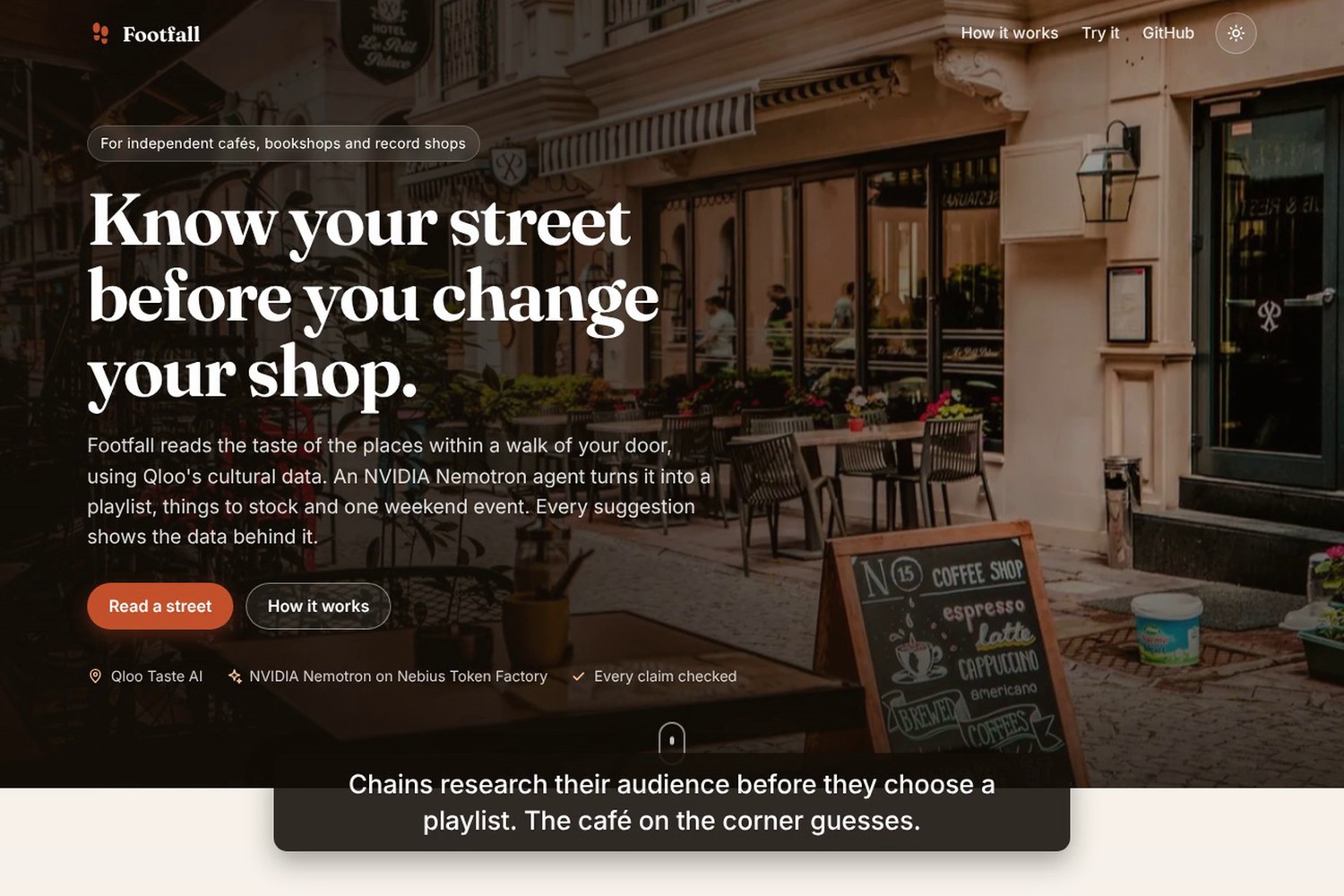
Chains run audience research before they pick a playlist or a product line. The independent café on the corner guesses. The owner knows the regulars, but not the street: the people who walk past on their way to the bar two doors down or the cinema round the corner, and never come in. I wanted to give that owner the street's taste in a form they can act on by Monday.
What it does
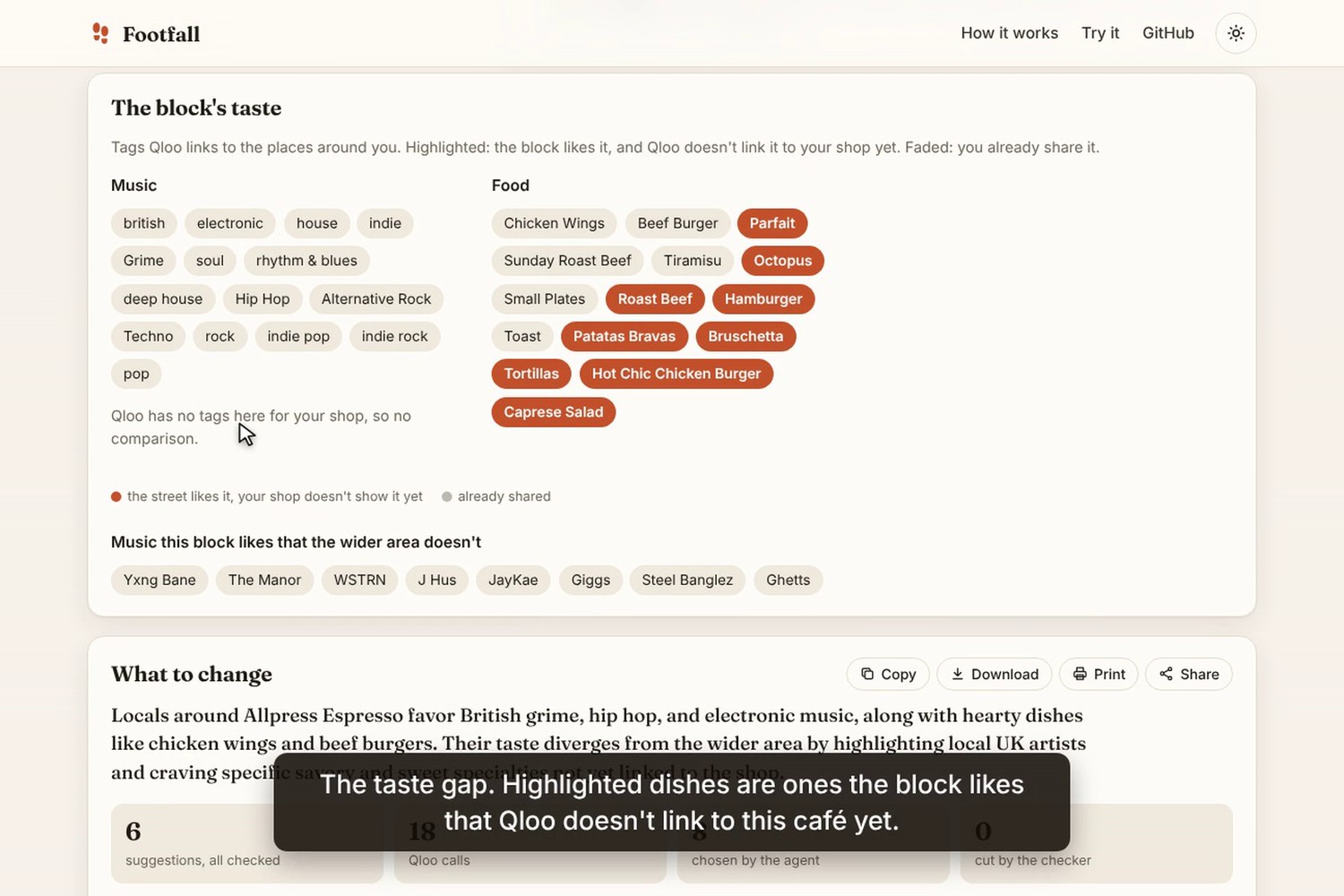
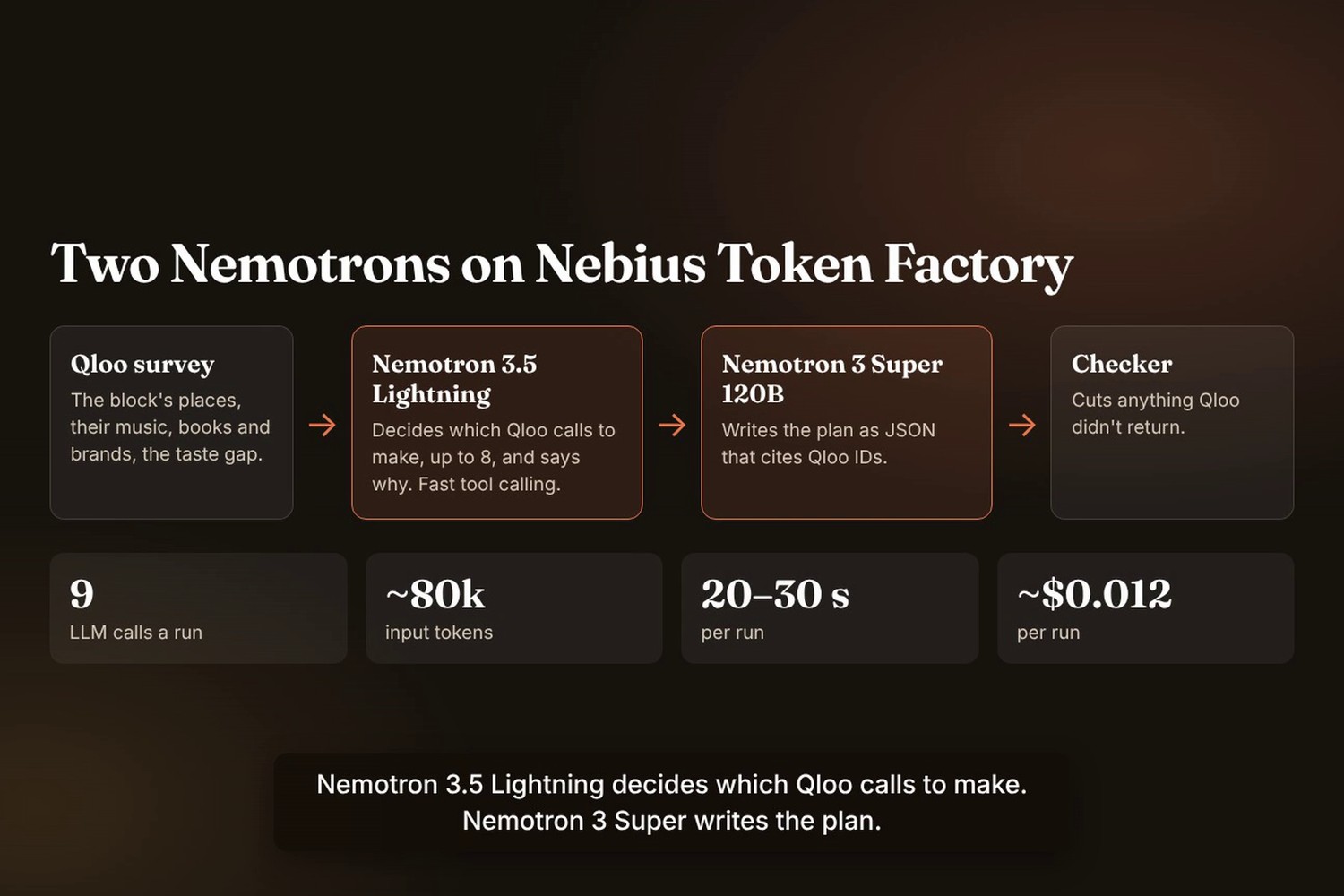
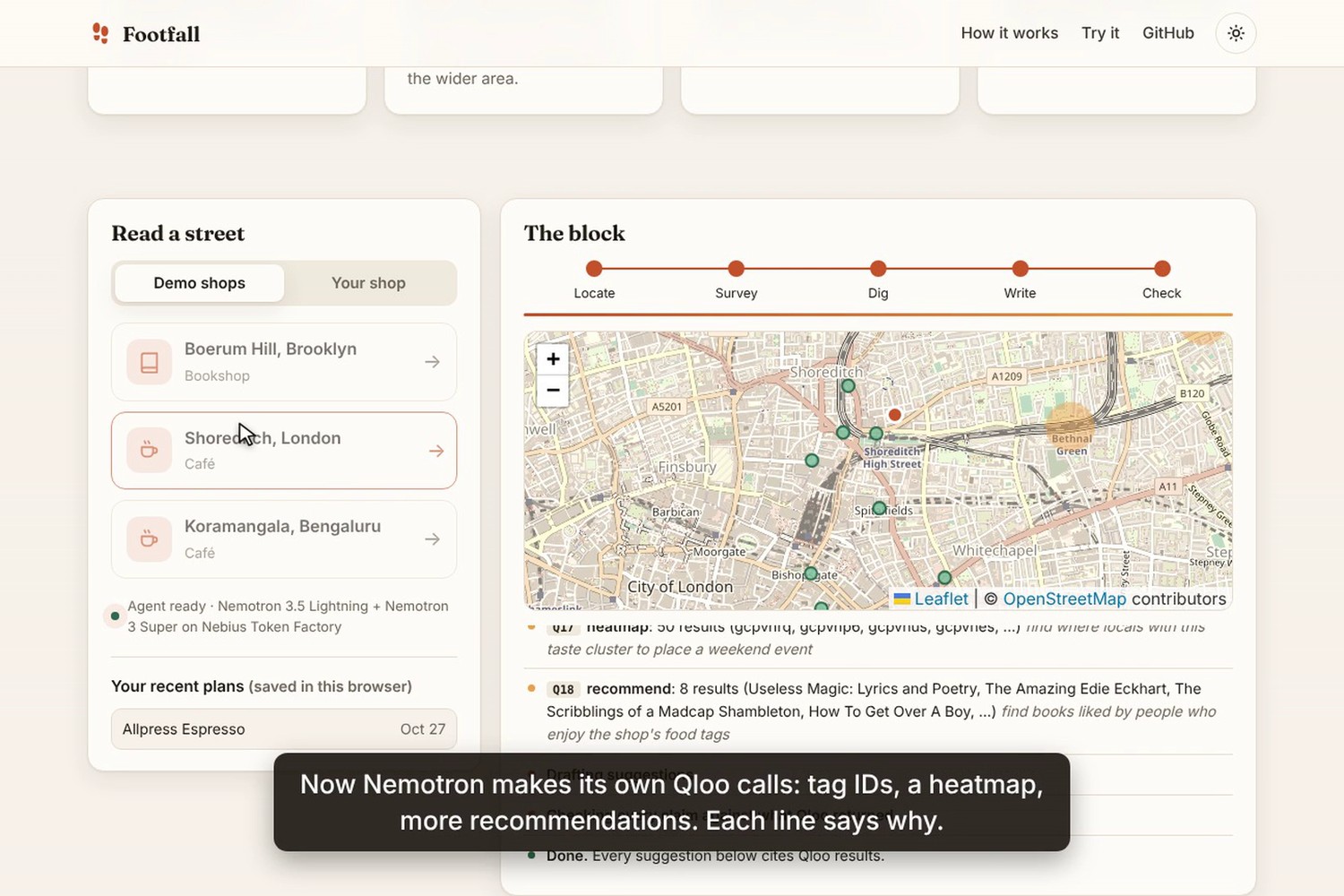
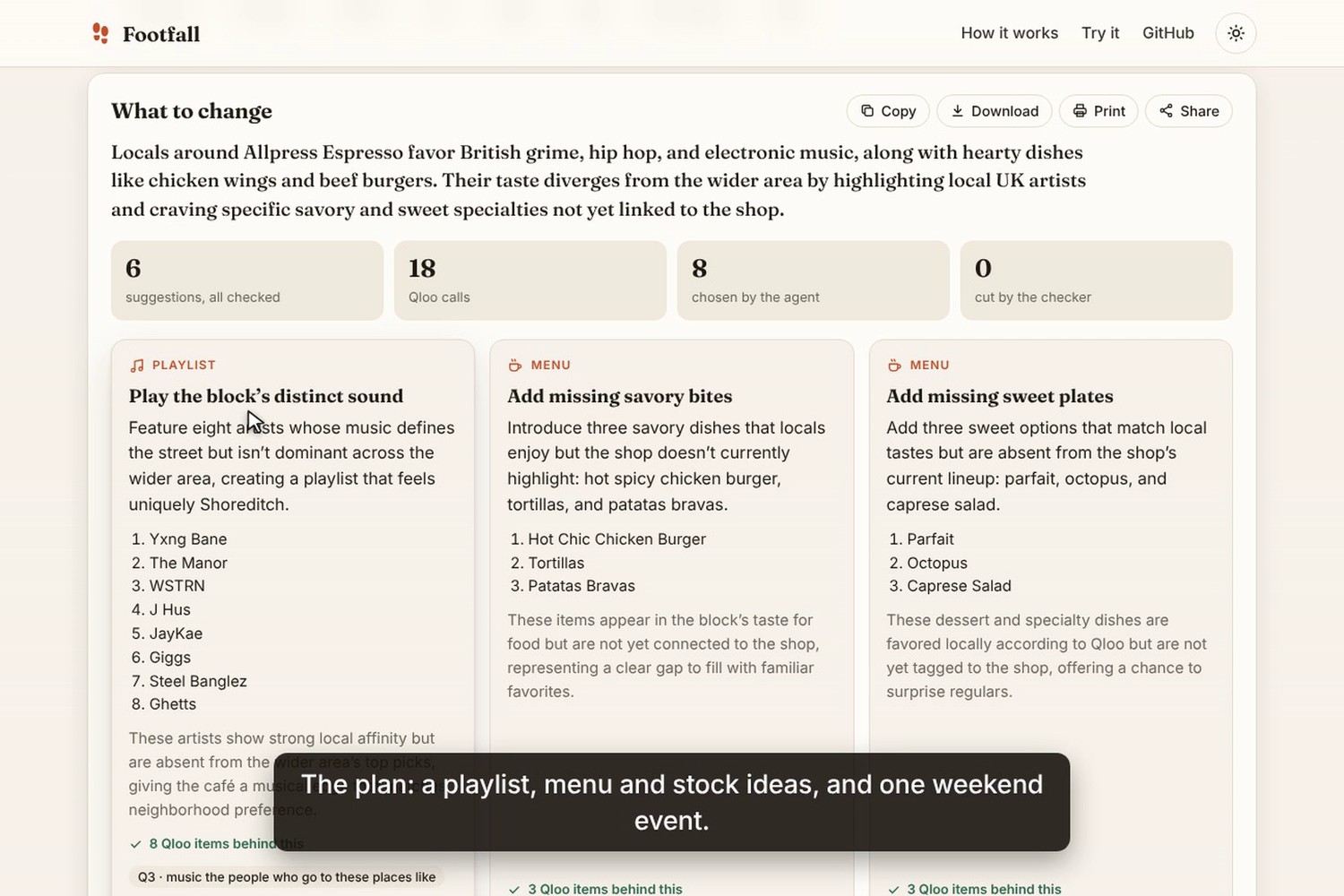
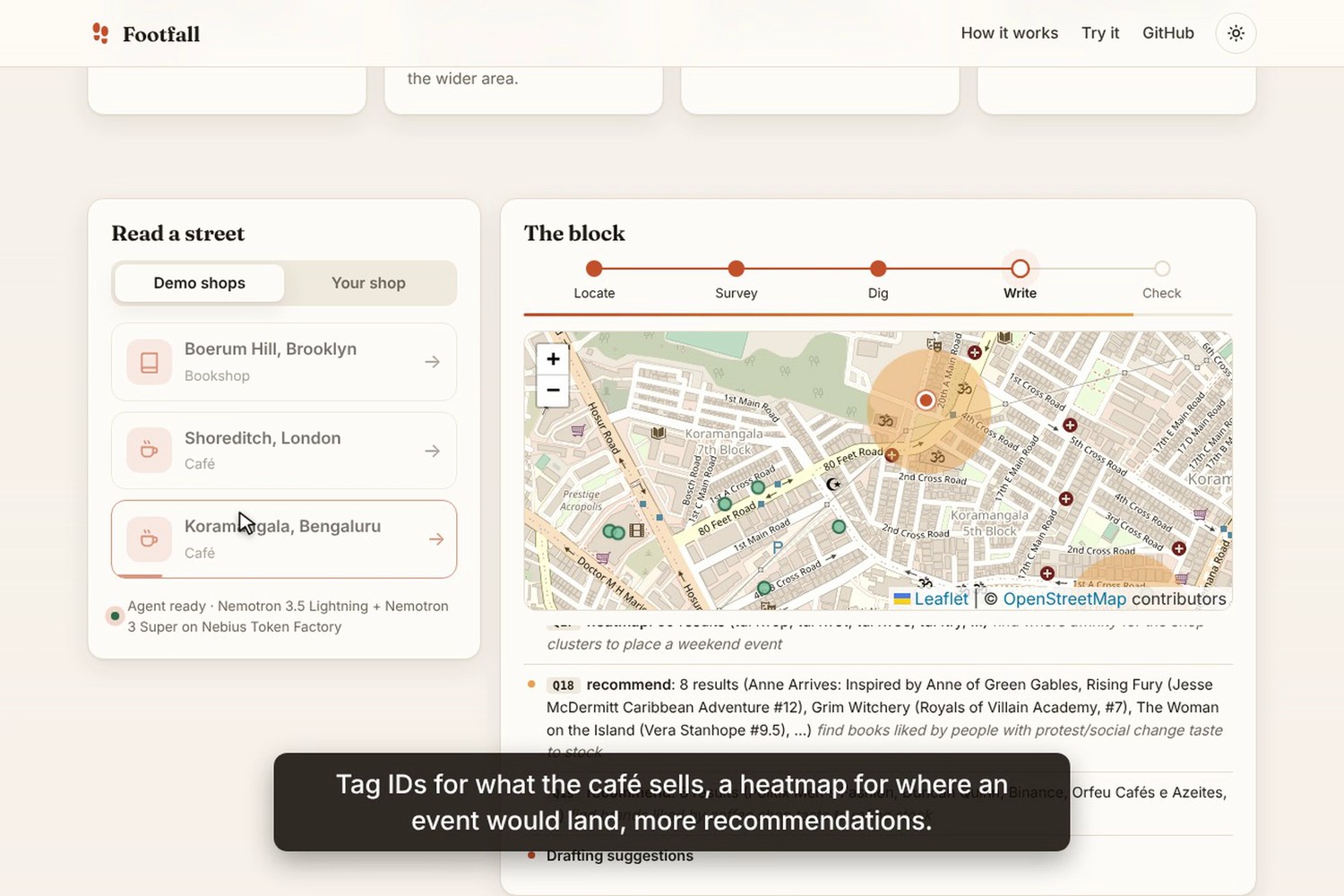
You pick one of three demo shops, or give Footfall your own: name, address, kind of shop and what you sell. Footfall finds the places within a walk of the door on Qloo and works out what the people who go to those places like: music, books, brands and dishes. It compares that with the wider area, and with the shop's own Qloo profile if Qloo knows the shop. Then an agent on NVIDIA Nemotron makes its own extra Qloo calls and writes a short plan: a playlist, things to stock or add to the menu, and one weekend event.
Every suggestion lists the Qloo results it rests on, and you can click through to the exact call. A checker deletes any artist, book, brand, tag or place that Qloo didn't return, and the page shows what it cut and why. The plan can be copied, downloaded or printed.
How I built it
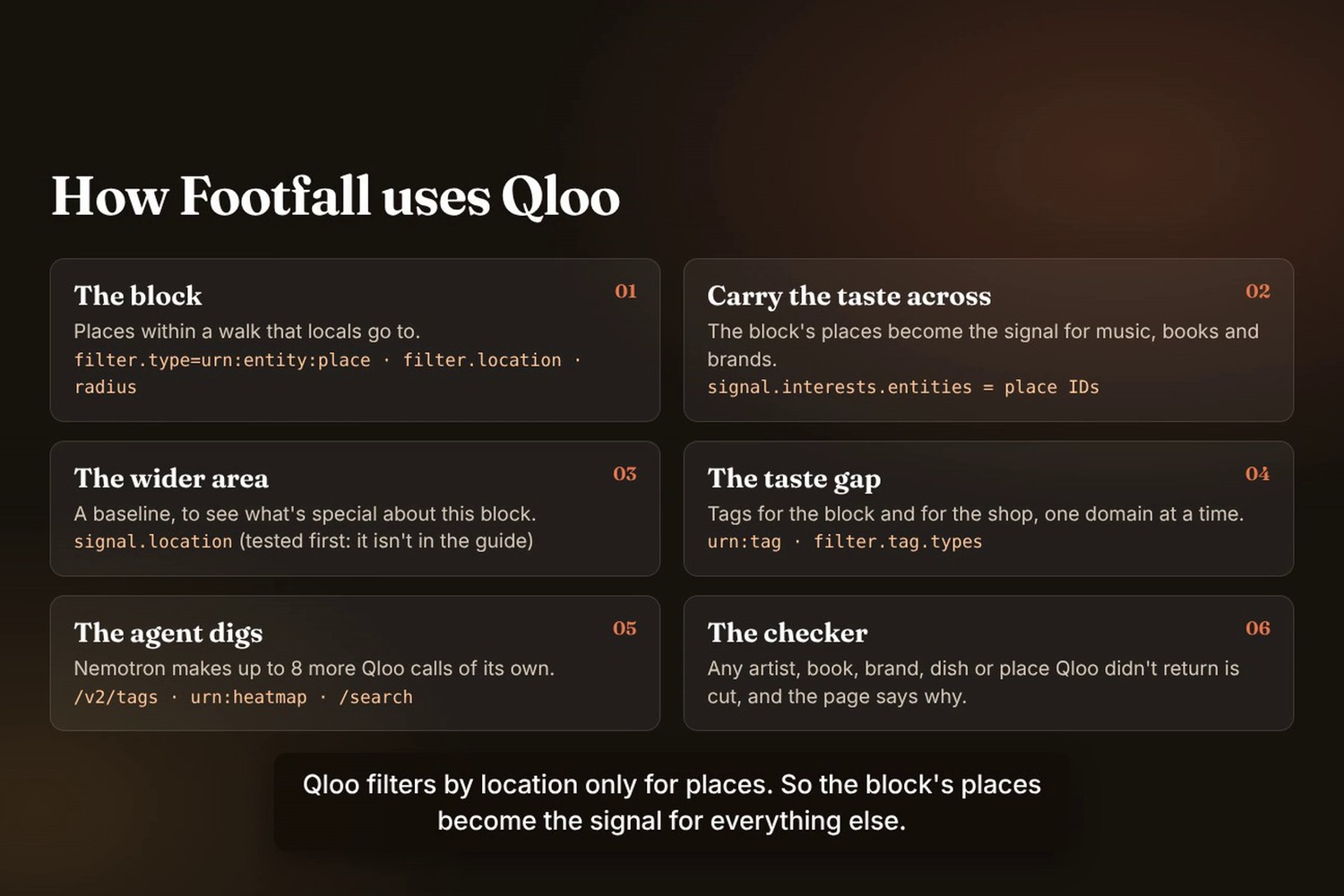
Qloo's insights endpoint filters by location only for places. Footfall uses that as its method.
/searchfinds the shop near the address. The nearest result whose name matches wins, and Footfall re-centres on Qloo's pin for it, which is often closer than the geocoder's.filter.type=urn:entity:placewithfilter.locationand a walking radius gives the block. Hotels, city halls and clinics are left out: they're popular, but they say little about taste.- The block's place IDs go in as
signal.interests.entitiesfor artists, books, brands and people. This is the cross-domain step: what do the people who go to these places listen to, read and buy? signal.locationgives the wider area as a baseline. It isn't in the Entity Type Parameter Guide, so I tested it before relying on it. It changes results at neighbourhood scale, and adding a radius made them less local, so Footfall doesn't send one. The music the block likes and the wider area doesn't is what makes a street different.urn:tagtaste, one domain at a time (music genres, specialty dishes, book genres), for the block and then for the shop. The difference is the taste gap. Unfiltered, the tag results mixed in credit cards and hotel ratings.- The agent can then make up to eight calls of its own:
/v2/tags, more insights, aurn:heatmaparound the shop to place the event, and/search.
Qloo ignores invalid parameters silently, so a typo returns plausible, unfiltered results. Footfall keeps the parameter guide as a table and refuses any request with a parameter that isn't listed for its type. It also reads Qloo's not_found warnings. On my first live runs, one to three of the eight places I sent as signal were being ignored without any error, so now they're swapped for the next places on the block.
The agent runs on two NVIDIA Nemotron models on Nebius Token Factory: Nemotron 3.5 Lightning for the tool calls and Nemotron 3 Super for the write-up. The app is Python and FastAPI with a plain JavaScript page and a Leaflet map, on Render. A run takes 20 to 30 seconds and makes about 18 Qloo calls.
Challenges I ran into
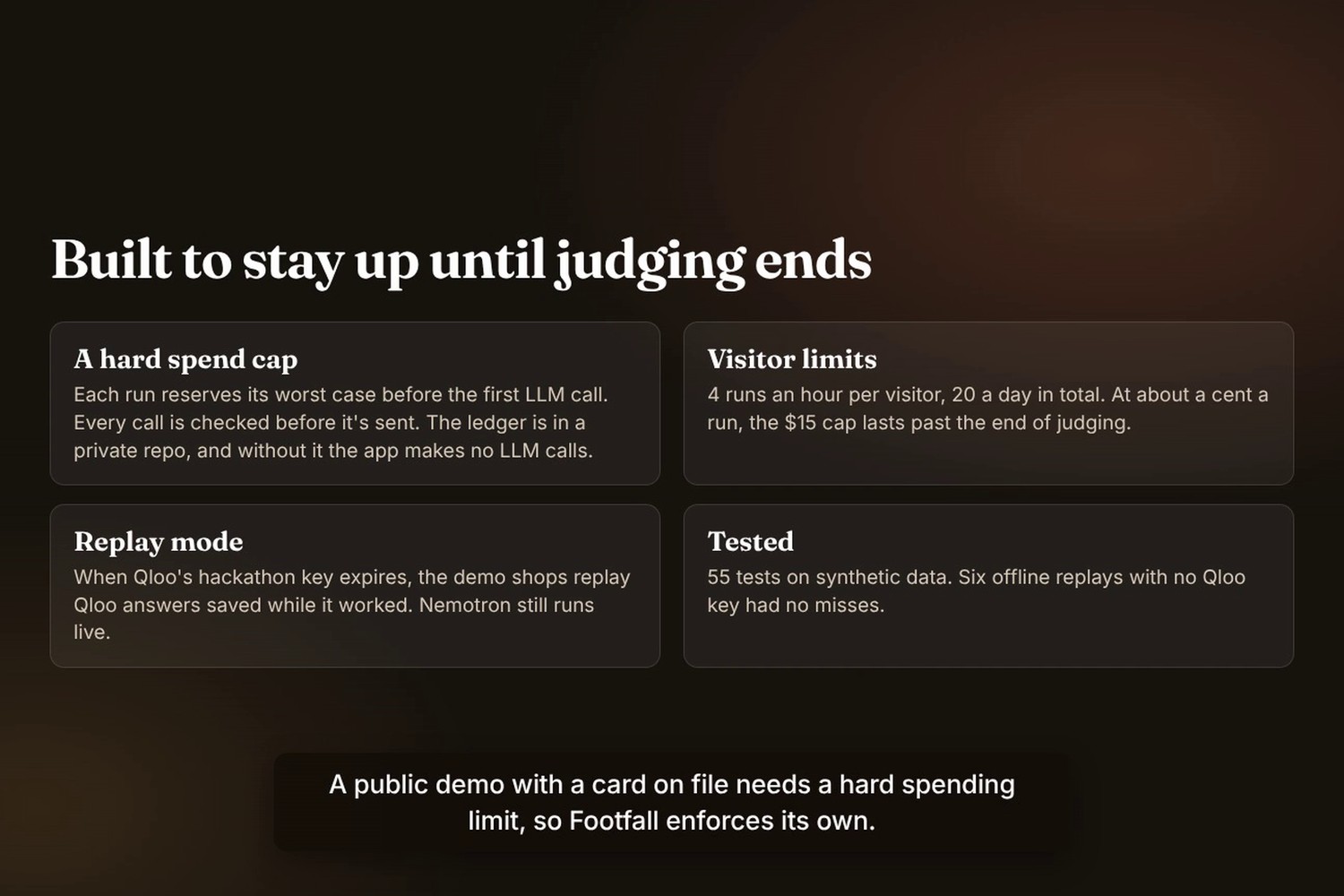
The Qloo key stops working after the hackathon, and I wanted the demo to keep working after that. The three demo shops keep the Qloo answers their runs fetched in a private store, never in the public repo. Once the key stops, they replay those answers while Nemotron still runs live. Temperature 0 didn't make Nemotron repeat its tool calls, so in replay mode it's shown the saved calls and told only those can be answered. Six offline test runs had no misses.
The LLM account has a card on file and no spending limit, so Footfall enforces one. Each run reserves its worst case in a ledger before the first LLM call, every call is checked before it's sent, and the demo stops at a hard cap.
What I'm proud of
The checker. Nothing reaches the shop owner unless Qloo returned it, and the page shows the evidence for every line. On a test where the writer listed tags as books to stock, the checker cut them and said why.
What I learned
Read the warnings. Qloo told me which places it didn't recognise; I just wasn't looking. And test undocumented parameters before building on them: one helped, its radius made things worse.
What's next
Let an owner save their shop and rerun it each month to see the street change, add more kinds of shops, and ask a few real café owners which suggestions they'd actually try.
Try it
Open https://footfall-zz9v.onrender.com and pick a demo shop under "Read a street". A run takes 20 to 30 seconds. The app is on Render's free plan, so the first visit after a quiet spell can take a minute to wake up. After Qloo switches the hackathon key off, the demo shops replay Qloo answers saved while it worked, and Nemotron still runs live.
Built With
- fastapi
- javascript
- leaflet.js
- nebius-token-factory
- nvidia-nemotron
- openstreetmap
- python
- qloo
- render

