Inspiration
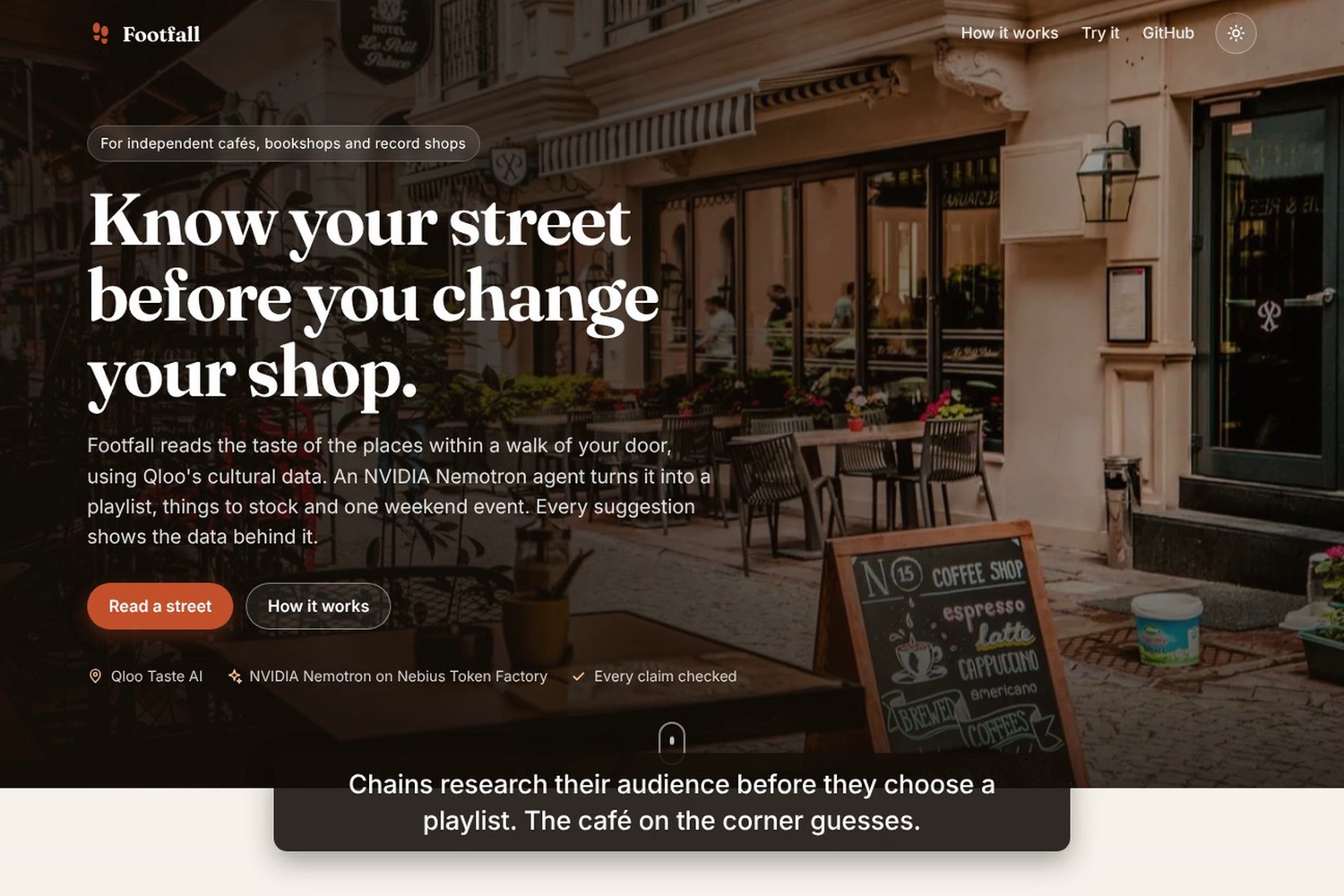
Chains run audience research before they pick a playlist or a product line. The independent café on the corner guesses. The owner knows the regulars, but not the street: the people who walk past on their way to the bar two doors down or the cinema round the corner, and never come in. I wanted to give that owner the street's taste in a form they can act on by Monday.
What it does
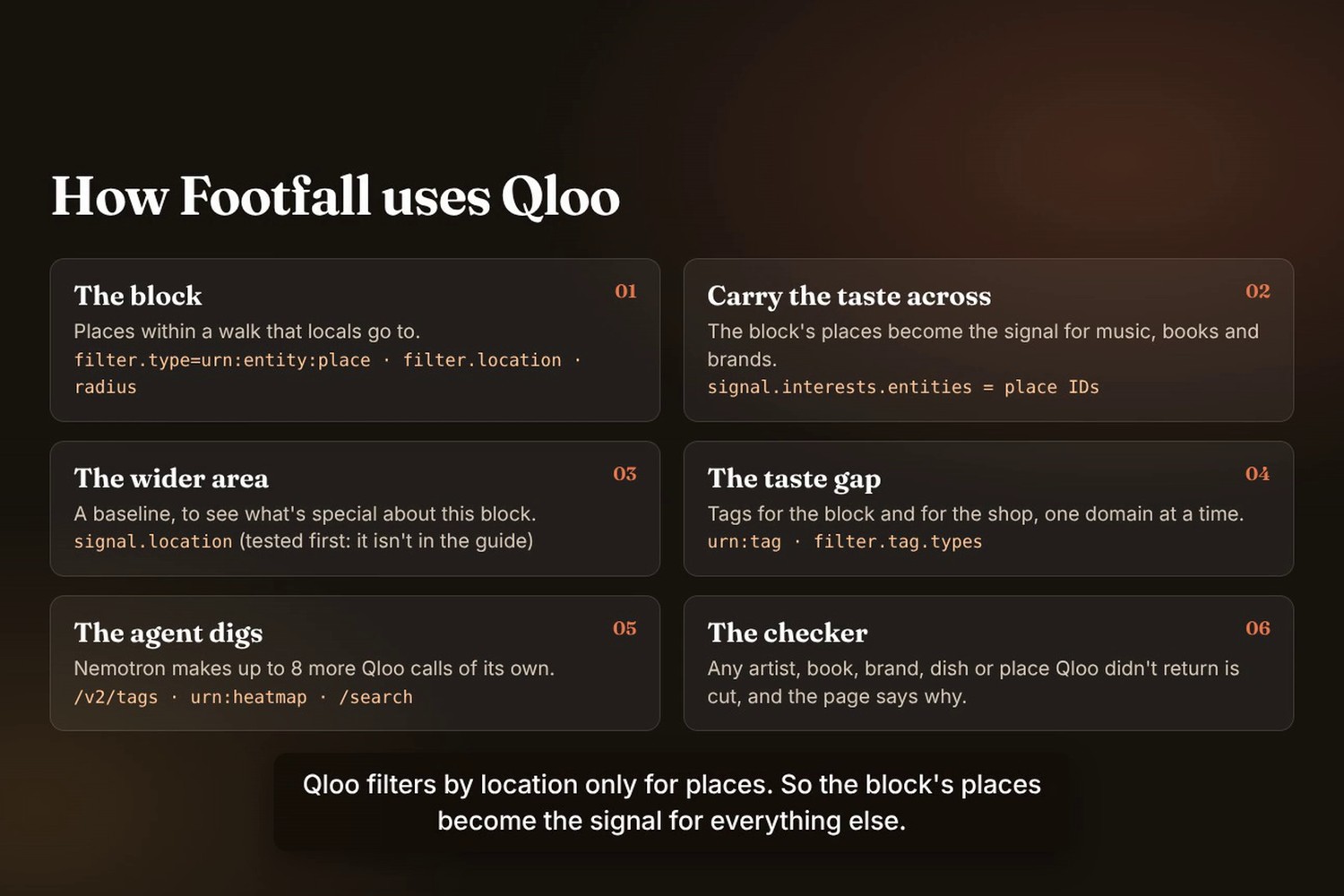
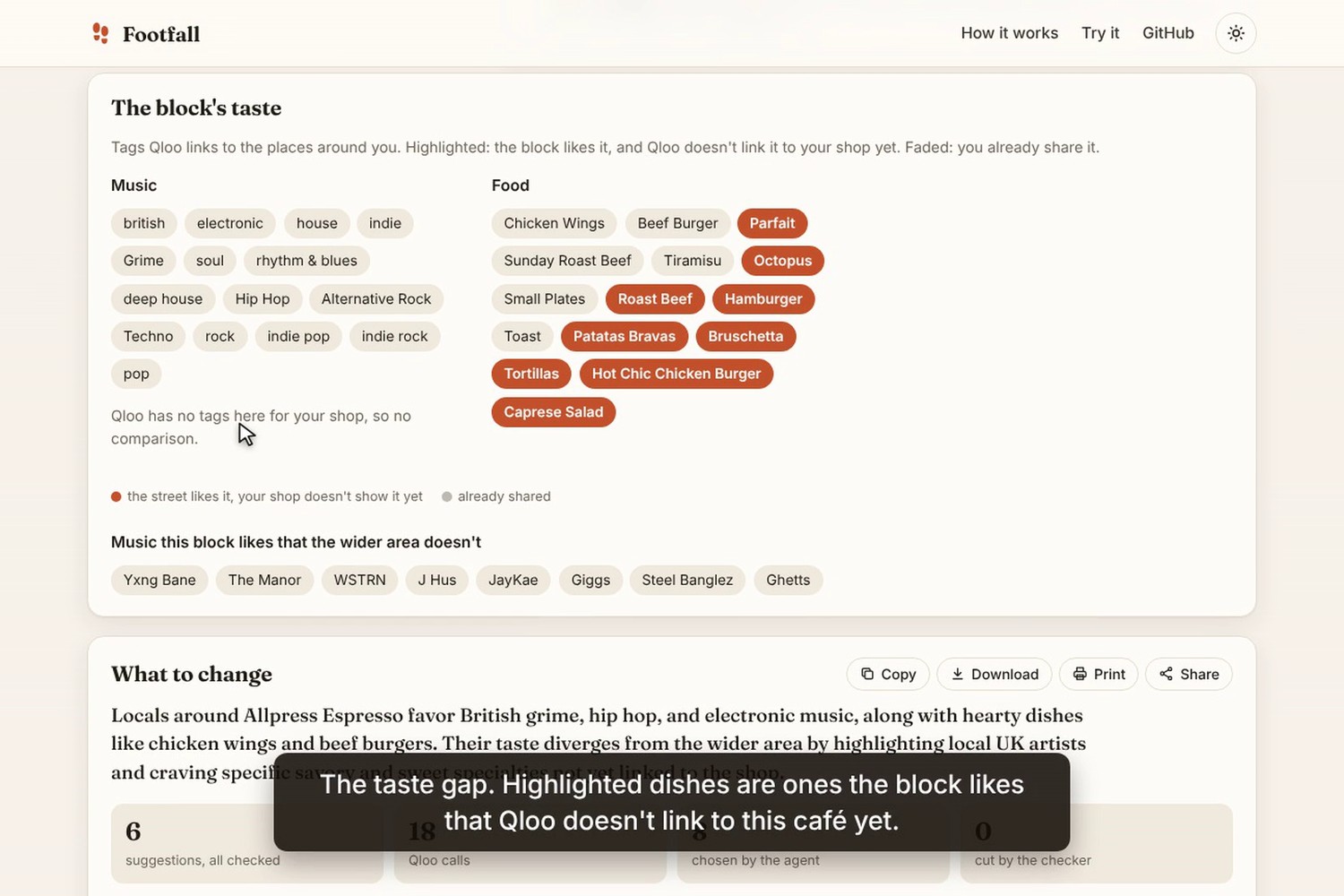
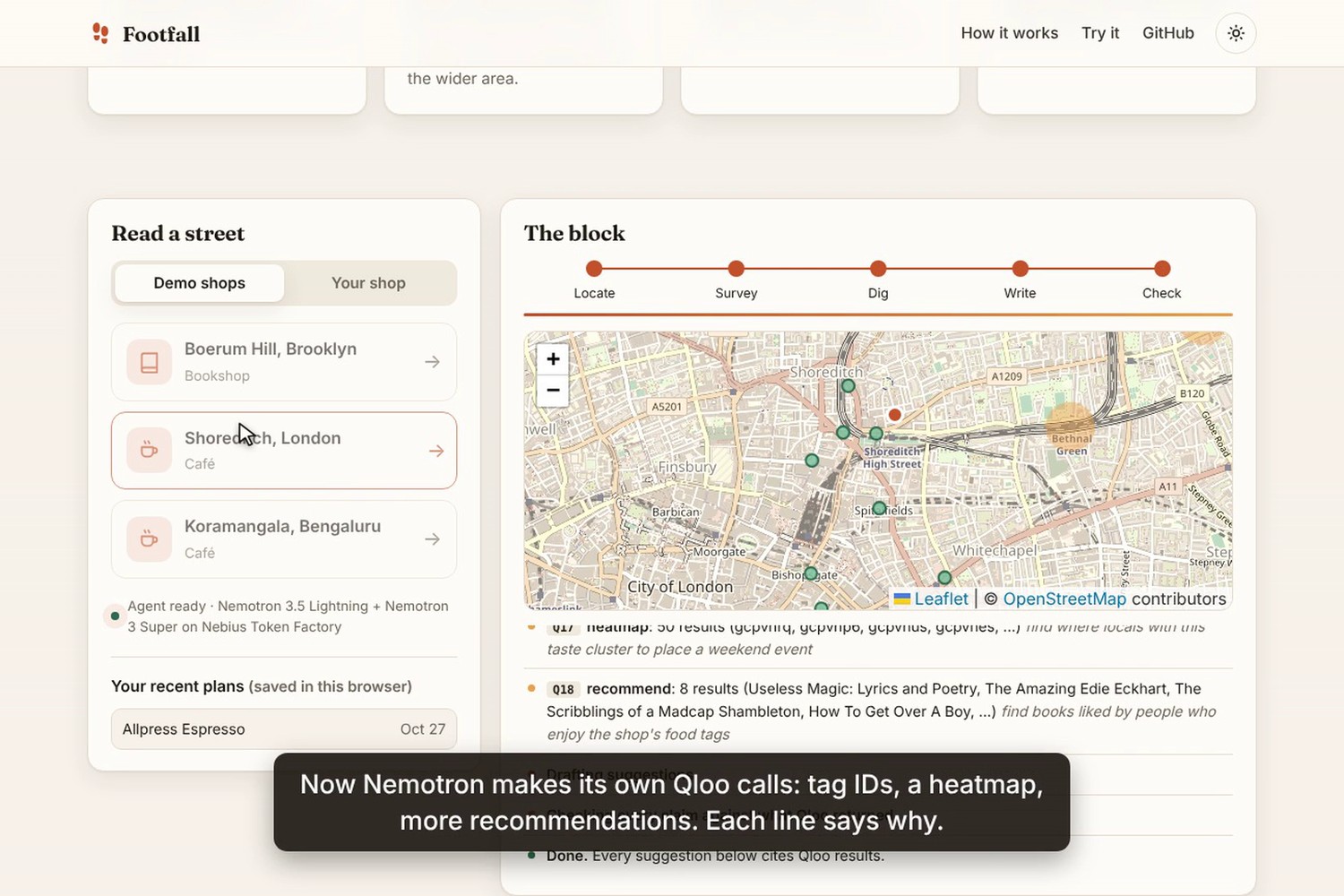
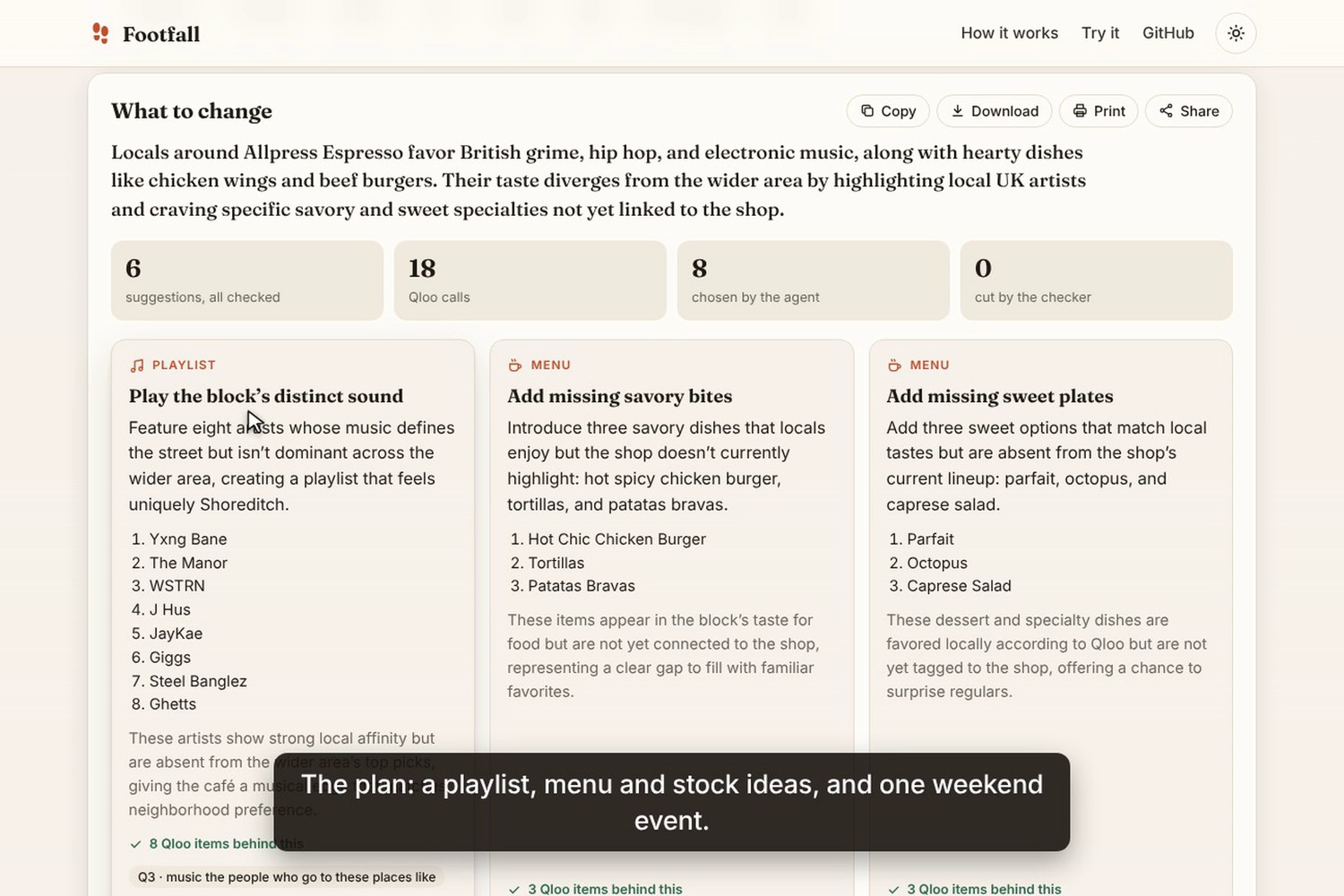
You pick one of three demo shops, or give Footfall your own: name, address, kind of shop and what you sell. Footfall uses Qloo's taste data to find the places within a walk of the door and what the people who go there like: music, books, brands and dishes. It compares that with the wider area and with the shop's own profile. Then an agent on NVIDIA Nemotron makes its own extra Qloo calls and writes a short plan: a playlist, things to stock or add to the menu, and one weekend event.
Every suggestion lists the data it rests on. A checker deletes anything the model cites that Qloo didn't return, and the page shows what it cut and why.
How Nemotron and Token Factory are used
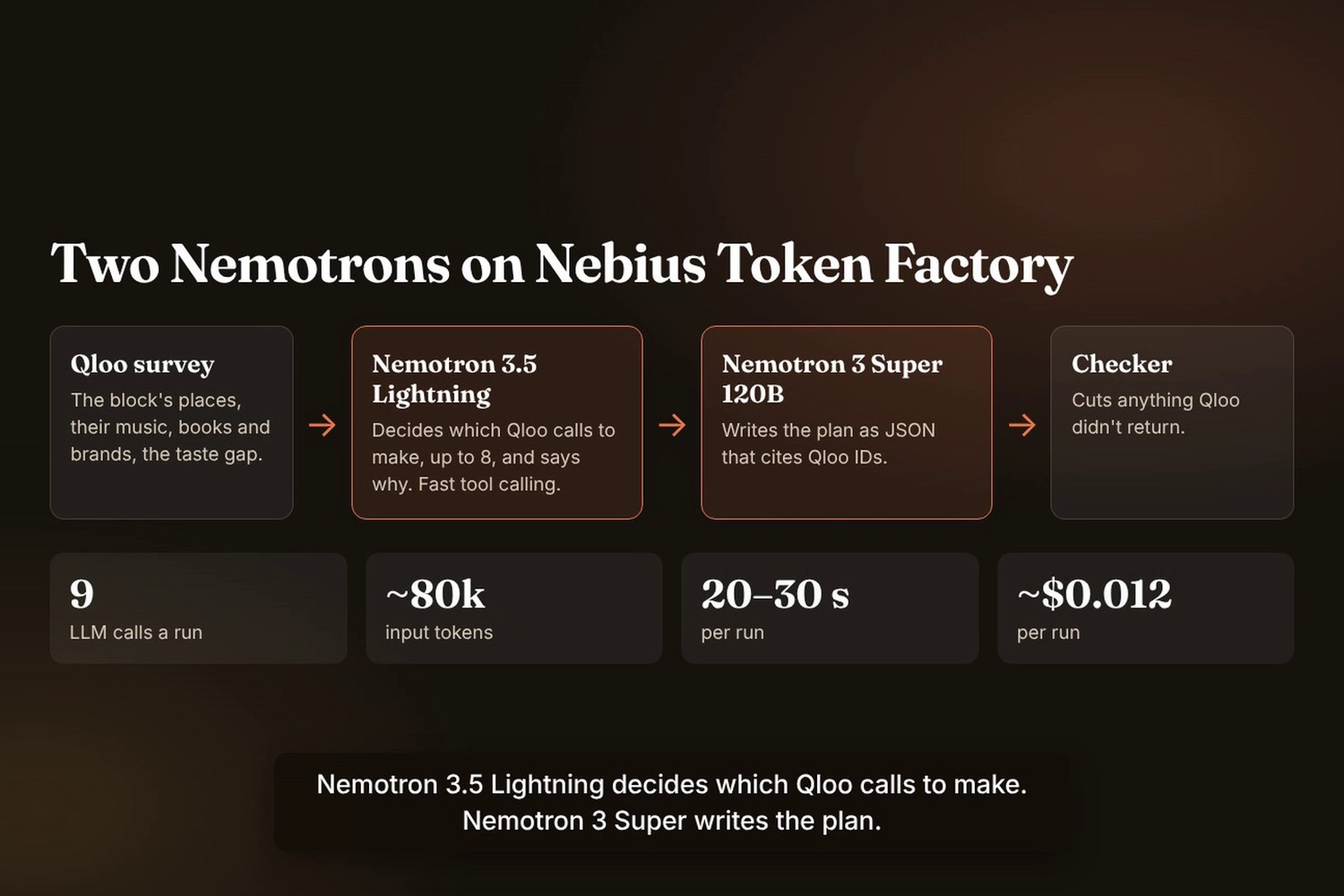
Footfall runs two NVIDIA Nemotron models on Nebius Token Factory, through its OpenAI-compatible API.
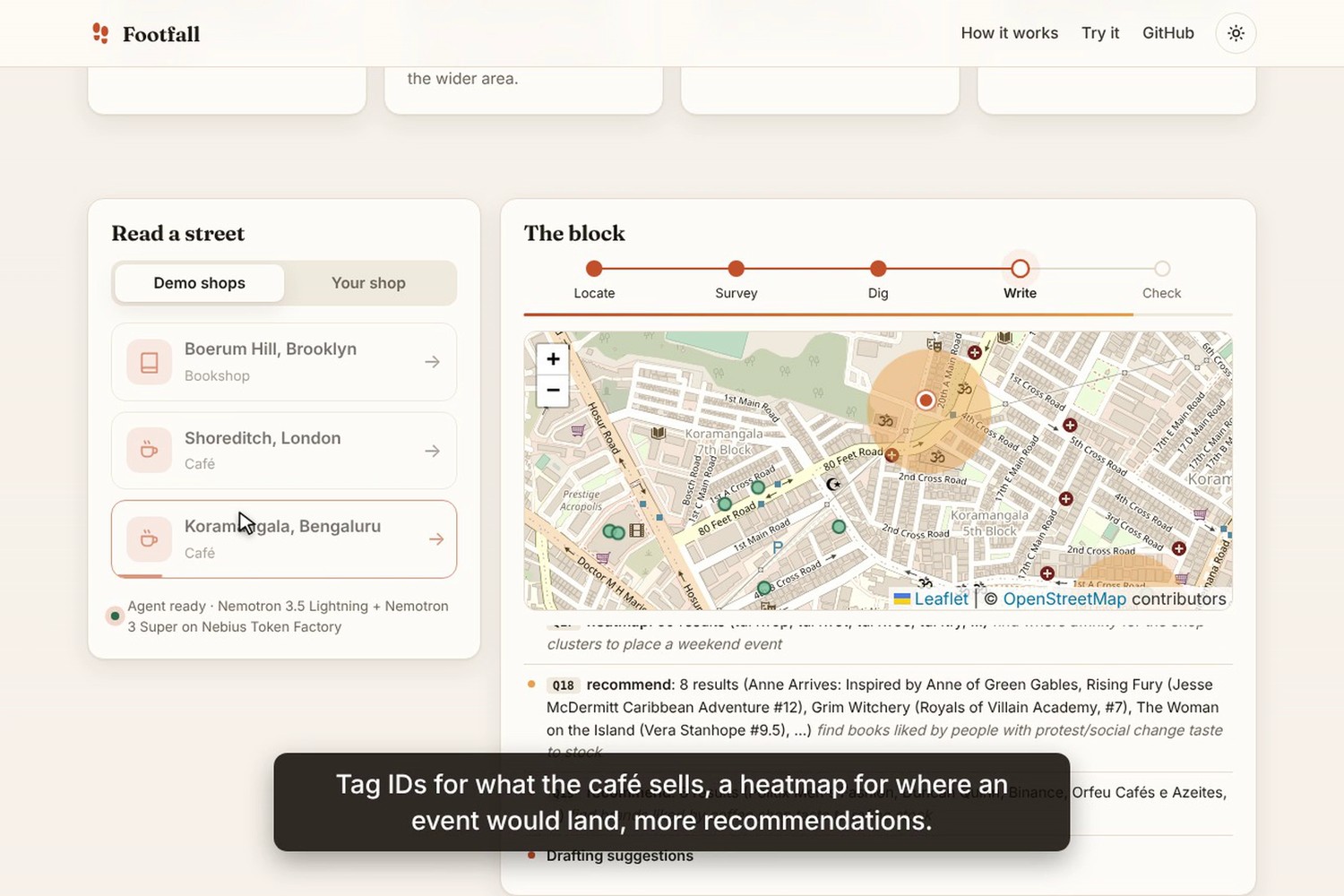
- Nemotron 3.5 Lightning is the investigator. It gets the survey (the block's places, their music, books and brands, the wider-area baseline and the taste gap) plus five Qloo tools as function definitions. It decides which extra calls would sharpen the plan, up to eight: tag IDs for what the shop sells, a heatmap to place the event, more recommendations. Each call and its stated reason show live on the page.
- Nemotron 3 Super 120B is the writer. It drafts the plan as JSON that cites Qloo IDs, and the checker verifies every ID against the calls the run made.
I picked both from Token Factory's own model list (/v1/models?verbose=true gives prices and tool support). Lightning and Nano 30B cost the same; on the same tool-call test Lightning answered in 1.6 s with 118 tokens and Nano in 7.4 s with 483. For writing, I compared models on identical replayed data: with Lightning writing, the checker cut 3 of 5 suggestions on one shop (it listed tags as books to stock); with Super writing, it cut none on any of the three demo shops, for about half a cent more a run. A full run is 9 LLM calls, about 80k input tokens, 20 to 30 seconds and about $0.012.
How I built it
Python and FastAPI, a plain JavaScript page with a Leaflet map, deployed on Render. The Qloo side: insights filters by location only for places, so the block's place IDs become the signal for artists, books and brands. Tag taste is fetched one domain at a time for the block and the shop, and the difference is the taste gap. signal.location, which I tested before using because it isn't in Qloo's parameter guide, gives the wider-area baseline.
Challenges I ran into
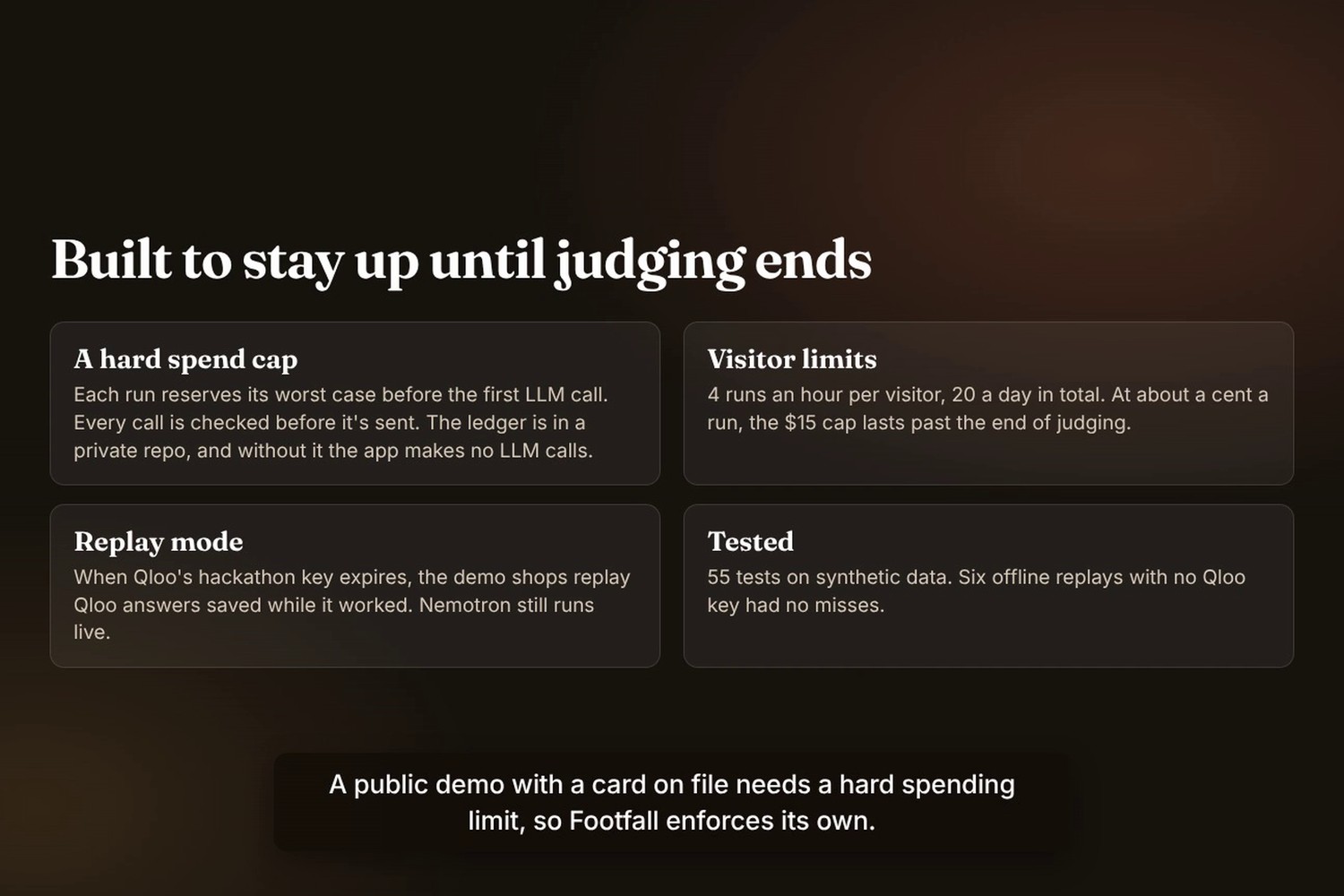
- Spending. The Token Factory account has a card on file and no spending limit, and the demo is public until judging ends. Footfall reserves each run's worst case in a ledger before the first LLM call, checks every call before it's sent, prices it from the usage Token Factory reports and stops at a hard cap of $15, with at most 20 runs a day. The ledger lives in a private GitHub repo because Render's disk is wiped on restart; without it the app makes no LLM calls at all.
- Reasoning ate the output. At the write step, Nemotron with thinking on spent its whole token allowance reasoning and returned no JSON.
chat_template_kwargs: {"enable_thinking": false}on that one call fixed it. With JSON mode on as well, the reply still ran to the limit, so the write step uses neither. - Qloo's hackathon key stops after the hackathon. The demo shops keep the Qloo answers their runs fetched in a private store and replay them later, while Nemotron keeps running live. Temperature 0 didn't make Nemotron repeat its tool calls, so in replay it's shown the saved calls and told only those can be answered. Six offline test runs had no misses.
What I'm proud of
The split between a fast tool caller and a stronger writer, chosen by measurement, and the checker behind them. Nothing reaches the shop owner unless the data says so.
What I learned
Small models are good at deciding what to look up and weaker at writing it up. Spending the extra half cent where the output is read was the best trade I made.
What's next
Let an owner save their shop and rerun it each month, add more kinds of shops, and ask a few real café owners which suggestions they'd actually try.
Try it
Open https://footfall-zz9v.onrender.com and pick a demo shop under "Read a street". A run takes 20 to 30 seconds. The app is on Render's free plan, so the first visit after a quiet spell can take a minute to wake up. Every run calls Nemotron live on Token Factory. After Qloo switches its hackathon key off, the demo shops replay Qloo answers saved while it worked.
Built With
- fastapi
- javascript
- leaflet.js
- nebius-token-factory
- nvidia-nemotron
- openstreetmap
- python
- qloo
- render

