Inspiration
FoodLoop started with a simple frustration: opening a fridge full of food and still not knowing what to cook, while groceries quietly expired in the back. That often leads to wasted food, duplicate shopping, and perfectly usable ingredients ending up in the trash.
We wanted to build something that tackles food waste at the household level while making sustainability practical and engaging. Instead of creating another standalone recipe app or another food-sharing platform, we wanted to connect the entire journey: manage what you have → cook with it → share what you don't need → discover surplus nearby.
What it does
FoodLoop is a technology-powered platform designed to help people reduce food waste through one connected loop.
Our hackathon MVP focuses on four core features:
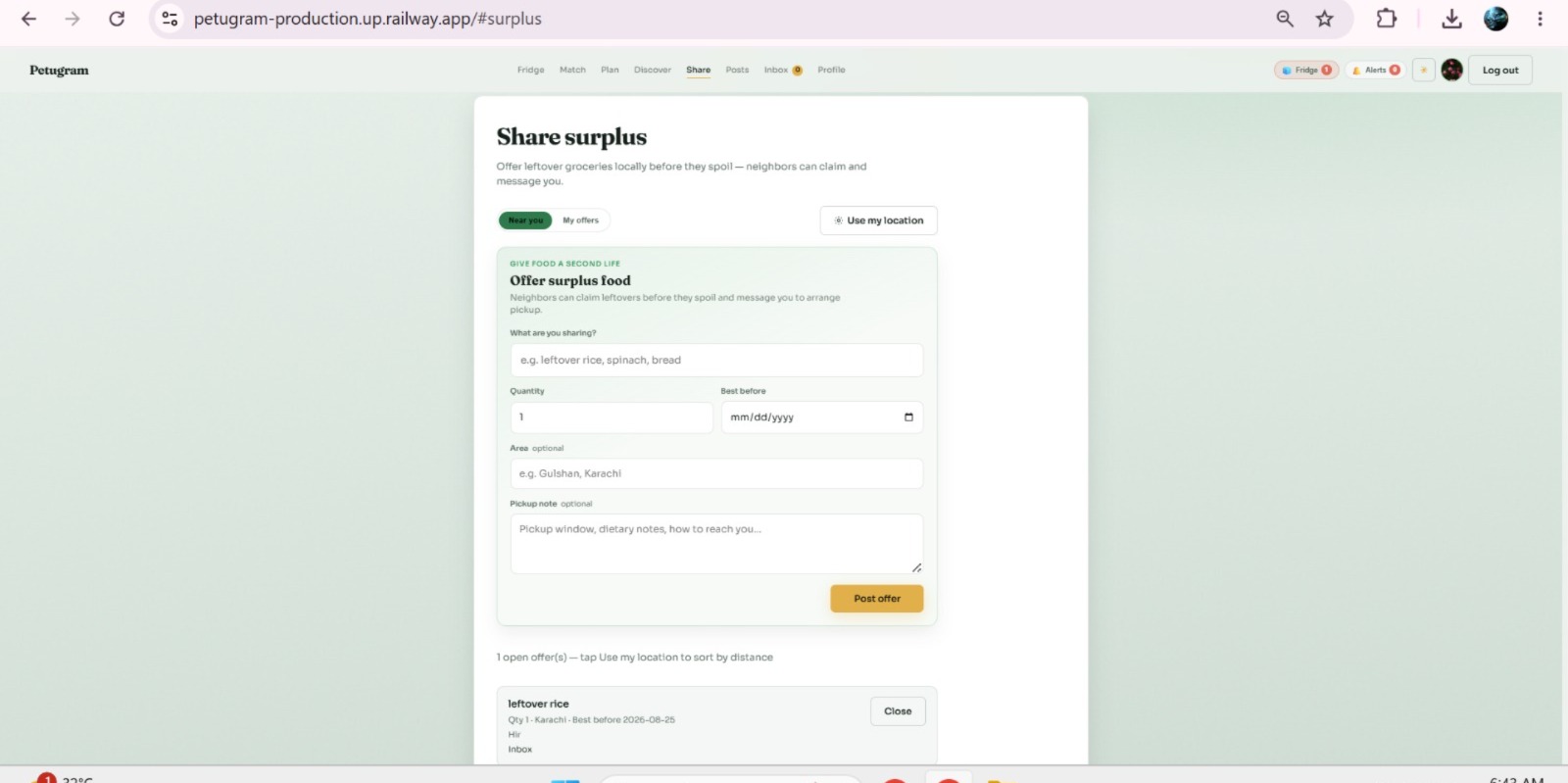
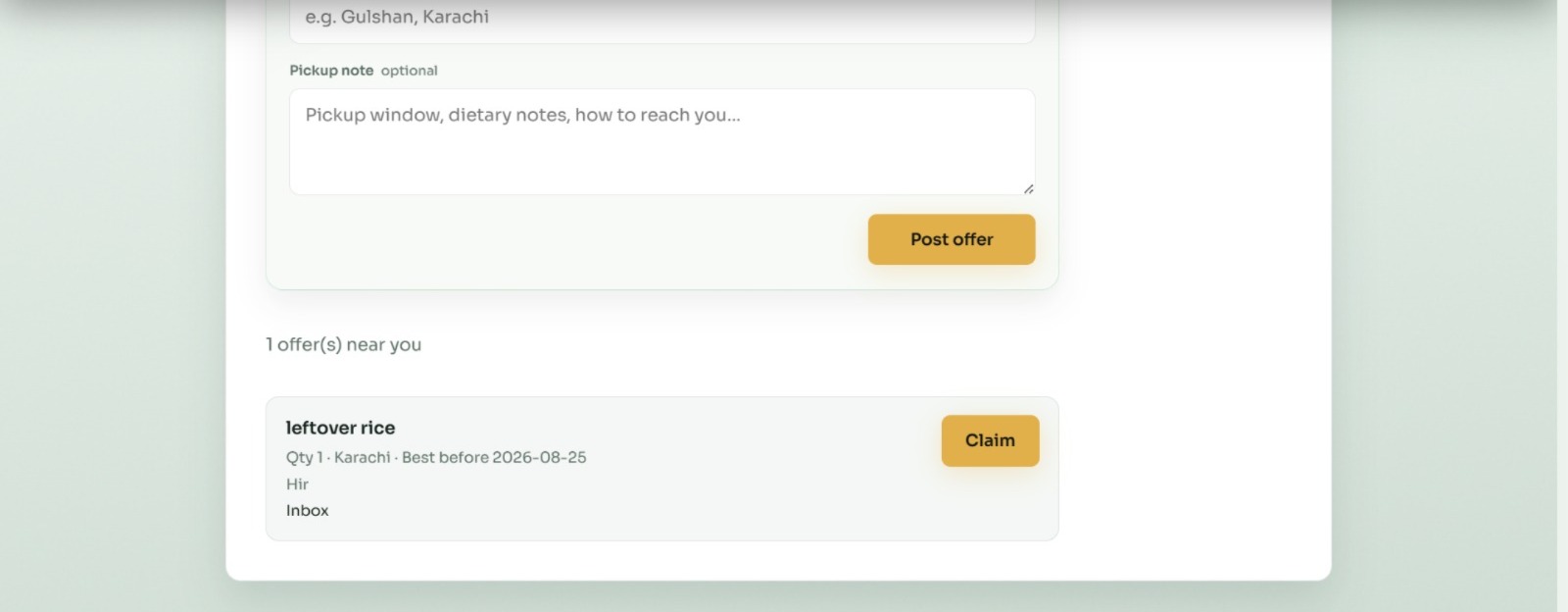
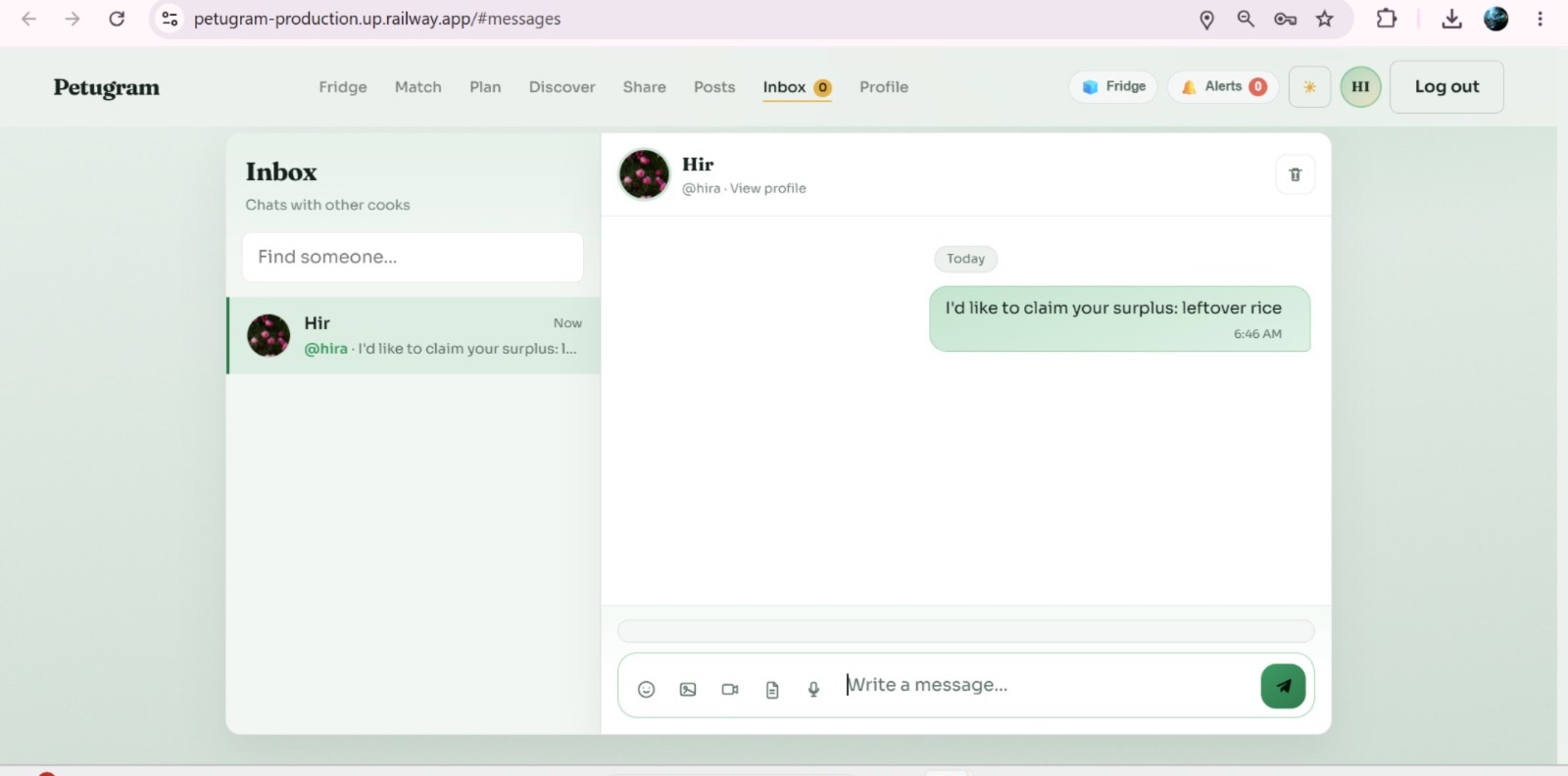
Manage: Add food through barcode scanning, photo/vision recognition, or manual entry and track expiry dates. Cook: Generate AI-powered recipes based on the ingredients a user already has, prioritizing food that is expiring soon. Share: List surplus food for others to discover, whether it comes from an individual or a business. Discover: Find nearby shared food using an interactive map, with distance and listing-type filters and a claim/pickup flow.
The goal is simple: turn food that might become waste into a meal, a share, or a useful discovery.
How we built it
We built FoodLoop as a full-stack application using:
HTML, CSS, and Vanilla JavaScript for the frontend Python, FastAPI, and Uvicorn for the backend MongoDB and PyMongo for data storage Hugging Face models for AI recipe generation, embeddings, and vision Open Food Facts for food/product data Leaflet + OpenStreetMap for location-based food discovery
We deliberately focused on building a functional core loop rather than creating many shallow features. The four main features — Manage, Cook, Share, and Discover — are connected into one working MVP. Features such as advanced planning, community creation, deeper connections, and impact tracking are part of our roadmap rather than features we wanted to overclaim in the hackathon build.
Challenges we ran into
One of our biggest challenges was connecting several different technologies into one coherent experience. Food recognition, inventory management, AI recipe generation, location-based discovery, and food sharing each have different technical requirements.
We also had to make the project realistic within the limited time of a hackathon. Instead of trying to fully build every part of our original eight-step vision, we prioritized the features that create the strongest end-to-end experience.
Another challenge was making AI useful rather than simply adding AI for the sake of it. We wanted the recipe system to actually understand the user's available ingredients and prioritize items that are closest to expiring.
Accomplishments that we're proud of
We're proud that we built a working MVP that connects inventory → AI cooking → surplus sharing → local discovery into one continuous experience.
We're especially proud of:
Building the core product loop end-to-end during the hackathon Integrating AI into an actual food-waste workflow Supporting both individual and business surplus listings Creating a location-based discovery experience using open mapping infrastructure Using Open Food Facts and OpenStreetMap to help make the concept globally scalable Keeping our MVP focused instead of overbuilding features we couldn't properly finish
Most importantly, we didn't want to build just another recipe generator. We wanted to build a system that helps food stay useful for longer.
What we learned
We learned that solving a real-world problem isn't just about adding more features. The most important part is connecting the features into a meaningful user journey.
We also learned how challenging it can be to integrate AI, external data sources, maps, databases, and a backend into a single product while maintaining a simple user experience.
Most importantly, we learned to prioritize a functional core over an ambitious but incomplete product. That helped us turn our larger eight-step vision into a focused MVP with a clear purpose.
What's next for FoodLoop
Our next step is to take FoodLoop beyond the hackathon MVP and develop the rest of the loop:
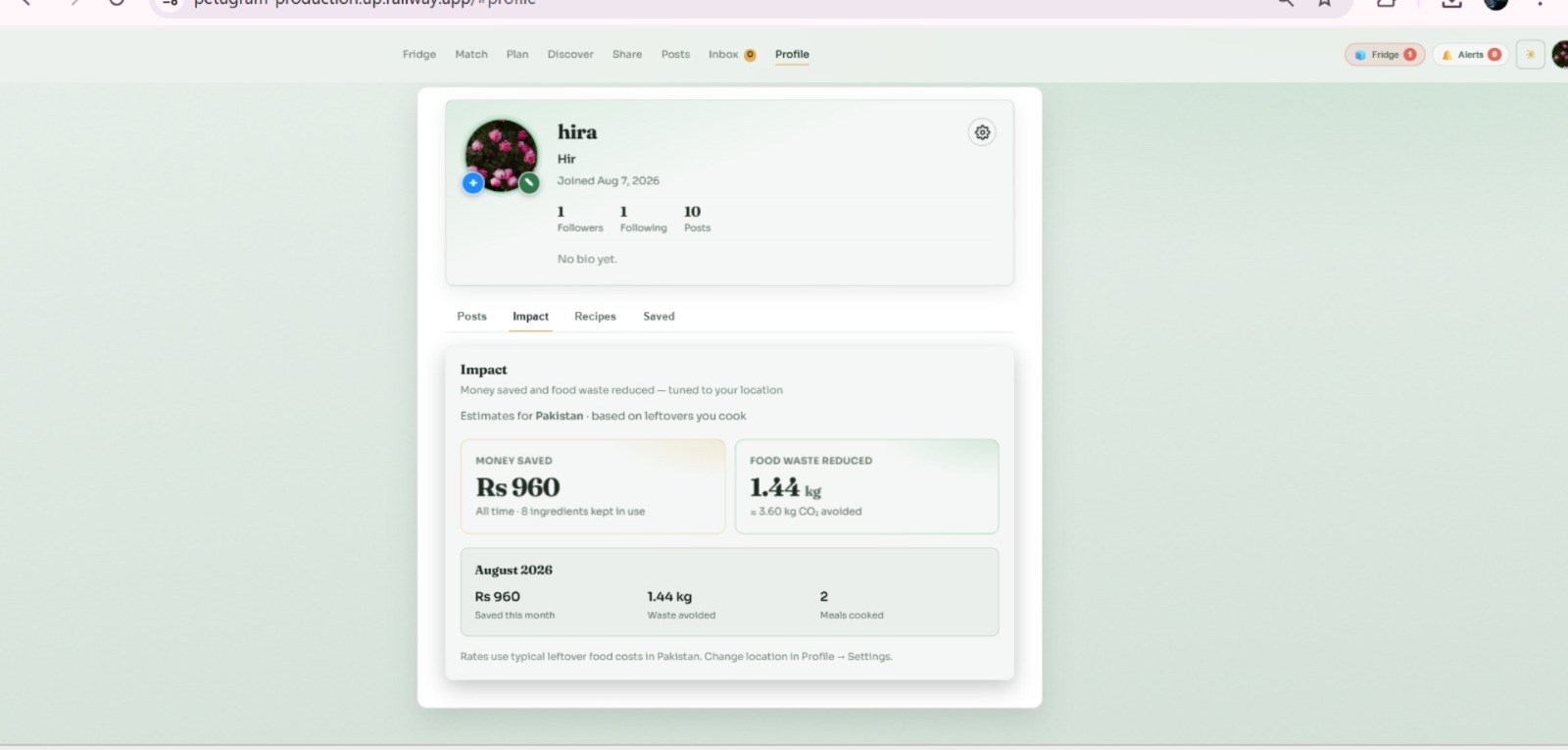
Plan: Generate smarter shopping suggestions based on existing inventory. Create: Let users share recipes and community content. Connect: Build stronger local food communities. Impact: Show users how much food and waste they have helped save. Pilot FoodLoop with a campus or local community. Add mobile apps and push notifications for daily engagement. Expand partnerships with local food businesses and community organizations. Scale the platform across regions using the same core infrastructure.
Our long-term goal is to make reducing food waste feel less like a chore and more like a natural part of everyday life.
FoodLoop: manage what you have, cook what you can, share what you don't need, and keep good food in the loop.
Built With
- ai
- computer-vision
- css3
- fastapi
- html5
- hugging-face
- javascript
- leaflet.js
- machine-learning
- mongodb
- open-food-facts
- openstreetmap
- python
- rest-api
- uvicorn

Log in or sign up for Devpost to join the conversation.