-
-
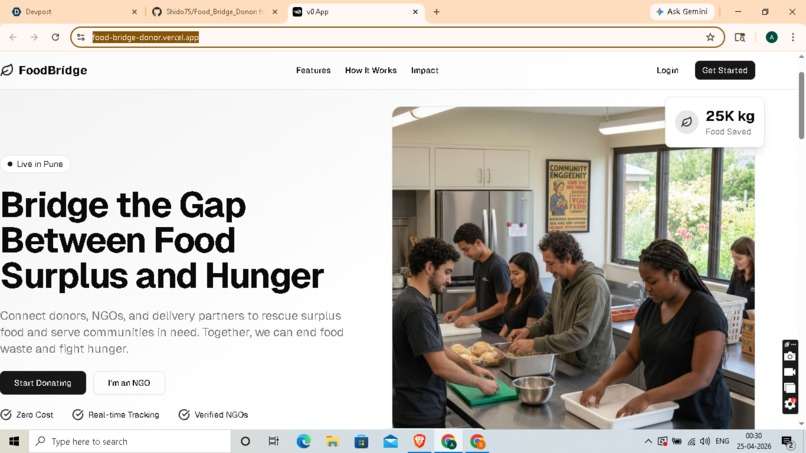
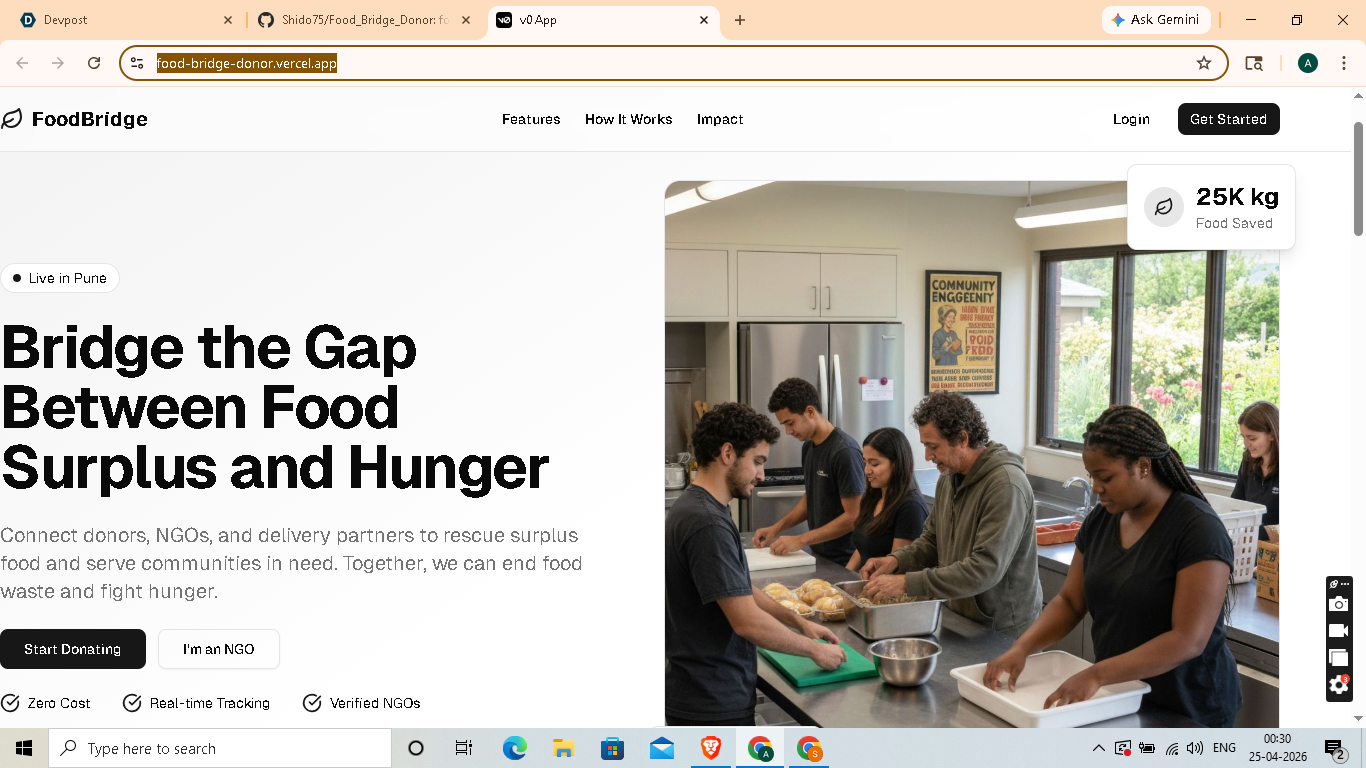
Landing page
-
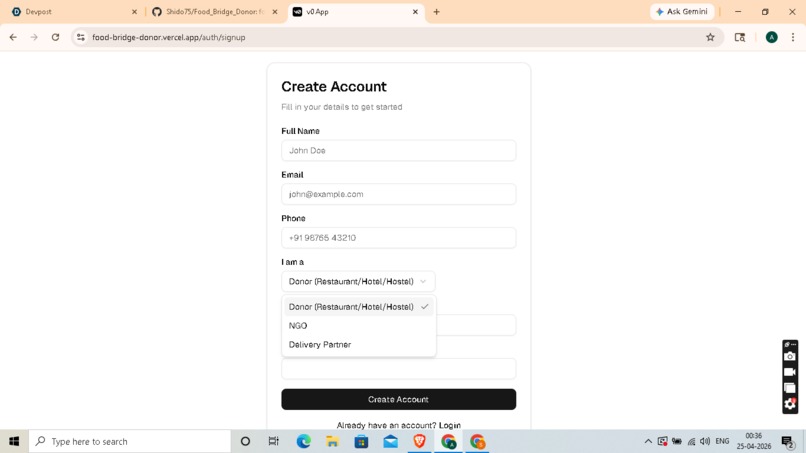
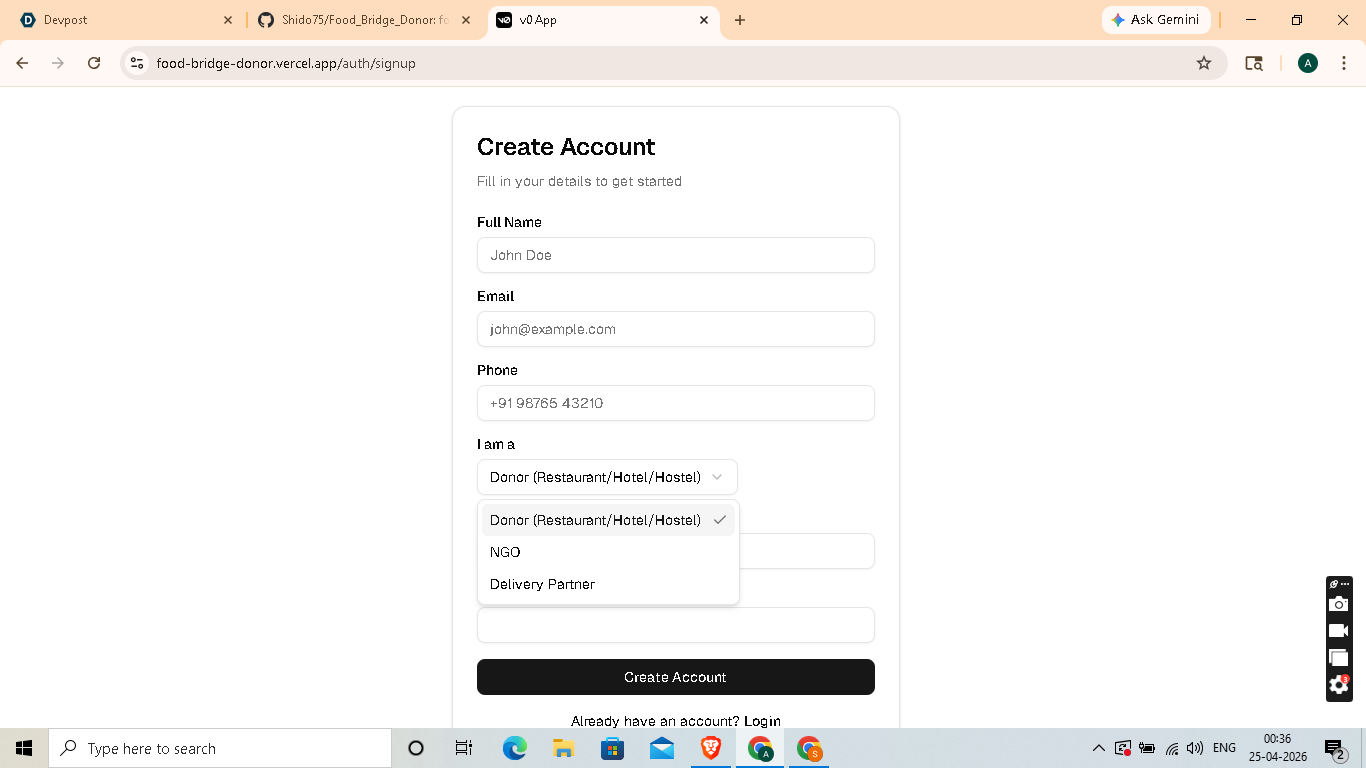
Scalable signup flow for Pune. Verified roles enable safe, real-time collaboration between businesses and social causes.
-
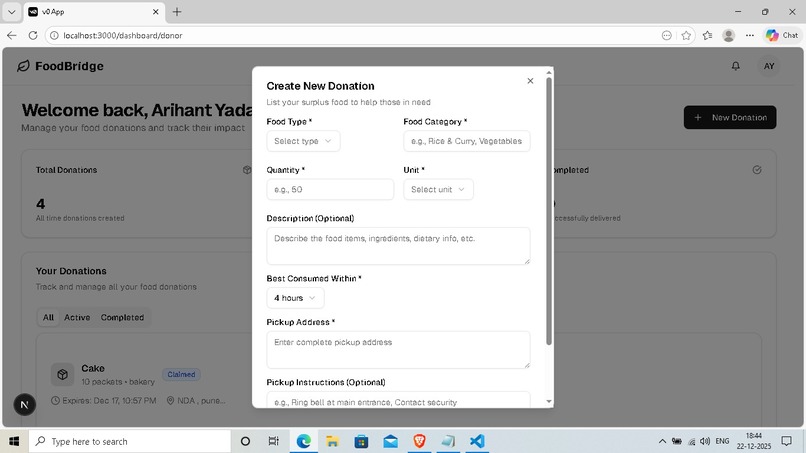
Donor
-
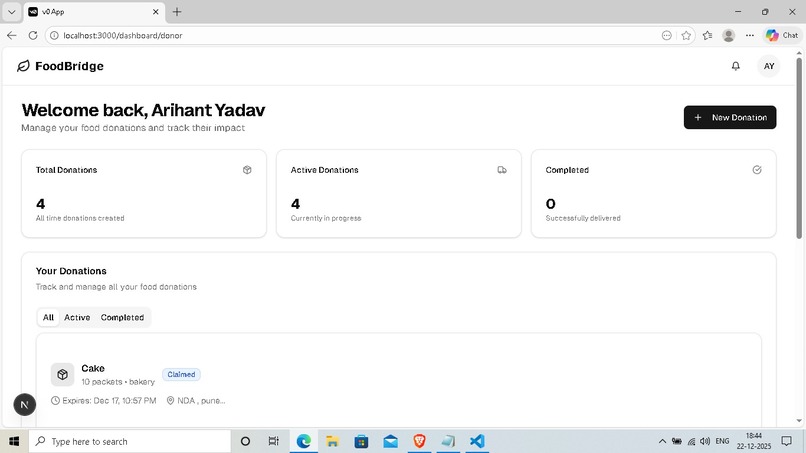
The person who is donating the food is doing it.
-
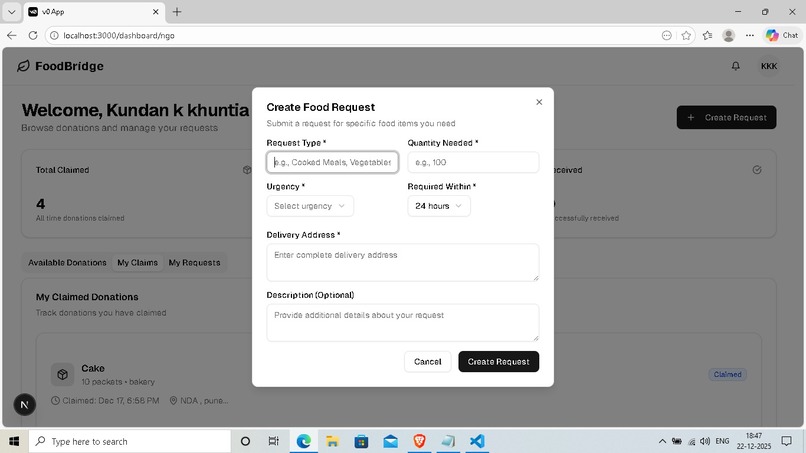
NGO
-
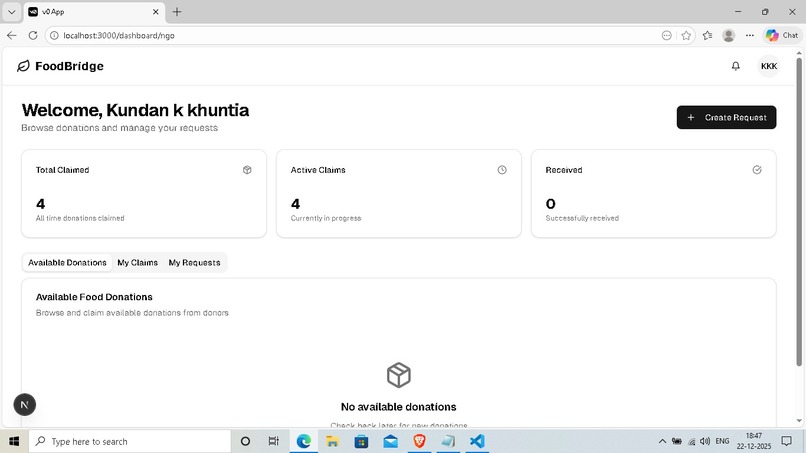
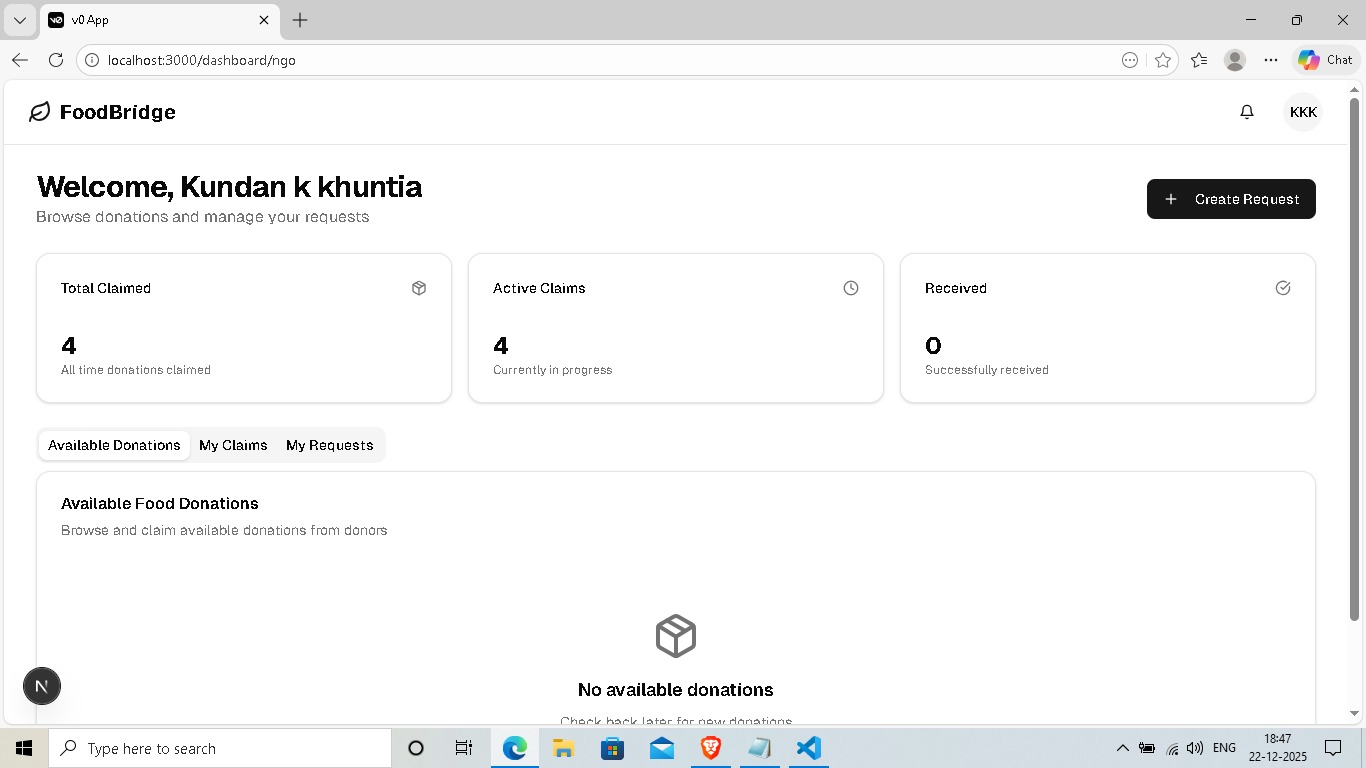
The person who is requesting the food.
-
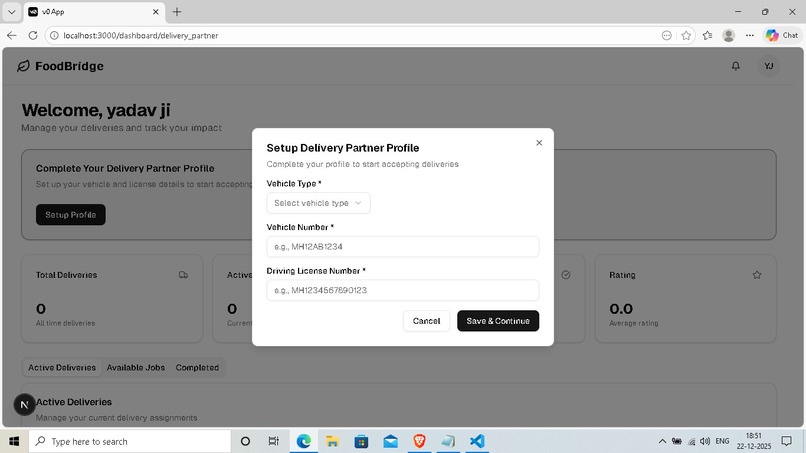
Delivery Riders
-
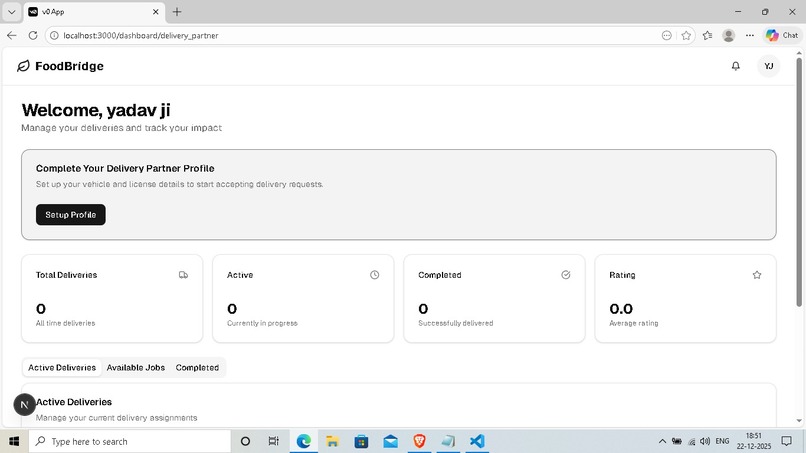
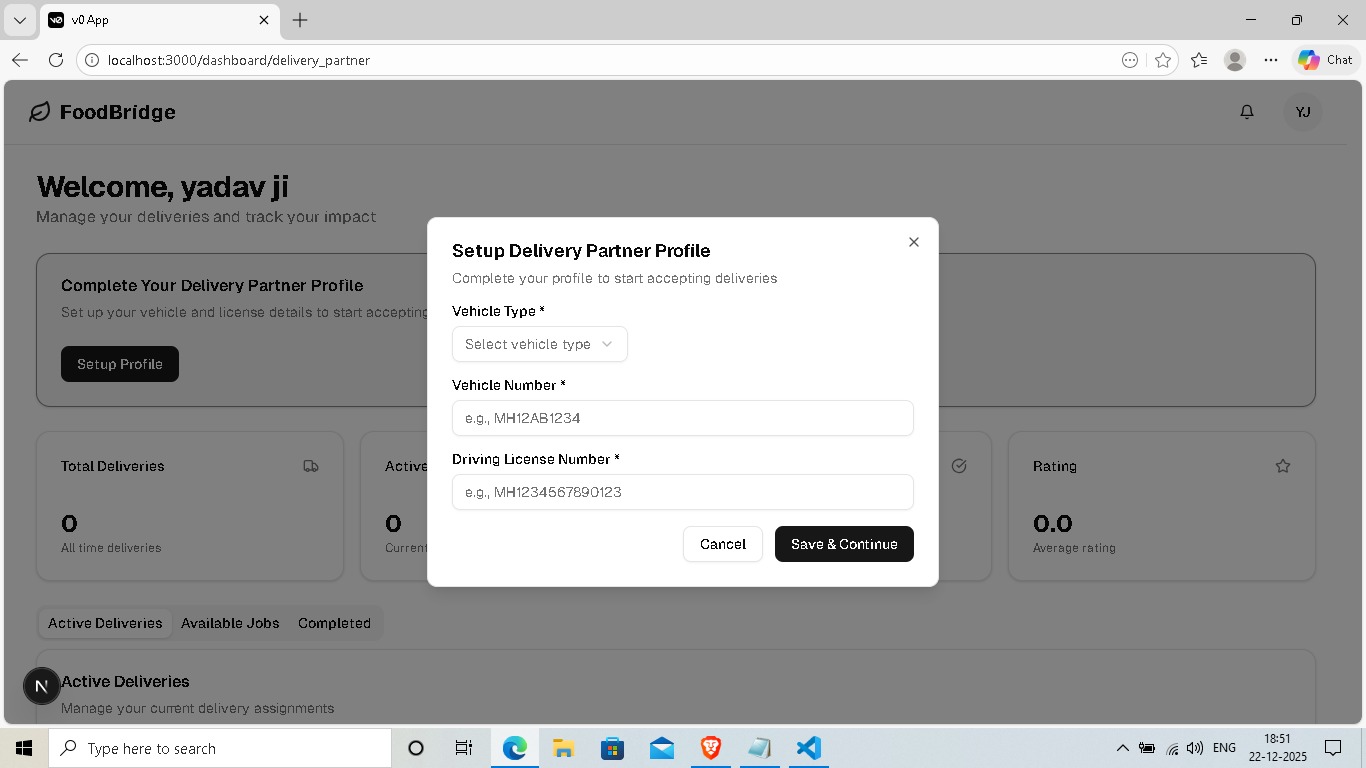
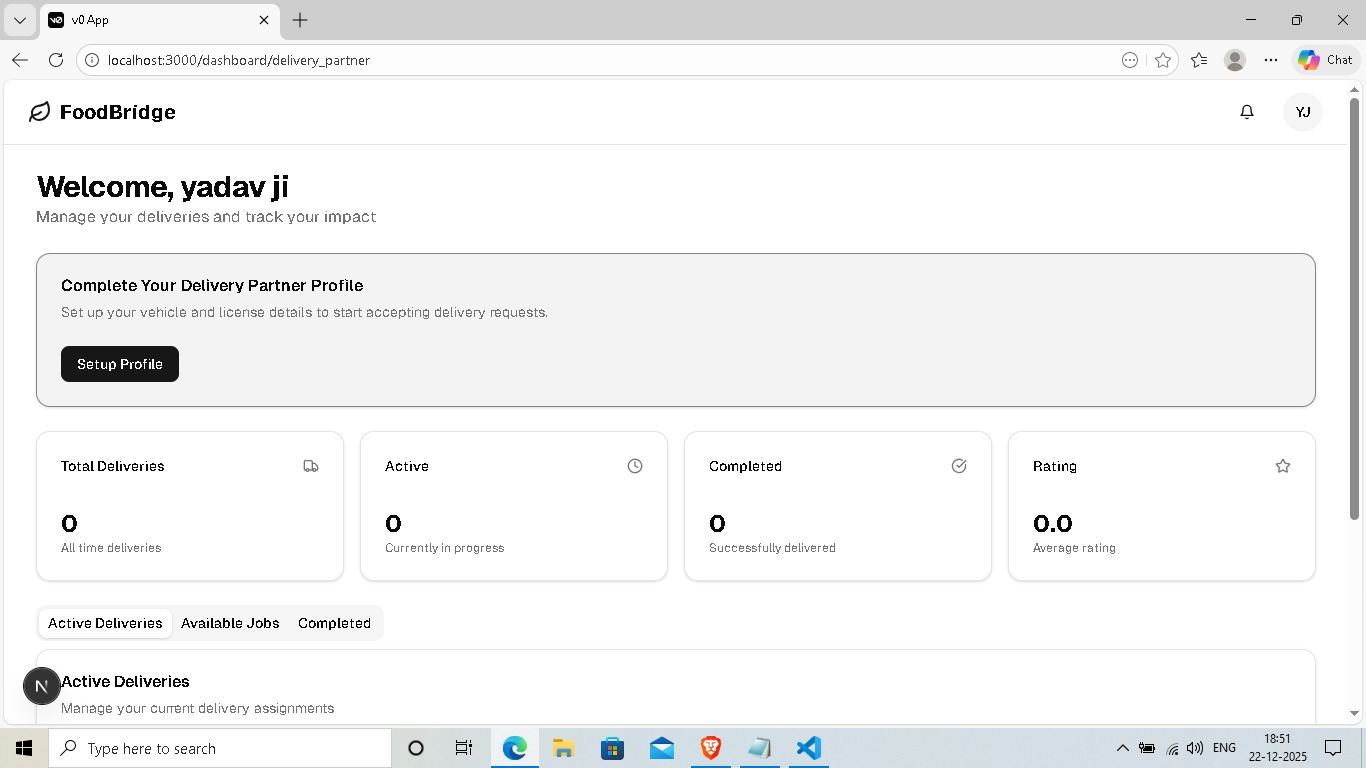
Delivery partner for both the donor and the NGO.
Inspiration
Living in Pune, I saw a big problem every day. Hotels and restaurants in Baner and Viman Nagar were wasting tons of fresh, healthy food. At the same time, nearby poor communities were struggling with malnutrition and health issues. I realized we can’t achieve UN SDG 3, Good Health and Well-being, if people don’t have proper food. So I created FoodBridge. We don’t have a food shortage. We just have a problem moving food and tracking it properly.
What it does
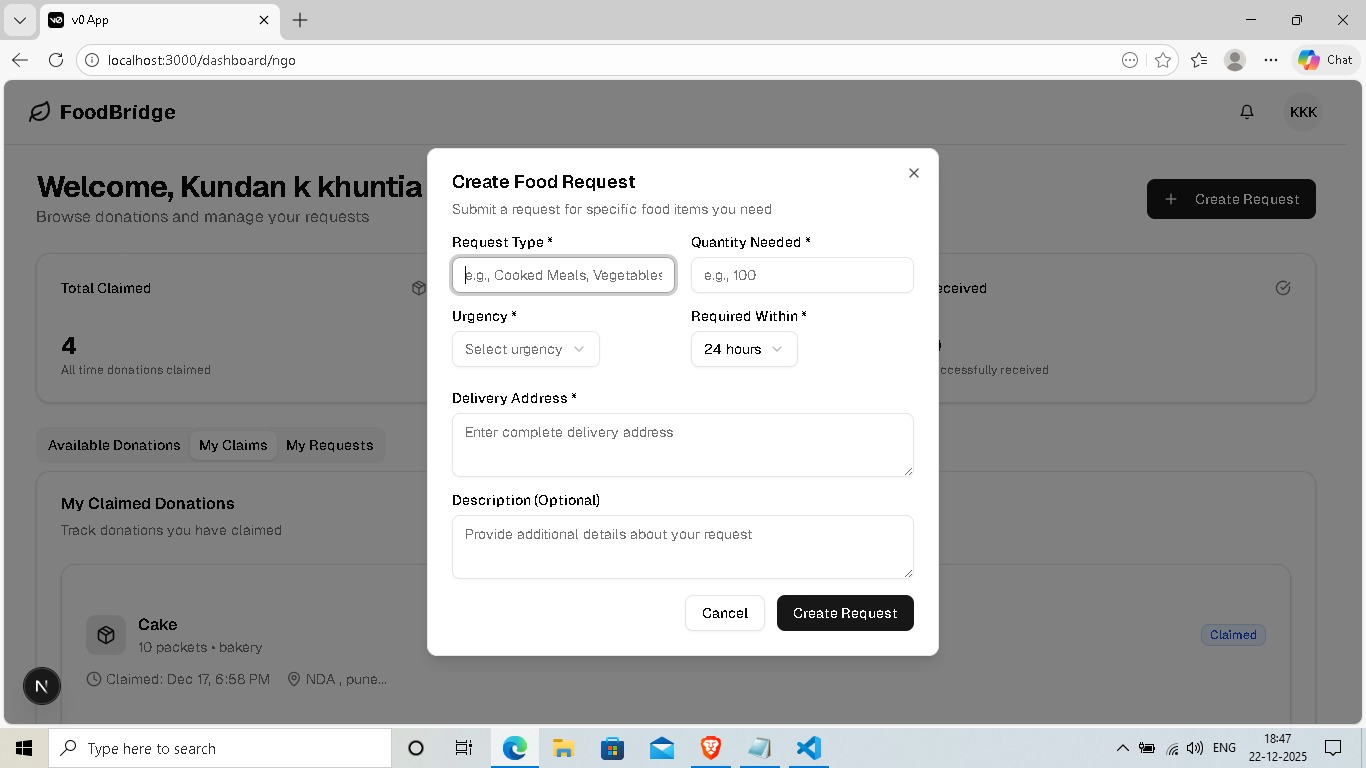
FoodBridge is a real-time system that sends good leftover food to people who need it most. It works with 3 groups:
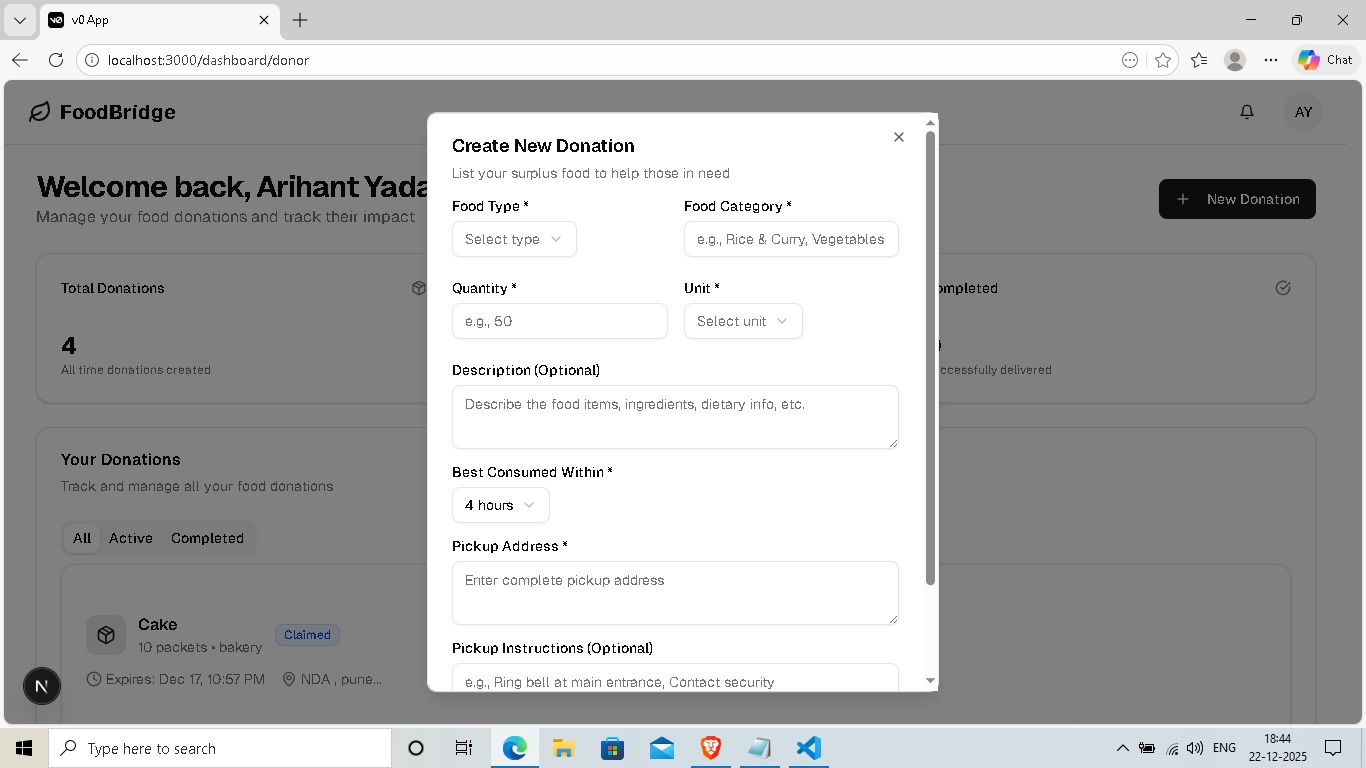
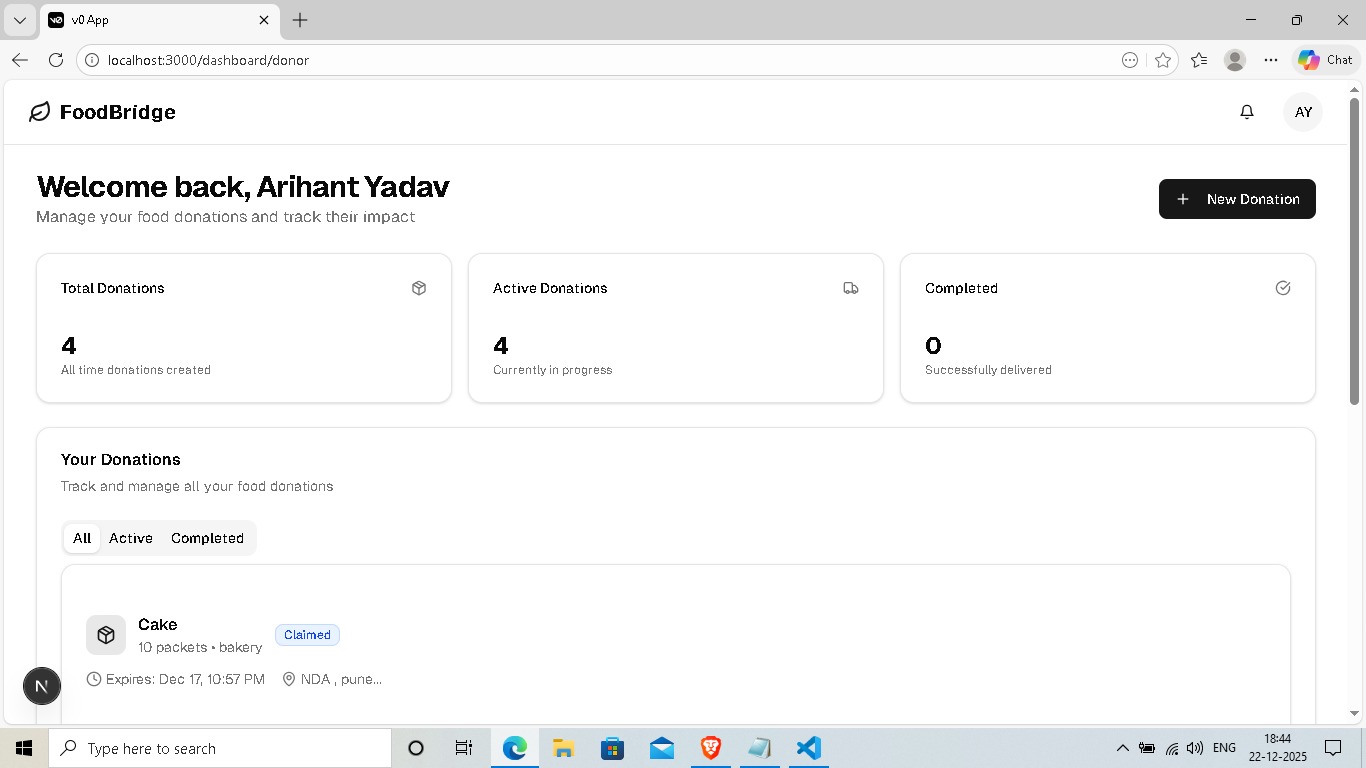
Donors like hotels/hostels: They can quickly post extra food before it goes bad.
NGOs: Trusted groups can pick the food that matches what their community needs.
Delivery partners: Volunteers use live maps to deliver the food fast to the right place.
We also have a check system: It makes sure every meal reaches someone’s plate. This keeps things safe and honest for everyone.
How we built it
To handle food safely and quickly, we used simple, reliable tech:
Website: We built it with http://Next.js 16 and TypeScript. This makes the app fast and easy to use.
Data & Safety: We use Supabase with PostgreSQL. It has Row Level Security, so NGO data stays private and protected.
Smart Maps: We added PostGIS to our database. It finds the fastest routes between hotels and NGOs.
Live Tracking: We use OpenStreetMap and Leaflet for real-time tracking. They’re free, so we keep costs low for non-profits.
Challenges we ran into
The hardest part was setting up user permissions. We had to make sure donors could only see their own food listings, while NGOs could see all available food. This needed very careful security rules.
The other big challenge was making the live map work well on phones. In Pune, network speeds change a lot. We had to optimize the app so it wouldn’t crash, especially during important food pickups.
Accomplishments that we're proud of
We're really proud that we built a complete "Uber-like" system for social good. Getting PostGIS to work for real-time location matching was a big tech win for us.
Most importantly, now one hotel's leftover food can directly help improve health in a whole neighborhood. This brings Pune closer to meeting UN SDG 3 goals.
What we learned
We learned that "Good food = Good health." While building this project, we had to think like public health workers, not just software developers.
We realized that just listing food isn’t enough. You need to track it all the way until someone eats it. That’s the only way to know you actually helped.
On the tech side, we got much better at building serverless systems and syncing data in real time.
What's next for FoodBridge: Real-time Surplus Food & Nutrition Network
Our next steps:
- Build a smart AI tool that helps NGOs guess when extra food will be available.
- Expand from Pune to other big areas like Chakan and Pimpri-Chinchwad.
Our big goal: We want FoodBridge to become the main system for food sharing across India. That way, no healthy meal ever gets wasted in the country.
Built With
- auth
- leaflet.js
- next.js
- openstreetmap
- postgis
- postgresql
- rls
- shadcn/ui
- supabase
- tailwind
- typescript
- vercel

Log in or sign up for Devpost to join the conversation.