-
-
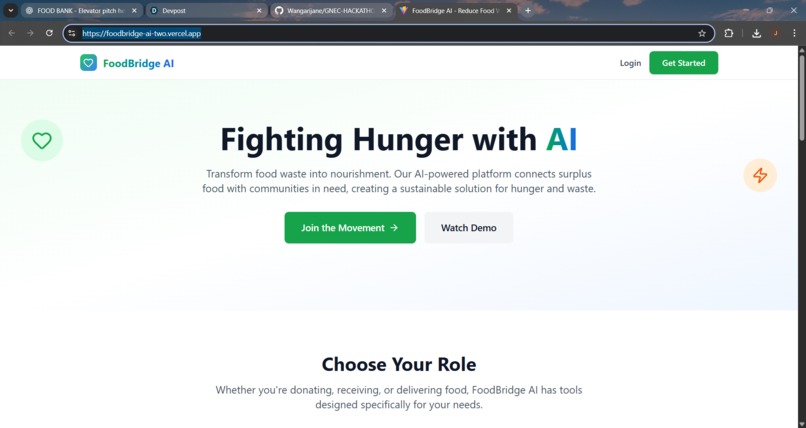
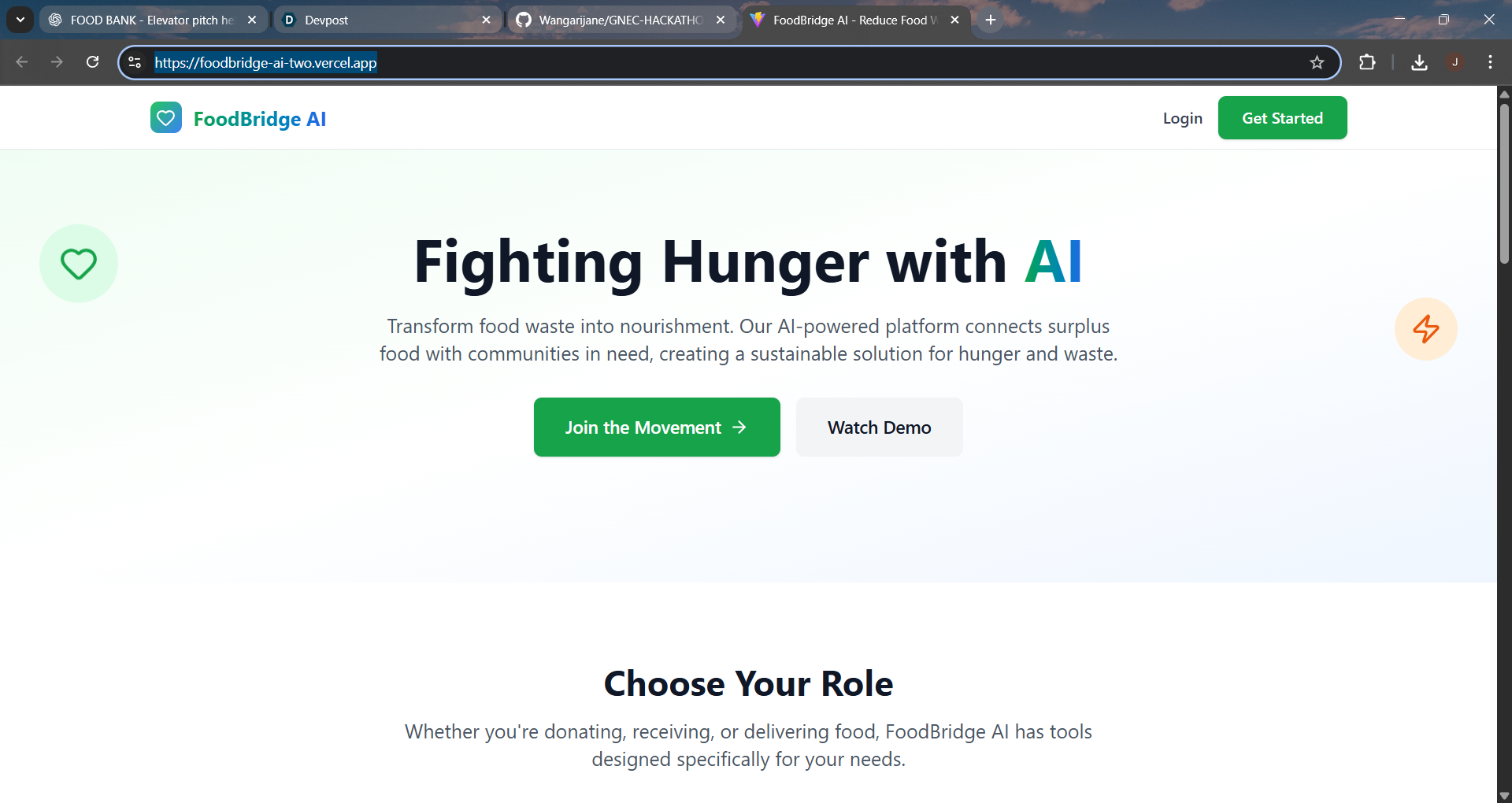
FoodBridge AI landing page
-
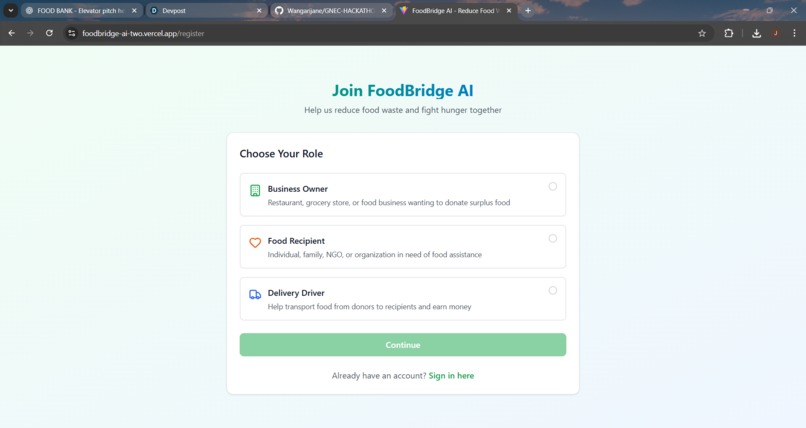
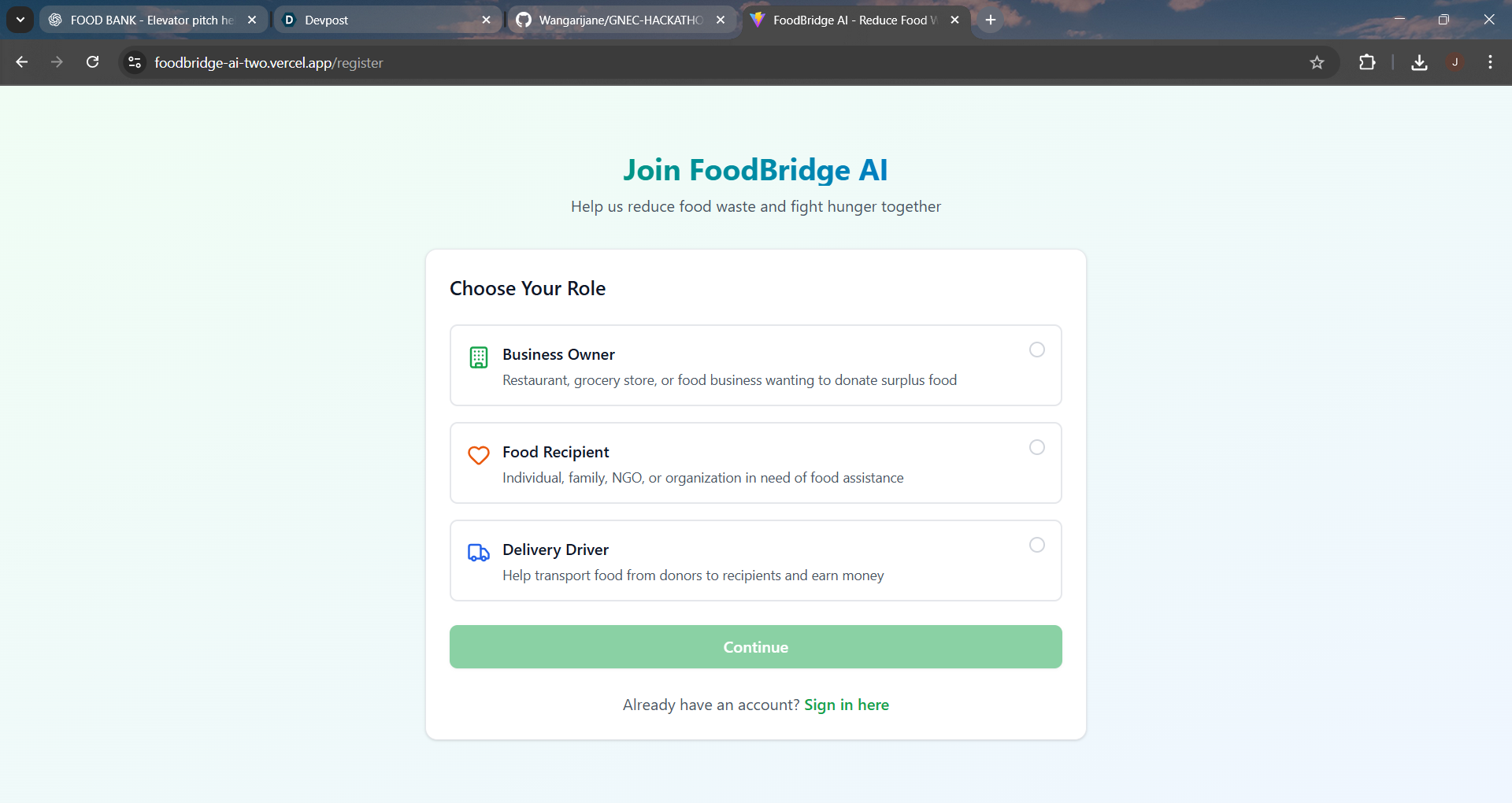
Signup page, select role
-
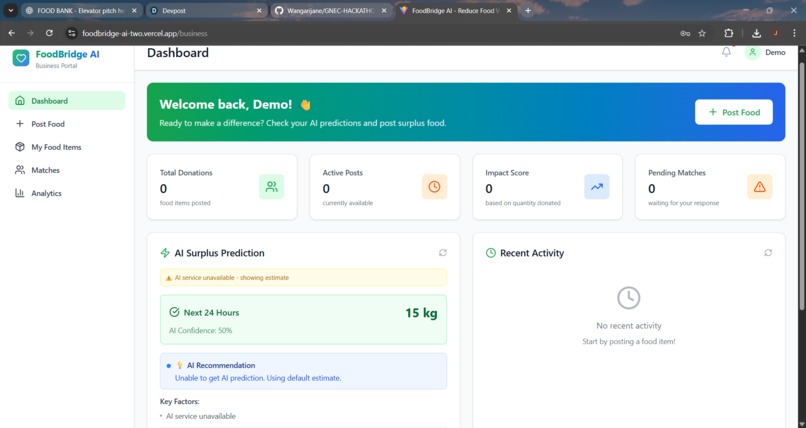
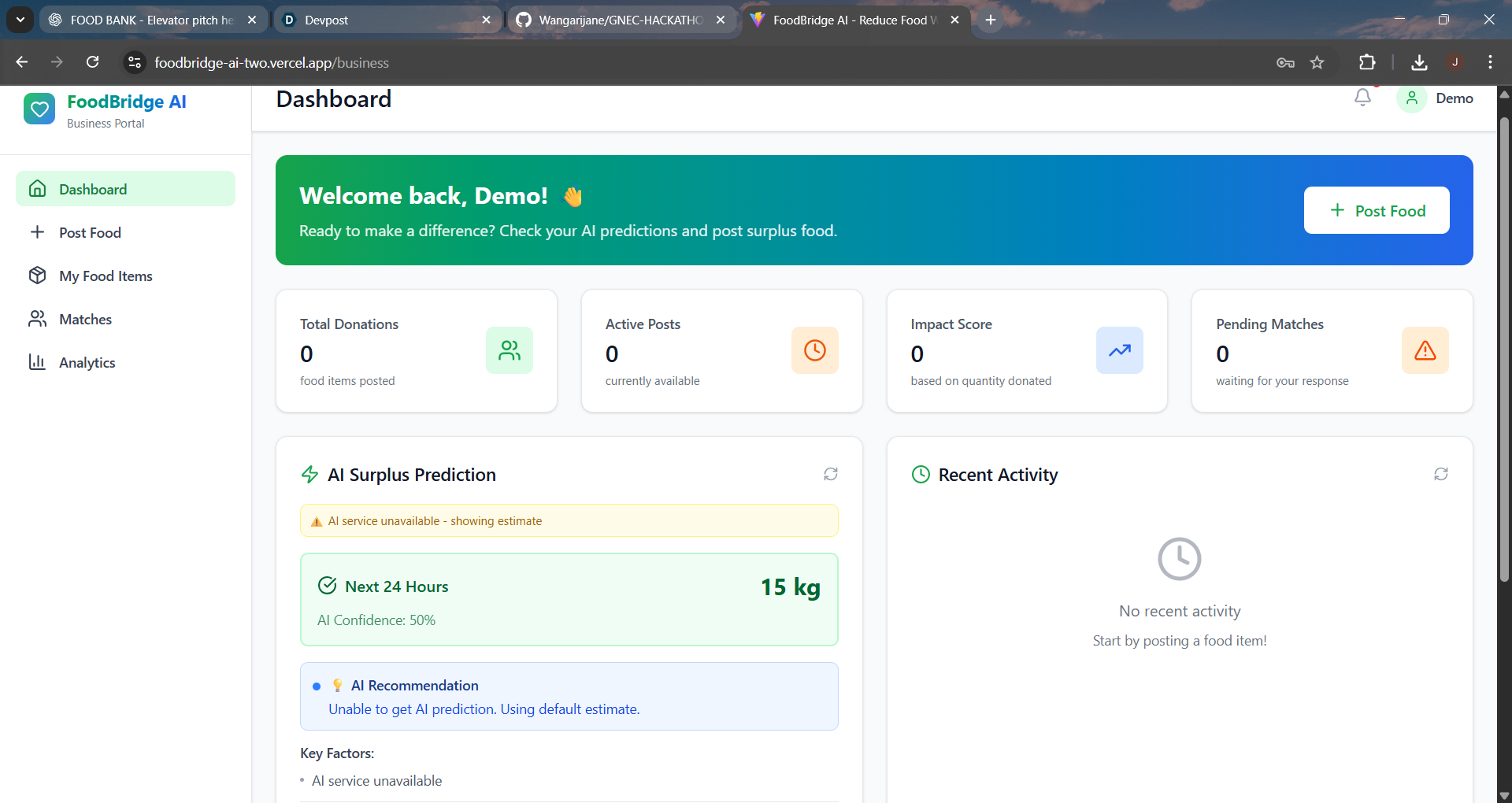
Business demo dashboard, AI surplus prediction
-
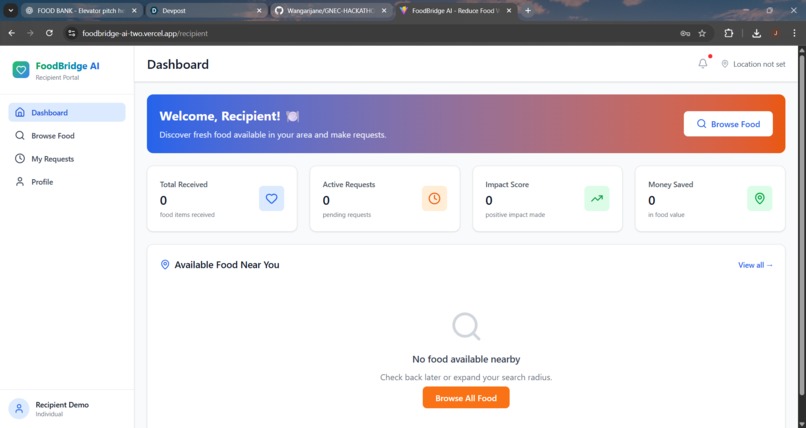
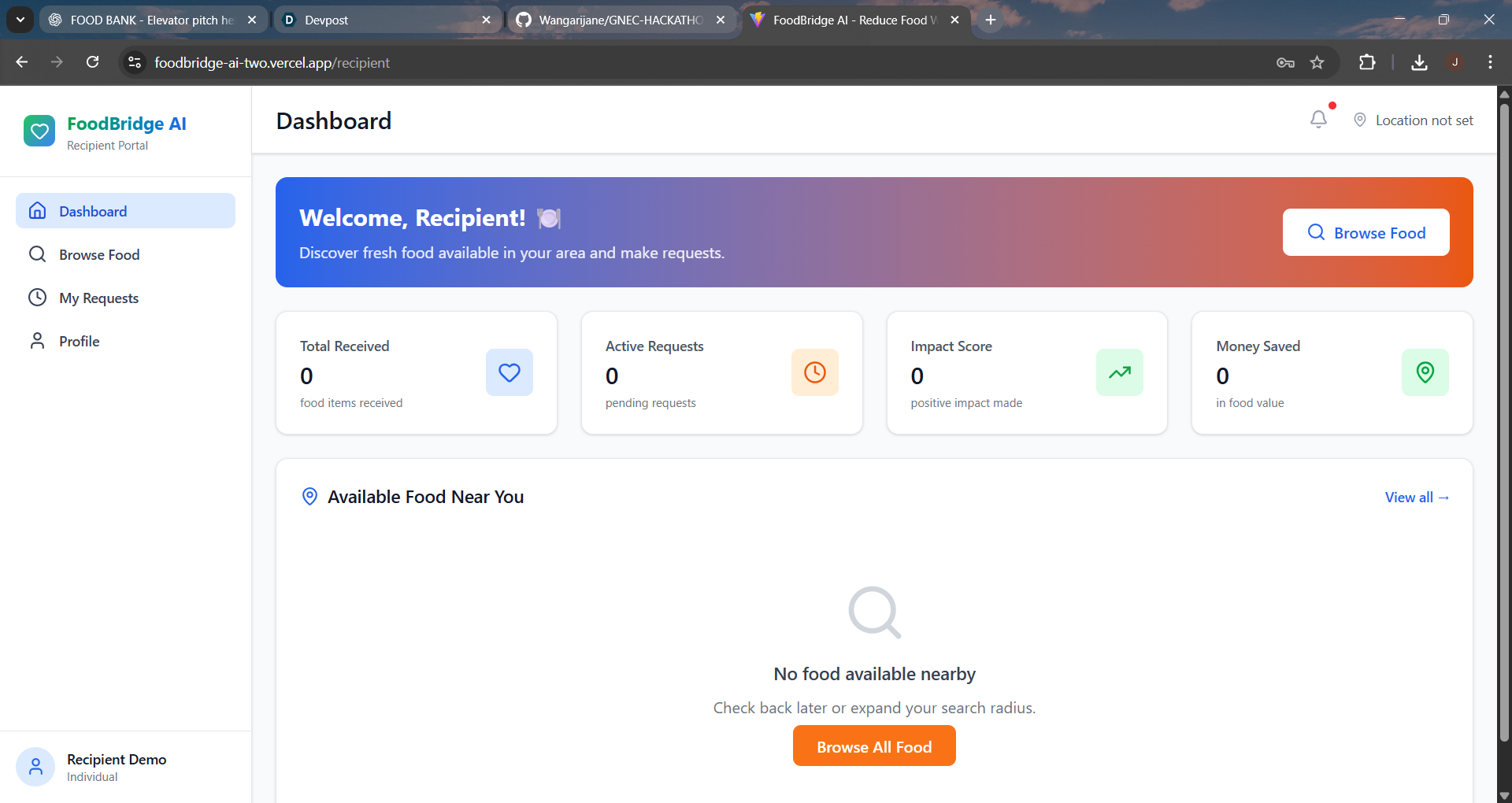
Recipient demo dashboard
-
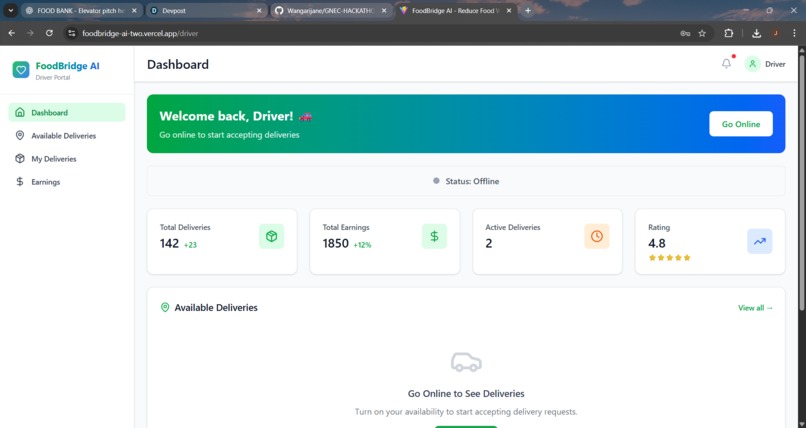
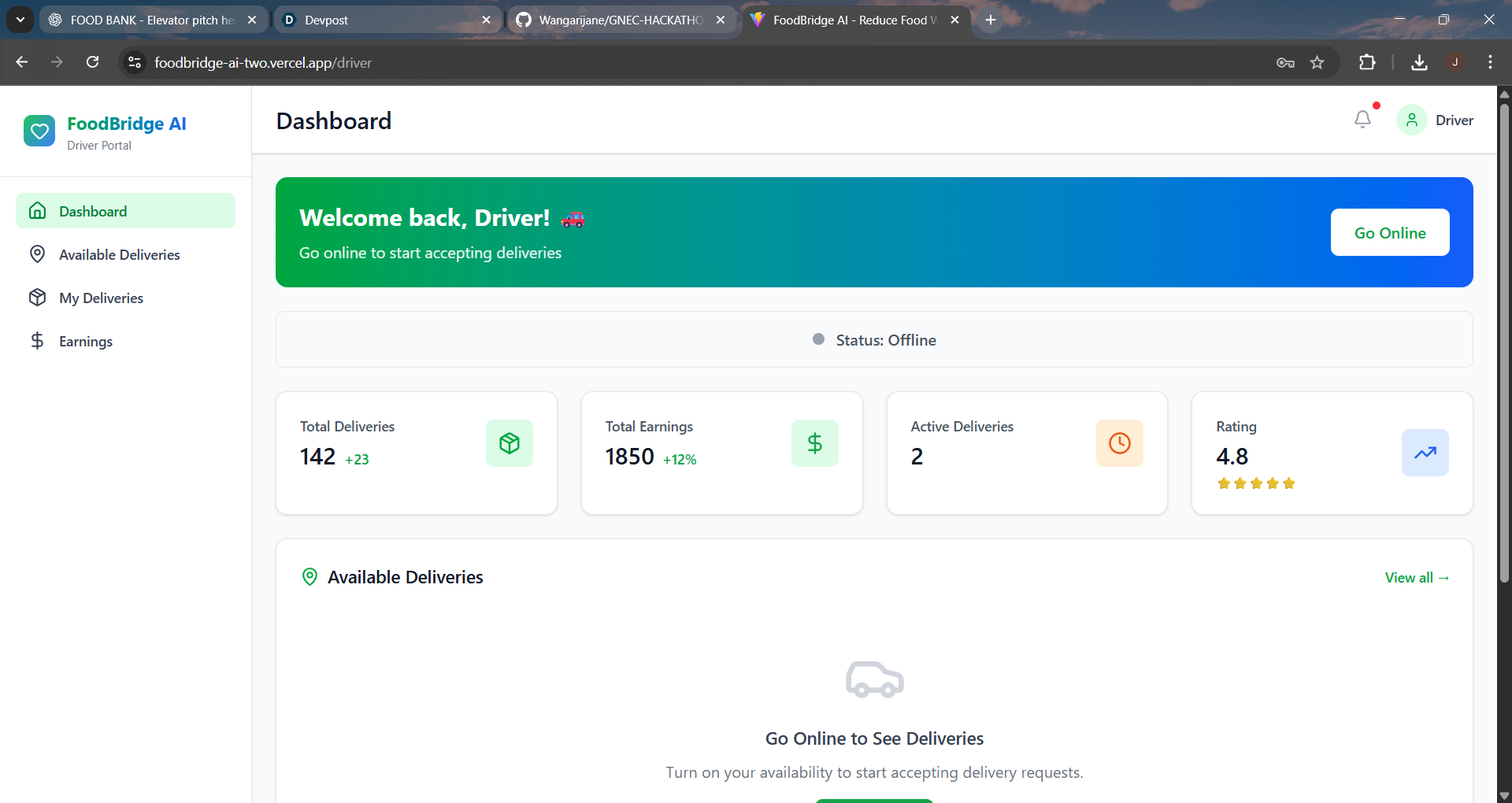
Driver demo dashboard
Inspiration
Growing up in Kenya, I have witnessed how fresh vegetables and fruits often end up rotting in dumping sites while many families struggle to afford daily meals. This imbalance between food waste and hunger inspired me to build FoodBridge AI — a platform that bridges the gap between surplus food and food insecurity.
The project supports UN Sustainable Development Goals (SDGs):
- SDG 2 – Zero Hunger: Reducing food waste and improving access to nutritious food.
- SDG 1 – No Poverty: Helping vulnerable communities save on food costs and improve quality of life.
What it does
FoodBridge AI connects food donors (restaurants, markets, farms, and individuals) with nearby recipients (charities, shelters, and households) using AI-powered smart matching.
- Donors list available surplus food.
- Recipients receive real-time notifications for nearby donations.
- AI Matching System (Hugging Face) predicts and pairs donations based on location, quantity, and food type.
- OpenWeather API provides weather updates to minimize spoilage risks.
- Mapbox / OpenStreetMap assists in route optimization for efficient deliveries.
- A real-time impact dashboard tracks saved food, fed people, and reduced carbon footprint.
How we built it
FoodBridge AI was developed using the MERN stack for a fully connected full-stack experience:
- Frontend: React.js with Tailwind CSS for a clean, responsive UI.
- Backend: Node.js and Express.js for APIs and data handling.
- Database: MongoDB Atlas for secure, cloud-hosted data storage.
- AI Engine: Hugging Face API for intelligent predictions and recommendations.
- APIs Used:
- OpenWeather API – to fetch weather data and reduce spoilage.
- Mapbox / OpenStreetMap – for geolocation and mapping.
- OpenWeather API – to fetch weather data and reduce spoilage.
- Hosting:
- Frontend: Vercel
- Backend: Render
- Frontend: Vercel
Challenges we ran into
- Managing API authentication and rate limits during AI and weather data integration.
- Ensuring real-time synchronization between donor and recipient activities.
- Handling geolocation accuracy in rural or poorly mapped regions.
- Designing an app that remains fast and usable even with low internet connectivity.
Accomplishments that we're proud of
- Created a functional AI-driven platform that connects surplus food with people in need.
- Successfully integrated multiple APIs for real-time matching and tracking.
- Deployed the project on Vercel and Render for public access.
- Built a solution that aligns directly with global sustainability goals (SDG 1 & 2).
What we learned
- How to apply AI technology (Hugging Face) to address real-world issues like hunger and waste.
- How to integrate and optimize multiple external APIs effectively.
- The importance of collaboration, testing, and deployment strategies in full-stack projects.
- That technology can drive meaningful change when built with empathy and purpose.
What's next for FoodBridge AI
- Launching a mobile-friendly version to support low-bandwidth regions.
- Partnering with local NGOs, markets, and governments in Kenya to scale real-world adoption.
- Adding AI forecasting to predict food surplus and demand trends.
- Expanding to other African countries and beyond to make global food redistribution smarter and more equitable.
Built With
- chatgpt
- claudeai
- express.js
- git
- github
- huggingface
- javascript
- mongodb
- node.js
- openstreetmap
- openweathermap
- python
- react
- render
- vercel
- vscode


Log in or sign up for Devpost to join the conversation.