-
-
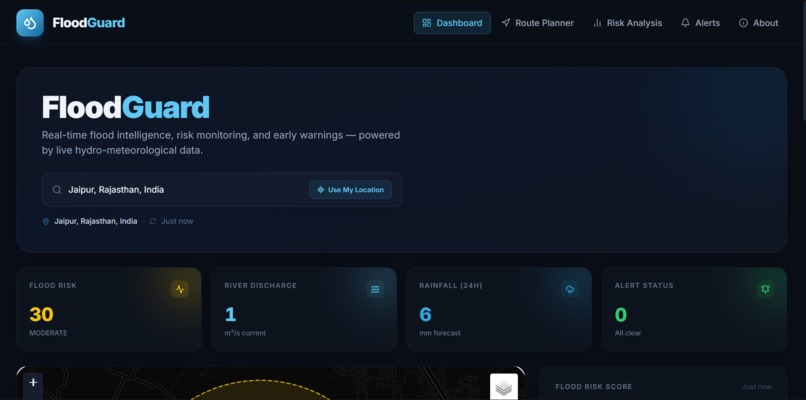
Dashboard
-
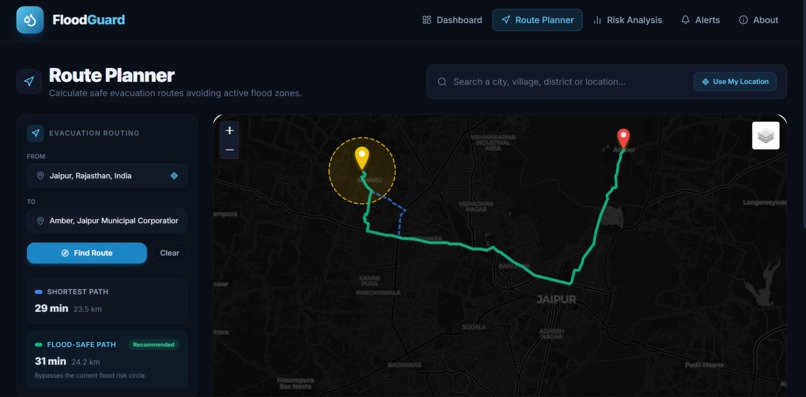
Route Planner
-
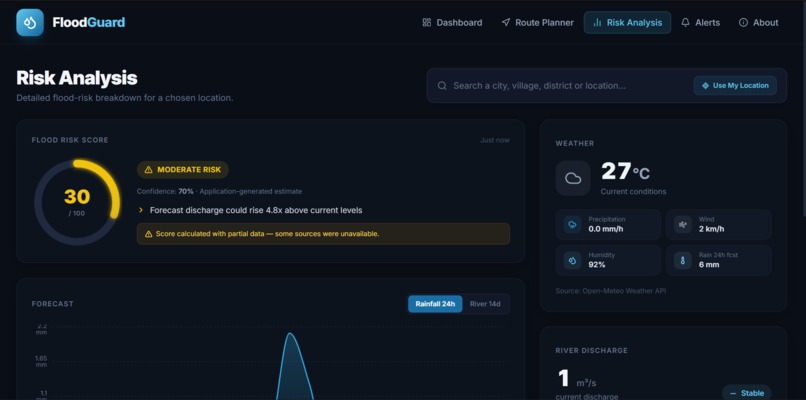
Risk Analysis
-
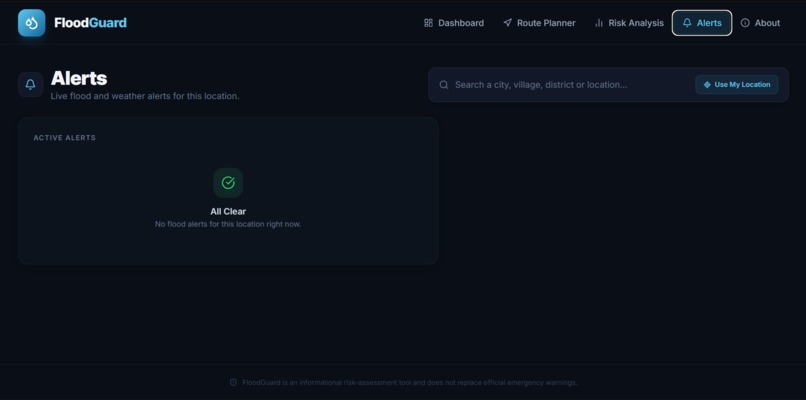
Alerts
-
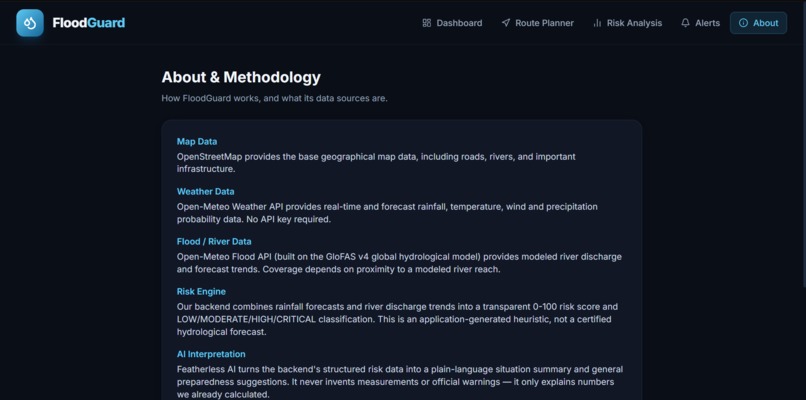
About and Methodology
Inspiration
Floods are certainly among the worst of natural disasters. They're unexpected, overpowering and highly expensive to recover from. Both me, Kabigyan Deb and my partner, Jeet Dey, being born in Assam, have seen numerous instances of floods and water borne disasters overtake the lives of the common folk of our region.
Almost every year, Assam makes headlines due to the high number of floods that take place in the region, but the severity of the floods of 2026, especially in regions like Sivasagar, Najira, Sonari and parts of the surrounding areas is on a scale of itself. With almost a hundred people dead and 150,000 people displaced, the floods of 2026 are without a doubt the worst the state has ever seen.
The suffering of people of our reigon inspired us to make to make FloodGuard
What it does
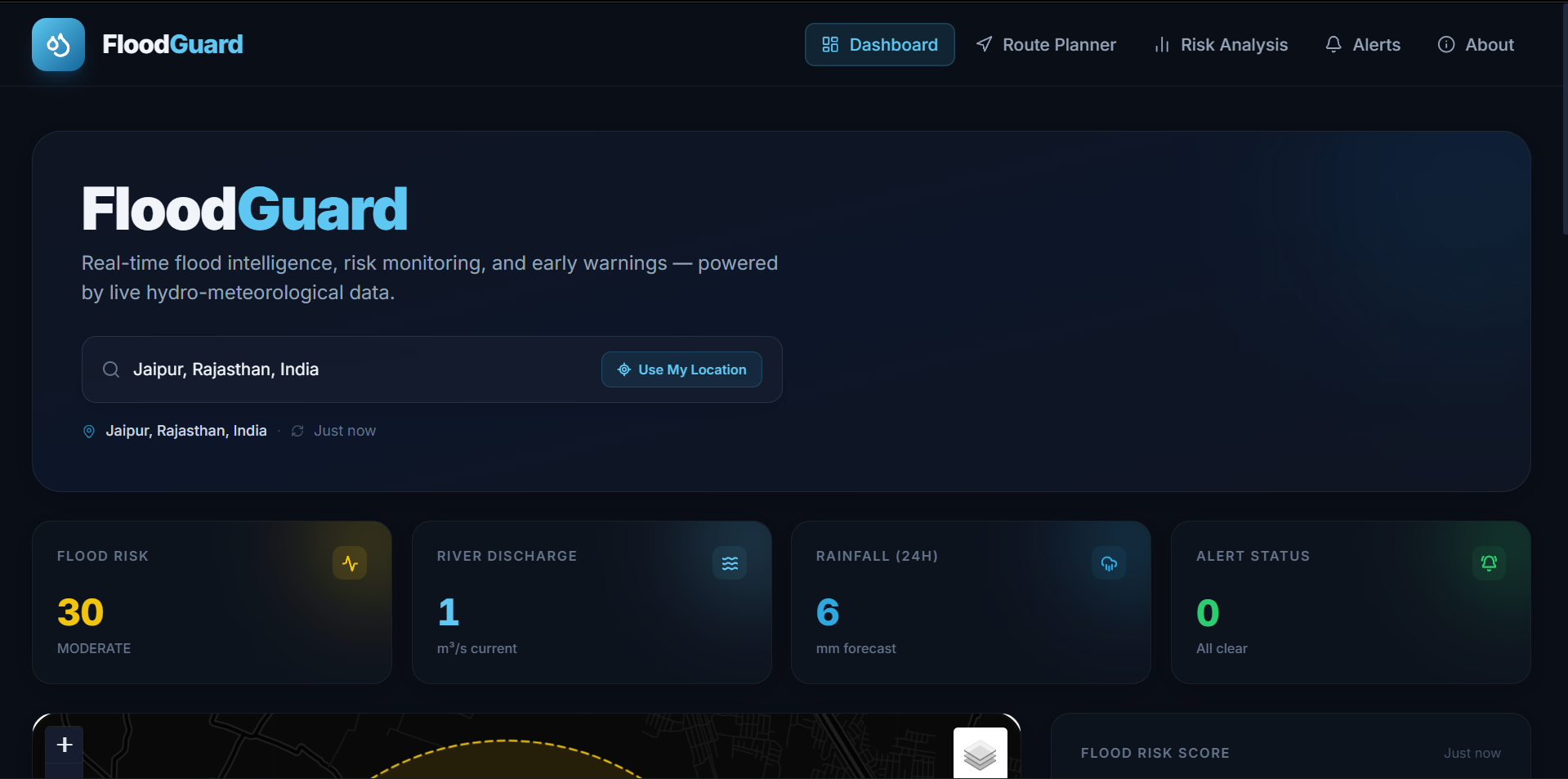
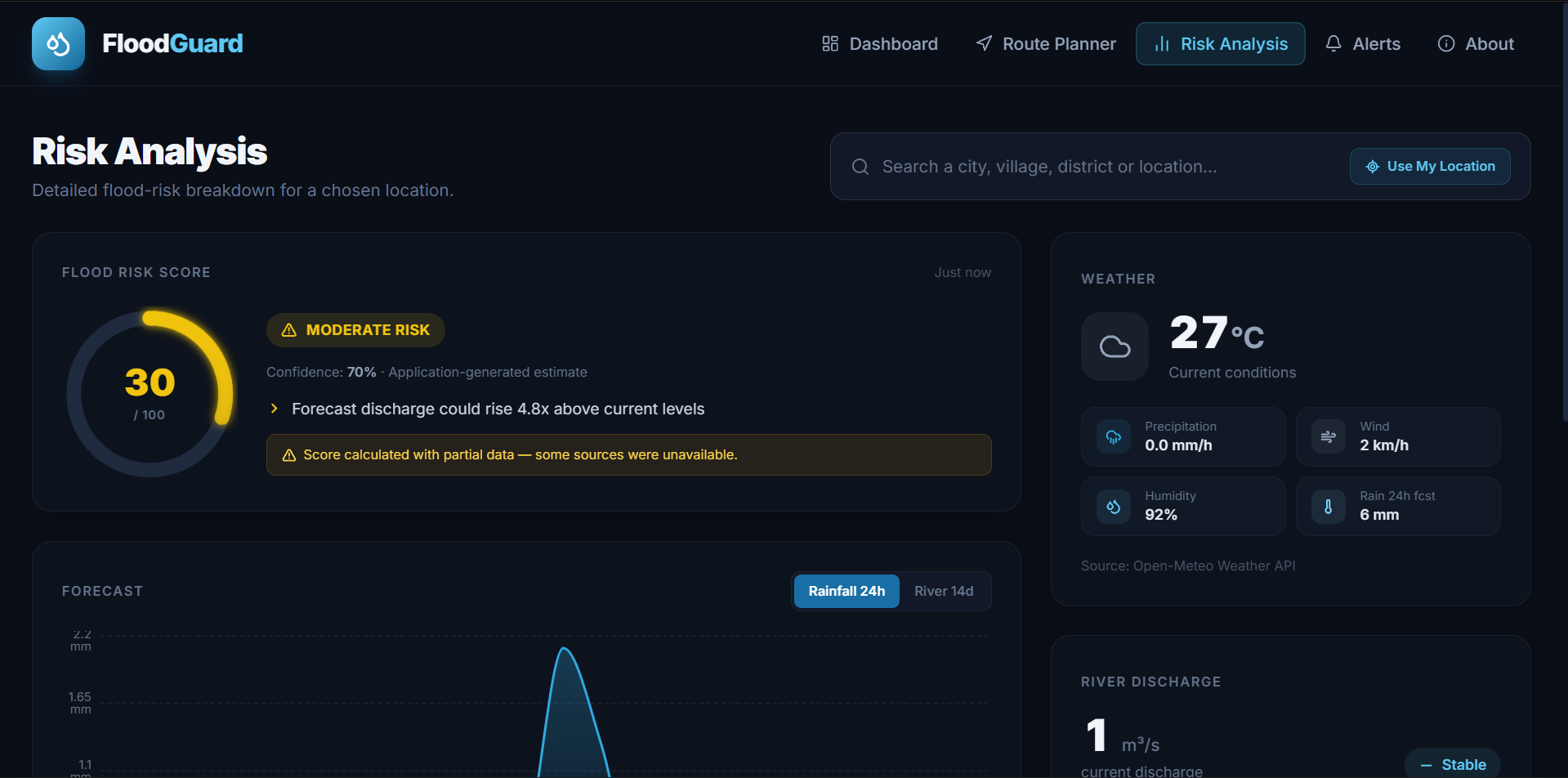
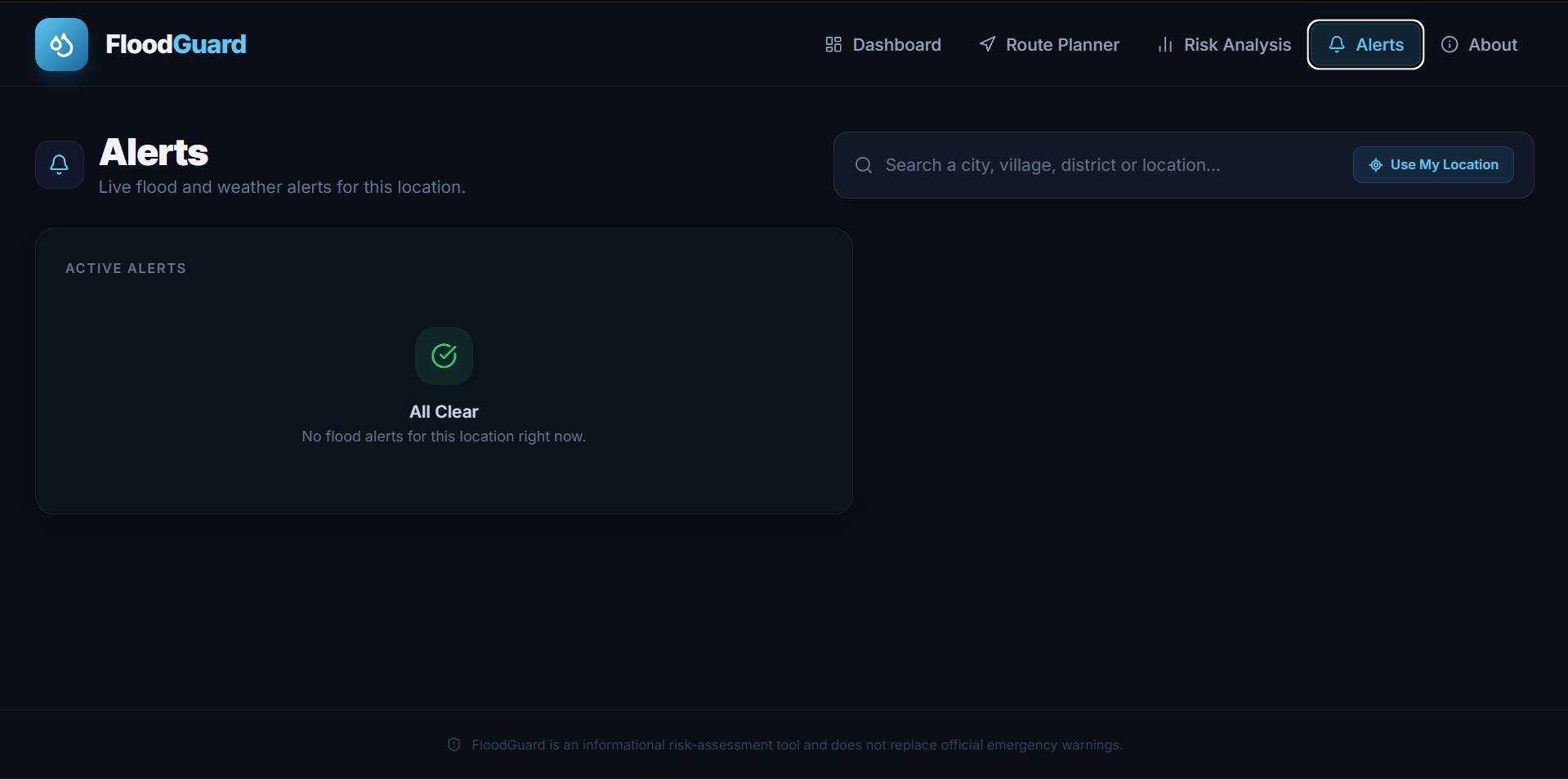
FloodGuard is an AI-powered flood-risk and emergency decision-support platform. It pulls live and forecast weather data, river levels, flood reports, geographic info, and runs all of that through a risk engine to spit out a FloodGuard Risk Index, which was created to let all people know the risk they might be in.
How we built it
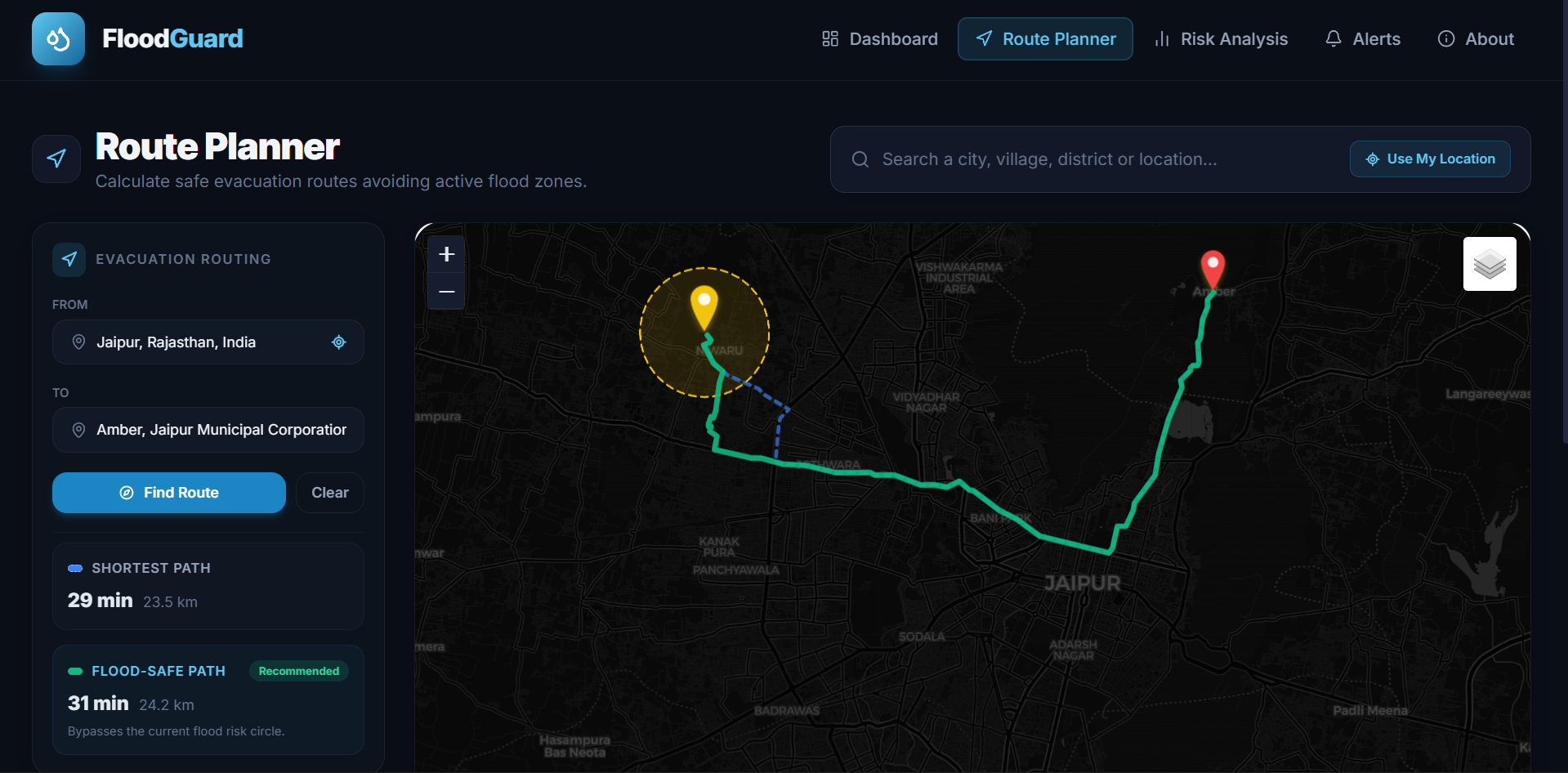
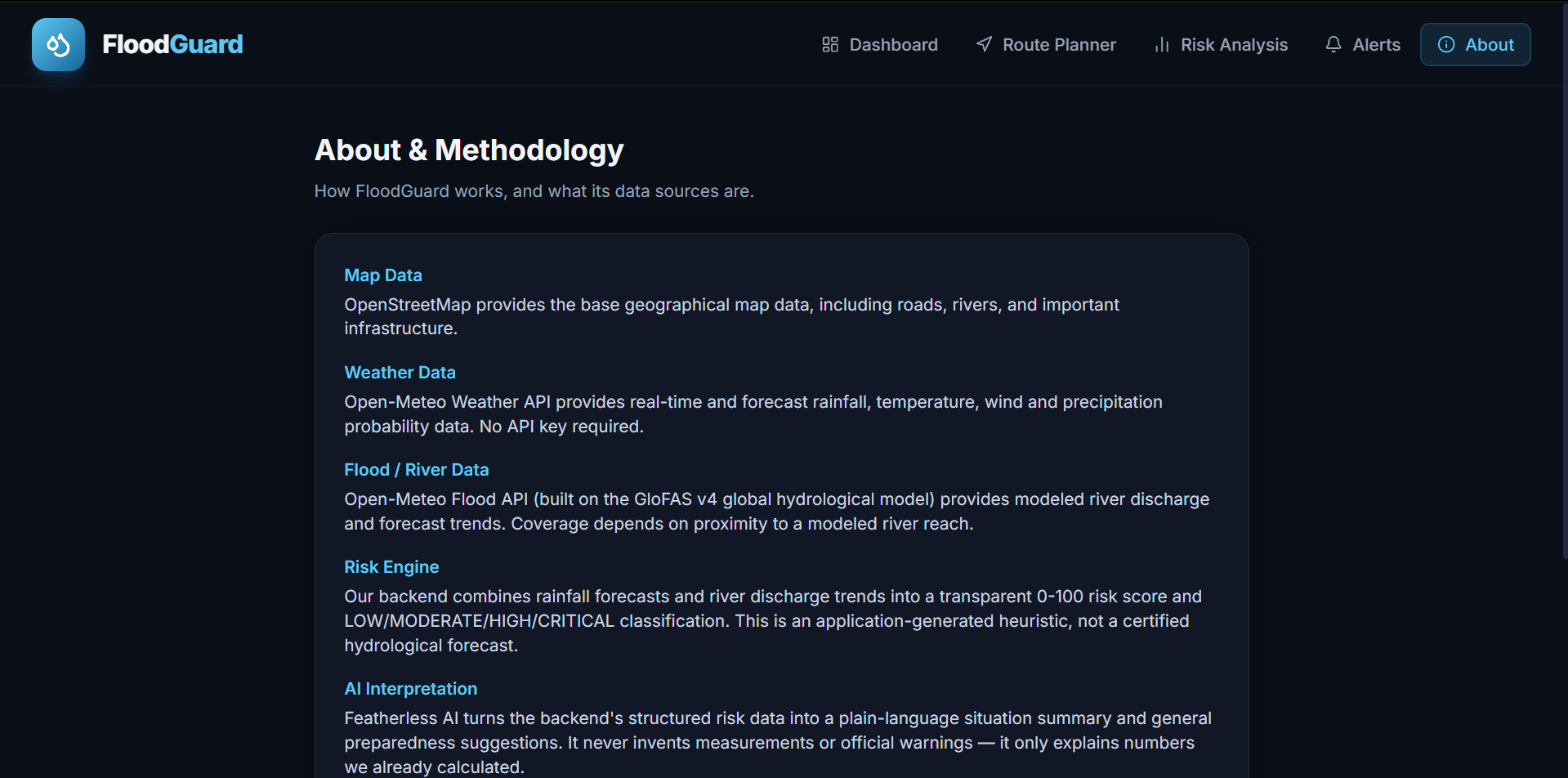
So, how did we build it? Our backend runs on Python and Flask; the frontend’s React + Vite. The backend grabs environmental data (from sources like Open-Meteo), processes it through our risk engine, and calculates the FloodGuard Risk Index (0–100 scale). For those AI explanations, our backend feeds structured data to an LLM, which returns easy to understand summaries. For mapping and routing, FloodGuard uses OpenStreetMap tools to show geographic context and help plan evacuation. Crucially, the risk calculations stay separate from the AI. The LLM doesn’t get to make up risk scores, only explain what’s already been calculated.
Challenges we ran into
There were many challenges we ran into while creating this, such as when Jeet, our full-stack developer could not properly setup render too host the backend, because something kept going wrong with APIs, or when Kabigyan AI/Ml developer, had to brush up on his web dev knowledge because he hasn't done web development in a while.
Accomplishments that we're proud of
Honestly, we’re proud of what we pulled off. We had no idea how to create a backend using Flask and Python before this, or how to create a project of this level in such a short amount of time. The Featheless API help us a ton as well. We are also proud of deploying our website by hosting the backend on Render and the frontend on Vercel.
What we learned
We learned a lot. From how to use flask, how to make do with the amount of time we had, how to use integrate AI models into our website and how deploy and host a website and countless other things, which I'm sure will make us better developers going forward.
What's next for FloodGuard
Moving forward, we would like to improve our project and make its so it isn't just limited to floods, but to move beyond a certain scale we need support from things like governments, and investors.
Built With
- featherless
- flask
- html
- javascript
- leaflet.js
- open-meteo
- openstreetmap
- osrm
- python
- react
- tailwind
- vite

Log in or sign up for Devpost to join the conversation.