-
-
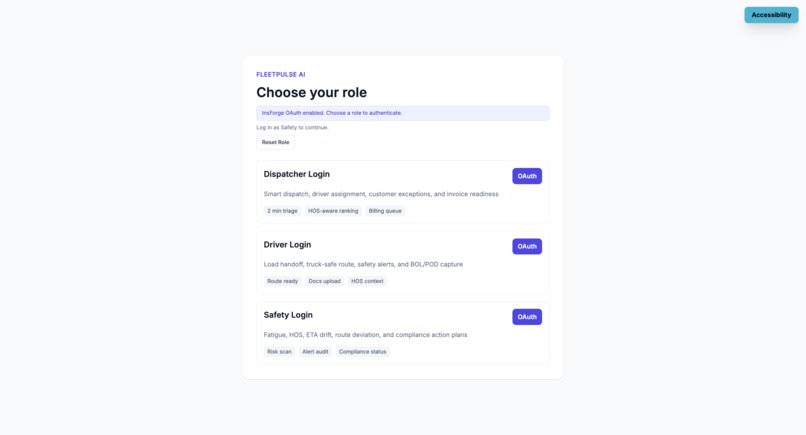
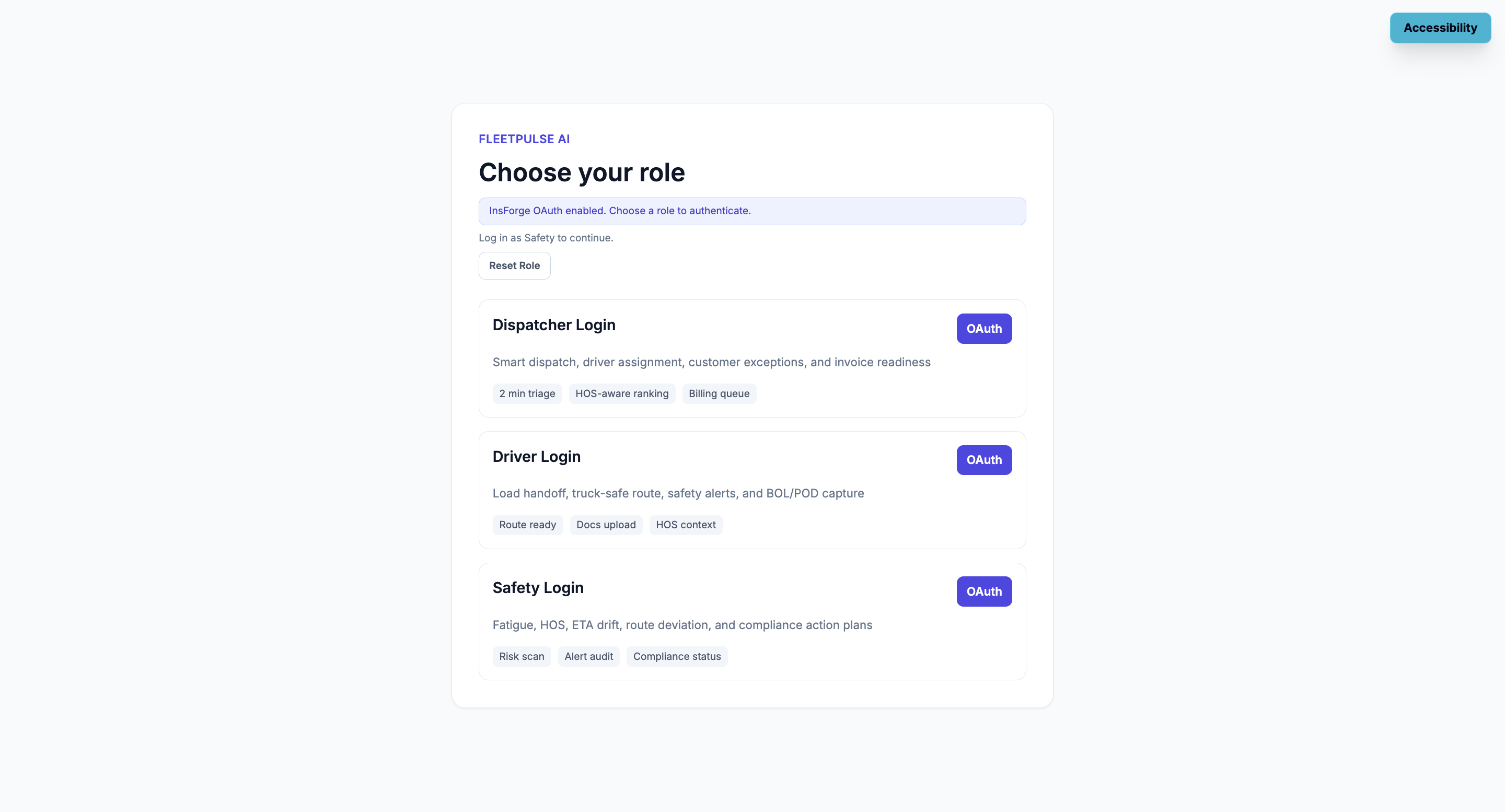
This is the login page for different roles.
Inspiration
FleetPulse AI was inspired by a common operations problem in trucking: dispatch, drivers, safety, and billing all depend on the same shipment, but they often work in disconnected systems. That creates delays, missed context, and manual follow-ups. We wanted to design a workflow where each role sees the right interface at the right time, while the load context stays consistent from assignment to delivery.
What it does
FleetPulse AI is a role-based fleet operations workflow platform built for Dispatcher, Driver, and Safety users.
It lets a dispatcher:
- create or evaluate a trip
- compare drivers with AI-assisted ranking
- assign the best driver for the load
It lets a driver:
- receive the assigned load
- review route and operating details
- continue the trip flow and upload delivery documents
It lets a safety user:
- monitor HOS, fatigue, route deviation, and delay risk
- run a safety review before issues become incidents
It also supports the final handoff into:
- document collection
- billing readiness
- invoice reconciliation support
How we built it
We built FleetPulse AI with:
- React + Vite for the frontend
- Node.js + Express for the backend
- role-based views for Dispatcher, Driver, and Safety
- AI-assisted recommendation and alerting endpoints
- shared trip state across the workflow
- document and billing handoff logic tied to delivery completion
A lot of the implementation focused on making the workflow feel real: dispatcher-created assignments, driver-facing route details, safety review states, and the post-delivery document flow all had to connect cleanly.
Challenges we ran into
The biggest challenge was workflow continuity across roles. The exact trip created in Dispatcher had to remain the same trip when viewed later by Driver and Safety, especially across logout/login transitions.
We also ran into product flow challenges:
- deciding when to switch roles versus when to stay in the same screen
- preventing unwanted default fallback trip data
- preserving the right state without making the app reopen into stale workflow states
On the UI side, we had to simplify the product significantly and align it to a cleaner white enterprise interface while keeping the underlying logic intact.
Accomplishments that we're proud of
We’re proud that FleetPulse AI became more than just a static dashboard. It now demonstrates a full operational flow:
- Dispatcher creates and assigns work
- Driver continues the job with the same route context
- Safety evaluates live risk
- Delivery leads into document upload and billing readiness
We’re also proud of getting the cross-role workflow behavior much closer to how an actual operations tool should feel, rather than just showing isolated screens.
What we learned
We learned that in operations software, workflow design matters as much as raw intelligence. AI recommendations only feel useful if the surrounding system preserves context and supports the human handoff correctly.
We also learned that state management becomes a product problem, not just a code problem, when multiple roles are involved. If one screen shows a different trip than another, trust breaks immediately.
What's next for FleetPulse AI
Next, we want to expand FleetPulse AI into a more complete multi-user fleet platform by adding:
- richer dispatcher tools for route planning and load boards
- billing automation tied directly to completed delivery packets
The long-term goal is to turn FleetPulse AI into a true operating layer for fleet coordination, where dispatch, safety, driver workflow, and billing all stay connected in one system.
Built With
- ai-powered
- alert
- api
- css
- data
- express.js
- geocoding
- insforge
- integration
- javascript
- navpro
- node.js
- nominatim
- oauth
- openstreetmap
- react
- tailwind
- tiles
- vite

Log in or sign up for Devpost to join the conversation.