Inspiration
The world produced 62 million tonnes of e-waste in 2022, and only about 22% of it was formally recycled (Global E-waste Monitor 2024). For most electronics, the majority of the lifetime carbon footprint comes from making the product, not using it. So every phone, laptop or kettle thrown away early wastes all of that manufacturing carbon.
Most people don't replace broken things because they want to. They replace them because they don't know whether a fix is possible, how hard it is, or what it costs. I wanted to make repairing the easy default, and make the environmental benefit measurable and honest instead of just claimed.
What it does
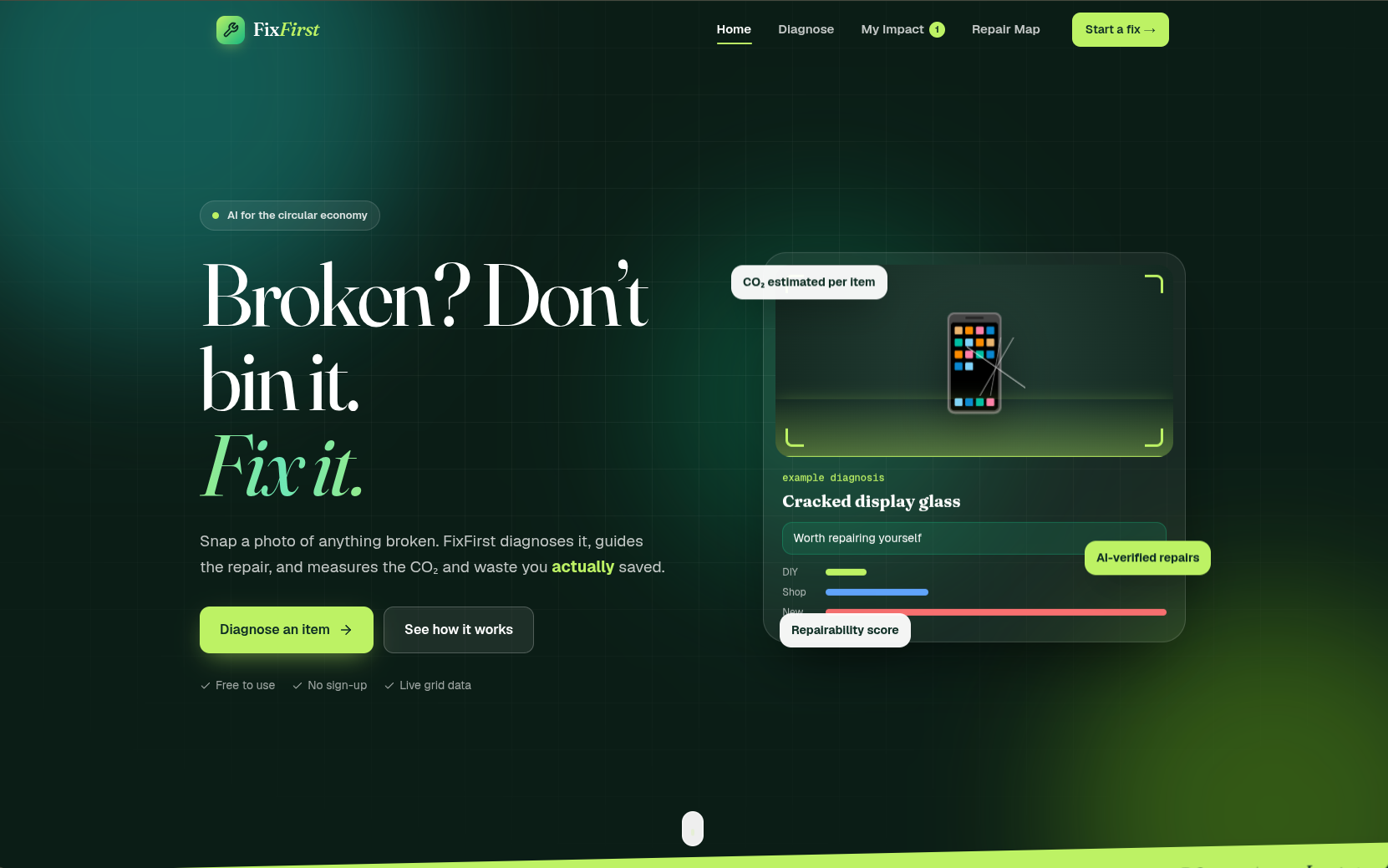
FixFirst is an AI repair assistant for students, renters and households.
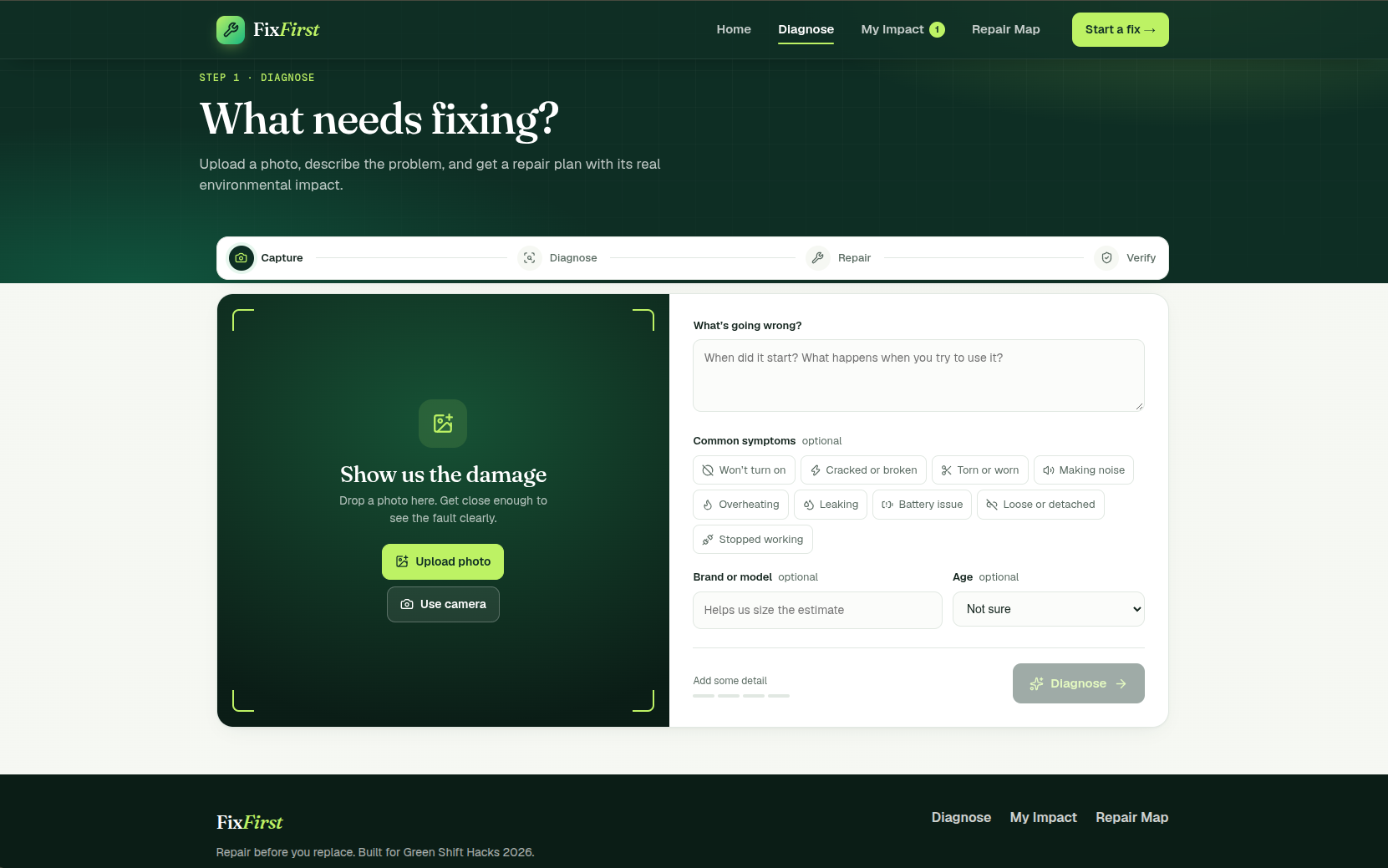
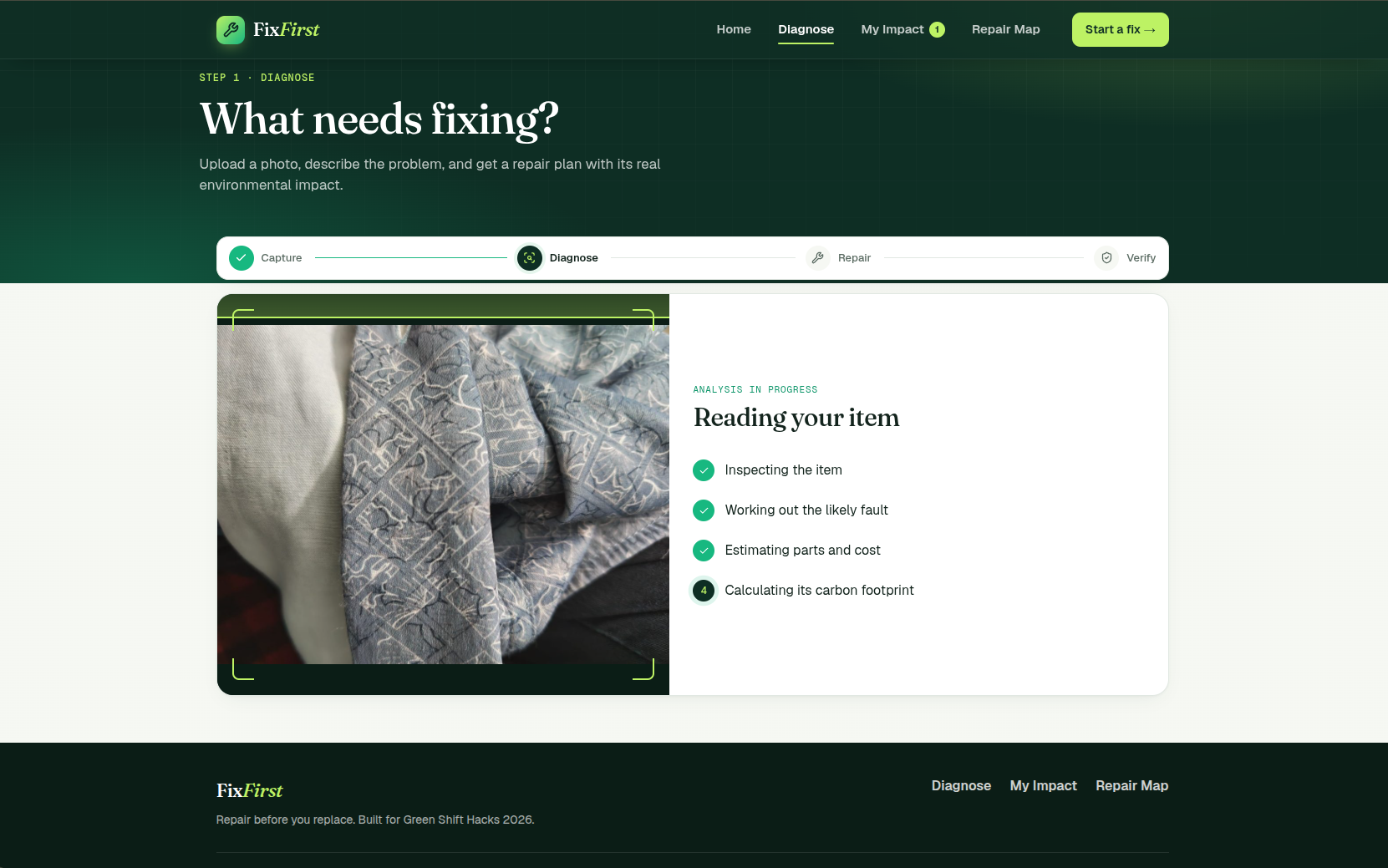
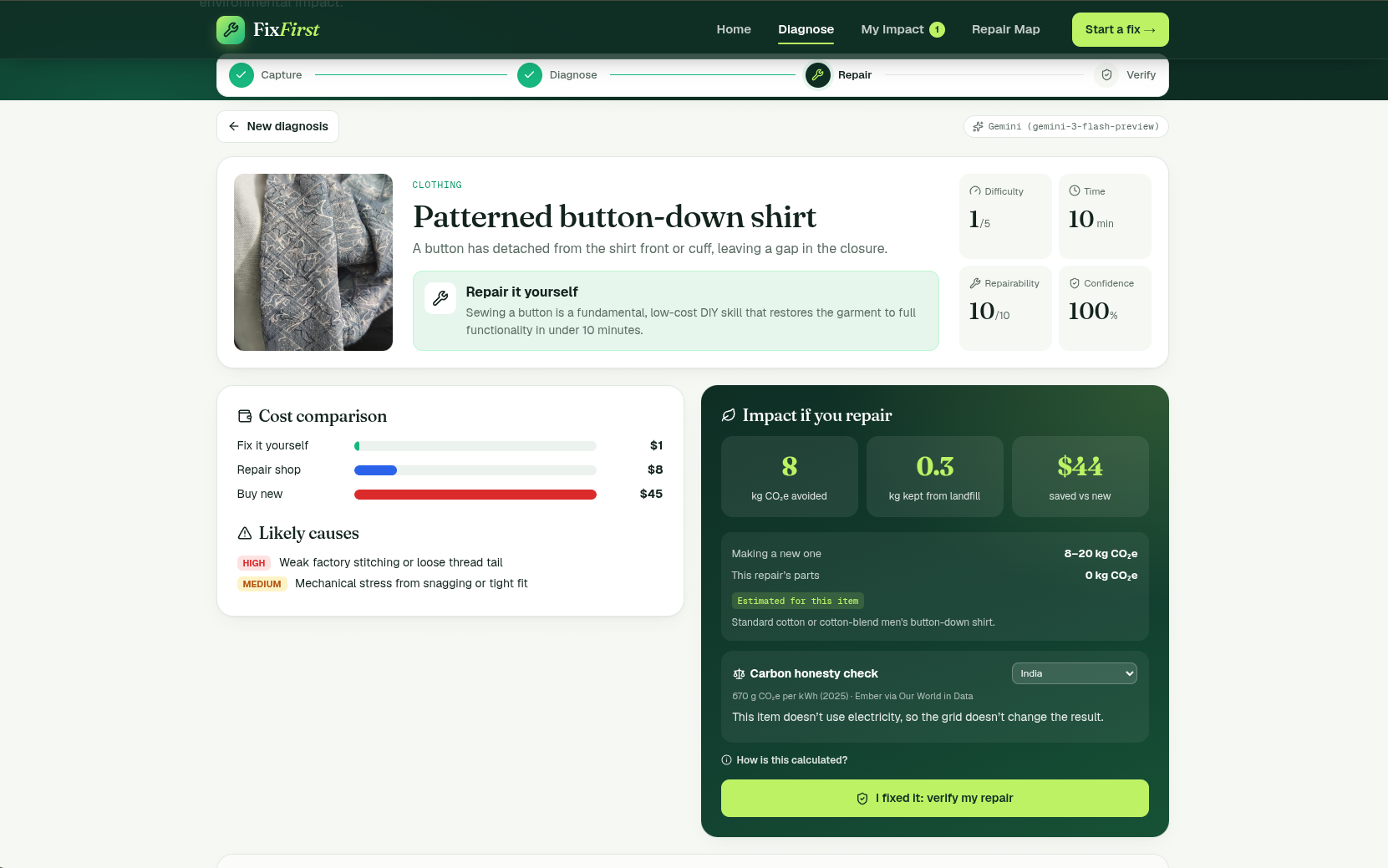
- Snap and diagnose. Upload a photo, pick symptoms, and optionally add the brand and age. A vision AI model identifies the item, ranks the likely causes, and gives a repair-or-replace verdict with difficulty, time, a repairability score (1–10), and a cost comparison of DIY, repair shop and buying new.
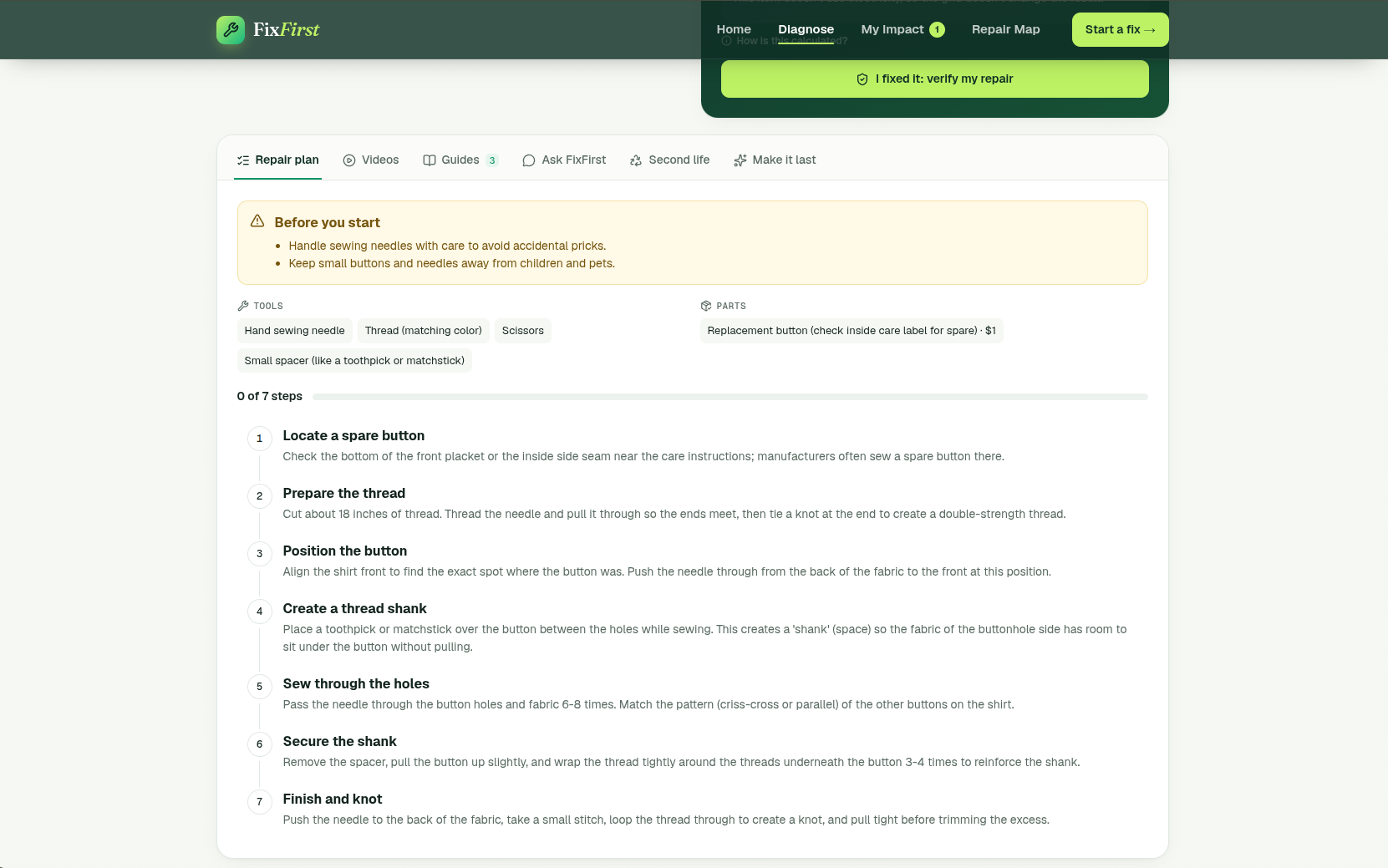
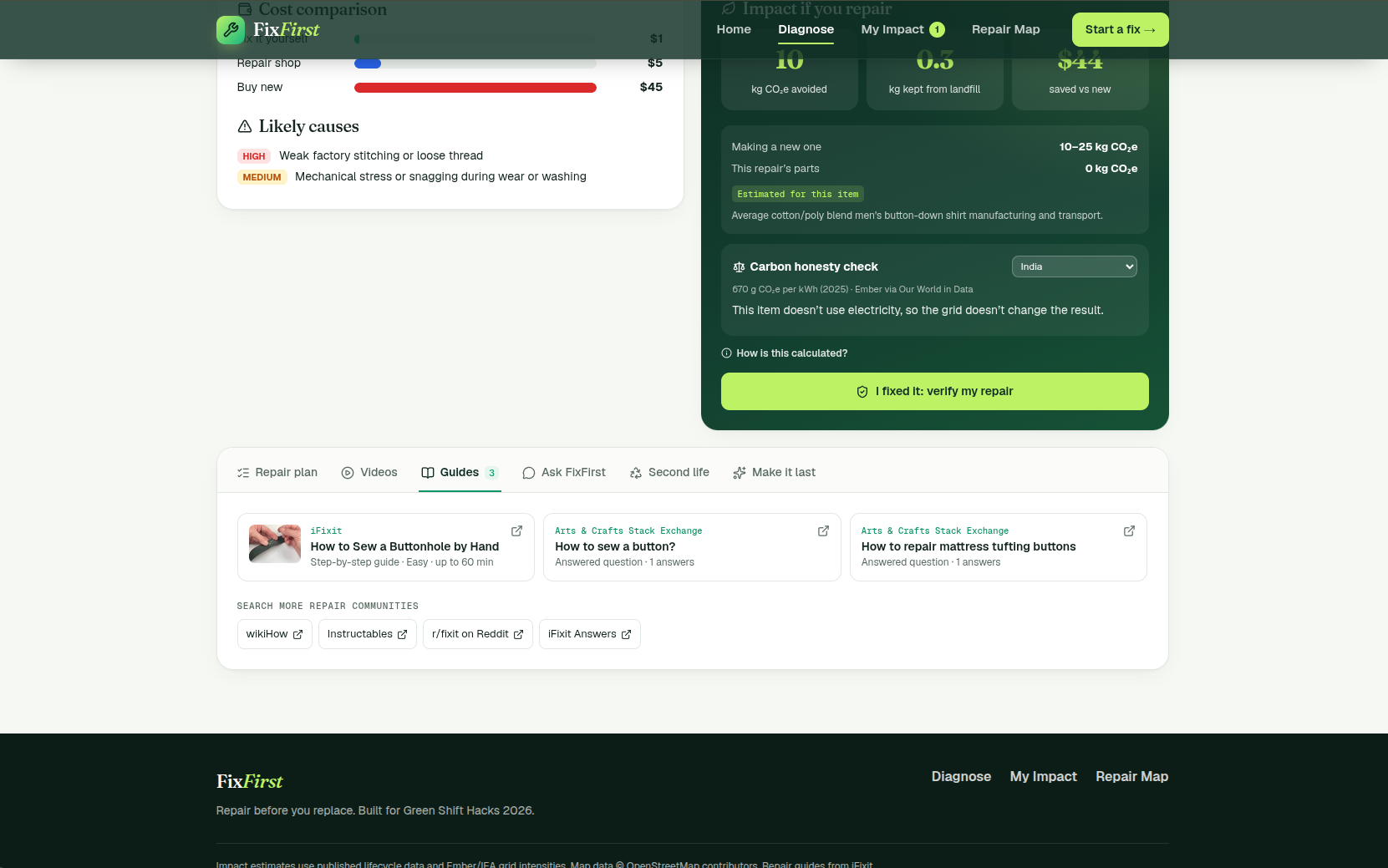
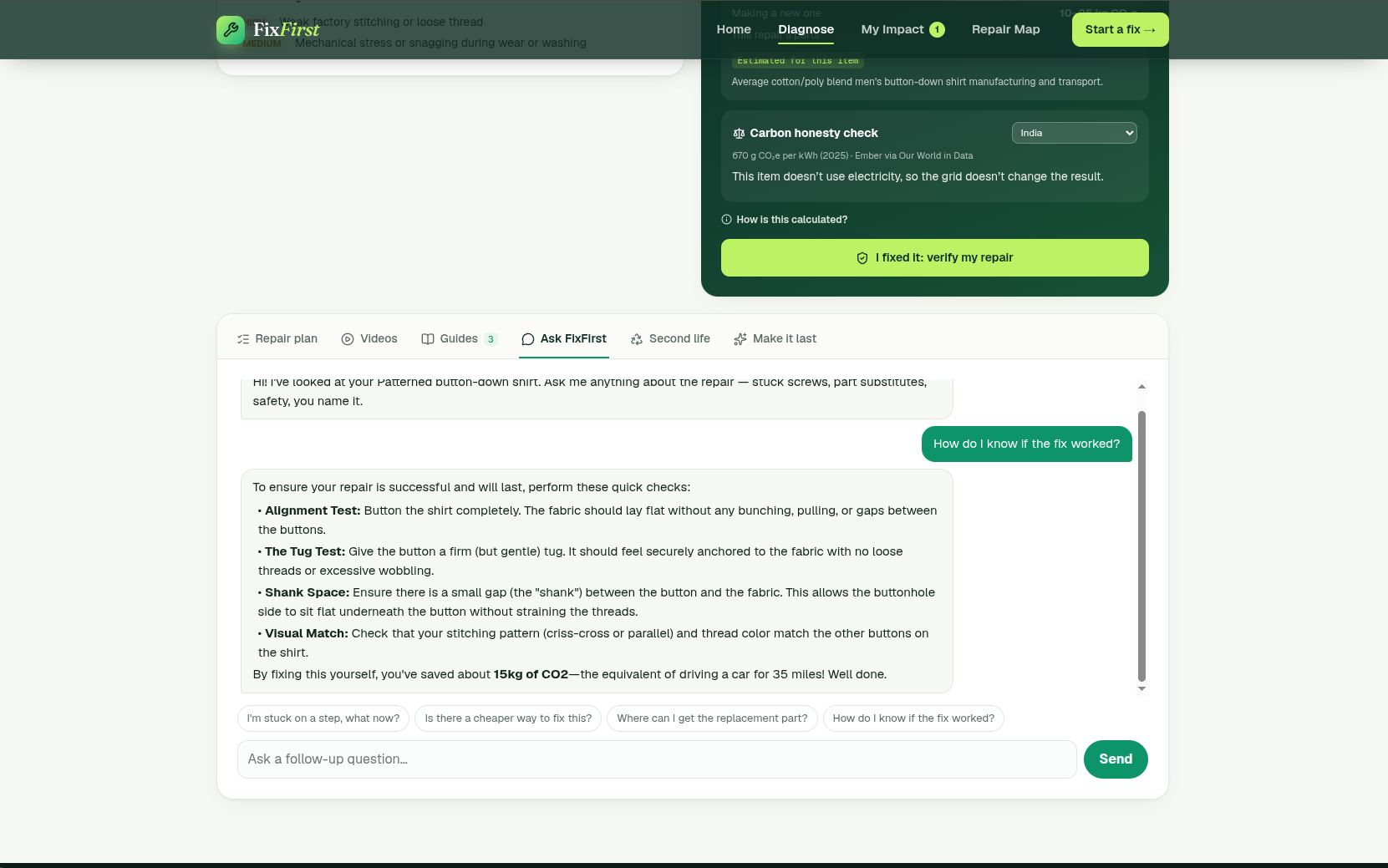
- Fix it. You get a step-by-step repair plan with safety warnings, tools and parts. Matching guides come from iFixit, Stack Exchange repair communities and Internet Archive manuals, plus repair-specific YouTube searches and a follow-up chat that already knows your diagnosis.
- Prove it (Proof of Repair). CO₂ savings only count as verified after the AI compares an after-repair photo with the diagnosis and the before photo. It rejects unrelated or identical photos and repairs that still show the fault. Self-reported fixes are tracked separately, so the impact numbers are never inflated.
- Carbon honesty check. Repair isn't always greener. For items that use electricity, FixFirst compares the carbon of making a new, efficient product with the extra electricity of keeping the old one running, using live grid carbon intensity for 200+ countries and regions (Ember via Our World in Data). For an illustrative 15-year-old fridge, keeping it running on the US grid emits about 611 kg CO₂e over five years, against 350 kg to make a new one, so FixFirst recommends replacing it and gives zero CO₂ credit for repairing it. On France's low-carbon grid, the same repair wins at about 97 kg.
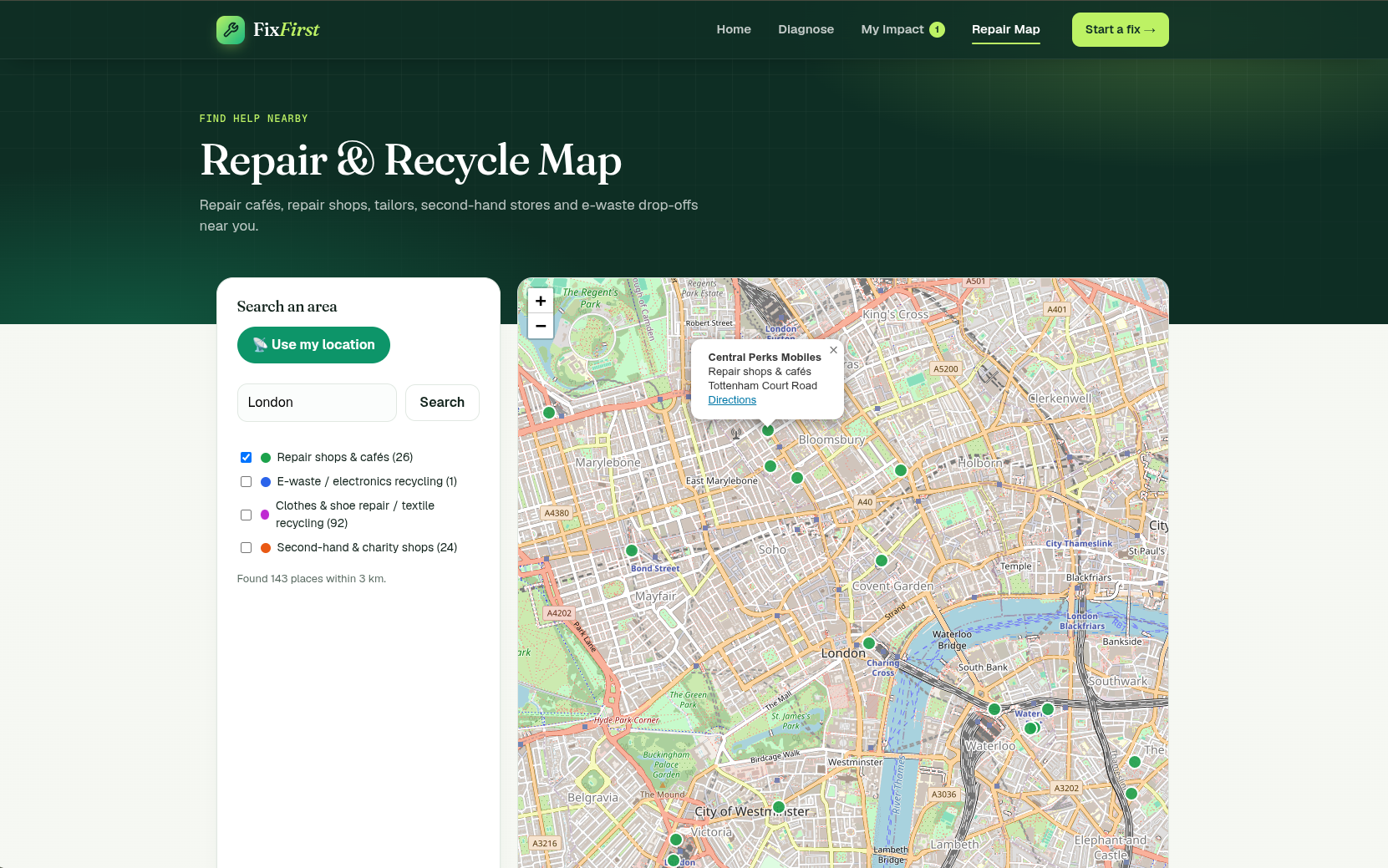
- Close the loop. If an item can't be fixed, there's a second-life plan (donate, resell, recycle or upcycle) and a map of nearby repair cafés, repair shops, tailors, second-hand stores and e-waste drop-offs from OpenStreetMap.
- Track and share. A personal dashboard shows CO₂ avoided, waste diverted and money saved, with verified and self-reported results kept apart. It also has badges, a "scale it up" projection, and downloadable impact certificates for campus repair challenges.
Expected environmental benefit
Impact is calculated per item, not taken from a fixed table:
CO₂ avoided = low estimate for making a new item
            − footprint of this repair's parts
            − extra electricity from keeping an older item running × live grid intensity × years
            (never below zero; replacements earn no CO₂ credit)
The AI estimates a low–high manufacturing footprint, the parts footprint and the mass for the specific item. That estimate is only accepted if it falls within a plausible range of published figures for the category; otherwise the published figure is used and labelled as a reference value. Using the low end of the range keeps claims conservative.
Example: repairing an overheating Dell XPS 13 (fan cleaning and thermal paste) instead of buying a new laptop. The estimated footprint of a new one is 280–400 kg CO₂e, so on India's grid FixFirst credits about 258 kg CO₂e avoided and 1.3 kg of e-waste kept out of landfill.
Each repair keeps an item, and often e-waste, out of landfill, avoids the manufacturing emissions of a replacement, and saves money, which makes repairing a habit people keep.
How I built it
- Frontend: React and Vite with a custom design system (Fraunces and Geist fonts, a Forest & Lime theme), scroll-driven animations, Lucide icons, and Leaflet with OpenStreetMap tiles. The impact log is stored in the browser, so no account is needed.
- Backend: small serverless functions on Vercel that keep API keys off the client.
- AI (free tiers only): Google Gemini vision models with automatic fallback between models, then to Groq, then to an offline demo mode so the app never dead-ends.
- Open data and APIs: iFixit, Stack Exchange, Internet Archive, YouTube search, Our World in Data / Ember grid intensity, OpenStreetMap Overpass (raced across several mirror servers and cached), and Nominatim.
Challenges I ran into
- Honest carbon accounting. A simple "repair saves X kg" number is easy to fake and sometimes wrong. I added the grid-aware honesty check, conservative low-end credits, and plausibility checks on AI estimates.
- Verification without abuse. Designing a photo check that rejects identical, unrelated or still-broken photos while staying friendly to real users.
- Free-tier reliability. One AI model hung on the free tier, so I added timeouts and a multi-provider fallback chain. The public map servers were slow, so I raced several mirrors and cached results.
- Relevant guides. Community Q&A search returned loosely related posts, so I filtered results by the item's key words.
Accomplishments that I'm proud of
- An app that sometimes tells you not to repair, because honesty makes every other number believable.
- AI-verified impact instead of self-reported clicks.
- Entirely free to run: free AI tiers, open data, no sign-up.
What I learned
Environmental impact tools earn trust through transparency. Every number in FixFirst has a "How is this calculated?" panel with its formula, its source, and whether it is an item estimate or a reference value.
Limitations
- AI diagnoses can be wrong. FixFirst shows a confidence score, always lists safety warnings, and recommends a professional for risky repairs (mains electricity, gas, swollen batteries).
- Item footprints are AI estimates checked against published category ranges, not full lifecycle assessments, and they assume the repair actually replaces a purchase.
- Energy-use figures for the honesty check are estimates for typical models.
- Photo verification is a strong deterrent but not tamper-proof.
- Costs are approximate and in USD; map coverage depends on OpenStreetMap data.
- Impact history is stored per browser and doesn't sync across devices.
What's next
Community-verified repair outcomes, local-currency pricing, multilingual support, parts marketplace links, and campus or city repair leaderboards.
Built With
- css3
- google-gemini
- html5
- ifixit-api
- internet-archive
- javascript
- leaflet.js
- lucide
- node.js
- nominatim
- openstreetmap
- our-world-in-data
- overpass-api
- react
- stack-exchange-api
- vite
- youtube-data-api


