-
-
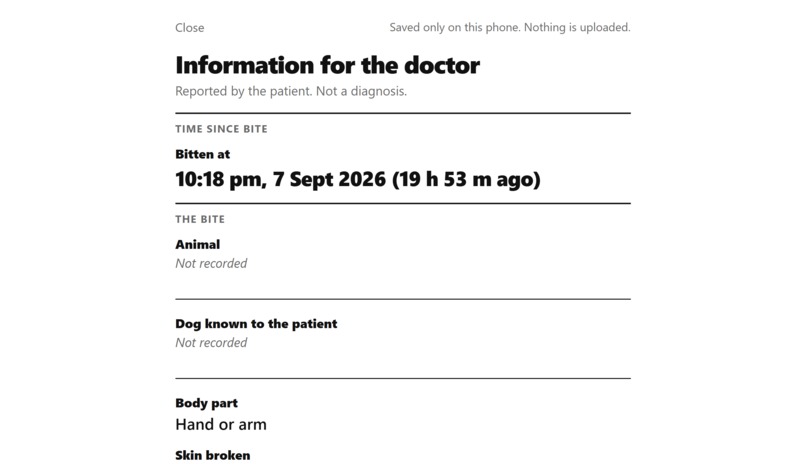
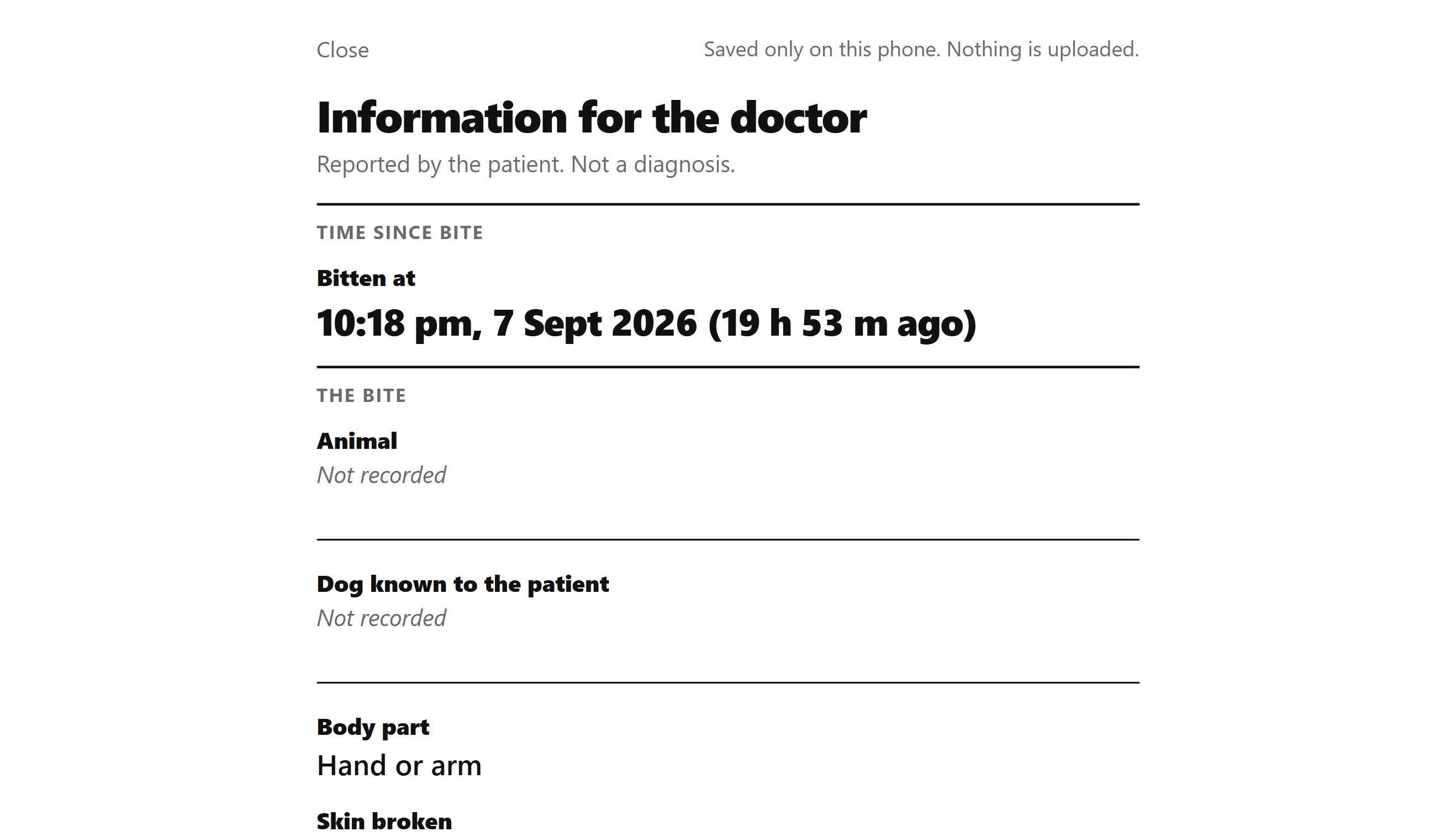
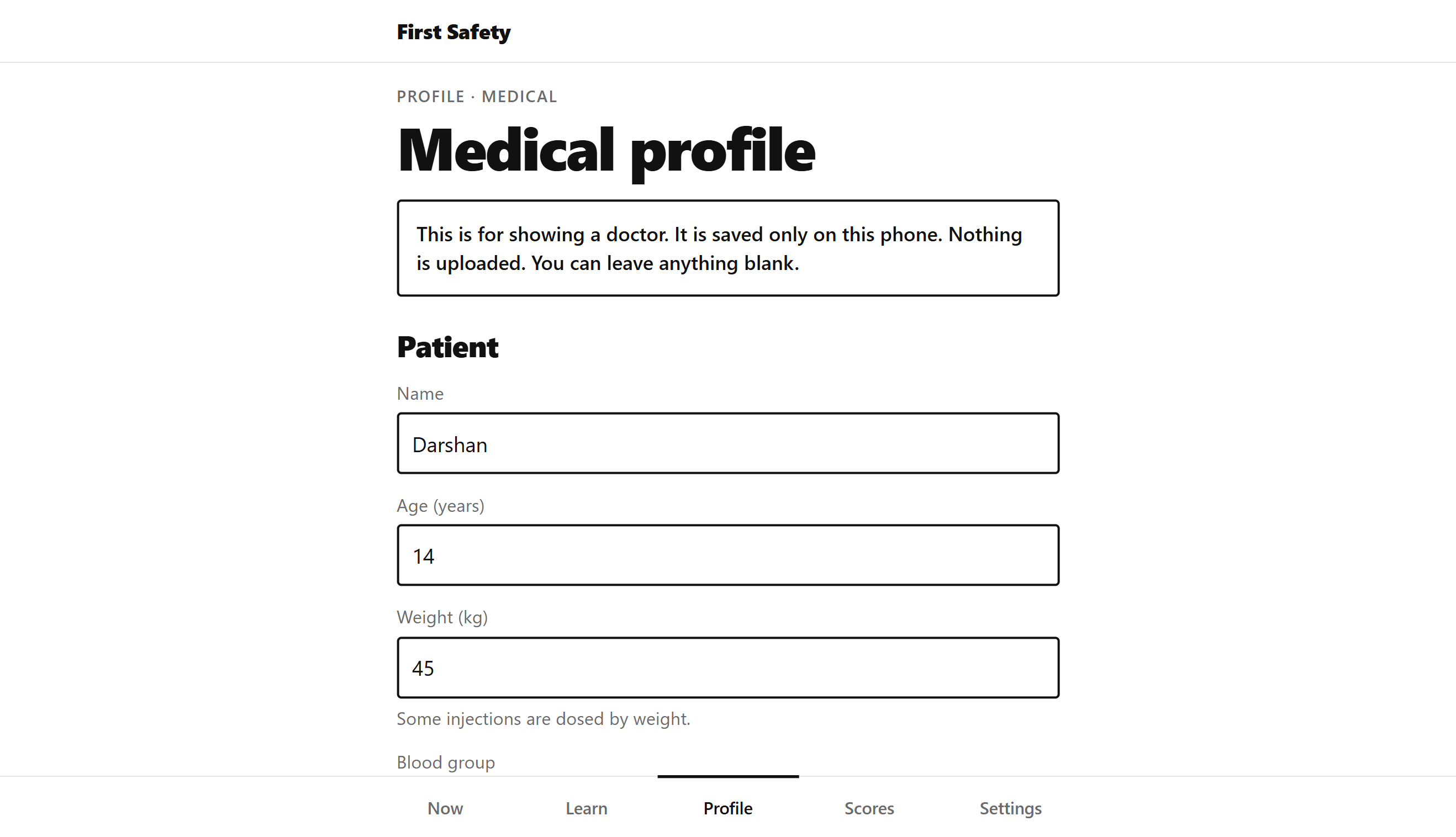
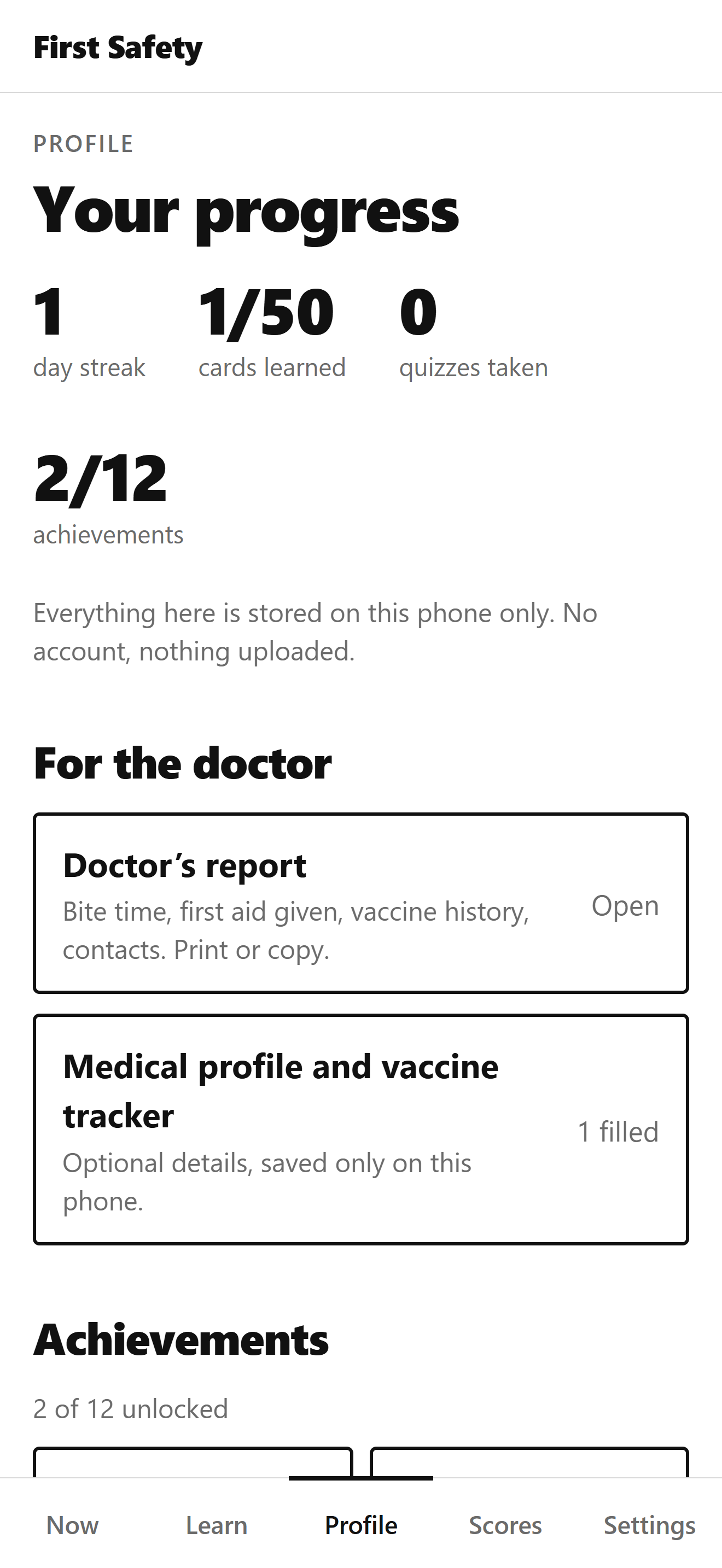
Infromation to the doctor
-
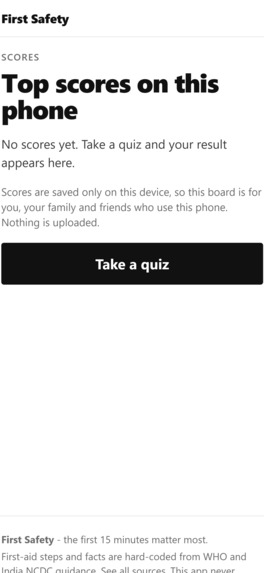
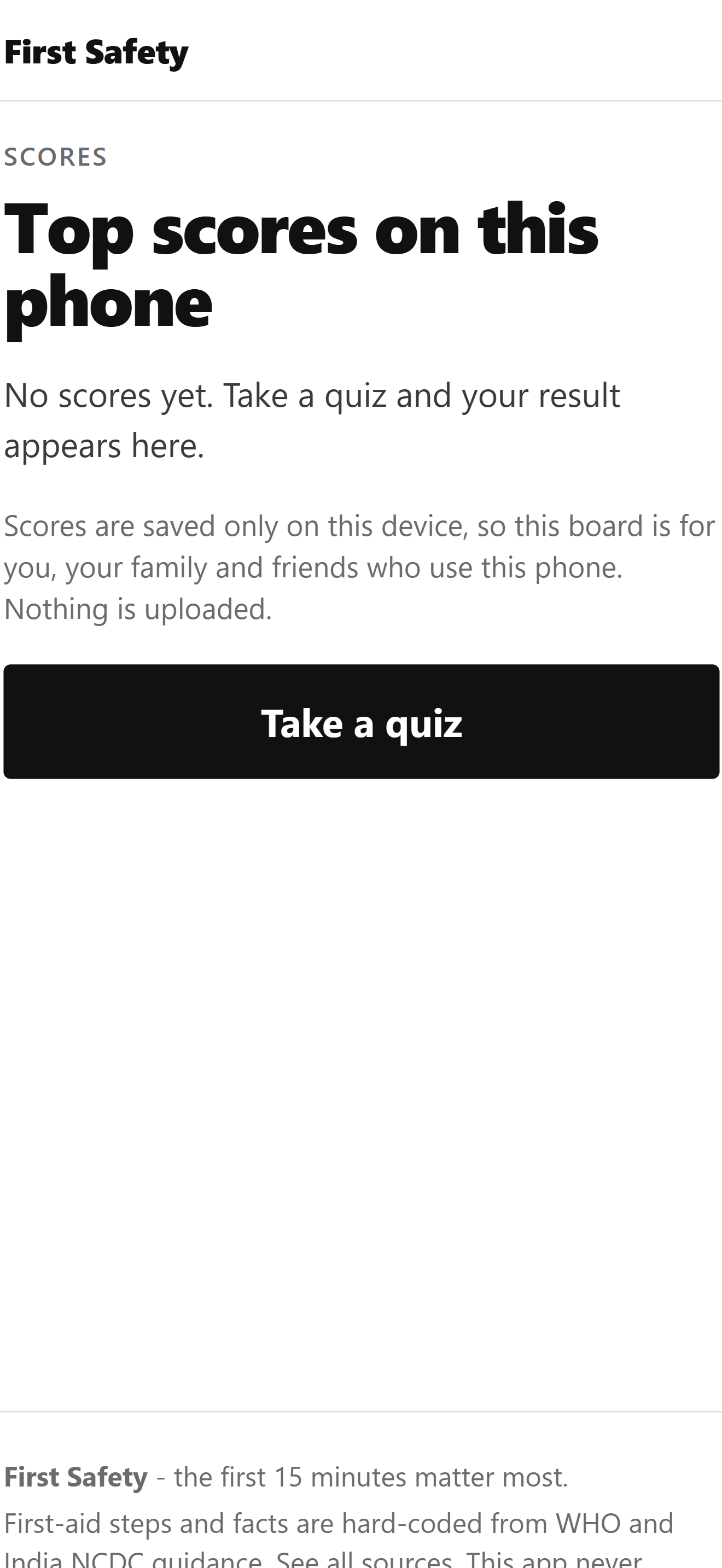
Top scores
-
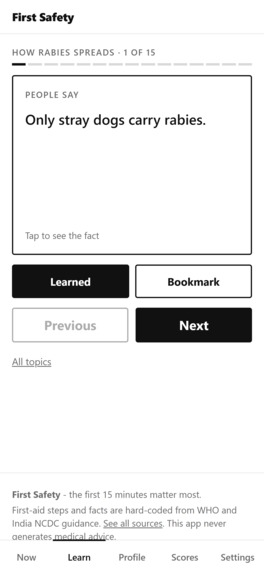
Flashcards
-
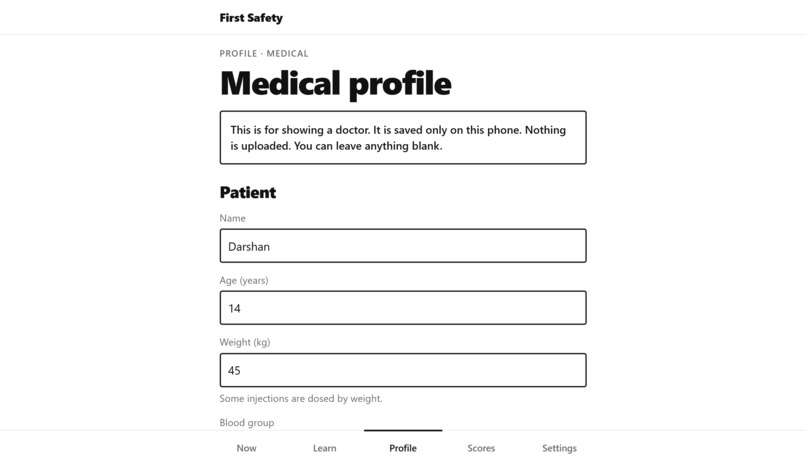
Medical Profile
-
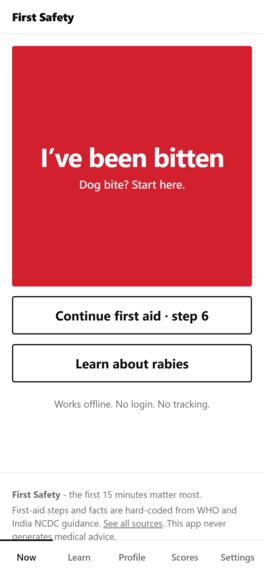
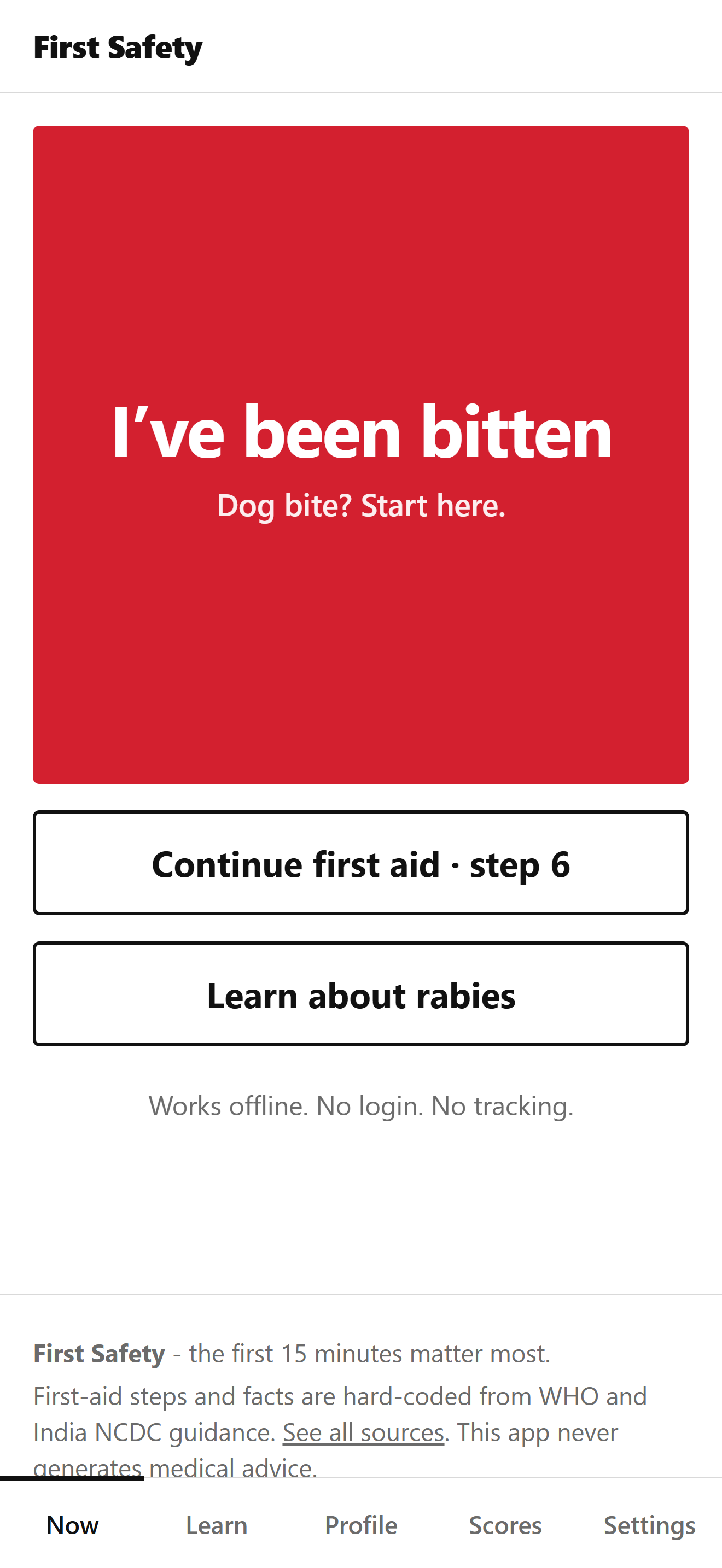
Ma in landing page
-
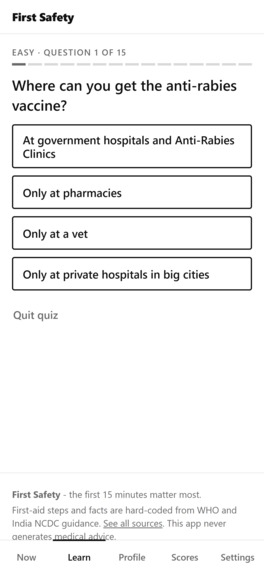
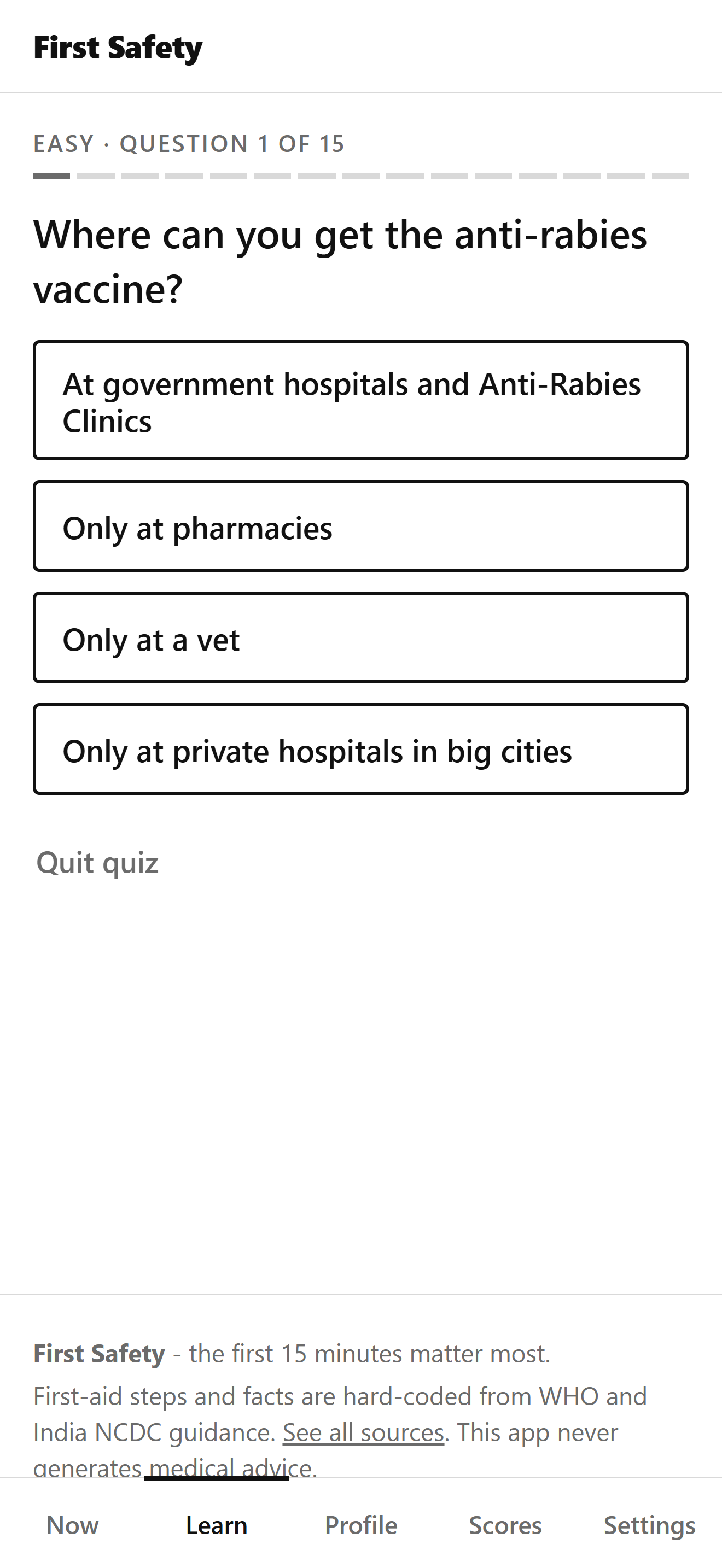
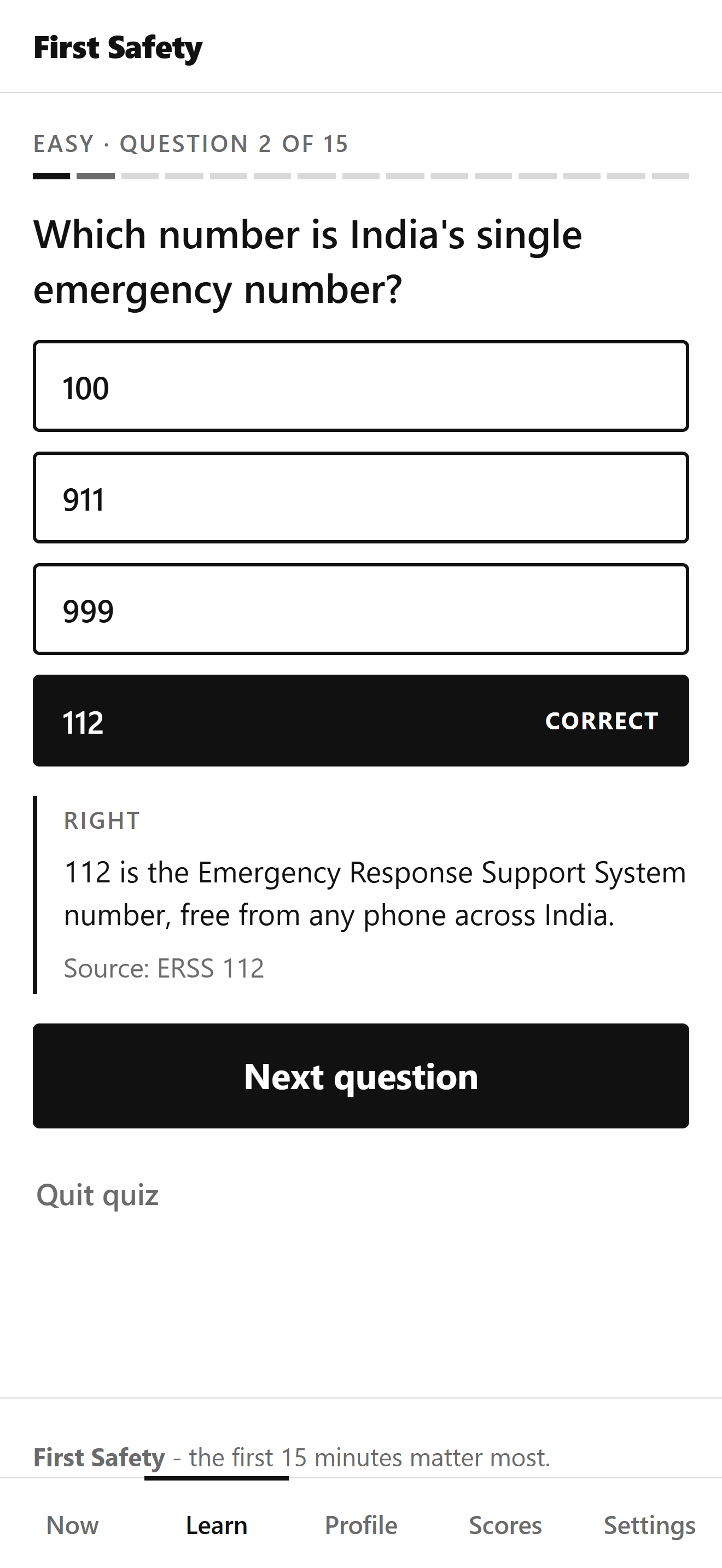
Quiz Area
-
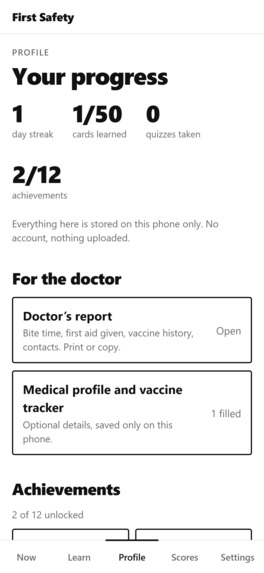
Progress
-
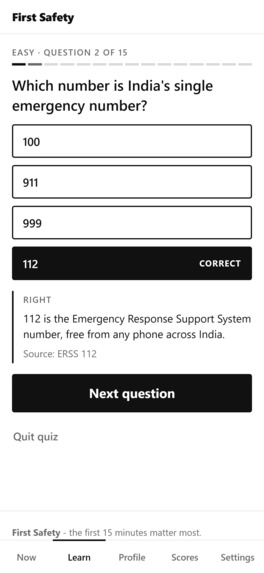
Quiz Area (image 2)
-
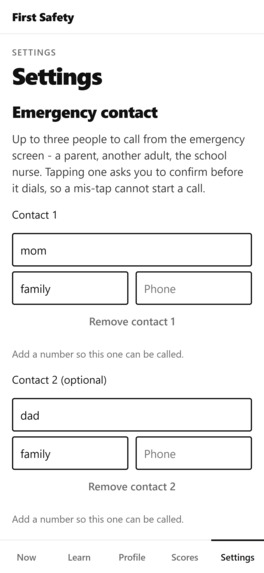
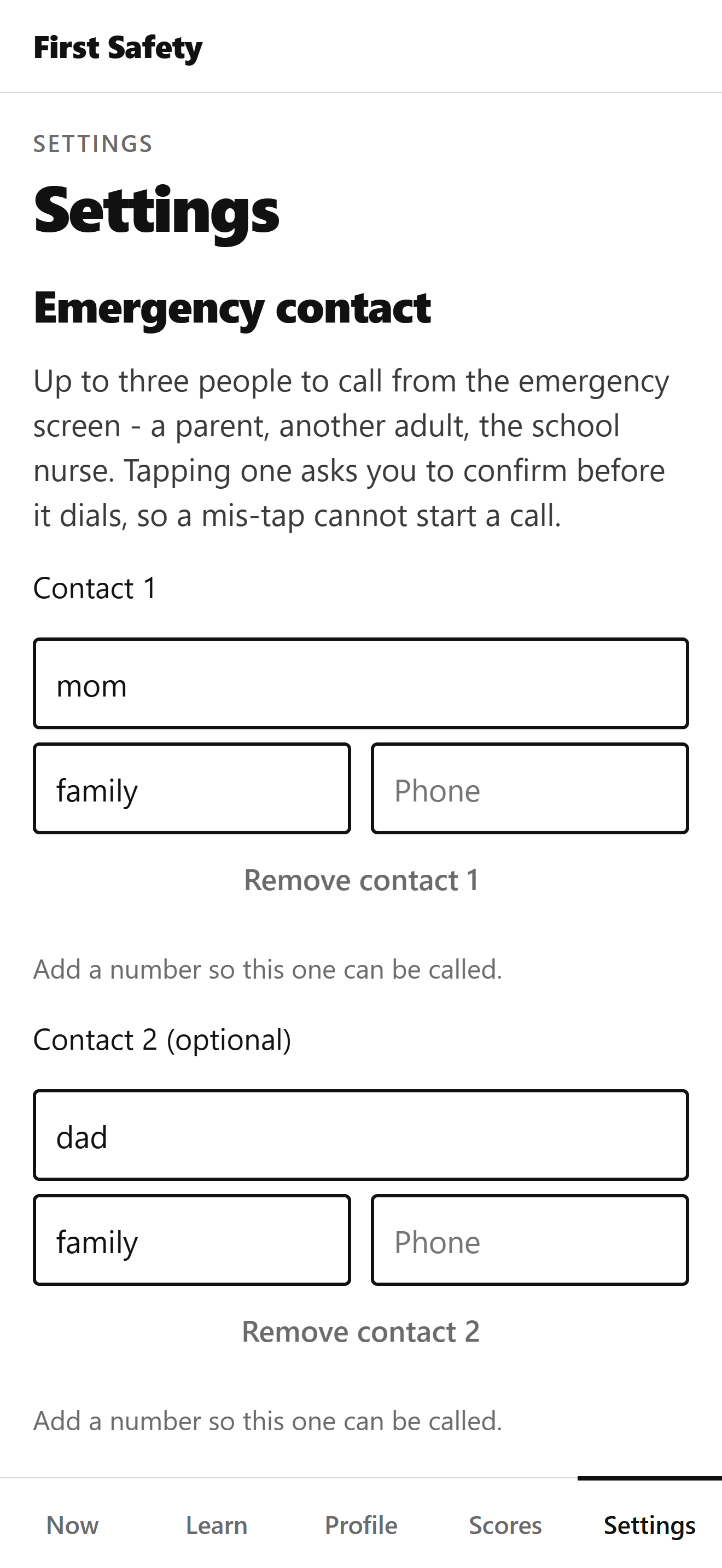
Settings
-
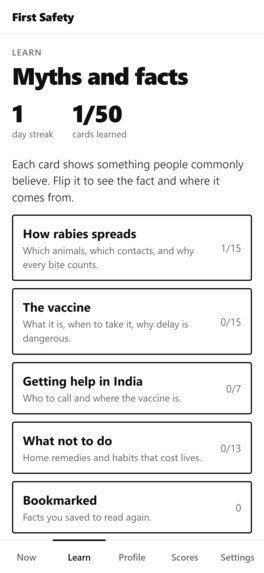
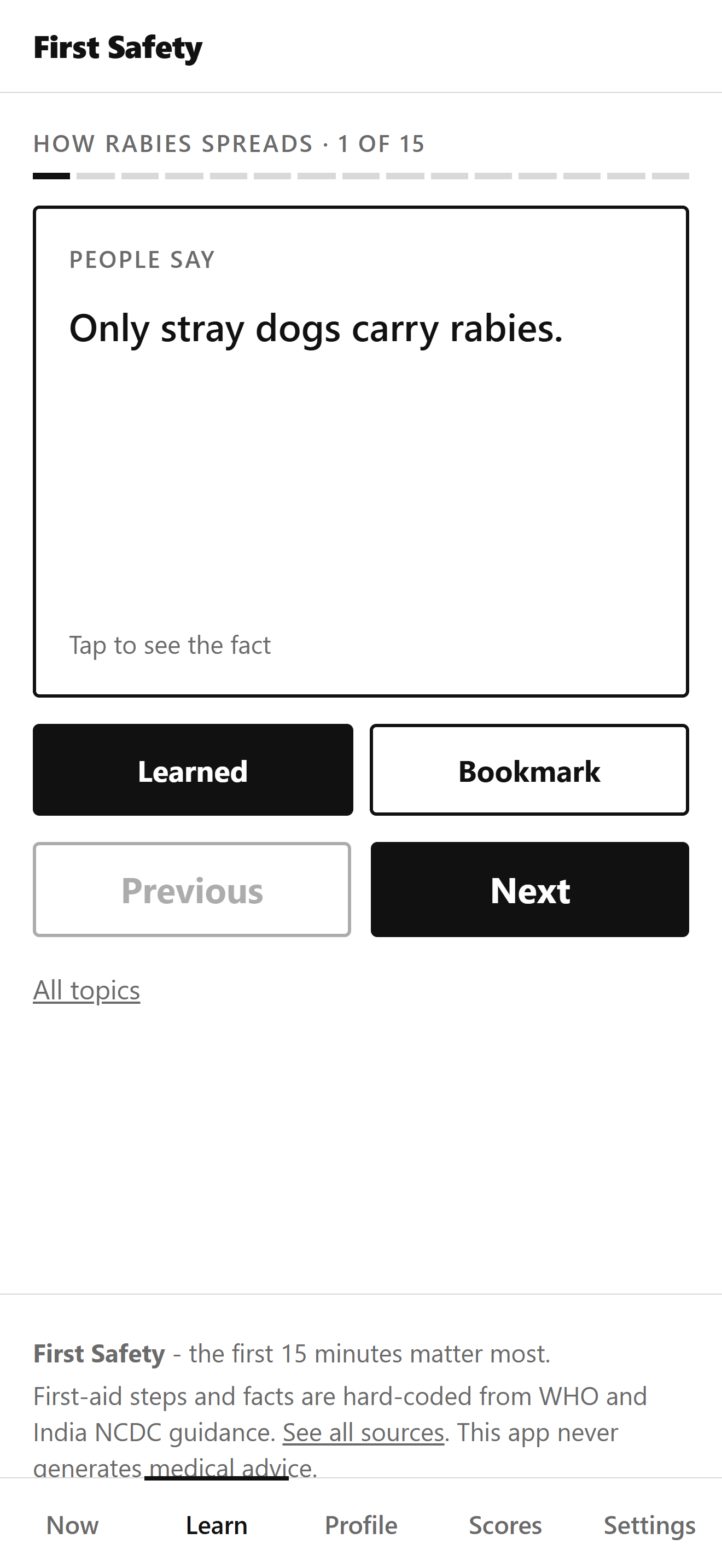
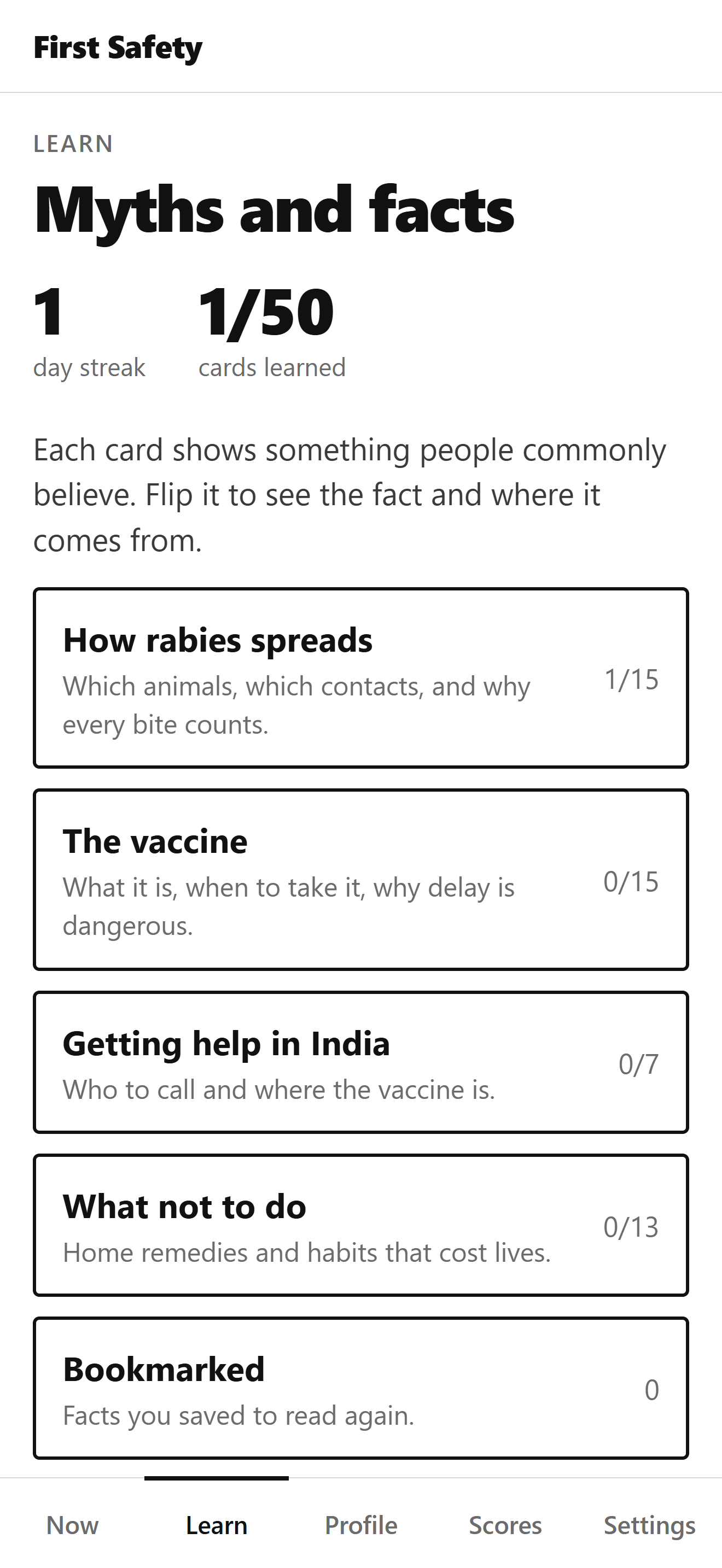
Myths and Facts
Inspiration
India records the highest number of dog-bite-related deaths in the world, and most rabies deaths happen because someone didn't wash the wound properly or waited too long to get the vaccine — not because a vaccine wasn't available. Kids are especially at risk: they're bitten most often, and they're the least likely to know what to do in the first few minutes, or to tell an adult right away because they're scared of getting in trouble. First Safety is built for that exact moment — the first 15 minutes after a bite, when a scared kid has a phone in their hand and needs clear instructions, not a search engine.
What it does
First Safety has two modes. NOW mode is a step-by-step emergency flow: wash the wound for a strict 15-minute timer, apply antiseptic, don't close the wound, don't tie/cut/burn it, tell an adult (with India's 112 emergency number one tap away), and go to a hospital today for the anti-rabies vaccine. It finds the nearest hospital using the phone's live location and OpenStreetMap, with a hardcoded state-by-state hospital fallback if location isn't available. It builds a doctor's report in real time as the student answers questions, so they have something concrete to hand a doctor. A saved emergency contact (e.g. "Mom") is one confirmed tap away from a call.
LEARN mode teaches rabies myths vs. facts (sourced from WHO and NCDC India), with flip cards, embedded videos, a three-difficulty quiz, achievements, and a vaccination record tracker — so the safety information sticks before a bite ever happens, not just during one.
How we built it
Vite + React + TypeScript, deployed on Vercel. It's intentionally a zero-backend app — no login, no server, no API keys for the medical content. Everything is stored in localStorage on the student's own phone, and a service worker makes the entire NOW-mode emergency flow work fully offline, since a scared kid in a hurry can't be asked to wait on a slow connection. The one live network feature — nearest-hospital lookup — calls the free OpenStreetMap Overpass API directly from the browser and degrades gracefully to a hardcoded list if location or network isn't available. All medical content is hardcoded from WHO's Rabies Fact Sheet and NCDC India's guidelines — nothing is AI-generated.
Challenges we ran into
Building for a genuine emergency use case meant every failure path had to be designed, not just the happy path — location denied, no network, an expired session — none of those could ever leave a student stuck with no next step. We also had to be careful with a minors-facing safety app about what data touches a backend at all versus staying entirely on-device.
Accomplishments that we're proud of
A fully working offline-first emergency flow that a child can complete start to finish with zero setup, zero login, and zero data leaving their phone unless they choose to save an emergency contact. The live doctor's report that fills in automatically from the student's own answers, so what an actual physician needs is captured without a parent's help.
Built With
- geolocation-api
- html5
- localstorage
- openstreetmap
- pwa
- react
- service-workers
- typescript
- vercel
- vite

Log in or sign up for Devpost to join the conversation.