-
-
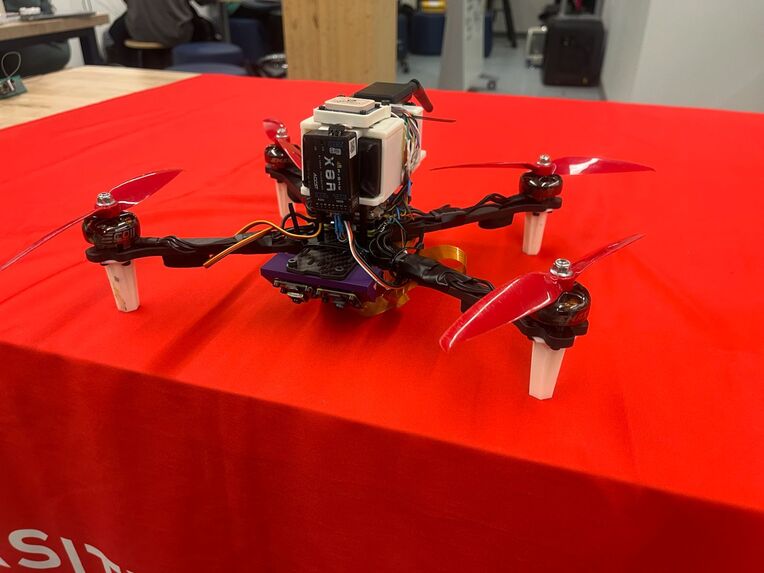
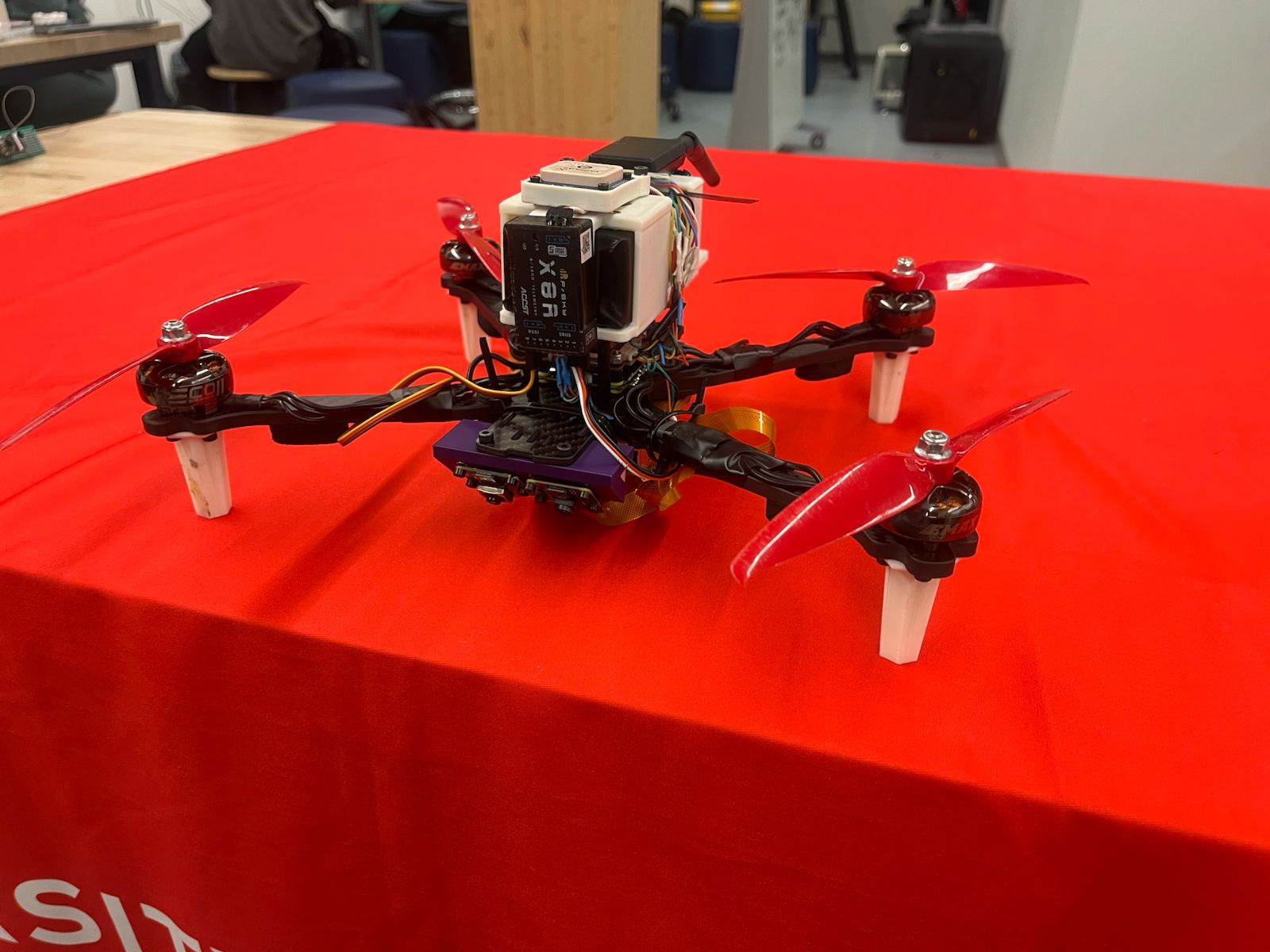
Side View of Drone
-
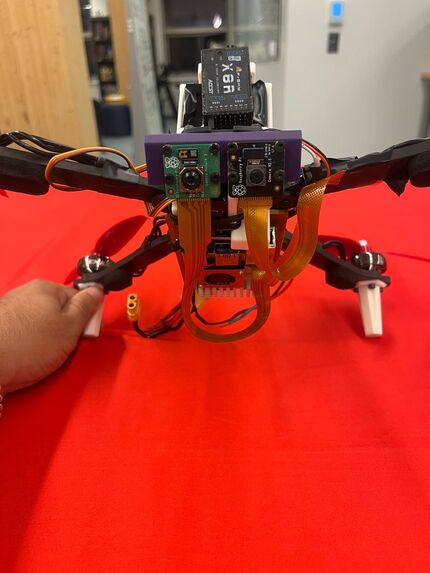
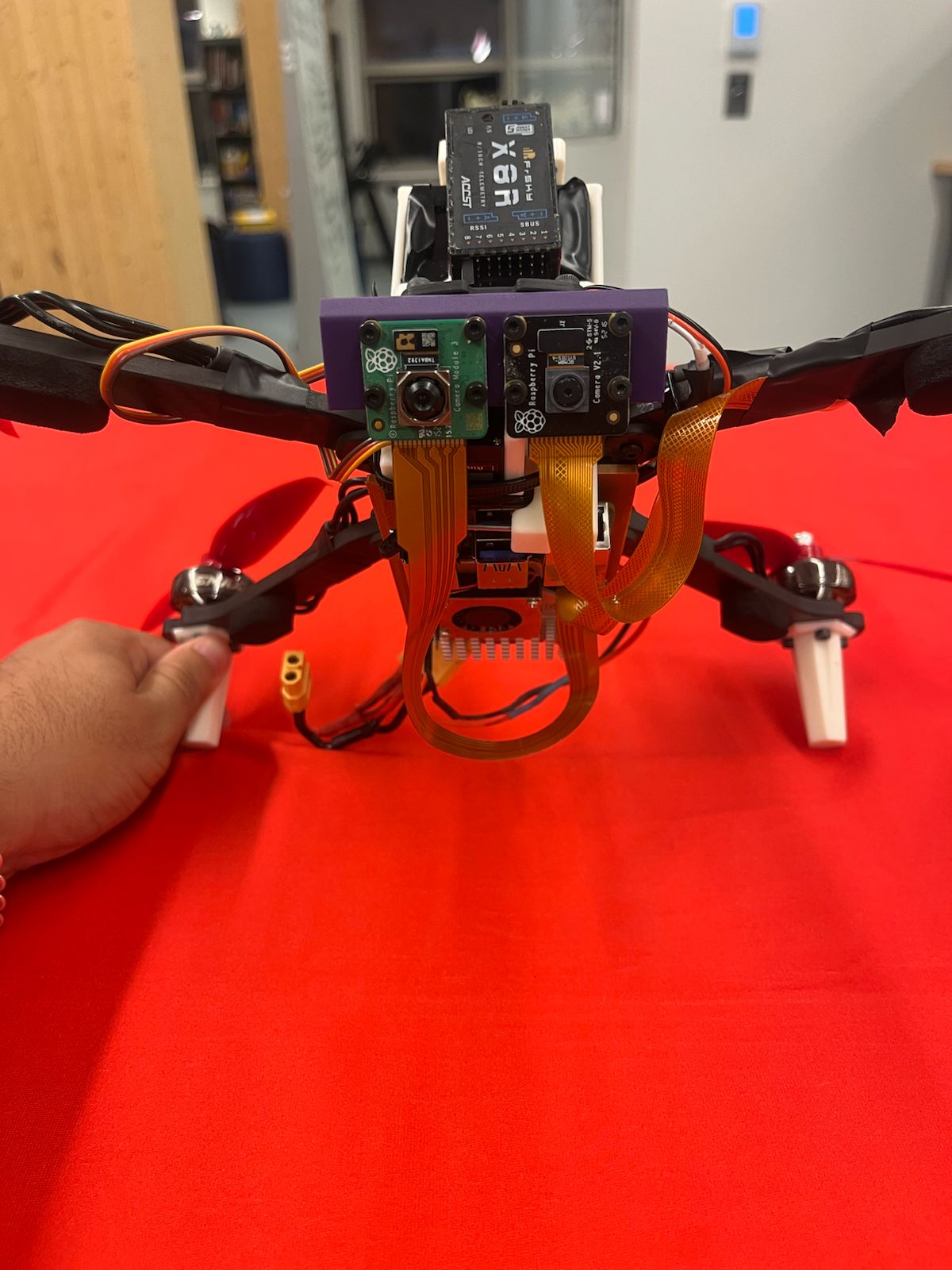
Belly view of Drone displaying IR cam,Reg Cam, Drop Mechanism, and Pi5
Inspiration
First 4 - Emergency Response Drone + Dispatcher Dashboard
The first 4 minutes change lives. First 4 is an emergency medical-response drone system designed to bridge the critical information gap between a 911 call and the arrival of ground responders.
Our system combines medical supply delivery, live day and infrared video feed, and a dispatcher dashboard to help emergency personnel make better-informed decisions.
Inspiration
When someone calls 911, a dispatcher often has only the caller's description of the situation. In emergencies such as cardiac arrest, overdose, or severe bleeding, the minutes before professional help arrives can be critical.
We spoke with emergency dispatch personnel from a city that has launched an FRD (First Responder Drone) program, and they spoke about the limitations of existing response workflows. Stamford Ct, dispatcher explained:
"Having a live feed as a dispatcher would be great especially since bystanders are in a panic and I can get the info before crew arrives on scene."
We also spoke with Tom Valle, Captain at the Amherst Fire Department, whose department already runs a drone program with four pilots. They use drones to monitor crowds and to help with injured hikers. Captain Valle told us his team has already talked about dropping supplies to a stranded or injured hiker, but they don’t have a way to do that yet.
He also explained why live aerial video matters so much. Firefighters work the fire, but the chief sets up a command post to direct the response, and that post depends on getting accurate information quickly. When the command post can see the scene in real time, it isn’t relying on secondhand radio updates. In his words:
“With new drones we can make more educated decisions in real time, you eliminate this game of telephone.”
That insight inspired First 4: a drone that could reach an emergency location, provide a live view of the scene, collect essential information, drop medical supplies, and have a response before the first responders.
What it does
1. Emergency Dispatcher Dashboard We developed a centralized dashboard that allows dispatchers to:
- View incoming emergency call information.
- Identify the caller's location on a map.
- Assign an available drone and medical payload.
- Monitor drone location, mission status, and telemetry.
- View real-time camera footage, with a Day/IR toggle to switch between the standard and infrared feeds.
For the hackathon, emergency calls and dispatch information are simulated.
2. Autonomous Emergency Drone Our drone platform uses a MicoAir flight controller running ArduPilot and a Raspberry Pi 5. The flight controller handles stabilization and navigation. The Raspberry Pi only streams the onboard cameras; all heavy processing happens on the ground station. The system is designed for GPS-based waypoint navigation to emergency locations, with a human able to take over at any time through the RC transmitter.
3. Live Day and Night Video The drone carries multiple cameras:
- Raspberry Pi Camera: standard daytime video.
- Raspberry Pi IR Camera: near-infrared imaging for low-light scenes (this is not a thermal camera). Camera streams go to the ground station using Raspberry Pi camera tools and MediaMTX.
4. Scene Analysis First 4 uses computer vision built on YOLO11, OpenCV, and PyTorch, running at the ground station. The vision pipeline supports:
- Detecting people in the camera feed.
- Counting visible individuals.
- Analyzing body poses.
- Flagging people who may have fallen or be unresponsive, for the dispatcher to review if missed during a situation.
alerts are meant to support the dispatcher's decisions. They do not diagnose medical conditions.
5. Medical Supply Delivery Our drone includes a custom 3d printed servo-operated payload release mechanism designed for compact emergency kits. Possible payloads include:
- Narcan
- EpiPen
- AED
- CPR face shield
- Bleeding-control supplies.
- Snake bite kit The payload delivery system is intended for controlled testing and future validation.
How we built it
| Component | Purpose |
|---|---|
| 7-inch Deadcat Frame | Drone structure |
| 1300KV Motors | Drone propulsion |
| MicoAir Flight Controller (ArduPilot) | Stabilization and autonomous navigation |
| Bluejay 60A 4-in-1 ESC | Motor control |
| Taranis X9D Plus 2019 | Manual RC control, safety override, and telemetry |
| Raspberry Pi 5 | Onboard video streaming |
| Raspberry Pi Camera | Daytime video |
| Raspberry Pi IR Camera | Low-light video |
| Servo Release Mechanism | Medical payload delivery |
Software Architecture
Our system uses three primary layers:
Drone Layer
- ArduPilot flight control
- Raspberry Pi camera capture and streaming
- Servo-based payload release
Ground Station
- Video stream reception (MediaMTX)
- Computer vision inference (YOLO11, OpenCV, PyTorch)
- Call transcription
- Drone mission information
Dispatcher Dashboard
- Simulated 911 call interface
- Interactive emergency map
- Camera feeds with Day/IR toggle
- alerts
- Telemetry
Running high computational processes at the ground station keeps the drone light: the Pi only streams video, which saves power and weight in the air.
External code and libraries
- ArduPilot (flight control firmware)
- Ultralytics YOLO11, OpenCV, PyTorch (computer vision)
- MediaMTX (video streaming)
Challenges we ran into
Hardware Integration Combining flight-control electronics, motors, Raspberry Pi 5, cameras, communication equipment, and a medical payload required careful mechanical and electrical integration.
Live Video Streaming We worked with Raspberry Pi camera software, video-streaming protocols, and ground-station integration to deliver useful visual information to the dispatcher interface. Which gave us a lot of trouble as we worked with hotspots that constantly disconnected while trying to bind our Pi5 to our ground station
Computer Vision Performance We weighed running the models on the drone against running them at the ground station, and chose the ground station so the Pi could focus on streaming. We also ran into many problems trying to get a test setup working with a Pi 02W where we reflashed the SD card multiple times only to continue facing password authentication issues.
Esc Firmware -Discontinued due to the war in Ukraine
- Required rebuilding a firmware using older models with the help of AI
Soldering
- Soldering copper pads to the ESC were a challenge as it dissipated heat quickly cooling the joint before a solid connection was made.
- Multiple attempts were had.
Accomplishments that we're proud of
Our project brings together robotic systems, embedded electronics, real-time communications, computer vision, and emergency-response workflow design in one integrated prototype.
We wanted to make a project that could have a genuine impact on people's day to day lives. When a time sensitive emergency comes every second counts. We think that dropping a payload with medical equipment is a twist to the already emerging technology that could help development and further improve life saving measures.
Key development areas include:
- Building the drone and payload hardware.
- Developing a dispatcher-focused interface.
- Integrating Raspberry Pi camera streaming.
- Connecting computer vision output with the dashboard.
- Developing a remote communication subsystem.
- Designing the overall emergency-response mission workflow.
What we learned
First 4 taught us that meaningful autonomous systems require more than flight-control algorithms. We gained hands-on experience in:
- Drone mechanical and electrical integration.
- Raspberry Pi 5 camera configuration.
- Real-time video streaming.
- Computer vision.
- Dispatcher dashboard development.
- Integrating hardware and software under hackathon time constraints.
- Staying organized was key
- Communication and assigning roles for maximum efficiency went a long way
We also learned how important it is to develop technology with input from the people who may eventually use it.
Team
| Team Member | Contributions |
|---|---|
| Javier Serrano | Dispatcher UI/UX and dashboard development, computer vision integration, market research and dispatcher outreach, demo orchestration |
| Abrar Jawad | Machine Vision, CAD, Power Management |
| Kyle Burke | Drone mechanics, programming, camera mounts, processor and battery mounts |
| Biraj Patel | Payload communication system, ESP32-S3 integration, Raspberry Pi 5 setup, daytime and infrared camera testing |
What's next for First 4
We plan to continue developing First 4 through:
- Authorized integration with computer-aided emergency dispatch systems.
- GPS-based autonomous drone assignment and mission planning.
- More reliable long-range audio and video communication.
- Improved computer vision for emergency scene awareness.
- Controlled autonomous flight and payload release testing.
- Collaboration with emergency responders on usability and safety.
- Regulatory and flight-safety validation before real-world deployment.
Our Vision
Emergency responders should not have to wait until arriving on scene to understand what is happening.
First 4 explores how autonomous drones, intelligent sensing, and real-time communication can help emergency teams act with better information during the critical first minutes.
First 4 - Because Every Second Matters.
Try it out
Built With
- 3dprinting
- ai
- arduino
- ardupilot
- computer-vision
- drones
- esp32
- fastapi
- ffmpeg
- javascript
- leaflet.js
- mediamtx
- ncnn
- node.js
- opencv
- openstreetmap
- picamera2
- python
- pytorch
- raspberry-pi
- raspberry-pi-5
- robotics
- webrtc
- websockets
- yolo

