-
-
Set The Table Logo
-
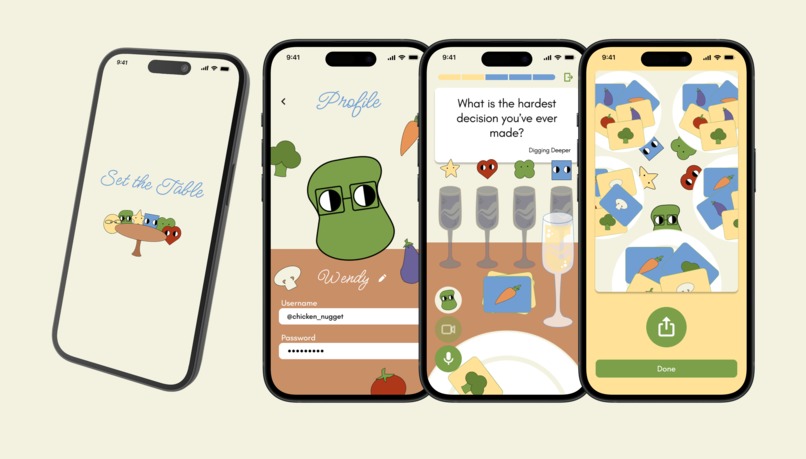
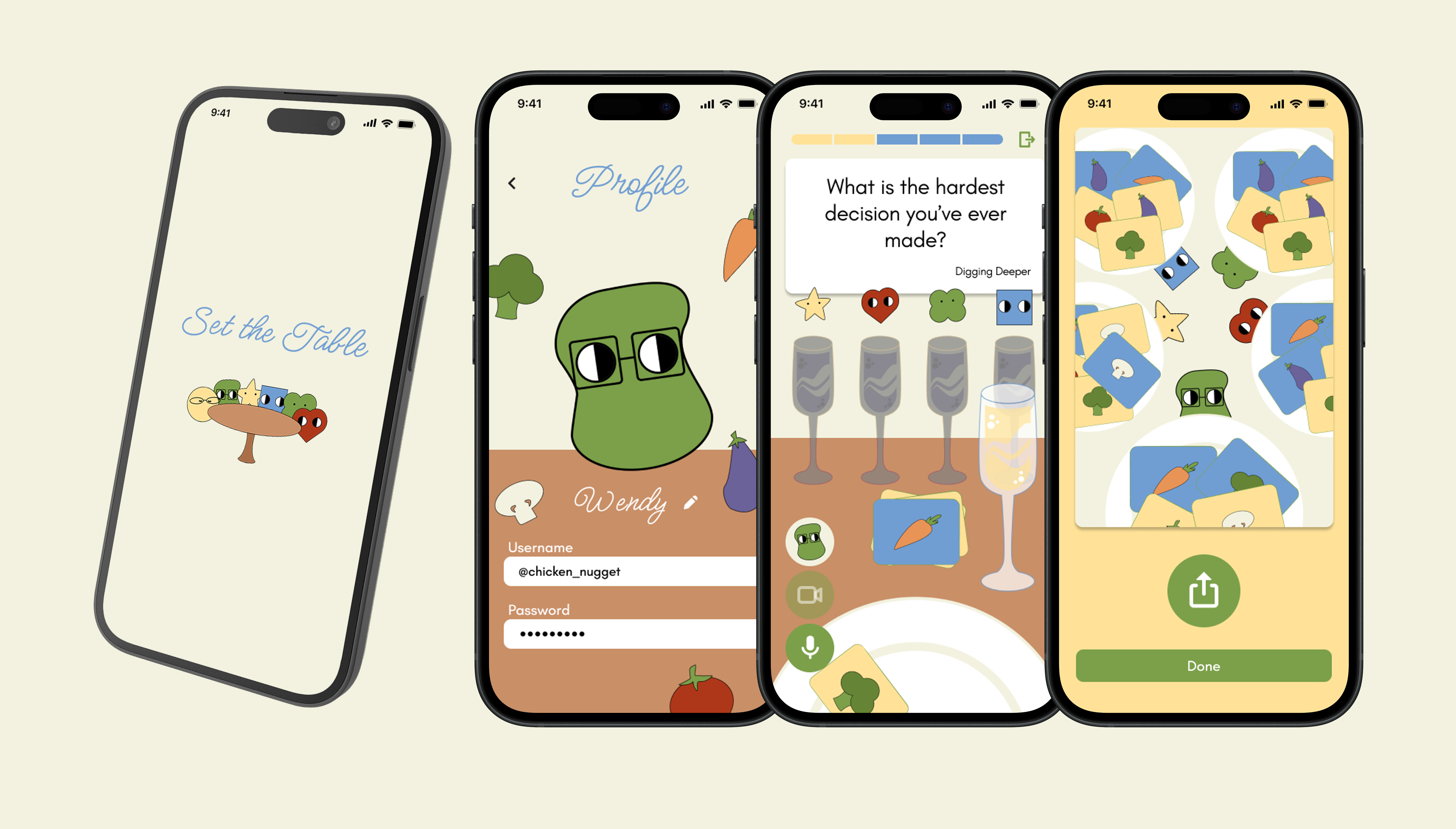
Screen Mockups
-
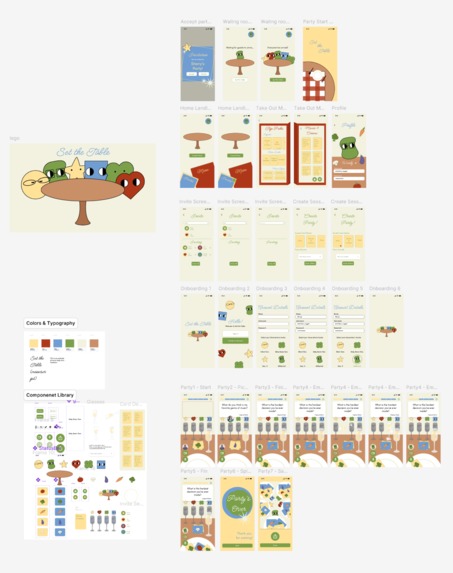
Our Figma!
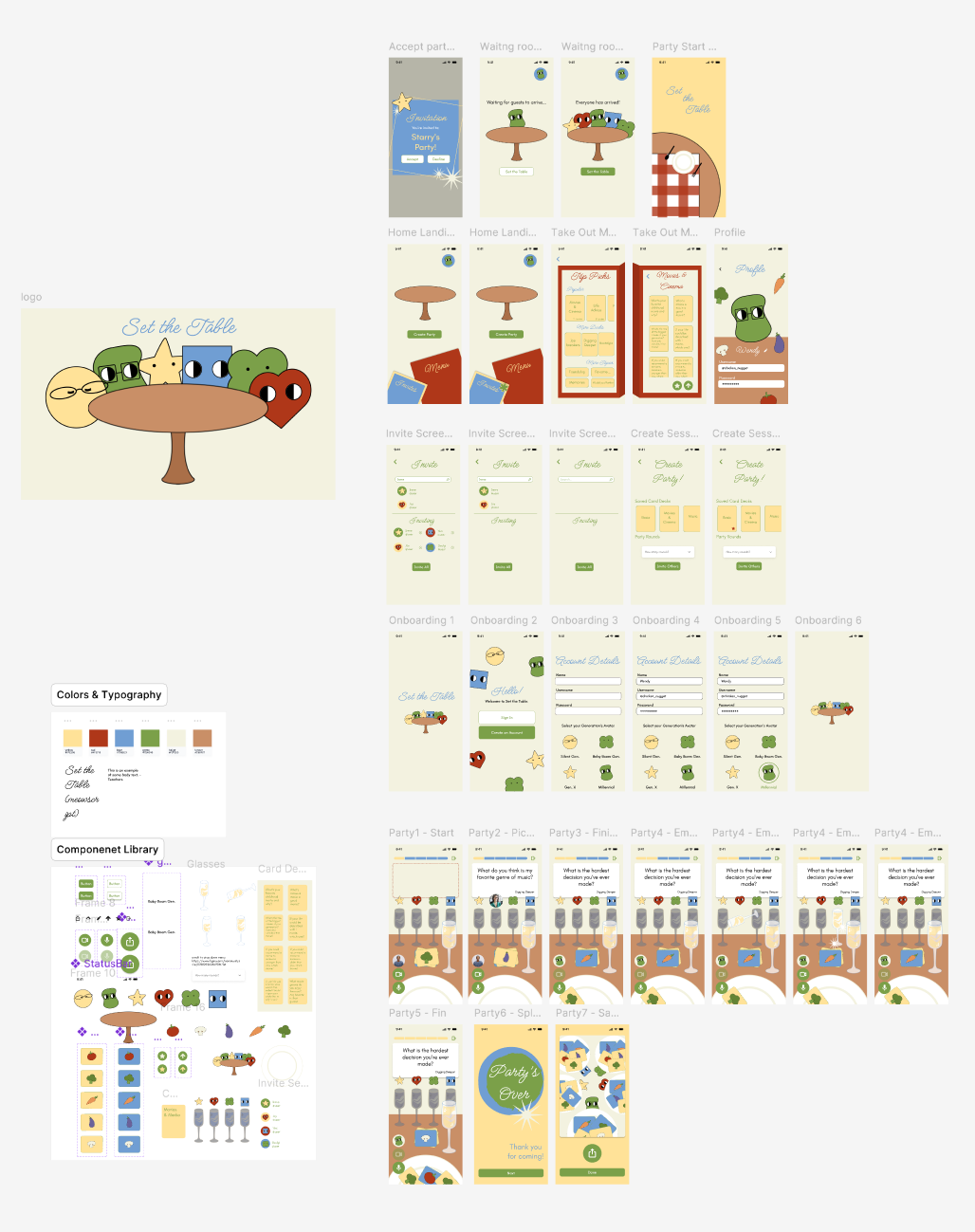
Set The Table by jens z
Designed by Sarah Roman, Nathan Rodriguez, Eden Balceta, & Jasmyn Villanueva
What is 'Set The Table' ?
The dining table is a dynamic common space. Sometimes it’s full of plates, other times it’s hosting a game night, or it's your makeshift office space. We chose to leverage this adaptability to create a digital environment that would foster deeper understanding between varied-aged individuals and remedy intergenerational dissonance by way of the dinner table.
With our app, we Set the Table and prompt our users to gather around our virtual table dressings to learn more about one another with an open-mind and on their terms. Set the Table uses guided questions to stimulate reflection and intentional dialogue to uncover the core of intergenerational misunderstandings or blind spots. We also ‘raise a glass’ as a form of table-side reactions that can communicate your emotions beyond just words. Lastly, end your dinner party with a memento of your filled plates—a symbol of your dinner parties shared growth and deeper bond.
Research Process & Surveys
We conducted a survey through Google Forms, aiming to understand various reasons why, when, and how people feel inter-generational disconnect. Within 16 hours, our survey received 24 responses. To fully understand our qualitative results, we created an affinity map, depicted in this Google Doc link, to organize our key takeaways.
Eventually, we sourced out the root issue: lack of proper communication. People of different generations feel others fail to listen and show respect towards their personal values; rather, they choose to stick with their individual beliefs without further explanation. Instead of trying to understand other generations’ values and morals through active listening, words often fall on deaf ears. Differing communication styles further widen the gap—whether novel slang terms or cultural references—that opposing generations are unfamiliar with.
We also employed digital ethnography practices, by looking at various Reddit forums which enveloped similar responses: emphasizing the importance of humility and communication.
Our findings were synthesized into the following HMW statement: How might we create an environment that encourages productive communication and fosters common ground between age groups, while respecting individual boundaries? This became the blueprint to our app: Set the Table.
Significant Design Decisions
The Dinner Party:
Our research findings point towards one sole issue—lack of communication. Thus, we created a digital space that could accommodate various forms of communication. A host can create a party and invite their guests to take a seat at their dining table. Once the fanfare begins, all party members work through different prompts and questions, filling their understanding gaps and their plates as they go. Whether party guests are online, in-person, or a combination of both, our virtual dinner party can host them all with accompanying camera and mic features.
Food for Thought:
Then we thought, “Ok so what do people typically do at the dinner table?” While the most common answer is “to eat,” it’s important to note the dinner table is a versatile and highly adaptive setting suited for various activities. In our scope, we decided to focus on an activity that can cultivate communication: games! We drew inspiration from games like “We’re Not Really Strangers” and “Hot Seat” that focus on conversation-starters to promote communication. As party guests work through a set of rounds, they take turns pulling food cards with different questions to stimulate conversation—or our food for thought! These questions are meant to align with the primary way individuals in our research connected with different generations which is social gatherings with conversation.
Table Side Manner & Reactions:
A main point of friction our research highlighted was a disconnect between generations based on different styles of communication. Thus, we wanted to consider how people could communicate with each other beyond words—adopting the idea of the drinking glass. If you ever feel uneasy or want to signal to a person at the table that you resonate with what they said, our app uses common drinking glass interactions to communicate the emotional impact for users. Additionally, if you ever feel uncomfortable at the party, we have a simple exit door touch point where users can easily return home—similar to an Irish goodbye.
Visualizing Growth & Understanding:
By the end of the party, users are able to save a photo of everyone's plates filled with their individual ‘food for thought’ cards. This memento acts as visual proof of everyone’s efforts to better understand one another. Moreover, this artifact is shareable and can be looked back upon—encouraging more people to contribute to narrowing the generational gap and that the foundation of bridged gaps stay strong!
We did not utilize AI in our design process.
Built With
- adobe-illustrator
- figma

Log in or sign up for Devpost to join the conversation.