-
-

TITLE
-
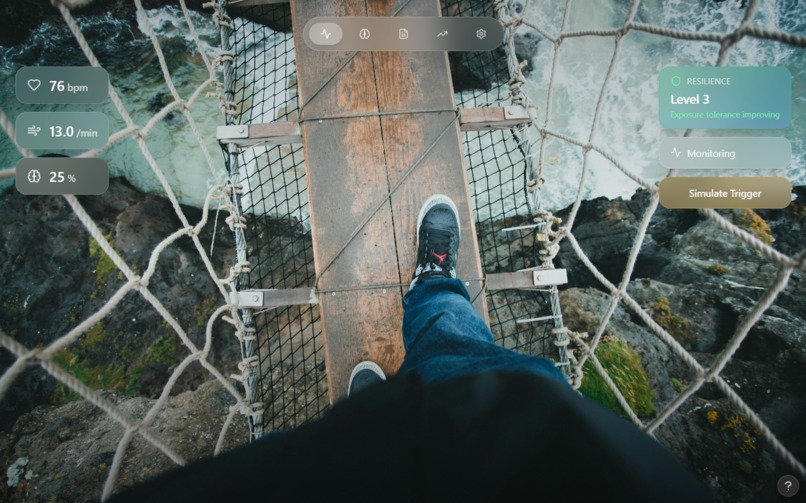
Start Screen
-
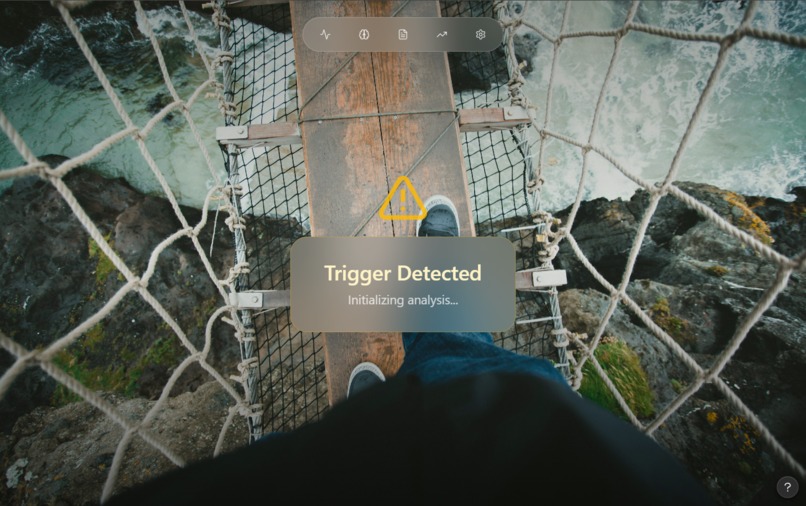
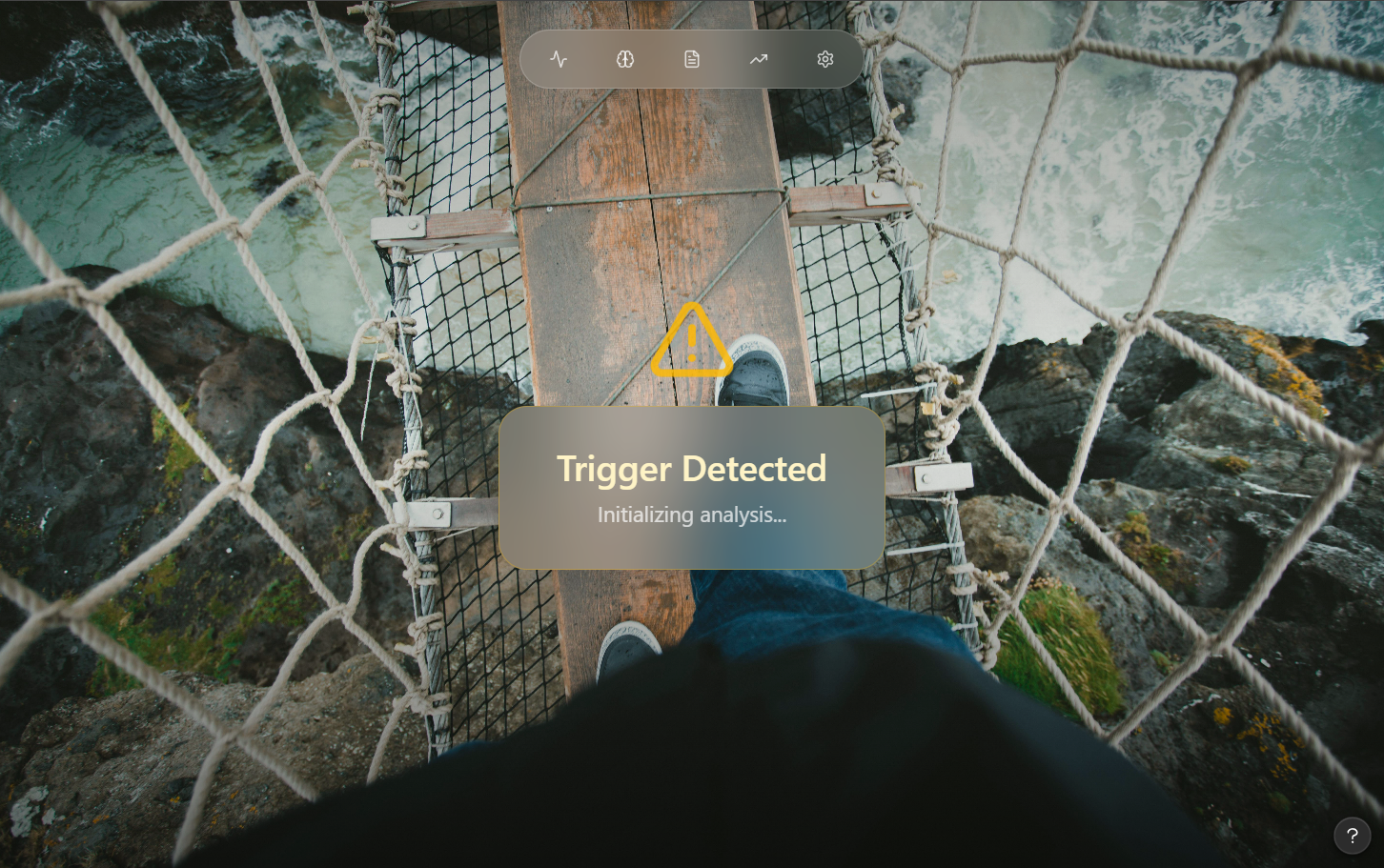
Trigger Detection
-
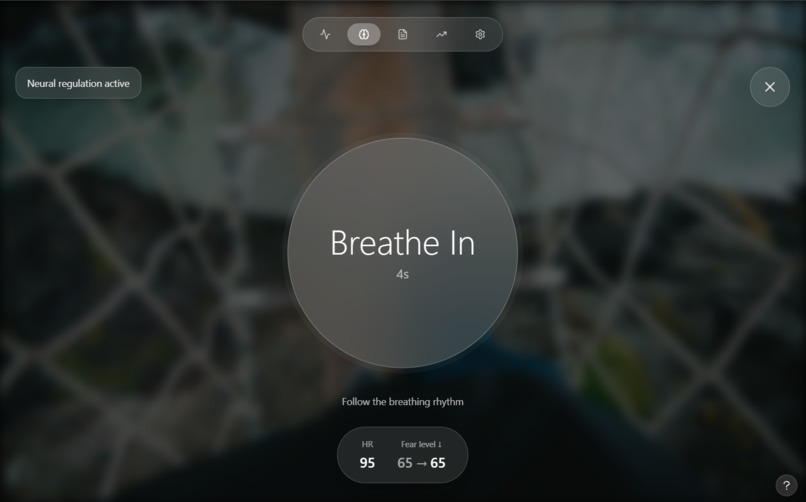
Neural Regulation
-
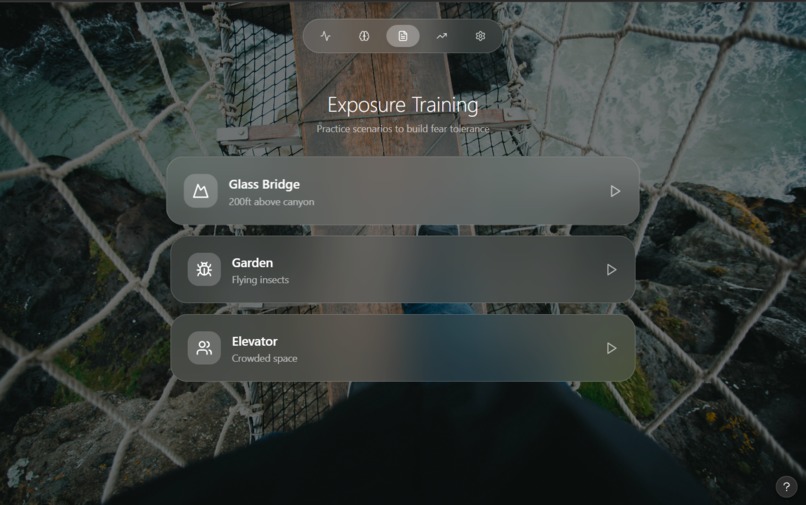
Exposure Training
-
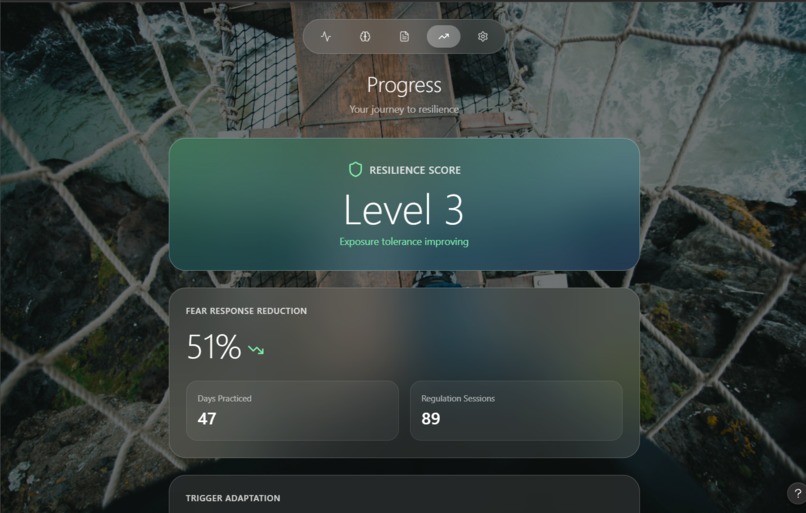
Progress Dashboard
-
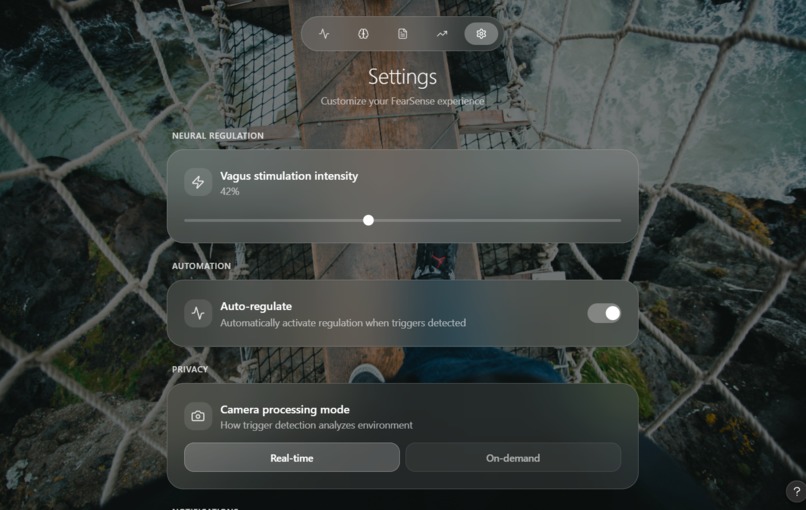
Settings Panel

Inspiration
FearSense was inspired by how sudden and overwhelming fear responses can be in everyday situations. Many people experience intense reactions to environments such as heights, enclosed spaces, or crowded areas, often before they consciously realize what is happening. We were interested in exploring how technology could help people become more aware of these internal signals. The idea emerged from the question: what if fear could be sensed and understood in real time, just like how wearable devices track physical health today?
What it does
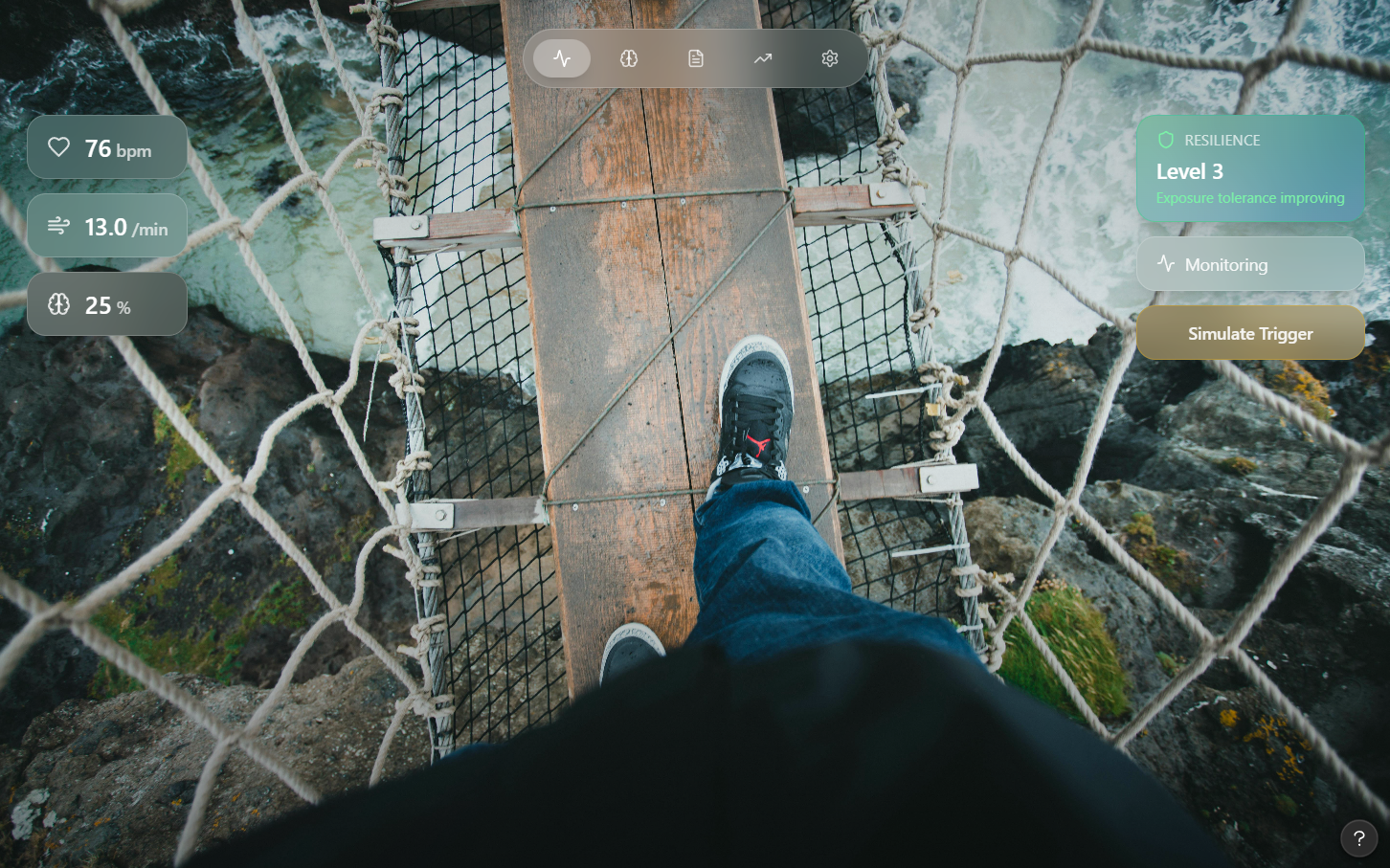
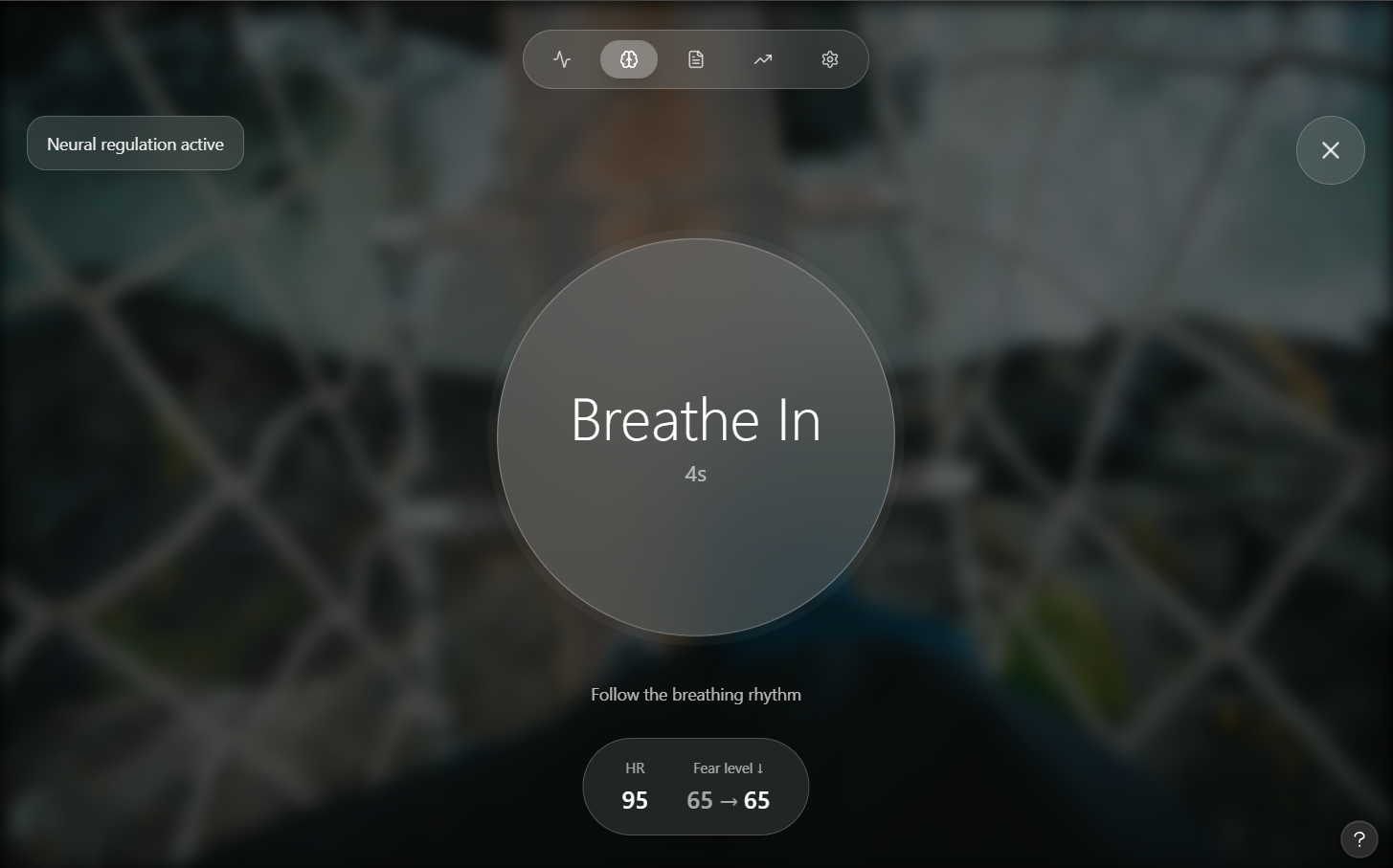
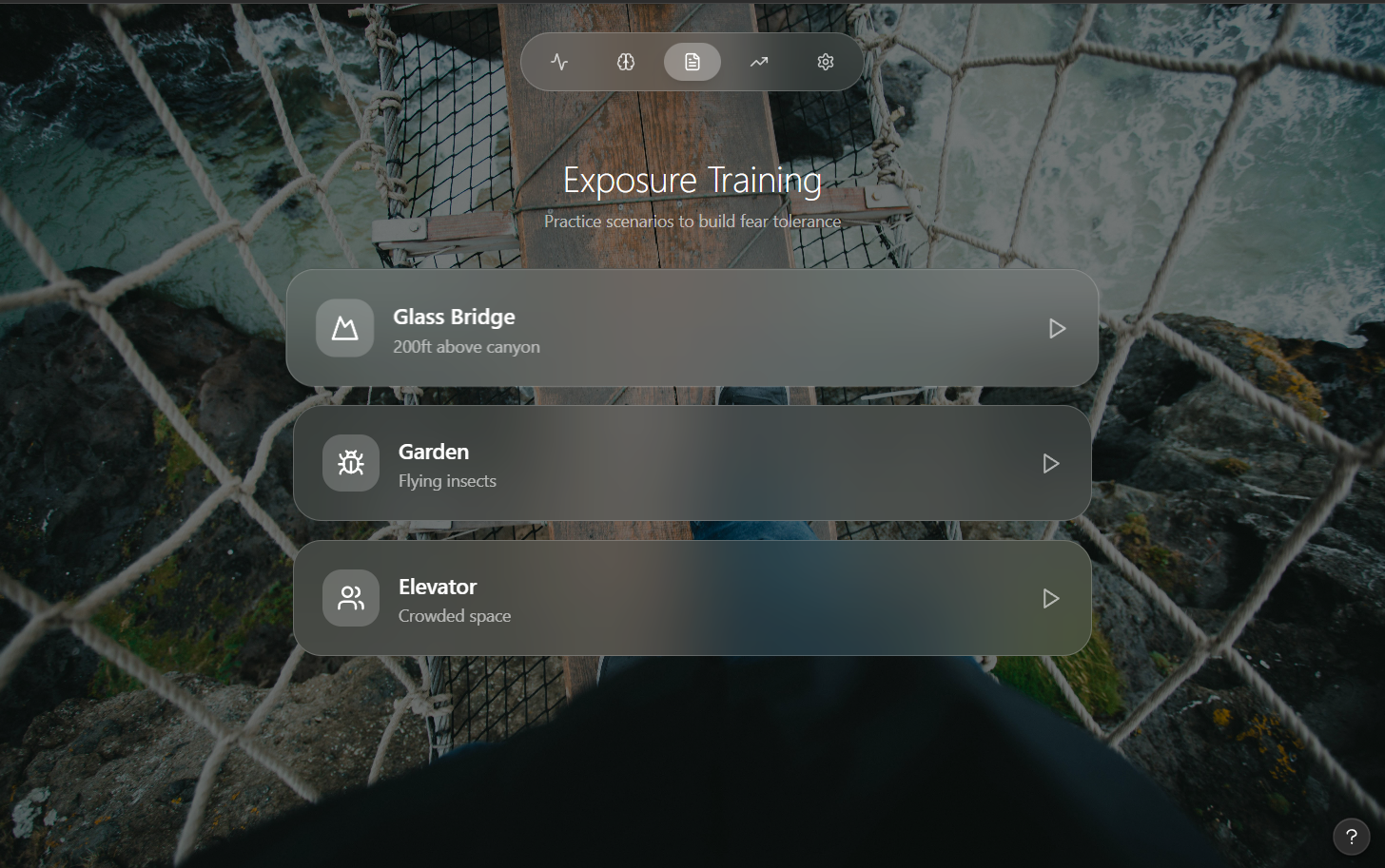
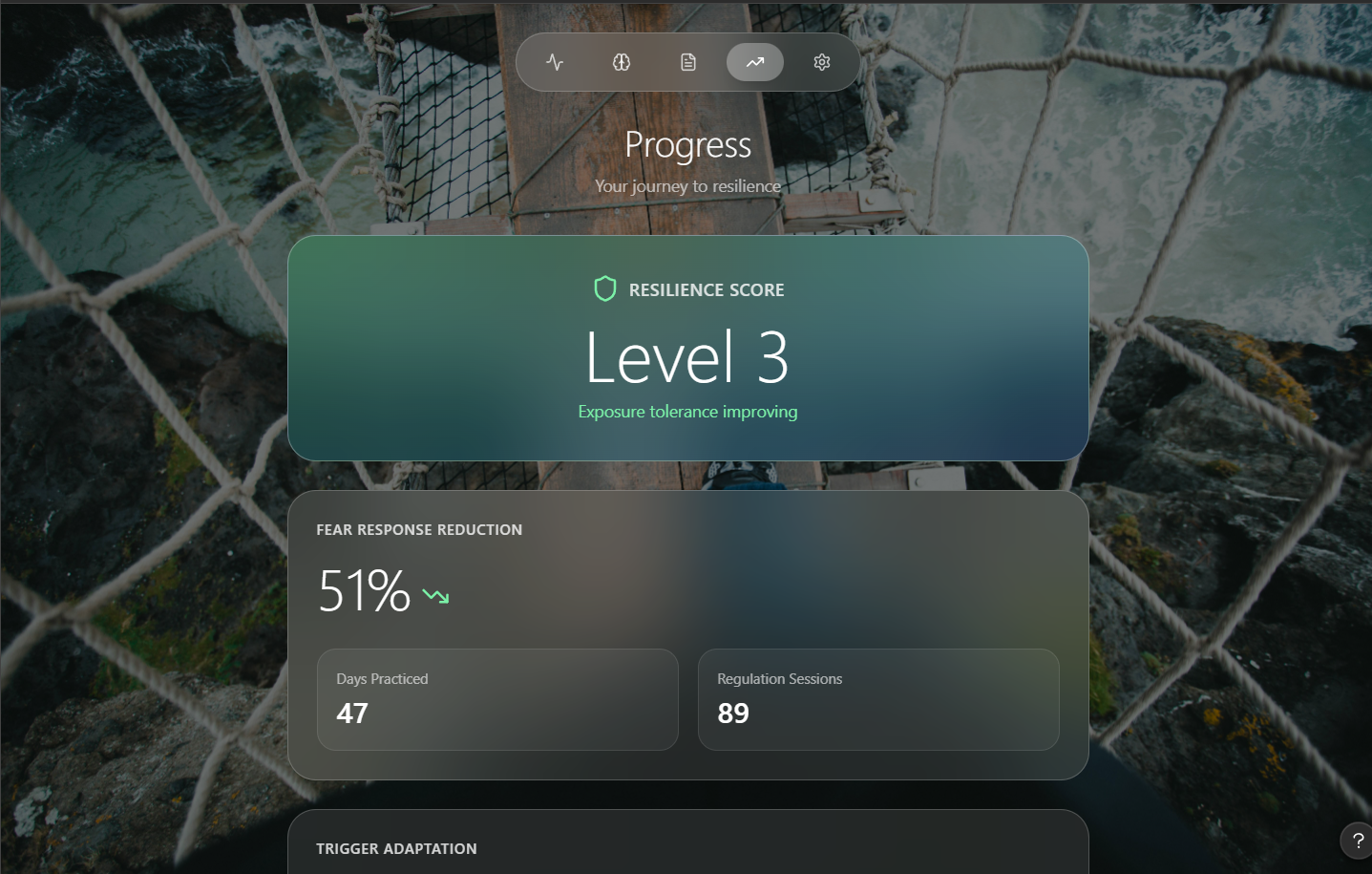
FearSense is a speculative system that detects and helps regulate fear responses as they happen. It combines a neural sensing implant with AI-enabled AR glasses to monitor physiological signals and environmental triggers. When the system detects a potential fear response, it activates subtle guidance through the AR interface, such as breathing rhythms and calming visual cues. Over time, it also tracks progress and offers exposure training scenarios to help users gradually build tolerance and resilience.
How we built it
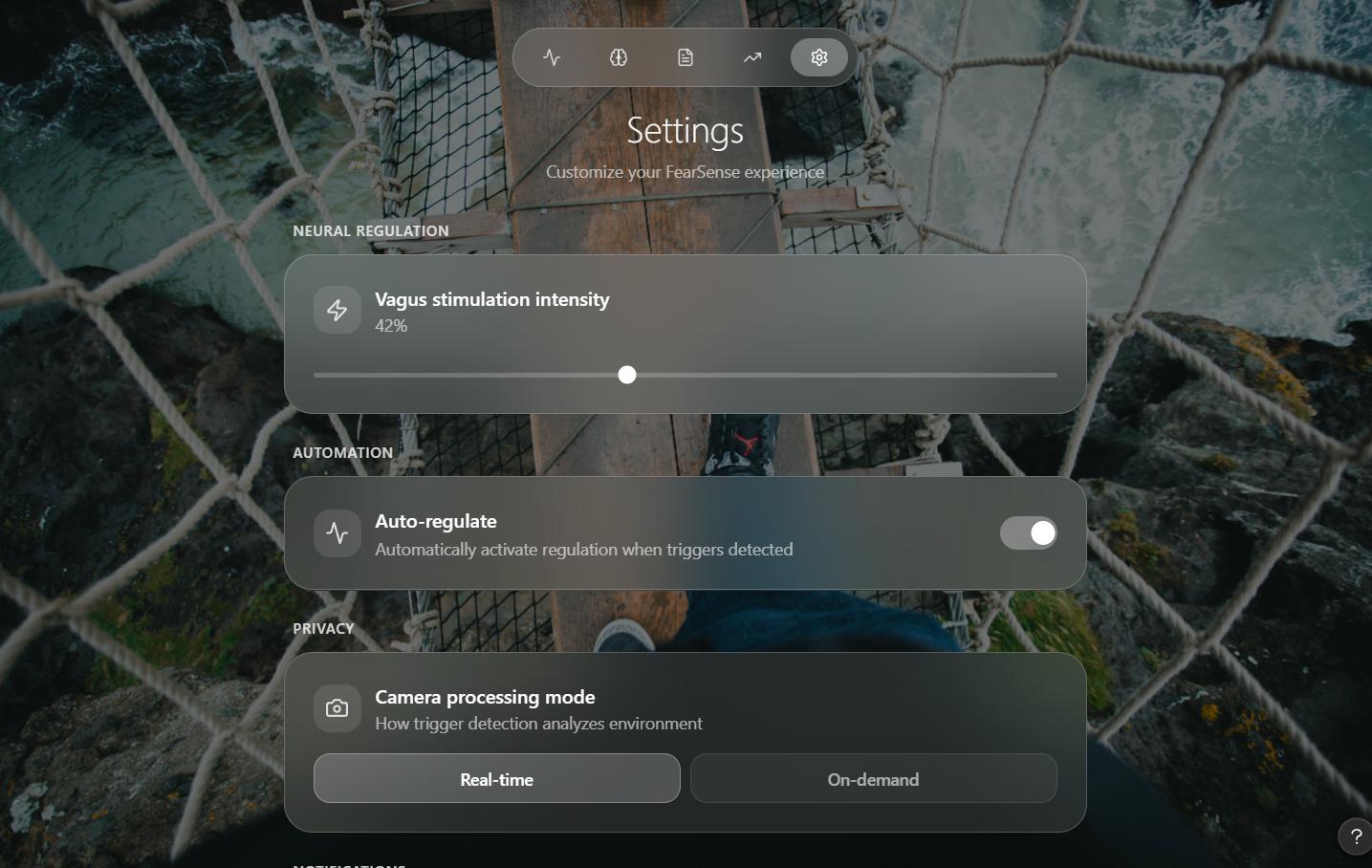
The project was developed as a design prototype focusing on interaction and system thinking. We designed a series of AR interface screens that demonstrate how the system would detect triggers, guide regulation, and track recovery. The concept integrates three main elements: physiological sensing through an implant, environmental recognition using an AI camera, and a minimal AR interface that provides calming guidance without overwhelming the user.
Challenges we ran into
One of the main challenges was designing an interface that supports users during moments of fear without adding cognitive load. When someone is anxious, the interface must remain calm, simple, and intuitive. Another challenge was imagining a future technology that feels believable while still exploring speculative possibilities. Balancing realism with innovation required careful thought about how each component would interact.
Accomplishments that we're proud of
We are proud of creating a system that transforms an invisible emotional response into something understandable and manageable. The project successfully demonstrates how physiological sensing, environmental awareness, and minimal AR interfaces could work together to support emotional wellbeing. We also developed a clear interaction flow that shows how the system detects, regulates, and helps users gradually adapt to fear triggers.
What we learned
This project helped us understand how powerful subtle design can be when dealing with human emotions. We learned that technology does not always need to provide more information; sometimes it needs to provide the right guidance at the right moment. We also explored how emerging technologies like neural sensing and augmented reality could open new possibilities for emotional awareness.
What's next for FearSense
The next step would maybe expanding the concept into a more complete system prototype. This could include deeper exploration of exposure training environments, more advanced progress tracking, and improved personalization for different types of fear responses. In the future, FearSense could evolve into a tool that helps people not only manage fear but also build long-term emotional resilience in everyday life.
Built With
- adobe-illustrator
- canva
- figma


Log in or sign up for Devpost to join the conversation.