-
-
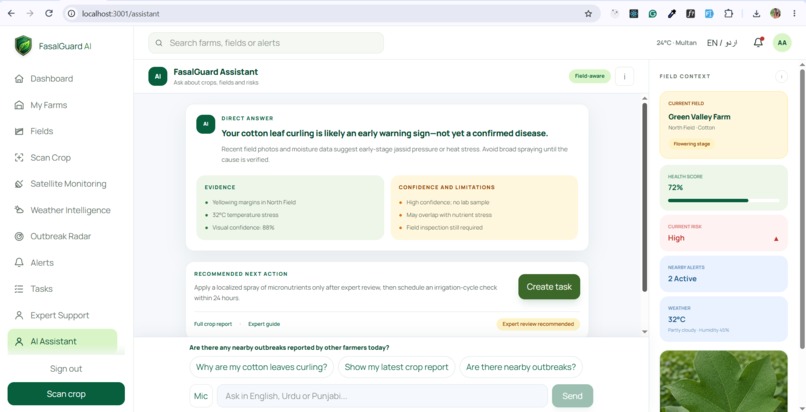
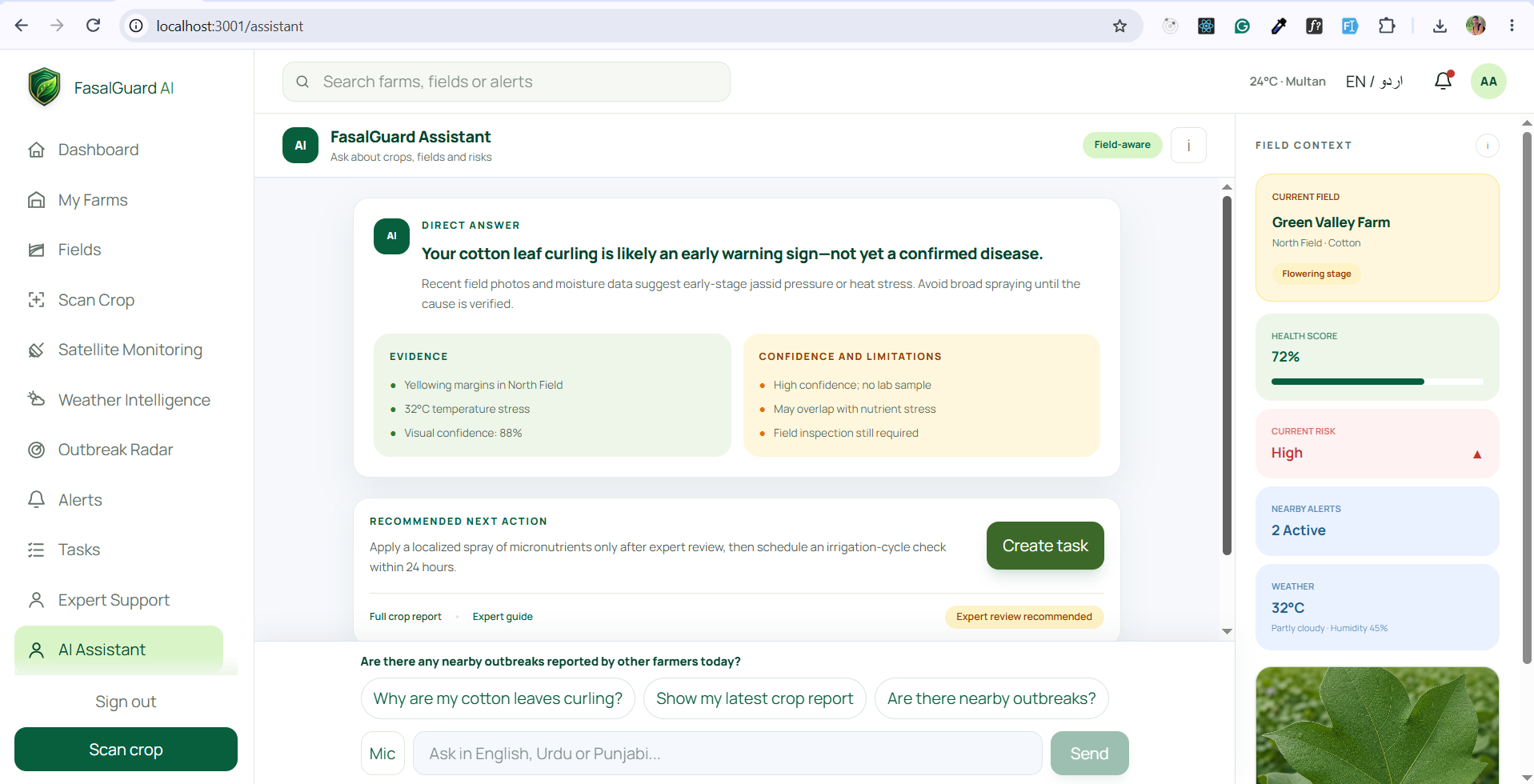
gemini assistant
-
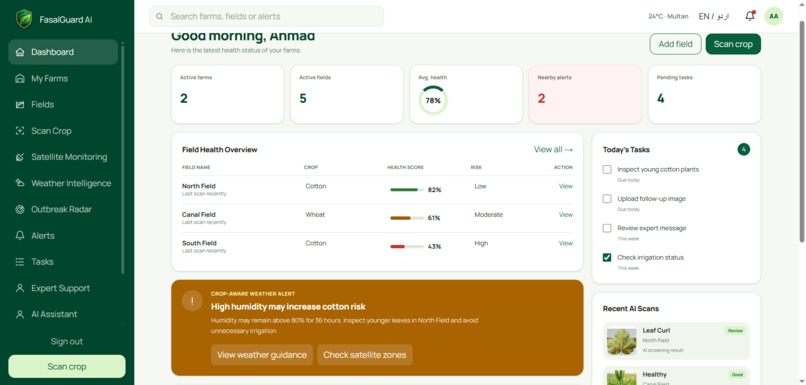
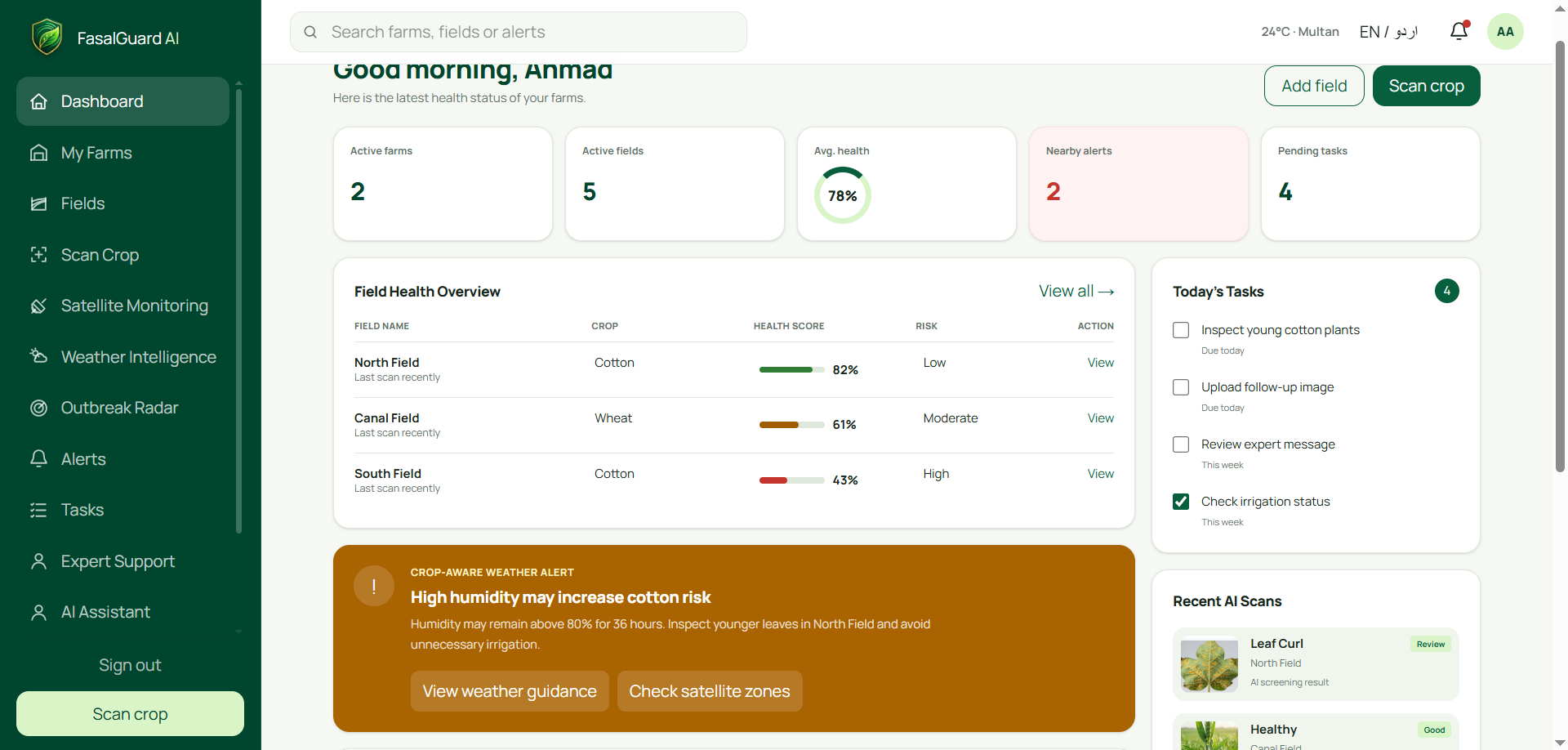
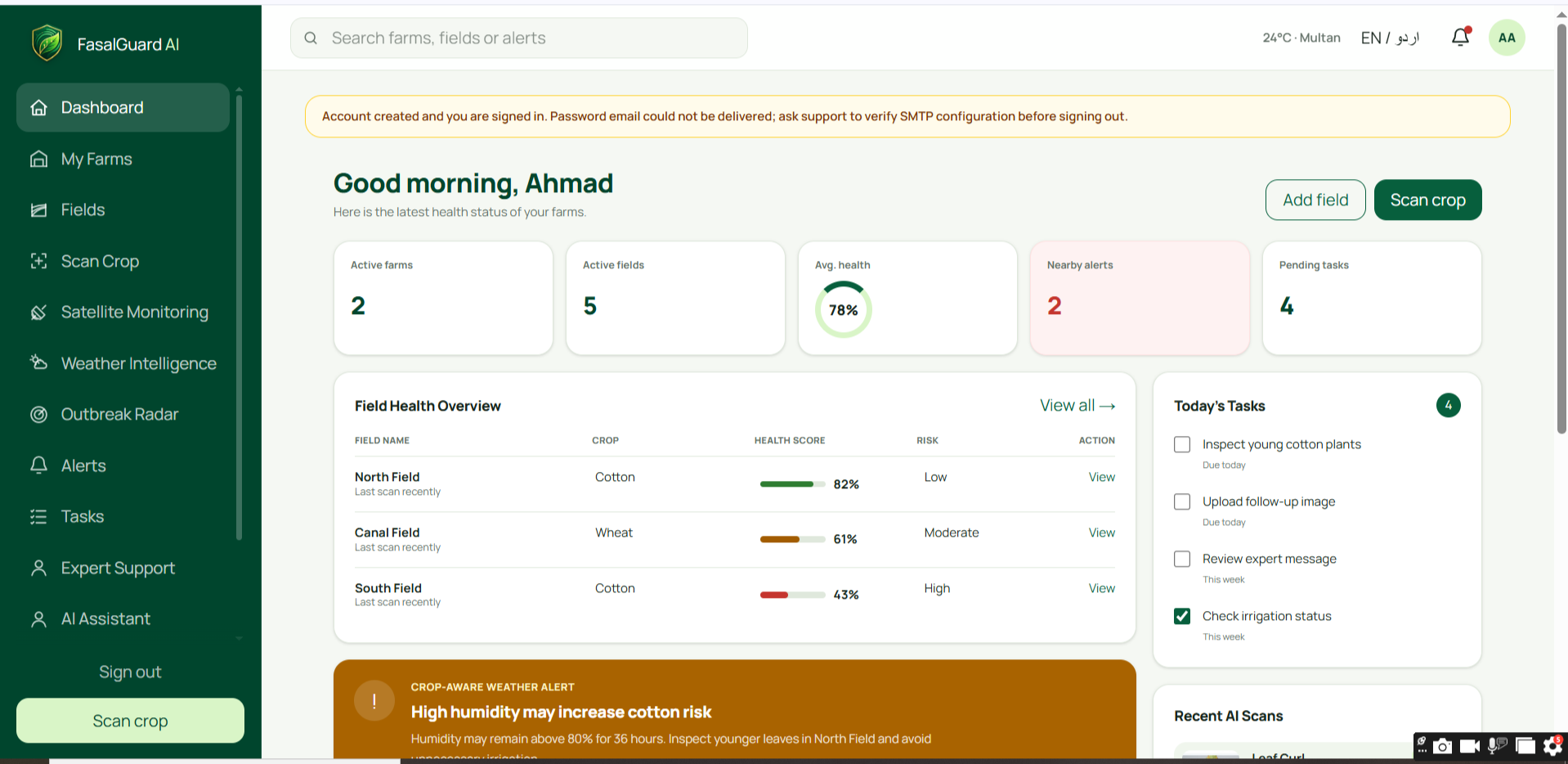
fasalguard dashboard
-
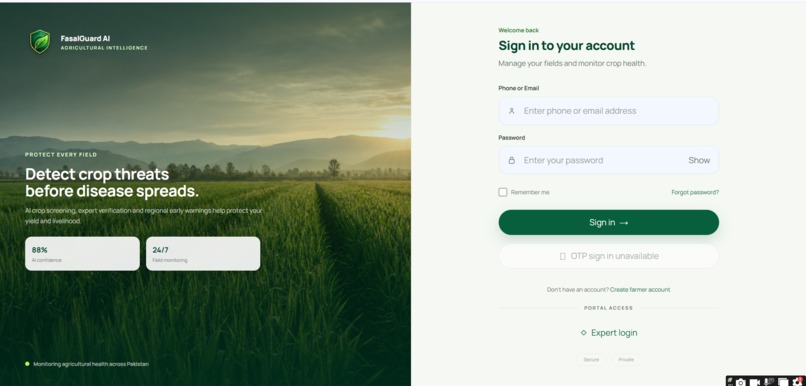
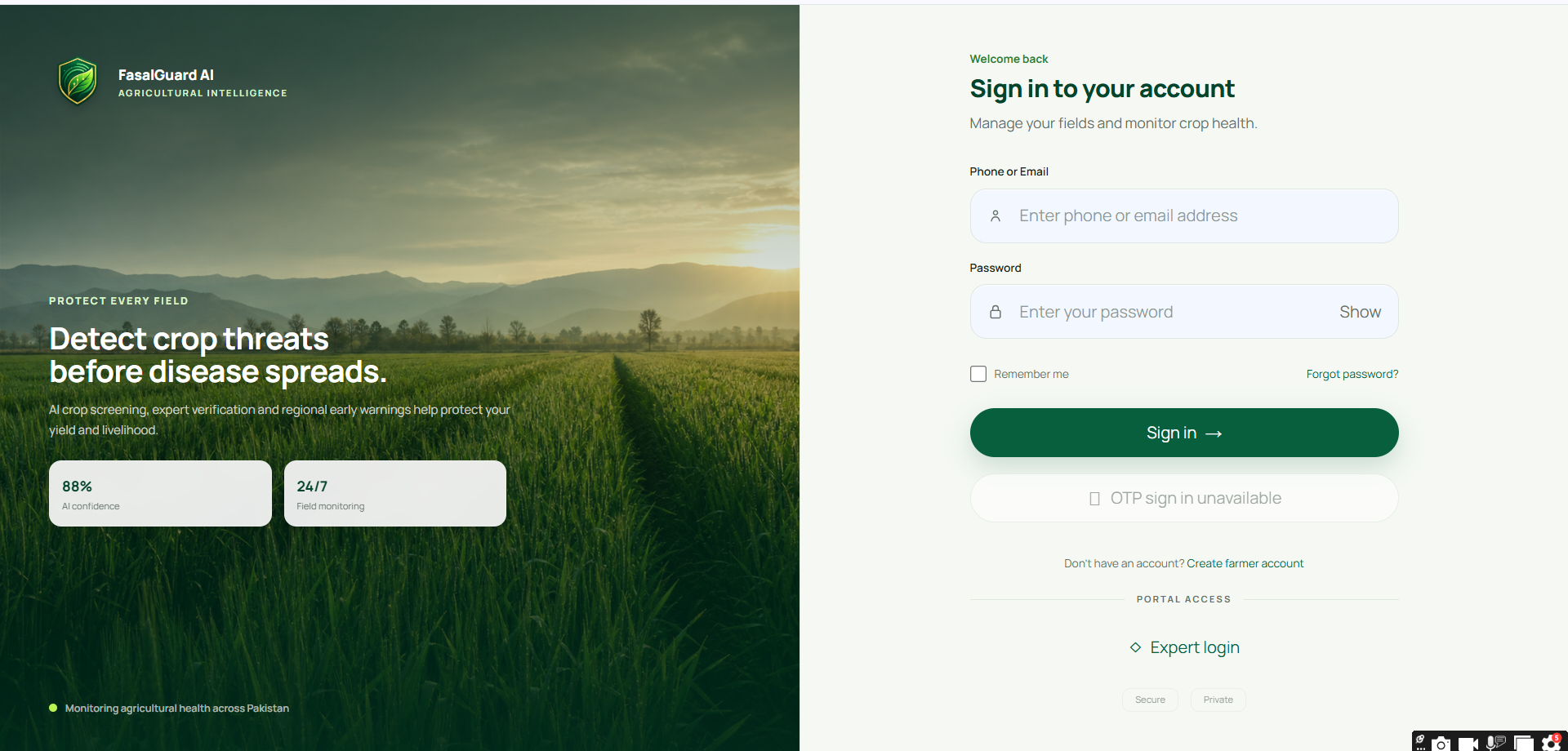
onboarding
-
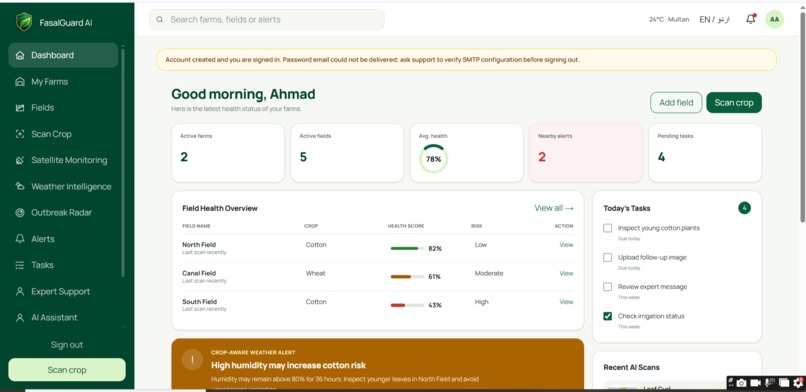
risk mangement
-
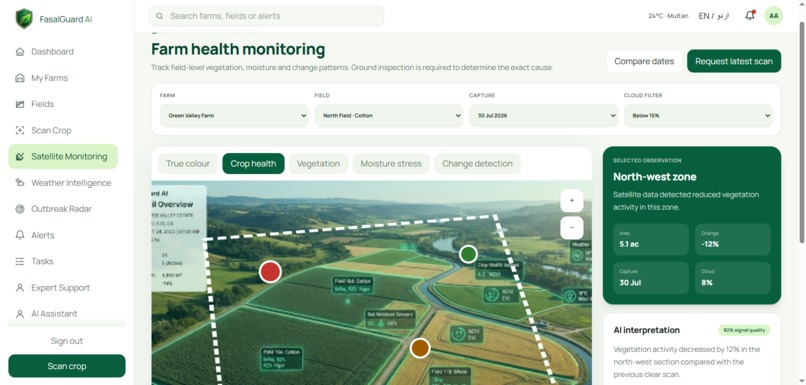
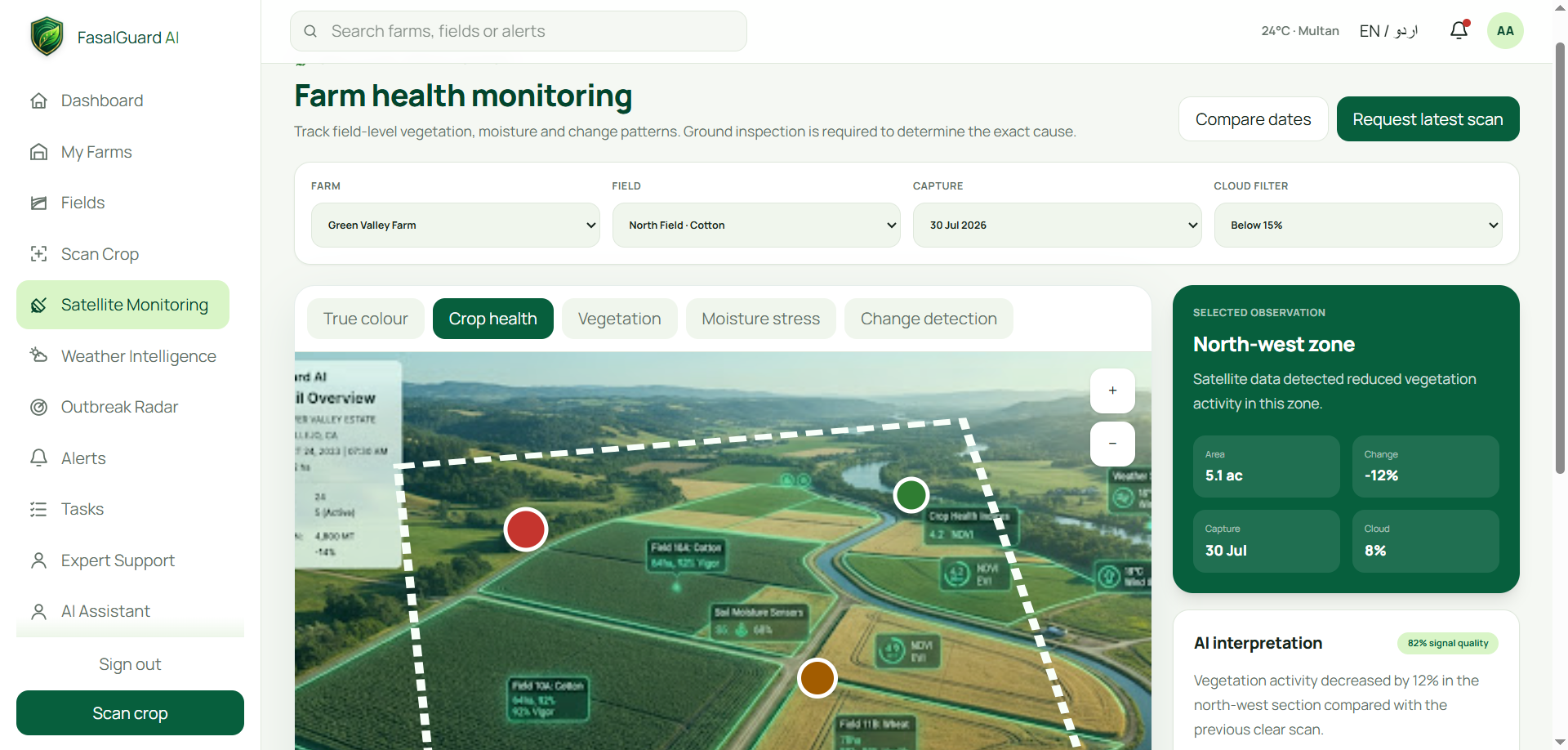
satallite scaning flow
-
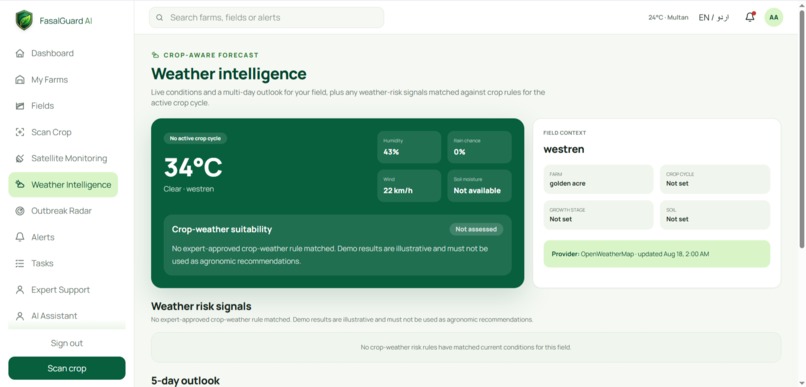
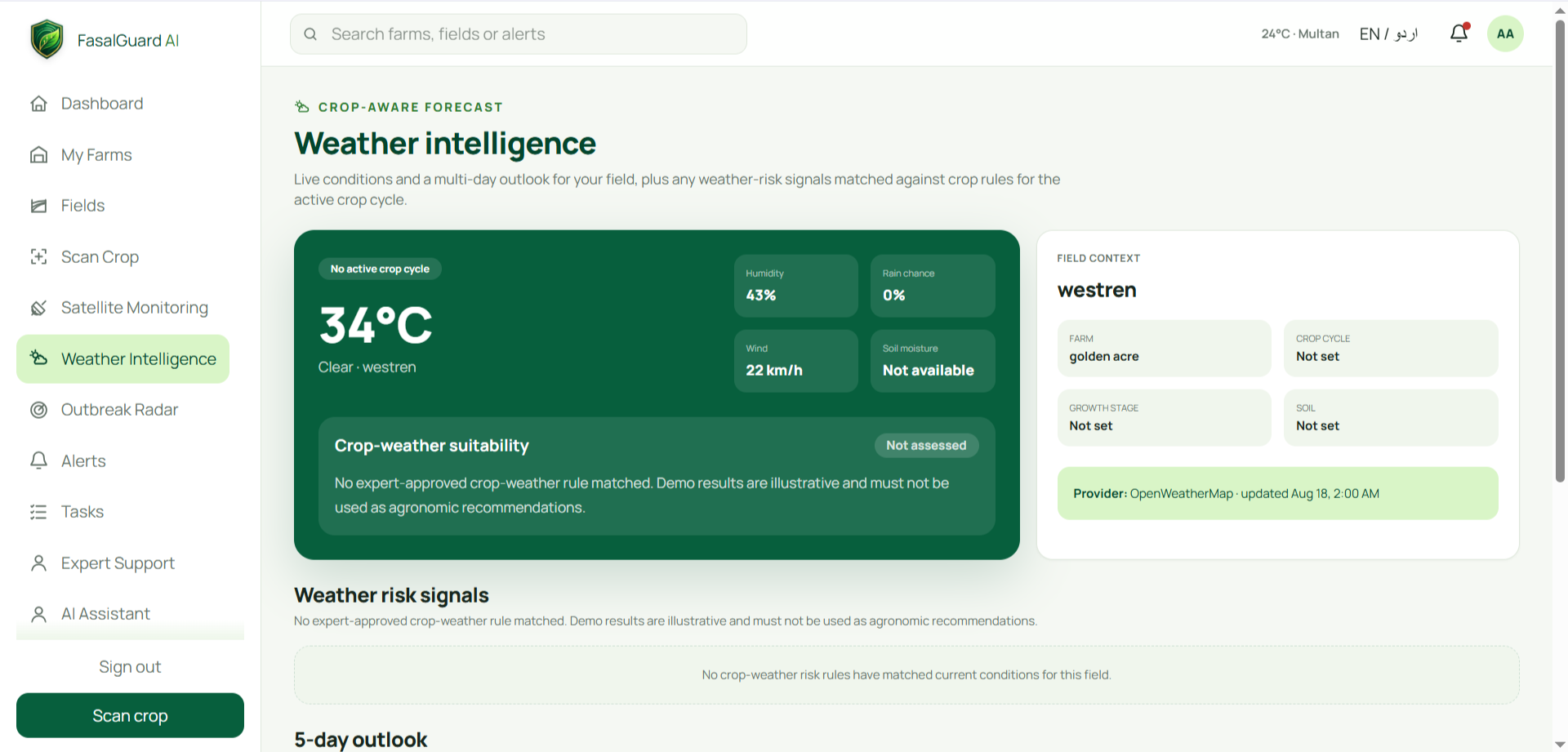
weather forcasting seven day weather update
-
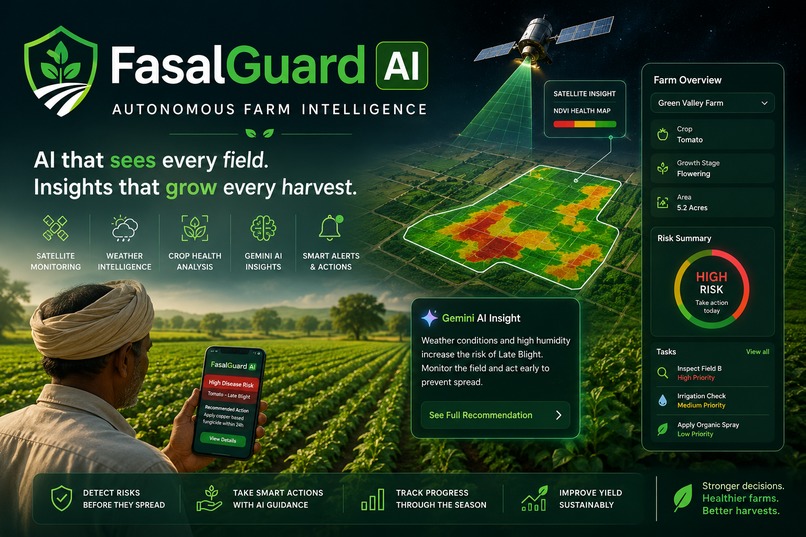
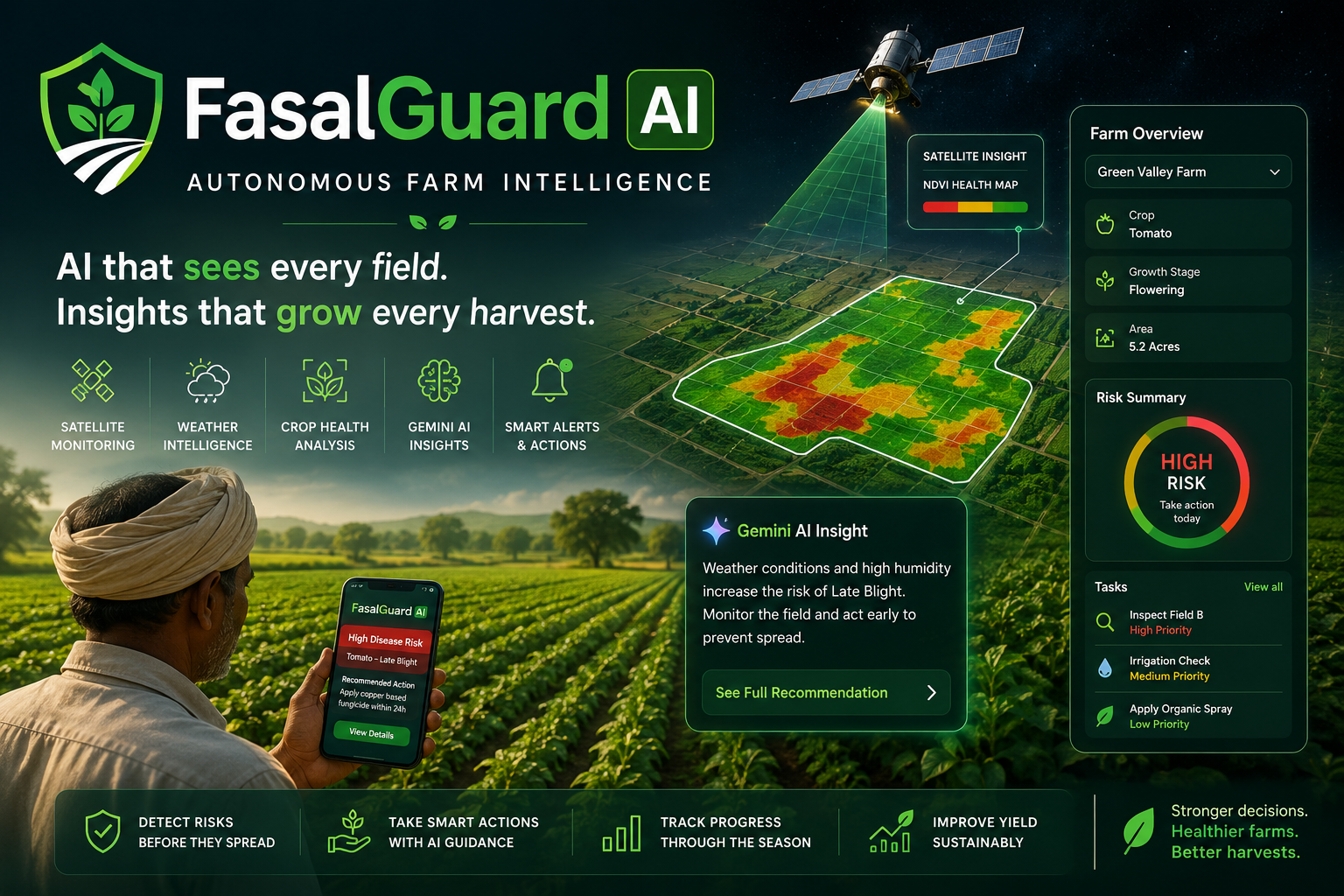
fasal guard intro
Inspiration
Millions of smallholder farmers make critical decisions about disease, irrigation, weather, pests, and crop timing with limited access to agronomists, satellite intelligence, or advanced farm-management systems.
A farmer often discovers a problem only after visible crop damage has already occurred.
We built FasalGuard AI to change that.
Our goal is to give every farmer an intelligent digital agronomist that does not simply answer questions, but continuously understands the farm, detects emerging risks, recommends actions, and follows the crop from planting to harvest.
What it does
FasalGuard AI is an AI-native farm intelligence and productivity platform powered by Gemini.
It combines multiple sources of farm evidence:
- Satellite observations
- Vegetation-health indicators
- Weather conditions and forecasts
- Crop type and growth stage
- Farmer-uploaded crop images
- Farm history
- Previous incidents and interventions
Instead of treating these signals separately, FasalGuard builds a continuously evolving Farm Digital Twin.
Gemini then reasons over that context to help determine:
- What is happening on the farm
- Why it may be happening
- How urgent it is
- What additional evidence is needed
- What the farmer should do next
- Whether the crop is improving after intervention
The system follows a closed-loop workflow:
Observe → Detect → Investigate → Decide → Act → Verify
Smart Crop Roadmaps
When a farmer creates a farm and selects a crop, FasalGuard creates a personalized seasonal roadmap.
The roadmap tracks:
- Planting
- Crop growth stages
- Important inspections
- Irrigation checks
- Weather-sensitive periods
- Disease and pest risks
- Upcoming tasks
- Harvest readiness
The roadmap changes as real farm conditions change.
For example, if severe heat is forecast during a sensitive crop stage, FasalGuard can increase the priority of irrigation and inspection tasks.
This turns FasalGuard from a diagnosis tool into a daily farm productivity system.
Gemini Farm Intelligence
Gemini is the reasoning layer at the center of FasalGuard.
Rather than using Gemini as a basic chatbot, we use it to combine structured farm evidence and generate validated farm intelligence.
For example:
A satellite observation may indicate vegetation stress.
Weather data may show several days of high humidity.
The crop may currently be in a disease-sensitive stage.
The farmer may then upload photographs showing visible leaf symptoms.
FasalGuard combines these signals and uses Gemini to produce a structured assessment containing:
- Health status
- Risk level
- Evidence
- Possible causes
- Confidence
- Missing information
- Recommended actions
- Human-review requirements
When confidence is insufficient, FasalGuard can request more evidence instead of pretending to know the answer.
For example:
“Vegetation stress has been detected in the southeast field, but there is not enough evidence to identify the cause. Please upload photographs of 3–5 affected plants.”
This investigation workflow helps reduce false certainty and makes the AI more useful and trustworthy.
Satellite Farm Monitoring
FasalGuard connects farm boundaries with satellite observations to monitor vegetation changes over time.
The system is designed to analyze indicators such as:
- NDVI
- NDMI
- Vegetation change
- Moisture stress
- Persistent field anomalies
Satellite signals are treated as evidence of possible crop stress — not as automatic proof of a specific disease.
When a meaningful anomaly appears, it can trigger a Gemini investigation or farmer inspection task.
Weather Intelligence
Weather information becomes crop-aware intelligence.
Instead of simply telling the farmer:
“Tomorrow will be hot.”
FasalGuard considers:
Weather + Crop + Growth Stage + Farm Context
and can produce something more actionable:
“High temperatures tomorrow may increase stress during your tomato crop's flowering stage. Check soil moisture this evening and inspect the field tomorrow morning.”
Crop Image Analysis
Farmers can upload images of affected crops.
Gemini uses multimodal understanding to analyze the visual evidence together with the farm's broader context.
This allows FasalGuard to move beyond isolated image classification and reason using:
Crop image + Weather + Satellite observations + Crop stage + Farm history
Autonomous Farm Operations
Insights are converted into real application actions.
FasalGuard can create:
- Farm incidents
- Inspection tasks
- Follow-up checks
- Weather alerts
- Crop-health warnings
- Roadmap updates
- Farmer notifications
- Recovery monitoring
The farmer does not need to constantly ask whether the farm is healthy.
FasalGuard is designed to monitor conditions proactively and surface what needs attention.
Smart Alerts
The notification engine prioritizes alerts instead of overwhelming farmers.
Notifications can include:
- Critical weather risk
- Crop disease risk
- Satellite vegetation anomaly
- Water stress
- Pest risk
- Inspection reminders
- Crop-stage changes
- Harvest-window reminders
- Recovery updates
Low-priority events can be grouped into daily or weekly farm summaries, while urgent events are surfaced immediately.
Farm Mission Control
The main dashboard gives farmers a simple overview of their farming operation.
It highlights:
- Farms being monitored
- Current crop stages
- Healthy and at-risk fields
- Active incidents
- Today's farm tasks
- Satellite observations
- Weather risks
- Gemini investigations
- Upcoming milestones
The goal is to answer one question immediately:
“What needs my attention today?”
How we built it
FasalGuard was designed as a production-oriented full-stack application rather than a static AI prototype.
The platform uses technologies including:
- Next.js
- React
- TypeScript
- PostgreSQL
- PostGIS
- Gemini API
- Geospatial farm boundaries
- Satellite-data integrations
- Weather APIs
- REST APIs
- Secure authentication and sessions
- Background monitoring
- Notification workflows
PostGIS allows us to represent farms as real geographic objects rather than simple addresses.
The Farm Digital Twin preserves observations over time so that FasalGuard can reason about how farm conditions change instead of only looking at the latest value.
Challenges we faced
One of our biggest challenges was avoiding false precision.
A satellite vegetation anomaly does not automatically mean a crop has a particular disease.
Similarly, an image alone may not explain why a field is deteriorating.
We therefore designed FasalGuard around evidence fusion.
The system separates:
- Observation
- Evidence
- AI inference
- Confidence
- Recommended action
This makes the platform more scientifically defensible and allows the AI to explicitly request additional evidence when needed.
Another major challenge was moving beyond a simple chatbot experience.
We wanted Gemini to participate in real farm operations.
This led to the Farm Digital Twin, structured AI outputs, farm incidents, task creation, follow-up monitoring, and the Observe → Detect → Investigate → Act → Verify workflow.
What we learned
We learned that useful agricultural AI requires more than a powerful model.
The model needs:
- Accurate context
- Temporal farm history
- Real-world environmental evidence
- Structured outputs
- Clear uncertainty handling
- Actionable workflows
We also learned that the strongest AI systems do not simply provide an answer.
They help users move from information to action.
What's next
Our next goal is to expand FasalGuard into a complete AI operating system for small farms.
Future development includes:
- More crop-specific intelligence
- Improved satellite monitoring
- Regional outbreak detection
- Farmer-to-farmer risk signals
- Expert agronomist review
- Local-language voice interaction
- Cooperative dashboards
- Yield forecasting
- Advanced farm analytics
- Additional alert channels
Our long-term vision is simple:
One intelligent farm assistant watching every field, every day.
FasalGuard AI aims to help farmers detect risks earlier, make better decisions, reduce preventable crop losses, and manage their farms with intelligence that was previously available mainly to large agricultural operations.
Built With
- agriculture
- docker
- gemini
- geospatial
- imagery
- leaflet.js
- learning
- machine
- multimodal
- next.js
- node.js
- open-meteo
- openstreetmap
- postgis
- postgresql
- redis
- satellite
- sentinel-2
- weather


Log in or sign up for Devpost to join the conversation.