-
-
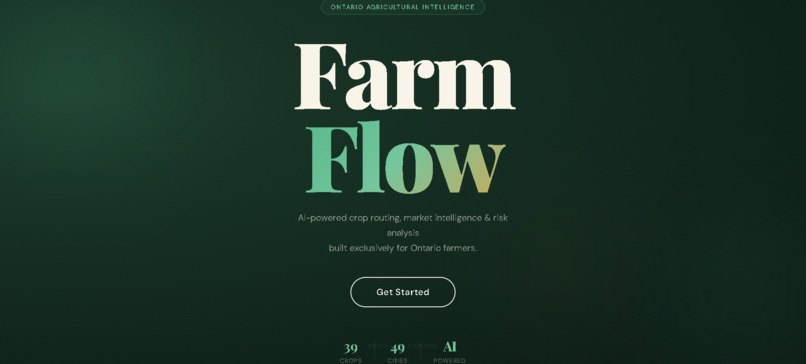
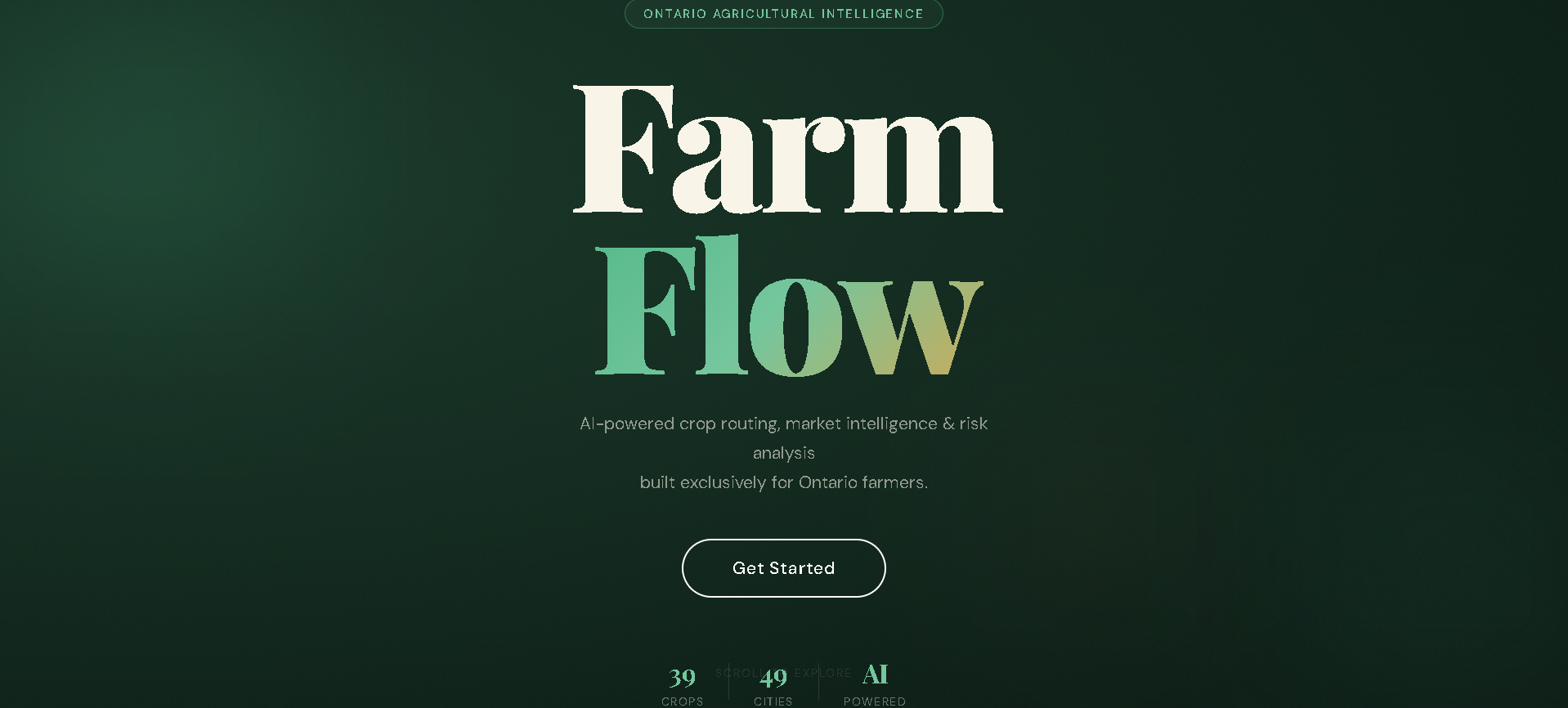
Home Page
-
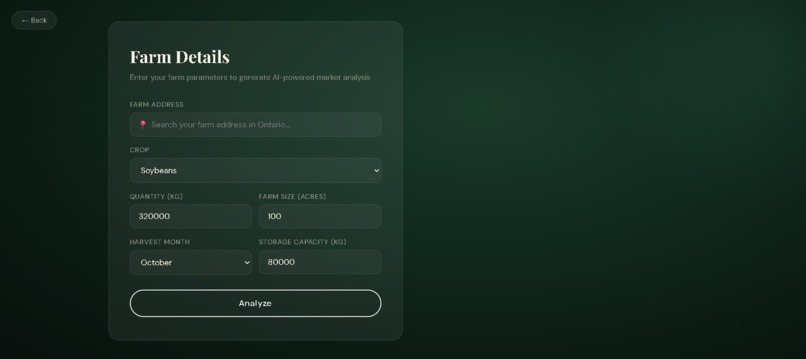
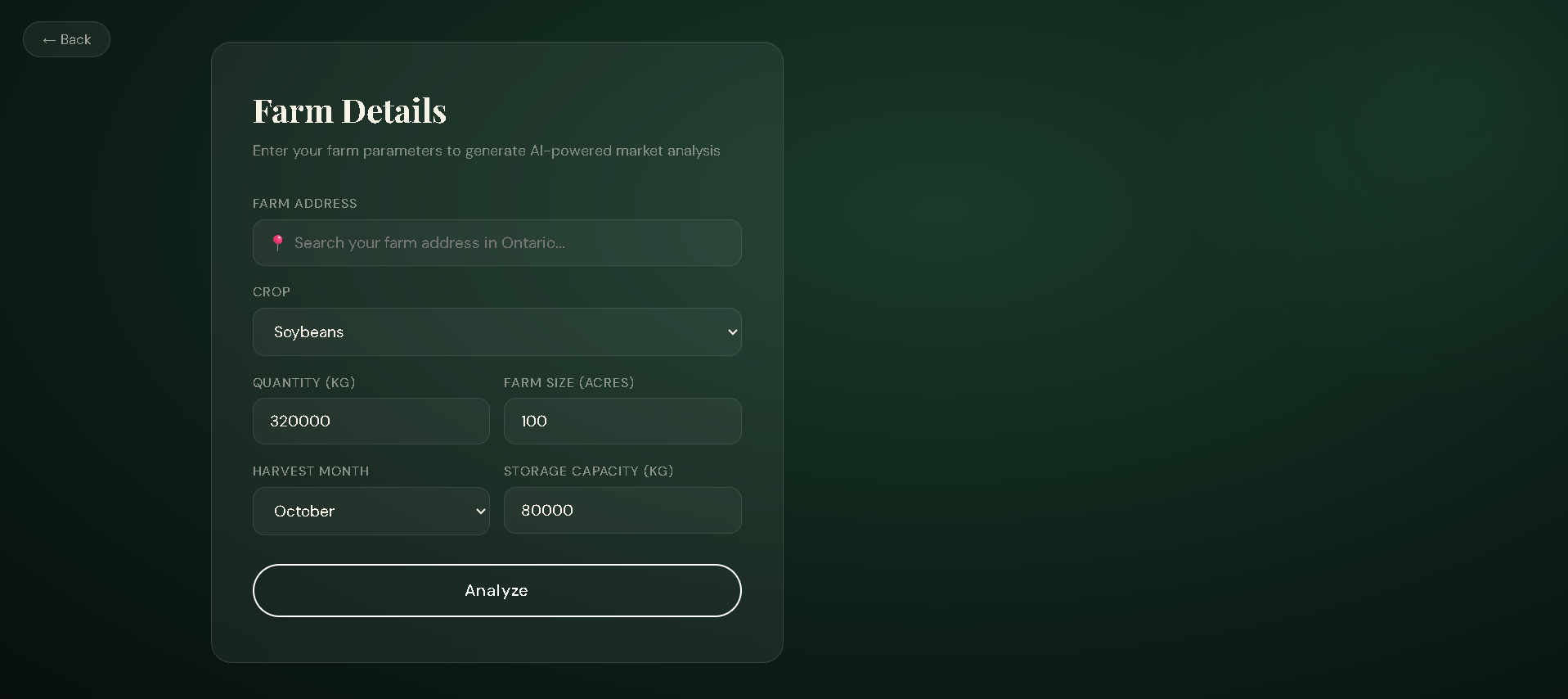
Farmer Input
-
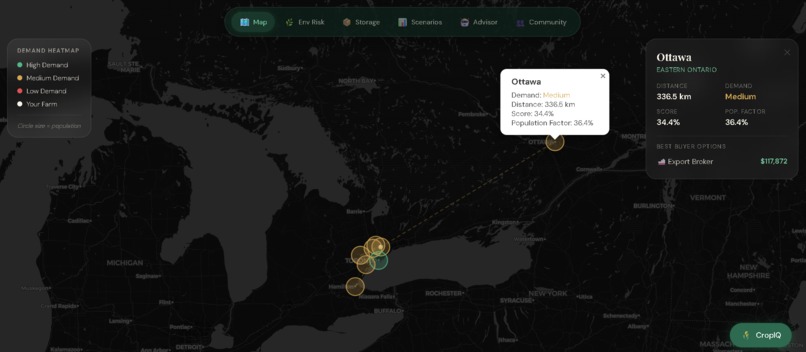
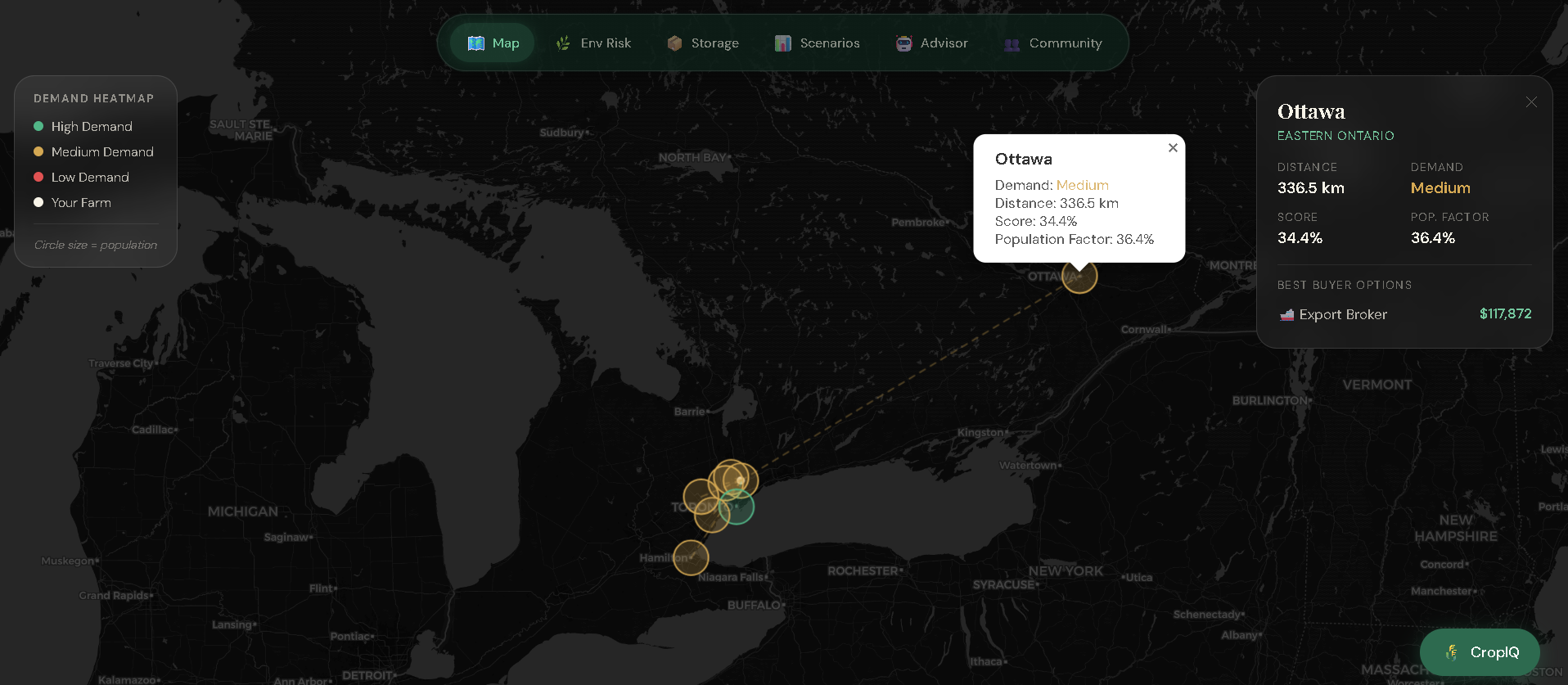
Demand Map
-
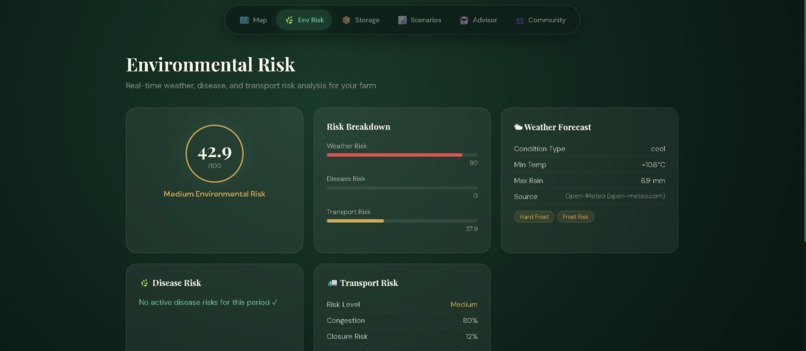
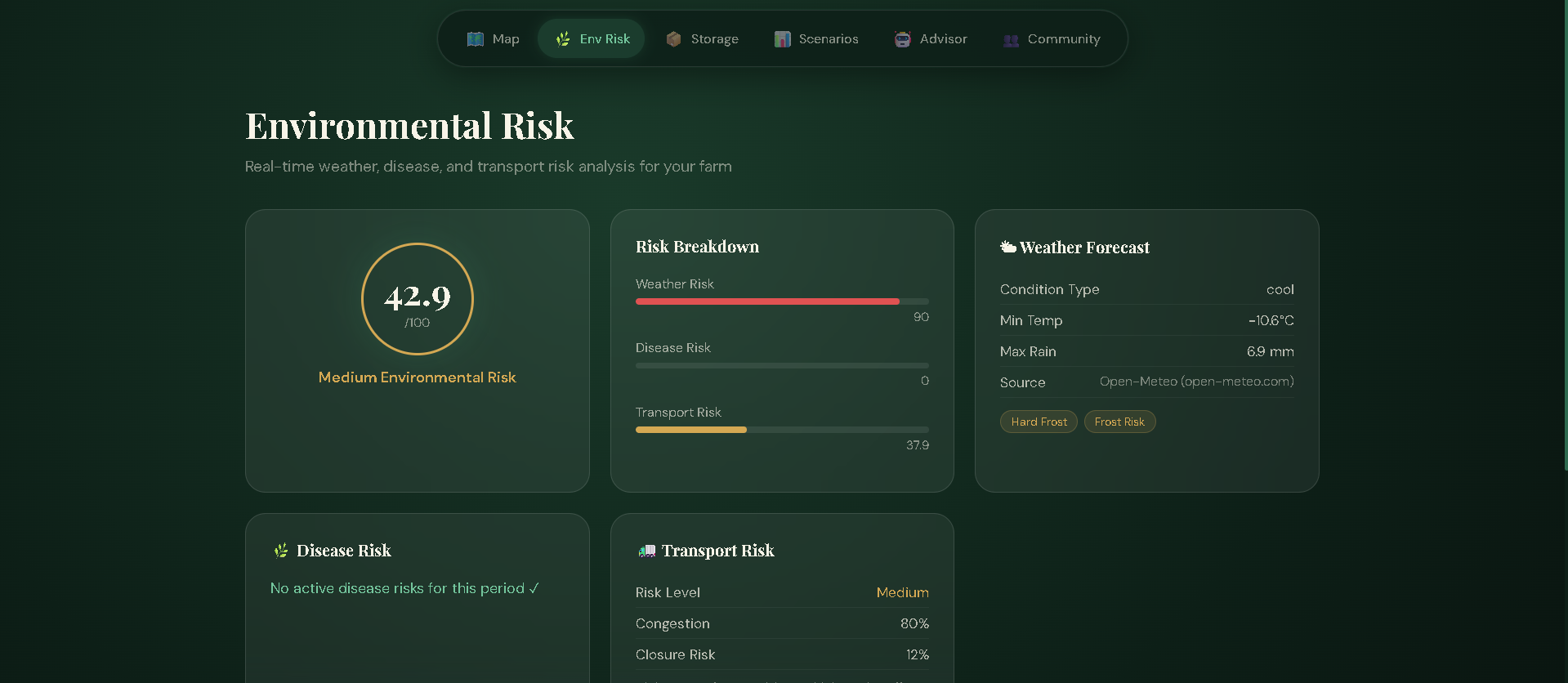
Environmental Risk
-
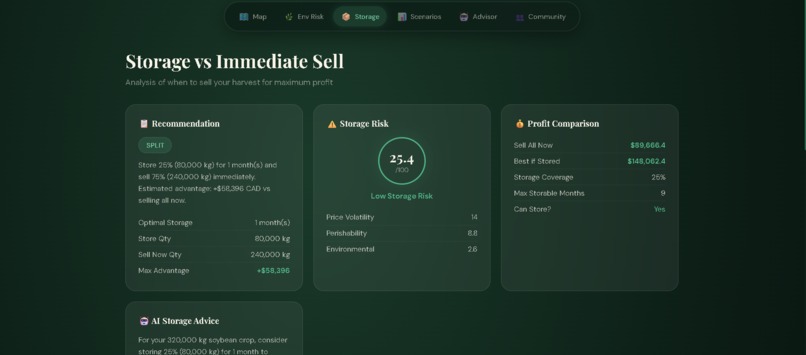
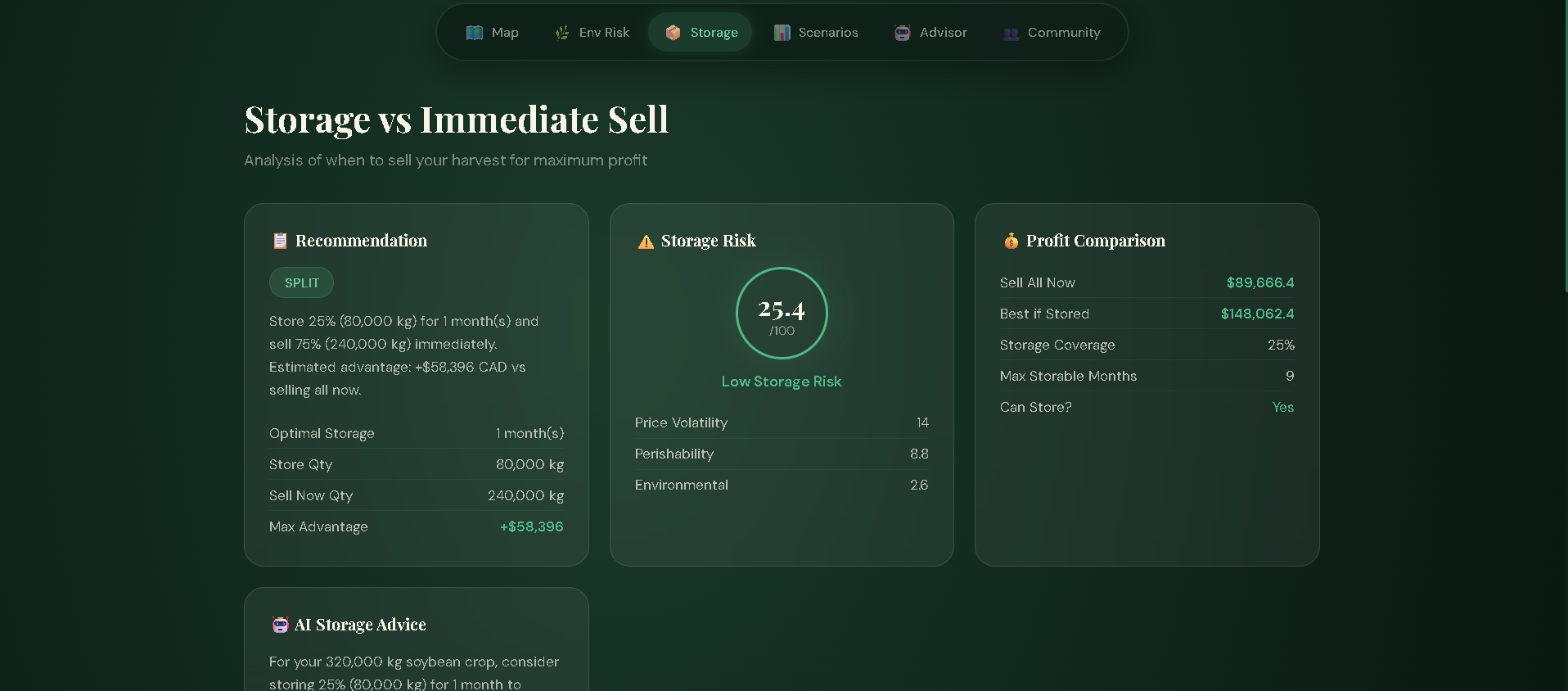
Storage Analysis
-
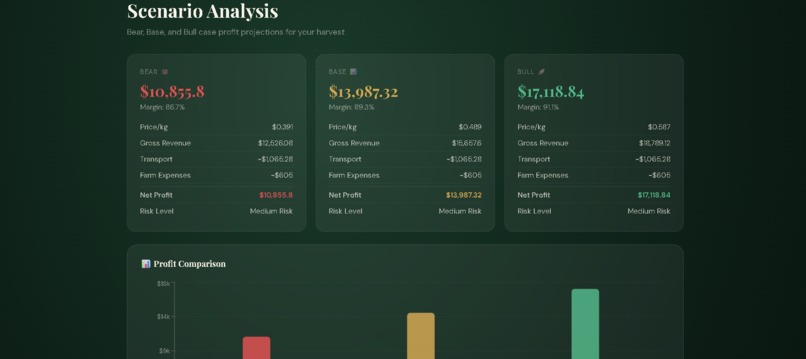
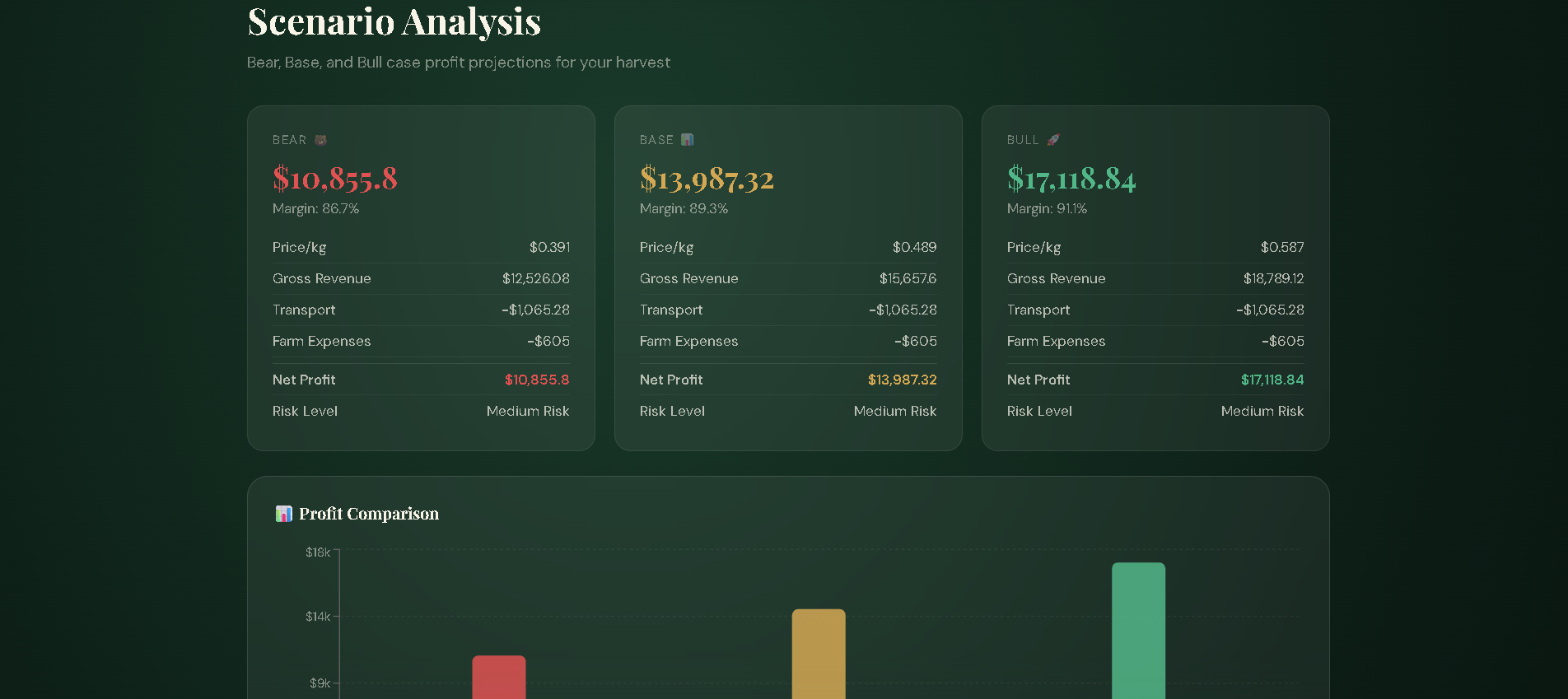
Scenario Analysis
-
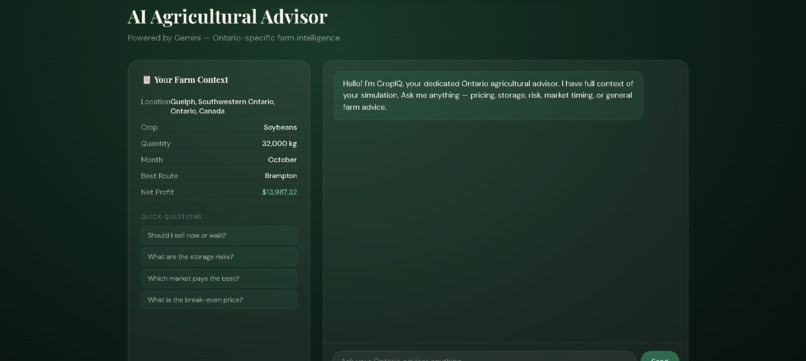
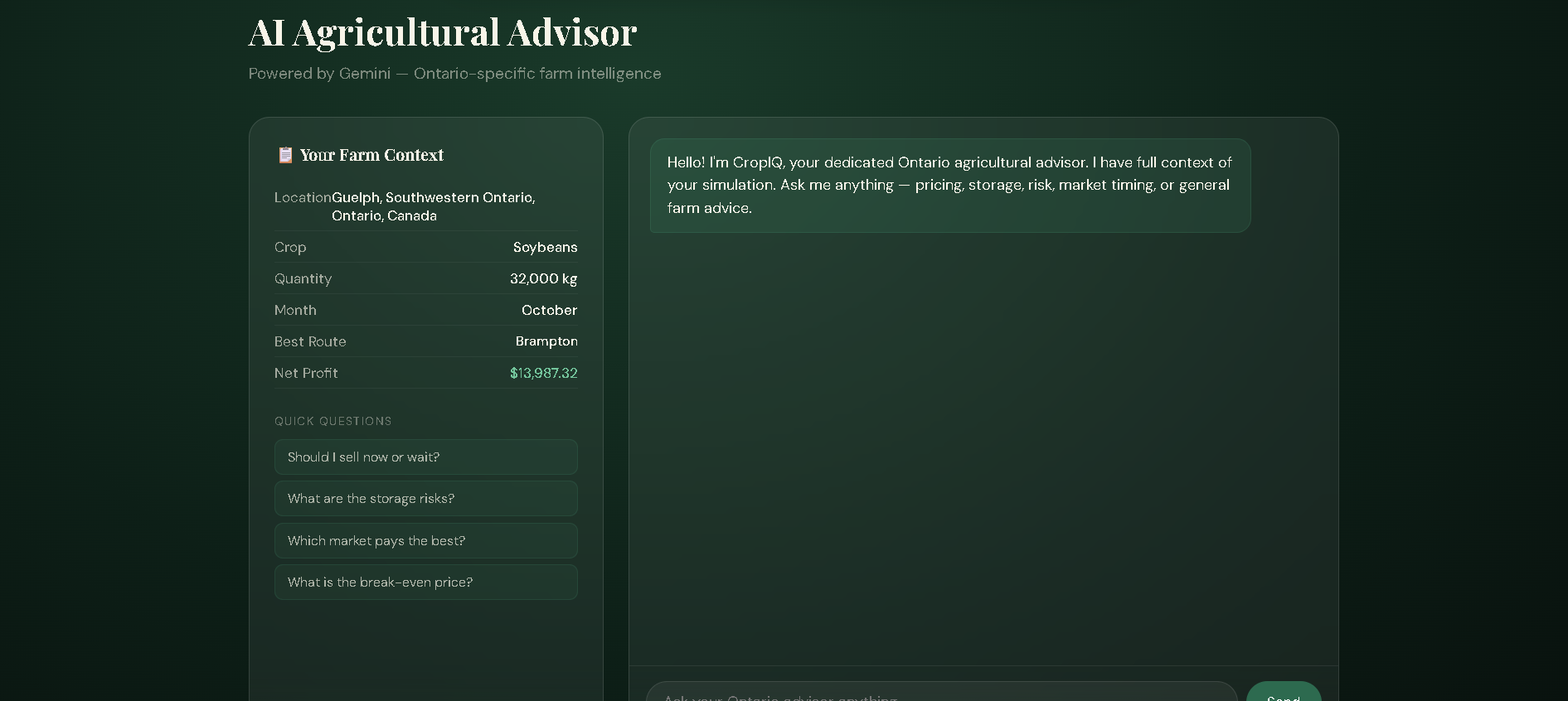
AI Advisor
-
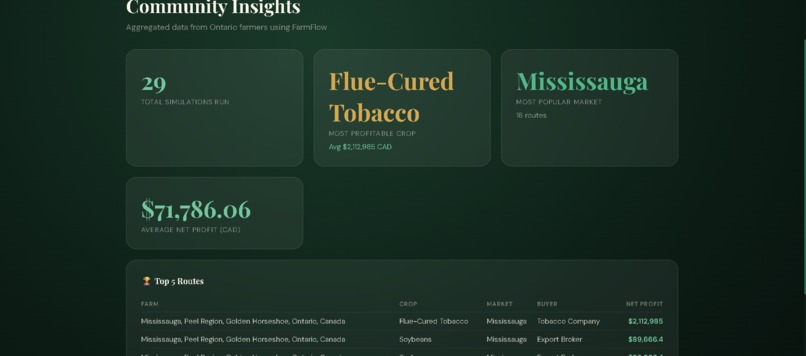
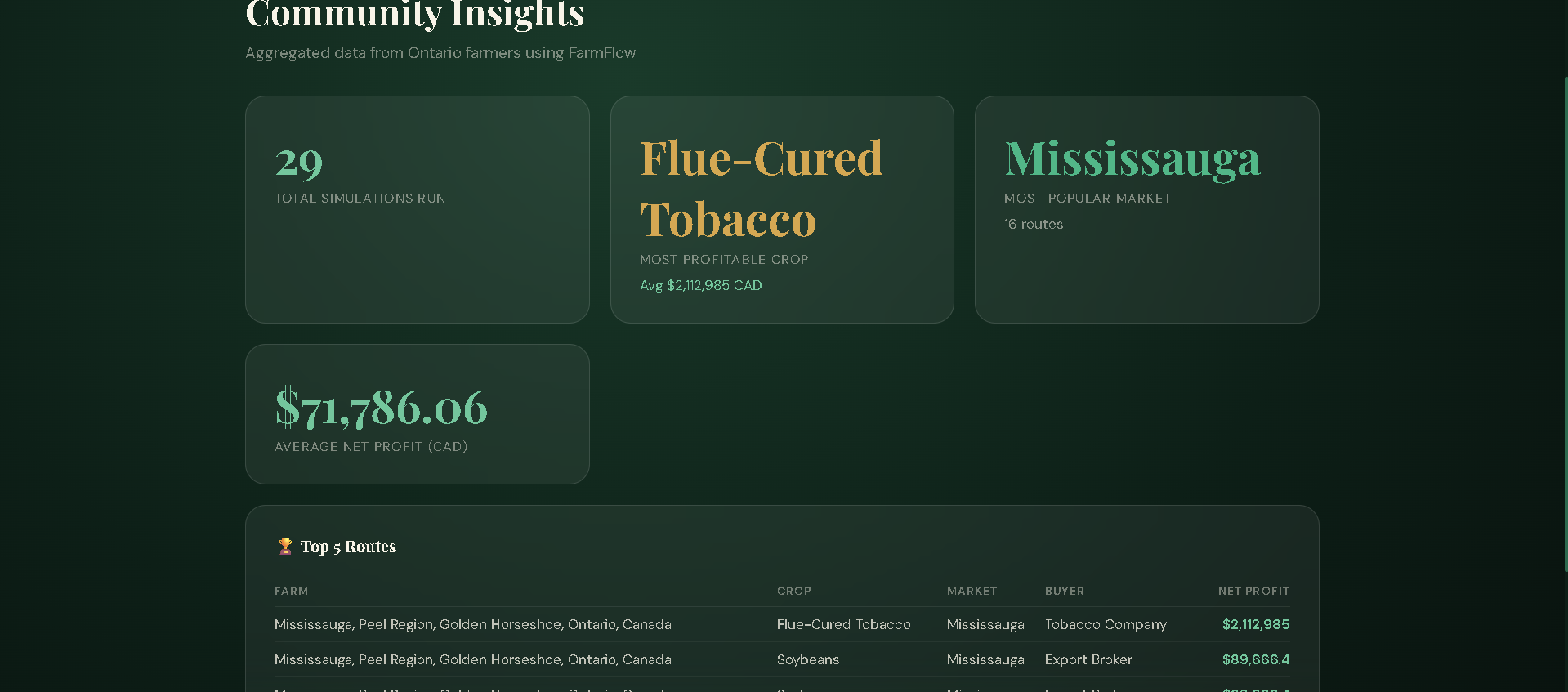
Community Insights
Inspiration
Agriculture is one of the most important industries in Canada, yet many farmers still rely on fragmented information when making critical decisions such as where to sell crops, when to sell them, and whether storing them will increase profit.
Market prices fluctuate, weather risks change quickly, and transportation logistics can affect profit margins. Farmers often need to combine multiple sources of information—market demand, storage capacity, environmental risks, and transportation costs—to make a single decision.
We asked a simple question:
What if a farmer could enter their farm details and instantly receive intelligent, data-driven recommendations on how to maximize profit?
This idea inspired FarmFlow, an AI-powered platform that combines market intelligence, environmental risk analysis, and profit forecasting to help farmers make smarter selling decisions.
What it does
FarmFlow is an agricultural decision intelligence platform designed specifically for Ontario farmers. It helps farmers answer three key questions:
Where should I sell my crops? Should I sell now or store them for later? What risks could affect my profit?
The platform provides:
📍 Market Demand Heatmap showing the best markets across Ontario 🌦 Environmental Risk Analysis including weather, disease, and transport risk 📦 Storage vs Immediate Sell Optimization 📊 Profit Forecasting and Scenario Modeling 🤖 AI Agricultural Advisor (CropIQ) 🌐 Community Insights from other farmers
How we built it
FarmFlow is a full-stack web platform combining geospatial data, agricultural economics, and AI.
Frontend React.js Interactive maps using Leaflet and OpenStreetMap Data visualization for profit forecasts and scenario analysis Hosted on Vercel
Backend FastAPI (Python) Simulation engines for: profit calculation expense modeling storage optimization environmental risk evaluation Hosted on Render
External Data Weather data from Open-Meteo Population and demand signals from Ontario cities
Challenges we ran into
Agricultural decision-making involves many variables including:
crop prices transportation distance storage capacity farm expenses price volatility environmental risks
Creating a profit model that remained simple enough for users while still reflecting realistic farm economics was a significant design challenge. We had to carefully balance accuracy and usability so that the results remained understandable for farmers.
Accomplishments that we're proud of
One of our biggest accomplishments is simply bringing FarmFlow from an idea to a fully working platform during our first hackathon. None of us had previously built a project that combined maps, simulations, AI advisory, and full-stack deployment, so getting all of these components working together felt like a huge milestone.
What we learned
On the technical side, we learned how to: Build and deploy a full-stack application using React and FastAPI Connect services across different platforms like Vercel and Render Design simulation models that convert real-world variables into meaningful outputs Use geospatial visualization to represent complex data in an intuitive way
What's next for FarmFlow
Future improvements could include: Integrating real-time commodity market prices Using machine learning to predict crop price trends Incorporating satellite and soil data for better agricultural insights Adding route optimization for transportation logistics Expanding the platform beyond Ontario to support farmers in other regions Ultimately, we envision FarmFlow becoming a data-driven decision platform that helps farmers maximize profit while reducing risk.
Built With
- css3
- fastapi
- grok
- html5
- javascript
- leaflet.js
- open-meteo
- openstreetmap
- python
- react.js
- vscode

Log in or sign up for Devpost to join the conversation.