-
-
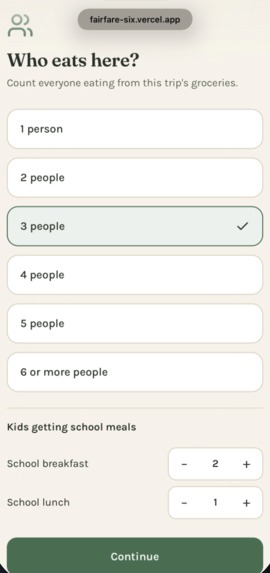
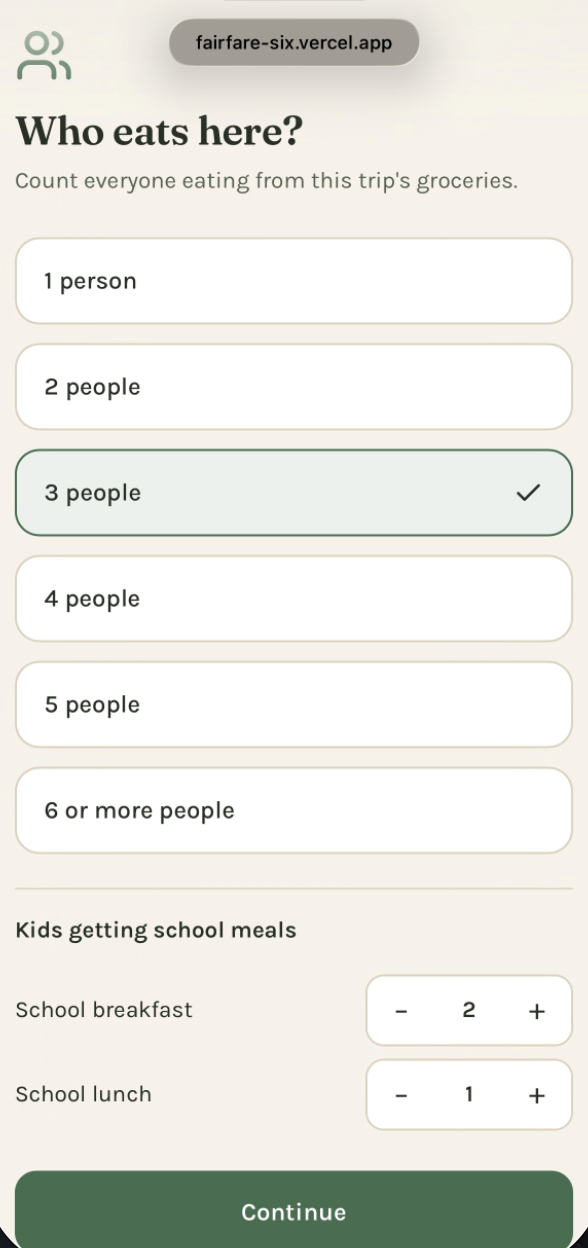
Beginning of user onboarding, customizing for amount of people to feed and factoring in children's meals at school.
-
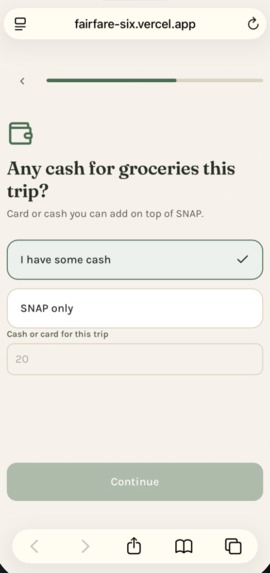
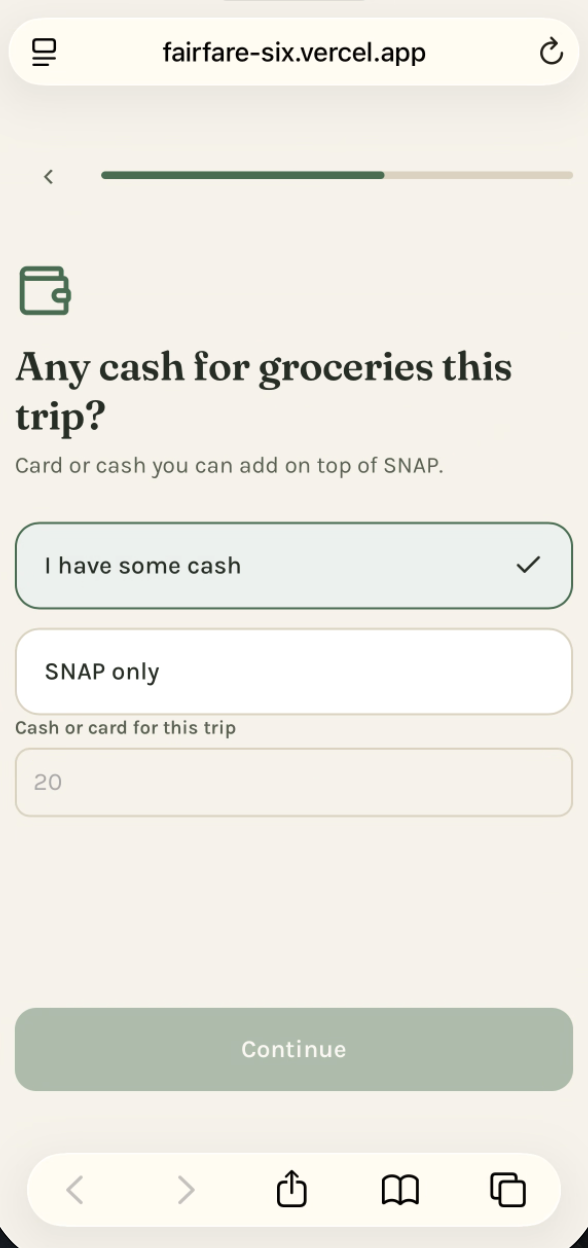
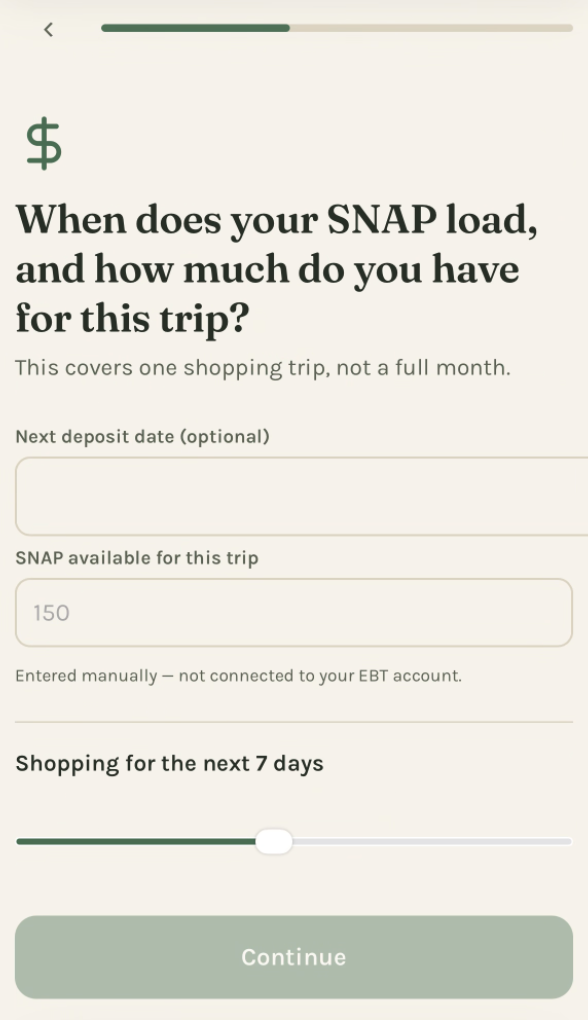
User factors in SNAP budget, additional budget (if applicable), and curates meals based on timeframe of meal planning.
-
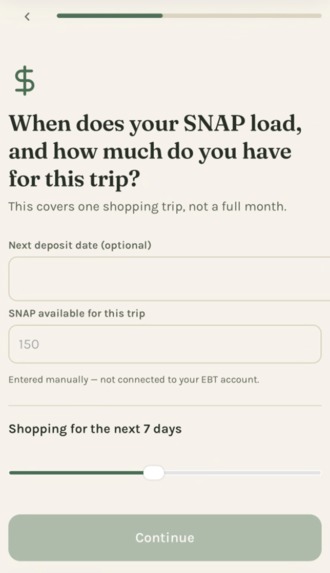
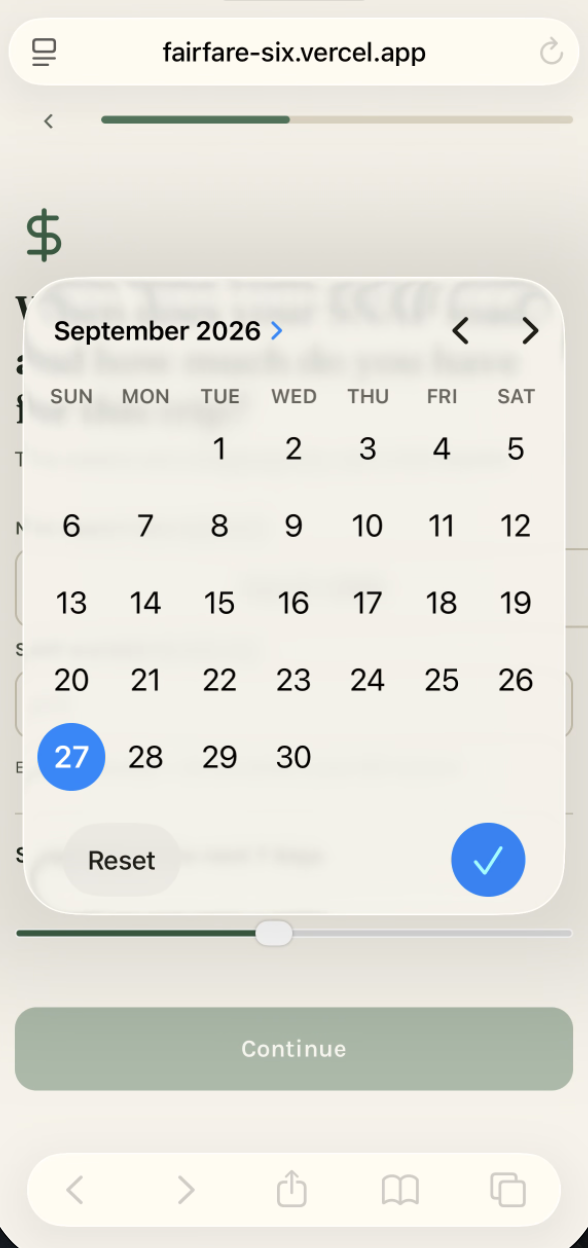
Includes user SNAP deposit date in analysis.
-
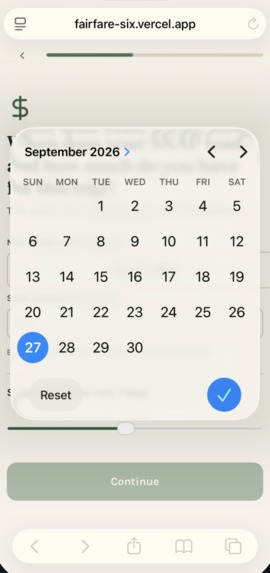
Deposit date selection.
-
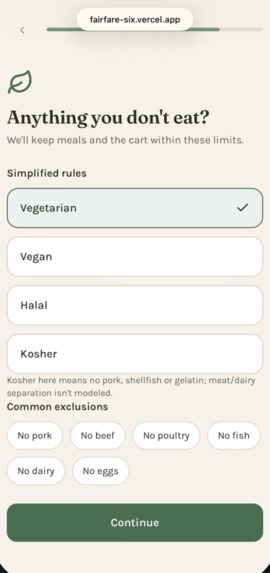
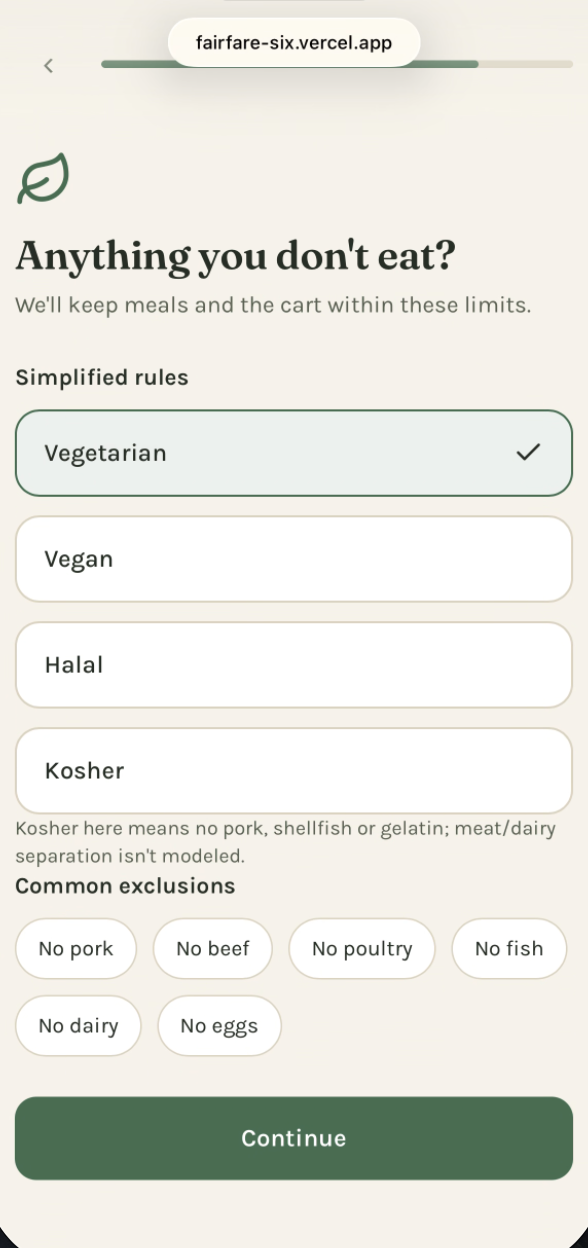
Tailors to potential dietary restrictions the user might have.
-
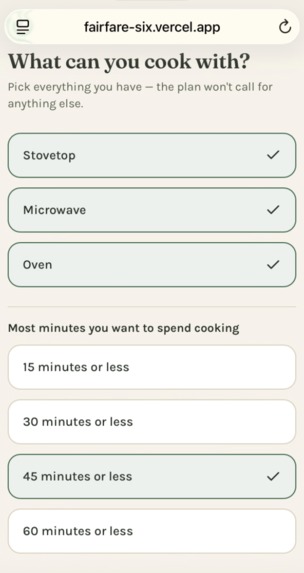
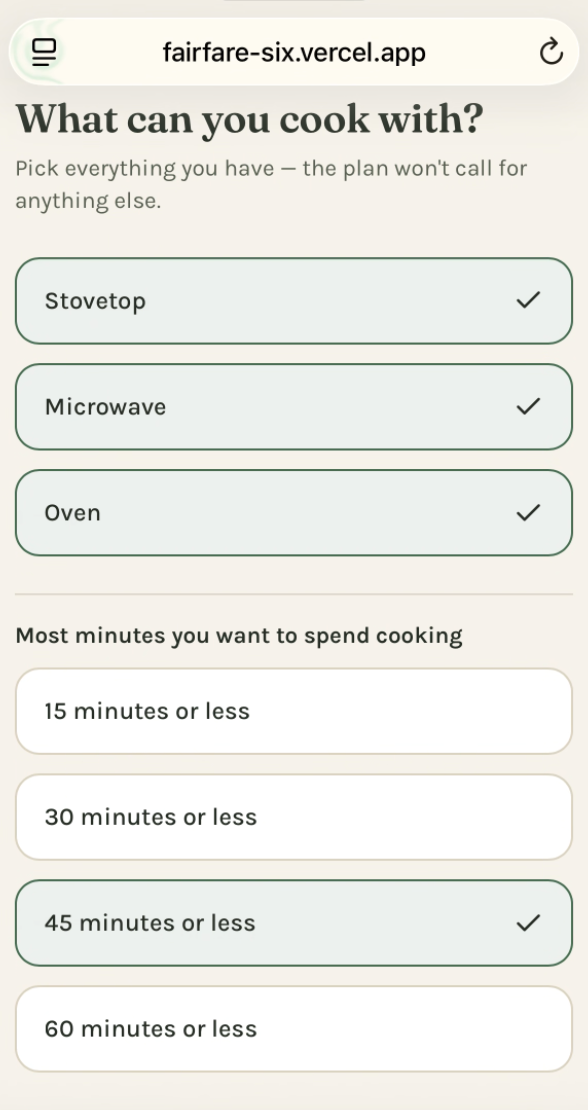
Allows user to input their available tools and resources in the kitchen.
-
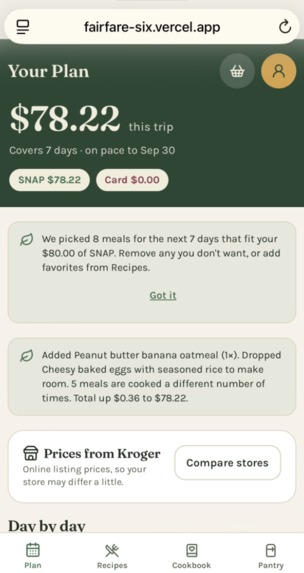
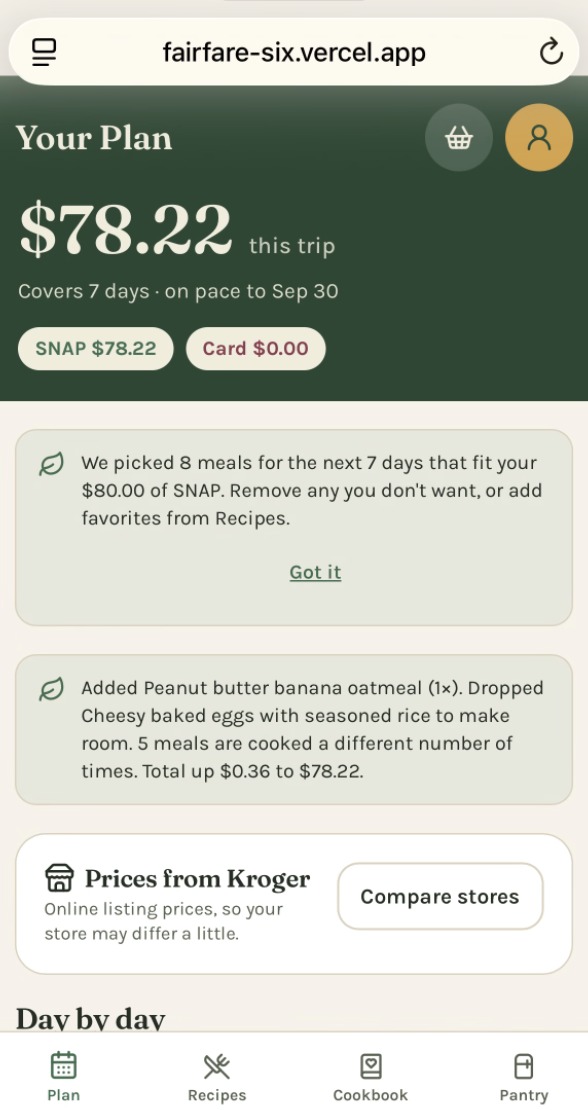
Landing page, describes the budget for weekly shopping, SNAP benefit specifications, and more.
-
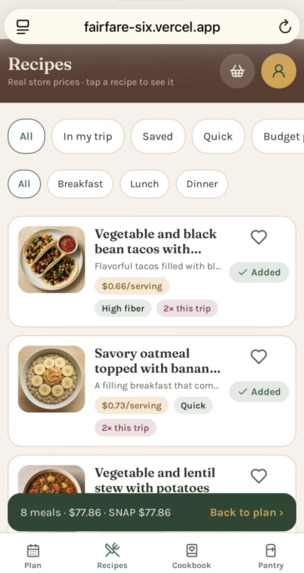
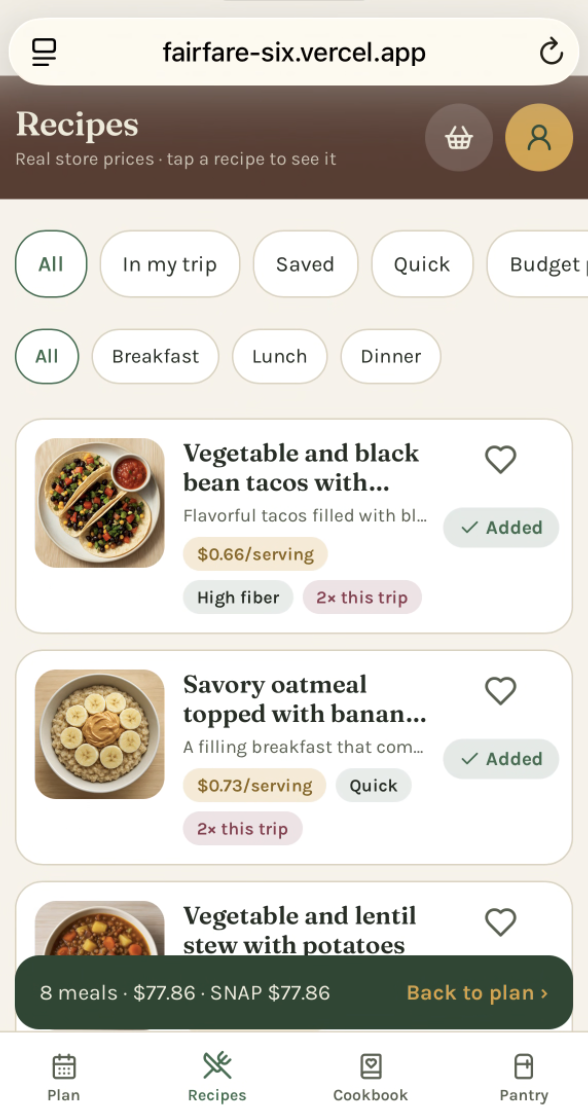
Landing pages recipes, details the selected recipes with nutrition facts, labels that categorize quirks about each dish (ie speed of making)
-
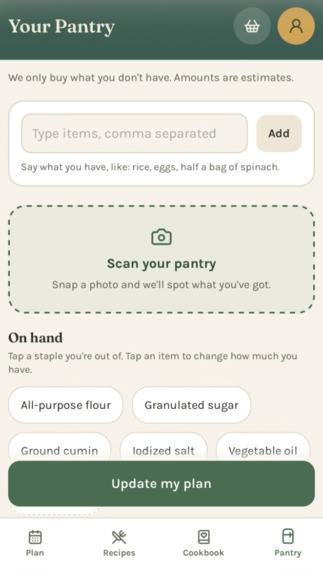
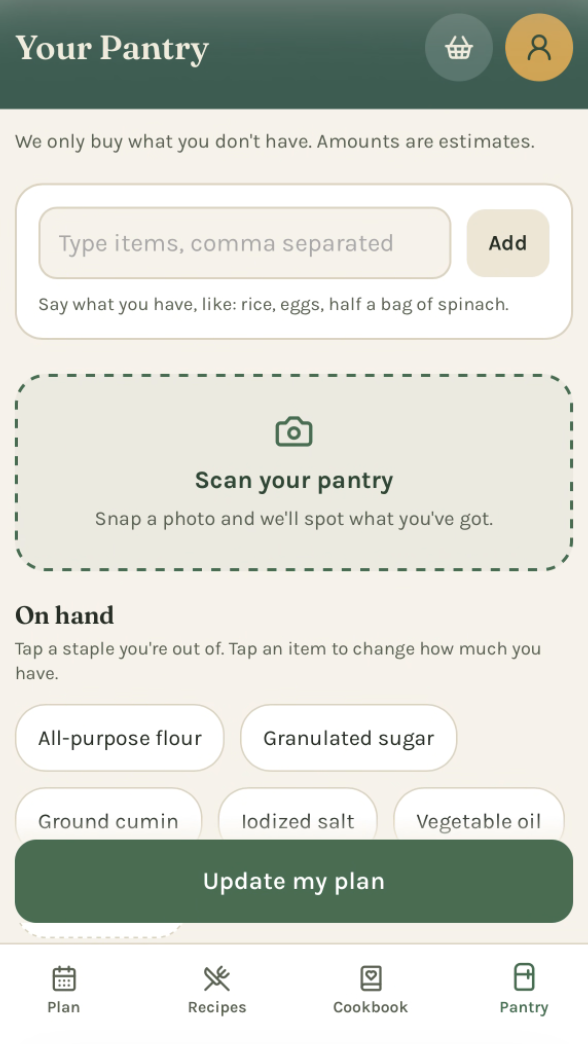
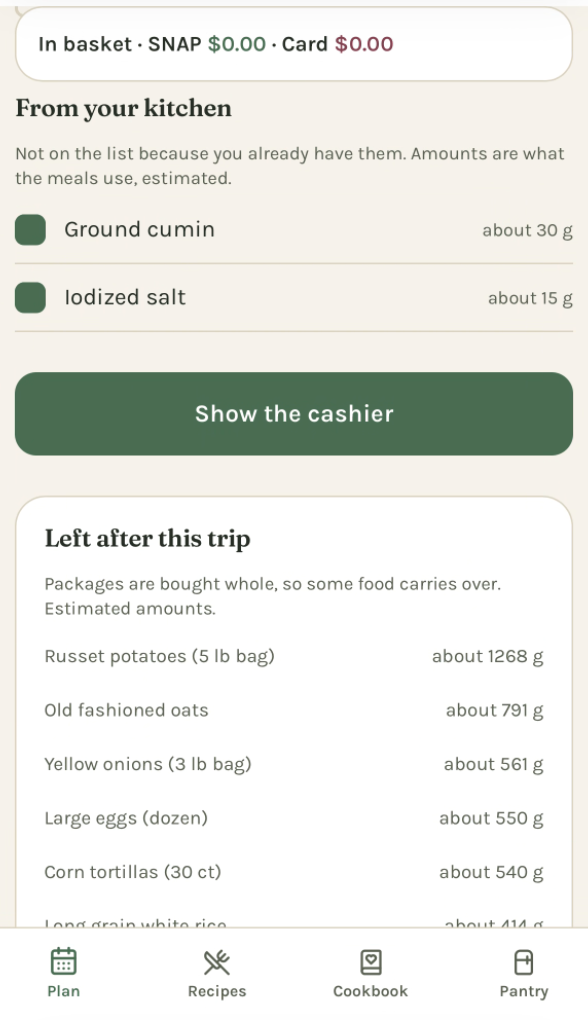
Pantry scanner, is able to account for ingredients and items that the user already has through visual and auditory input.
-
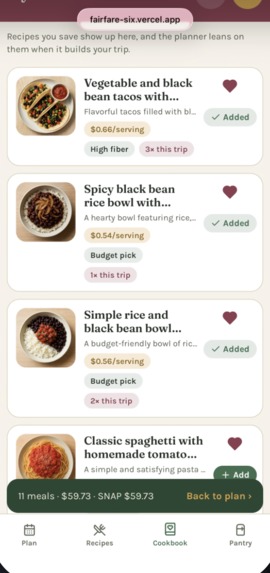
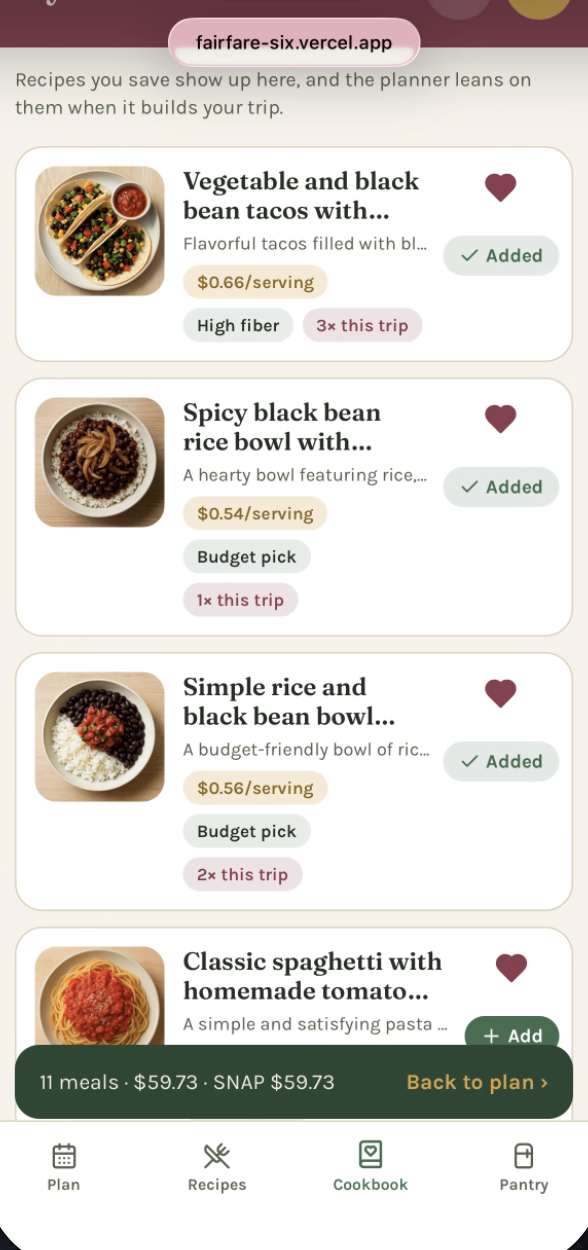
Cookbook, allows user to save favorite meals.
-
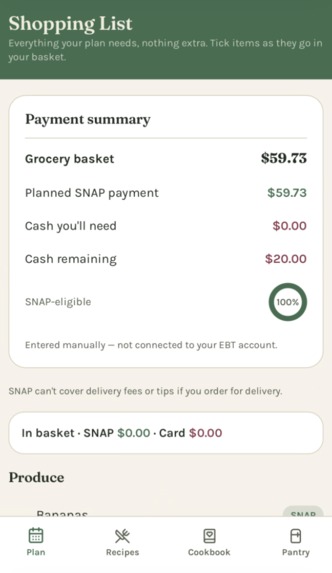
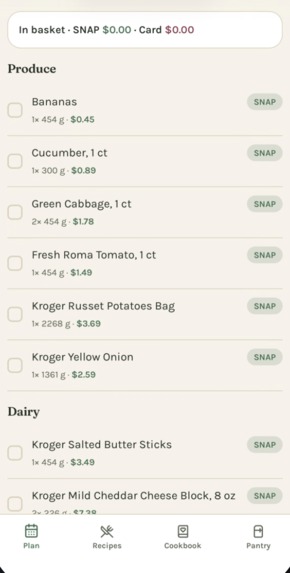
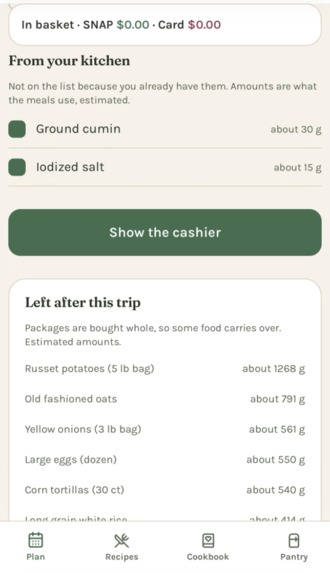
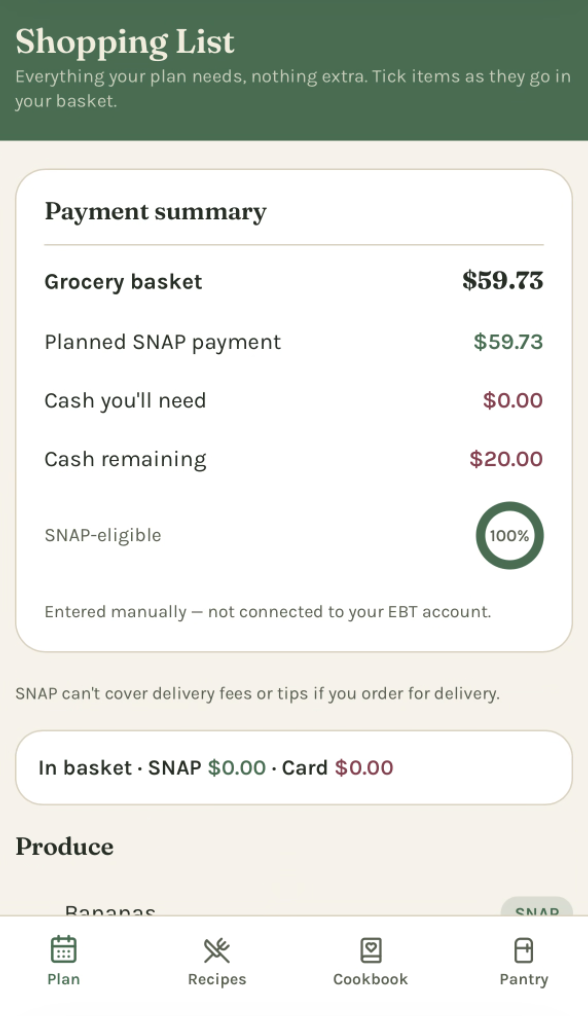
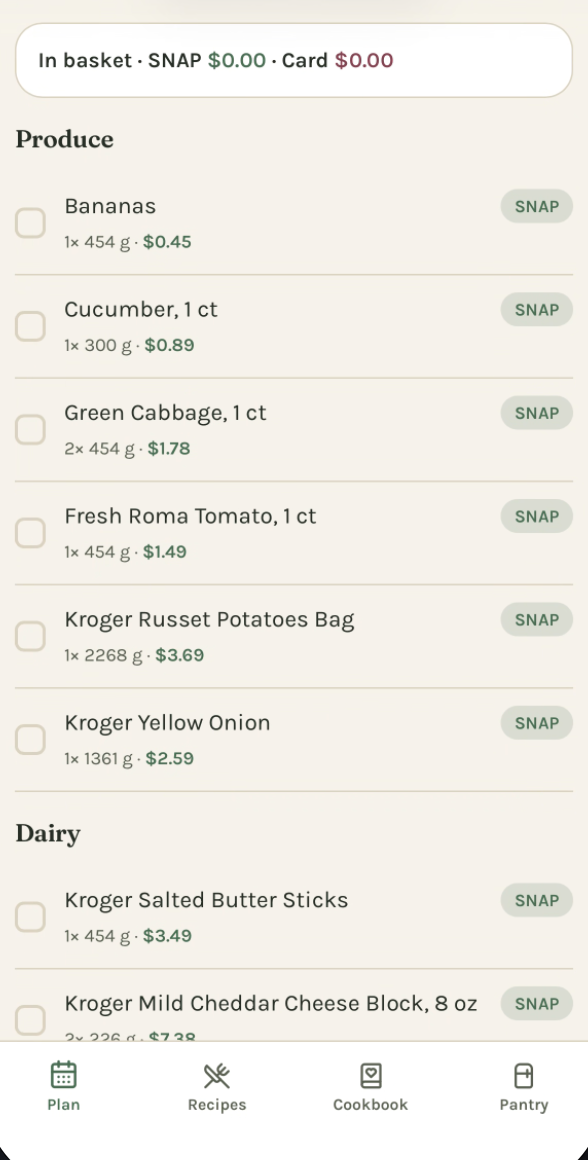
Cart, cost breakdown for total shopping trip, extrapolating down to each ingredient.
-
Finding the most affordable/convenient retail location.
-
-
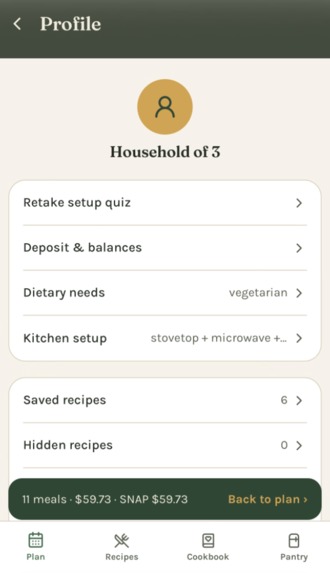
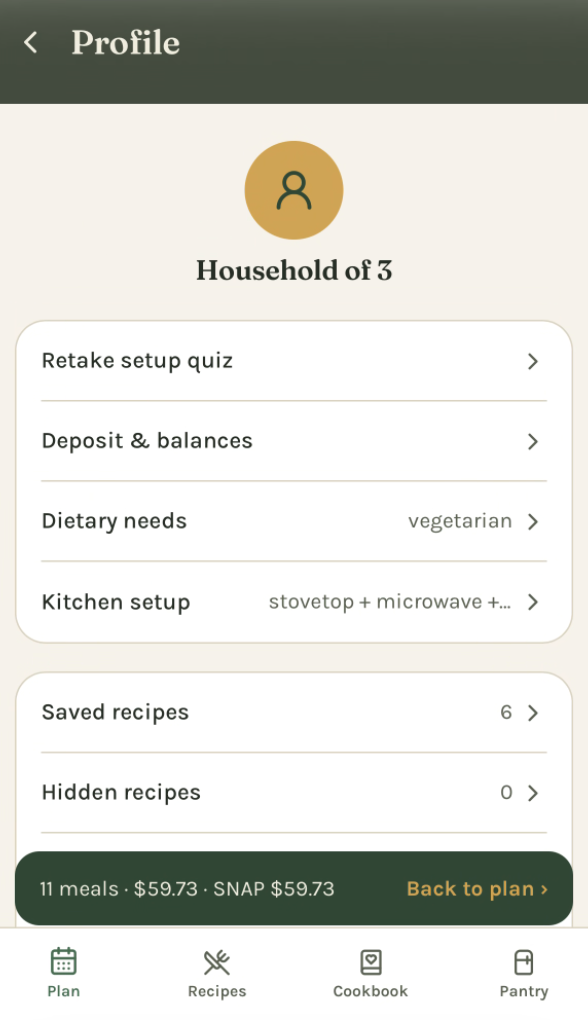
Profile, option to retake preferences quiz.
Inspiration
As first-year college students navigating healthy food options, our team realized how much time and money go into planning and buying healthy meals or even snacks. In fact, we often settle for fast food several times a week as a quick, convenient option rather than spending time getting to the grocery store by public transportation and determining which items meet our nutrition goals on an affordable budget. If we had this much trouble preparing and accessing healthy meals, we wondered how much harder meal planning and making balanced food choices would be for individuals on an even tighter grocery budget. After learning more about the Supplemental Nutrition Assistance Program (SNAP), we recognized that we can leverage technology to make nutritious eating more accessible on a limited budget through FairFare.
What FairFare Does
FairFare is a multimodal, AI-powered meal planning and budgeting platform designed to help families across the nation apply their SNAP benefits as effectively as possible while minimizing the time, effort, and stress of finding affordable, nutritious meals. FairFare users will first curate a profile based on their budget, dietary restrictions, SNAP allotment, household size, location, nutrition goals, and more. While this profile information can be standardized over time, users can always go back and update their preferences. Then, users can either upload a picture of their pantry or use the voice-enabled AI agent to log their existing groceries. By analyzing the user’s personalized profile and current ingredient inventory, FairFare will then provide a range of tailored recipes, each clearly labeled with nutrition, cooking, and purchasing information. To select a recipe and view comprehensive purchasing information, users add each desired dish to their cart, where they can review which ingredients may be purchased through SNAP benefits and which grocery retailers offer the most affordable options. Users can also rate recipes and add their favorites to their own cookbook. From individualized food preferences to maximizing SNAP benefits with each meal, FairFare ensures healthy eating is accessible and attainable, regardless of time or resource limitations.
How We Built It
FairFare's design is based on an integrated approach that combines artificial intelligence and deterministic optimization, so each tool can focus on the problems it is best suited to solve. For frontend development, we used React, Vite, and TypeScript, and FastAPI links the user interface to our AI models and optimization algorithms. With regard to open-ended tasks, we have applied artificial intelligence in all areas—a vision model is used to analyze pictures of the food in our clients' pantries and match them to our database of ingredients; generative models help in producing recipes from the ingredients and appliances available; our AI agent carries out the research and obtains the prices of groceries from different stores, and the verification system checks the sources and packaging sizes.
Rather than employing a large language model for shopping within a budget constraint, we have developed an optimization algorithm based on the Google OR-Tools CP-SAT model so as to be able to optimize meal planning and grocery shopping in line with both SNAP and cash budgets, pantry inventory, nutritional requirements, meals, and user preferences. The prices from different stores are fed into this optimization model in order to find the best combination of stores and meals to buy, while OpenStreetMap is used to find the
Our Challenges
A challenge that our team encountered during the prototyping of this app was deciding which features we wanted to implement and which ones were unnecessary, unhelpful, or outside of the scope of our project. For example, we were originally planning on incorporating a reminder system that alerted SNAP users when their benefits were going to expire. However, after further consideration, we realized that this implementation might be outside the scope of what we wanted to originally accomplish with FairFare. This challenge helped us develop the skills to adopt a focused and analytical perspective when building our project.
Another challenge that we faced was how to handle disagreements about which project to choose, which would be the most impactful, and the execution steps for the project. We also had to choose between building an app on iOS/Android handheld devices versus creating a website to be used on a computer. We analyzed the various features we were planning on incorporating and, for each feature, which design choice would make the most sense. We eventually decided on a web design that would work on both phones and computers, with plans to expand into an app later. Through this process, we practiced how to work with others by practicing skills of communication, compromise, and collaboration.
Future Plans
As for our continued work, the FairFare team intends to translate the product format from a website to an application for both IOS and Android mobile users. Given our current time constraints, as mentioned above, we decided to focus on FairFare's core functionality through a website rather than delving into specific native application development. However, we aim to adapt our work to an application, as it would provide a more intuitive and streamlined user experience. Additionally, we seek to expand the range of SNAP-accommodating retailers by working with and surveying local food vendors, farmers' markets, and smaller grocery stores. Moreover, we plan to work with individuals and families receiving SNAP benefits to gather feedback on how we can best tailor our application to their real-world needs and priorities. Overall, the FairFare team is optimistic about and invested in the future of our nation’s health by harnessing the capabilities of AI to drive healthy, affordable, and accessible food choices nationwide.
Built With
- agent
- artificial
- computer
- constraint
- fastapi
- generative
- intelligence
- language
- large
- models
- openstreetmap
- optimization
- pydantic
- python
- typescript
- vision
- vite

Log in or sign up for Devpost to join the conversation.