-
-
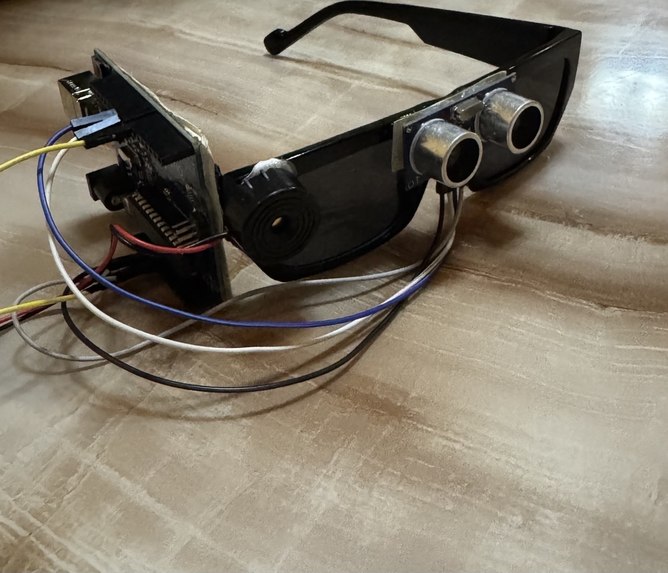
Hardware prototype
-
Eyta AI – AI-Powered Smart Assistive Glasses for the Visually Impaired
Inspiration
Eyta AI was inspired by the daily challenges faced by visually impaired individuals when navigating environments independently. Many blind people struggle to identify obstacles, read printed text, or access important information without assistance from others. Existing assistive technologies are often expensive and inaccessible, especially in developing countries.
As students passionate about artificial intelligence, accessibility, and social impact, we wanted to build a solution that combines AI and affordable hardware to improve independence and safety for visually impaired users. We also recognized that many existing systems lack support for local languages, which motivated us to include Amharic and Afaan Oromo support in our project.
What It Does
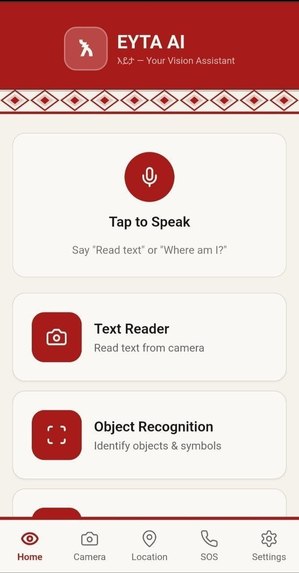
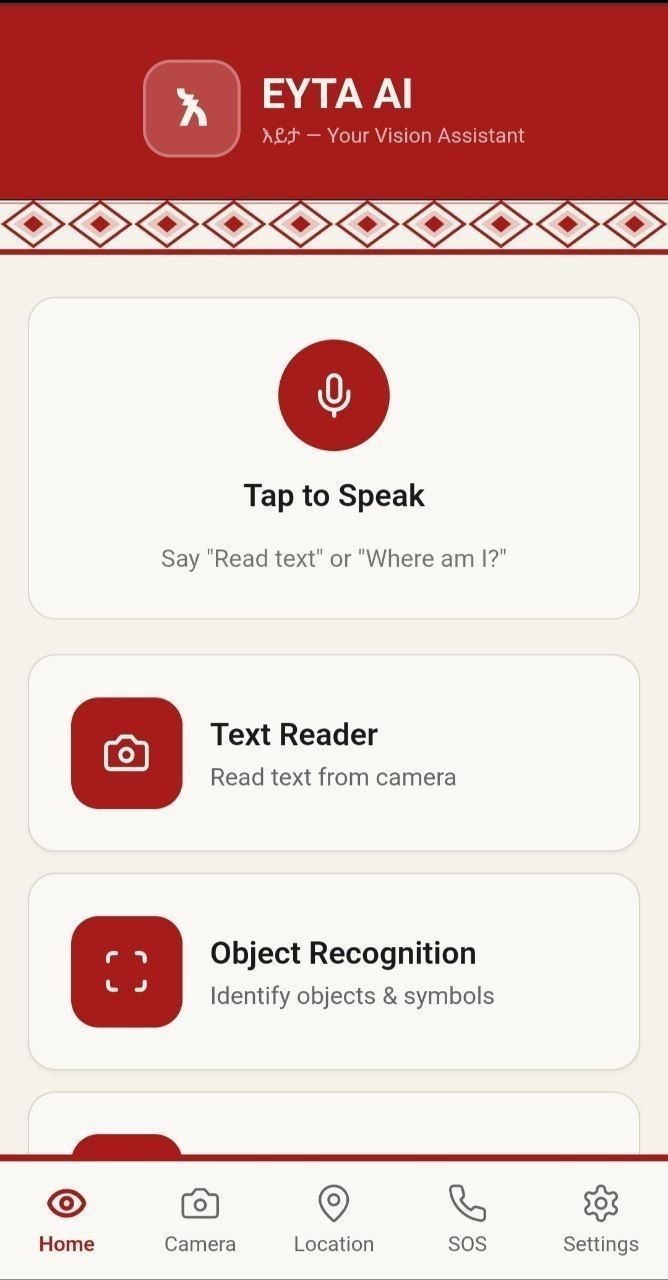
Eyta AI is an AI-powered assistive system that combines a mobile application with a smart glasses prototype to provide real-time audio feedback.
The system includes:
- Real-time object detection
- OCR text reading
- Voice feedback using text-to-speech
- Emergency location sharing
- Weather and location assistant
- Multilingual support (English, Amharic, Afaan Oromo)
- Smart obstacle detection using ultrasonic sensors
The mobile application acts as the intelligent processing unit, while the smart glasses prototype provides immediate obstacle awareness through hardware alerts.
How We Built It
Mobile Application
We developed the mobile application using Android technologies and integrated AI-based computer vision features.
The app uses:
- TensorFlow Lite for object detection
- OCR for text recognition
- Text-to-Speech for audio feedback
- GPS and Weather APIs for contextual assistance
The application captures real-time camera frames, processes them using AI models, and converts the results into speech for the user.
Smart Glasses Prototype
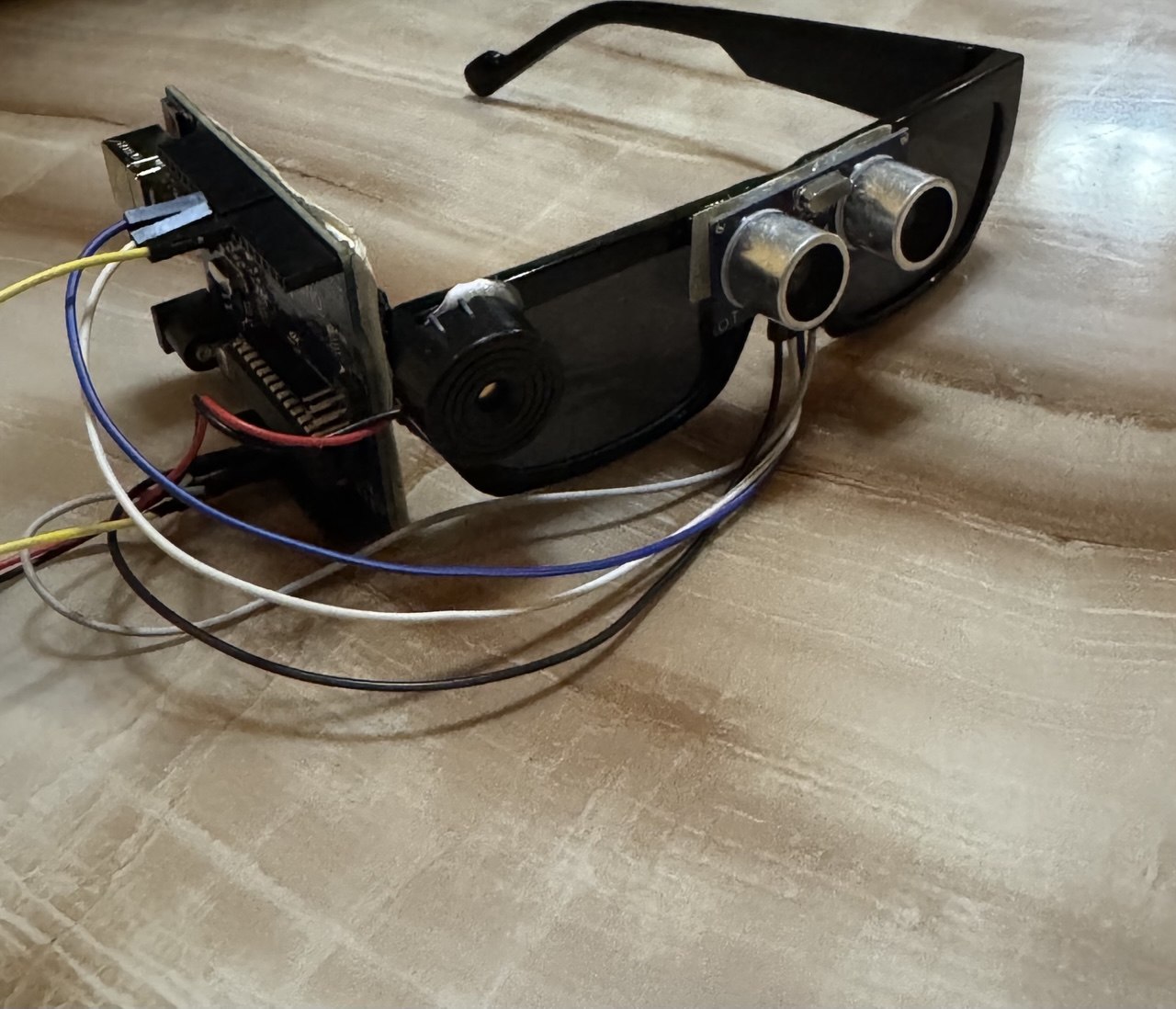
The hardware prototype was built using:
- Arduino
- HC-SR04 Ultrasonic Sensor
- Buzzer/Vibration alert system
The ultrasonic sensor continuously measures the distance between the user and nearby obstacles. When an object is detected within a certain range, the system alerts the user instantly.
Challenges We Faced
One of the biggest challenges was integrating hardware and software into a single assistive system. Optimizing AI models for mobile devices while maintaining real-time performance was also challenging.
Another major challenge was implementing multilingual support for local languages and ensuring that the voice feedback remained understandable and accessible.
We also faced challenges in balancing affordability with functionality, since our goal was to create a solution that could realistically be used in developing regions.
What We Learned
Through this project, we learned:
- Mobile AI integration using TensorFlow Lite
- Real-time object detection and OCR systems
- Embedded systems development with Arduino
- Hardware and software communication
- Accessibility-focused design
- The importance of privacy and security in AI systems
Most importantly, we learned how technology can be used to solve real-world human problems and improve accessibility for underserved communities.
Security & Privacy
Since Eyta AI handles sensitive data such as camera input and location information, we designed the system with privacy in mind. The system minimizes unnecessary data storage, and location sharing is only activated during emergencies.
Our future goal is to increase on-device processing and implement stronger encryption and secure communication systems.
Future Plans
In the future, we aim to:
- Improve AI accuracy and response speed
- Expand offline functionality
- Miniaturize the hardware
- Develop a dedicated Eyta AI embedded board
- Create a fully standalone smart glasses system
Our long-term vision is to make assistive technology more affordable, accessible, and practical for visually impaired individuals around the world.
Built With
- amharic
- api
- arduino
- buzzer
- buzzer-apis-&-services:-gps-location-services
- gps
- hc-sr04
- hc-sr04-ultrasonic-sensor
- lite
- multilingual
- ocr
- ocr-speech-technology:-text-to-speech-(tts)-engine-for-voice-feedback-hardware:-arduino
- python
- sensor
- tensorflow
- text-to-speech
- tts
- ultrasonic
- weather
- weather-api-multilingual-support:-english


Log in or sign up for Devpost to join the conversation.