-
-
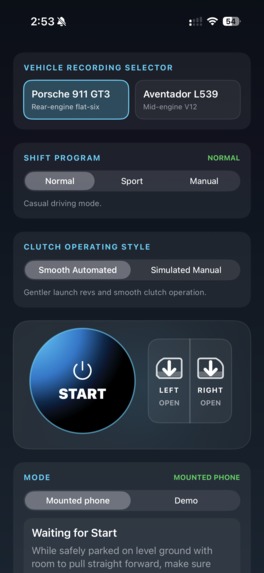
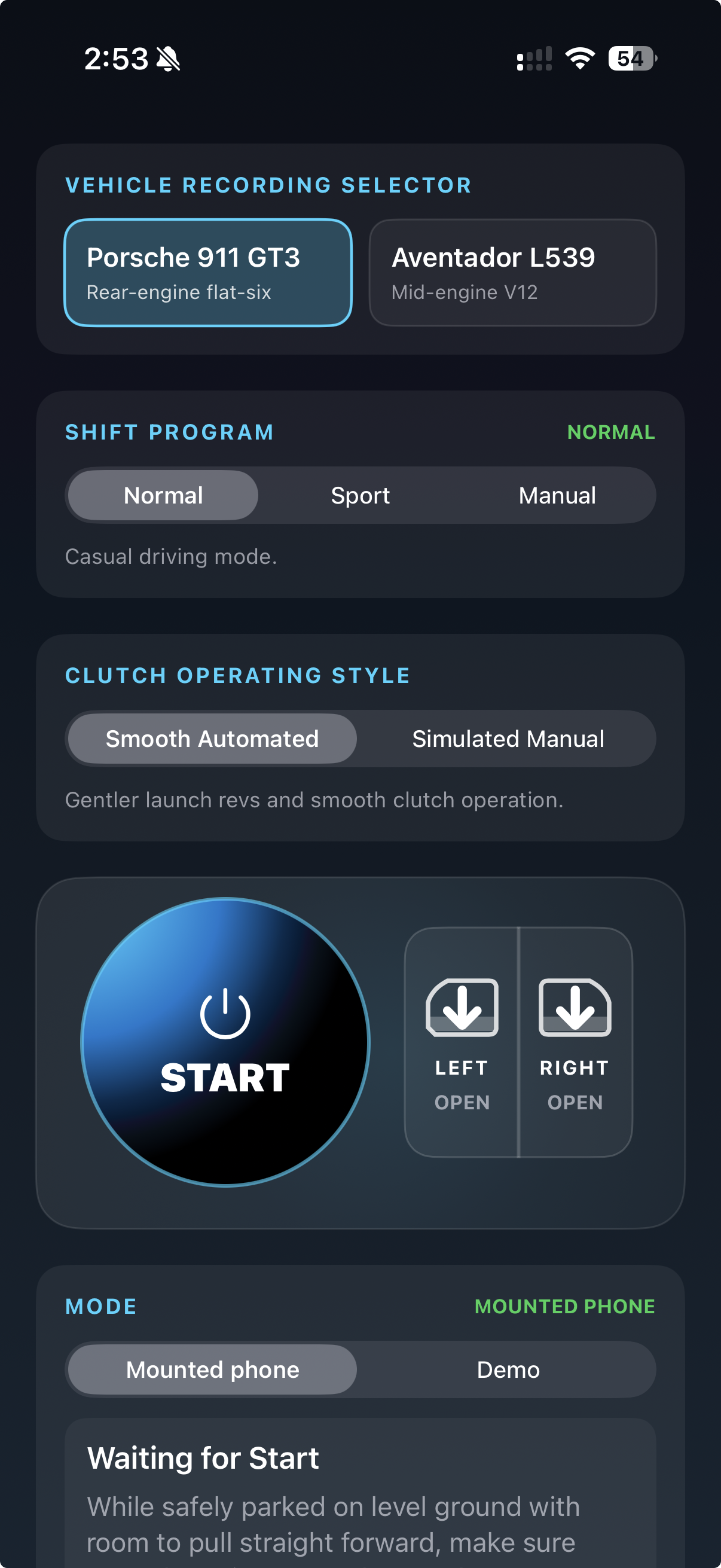
DriveTone Main Screen
-
DriveTone Icon
Inspiration
As an EV owner, I love how quiet they are. As a sports car fan, I miss how the engine sound creates a real connection with the car and the driving experience. With all the hype right now about virtual engine sounds for EV’s, I had this crazy idea to try to bring that to any EV, without any hardware.
What it does
Based entirely on the accelerometer & GPS data from a phone, the app physically simulates a full working powertrain of a car, and connects that to a game-quality audio renderer for sound effects and haptics. The result is an amazing soundscape that dynamically responds to your driving.
How we built it
The app is a native iOS/Swift app. I am also presently learning to leverage AI to run "software factories", so the entire app was built with a custom software factory setup that I designed. The app also uses a custom diagnostic viewer and sound mastering studio.
I have a lot of experience working with phone sensors, sensor fusion algorithms, signal processing, etc. For the sound effects, I partnered with existing content creators that develop sound mods for car games like BeamNG, Forza, and Assetto Corsa to license their work for the built-in sound packs.
We then thoughtfully re-mastered the sounds for replay on a car stereo listening environment.
App telemetry is done through TelemetryDeck and we have an internal "feedback" system to collect feedback each time the app is used on a real drive.
Challenges we ran into
When the simulation gets out of sync with the car's real-life state, it breaks the illusion and is a bad experience for the users. It takes great care to get the right algorithms to nail the sensor fusion experience and tune the physical simulation.
Wireless CarPlay has great sound quality but unusable latency. The first version launched with a hard-block in place for wireless CarPlay. This has proven to be a huge hit for adoption.
We also learned that GPS signals are not strong in many cars (CarPlay gets around this issue by using the car's GPS antenna) and many users with Bluetooth had a terrible experience. This was also a huge hit to conversion.
As good as these sound packs sound in the game, when the sounds are used in everyday driving there is a very low margin for error. Small loop artifacts and interference patterns between layers stick out like a sore thumb. We had to develop a robust audio pre-processing & remastering infrastructure.
Also, every car has a different sound system, so we had to build a tunable haptics layer to make the haptics system work in a frequency that the user's car can actually deliver.
Accomplishments that we're proud of
Social Media promotion during TestFlight betas and post-launch has been a big success, with over 300,000 views across a handful of posts, yielding 600+ installs. This has been great for early feedback and prioritizing our roadmap. The engagement and excitement from users of the app really pushed me to work harder and faster to release updates.
What we learned
This is my first experience with B2C / entertainment apps. It is a very different dynamic than B2B SaaS! A lot of learning about influencers, consumer behavior/pricing approaches, and how to do well on social media.
What's next for DriveTone
Figuring out how to monetize the app -- thoughtful pricing, a solid GTM plan, and getting lots of user feedback! Then, a social-heavy rollout!


Log in or sign up for Devpost to join the conversation.