-
-
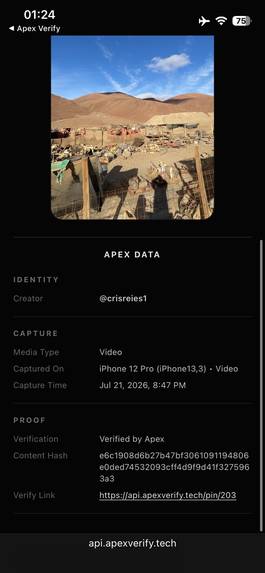
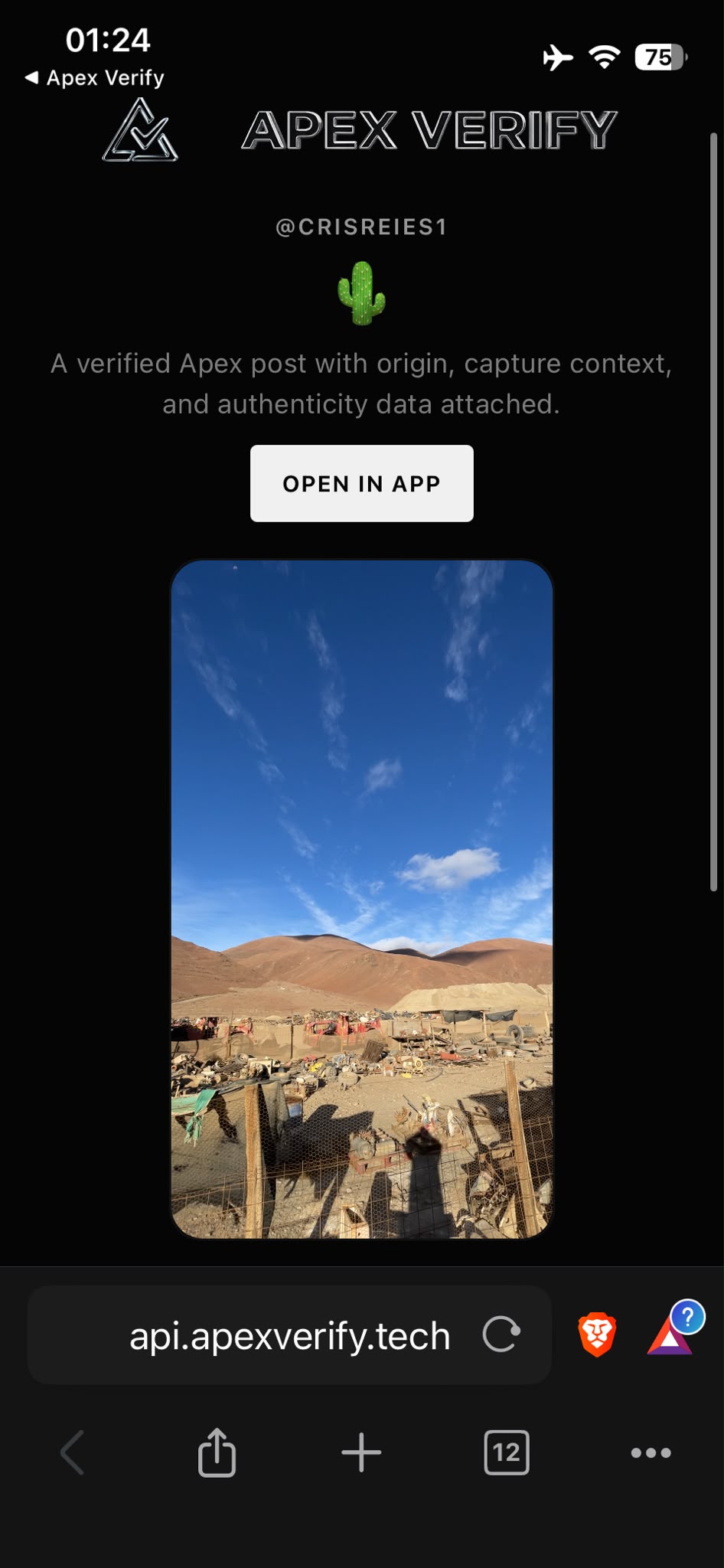
web view
-
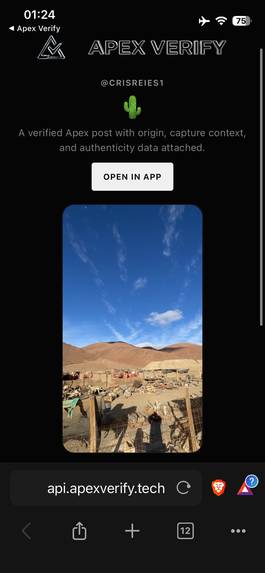
web view
-
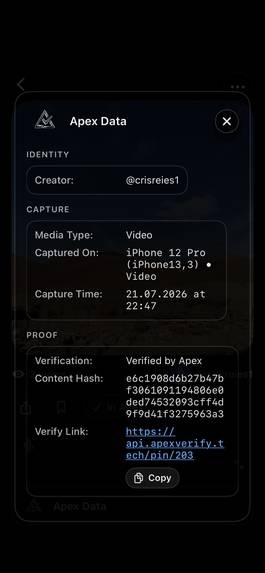
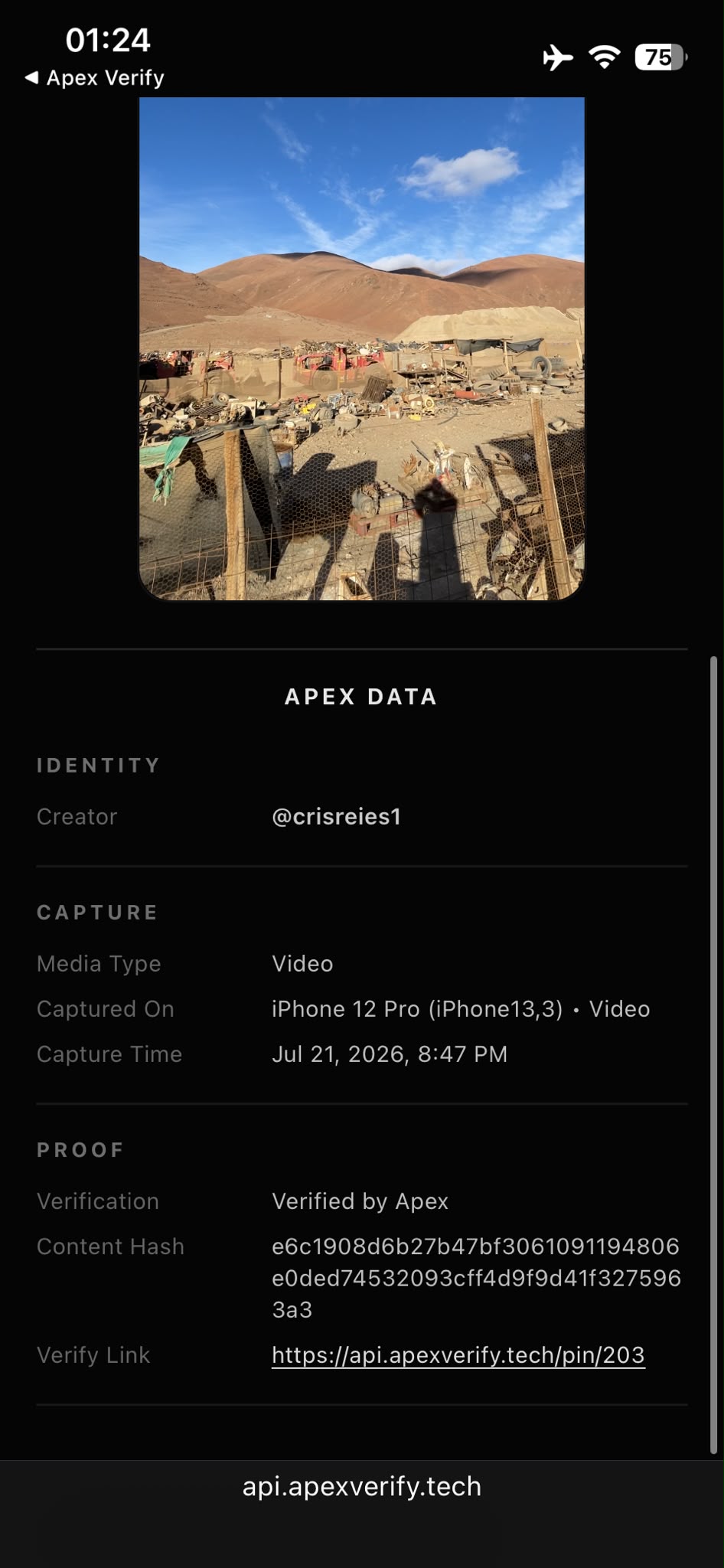
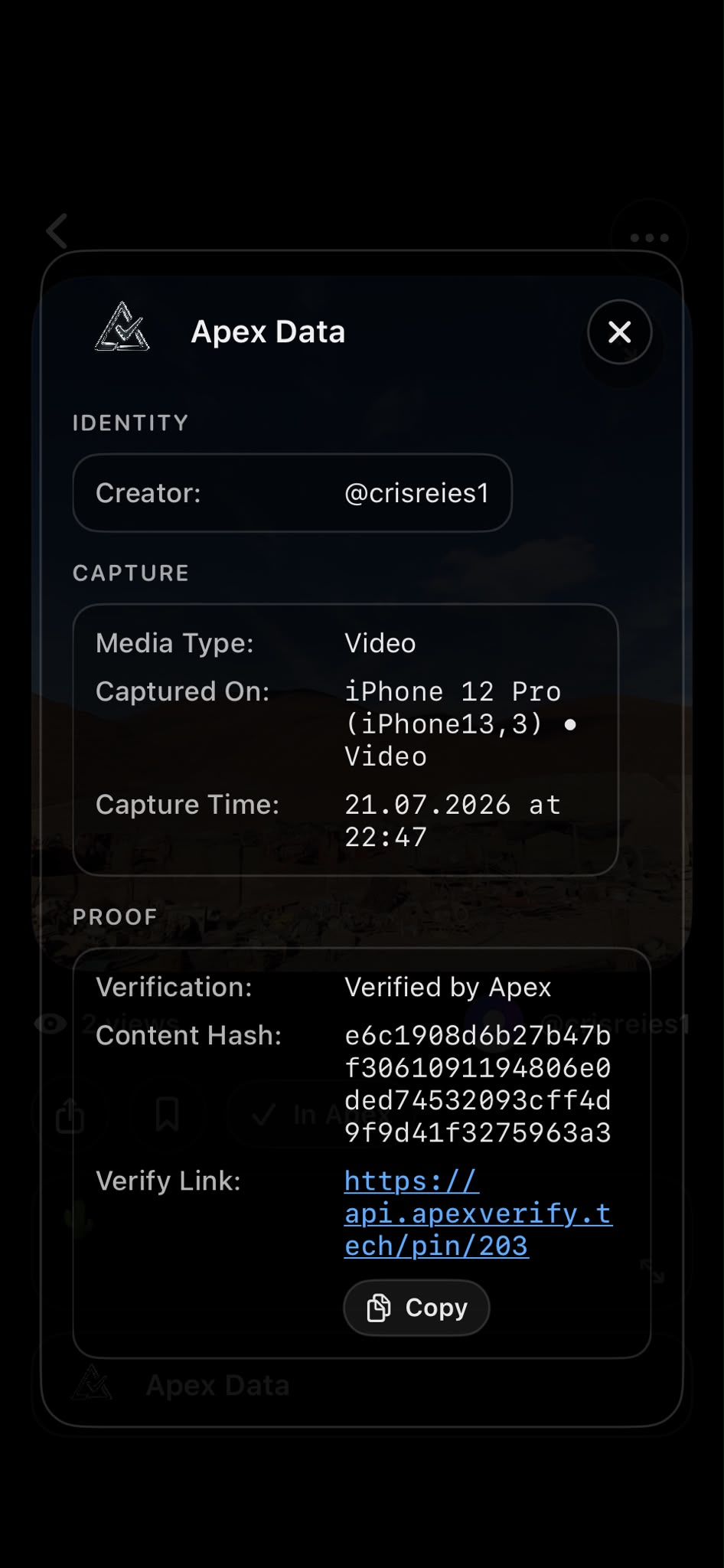
Apex Data shows every data user needs to know
-
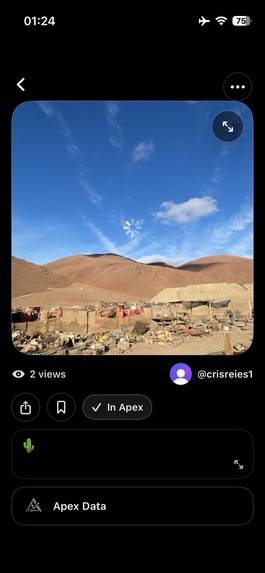
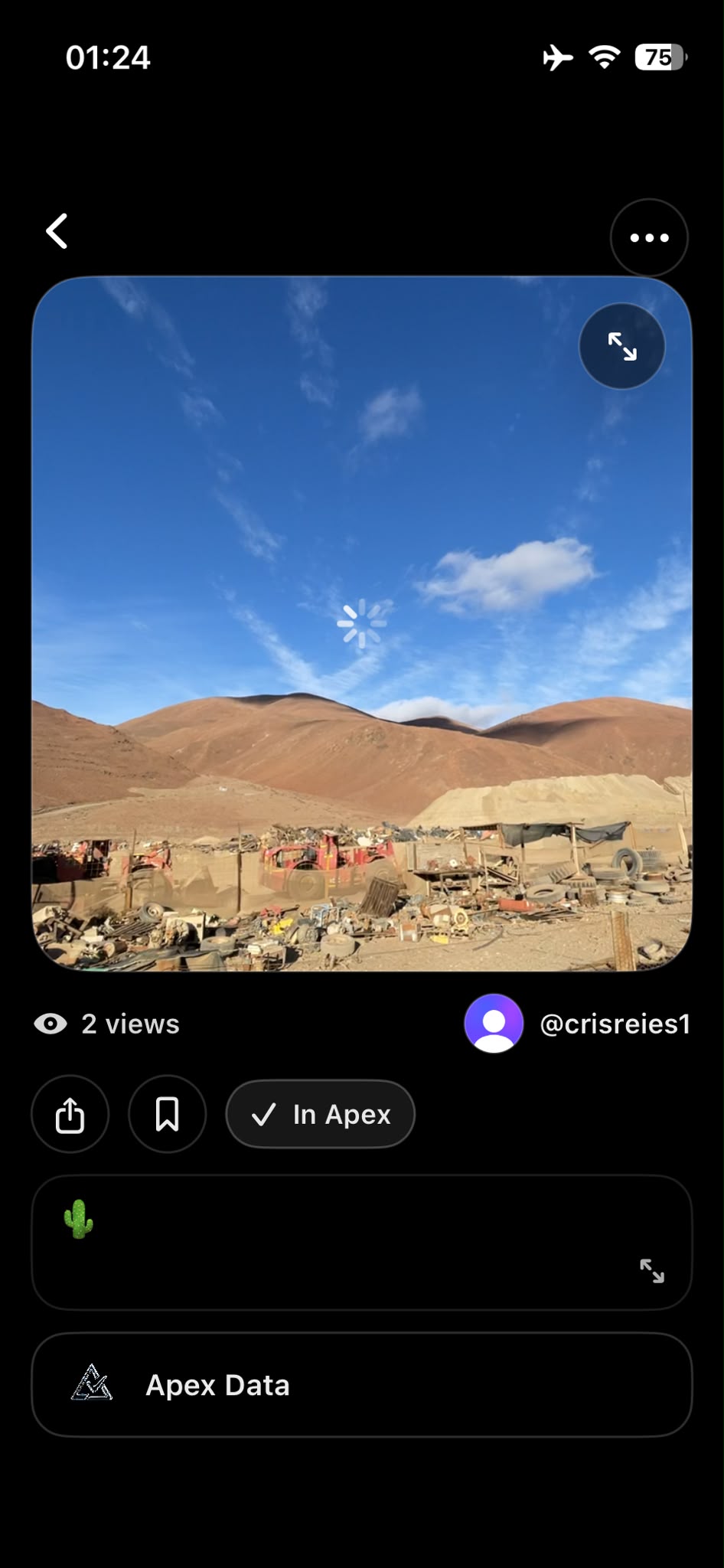
Picture / video - post ( in registry just for a little social feeling )
-
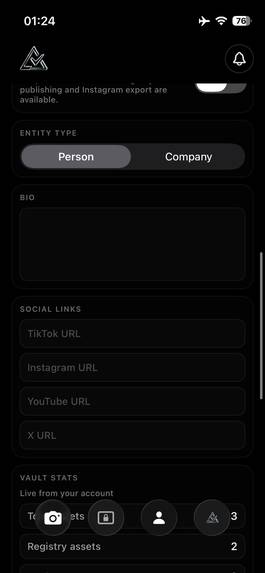
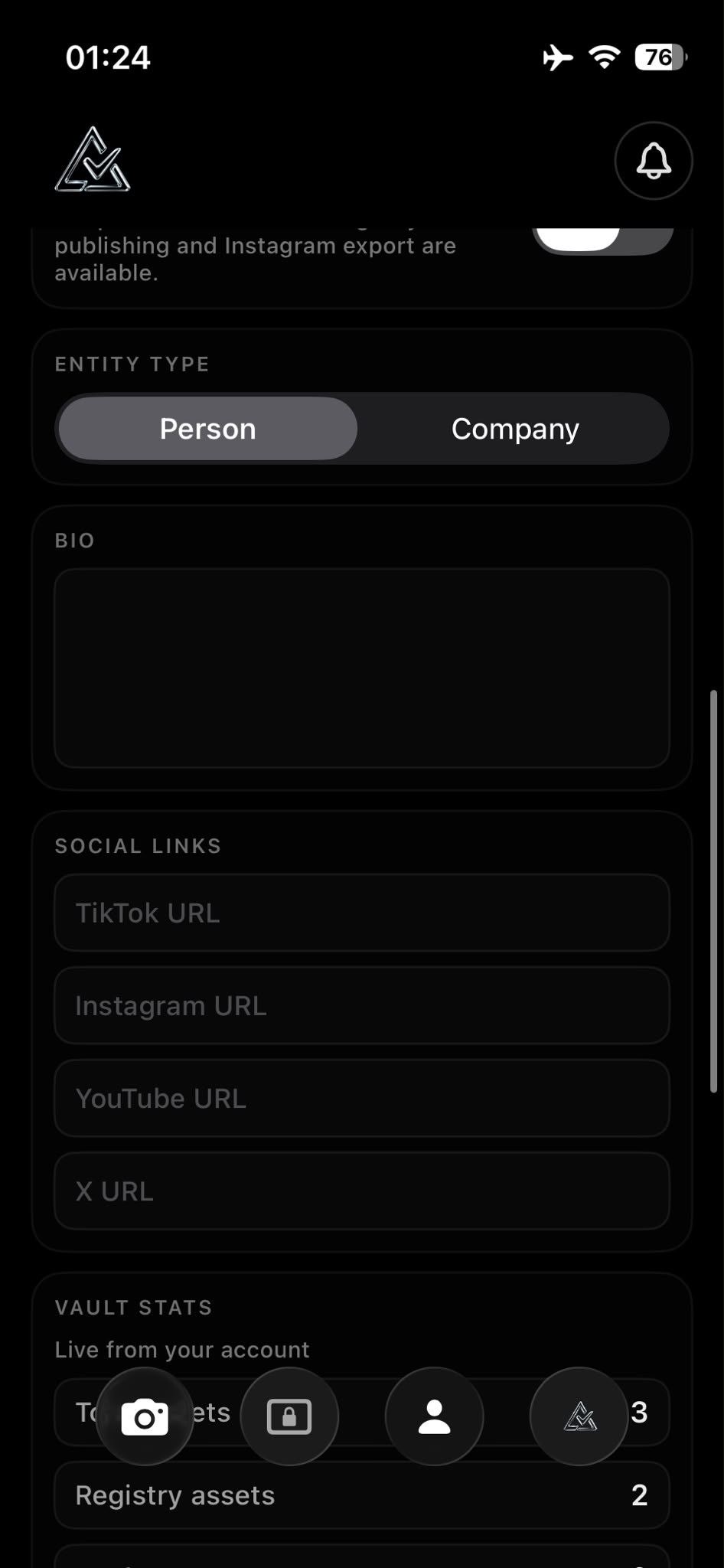
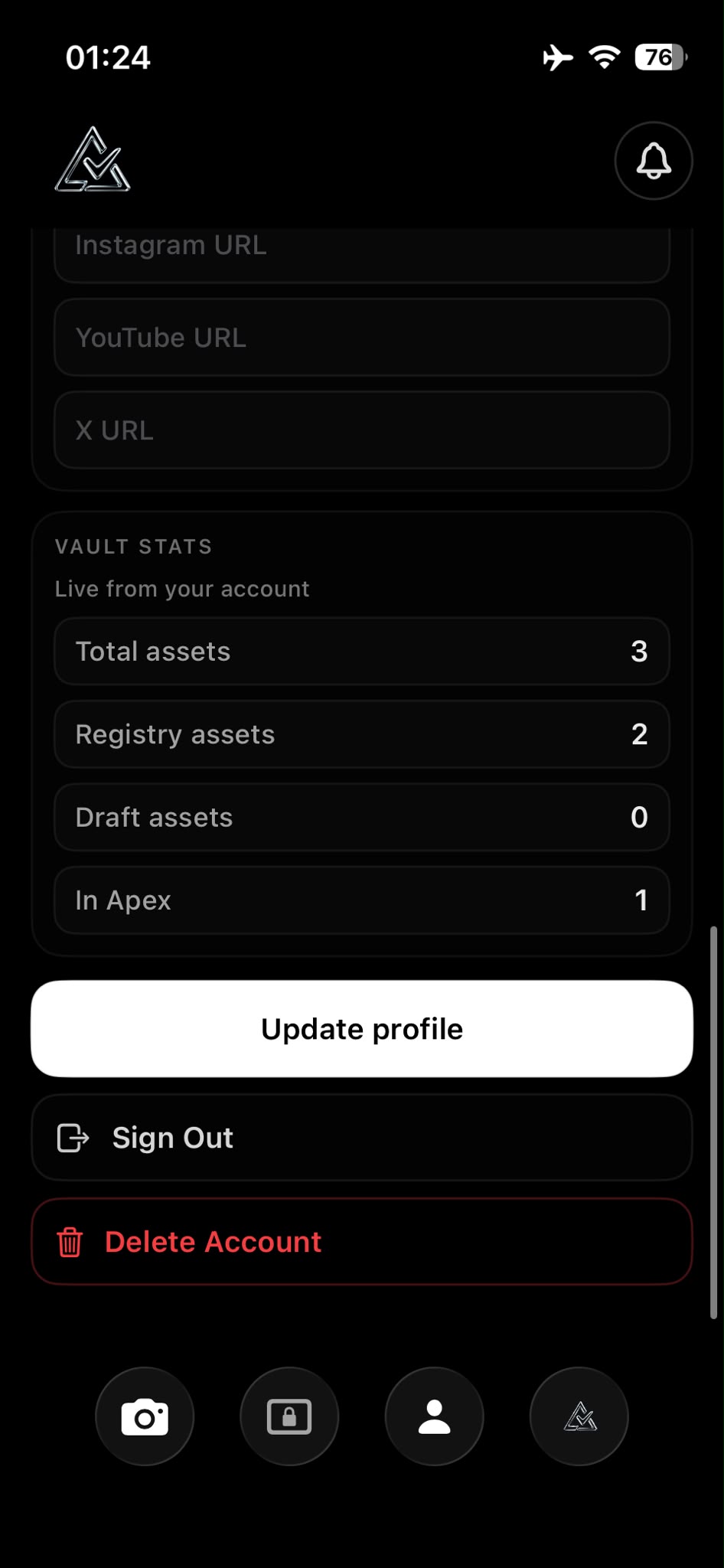
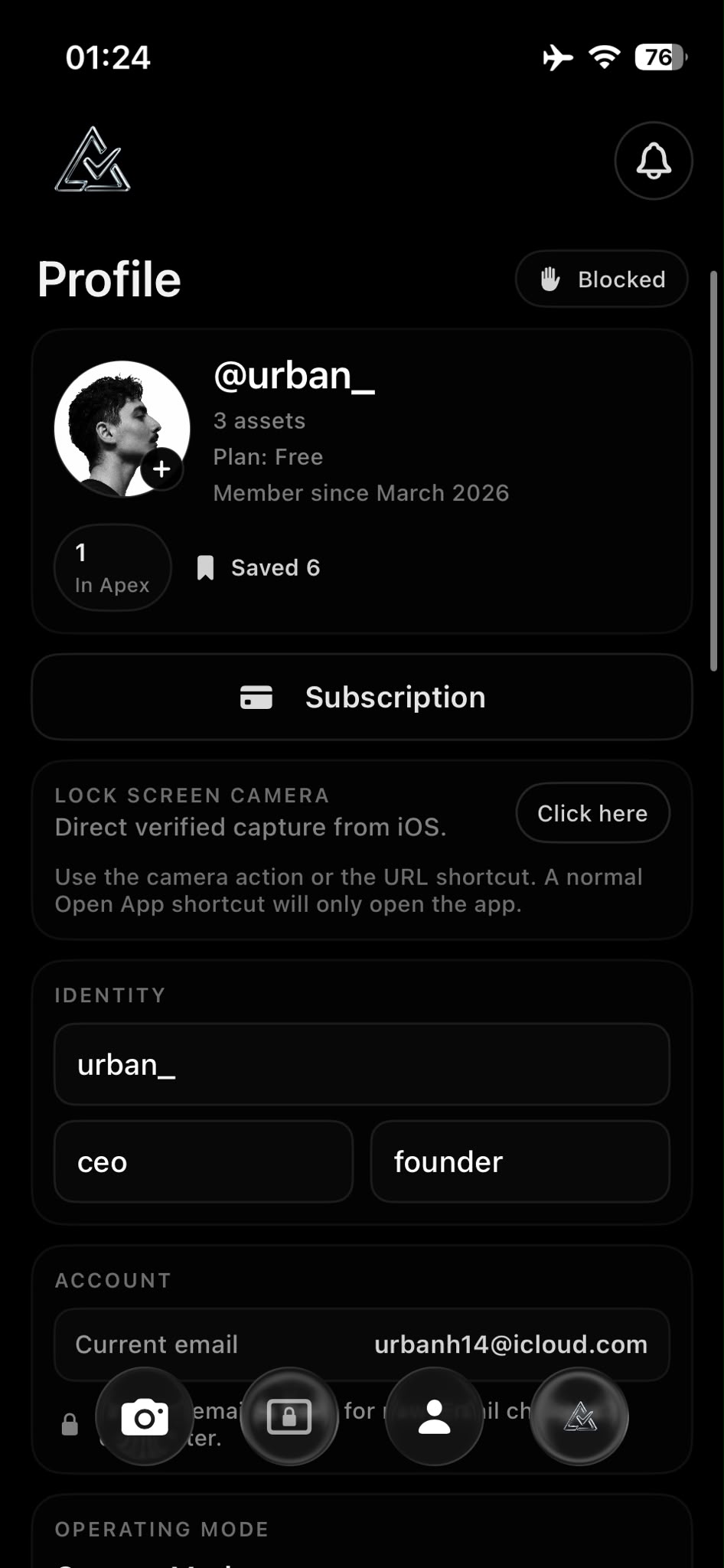
settings , bio , social handles
-
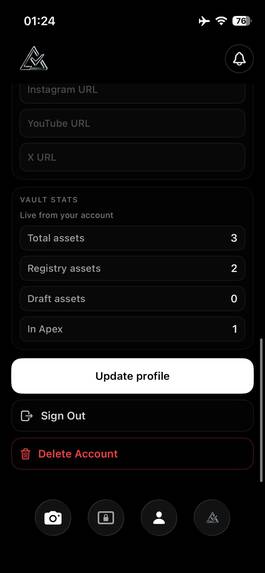
stats
-
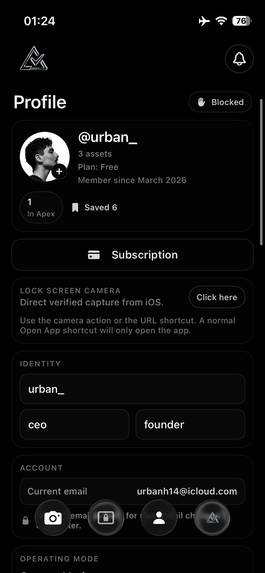
perosnal settings
-

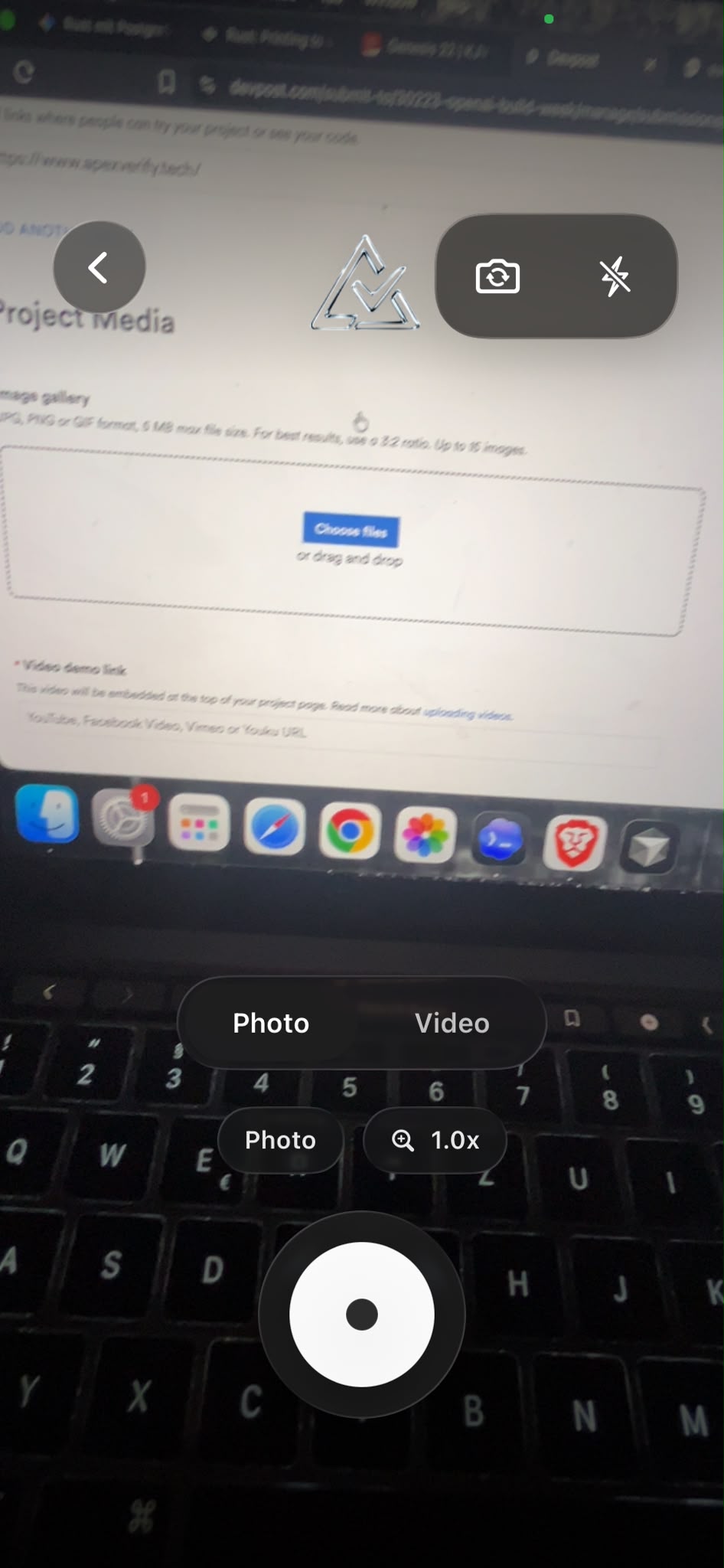
camera
-
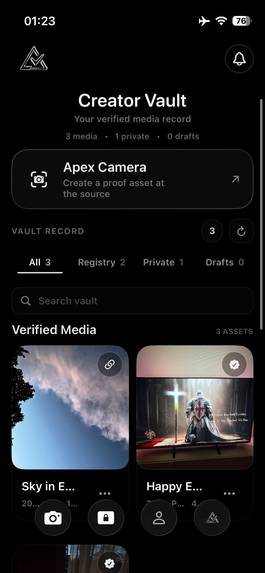
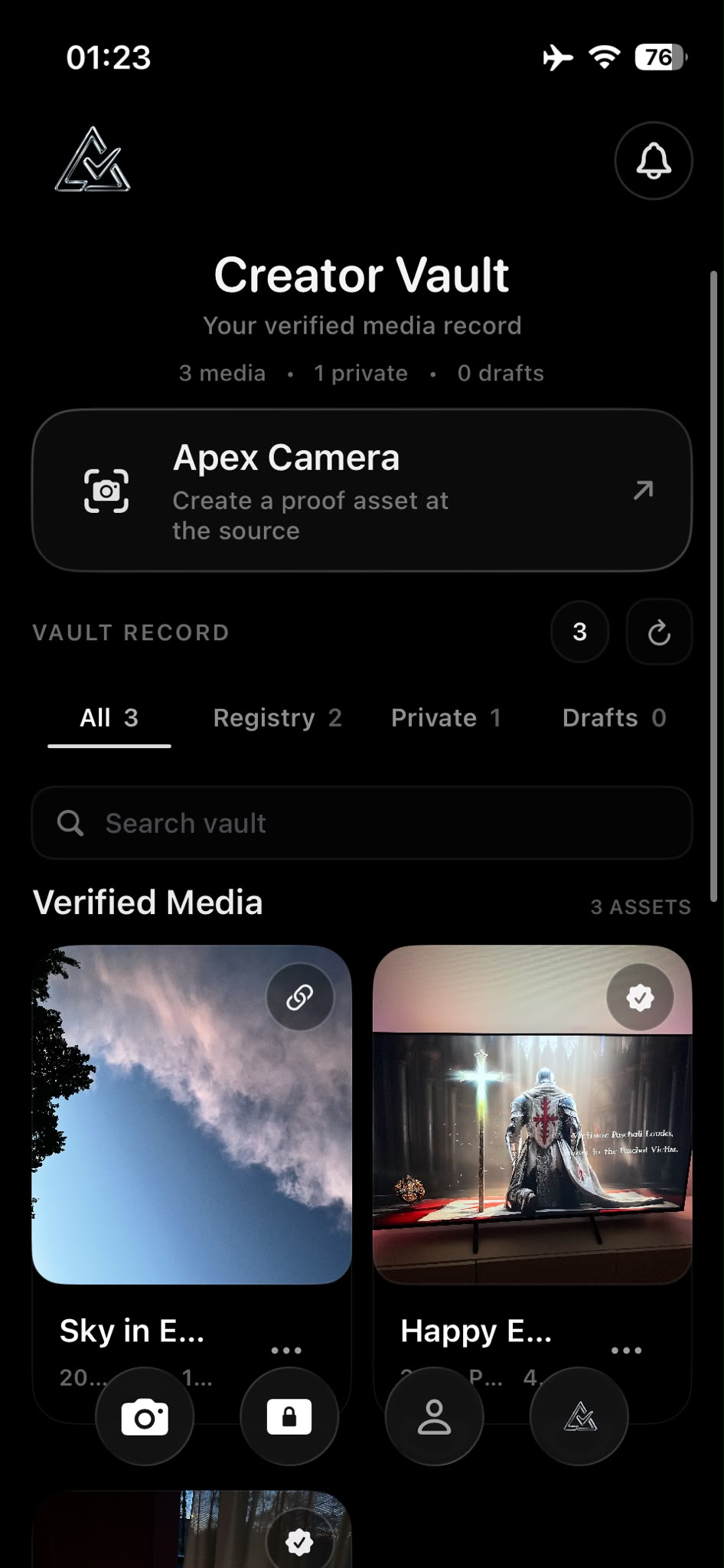
creator vault
Inspiration
Apex Verify was inspired by a simple belief: authenticity should begin when media is captured not be guessed after it is posted. As AI-generated and edited content becomes ubiquitous, we wanted to give creators a native way to preserve and communicate the origin and context of their photos and videos.
Its not another social platform , its the infrastructure layer for all visual media related content on the web!
What it does
Apex Verify is an iOS-first platform for capturing, publishing, and discovering trust-oriented media. Creators can take photos or videos in-app, attach capture metadata and a content hash, add context, and publish them to a media-first feed. Each post has an Apex Data proof surface that makes its verification context understandable.
It also supports creator profiles, private verified links, gallery and draft management, watermarked exports, moderation, and an optional Apex Pro subscription.
How we built it
We built the app natively in Swift and SwiftUI, with an iPhone camera experience for photo and video capture. Authentication uses Clerk with Apple and Google sign-in.
The backend is a TypeScript Cloudflare Worker that validates sessions and enforces core business rules. We use Neon PostgreSQL for product data and Cloudflare R2 for media storage. OpenAI moderation helps review text, images, and sampled video frames before content becomes visible. StoreKit powers the in-app Apex Pro subscription.
Challenges we ran into
The hardest part was making “verification” useful without making the product feel technical or heavy. We had to translate hashes, capture metadata, and trust-oriented manifest data into a clear creator experience.
Other challenges included reliable native video capture and upload flows, preserving fast feed performance with media-heavy content, securely handling public versus private media links, and applying practical moderation to videos without requiring prohibitively expensive full-frame analysis.
Accomplishments that we're proud of
We are proud that Apex Verify is more than a concept: it is a working native iOS product with capture, publishing, discovery, profiles, private sharing, moderation, subscriptions, and proof surfaces.
We are especially proud of:
- A native photo and video camera flow with zoom, mode switching, and deep-link shortcuts.
- Trust context attached to media through capture metadata, SHA-256 hashes, and Apex Data.
- Private, time-limited verified sharing links.
- A media-first creator experience that deliberately reduces public vanity metrics.
- Server-side enforcement for identity, quotas, privacy, moderation, and publishing rules.
What we learned
We learned that trust features only matter if they are legible to everyday users. The underlying infrastructure can be sophisticated, but the product needs to stay intuitive: capture, add context, publish, and let the proof be available when it is needed.
We also learned that authenticity, safety, and privacy must be designed together. A public proof system cannot treat private media as an afterthought, and moderation needs to preserve—not overwrite—the original media record and verification context.
What's next for Apex Verify
Next, we want to deepen the trust layer with automatic blockchain proof anchoring: storing proof hashes on-chain without putting media files or private data on-chain. We also plan to further modularize the backend, improve caching and test coverage, and expand creator distribution through watermark-preserving exports to existing social platforms.
Longer term, Apex Verify can become infrastructure for verified creator media: capture once, preserve provenance, and distribute everywhere.
Built With
- apple
- avfoundation
- bun
- c2pa
- clerk
- cloudflare
- ios
- moderation
- neon
- postgresql
- r2
- resend
- sha-256
- storekit
- swift
- swiftui
- typescript
- workers
- wrangler
- xcode

Log in or sign up for Devpost to join the conversation.