🚑 EmergencySync
Inspiration
In a medical emergency, every minute matters. We noticed that a major gap in emergency care is not always the lack of medical facilities, but the lack of coordination between the patient, ambulance, and hospital.
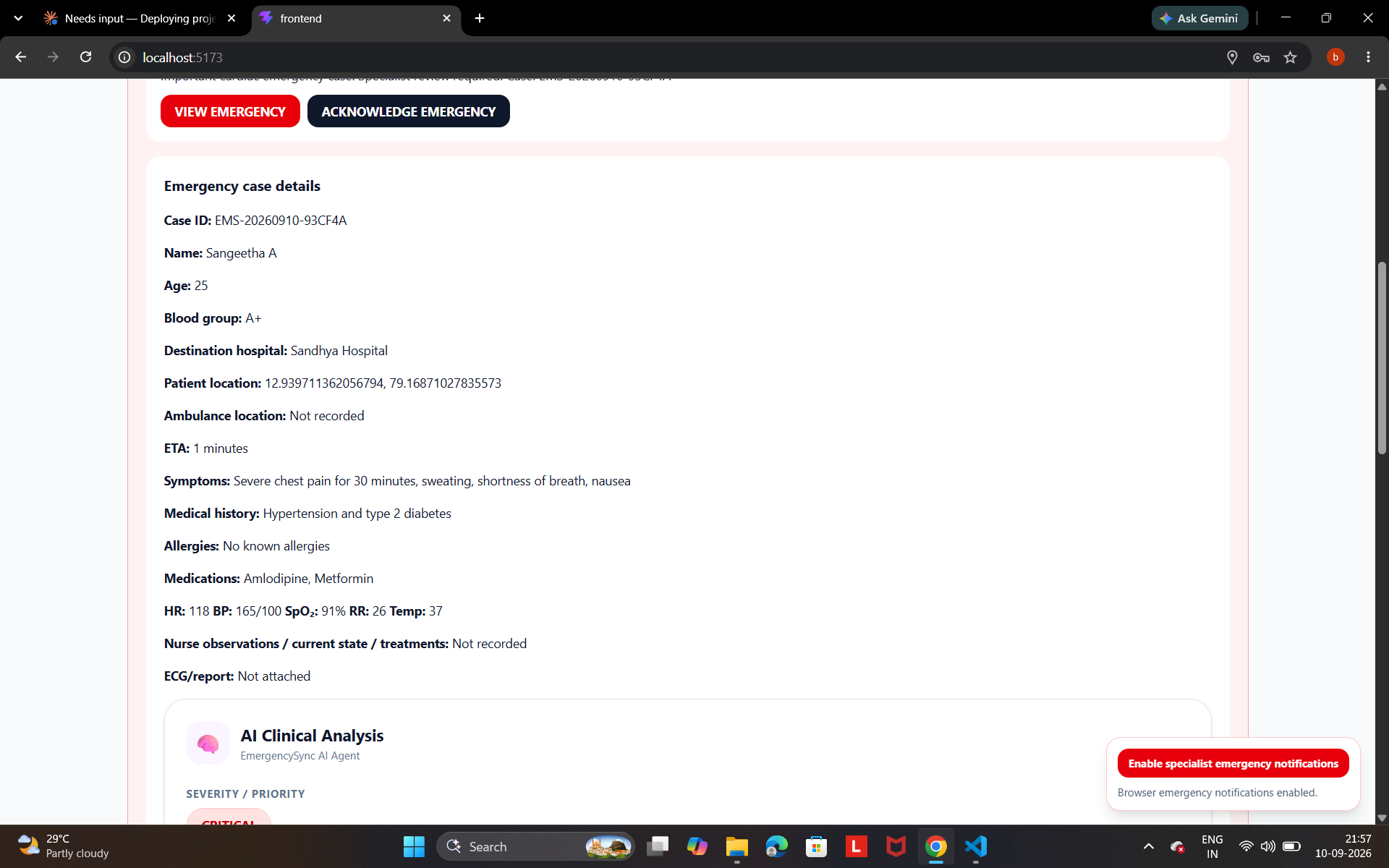
Usually, the hospital starts preparing only after the patient reaches the emergency department. Important information such as symptoms, vitals, ECGs, and medical reports may also be communicated late or manually.
We wanted to build a system that could change this process.
Our inspiration was a simple question:
What if the hospital could start preparing for the patient while the ambulance is still on the way?
This led us to build EmergencySync, a platform that connects patients, ambulance teams, hospitals, and specialists through a single emergency workflow.
What It Does
EmergencySync is an AI-assisted ambulance-to-hospital emergency coordination platform.
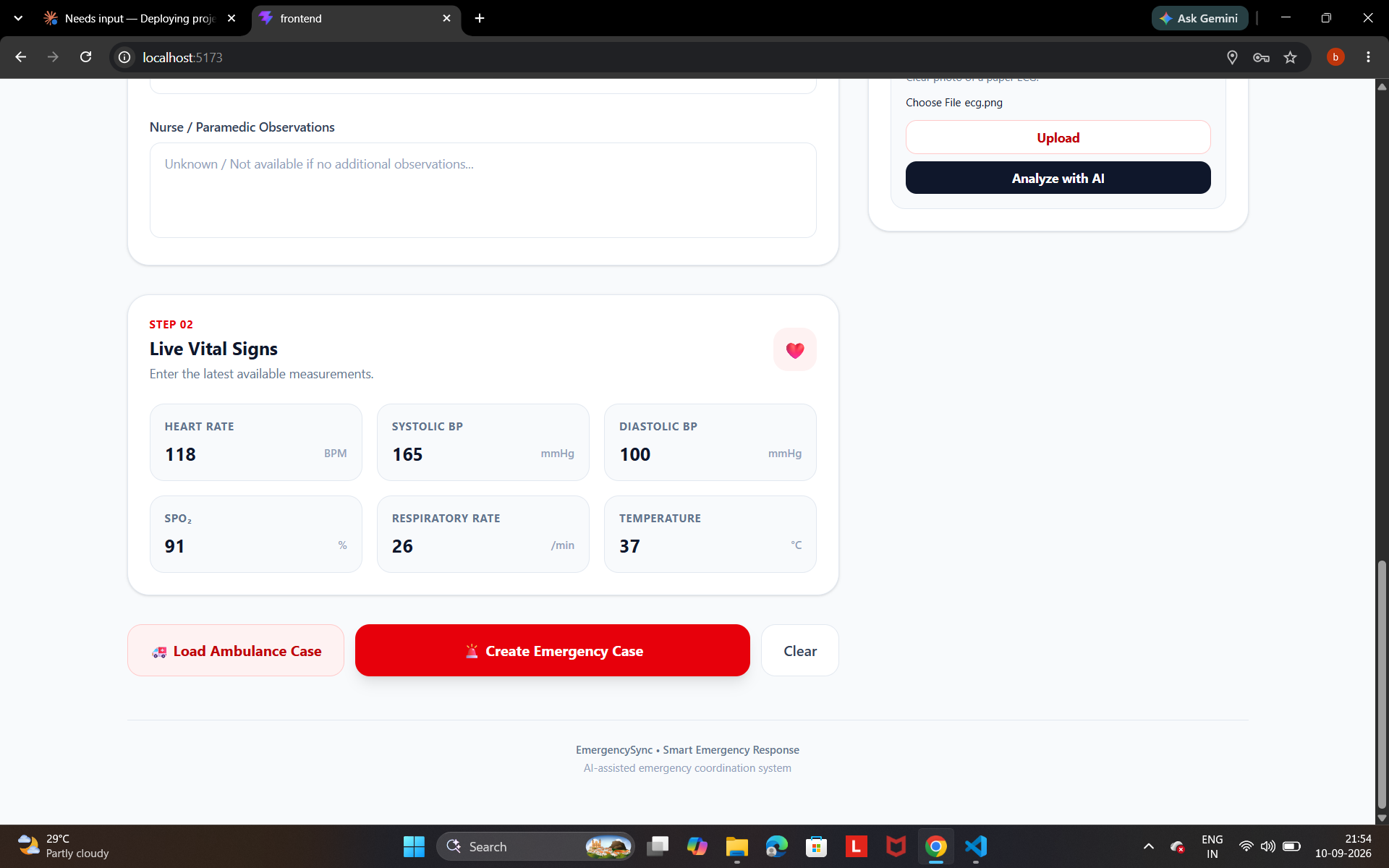
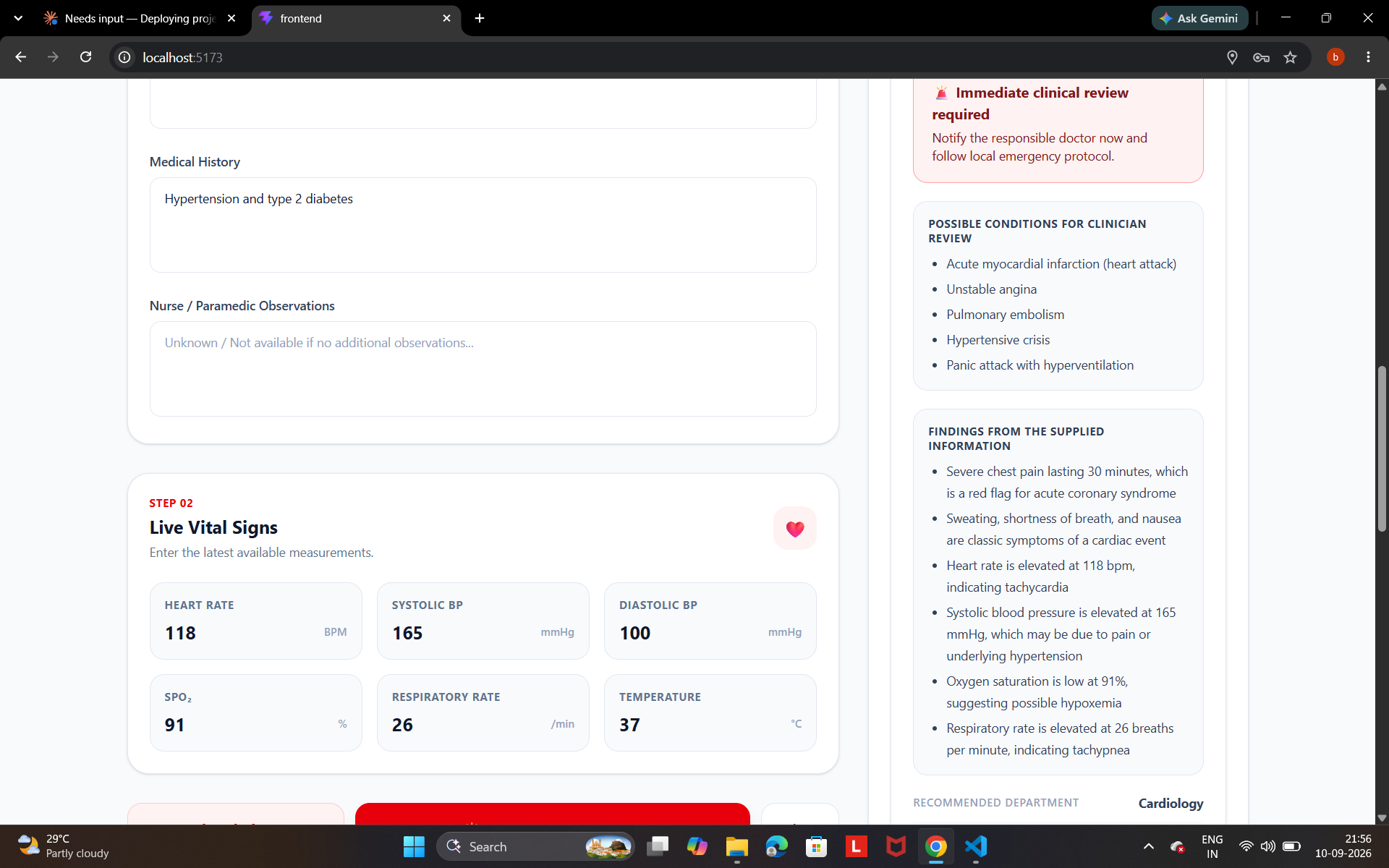
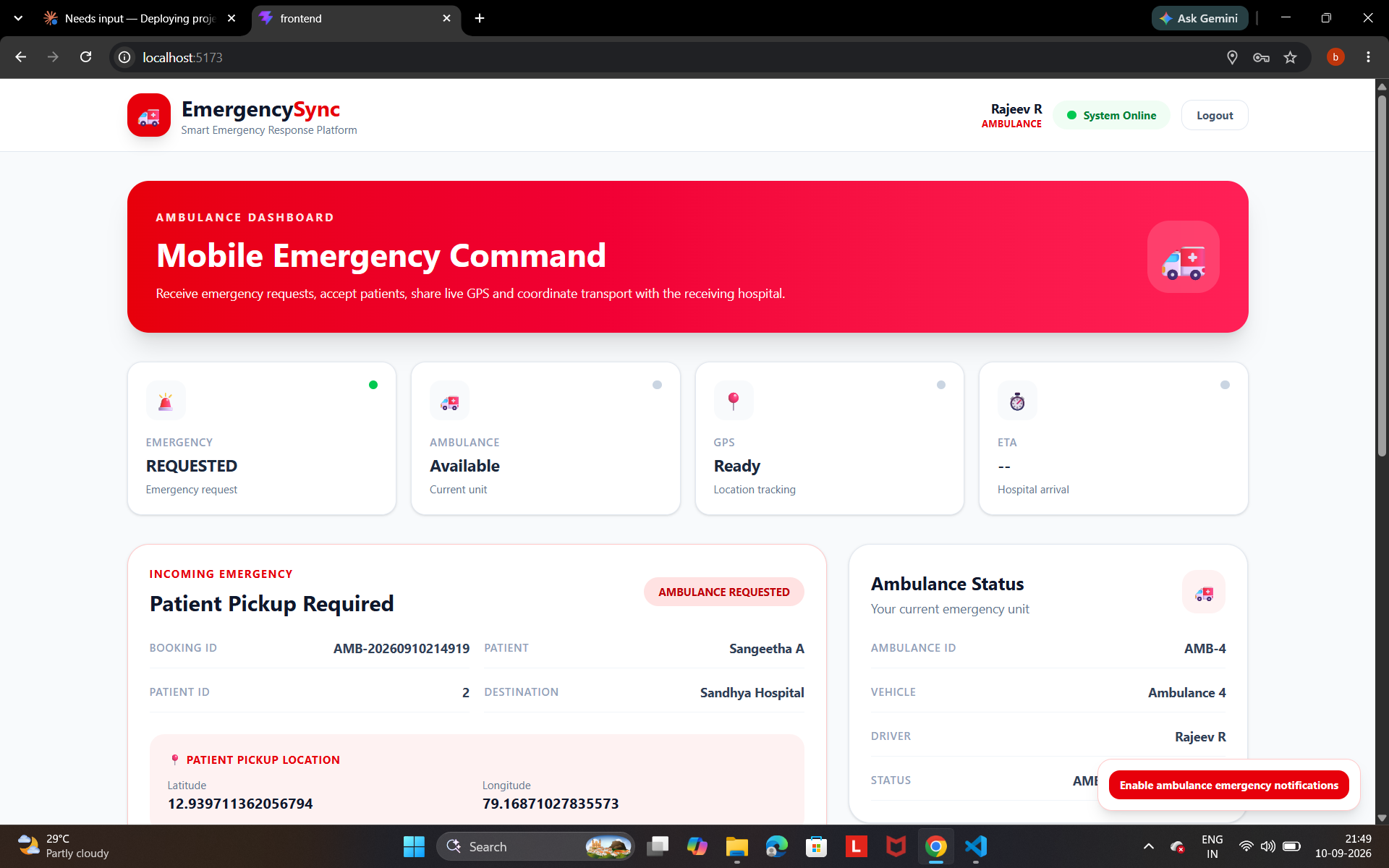
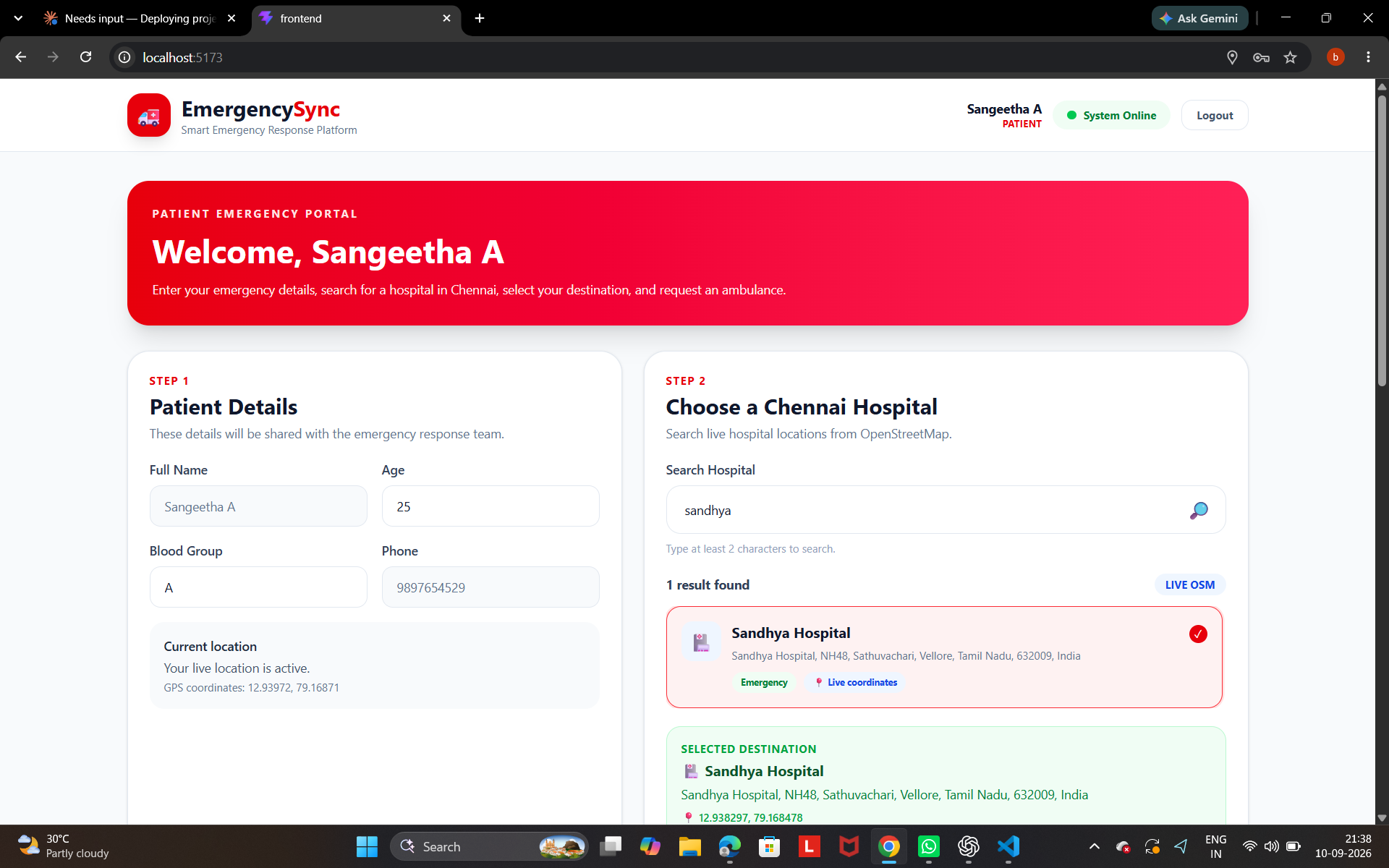
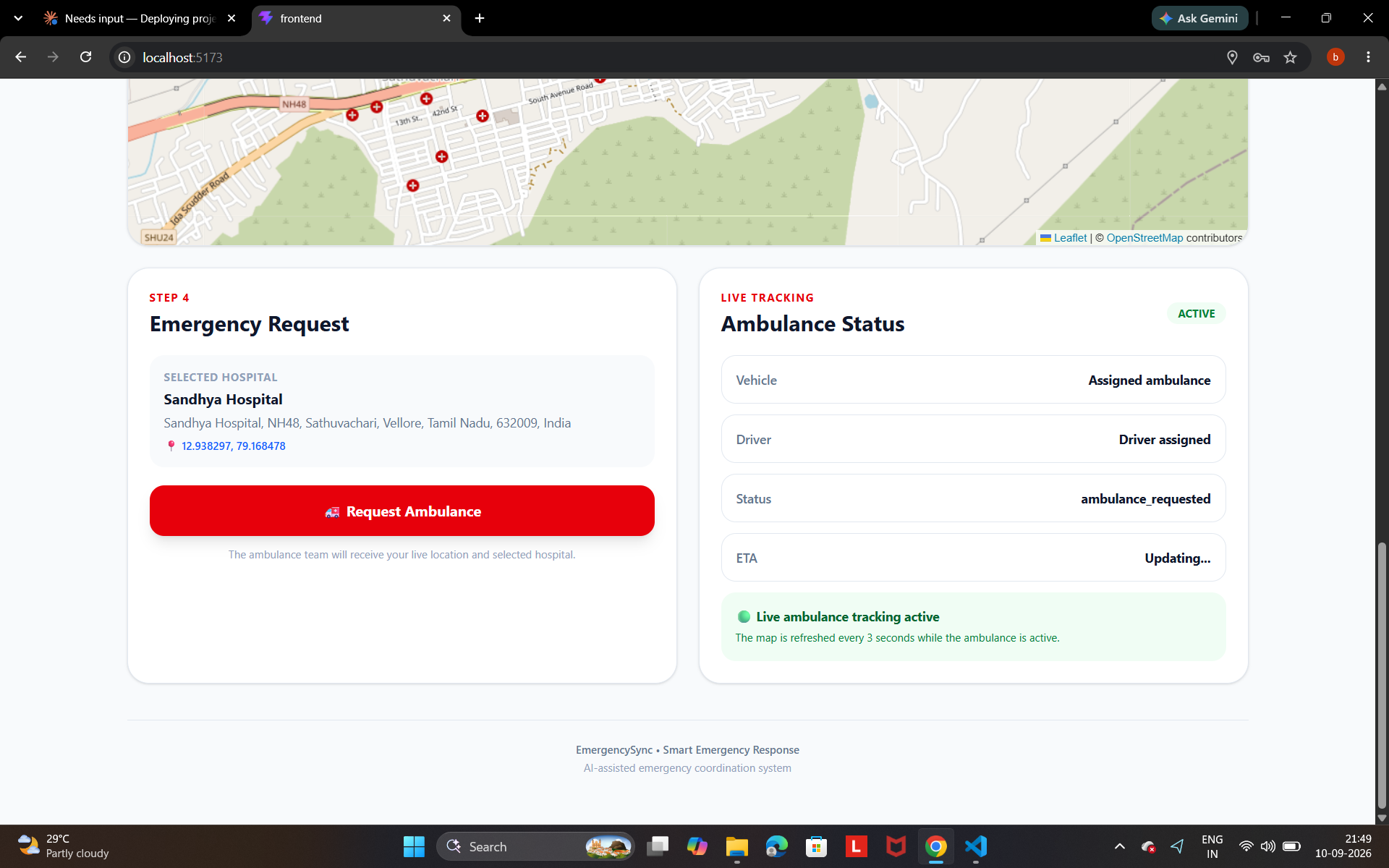
A patient or family member can create an emergency request, provide symptoms and vital information, select a preferred hospital, and request an ambulance.
The system then coordinates the emergency journey:
Patient → Ambulance → AI Analysis → Hospital → Specialist
Key features include:
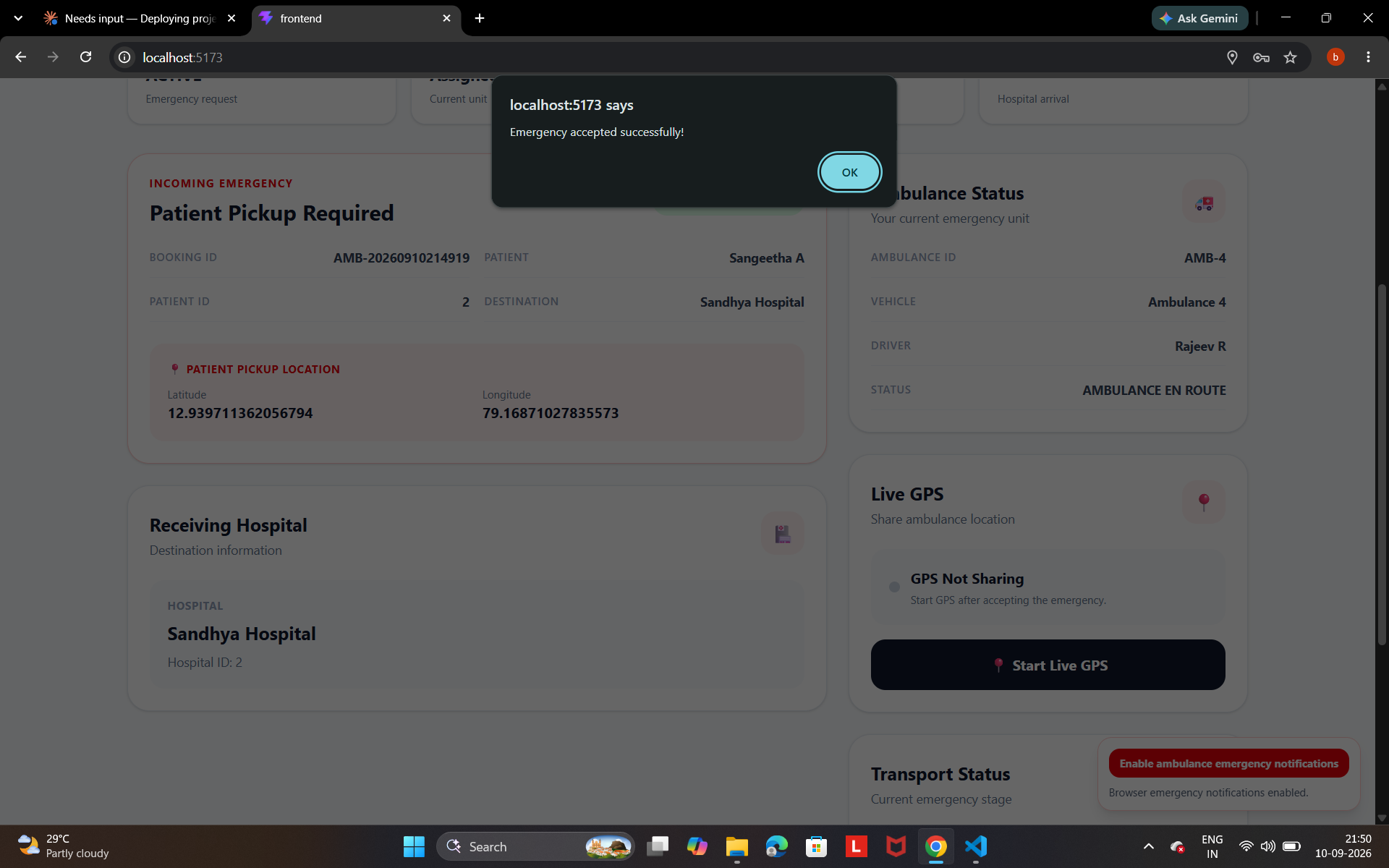
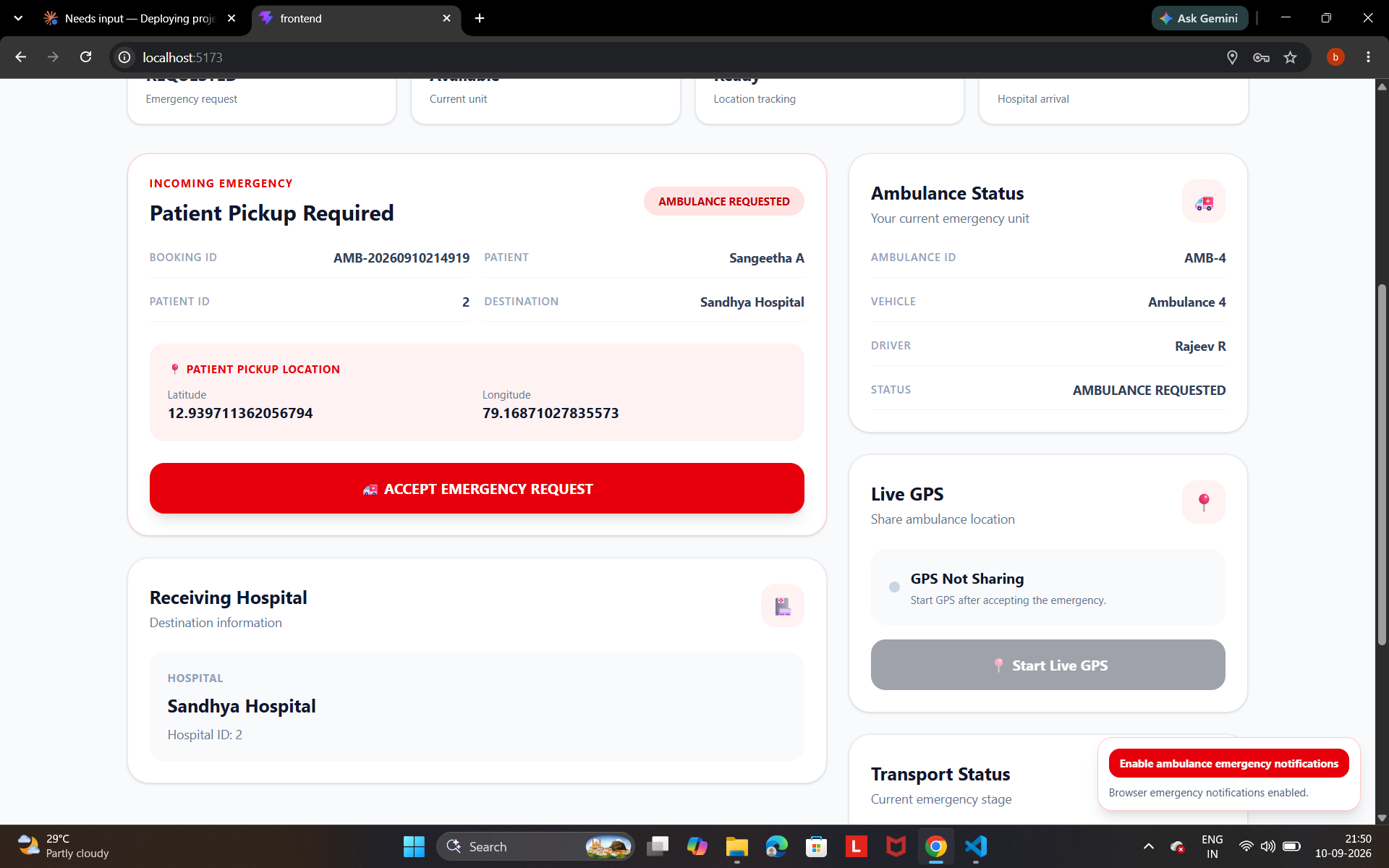
🚑 Ambulance booking and emergency request management
🏥 Hospital selection and coordination
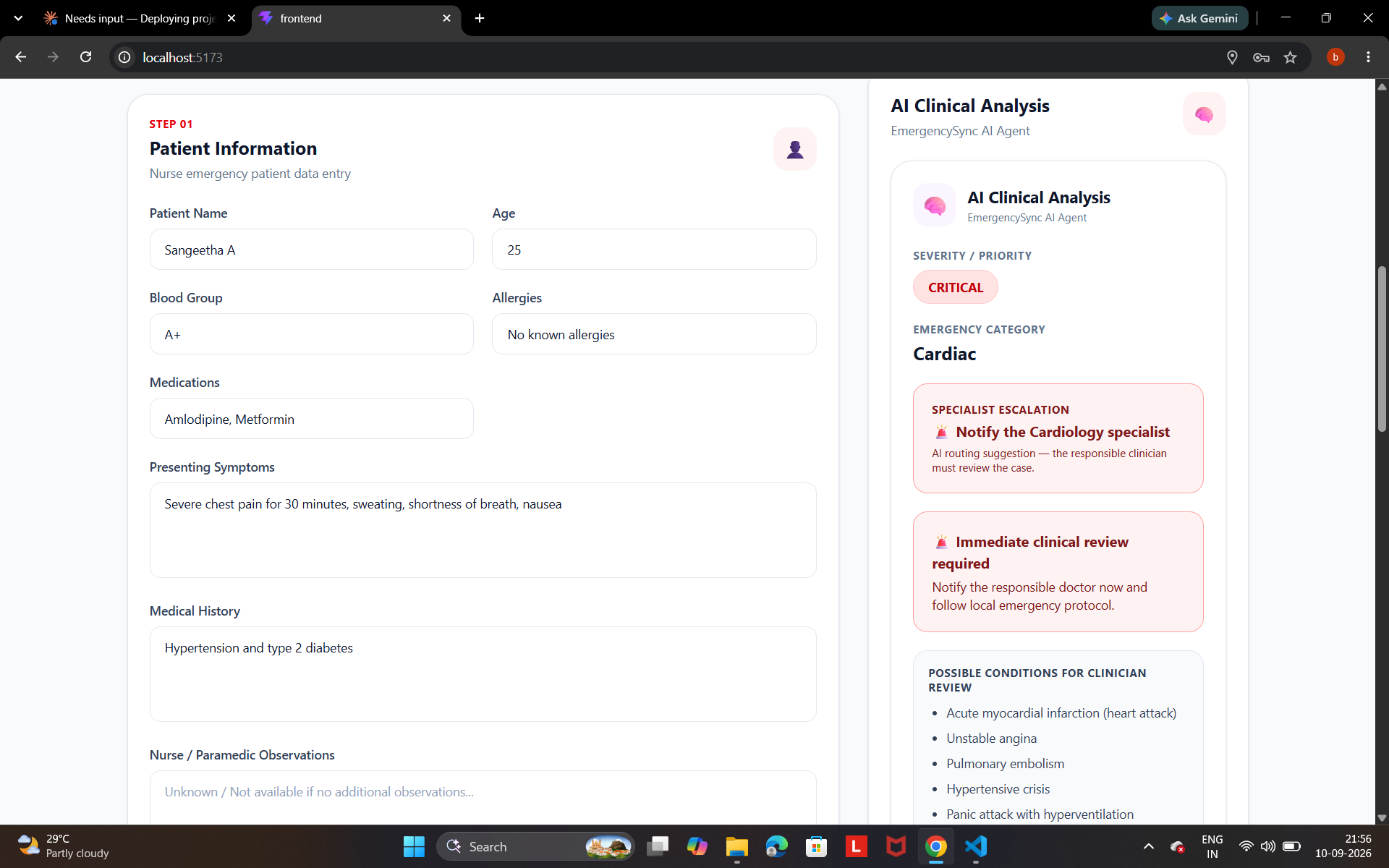
🤖 AI-assisted emergency categorization
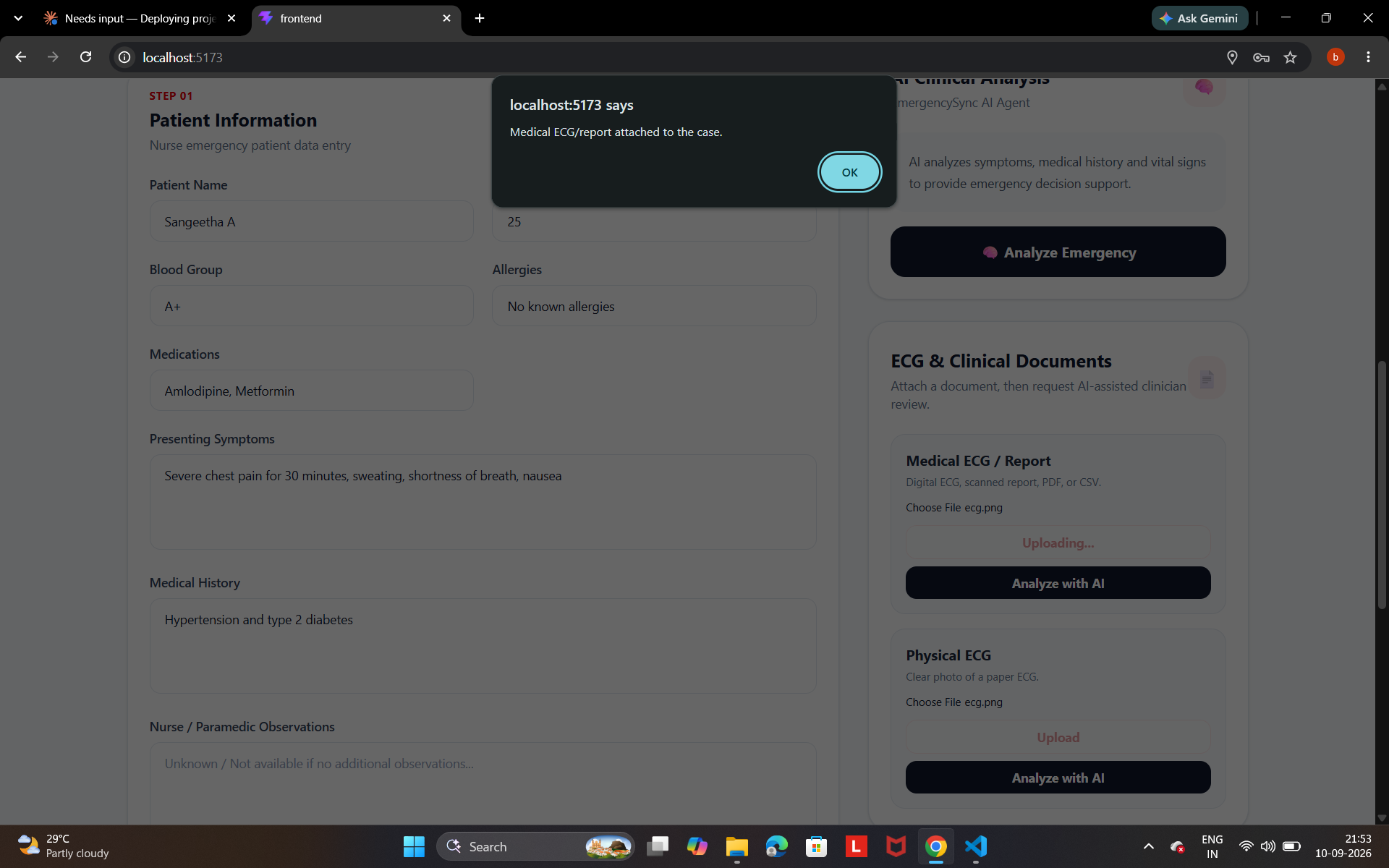
❤️ ECG and medical report/file support
📍 Patient and ambulance location coordination
🚨 Hospital emergency notifications
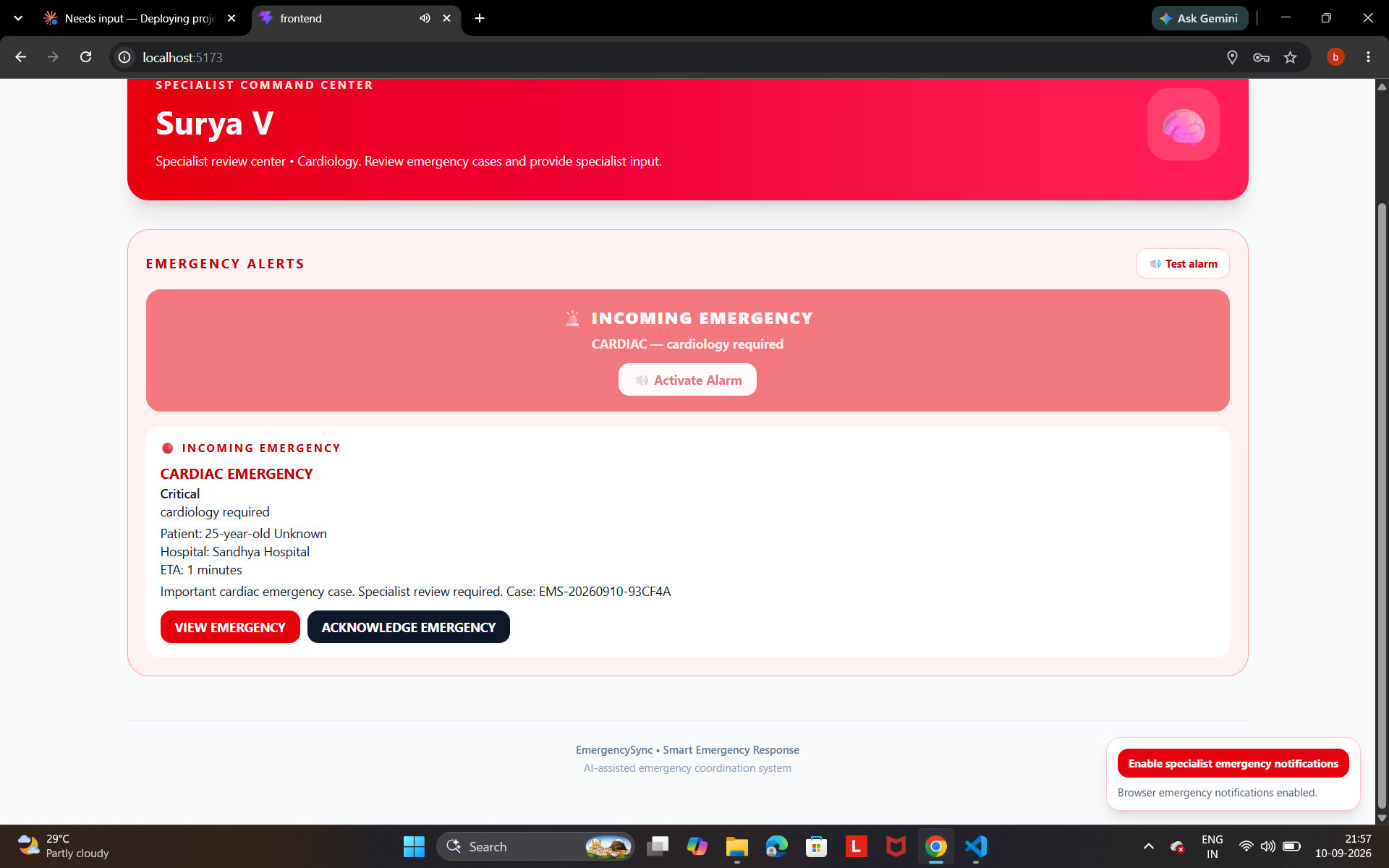
👨⚕️ Specialist alerts based on emergency category
🔊 Voice/audio emergency alerts
🔐 Role-based authentication and access
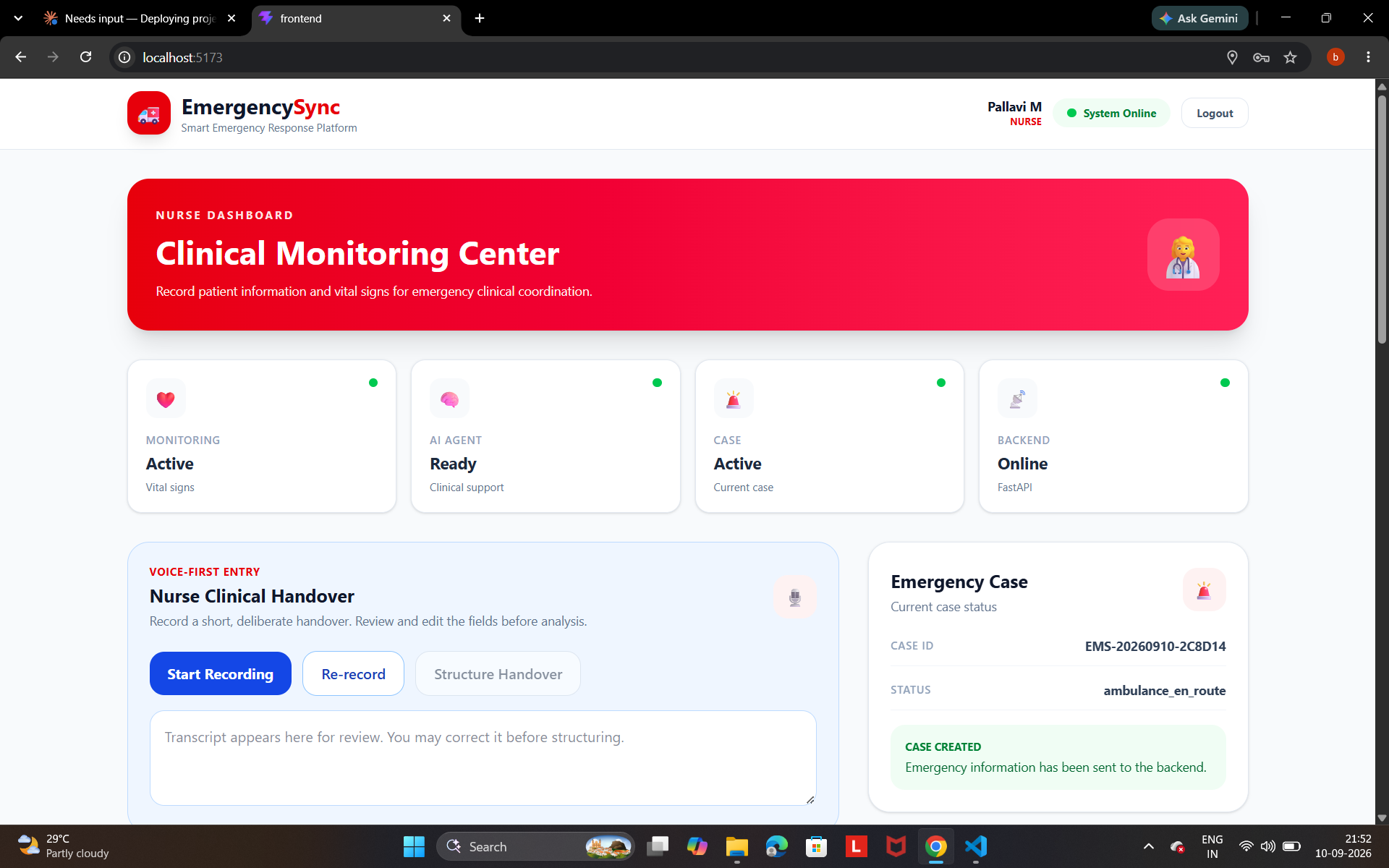
📊 Separate workflows for patients, ambulance/nursing teams, specialists, and hospitals
Emergency cases can be categorized into areas such as Cardiac, Neurological, Respiratory, Trauma, Environmental, Metabolic, and Poisoning, helping the receiving hospital understand the nature of the emergency before arrival.
EmergencySync is designed as a clinical decision-support and coordination system, not as a replacement for doctors or medical diagnosis.
How We Built It
We built EmergencySync as a full-stack application with a React-based frontend and a Python FastAPI backend.
Frontend
We used:
React
TypeScript
Vite
Role-based dashboards
Responsive UI
Different interfaces were created for the patient, ambulance/nursing team, specialist, and hospital workflows.
Backend
The backend was built using:
Python
FastAPI
REST APIs
JWT authentication
CORS
SQLite
ORM-based database operations
The backend manages authentication, emergency cases, ambulance assignments, hospital coordination, file handling, locations, and AI analysis.
AI Layer
We integrated a backend AI workflow using Ollama/local LLM-based processing to analyze emergency information and assist with categorization and prioritization.
The AI receives relevant emergency information such as symptoms and vitals and produces structured emergency insights that can be used by the coordination workflow.
Location Services
For hospital discovery and location-related functionality, we integrated:
OpenStreetMap
Nominatim
Location-based hospital search
This allows the system to connect emergency requests with hospitals and support patient/ambulance location coordination.
Challenges We Ran Into
Building EmergencySync was challenging because it combines several systems that normally operate independently.
- Integrating AI into a Real Workflow
One of our biggest challenges was ensuring that AI was not just a chatbot sitting on the frontend.
We wanted the AI analysis to be part of the actual backend emergency workflow, so that the result could influence how an emergency case is categorized and communicated.
- Real-Time Emergency Coordination
Connecting the patient, ambulance, hospital, and specialist workflows required us to carefully manage emergency states and assignments.
For example:
Requested → Accepted → En Route → Hospital Notification → Arrival
Keeping these states synchronized was challenging.
- Location Handling
We had to deal with hospital search, patient locations, ambulance locations, and map-based services. External location services also introduced issues such as response delays and availability limitations.
- Designing for Different Roles
A patient should not see the same information as an ambulance team or specialist.
Designing appropriate dashboards and permissions for each role required us to think about the entire emergency journey rather than just individual screens.
- Medical Safety
We had to be careful not to present AI output as a medical diagnosis.
The system therefore treats AI as an assistive layer, while clinical decisions remain with qualified healthcare professionals.
Accomplishments We're Proud Of
We are proud that we were able to build an end-to-end working prototype rather than only a concept or UI design.
Some accomplishments we are particularly proud of:
🚑 Built an end-to-end ambulance-to-hospital emergency workflow
🤖 Integrated AI-assisted emergency categorization into the backend
❤️ Added ECG and medical report support
📍 Implemented patient and ambulance location coordination
🏥 Built hospital selection and emergency notification workflows
👨⚕️ Created specialist-oriented emergency alerts
🔐 Implemented authentication and role-based access
💻 Developed multiple role-specific dashboards
🔊 Added voice/audio assistance for emergency notifications
🌐 Integrated OpenStreetMap/Nominatim for hospital location search
Most importantly, we transformed our original idea into a working prototype where the different parts of the emergency journey communicate with each other.
What We Learned
Building EmergencySync taught us that solving a real-world problem is much more than building individual features.
We learned how to:
Design a complete full-stack application
Build and connect REST APIs using FastAPI
Integrate AI into a backend application
Work with authentication and role-based authorization
Handle file uploads and emergency information
Work with geolocation and map services
Design different workflows for different user roles
Debug frontend-backend integration issues
Think about AI safety and responsible medical use
Design systems around real-world workflows rather than just screens
Most importantly, we learned that good technology should reduce friction during critical moments, not add more complexity.
What's Next for EmergencySync?
EmergencySync is currently a prototype, but we see significant potential to take it further.
Our next steps include:
🚦 Smarter Ambulance Routing
Integrate real-time traffic information and intelligent route optimization to improve ambulance ETA.
🏥 Hospital Capacity Integration
Connect with hospital systems to provide information about:
Emergency department availability
ICU availability
Critical care resources
Specialist availability
❤️ Advanced ECG Analysis
Extend the system to support deeper ECG analysis while keeping qualified clinicians in the decision-making loop.
📱 Mobile Application
Develop dedicated Android/iOS applications for patients, ambulance teams, and healthcare professionals.
🔔 Real-Time Notifications
Add push notifications and real-time WebSocket communication for faster emergency updates.
🌐 Multilingual Emergency Assistance
Support multiple Indian languages so that language does not become another barrier during an emergency.
🔐 Production-Grade Healthcare Security
Strengthen privacy, authorization, auditing, and data protection to meet the requirements of real-world healthcare environments.
🤝 Real-World Hospital Integration
Our long-term goal is to connect EmergencySync with hospitals and emergency service providers so that pre-arrival coordination can become part of the actual emergency response process.

Log in or sign up for Devpost to join the conversation.