-
-
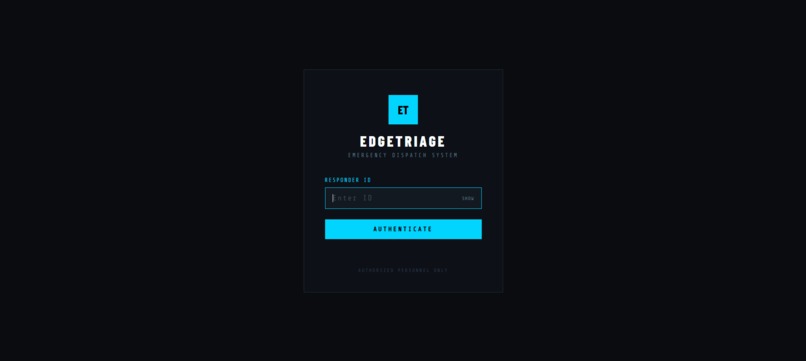
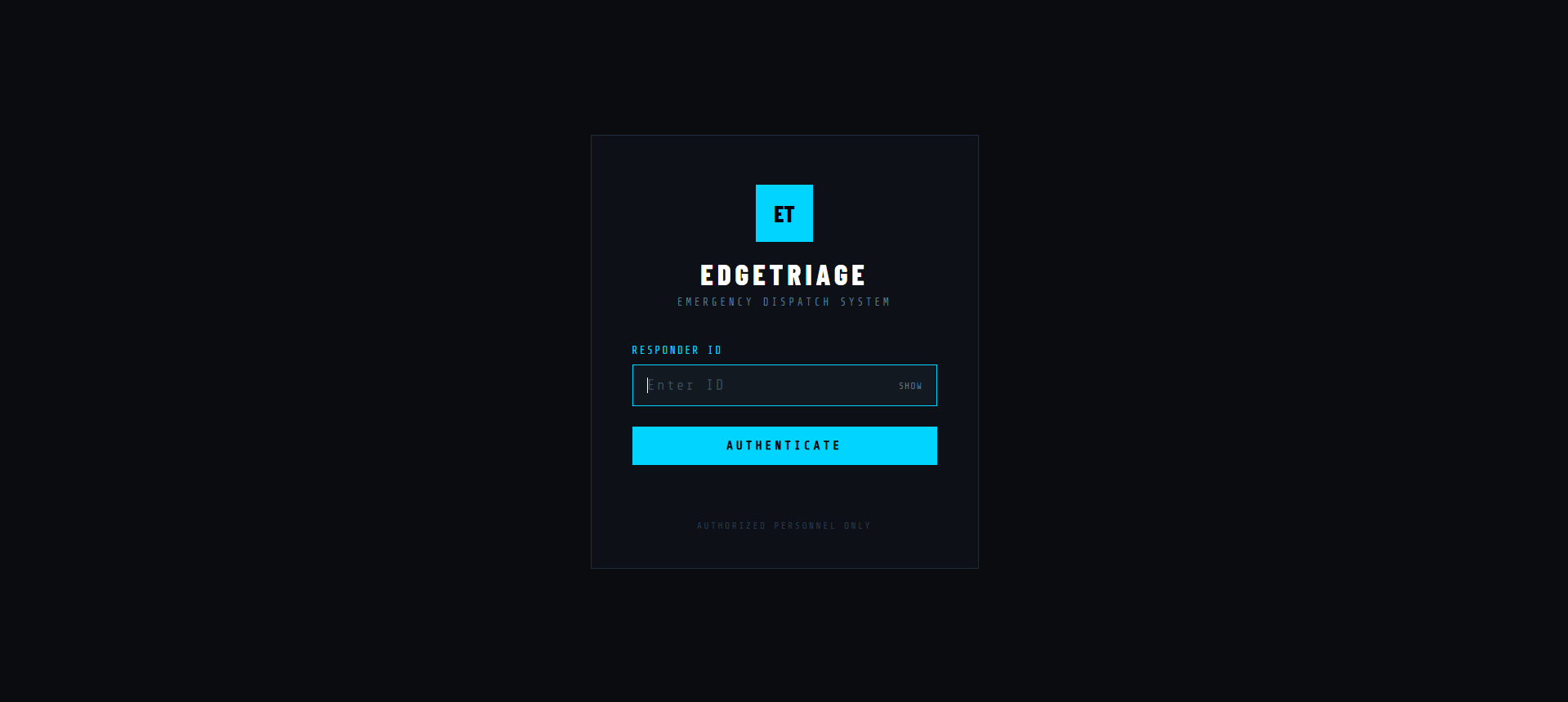
Operator Sign In
-

Loading Screen
-
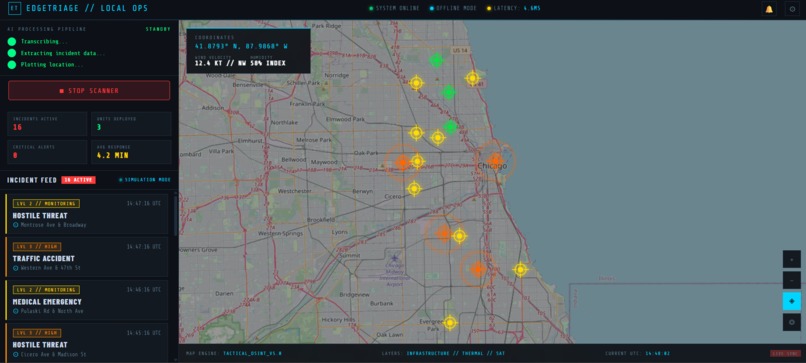
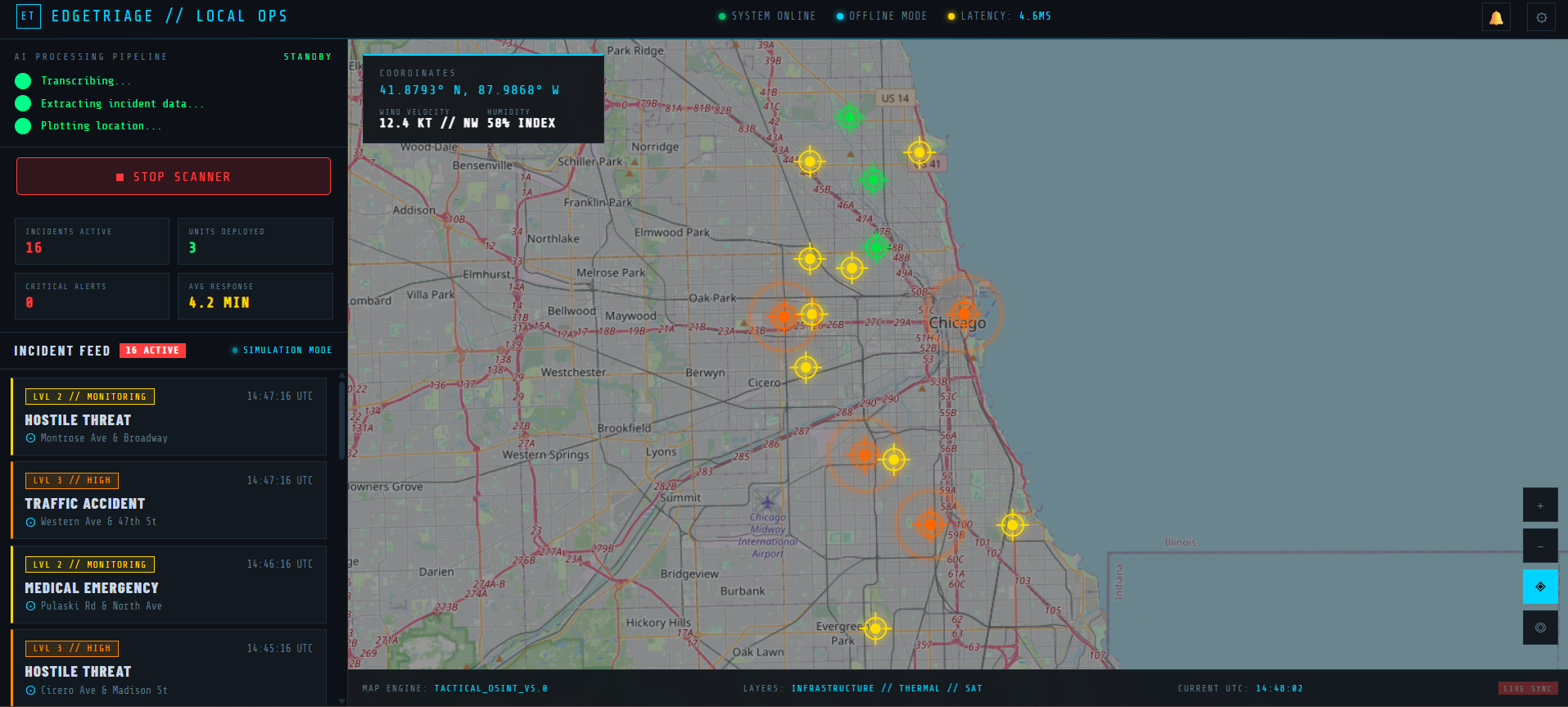
Dashboard

Inspiration
Three out of four of us are biomedical engineering students, so when we sat down to think about what to build, health and societal impact were non-negotiable. We kept coming back to one question: what happens to emergency response when the infrastructure fails? No internet, no cloud, no communication backbone. That is exactly when people need help the most, and existing tools fall apart. Hamid brought real context to this, having hands-on experience with emergency response hardware. That grounded the idea quickly and we ran with it.
What it does
EdgeTriage is an offline-first emergency dispatch triage system. It listens to emergency radio audio, transcribes it locally using faster-whisper, runs it through a local LLM via Ollama, and plots classified incidents on a live map in seconds. No cloud APIs. No internet required. Operators get instant situational awareness with severity-coded map markers, a live incident feed, and a real-time AI processing pipeline, all running entirely on local hardware.
How we built it
We split into our strengths early. Devansh owned the entire backend, building the FastAPI server, the STT pipeline, the LLM integration, and getting a working MVP up faster than any of us expected. Tosin handled the frontend, designing and building the tactical dashboard UI from scratch with a focus on making it feel like a real emergency operations console. Aditya drove brainstorming and ideation, kept the vision sharp, and jumped into the code wherever needed, ensuring the team stayed aligned and focused. Hamid brought his emergency response knowledge to shape how the system should actually behave in the field and kept the team communicating.
Challenges we ran into
A lot. Windows compatibility with bash scripts, execution policy blocks, getting Ollama recognized on PATH, merge conflicts, model performance tuning. None of it was smooth. But we pushed through every single one and came out with something we are genuinely proud of.
What we learned
The biggest takeaway is how much we depend on systems we do not control. The cloud can go down. The internet can go down. In a disaster scenario, it will go down. We learned that building resilient, locally-run AI pipelines is not just possible, it is necessary. If a tool is only useful when everything is working, it is not a tool you can rely on when it matters most. EdgeTriage works precisely when everything else does not.
Built With
- broadcastify
- css
- ctranslate2
- fastapi
- faster-whisper
- html
- javascript
- leaflet.js
- ollama
- openmhz
- openstreetmap
- phi-3-mini
- python
- uvicorn


Log in or sign up for Devpost to join the conversation.