-
-
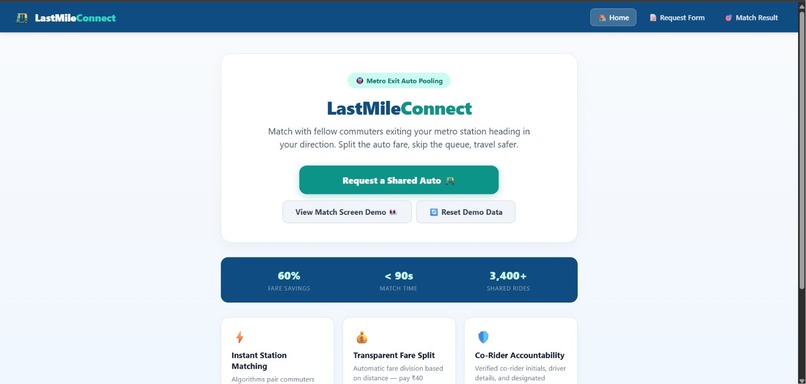
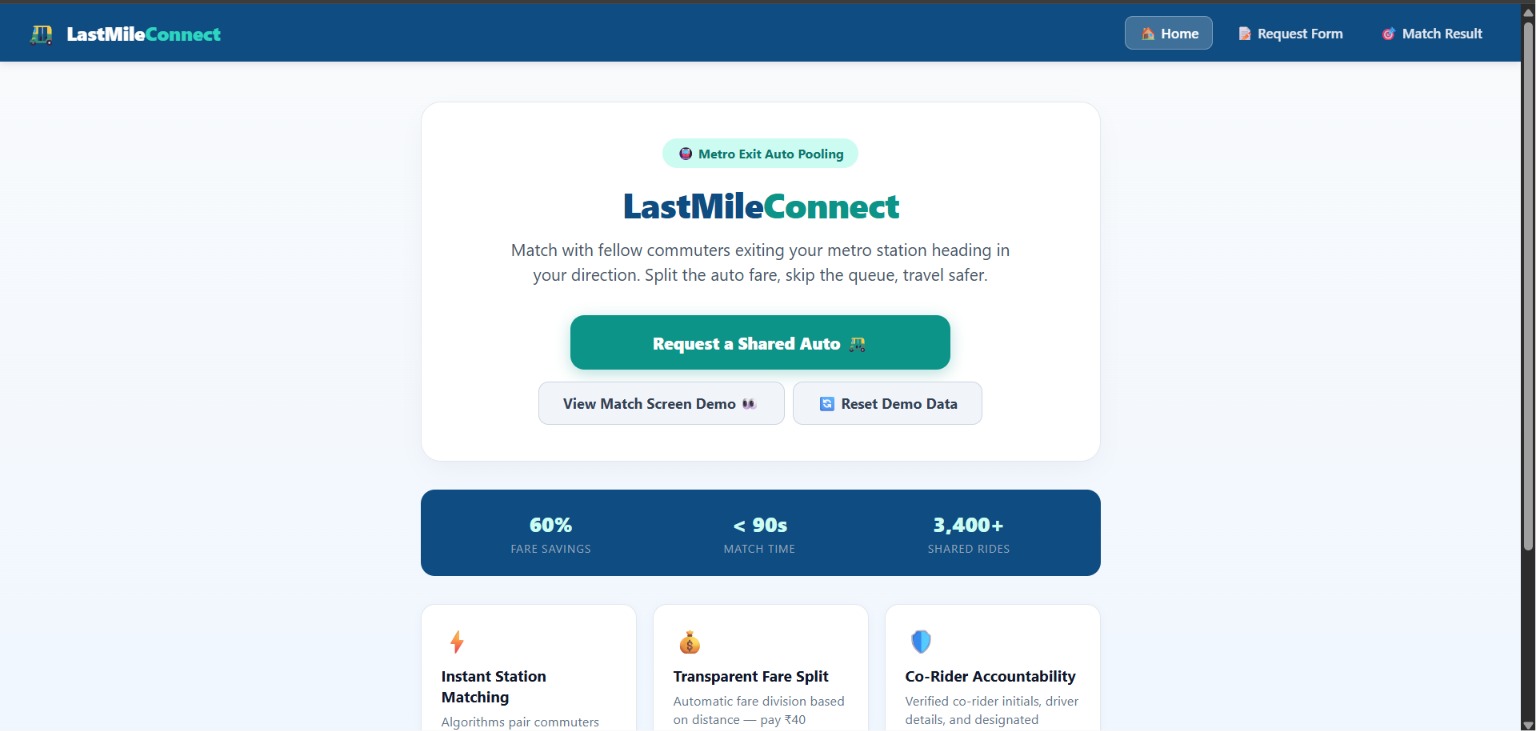
home
-
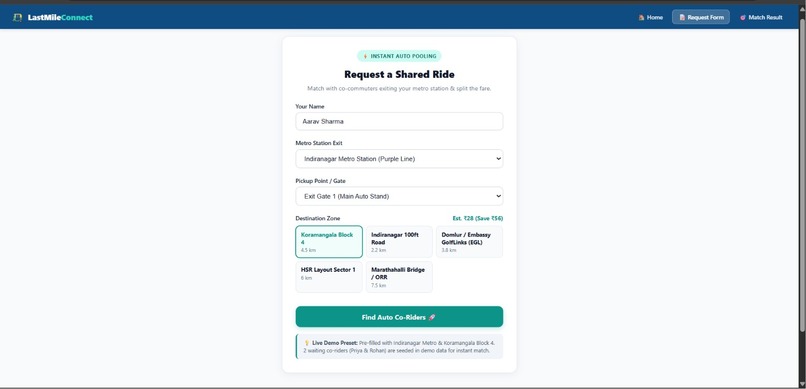
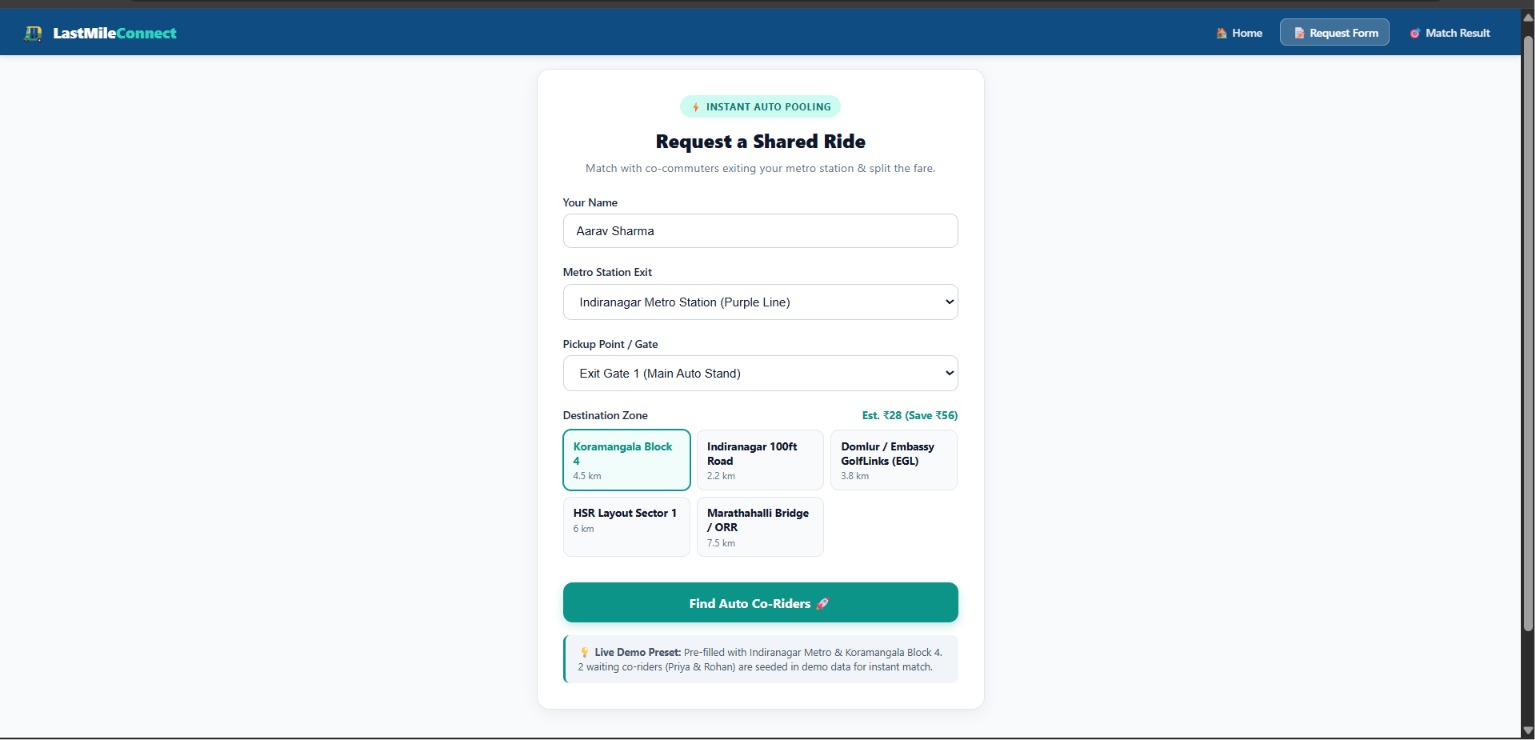
ride booking page
-
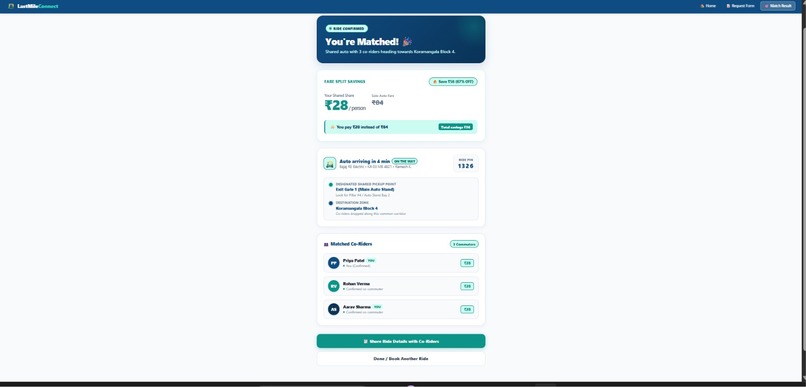
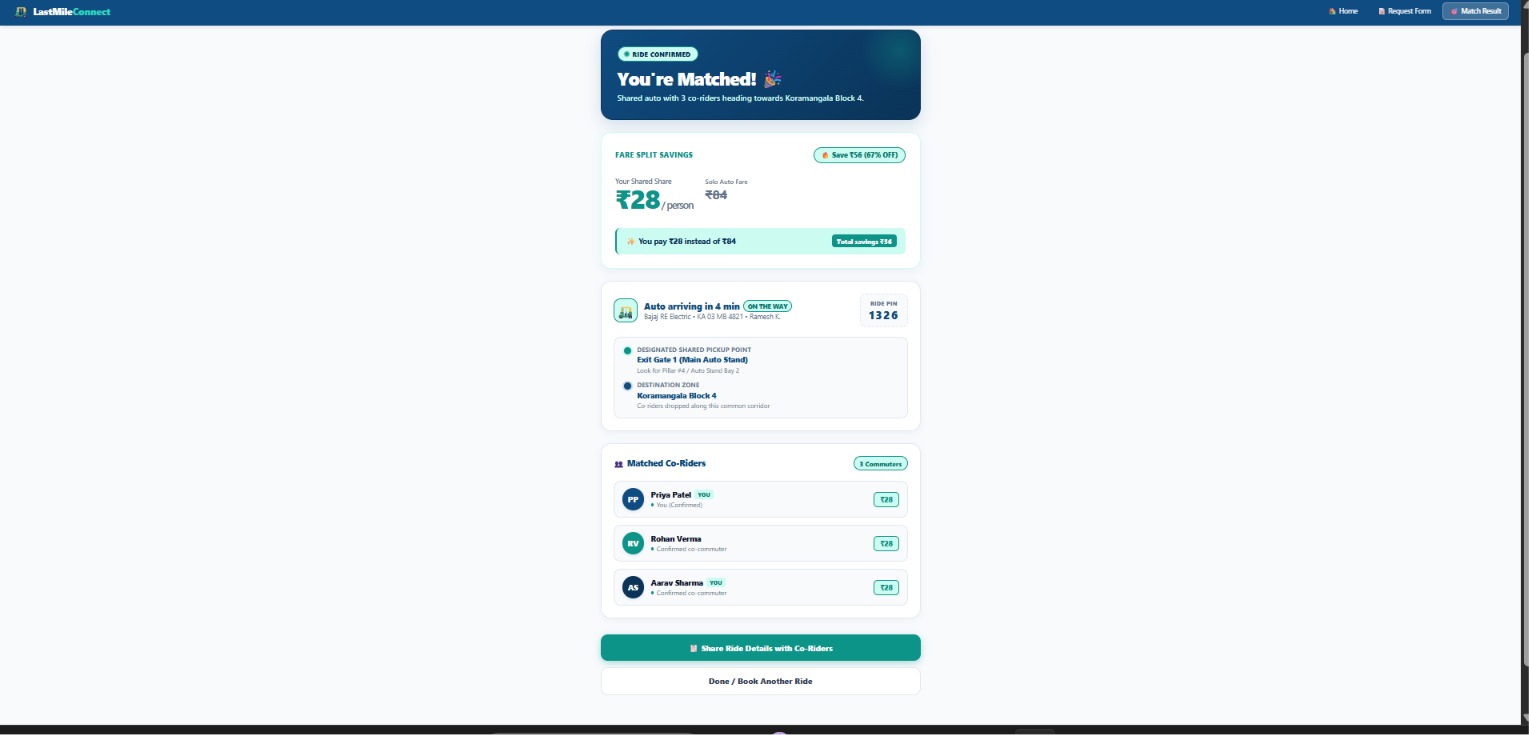
ride confirmation page
Inspiration
Public transport in most Indian cities is actually decent — buses and metros cover the main routes well. But the "last mile," that final 1-2 km from the station to home, is where the system breaks down. The only real option is an auto, and drivers often overcharge for short, awkward routes. At night, the alternative is walking through poorly lit areas, which raises real safety concerns. We realized this gap was quietly pushing people away from public transport altogether and toward expensive cab rides for the entire trip — defeating the purpose of having good public transit in the first place.
What it does
LastMileConnect identifies commuters getting off at the same station and heading in the same direction for their last leg of the journey. It matches 2-3 of them in real-time, lets them book a single shared auto or e-rickshaw, and automatically splits the fare between them. Riders save money, drivers still earn a full fare, and nobody has to walk alone at night or overpay for a short trip.
How we built it
We split the build across three areas: a frontend map and matching interface showing nearby riders and live status, a matching engine that groups users by station, direction, and time window, and a fare-splitting calculator that divides the total fare fairly based on distance contribution. For the demo, we simulated multiple riders arriving at a station to show the matching and fare-split process happening live.
Challenges we ran into
Getting the matching logic right was trickier than expected — we had to balance matching speed against match quality, since waiting too long for a "perfect" match defeats the purpose of a quick last-mile solution. We also had to think carefully about how to fairly split fares when riders are going different distances in the same general direction, not identical routes.
Accomplishments that we're proud of
We built a working simulation that clearly demonstrates the entire flow — matching, shared booking, and automatic fare-splitting — in a way that's easy for anyone to understand at a glance. We're also proud of scoping the idea tightly: instead of trying to compete with Ola/Uber on full trips, we found and targeted a specific, underserved gap in the transit experience.
What we learned
We learned how much complexity hides inside something that sounds simple, like "just match nearby riders." Small decisions — like how wide a matching radius should be, or how long to wait before finalizing a group — have a big impact on whether the solution actually feels useful in real life. We also learned the value of scoping a hackathon build tightly enough to have a working, demoable core in limited time.
What's next for LastMileConnect
Next, we'd want to pilot the app around a few real metro/bus stations to test actual matching demand and refine the radius and timing logic with real usage data. We'd also like to explore partnerships with local auto/e-rickshaw driver unions to make the shared bookings official and reliable, and eventually add safety features like ride verification and driver ratings for night-time use.

Log in or sign up for Devpost to join the conversation.