-
-
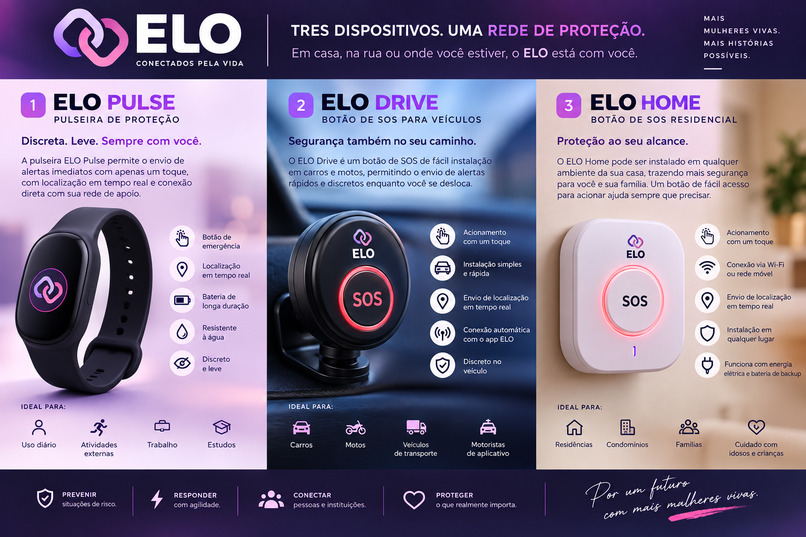
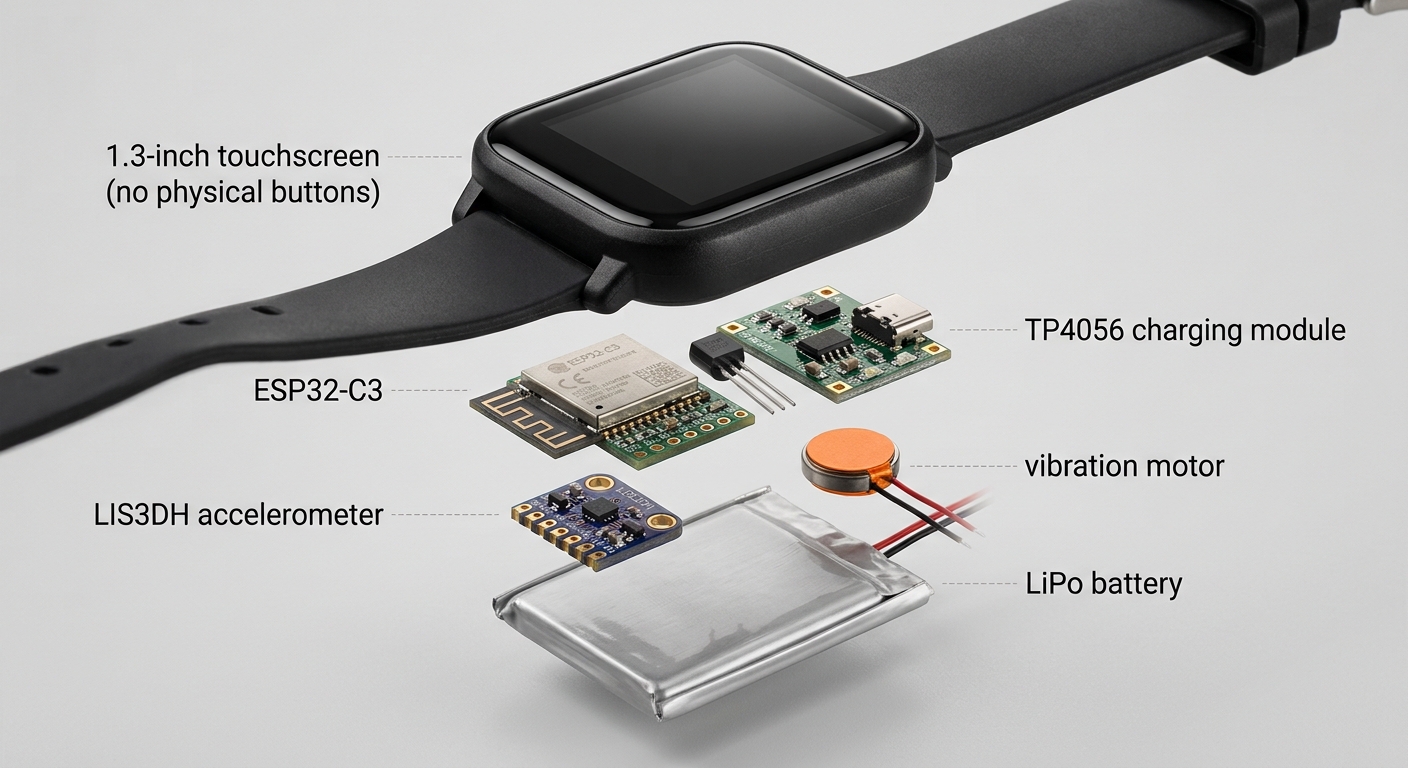
MODELOS DE HADWARE
-
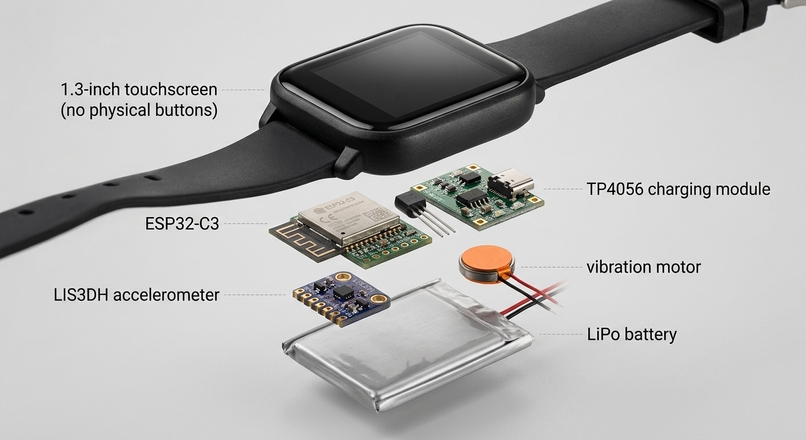
WEARABLE
-
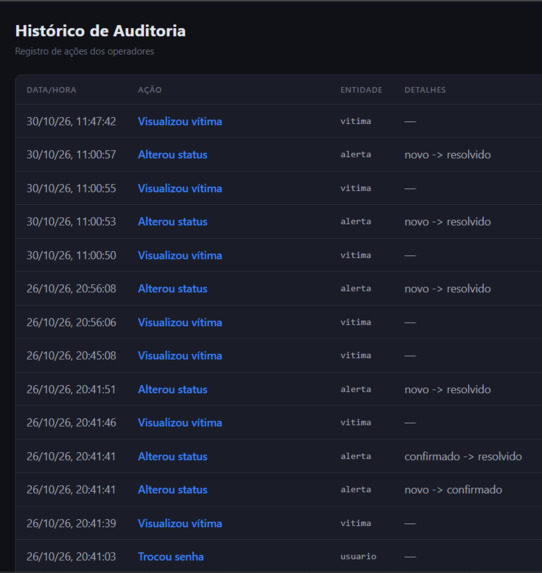
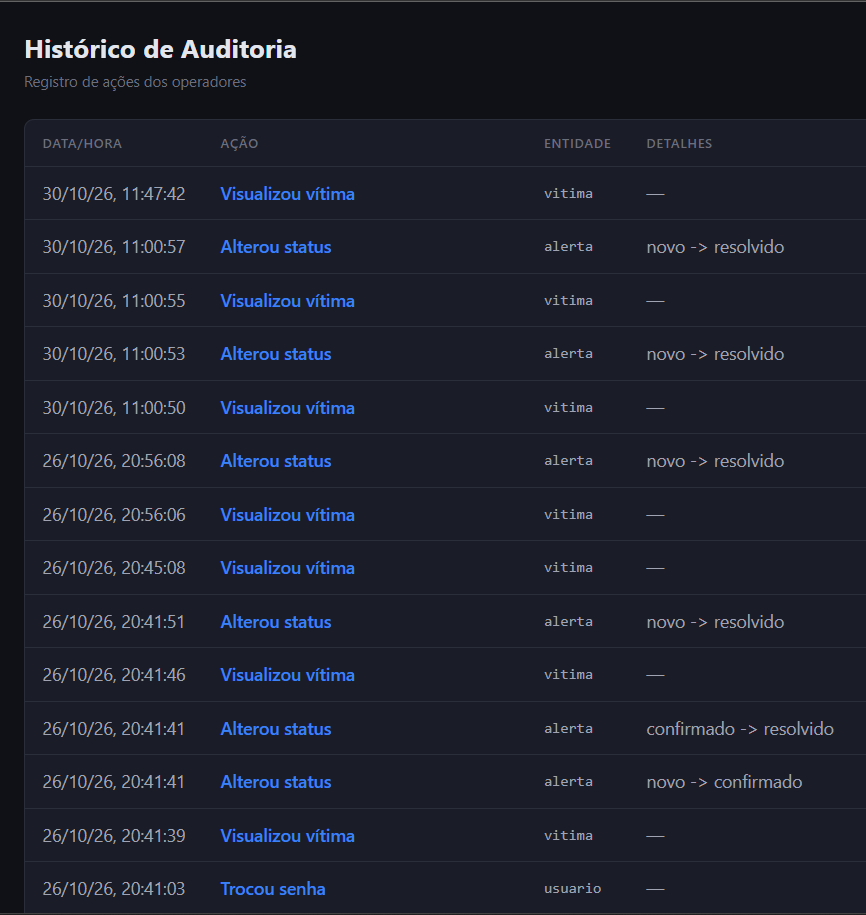
LOGS DE AUDITORIA
-
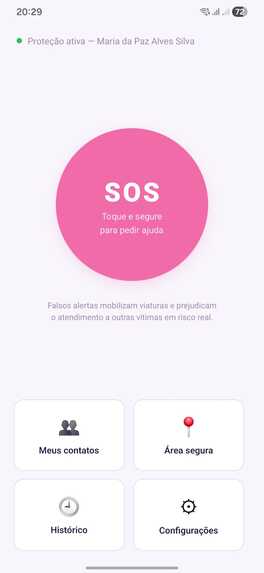
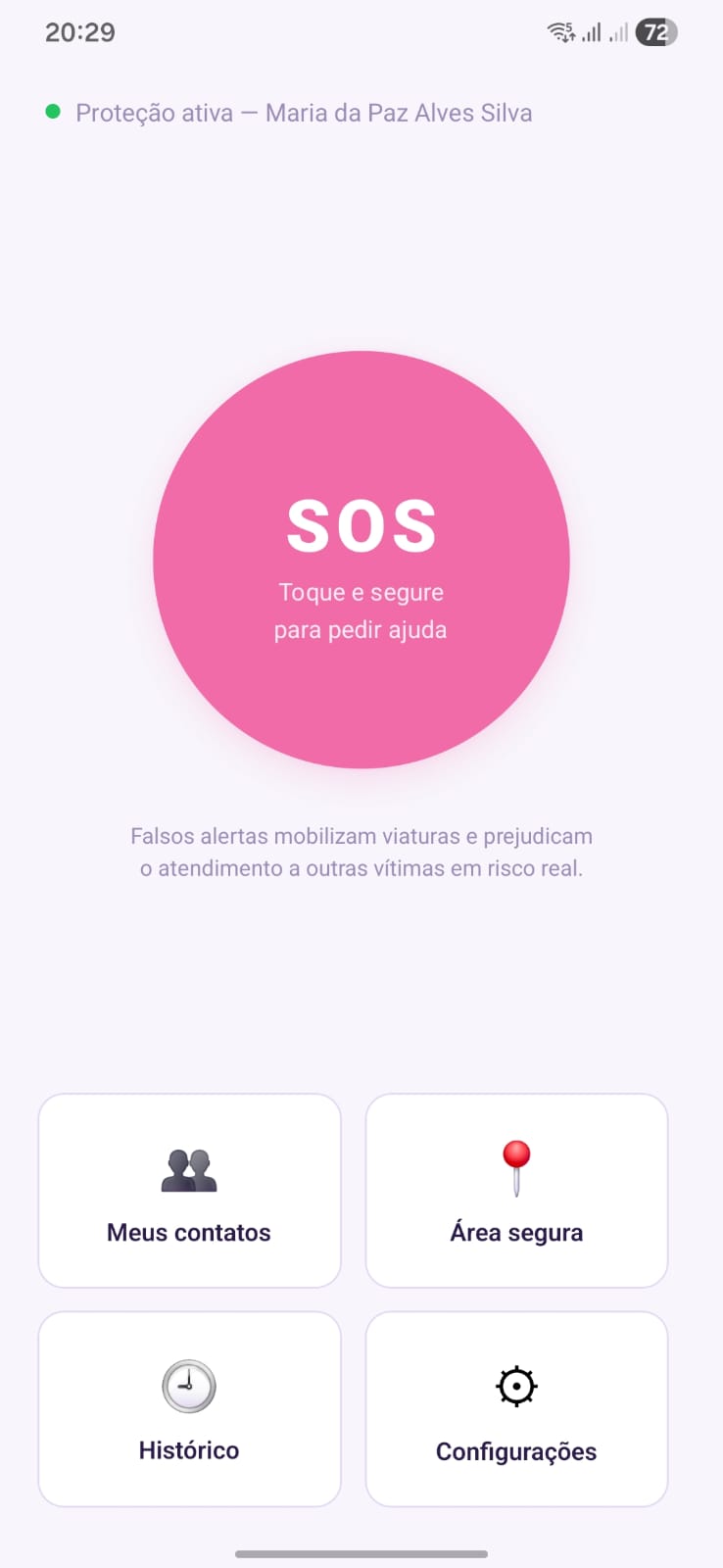
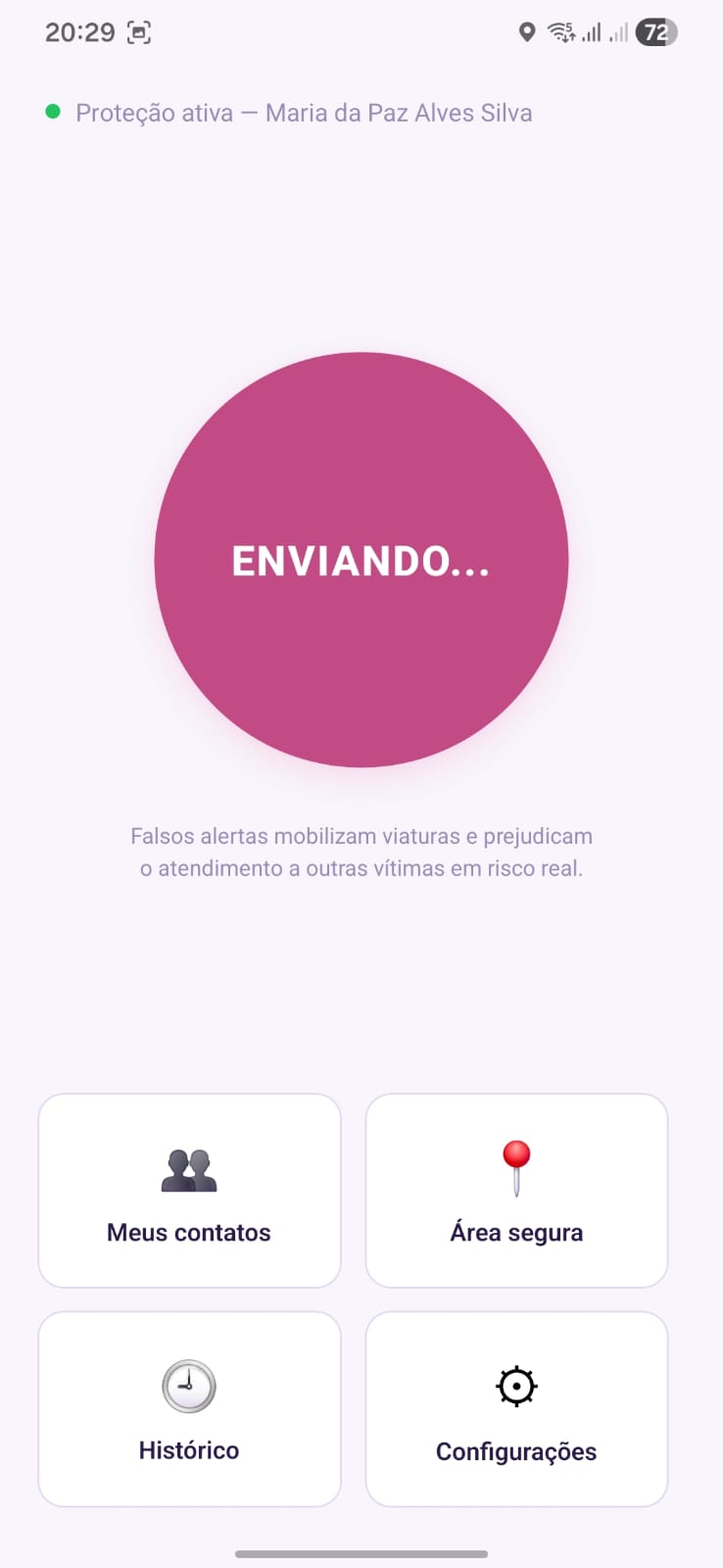
TELA INICIAL
-
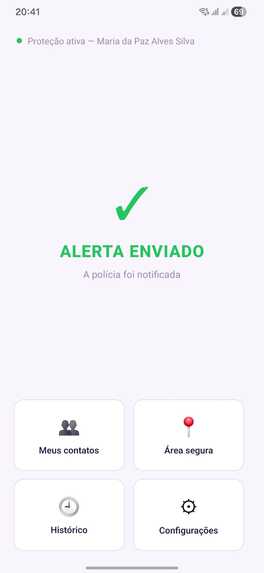
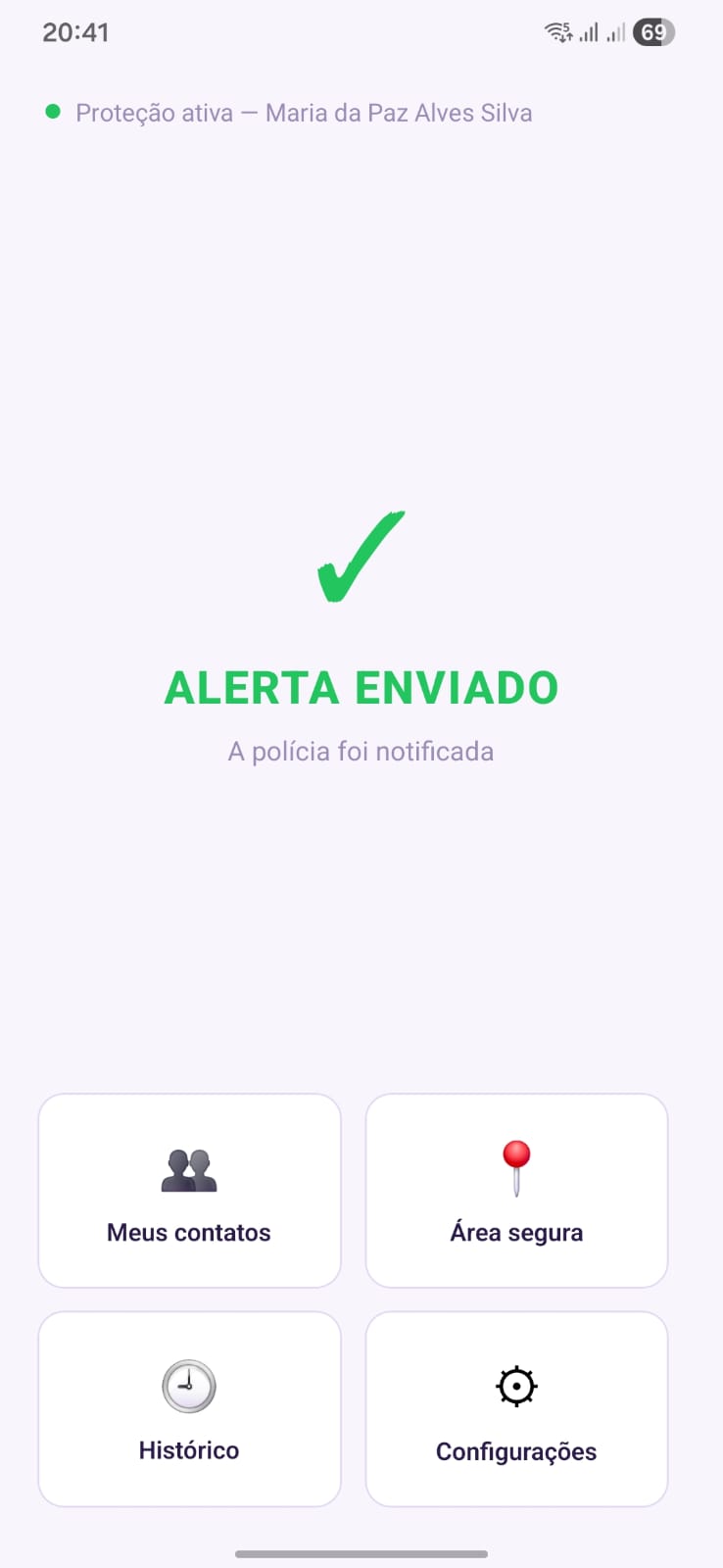
ALERTA ENVIADO
-
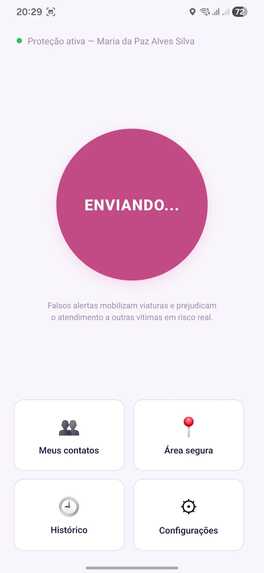
ENVIANDO ALERTA...
-
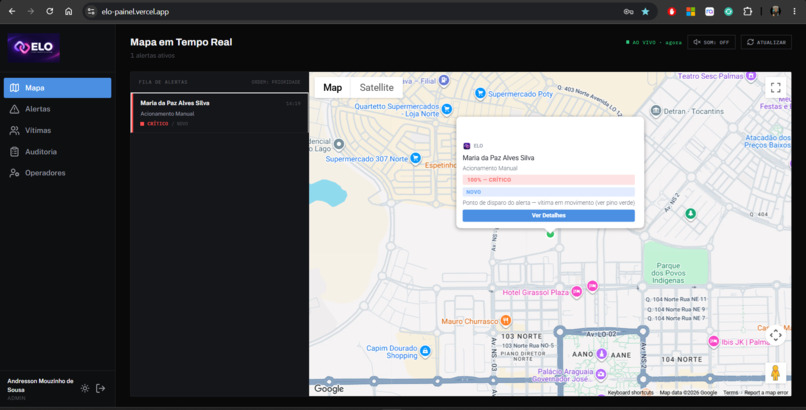
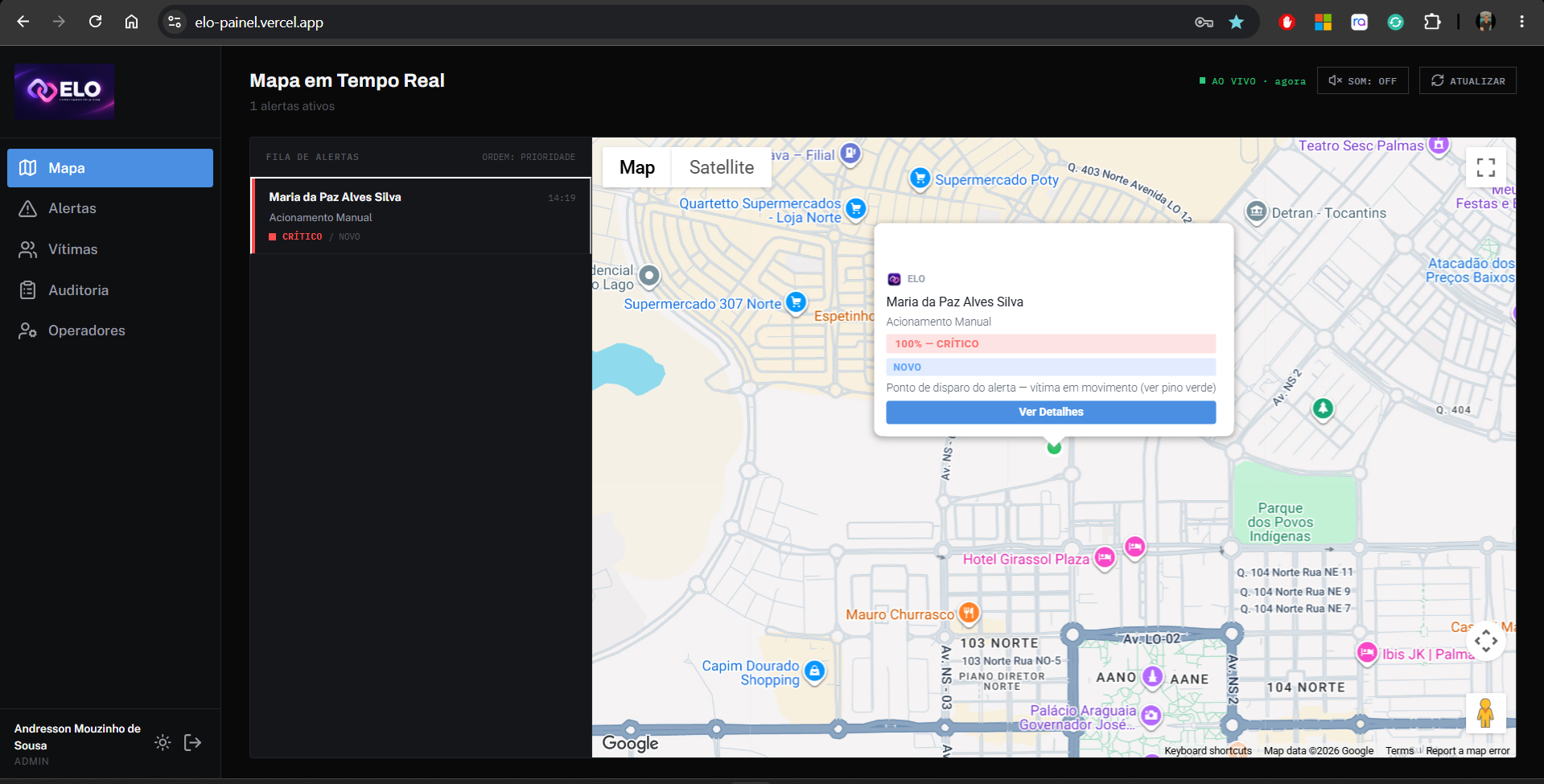
PAINEL DE OPERAÇÃO WEB - POLICIA
Inspiration
My daughter is due in February 2027. While following the news — Brazil hit a record number of femicides in 2025, 1,571 women killed, an average of 4 per day — I caught myself thinking about the kind of world she's going to find when she gets here. I couldn't just wait for that world to get better on its own.
ELO came out of that concrete need: to contribute, with what I know how to do (technology), to a more protective and more respectful society for women — before my daughter is even born, not after. Brazilian law has already moved in that direction (Law No. 15.383/2026 makes immediate electronic monitoring of at-risk aggressors mandatory), but I realized victim protection still depended, in most existing solutions, on her phone: with internet, charged, with the app open, exactly at the moment she's most vulnerable and least able to operate a smartphone. That gap between what the law already requires and what technology actually delivers is where ELO comes in.
What it does
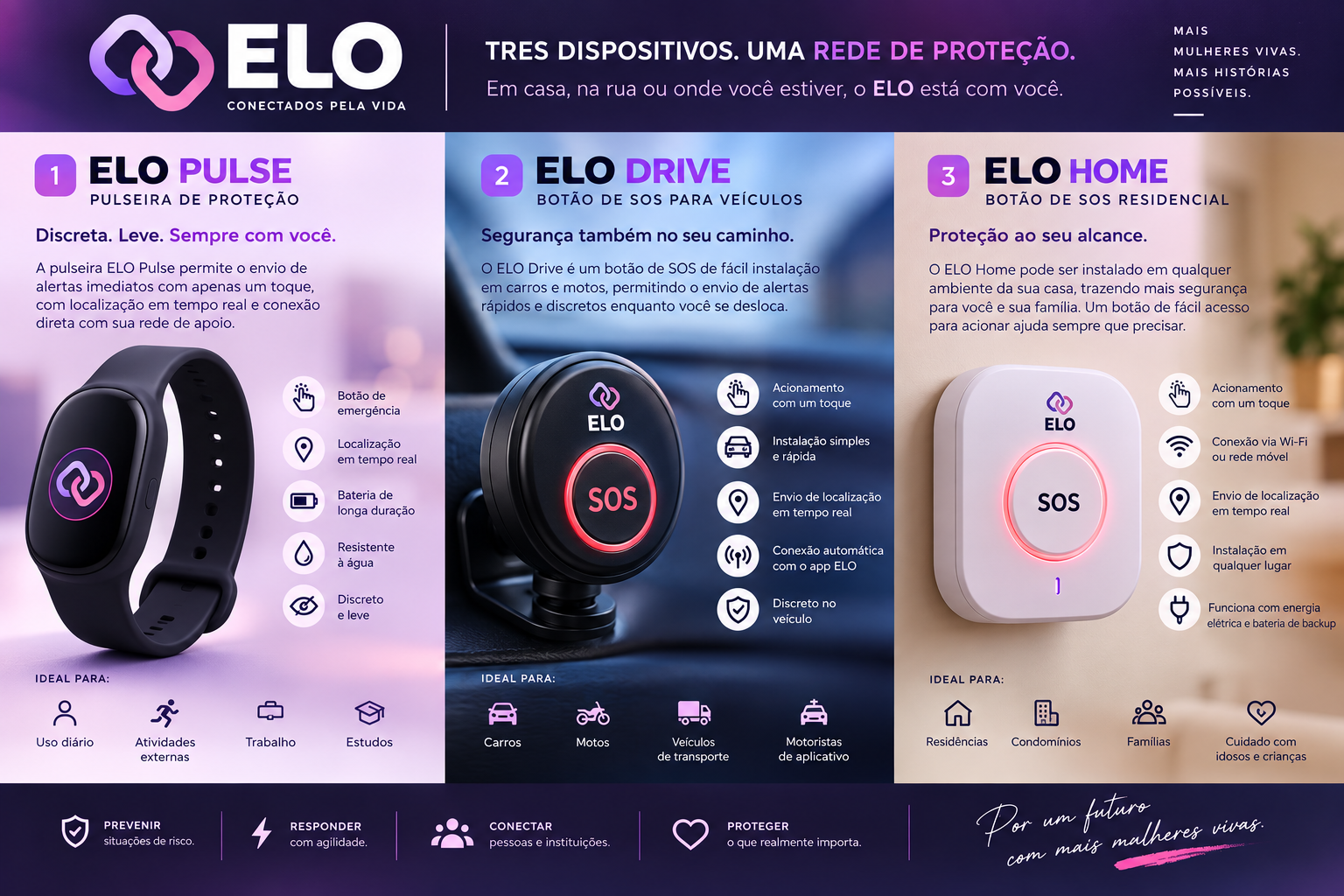
ELO connects victims of domestic violence to police response in real time, through three complementary physical formats:
- ELO Pulse — a wearable bracelet triggered with three taps, connected via Bluetooth (BLE). Automatically detects fall or impact events.
- ELO Home — a fixed home device with GPS and its own cellular connectivity, powered by an outlet with an internal backup battery (keeps working even if the house's power is cut).
- ELO Drive — a vehicle device installed on the car dashboard or motorcycle handlebar, with GPS and an accelerometer, powered by the vehicle's battery with internal backup — protects during travel, one of the hardest contexts to track.
All three report to the same platform: an operational dashboard used by police officers, which automatically calculates a risk indicator from alert history and active protective orders, shows real-time location, and lets them notify a patrol.
How we built it
Backend in FastAPI (Python) with PostgreSQL + PostGIS for geospatial data, Redis and Celery for asynchronous alert processing. The ELO Pulse firmware runs on an ESP32-C3 (ESP-IDF/PlatformIO), with BLE communication validated end to end with the mobile app and the backend. The operational dashboard is a web app (React/TypeScript), with data isolation by police precinct — each operator only accesses cases from their own unit.
Security was handled from day one, not bolted on afterward: encryption of sensitive data at rest, authentication with CSRF embedded in the token, rate limiting and account lockout after failed login attempts, and explicit LGPD (Brazil's data protection law) consent from the victim before any sensitive data is collected.
Challenges we ran into
Connecting a low-power physical device (BLE) to a backend that needs to respond within seconds for a security alert meant rethinking where each decision happens: the device can never wait for network confirmation to tell the victim the alert was sent, but the backend has to guarantee that alert actually arrives and gets prioritized correctly. We solved this with an asynchronous queue architecture (Celery) and a risk-score calculation that runs as soon as the alert arrives, without blocking the response to the device.
Another challenge was about the domain, not the tech: designing data isolation by police precinct without compromising speed in an emergency — an operator needs to see cases from their own unit quickly, but should never be able to access victim data from another precinct.
Accomplishments that we're proud of
Getting the ELO Pulse from concept to a working physical prototype, with BLE communication validated end to end — from a three-tap trigger on the wearable all the way to an alert landing on the police dashboard with location and risk score attached.
Treating security as a first-class requirement instead of an afterthought, given how sensitive the data is (health information, location, protective orders). The backend already has encryption at rest, embedded CSRF protection, rate limiting, account lockout, and real multi-tenant isolation by police precinct, built and tested before we ever thought about demoing it.
Designing an ecosystem instead of a single app. Most existing solutions ask the victim to rely on her phone alone; ELO Pulse, Home, and Drive cover the actual contexts where violence happens, each with its own independent path to the same response pipeline.
Doing all of this as a solo builder on a tight timeline, while staying honest about what's a working prototype versus what's still in development, instead of overselling the project's current stage.
What we learned
That victim-protection technology in Brazil already has strong legal backing (Law 15.383/2026, Decree 13.084/2026 — the Safe Woman Alert Program), but most solutions actually in use still rely on the victim's phone as the only channel. That confirmed for us that ELO's differentiator — dedicated physical devices for each life context — targets a real problem, one not solved by the solutions Brazilian states have already adopted.
What's next for Ecossistema ELO - Conectados pela Vida
Finish the physical prototyping of ELO Home and ELO Drive (ELO Pulse already has a working prototype), and move forward with integration into aggressor electronic monitoring systems (ankle monitors), enabling automatic proximity alerts between a monitored aggressor and the victim.
Built With
- ble
- bluetooth
- celery
- docker
- energy
- esp-idf
- esp32-c3
- fastapi
- gps
- iot
- jwt
- lgpd
- low
- native
- platformio
- postgis
- postgresql
- python
- react
- redis
- typescript
- vercel
