-
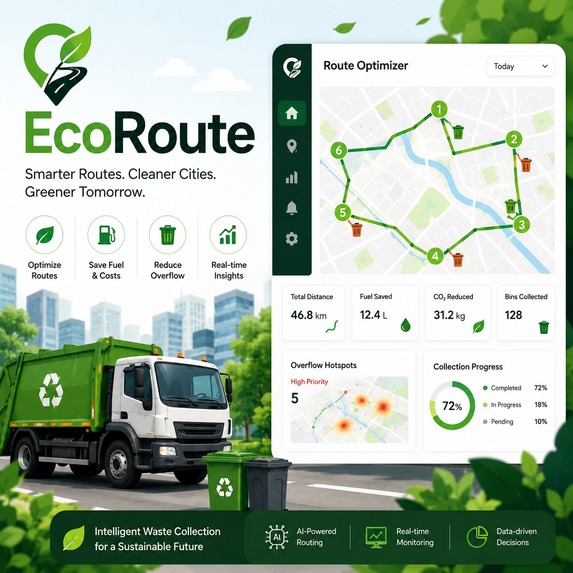
EcoRoute: a practical solution that municipalities could realistically adopt without requiring expensive infrastructure changes.
-
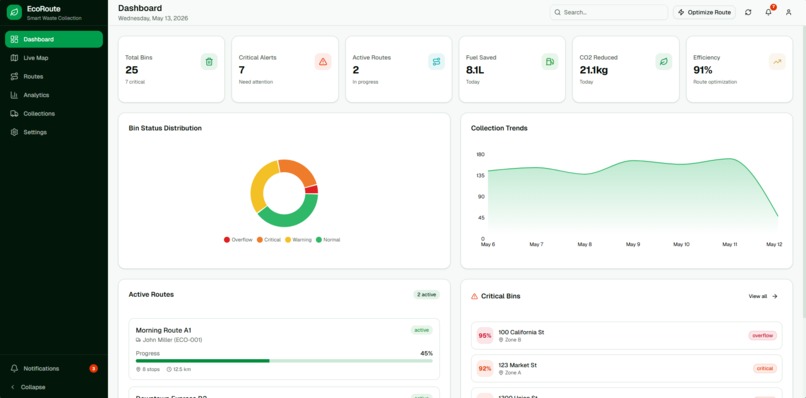
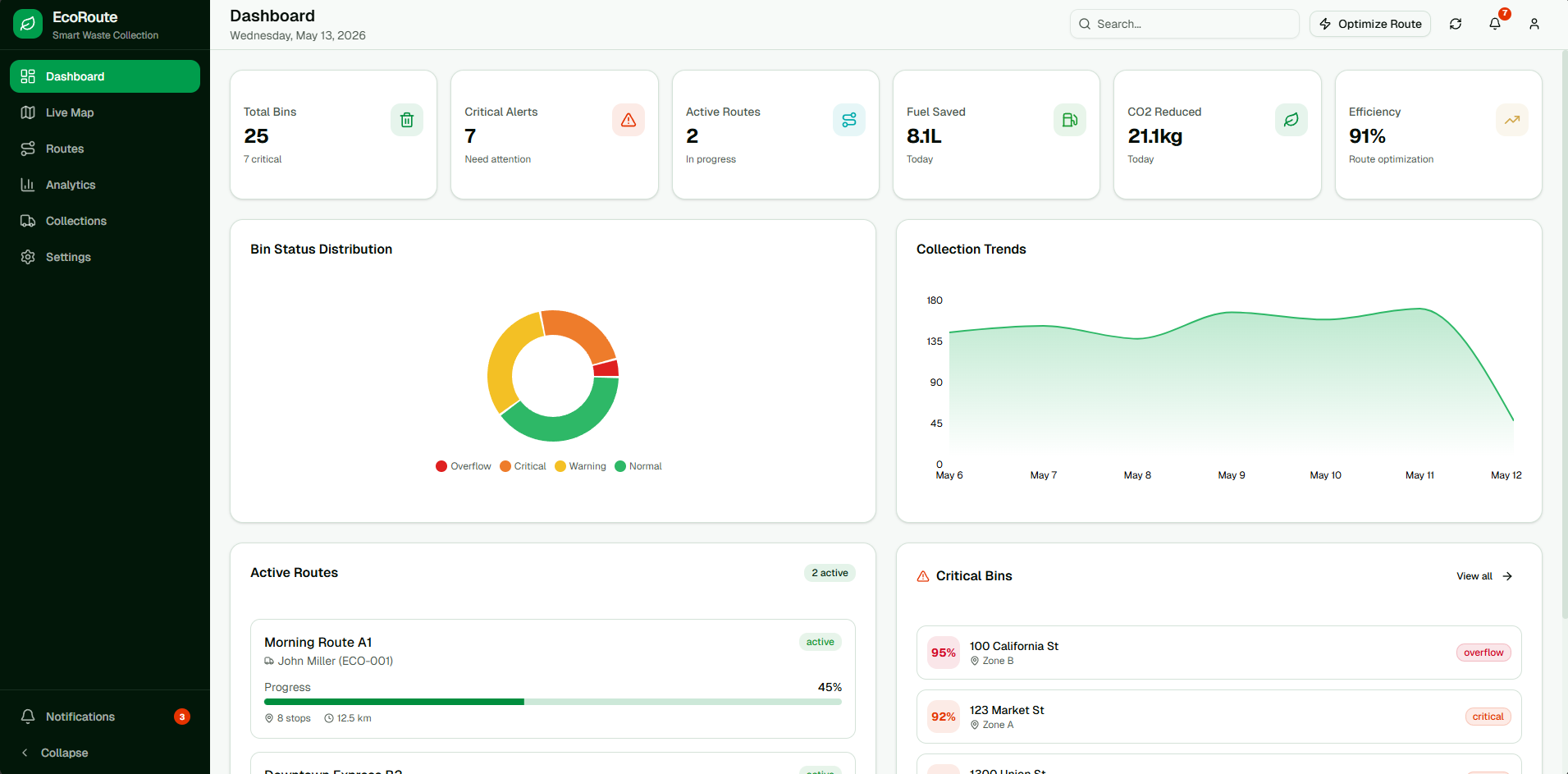
EcoRoute Dashboard
-
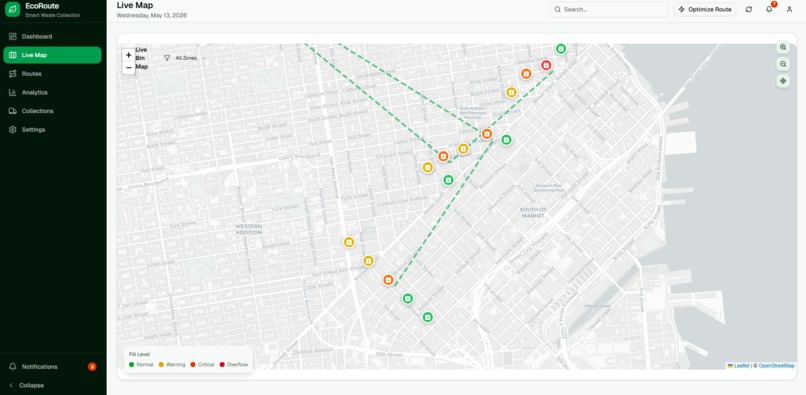
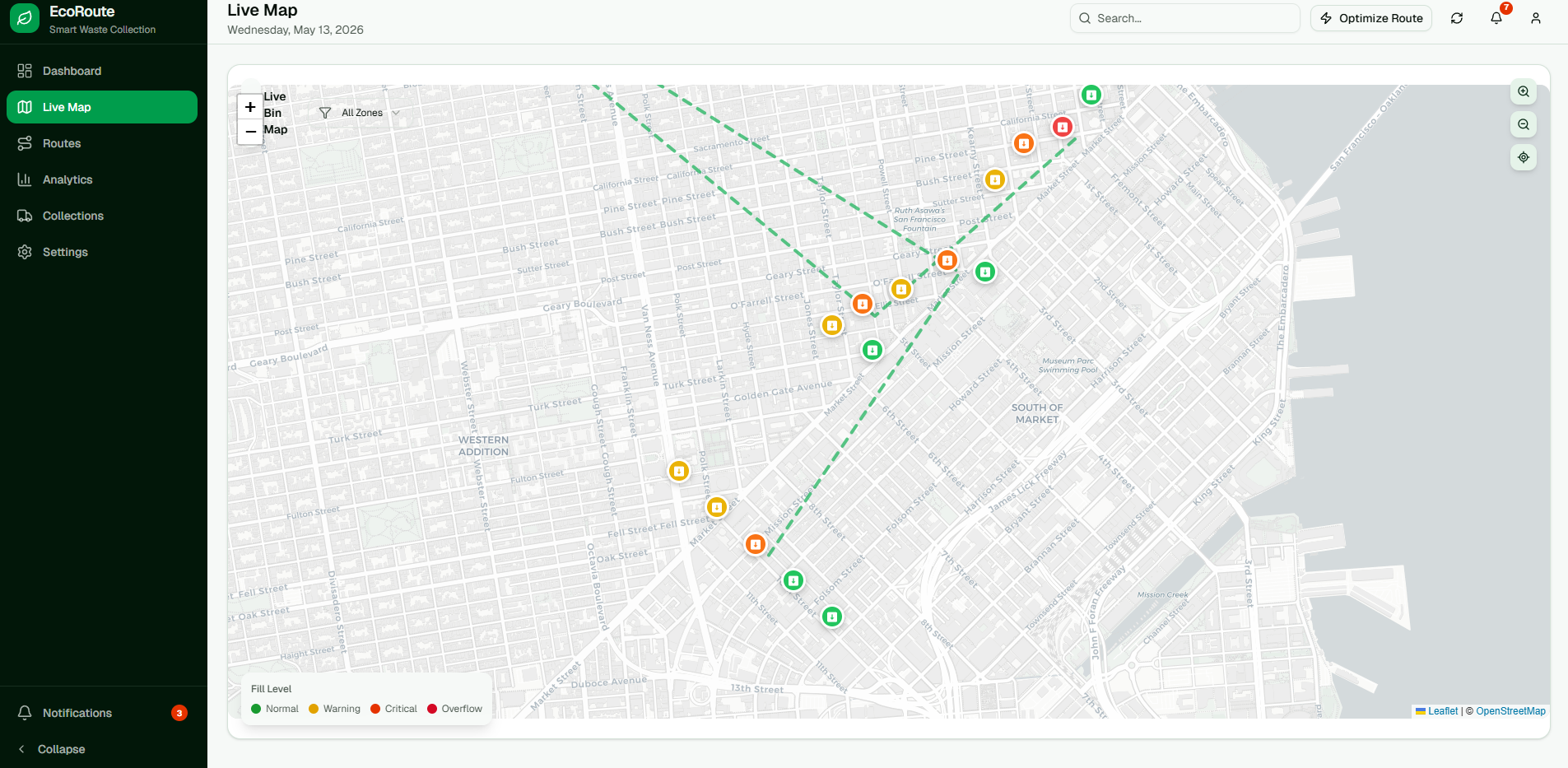
EcoRoute Map
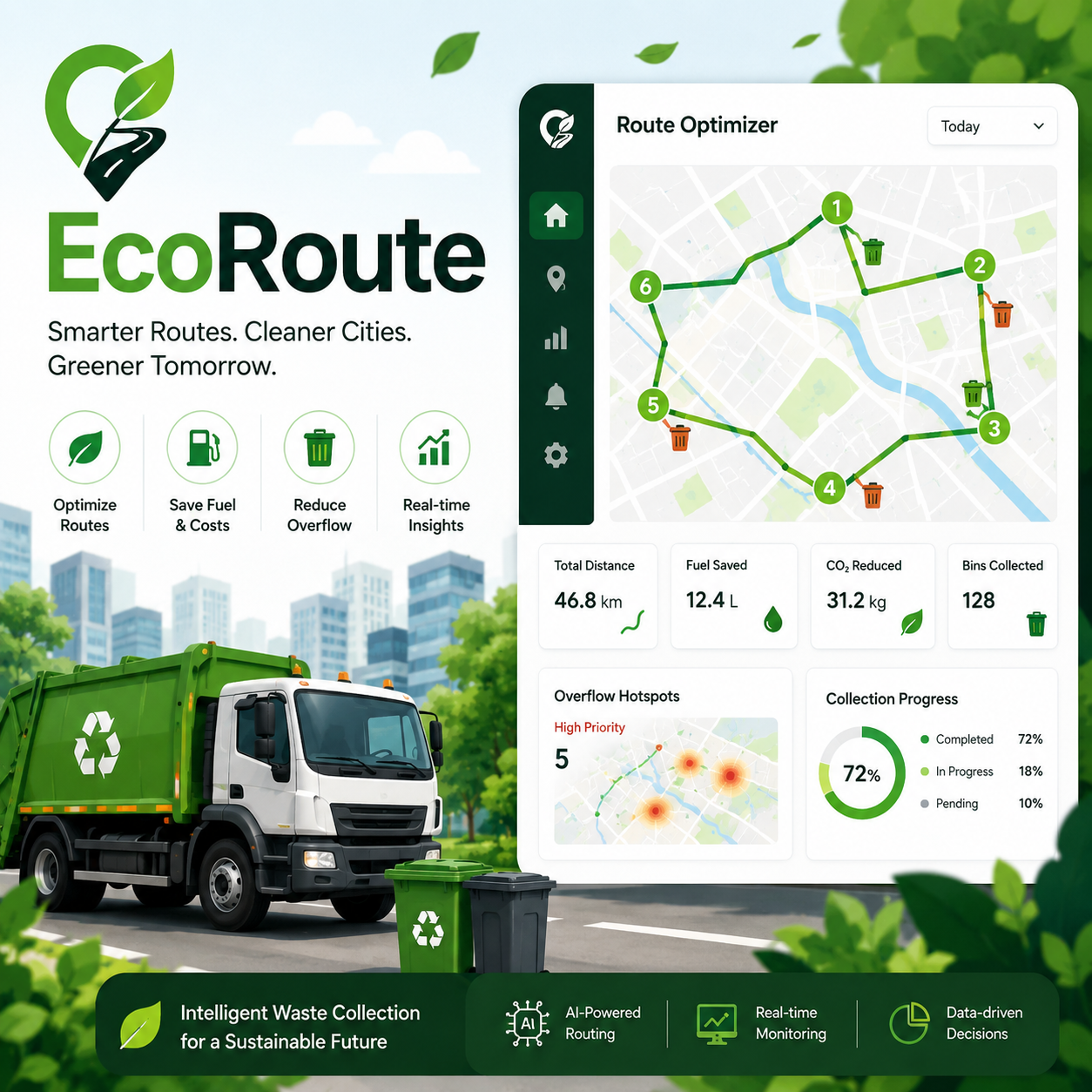
EcoRoute
Inspiration
Urban waste collection in many cities still relies on static routes and manual monitoring. This leads to overflowing bins in some areas while collection trucks waste fuel and time visiting half-empty locations. We were inspired by the idea that even small improvements in route planning and waste prioritization could create a meaningful environmental and economic impact.
We wanted to build a practical solution that municipalities and local waste management teams could realistically adopt without requiring expensive infrastructure changes.
What it does
EcoRoute is a smart waste collection optimization platform designed to improve urban waste management efficiency.
The platform helps:
- Monitor waste bin levels
- Identify overflow-priority zones
- Optimize garbage collection routes
- Reduce unnecessary fuel consumption
- Improve response times for high-density areas
The dashboard provides real-time visibility into collection priorities and generates optimized pickup sequences based on:
- Fill levels
- Traffic conditions
- Distance
- Area priority
EcoRoute aims to reduce operational costs while helping cities maintain cleaner and more sustainable environments.
How we built it
We built EcoRoute as a modern web platform focused on simplicity, performance, and scalability.
Frontend
- Built using React and Tailwind CSS
- Interactive map visualization using OpenStreetMap
- Real-time dashboard for monitoring waste collection status
Backend
- Node.js and Express for API services
- Route optimization logic implemented using graph traversal and shortest-path heuristics
- REST APIs for communication between services
Database
Supabase/PostgreSQL for storing:
- bin locations
- fill levels
- collection history
- route analytics
Optimization Logic
The routing engine prioritizes:
- Overflow-risk bins
- Minimal travel distance
- Reduced fuel usage
- Efficient collection sequencing
We focused heavily on building a lightweight and deployable architecture suitable for municipalities with limited technical infrastructure.
Challenges we ran into
One major challenge was balancing route efficiency with real-world practicality. The mathematically shortest route is not always the most realistic due to traffic conditions, road accessibility, and changing waste accumulation patterns.
Another challenge was designing an interface simple enough for operational staff while still exposing useful analytics and optimization insights.
We also spent significant time improving map performance and ensuring that route visualization remained responsive with larger datasets.
Accomplishments that we're proud of
- Built a fully functional route optimization workflow
- Designed a clean and intuitive operational dashboard
- Reduced redundant collection paths in our simulations
- Created a solution that is both scalable and practical
- Focused on real-world deployment feasibility instead of just theoretical concepts
Most importantly, we built a project that addresses a genuine environmental and urban infrastructure problem.
What we learned
Through EcoRoute, we learned:
- How optimization problems apply to real-world logistics
- The importance of designing software for non-technical users
- How mapping systems and geospatial data work together
- The trade-offs between theoretical algorithms and operational constraints
- The importance of sustainability-focused engineering solutions
We also gained experience integrating frontend visualization with backend optimization systems.
What's next for EcoRoute
Future improvements for EcoRoute include:
- IoT-based smart bin integration
- AI-powered waste accumulation prediction
- Traffic-aware dynamic rerouting
- Mobile app for collection teams
- Carbon emission analytics
- Municipality-wide deployment scaling
We also plan to explore partnerships with local communities and urban management organizations to test EcoRoute in real-world pilot environments.
Built With
- algorithms
- apis
- css
- express.js
- geospatial
- github
- javascript
- mapping
- node.js
- openstreetmap
- optimization
- postgresql
- react
- rest
- route
- supabase
- tailwind
- vercel


Log in or sign up for Devpost to join the conversation.