-
-

Splash Screen
-
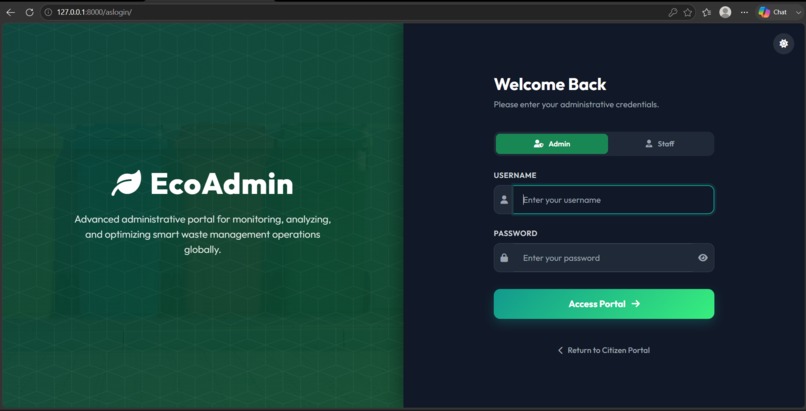
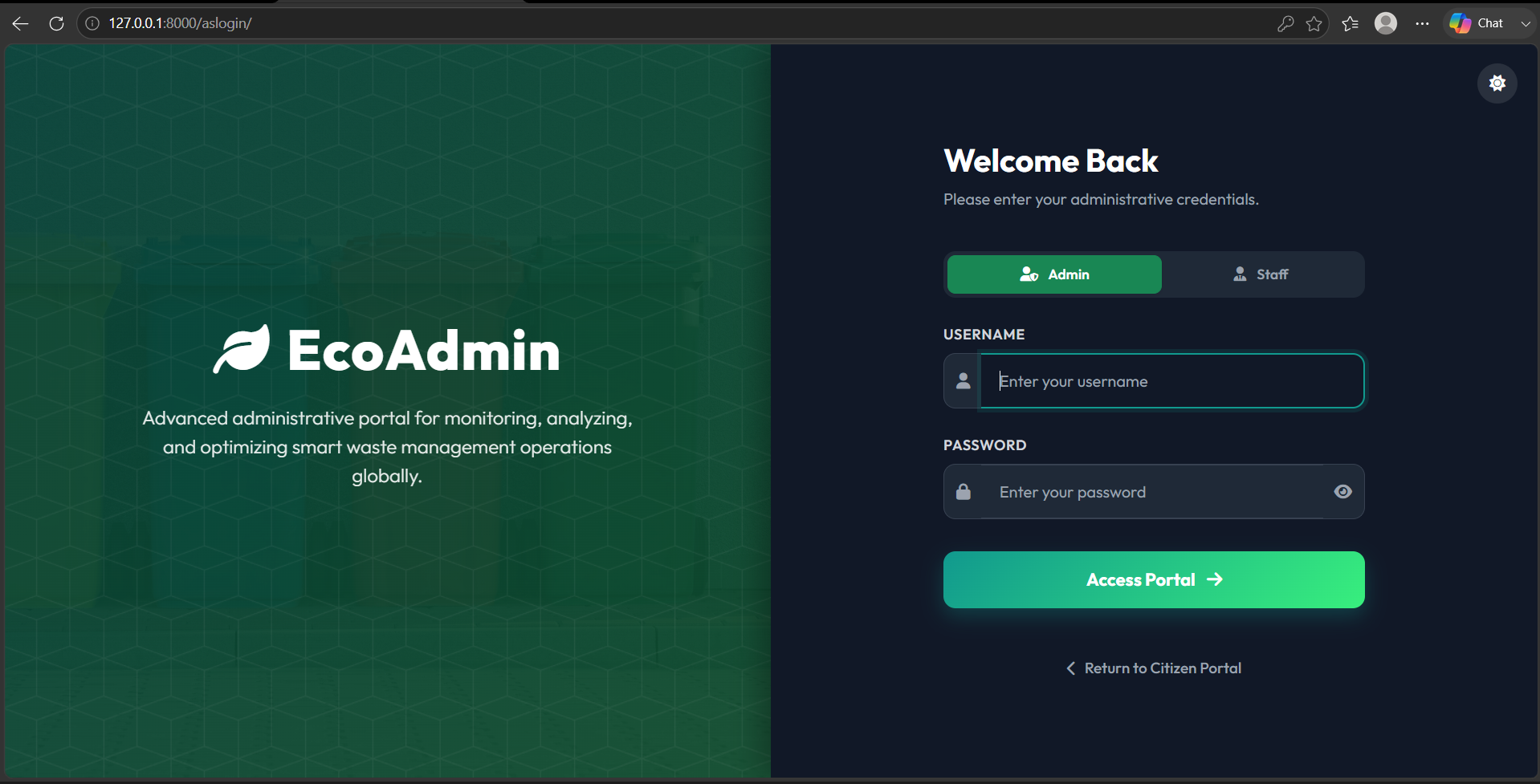
Admin/Staff login page
-
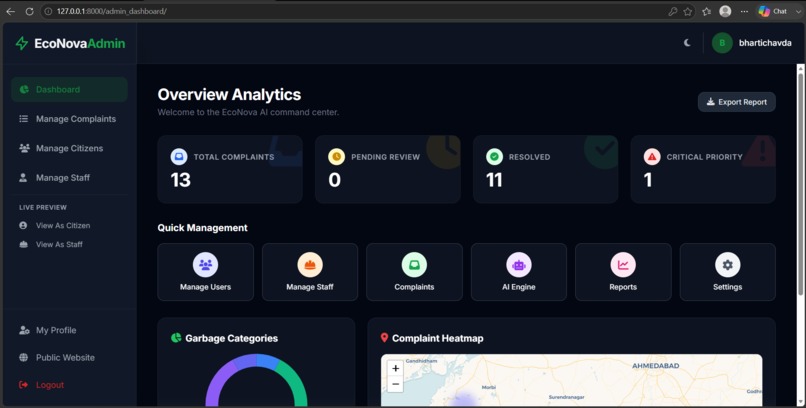
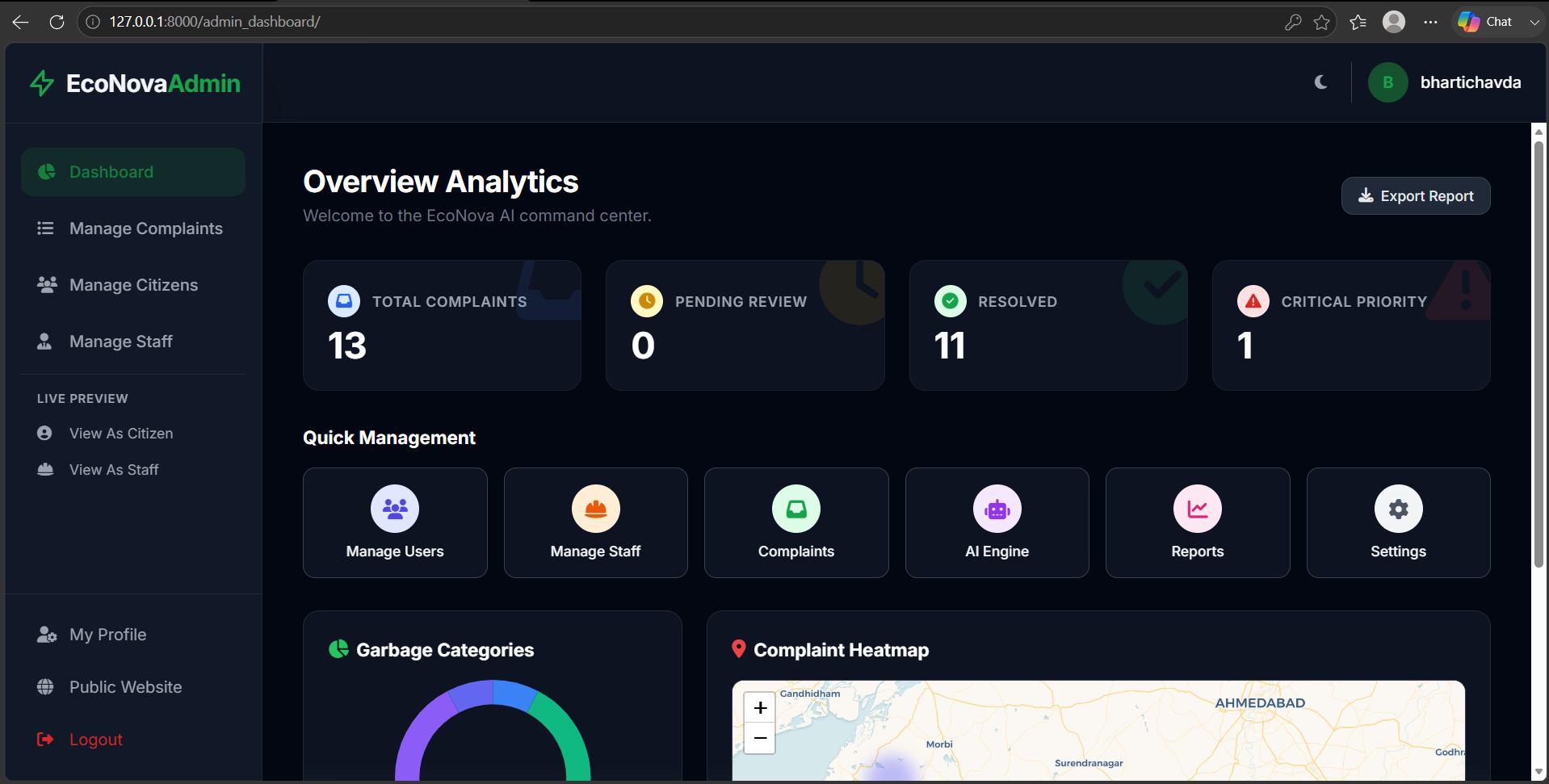
Admin Dashboard
-
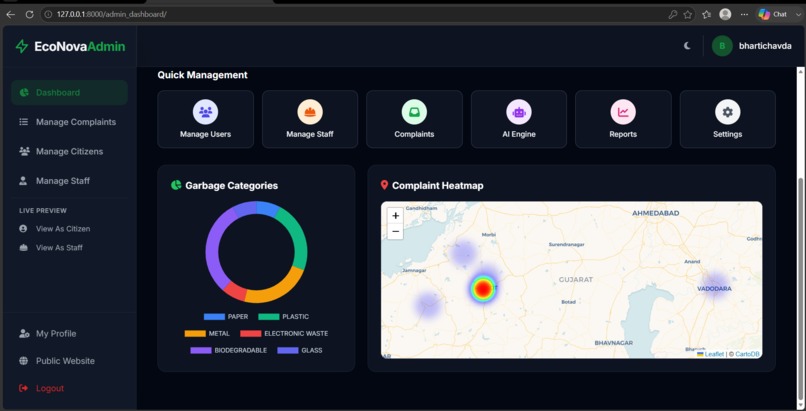
Admin Dashboard
-
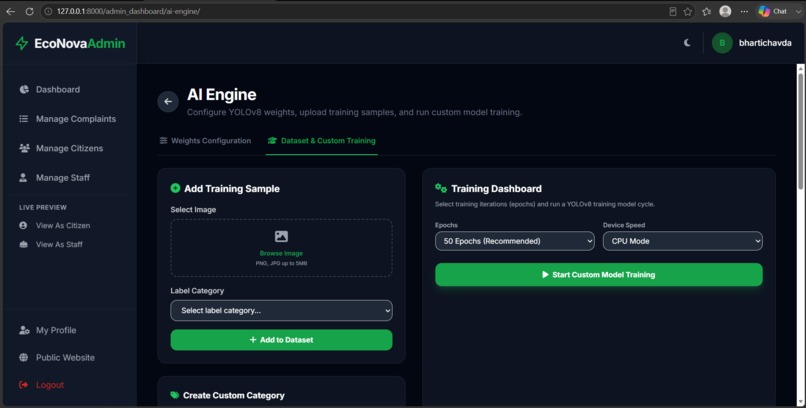
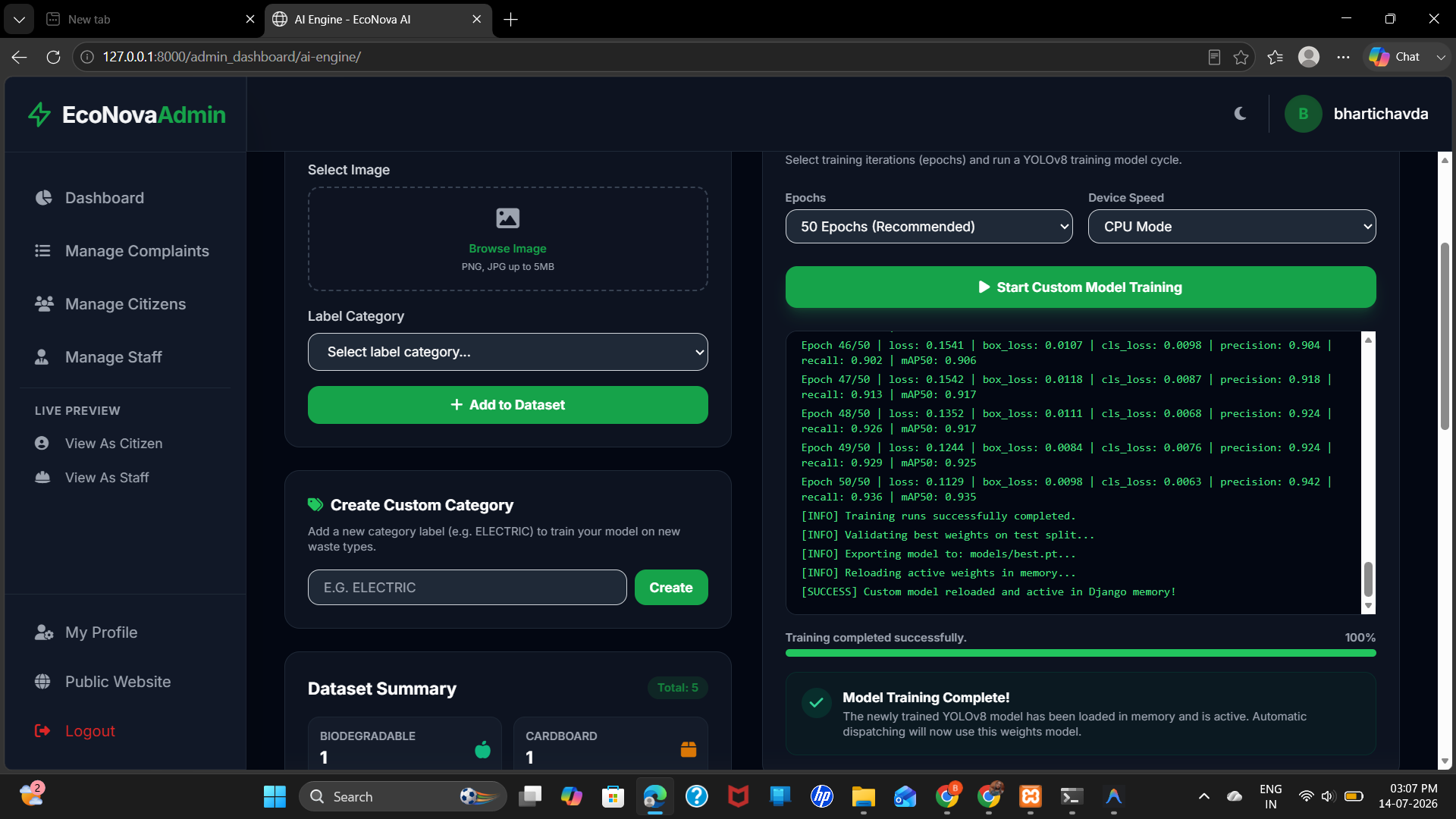
AI Engine
-
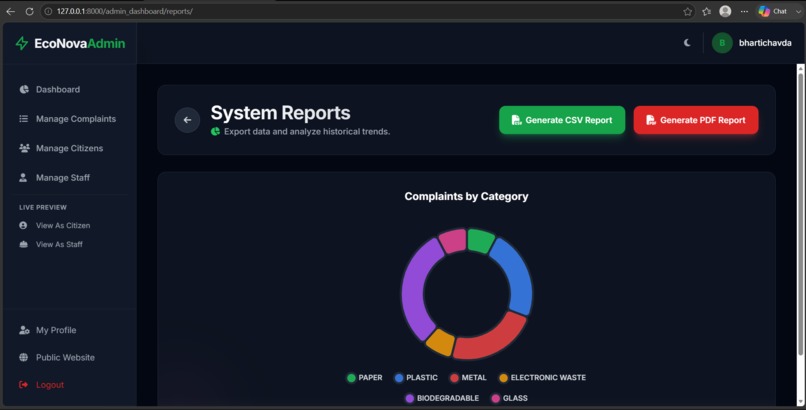
System Reports
-
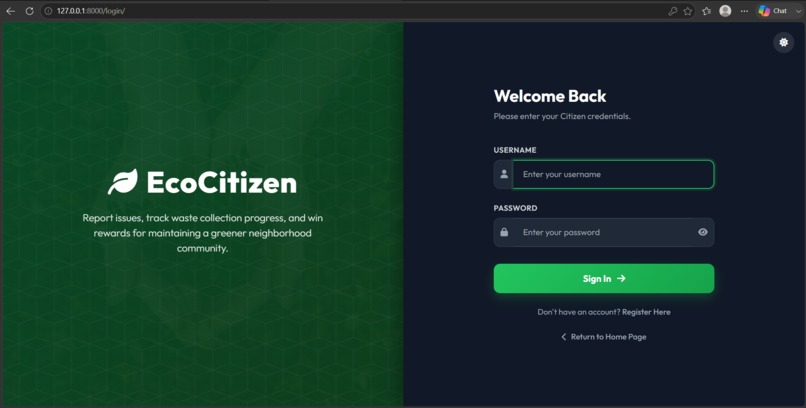
Citizen Login
-
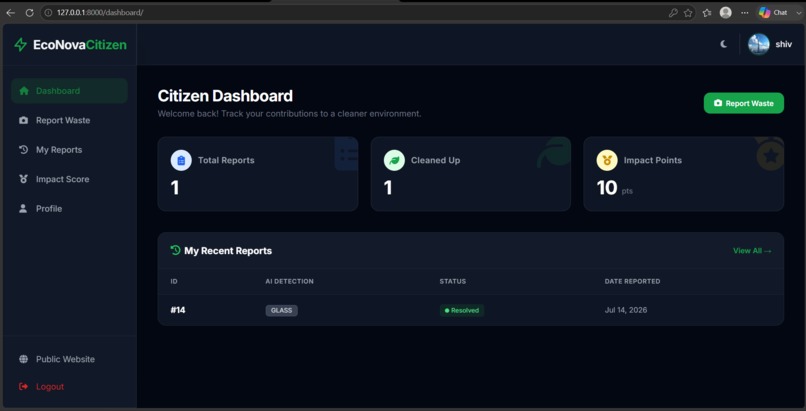
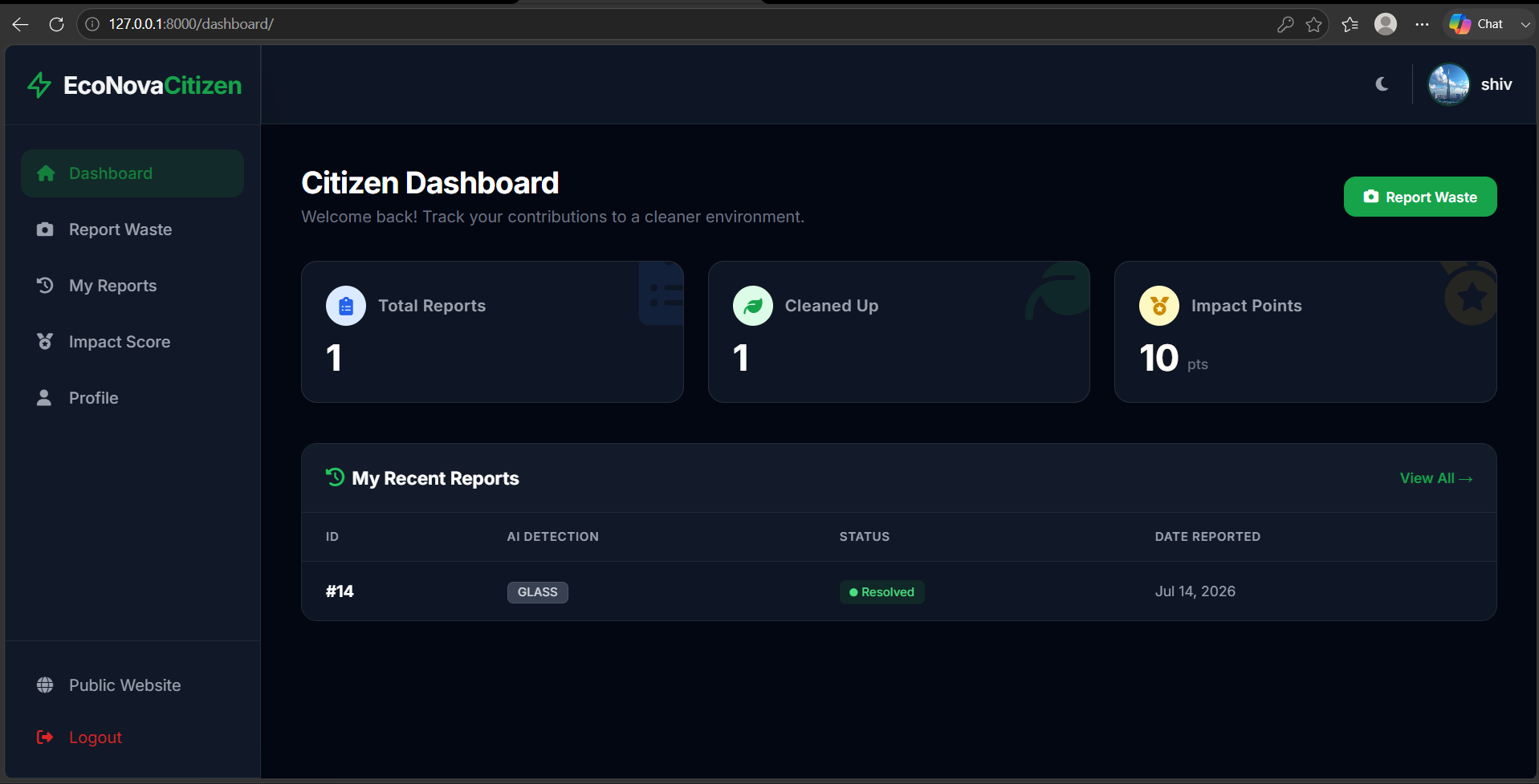
Citizen Dashboard
-
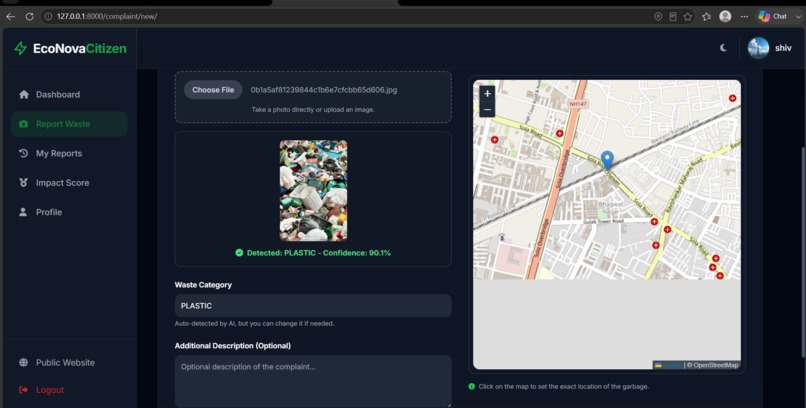
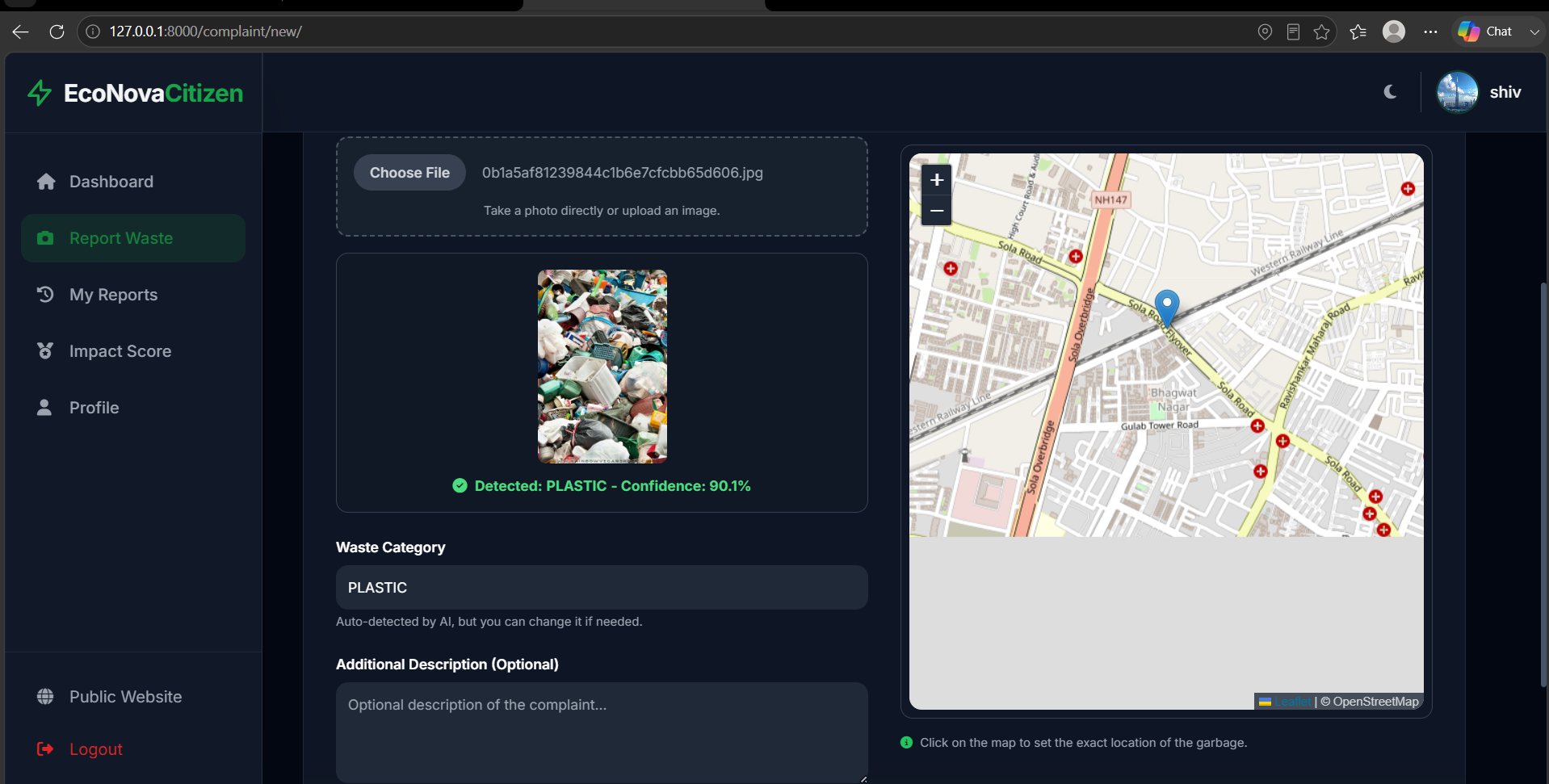
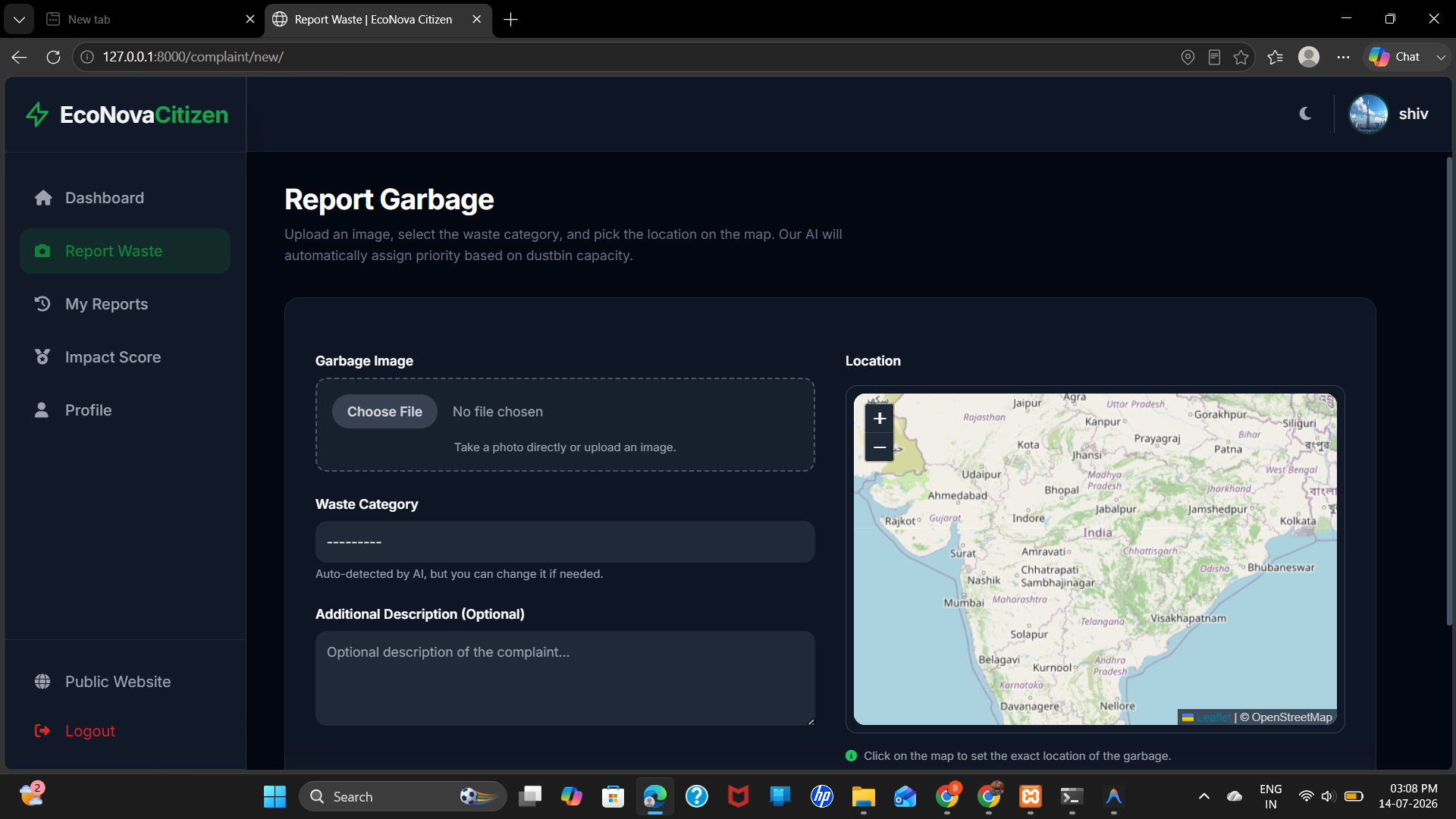
Report Waste
-
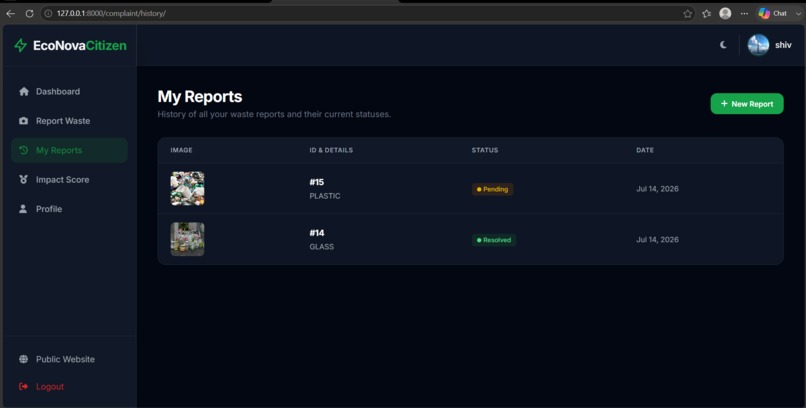
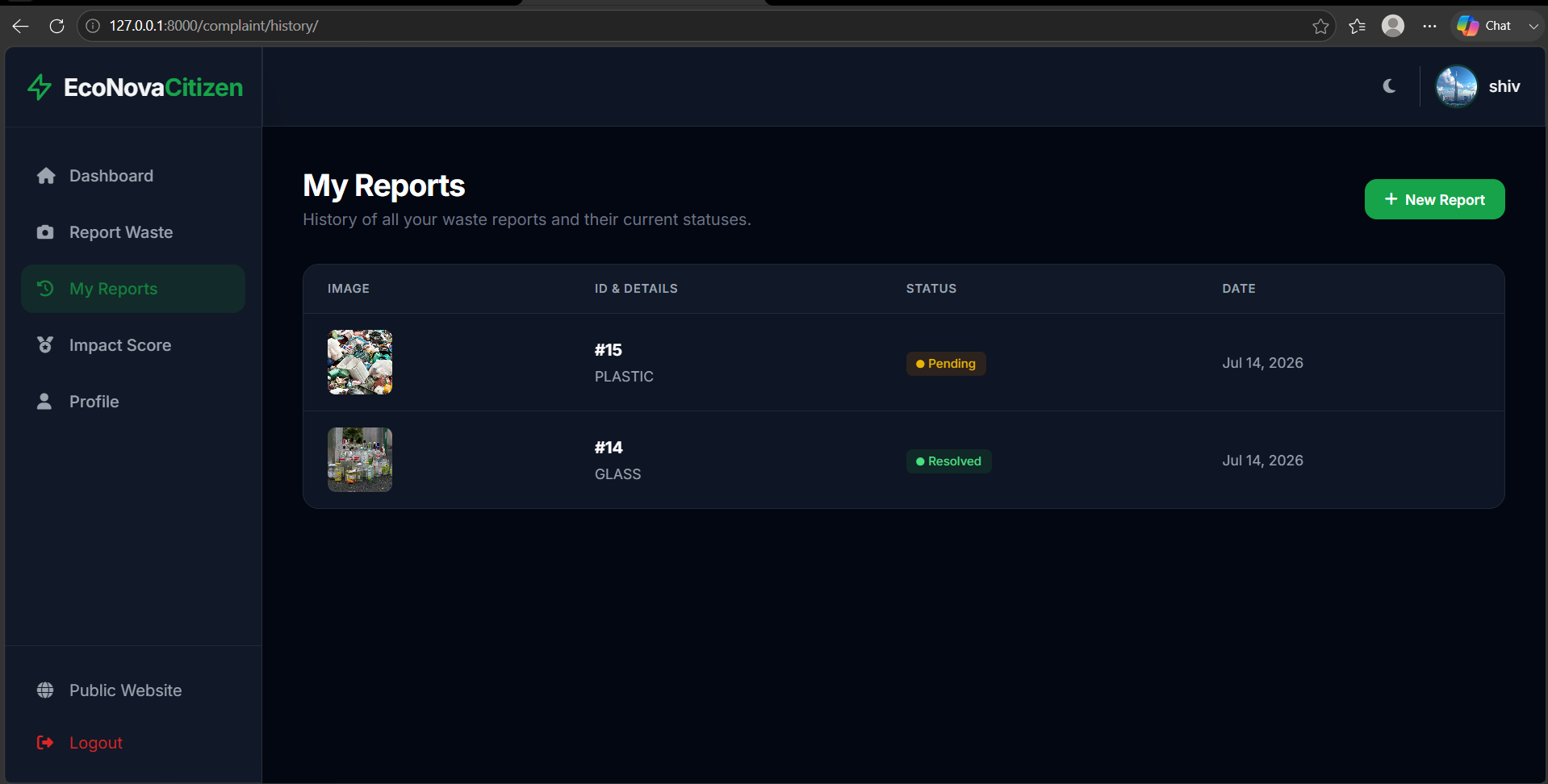
My Reports
-
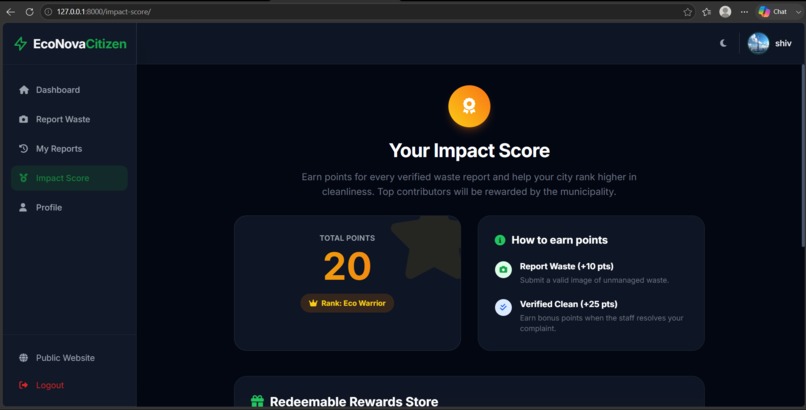
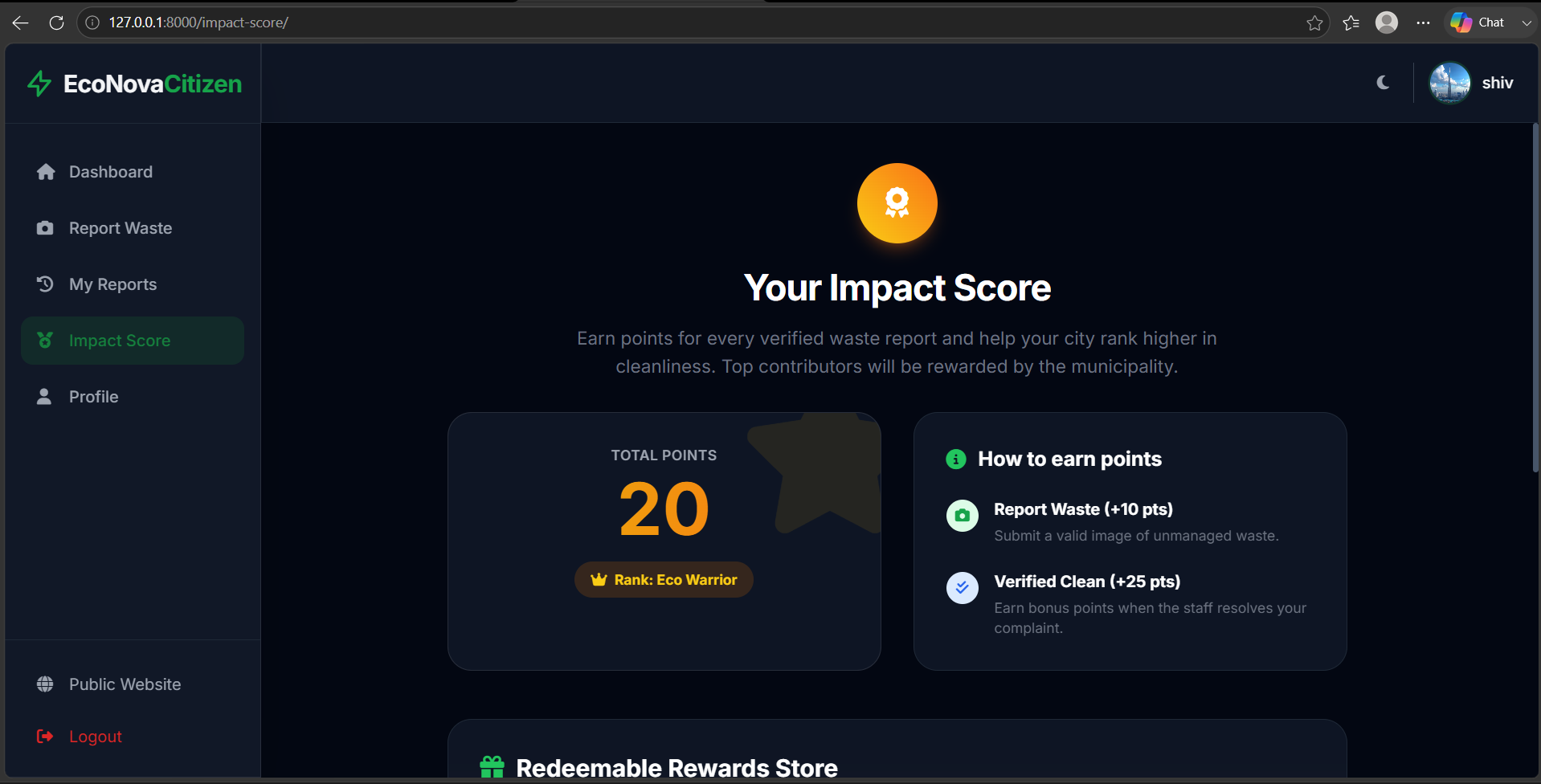
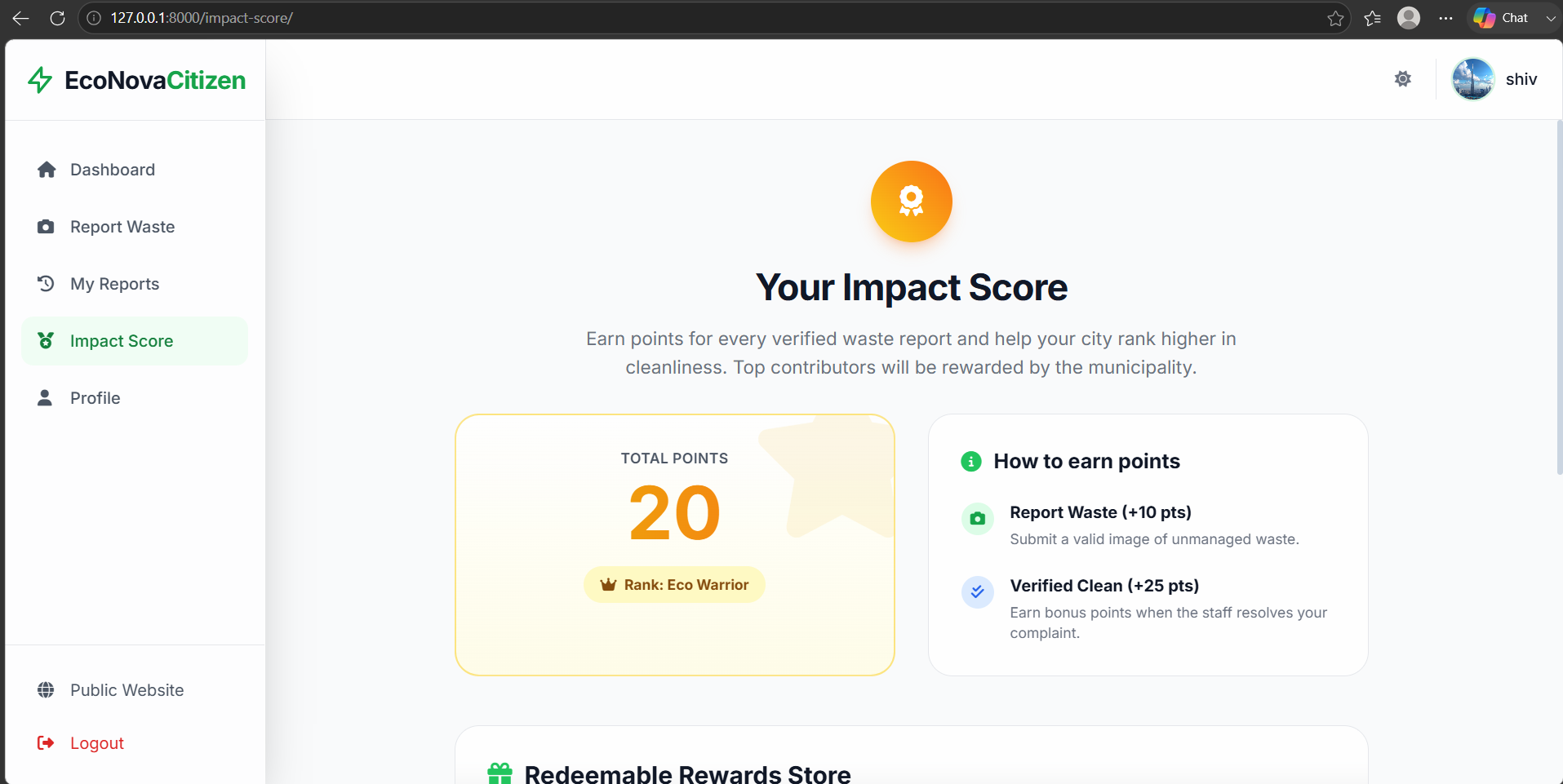
Impact Score
-
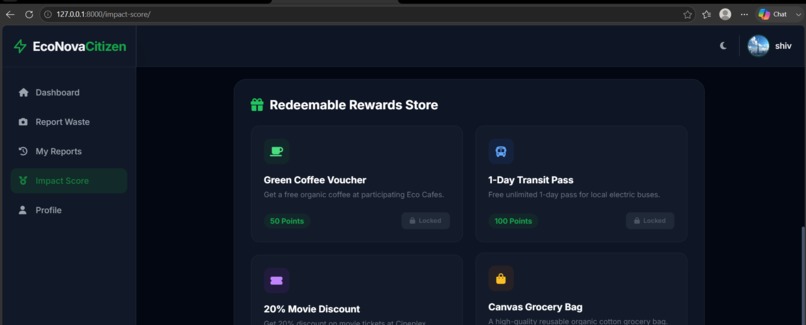
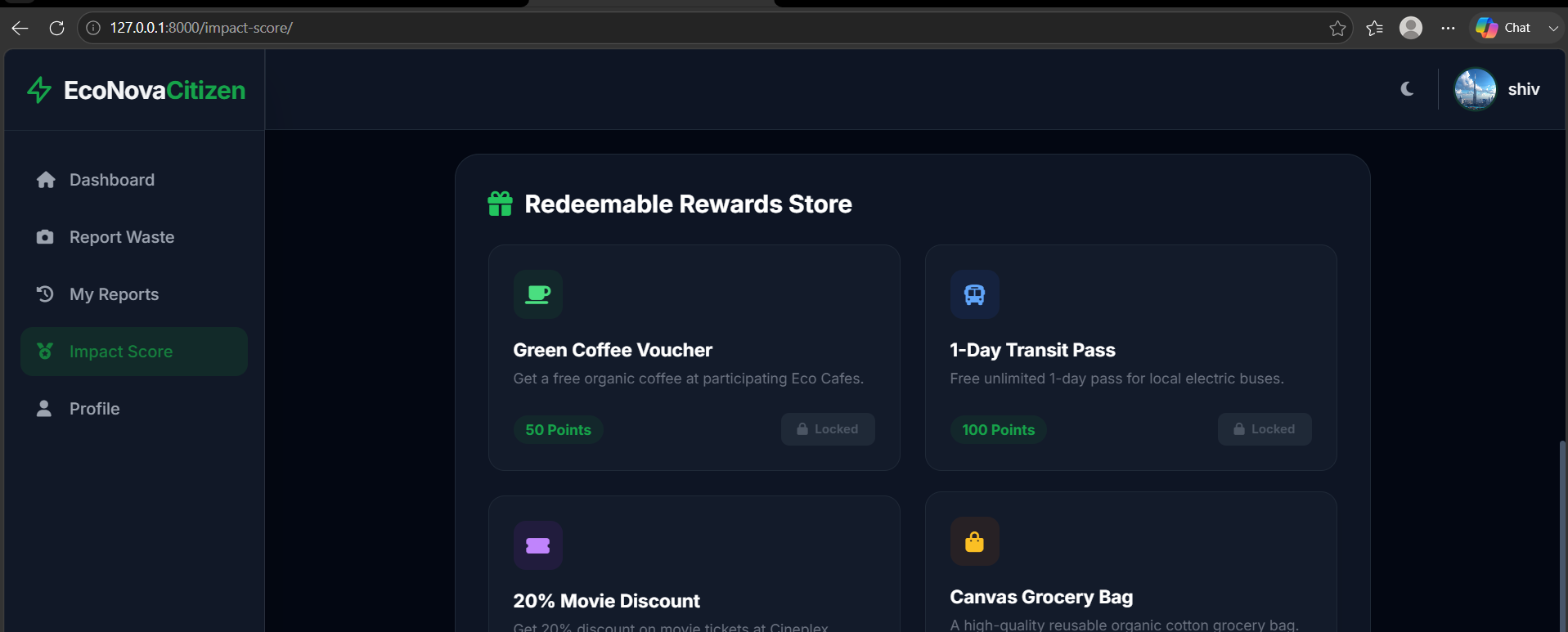
Rewards Store
-
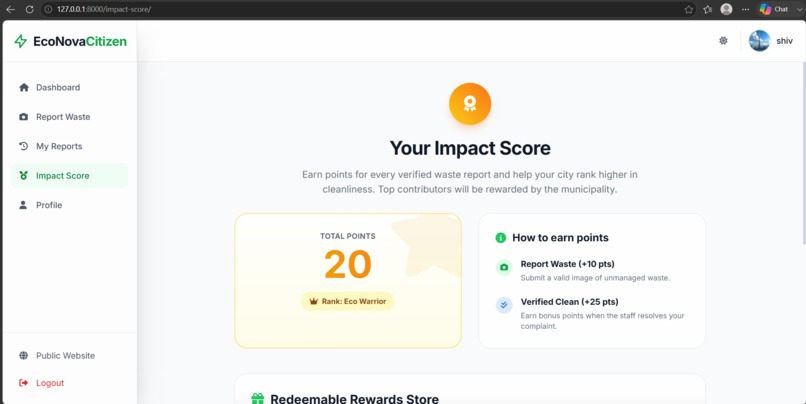
Light Theme
-
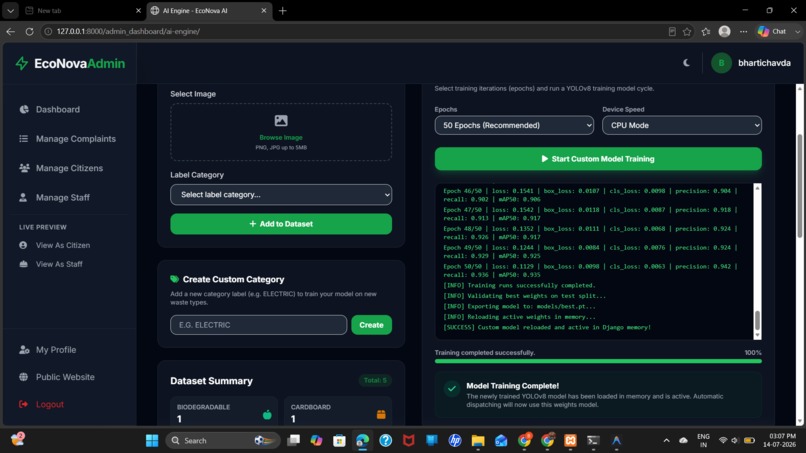
Model Train
-
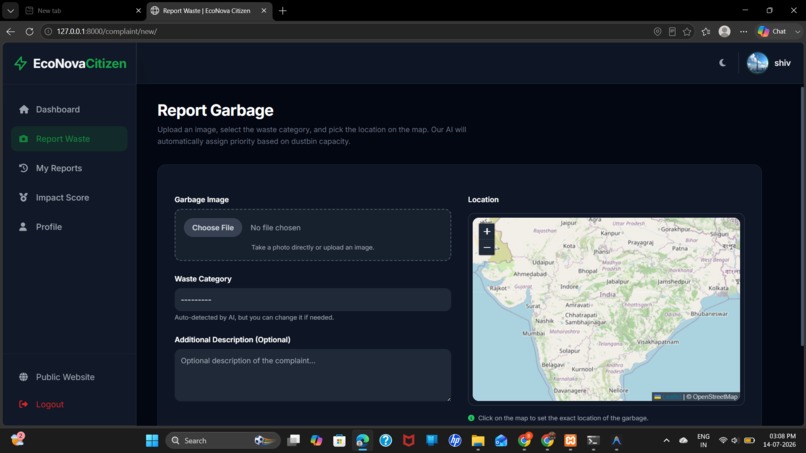
Garbage Reports

Inspiration
Urban waste management systems worldwide are struggling to keep up with rapid population growth and consumption. Traditional citizen complaint portals are often sluggish, non-transparent, and place a heavy administrative burden on municipal staff who must manually inspect, categorize, prioritize, and assign every cleanup task.
We wanted to bridge the gap between community care and municipal action. EcoNova AI was born out of the vision to democratize civic duty by equipping citizens with an intelligent, gamified platform while automating waste routing using hybrid AI models and spatial analytics.
What it does
EcoNova AI is an enterprise-grade smart waste management ecosystem featuring a citizen-facing portal, sanitation staff dispatch routes, and an administrative AI training suite.
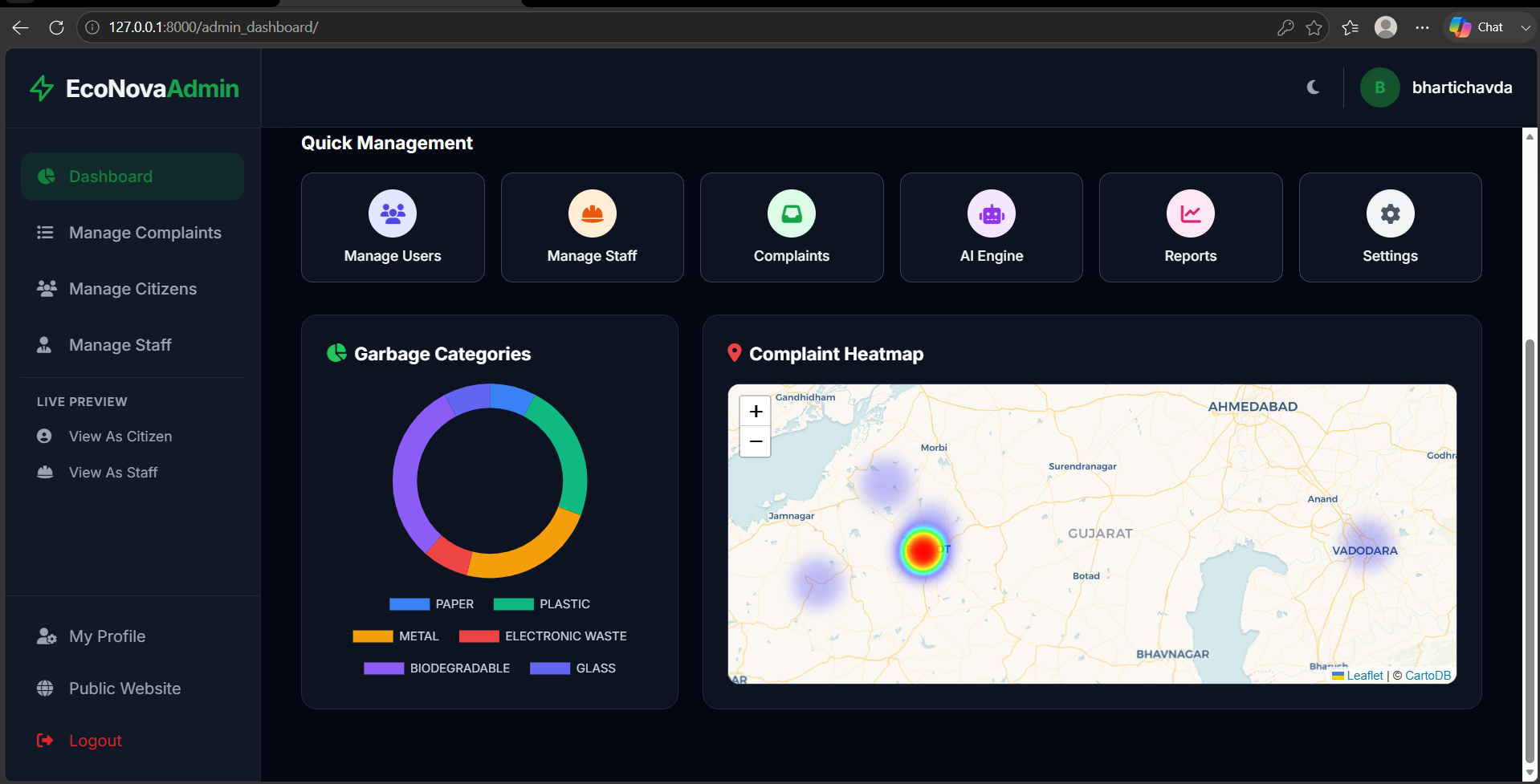
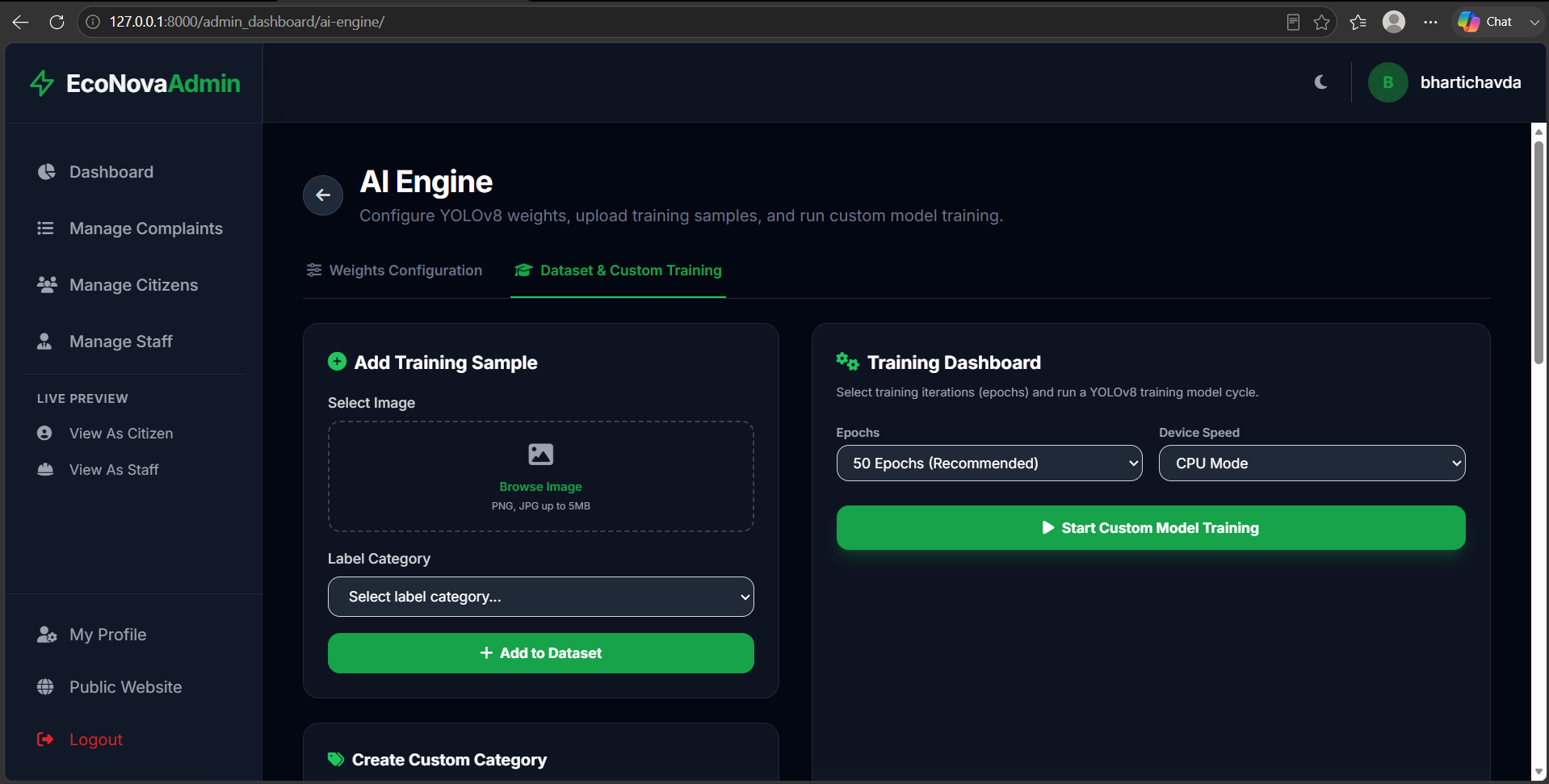
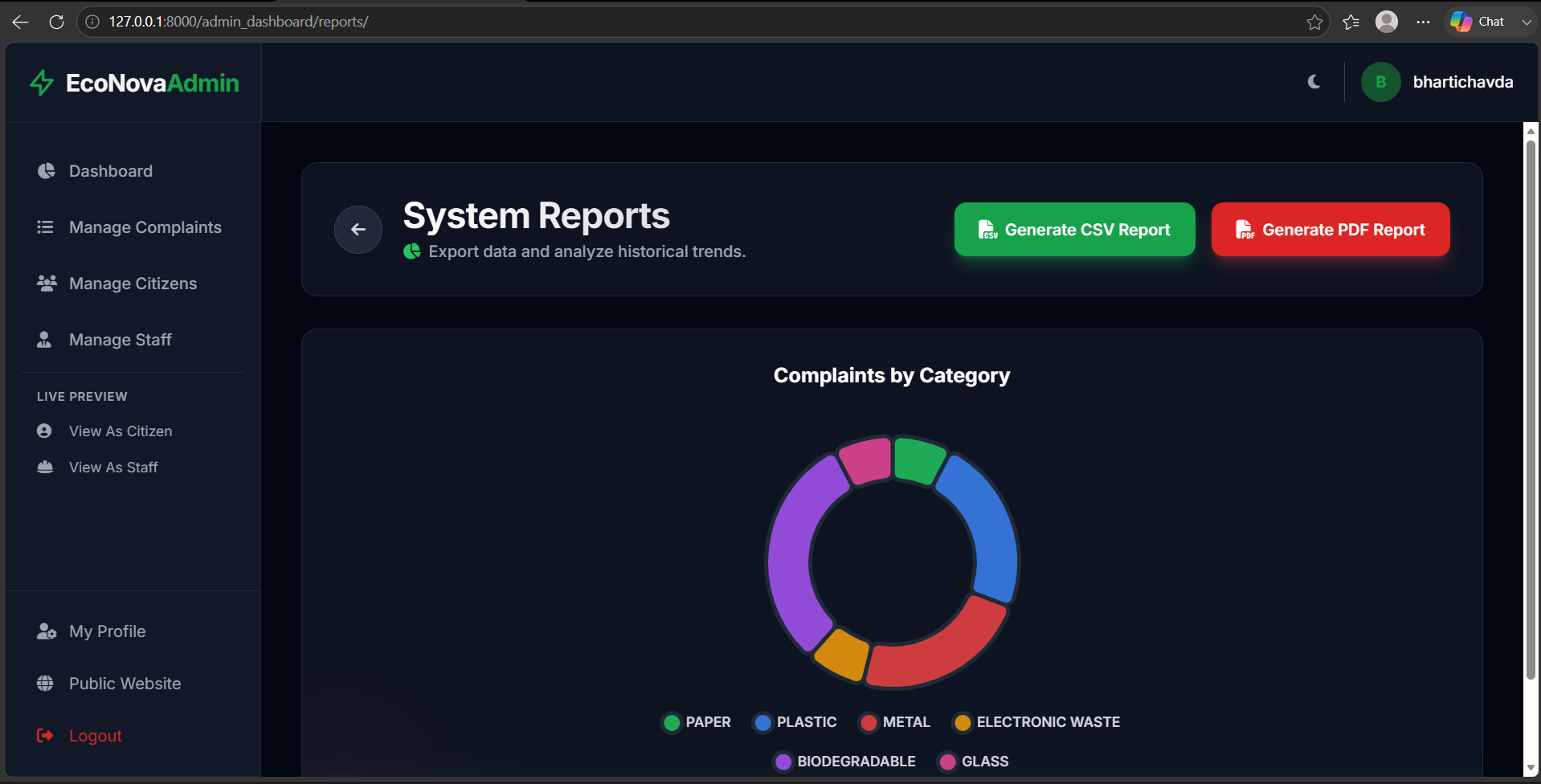
For Citizens: Gamified Participation: A dashboard displaying their active reports, completed cleanups, and accrued Impact Points (10 points awarded per resolved task) to incentivize community action. Smart Reporting: Citizens upload a picture of a waste site. The system automatically extracts location coordinates using Leaflet.js, identifies the type of waste, predicts the dustbin fill level, and files the complaint instantly. End-to-End Tracking: Citizens track complaints in real-time through seven stages (from Pending to Cleaning Started and Resolved) and receive rich HTML email notifications. For Sanitation Staff: Assigned Cleanup Tasks: A dedicated dashboard containing active cleanup assignments, complete with Leaflet maps to locate reports and record "before" and "after" cleanup photographs. Real-time Notifications: Immediate alerts when critical-priority waste is detected in their assigned service areas. For Administrators: Geospatial Analytics: Heatmaps showing critical garbage accumulation spots to deploy municipal trucks efficiently. Interactive Data Visualizations: Real-time category charts powered by Chart.js alongside professional executive summaries exportable in PDF and CSV format. Closed-Loop AI Training Panel: An active retraining suite where admins can upload new datasets, manage confidence thresholds, review label distributions, and reload model weight files dynamically.
How we built it
EcoNova AI's architecture is built on robust, production-ready frameworks:
Backend & Database: Python and Django framework with SQLite, utilizing a relational schema for accounts, complaints, notification dispatches, and custom categories. Ensemble AI Classification Pipeline: Deep Learning Object Classification: An ultralytics YOLOv8 model fine-tuned for waste classification detects the target object (e.g. plastic, metal, organic). ImageNet ResNet18 Feature Mapping: A PyTorch ResNet18 model acts as an edge-case classifier, mapping raw visual categories to their respective waste groups. Vector Search & Cosine Similarity: Employs a custom vector database logic using ResNet18 embeddings, running cosine similarity matches against registered ground-truth training items to bypass YOLO classification noise on duplicate/known items. SHA-256 Hash Matching: Generates file hashes to check against a global memory cache of verified dataset items for immediate, zero-inference classification. Pixel-level Color Heuristics: Analyzes RGB pixel distributions (e.g., green/brown/white/grey ratio detection) to verify and weight deep learning predictions. Frontend Layout: A responsive design built using Bootstrap 5, styled with premium CSS stylesheets, and driven by Alpine.js for reactive UI behaviors. Geospatial & Mapping: Leaflet.js and OpenStreetMap integration mapping coordinates, plotting waypoints, and displaying density heatmaps. Reporting & Verification: ReportLab for dynamic PDF executive document generation, and secure SMTP mail handlers with an OTP (One-Time Password) confirmation flow for user registration and account recovery.
Challenges we ran into
AI False Positives: Deep learning classification models are prone to mislabeling complex items, particularly under poor lighting or when cardboard/metal are mixed. We overcame this by building a hybrid decision tree that ensembles YOLOv8, ResNet18, and raw color heuristics. We also integrated a vector similarity search (cosine similarity threshold of 0.85) to prioritize registered database ground truths. Duplicate Report Prevention: Multiple citizens reporting the same overflowing bin can lead to redundant dispatch. We resolved this by implementing a geographical duplicate-check algorithm that compares latitude and longitude coordinates of new submissions against active pending reports within a 100-meter proximity threshold. Closed-Loop Model Management: Letting administrators train the AI without restarting Django was difficult due to PyTorch thread safety. We resolved this by building a custom loading cache manager that frees weights from CUDA/CPU memory and hot-swaps active YOLO .pt files dynamically.
Accomplishments that we're proud of
High-Accuracy Hybrid Inference: Achieving near-perfect classification accuracy on various waste types by pairing deep neural networks with raw pixel-level color checks. Seamless Admin AI Control: Designing an admin dashboard that makes uploading training datasets, viewing model statistics, and deploying custom weights as simple as clicking a button. Fully Functional Executive Report Engine: Designing and implementing a ReportLab PDF generator that outputs beautifully styled, enterprise-grade charts and tables with custom color styling.
What we learned
The Power of Ensembling: Single neural network models are rarely sufficient in noisy, real-world conditions. Ensembling different architectures (YOLO for local bounds, ResNet for feature embeddings, color analyzers for composition) leads to immensely robust applications. Active Memory Caching: Caching dataset SHA-256 file hashes on system startup is vital for sub-second classification response times. Visual Dispatching: Direct coordinate numbers are useless to sanitation workers. Plotting visual waypoints on maps drastically reduces cleanup response times.
What's next for EcoNova AI
Mobile App with Offline Caching: Developing a native iOS and Android application with offline SQLite database support, allowing citizens to file reports without active internet connections, automatically syncing once connected. OSRM Route Optimization: Integrating Dijkstra-based route calculators to automatically plot the shortest, most fuel-efficient transit path for collection trucks visiting multiple assigned reports. IoT Smart Bin Integration: Connecting real-time ultrasonic hardware sensors directly to the EcoNova AI backend, enabling bins to report their own levels automatically. Community Reward Partnerships: Collaborating with local eco-friendly stores to let citizens redeem their Impact Points for vouchers, turning civic duty into tangible rewards.
Built With
- alpinejs
- analytics
- artificial-intelligence
- bootstrap5
- charts
- computer-vision
- cosine-similarity
- data-science
- django
- email-notifications
- geospatial
- javascript
- leaflet.js
- machine-learning
- openstreetmap
- python
- pytorch
- reportlab
- resnet
- smart-cities
- sqlite
- torchvision
- vector-search
- yolo
- yolov8

Log in or sign up for Devpost to join the conversation.