
Inspiration
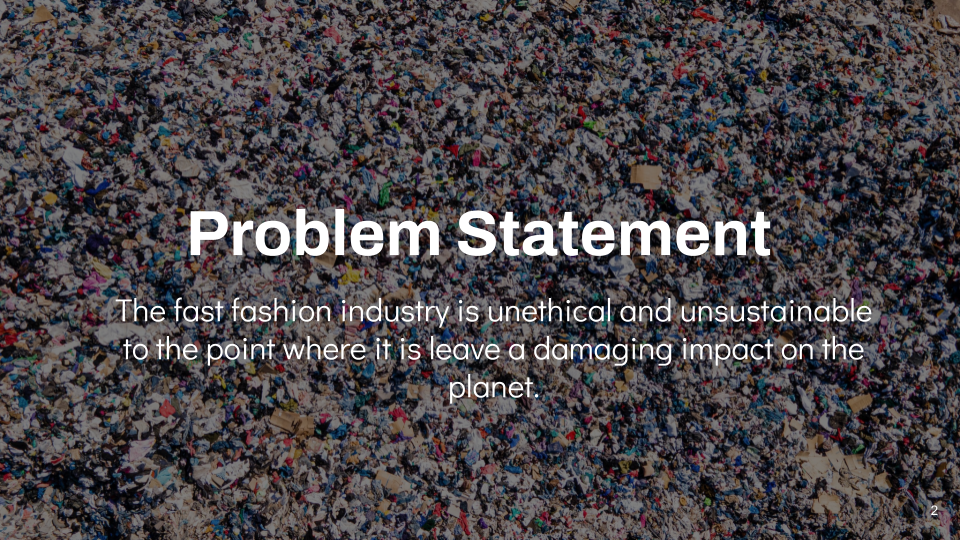
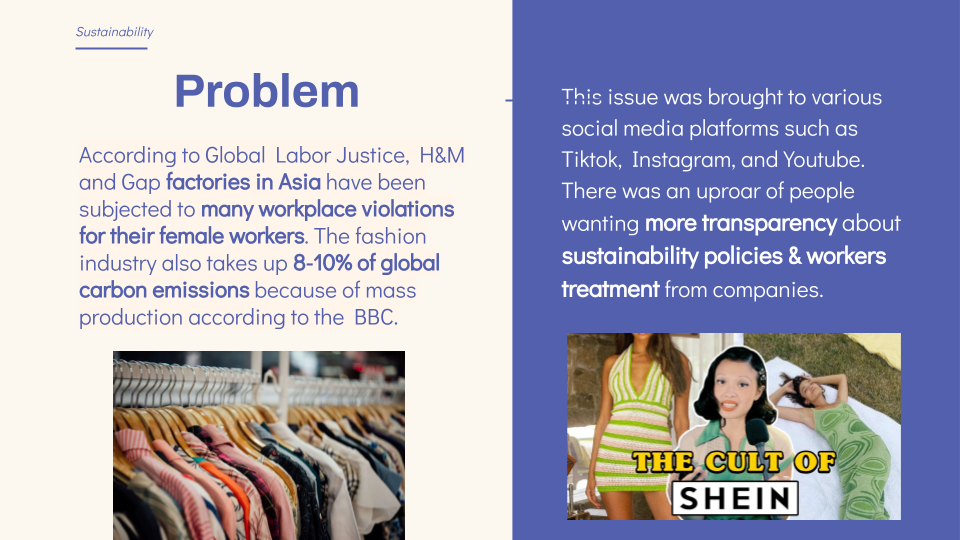
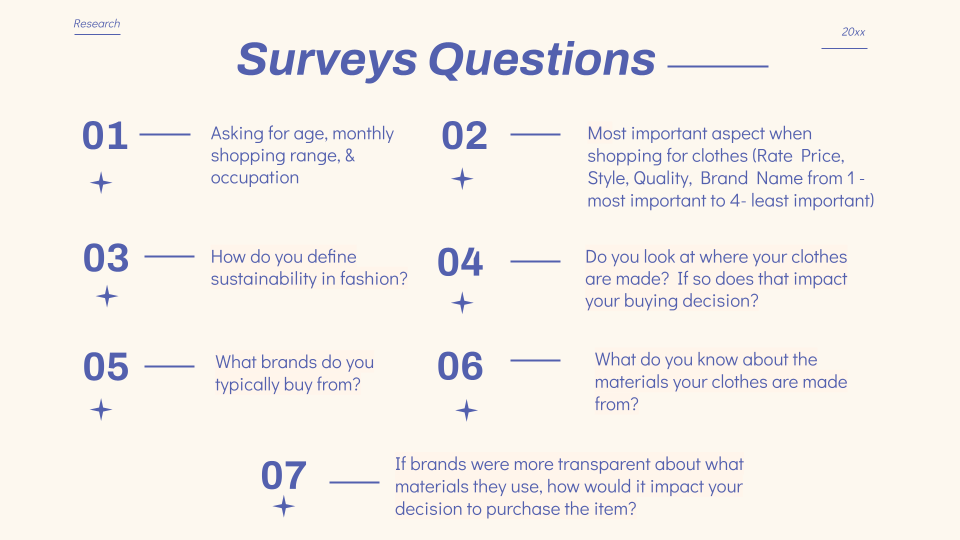
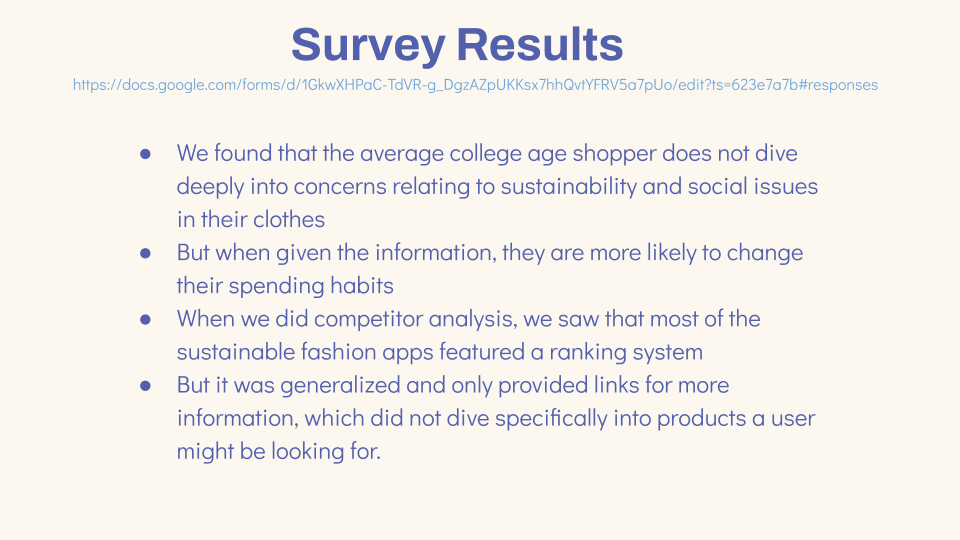
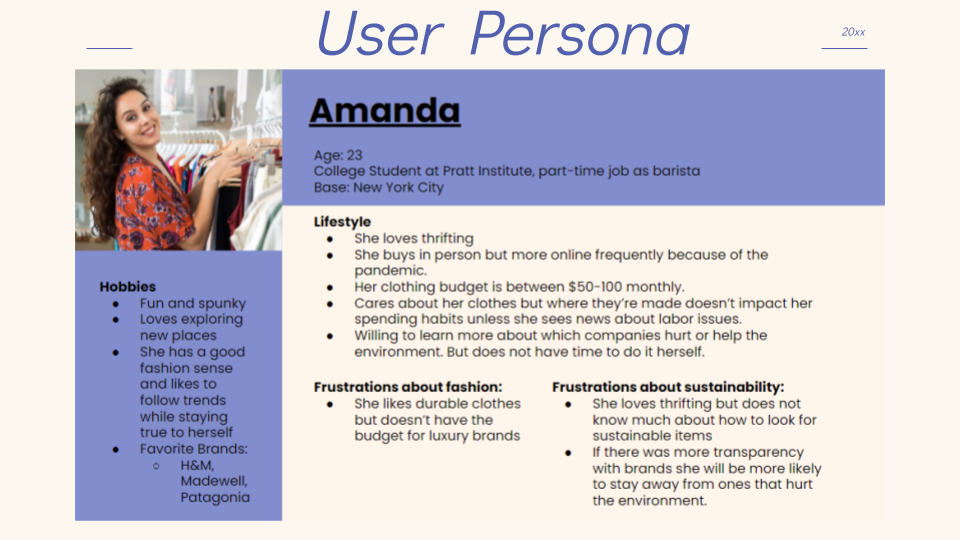
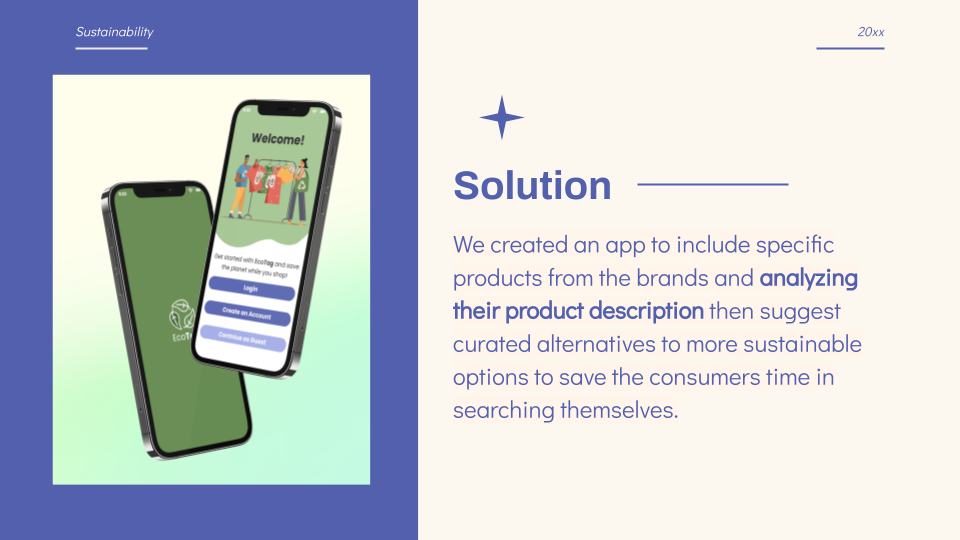
We chose sustainability, specifically in fashion because we saw that not many apps have an all-inclusive solution for the user to understand what components make a brand more sustainable beyond the use of eco-friendly materials. Through our research using a google form survey, we found that the average college age consumer does not dive deeply into concerns relating to sustainability and social issues in their clothes but when given the information they are more likely to change their spending habits. When we did competitor analysis, we saw that most of the sustainable fashion apps featured a ranking system, but it was generalized and only provided links to more information, which was not engaging. They focused on a brand's overall aesthetic and sustainable alternatives, however, we decided to take it a step further, incorporating specific products from the brands and analyzing their product description then suggest curated alternatives to more sustainable options to save the consumers time in searching themselves. We want to advocate for sustainable businesses, in a way that can showcase their products, why they are better for the planet to entice all kinds of shoppers looking to stop fast fashion without abandoning style.
What it does
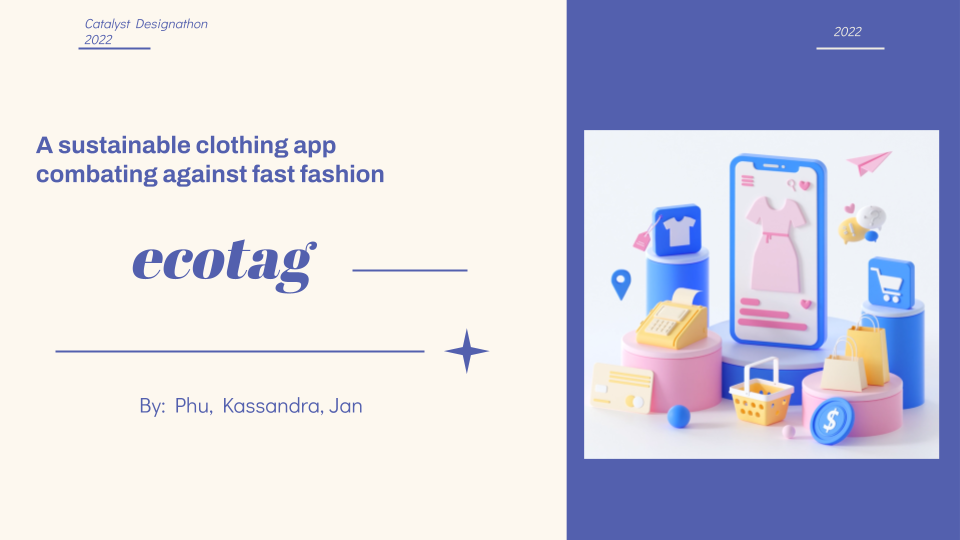
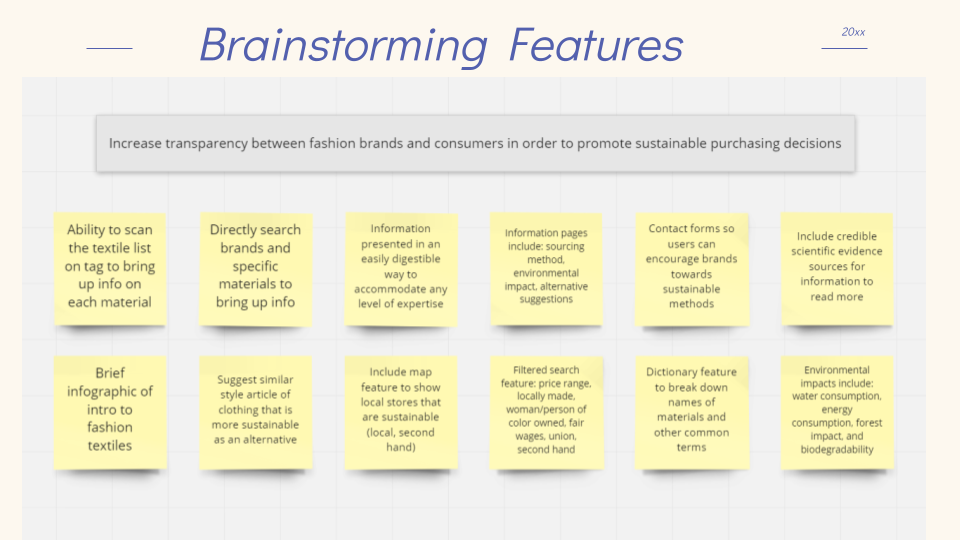
Our app addresses how to conveniently find out the transparency of a fashion company’s supply chain based on their profiles, the environmental costs of the apparel and offers alternative sustainable choices nearby as well as online options. Our app is divided into three main sections: fiber content information, alternative apparel options and public company transparency. Our user interface was created with the intent that anyone could digest the information on fiber content, energy consumption, how it affects the environment and people. We want to promote brands that have taken measurable actions to combat fast fashion and make users more aware of brands that are greenwashing.
How we built it
Eco-tag was created in Figma, with the use of Icons8 and Adobe Illustrator.
Challenges we ran into
It was challenging to figure out how to brand ourselves to the consumer niche. We wanted to create an app that was inclusive to everyone, yet we knew not every user will have a background on fashion or textiles, but they were opened to learning more. The difficult part was creating a cohesive user interfacing that would help guide the user throughout all our features.
Accomplishments that we're proud of
As a beginner level team, we are proud of the amount of deep thought and analysis we made in a considerably short time. We are really happy without aesthetically pleasing our designs and color palette turned out to be and we thoroughly enjoyed the thought process behind our final design prototype.
What we learned
We learned that there is so much detail and input being made in UX that does not necessarily come off to the end user, however having that narrative and story for ourselves is what drives the design process and solution building. Figma is an amazing tool to use for collaboration and art boards, helping us from the brainstorming process to the final pitch.
What's next for Eco-Tag
The next step for Eco-Tag would be to gather organizations and sustainability committees to help actualize the information we want to put out to the public. There is a vast number of experts we need to hear from, therefore we would conduct more research and user testing.
Built With
- adobe-illustrator
- figma


Log in or sign up for Devpost to join the conversation.