Inspiration
We wanted to make environmental sustainability feel less like a chore and more like something people could genuinely enjoy. Recycling is one of the simplest ways to help the environment, but the impact of a single action can be difficult to see. We took inspiration from virtual pet games like Tamagotchi and imagined a world where taking care of a digital ecosystem meant taking care of the real one. That's how Recycli was born: a mobile game that connects real-world recycling habits with the health and happiness of a virtual habitat. Our goal was to make environmental responsibility interactive, approachable, and rewarding encouraging people to build sustainable habits through play.
What it does
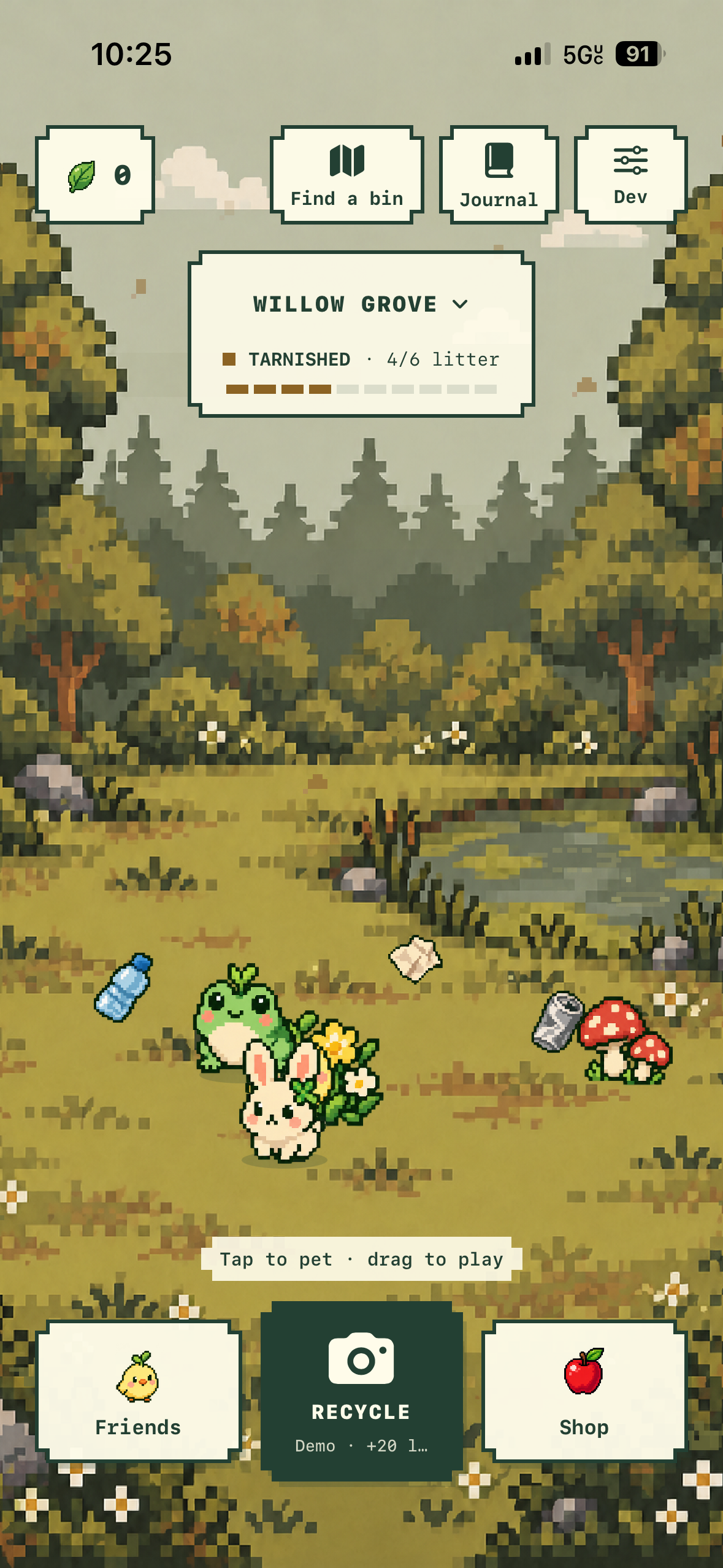
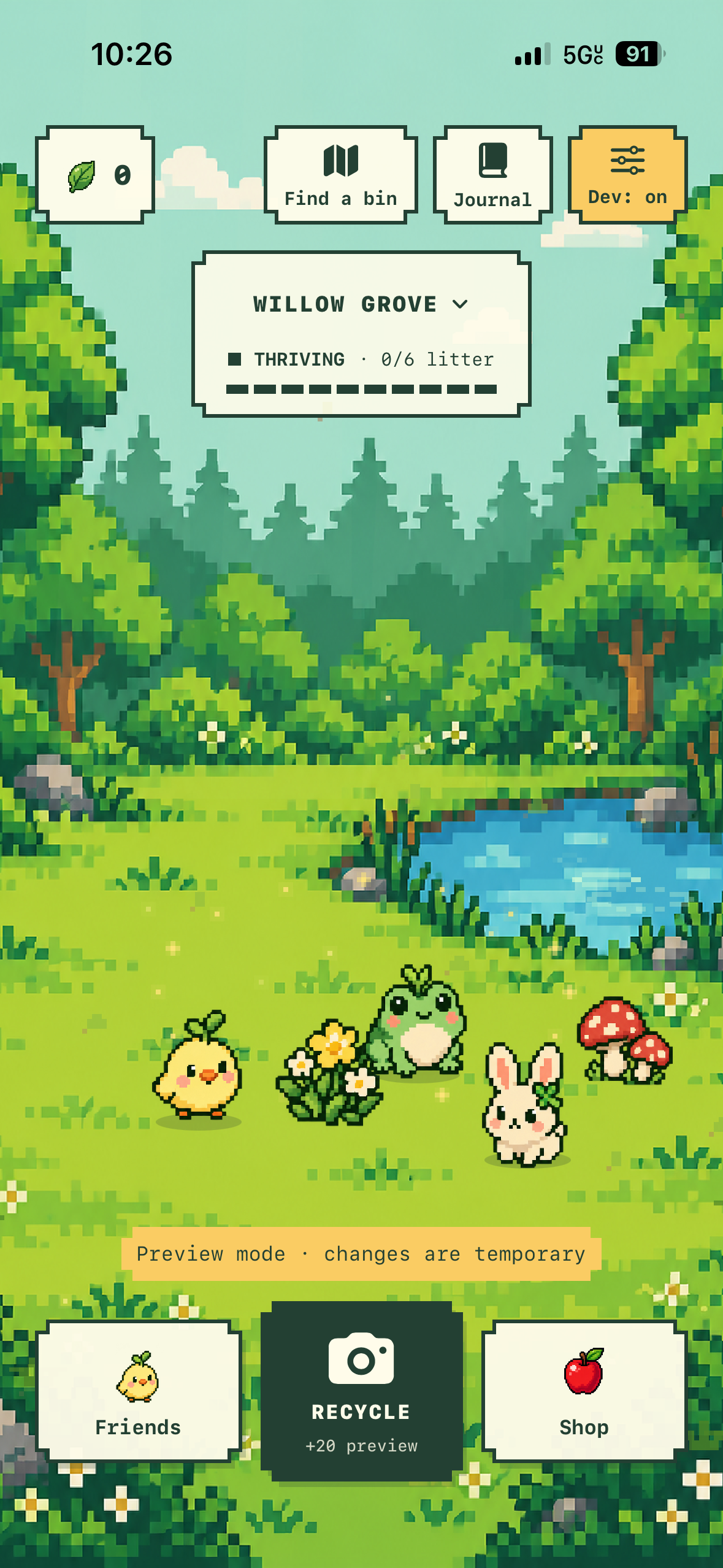
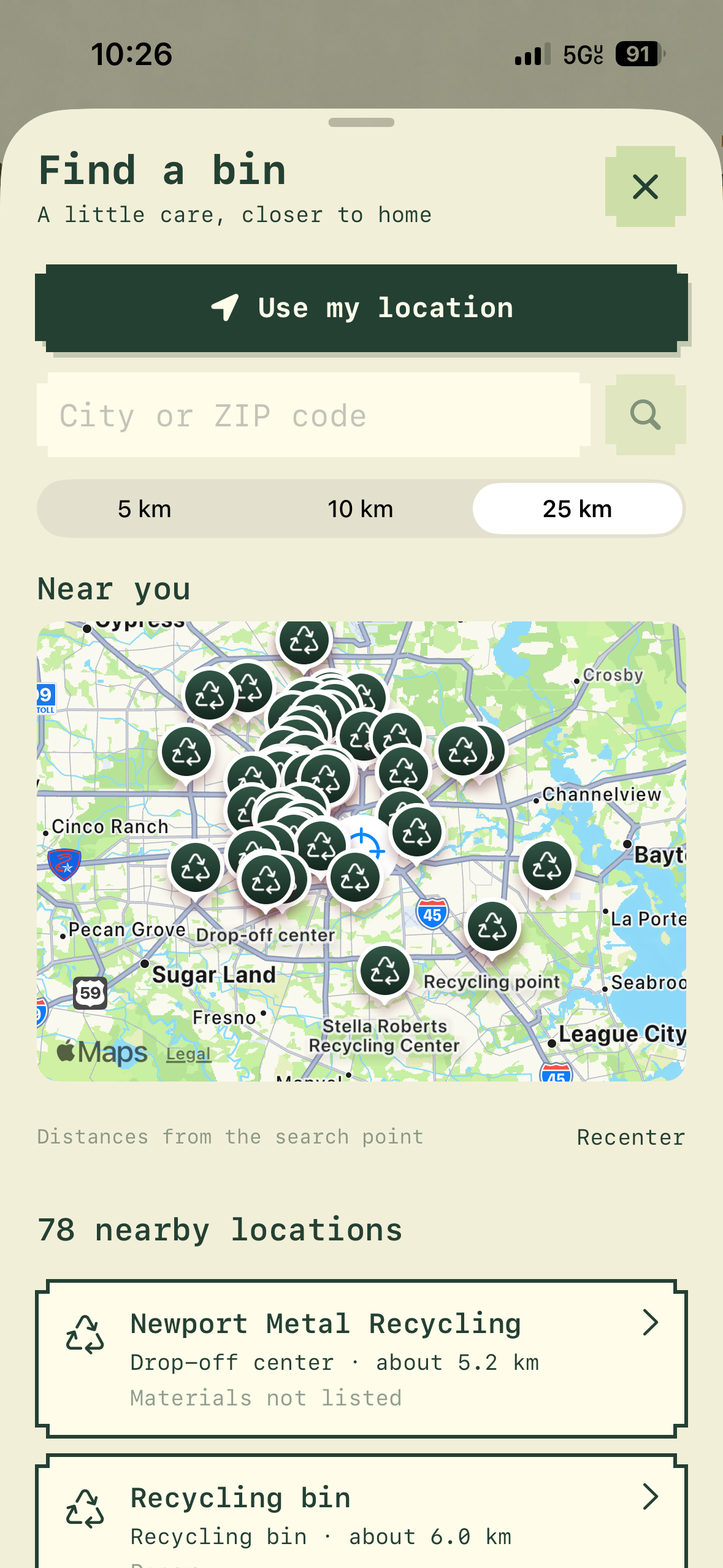
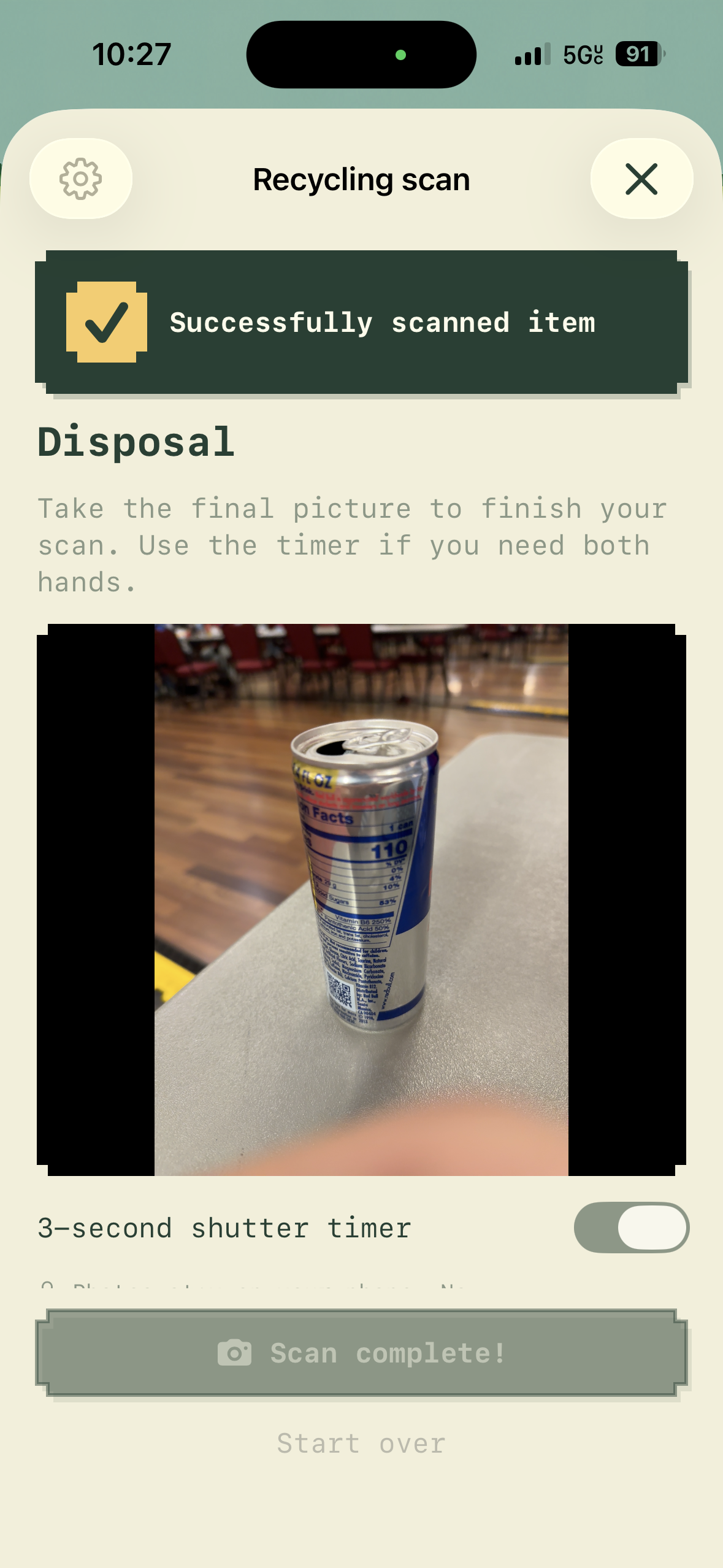
Recycli is an iOS virtual pet and ecosystem simulator that rewards users for recycling in the real world. Players begin with a small pixel-art habitat populated by adorable animal companions. Over time, litter accumulates, the environment deteriorates, and animals retreat as their habitat becomes polluted. To restore their world, players complete recycling challenges using their phone's camera. The recycling process follows three steps: Capture the recycling bin — Take a picture of the bin being used. Capture the recyclable item — Photograph the item before disposal. Capture the disposal — Take a final photo showing the item being placed into the bin. Recycli features an optional Gemini-powered review mode that analyzes the submitted images, identifies recyclable materials, evaluates the visible evidence, and provides recycling guidance. Approved actions earn virtual leaves and remove litter from the player's habitat. Players can then spend their leaves on food and decorations, interact with their pets, and unlock new animal friends. The game features three distinct ecosystems: Willow Grove: A peaceful woodland filled with greenery and forest animals. Coral Cove: An underwater environment with colorful coral and marine life. Snow Glade: A snowy wilderness inhabited by arctic animals. Each habitat has its own pollution progression, environmental animations, and collectible pets. As pollution increases, the scenery visibly changes. Recycling helps bring the ecosystem back to life. We also built a Find a Bin feature that helps users discover nearby recycling locations, view facility information, and open directions in Apple Maps. For hackathon demonstrations, Recycli includes an offline demo mode that simulates successful recycling reviews without requiring an external server or API key.
How we built it
We developed Recycli as a native iOS application using Swift, SwiftUI, and Xcode. SwiftUI powers the interactive interface, animated habitats, pet interactions, camera experience, and in-game shop. We used a retro pixel-art aesthetic to give the application the personality of a classic virtual pet game. We implemented a persistent game-state system to manage habitat pollution, rewards, unlockable pets, food inventories, decorations, and recycling history. Each ecosystem maintains its own environmental condition and progression, while players share a common virtual currency across habitats. For recycling verification, we integrated Google Gemini through an optional Node.js backend. Rather than continuously streaming camera footage, the app collects three images and submits them together for review. Gemini evaluates the visual evidence and returns material information, feedback, and a review decision. The backend also handles review limits, duplicate-image checks, and retry protection to reduce reward abuse. For recycling-location discovery, we integrated OpenStreetMap data through the Overpass API, supplemented with public City of Houston recycling-facility data. Users can search by location, explore recycling sites on a map, and navigate using Apple Maps. We also implemented accessibility features, including VoiceOver support and reduced-motion behavior, and created automated tests for core game logic, persistence, recycling workflows, and verification handling.
Challenges we ran into
One of our biggest challenges was figuring out how to connect real-world recycling with a game in a way that felt meaningful. We wanted to reward legitimate sustainable behavior without making the experience tedious. This led us to design a three-photo recycling workflow that collects evidence while keeping the interaction straightforward. AI verification was another major challenge. A photograph cannot conclusively prove that an item was recycled correctly, so we had to design around the limitations of visual evidence. We added checks for incomplete submissions, duplicate images, uncertain results, and repeated rewards while keeping the system honest about what it can verify. Managing multiple living environments also introduced complexity. Each habitat needed independent pollution levels, unlockable animals, and saved decorations, while keeping shared rewards and consistent gameplay. Finally, we had to balance visual polish with performance. Animated animals, atmospheric effects, gestures, haptics, and particle effects needed to work together smoothly on mobile devices.
Accomplishments that we're proud of
We're especially proud of turning a sustainability concept into an interactive game with several connected systems. We built three visually distinct habitats, each with environmental changes that reflect pollution and cleanup. We also created twelve animal companions that players can pet, pick up, feed, and interact with. Another major accomplishment was connecting the virtual rewards system to a real-world recycling workflow, including optional AI-assisted verification and recycling-location discovery. We developed an offline demonstration experience so the core gameplay can be showcased without depending on internet access or external services. Most importantly, we created an experience that makes taking positive environmental action feel immediately rewarding.
What we learned
Building Recycli taught us how to combine game development, mobile engineering, AI integration, and environmental education into one cohesive experience. We gained experience building interactive interfaces in SwiftUI, managing persistent game state, implementing camera-based workflows, integrating external APIs, and designing backend safeguards. We also learned that AI systems require careful handling of uncertainty. Instead of treating AI output as unquestionable proof, we designed the verification system around visible evidence, explicit review results, and clear limitations. Beyond the technical skills, this project reinforced how important user experience is when encouraging positive behavior. The reward system needs to be engaging, but the underlying goal should remain meaningful.
What's next for Recycli
We envision Recycli growing into a larger sustainability platform with more opportunities for players to make a difference. Future improvements could include: More environmental activities: Rewarding actions such as neighborhood cleanups, reuse, and other sustainable habits. Expanded AI verification: Improving material recognition, sorting guidance, and fraud prevention. Social features: Allowing friends to compare progress, participate in challenges, and work toward shared environmental goals. Additional ecosystems: Introducing new habitats, animal companions, and customization options. Community challenges: Connecting virtual achievements with local environmental initiatives. Real-world impact: Exploring partnerships with environmental organizations and opportunities to support verified conservation projects. Our long-term vision is to transform everyday environmental responsibility into something that people actively look forward to.
With Recycli, every small action can help bring a world back to life.
Built With
- apple-mapkit
- core-location
- google-gemini-api
- node.js
- openstreetmap
- overpass-api
- sqlite
- swift
- swiftui
- xcode

Log in or sign up for Devpost to join the conversation.