-
-
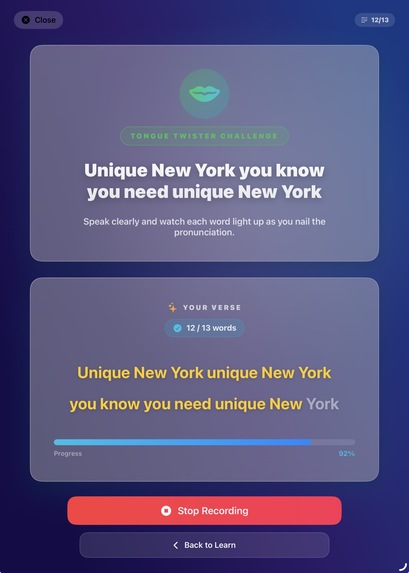
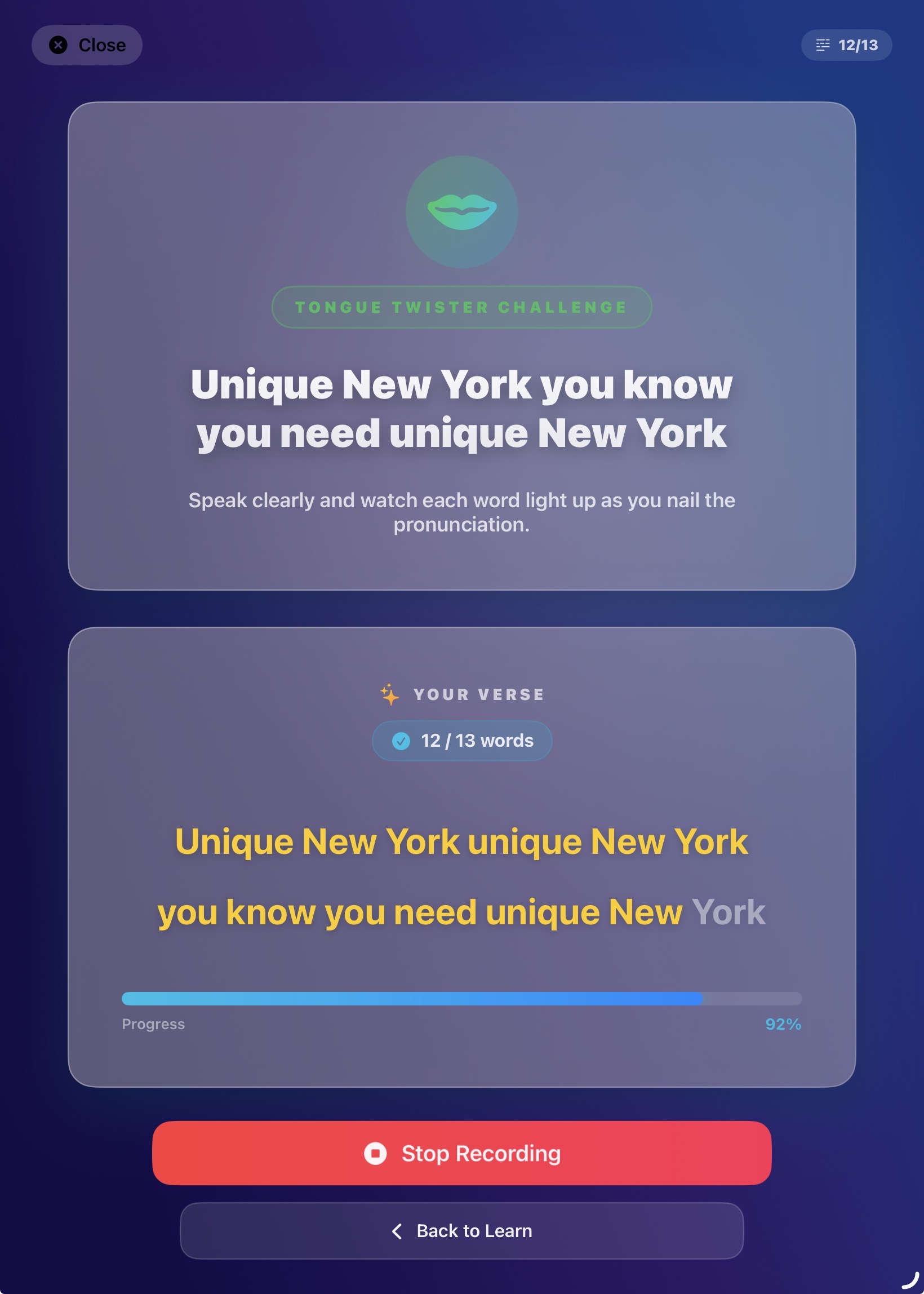
Tongue Twister practice
-
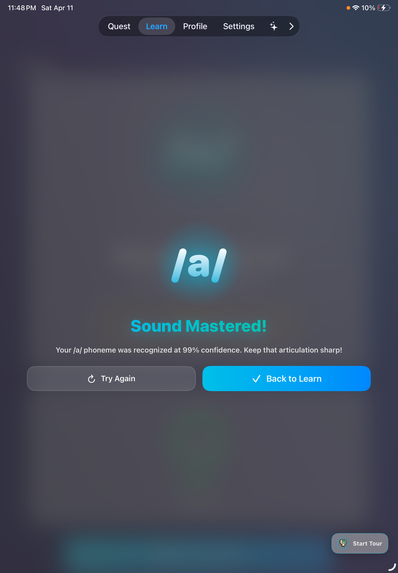
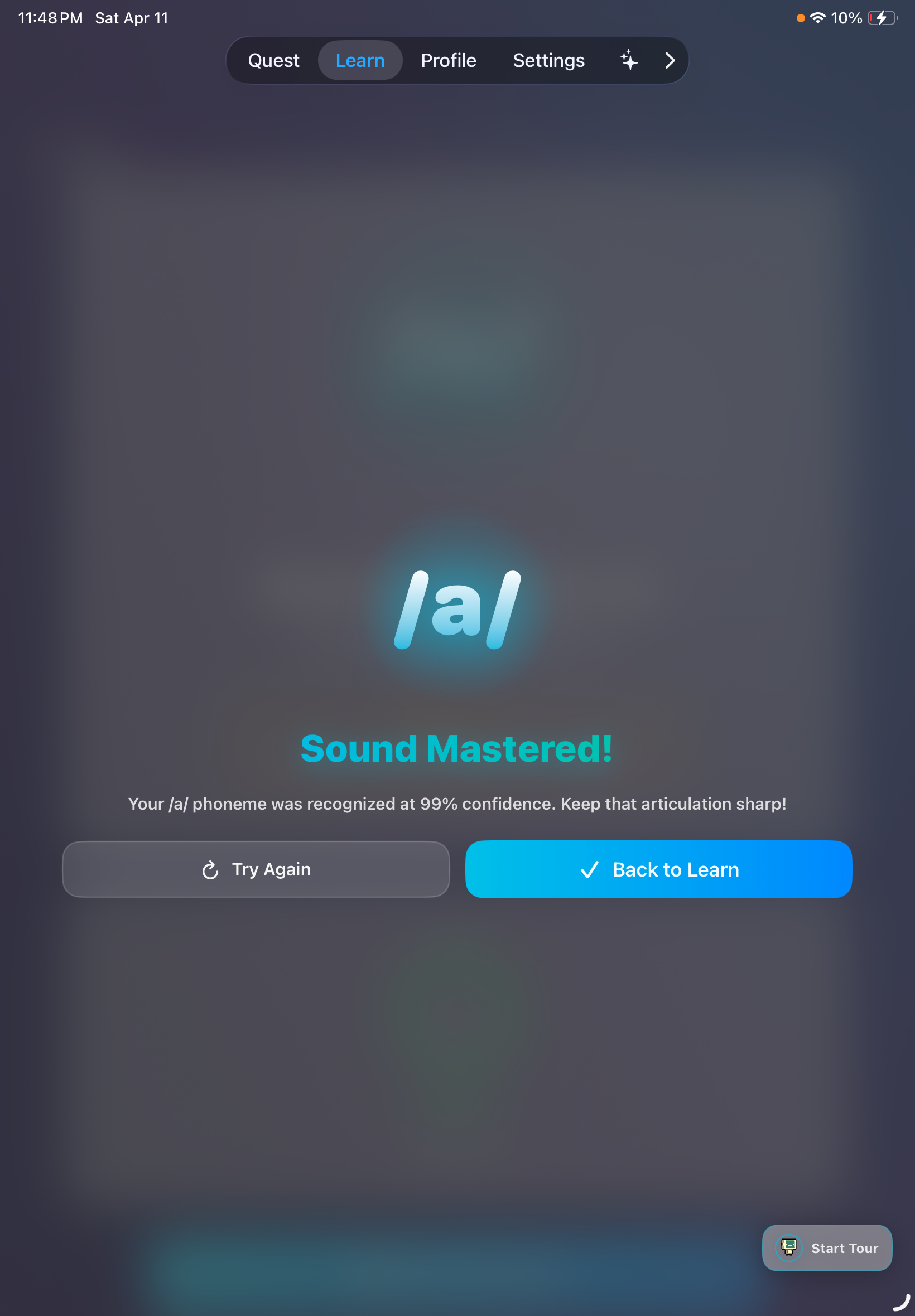
Phonics practice after completion
-
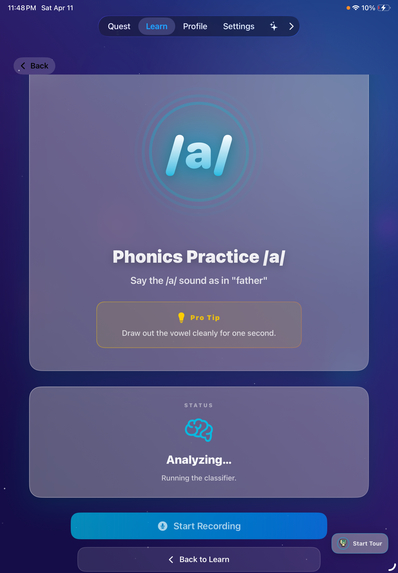
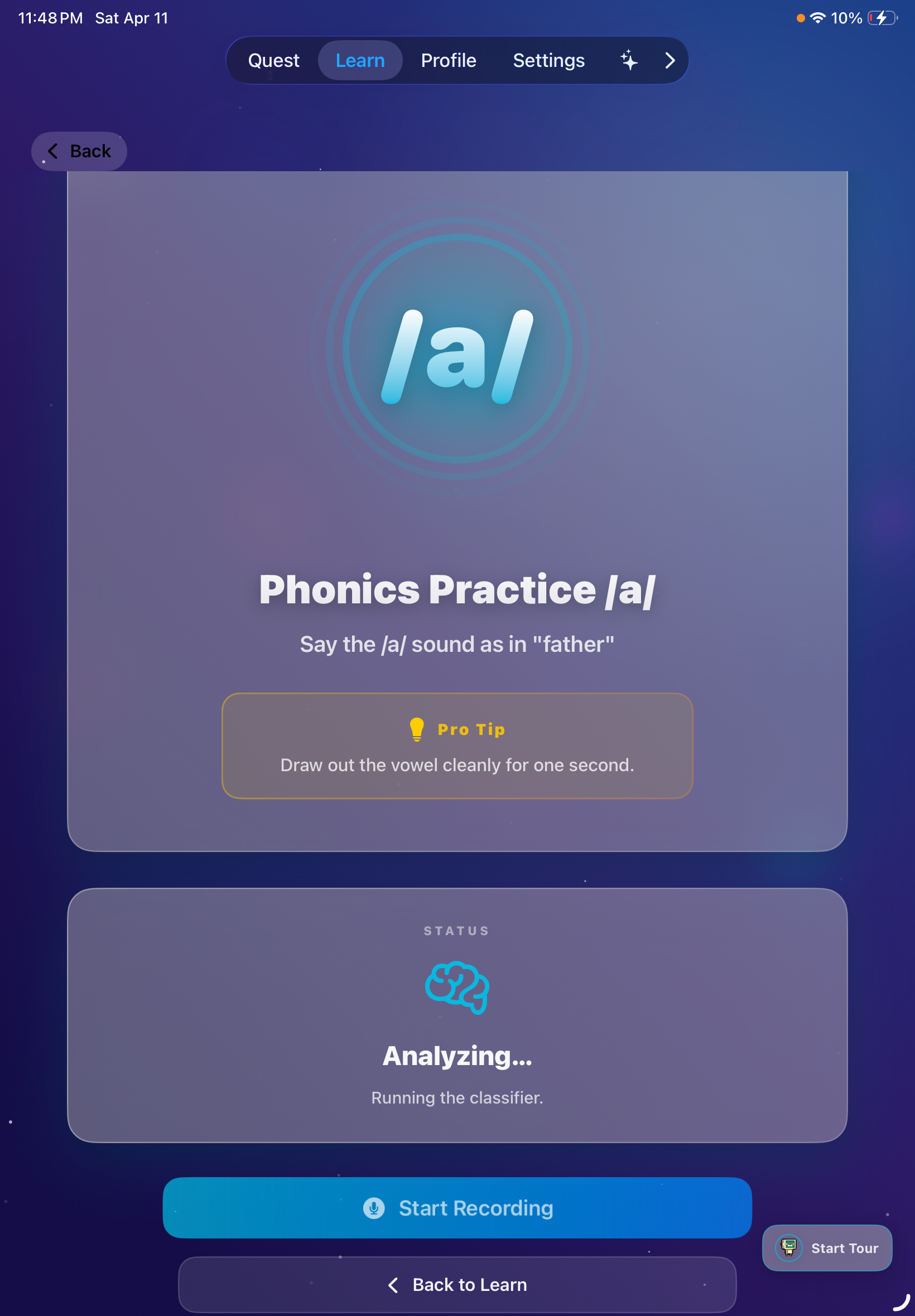
Phonics practice during analysis of the speech sound
-
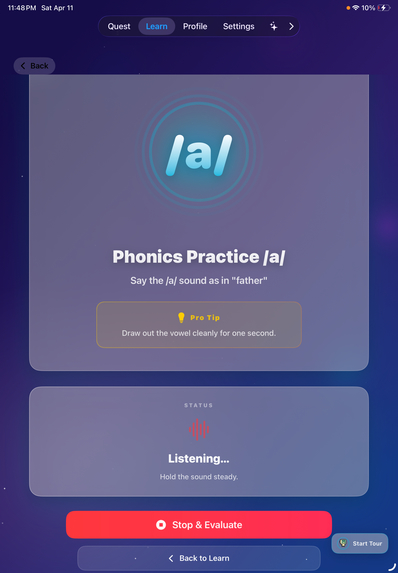
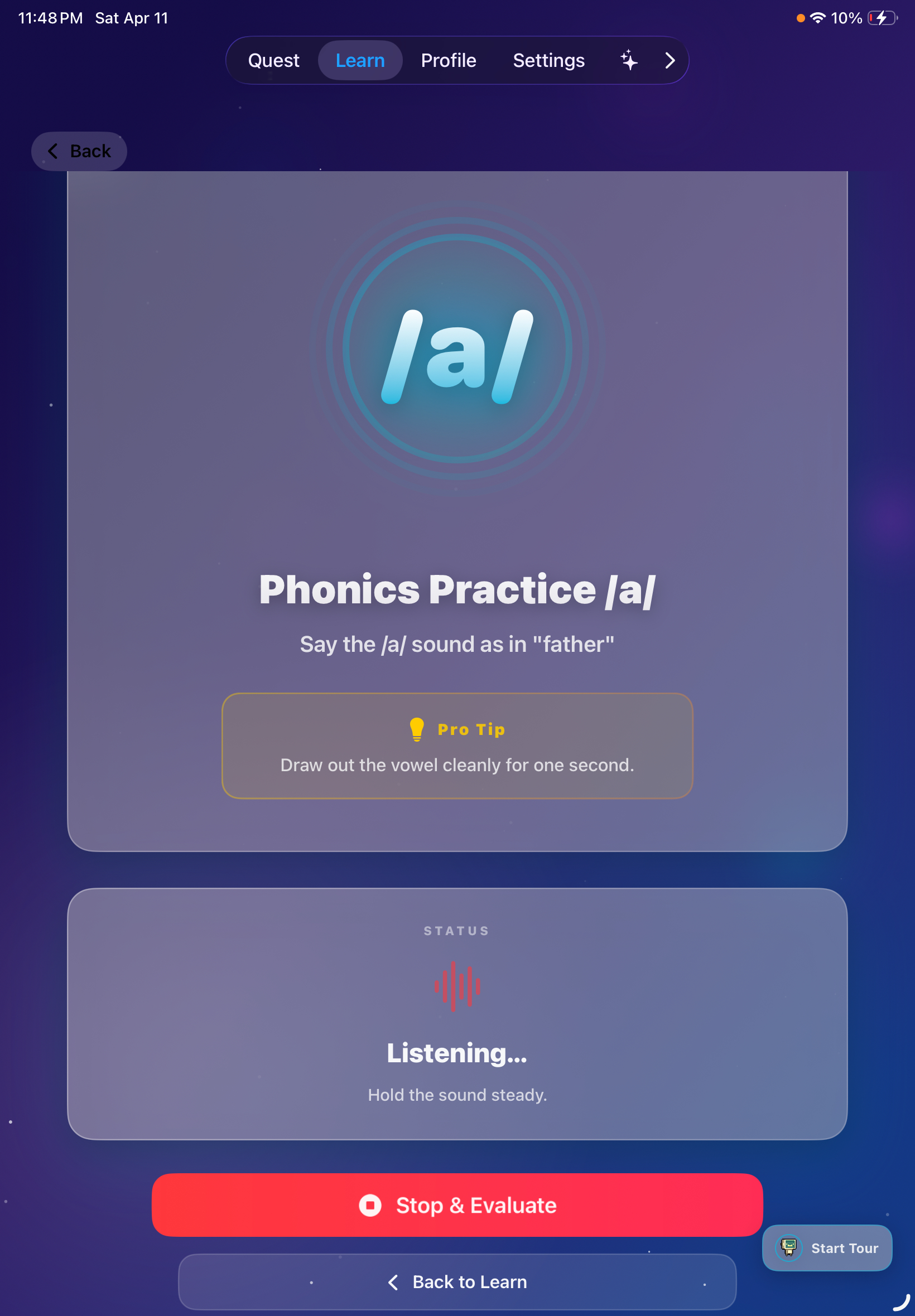
Phonics practice before analysis
-
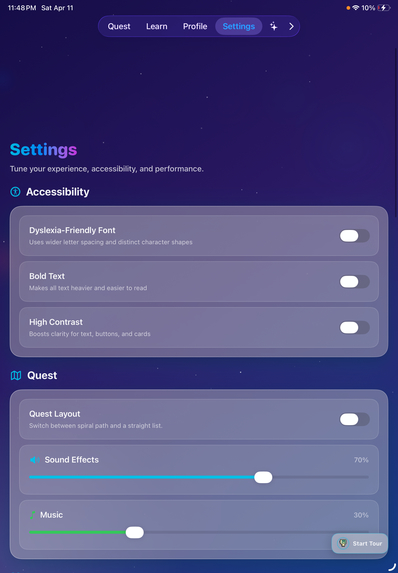
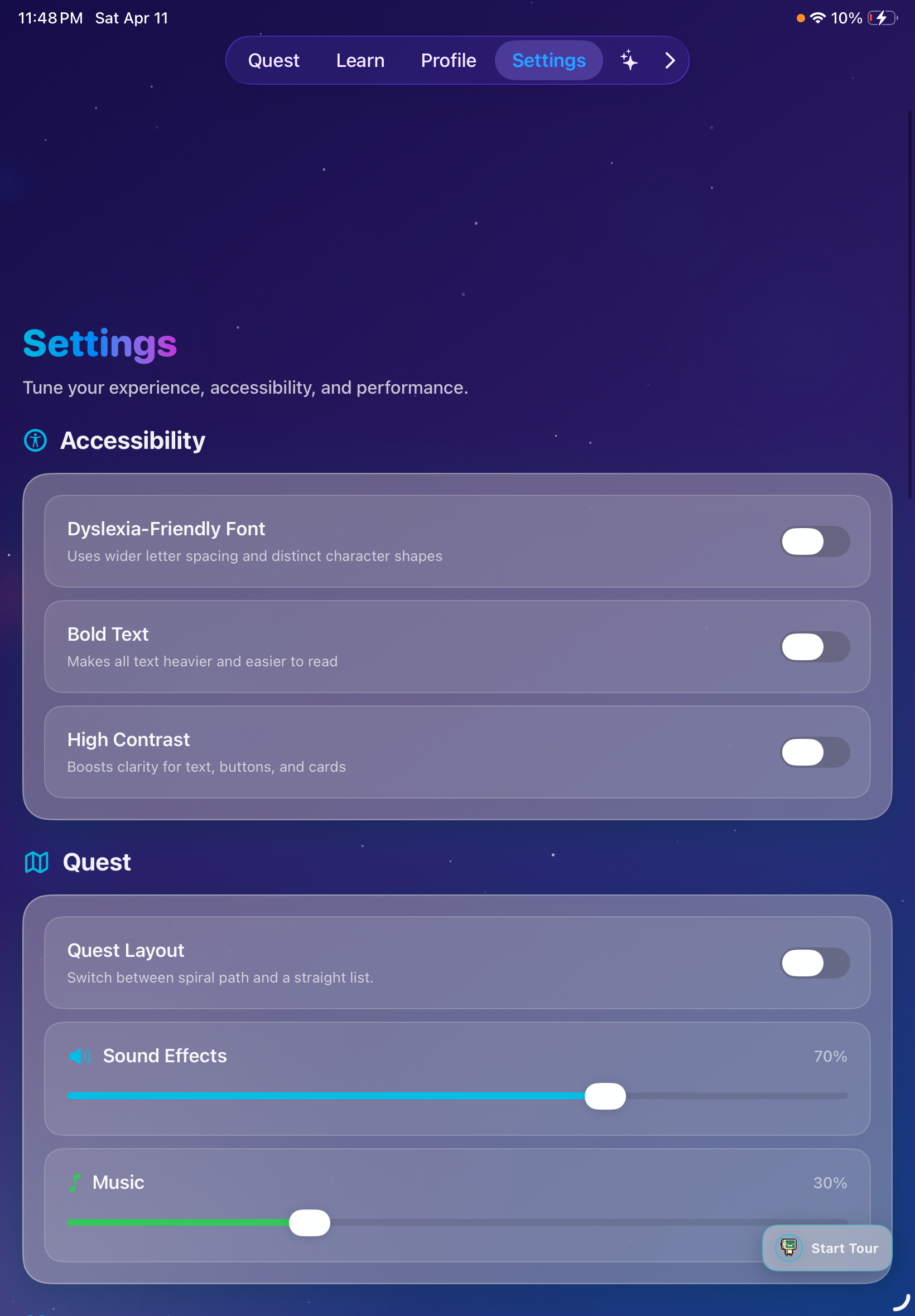
Settings Screen
-
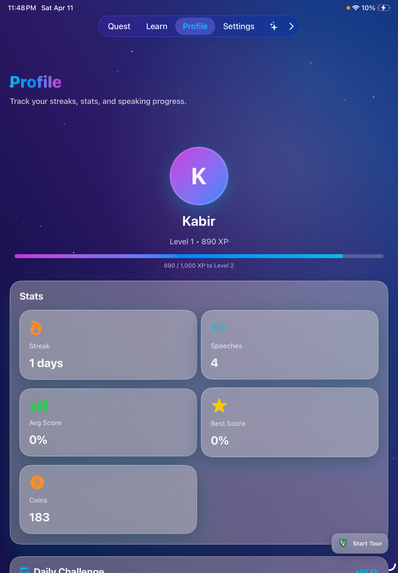
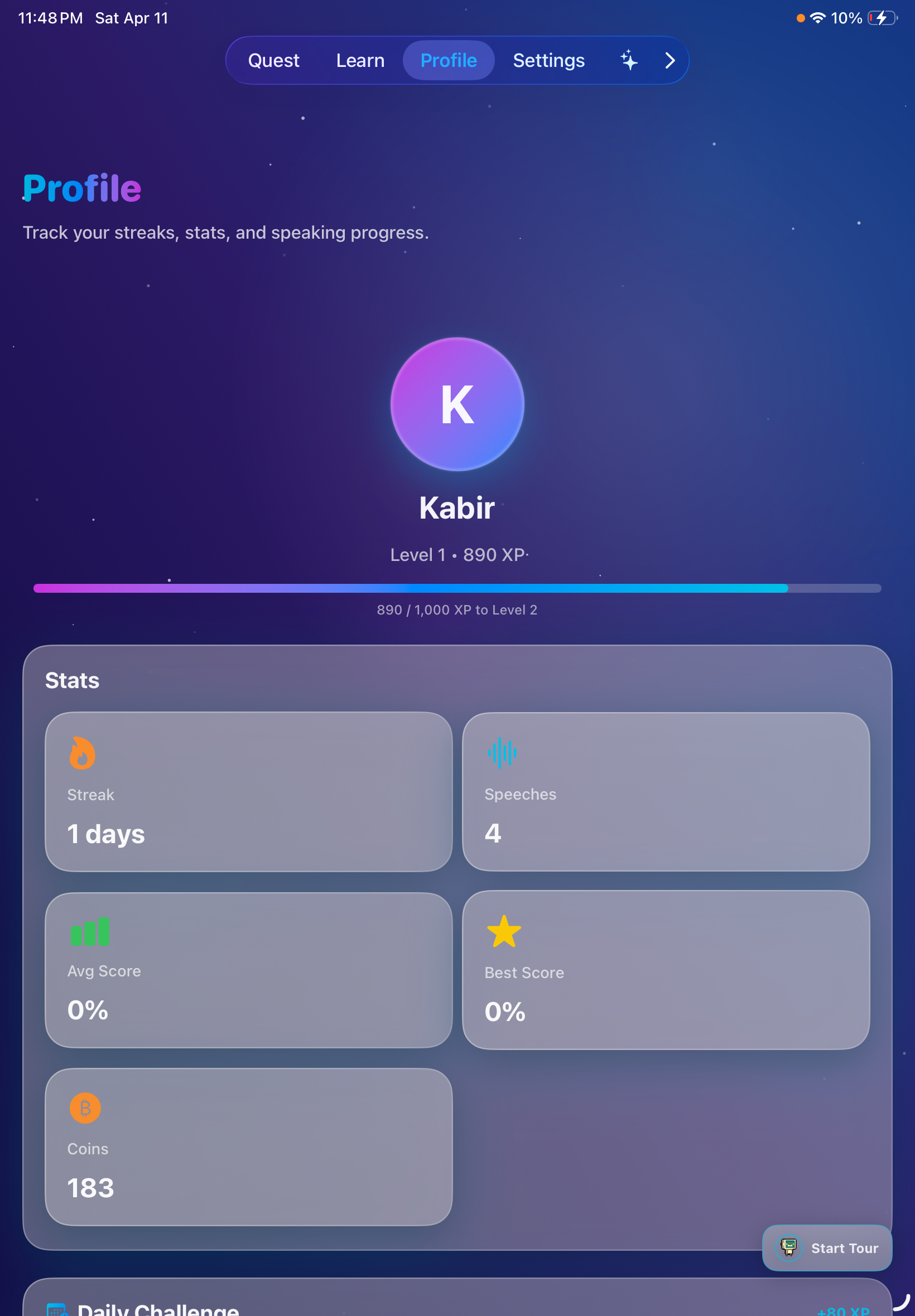
The profile screen
-
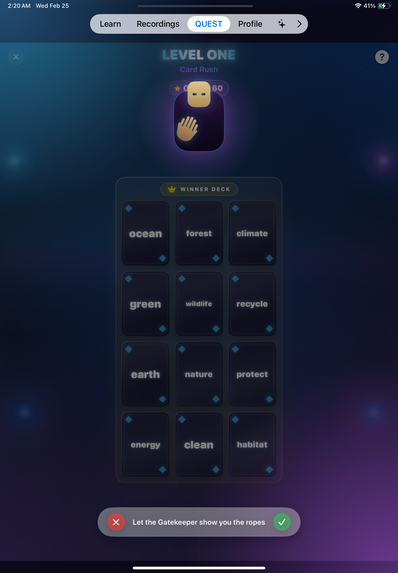
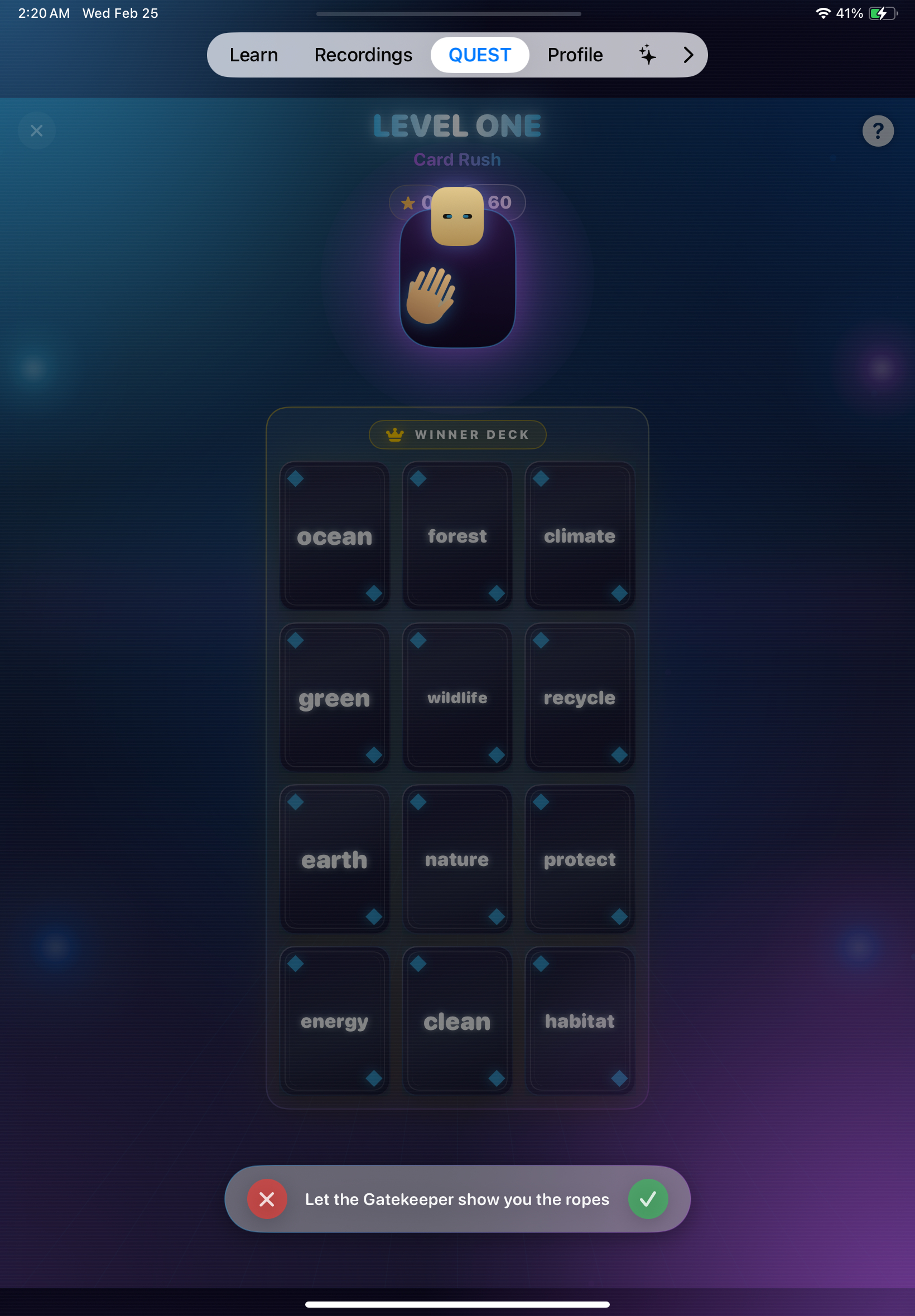
Pic of gameplay from level 1
-
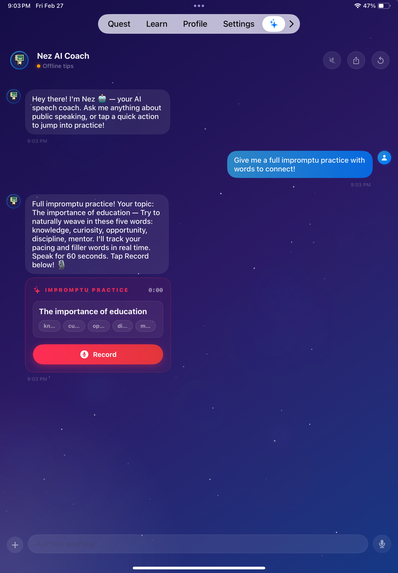
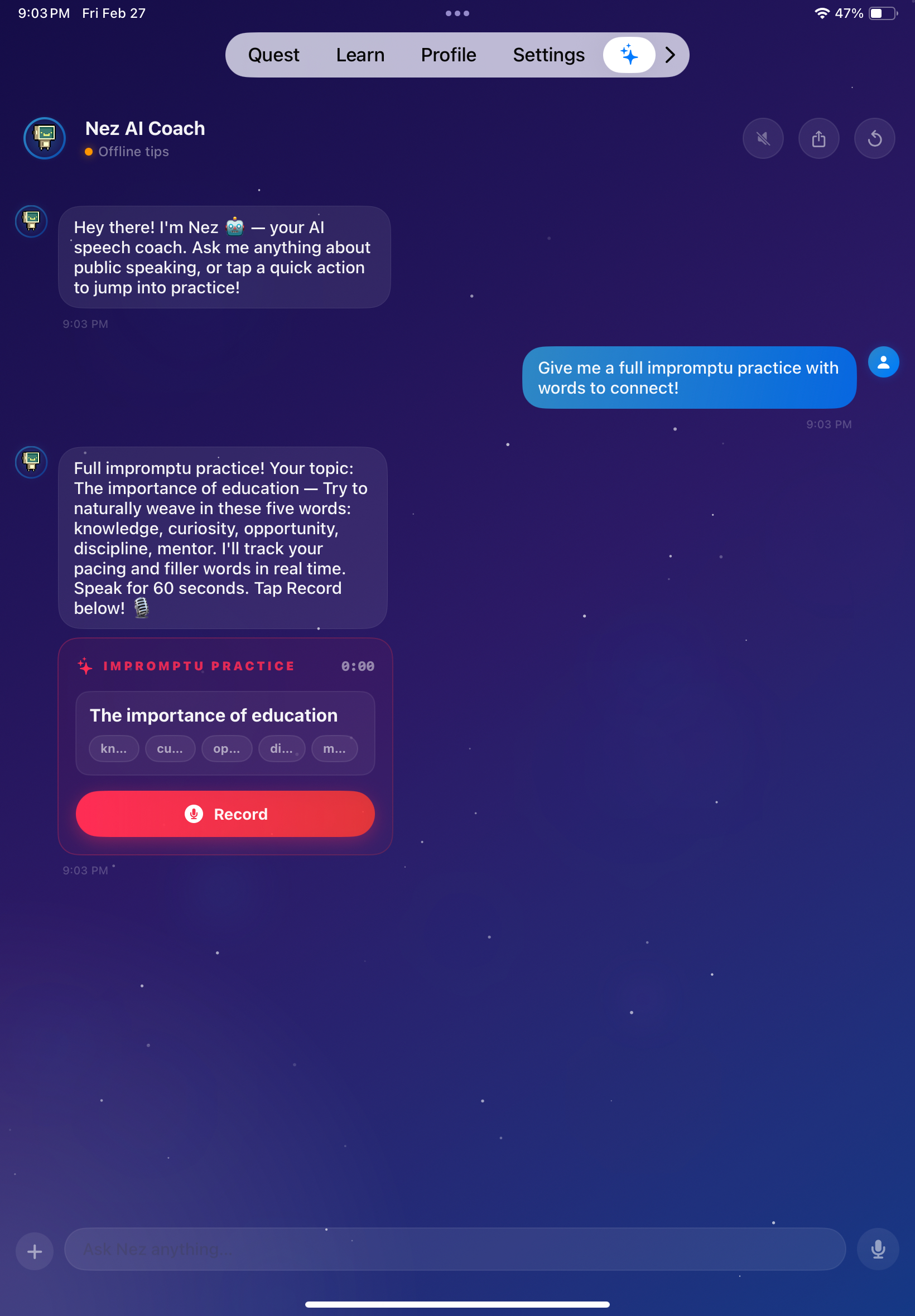
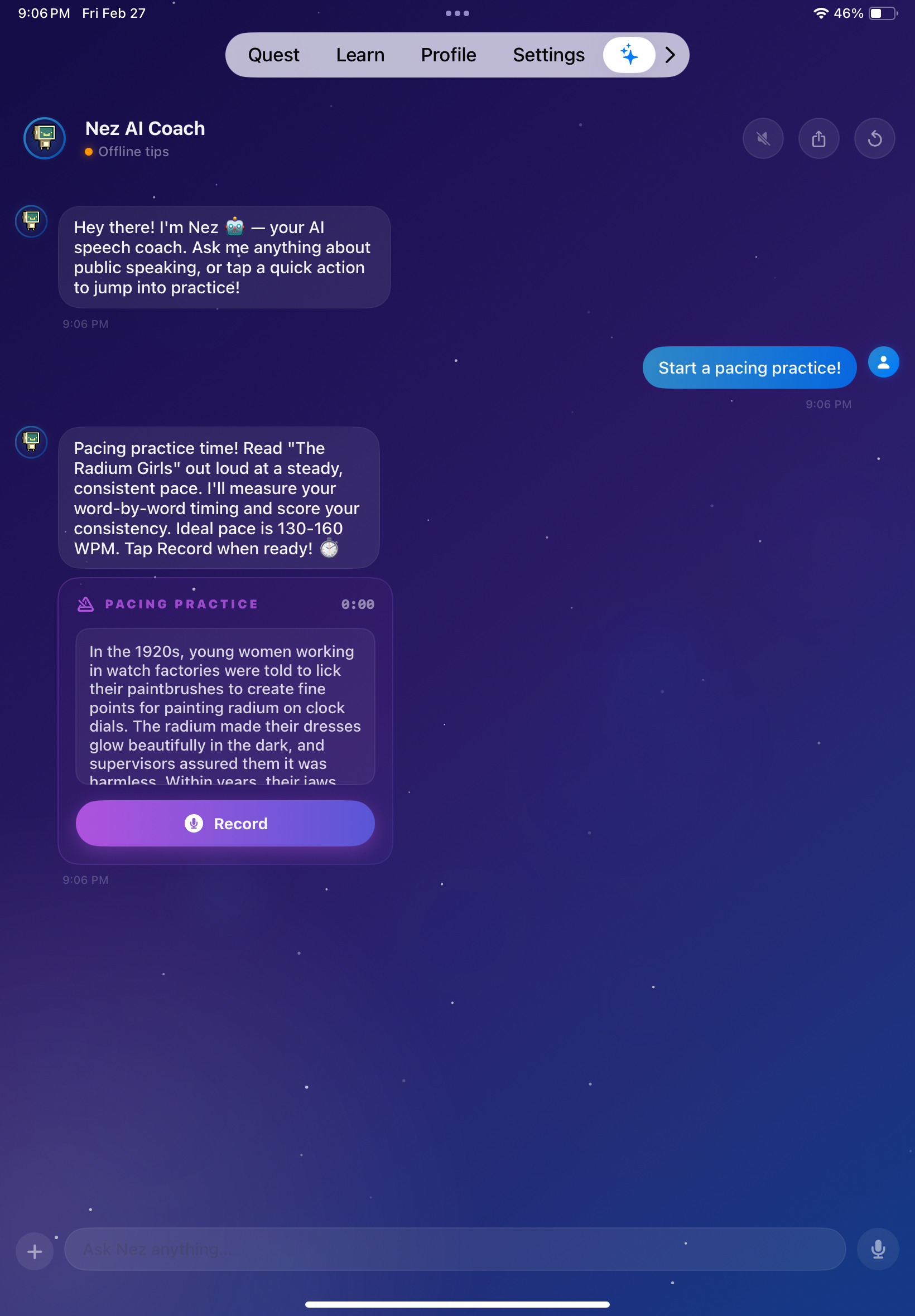
On-Device Apple intelligence powered public speaking chatbot with in-chat activities and more
-
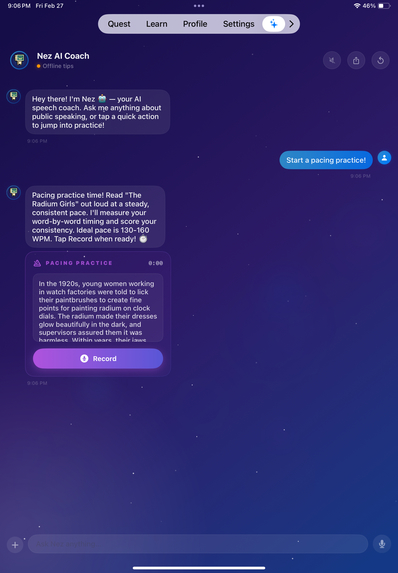
On-Device Apple intelligence powered public speaking chatbot with in-chat activities and more
-
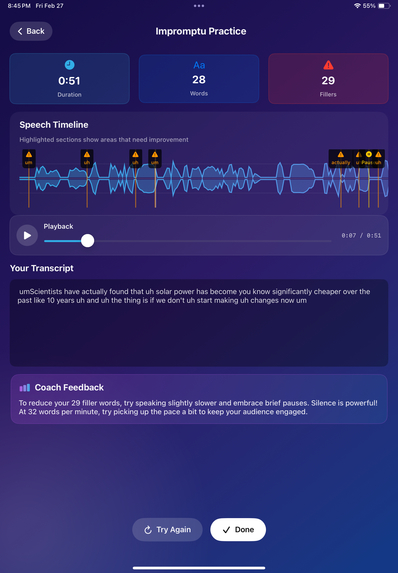
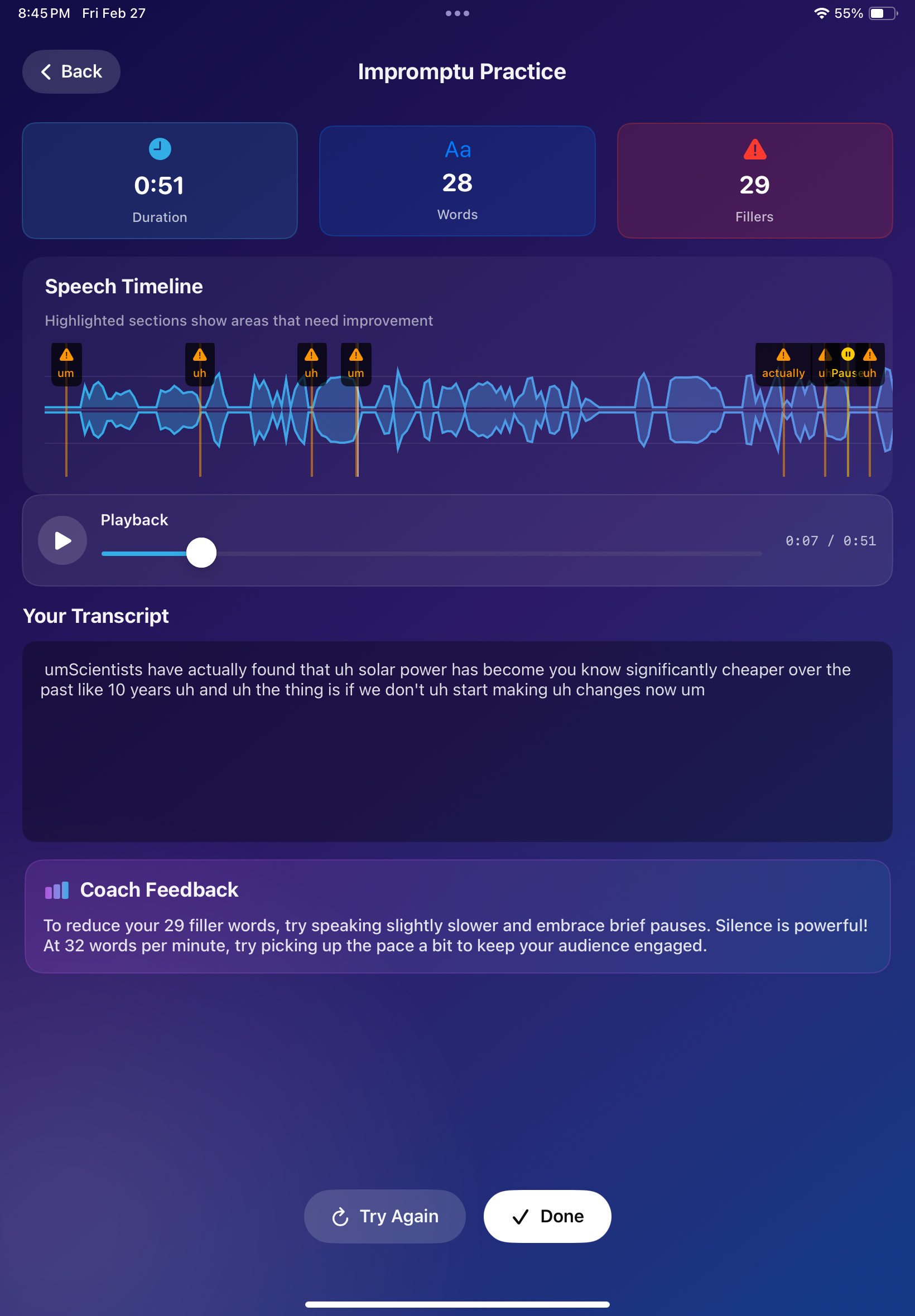
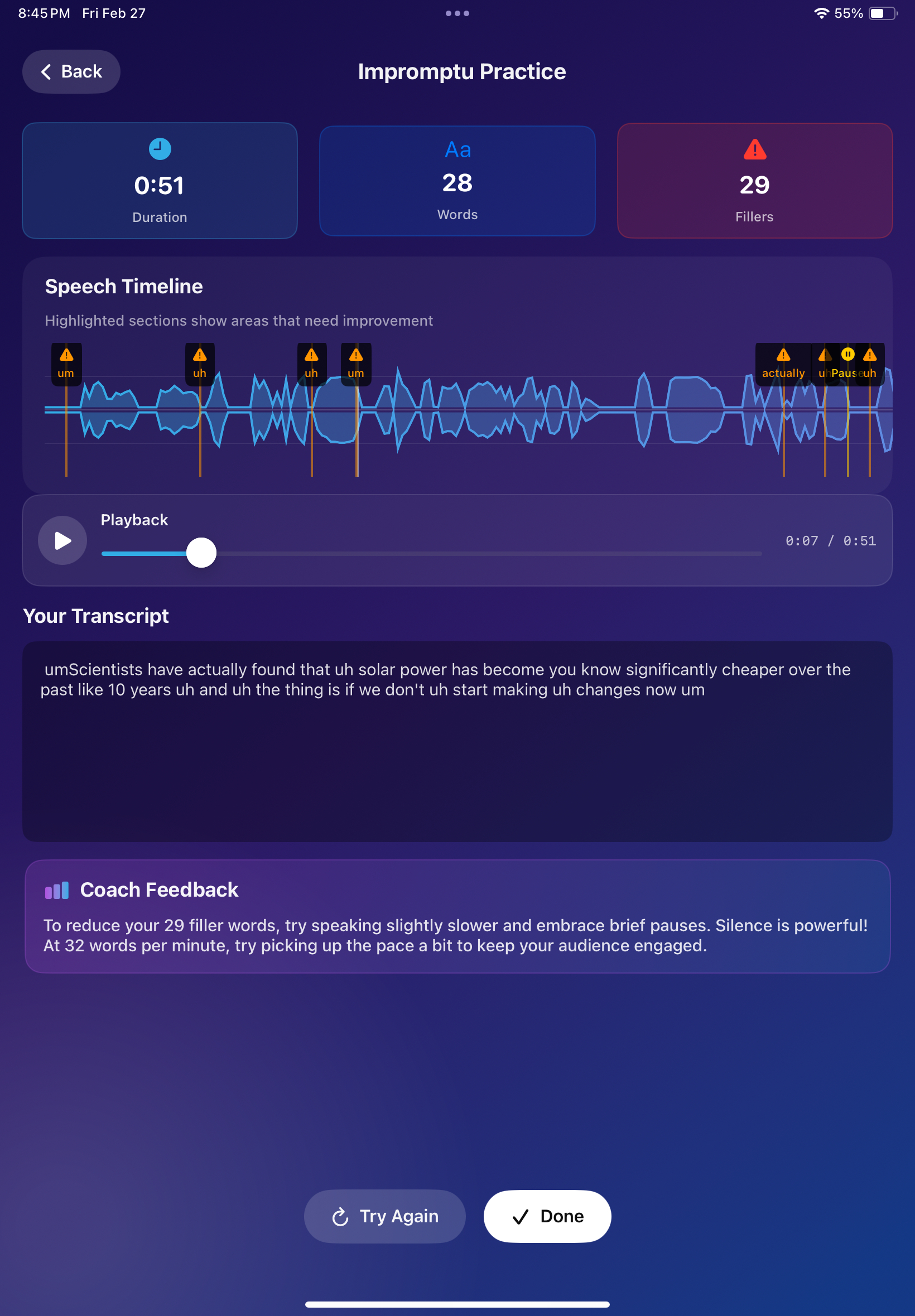
Machine learning model trained on my computer to detect and mark filler words
-
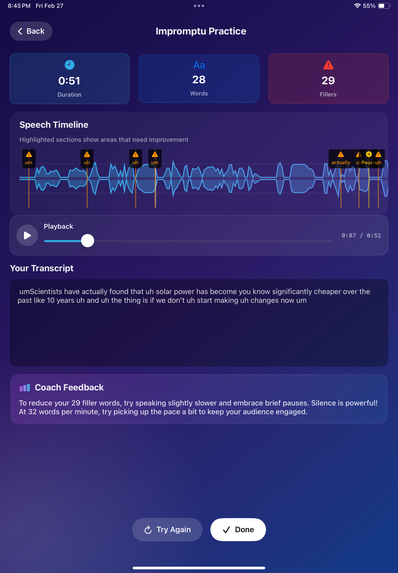
Machine learning model trained on my computer to detect and mark filler words
-
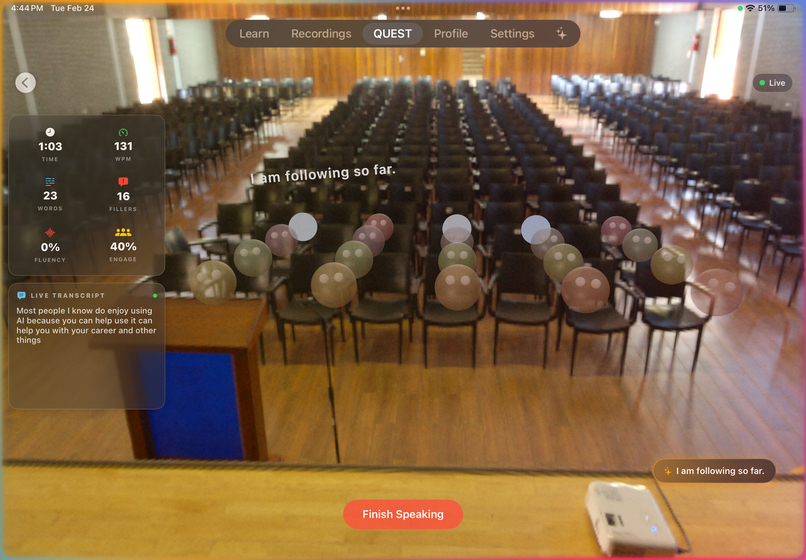
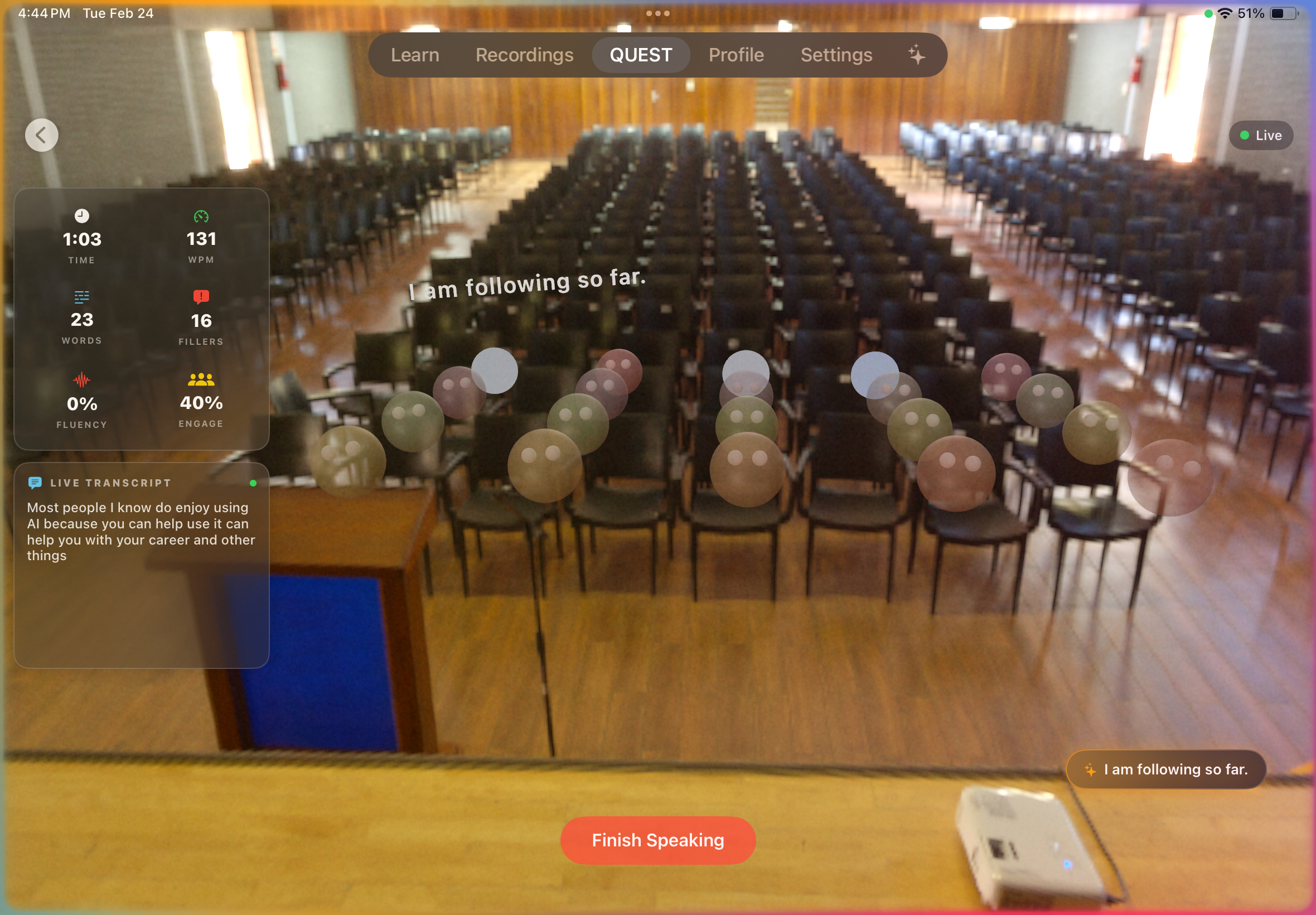
The AR Level. Simulated public speaking environment to find a safe and reliable way to practice and improve your speech over tiem..
Inspiration
Since I was 8, I have struggled with major speech anxiety. Speaking in front of people never felt simple for me. My thoughts would tighten, my delivery would become stiff, and my voice would stop sounding natural.
When I was 11, I built an attendance app called RollMate. It solved a real problem at school, and my teachers and friends genuinely wanted it implemented into the school system. I took it to a business pitch fair in Boston to present it. I believed in the idea, and other people did too. But after I pitched, one judge told me that the reason I lost was because my voice "sounded like a robot," my confidence dropped as I spoke, and the room became disengaged.
That moment stayed with me. I had built something useful, but I still lost because I could not present it with confidence. So this year when I was 13, I built EchoQuest, which comes directly from that experience. I built the app I wish I had back then: a speaking coach that feels safe, interactive, and encouraging instead of intimidating. I wanted to turn practice into something people would actually want to come back to.
$$ \text{Confidence Growth} = \text{Practice} + \text{Feedback} + \text{Repetition in a Safe Space} $$
That idea became the core of EchoQuest.
How I Built It
I built EchoQuest as a Swift Playground app using Swift and SwiftUI for the main experience and interface. I used SpriteKit for game-like mechanics, ARKit and RealityKit for immersive audience-based practice, and AVFoundation plus Apple's speech technologies to capture and respond to spoken input in real time.
To make the coaching feel intelligent and personal, I used Core ML models for filler-word and speech-pattern analysis, and Foundation Models for adaptive feedback and guidance. I also designed the app around accessibility from the beginning, with support for dyslexic-friendly reading, strong contrast, readable layouts, and inclusive interaction patterns.
At a high level, EchoQuest works like this:
$$ \text{Voice Input} \rightarrow \text{Speech Analysis} \rightarrow \text{Feedback} \rightarrow \text{Game Response} $$
The player's speech is not just recorded. It actively changes the experience in real time.
Challenges I Faced
The hardest challenge was making real-time speech feedback feel helpful instead of stressful. Audio capture, speech analysis, model inference, and interface updates all had to happen quickly enough that the player could stay focused on speaking rather than waiting on the app.
Another challenge was emotional design. Because this project is based on a personal experience, I did not want it to feel cold, judgmental, or overly clinical. I wanted the app to correct users without making them feel worse. Balancing gameplay, coaching, immersion, and encouragement was one of the most difficult parts of the project.
I also had to combine several different systems, including live audio processing, game mechanics, AR scenes, AI-generated feedback, and accessibility support, into one cohesive experience that still felt simple to use.
What I Learned
I learned that the best technical decisions are the ones that directly support a human need. This project taught me how to combine multiple Apple frameworks into one experience with a single purpose, instead of building disconnected demos.
I also learned that accessibility should never be an afterthought. If an app is meant to help people build confidence, then it has to be designed so different kinds of people can actually use it comfortably.
Most importantly, I learned how powerful it is to build from a real wound instead of a vague idea. EchoQuest is not just a technical project for me. It is my way of turning one of my hardest personal experiences into something that could help someone else avoid feeling that same defeat.
Built With
- Swift
- SwiftUI
- SpriteKit
- ARKit
- RealityKit
- AVFoundation
- Speech framework
- Core ML
- Foundation Models
- iOS / Swift Playgrounds
- On-device AI and speech processing
- Accessibility-focused design including dyslexic-friendly reading support and VoiceOver-aware patterns
No cloud backend or external database was required because the core speech coaching experience is designed to run on-device for privacy and responsiveness.
Built With
- accessibility-focused-design
- agents
- arkit
- avfoundation
- copilot
- coreml
- foundationmodels
- github
- github-copilot
- ios/swiftplaygrounds
- noclouddb
- noexternaldb
- on-deviceai/speechprocessing
- realitykit
- speechframework
- sprite-kit
- swift
- swiftui


Log in or sign up for Devpost to join the conversation.