Inspiration
Planning a trip by yourself is not easy, especially not for someone who uses a wheelchair. Beyond deciding where to go, they also have to worry about whether the places they want to visit are even accessible. We built a travel planner for wheelchair users.
What it does
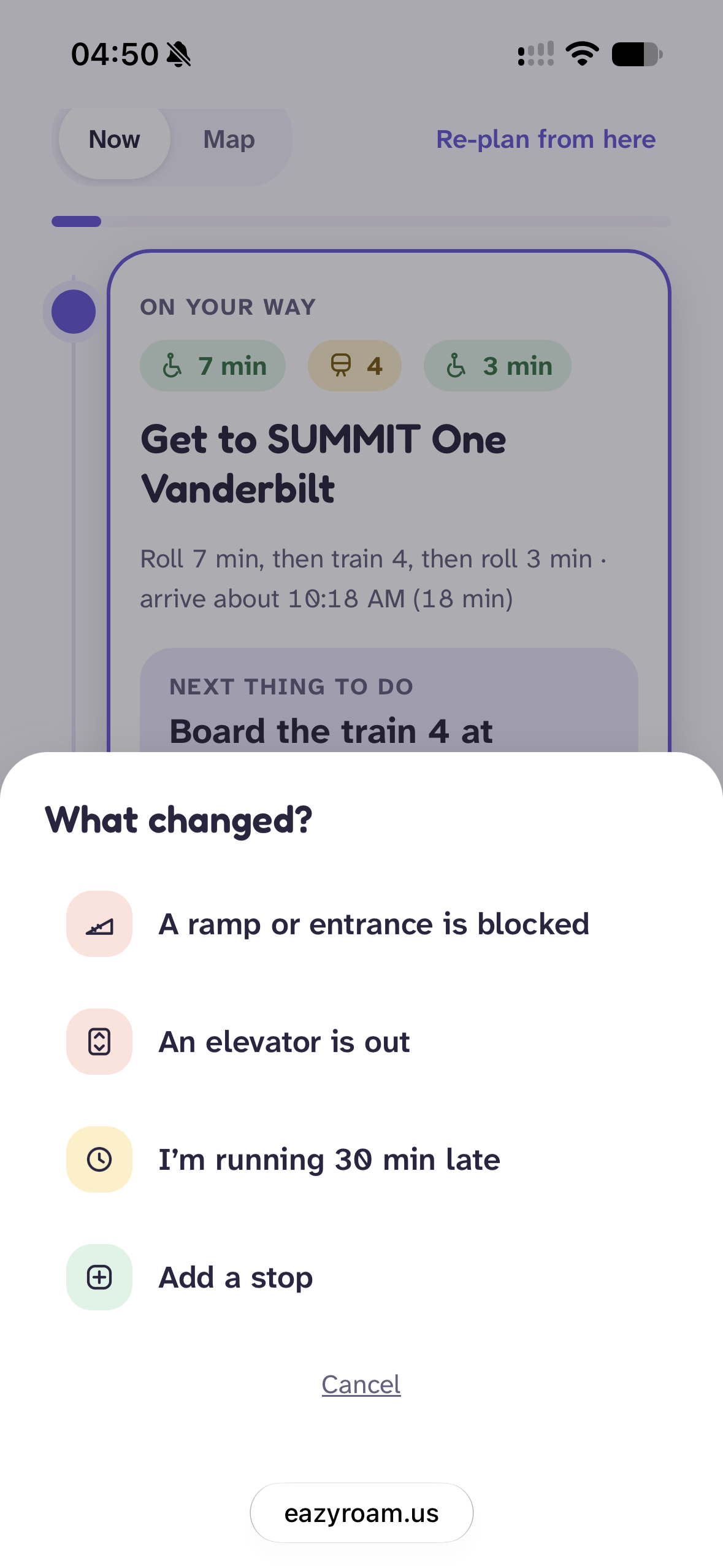
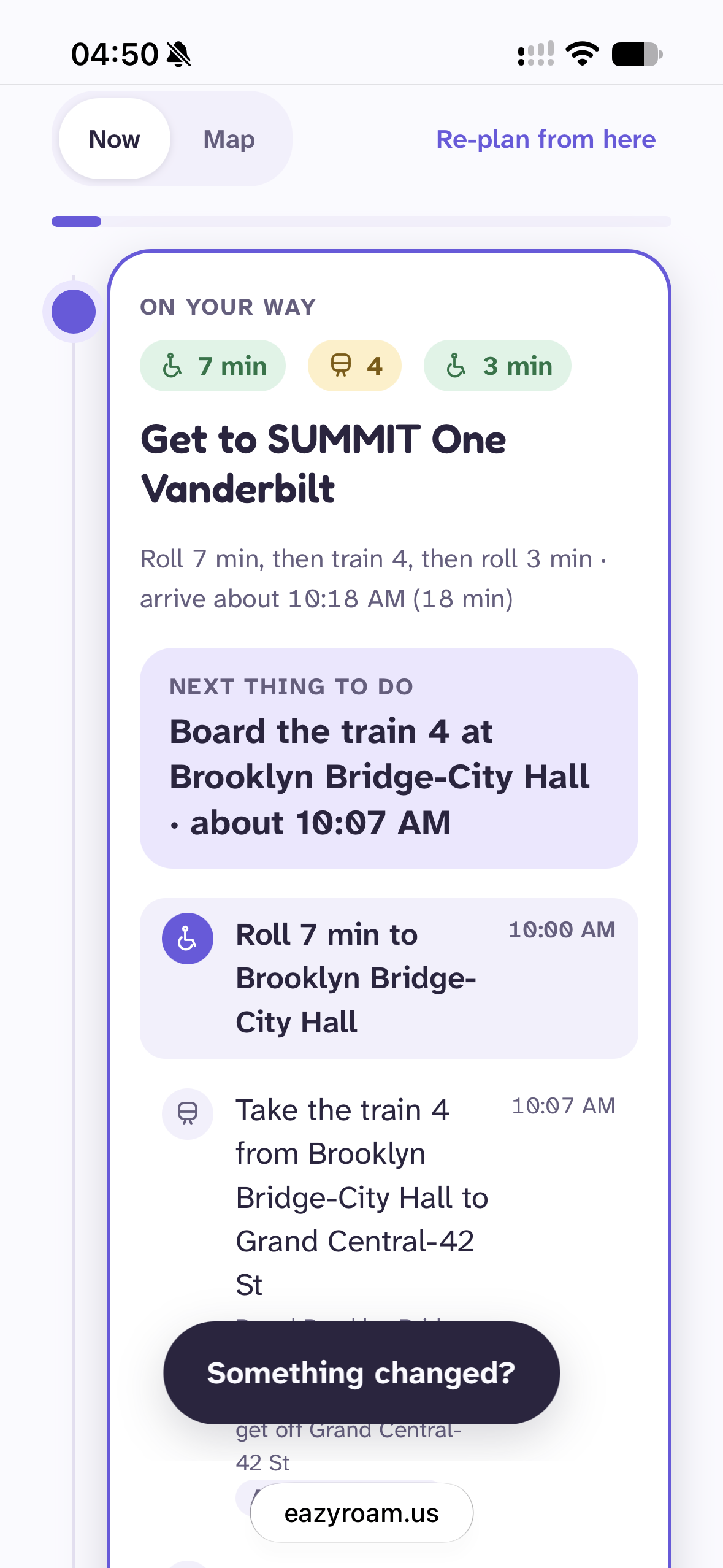
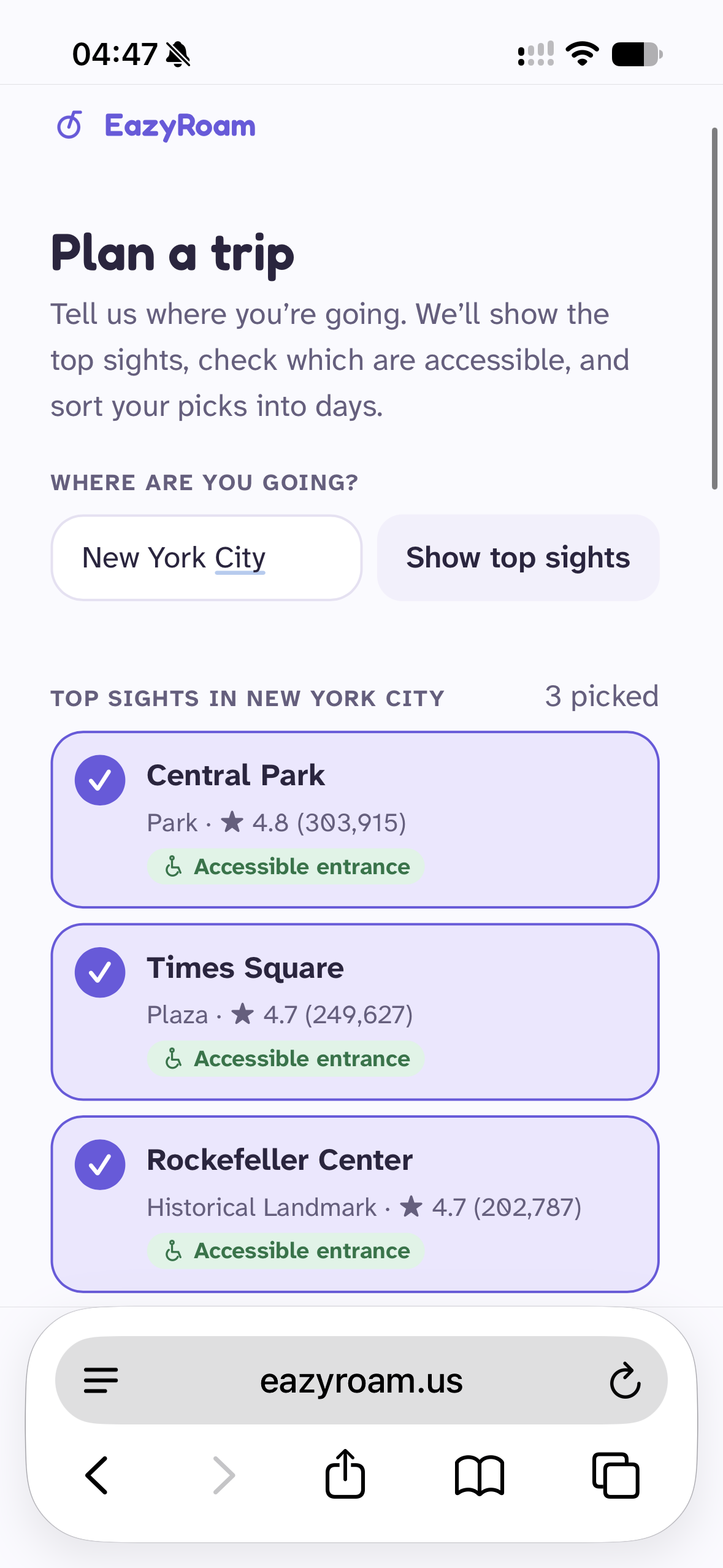
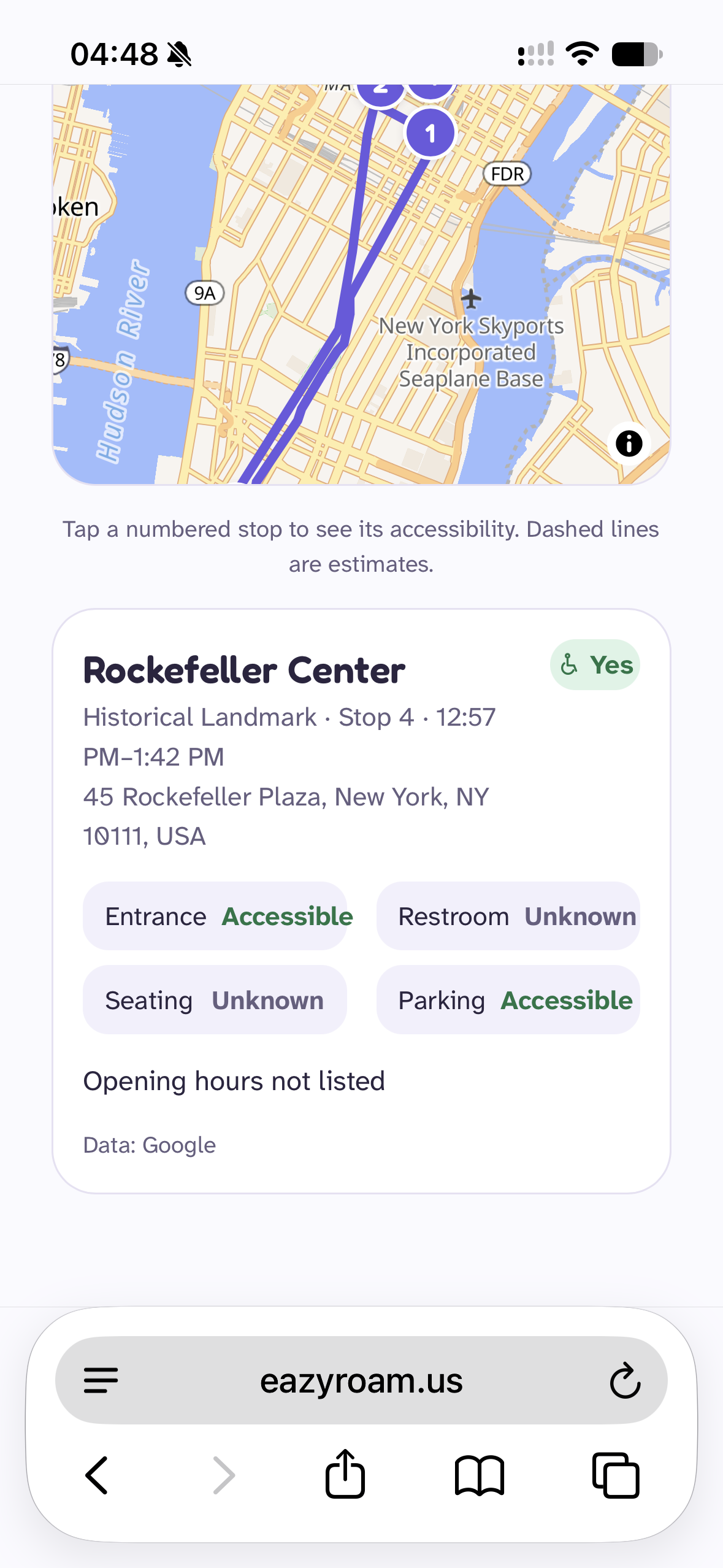
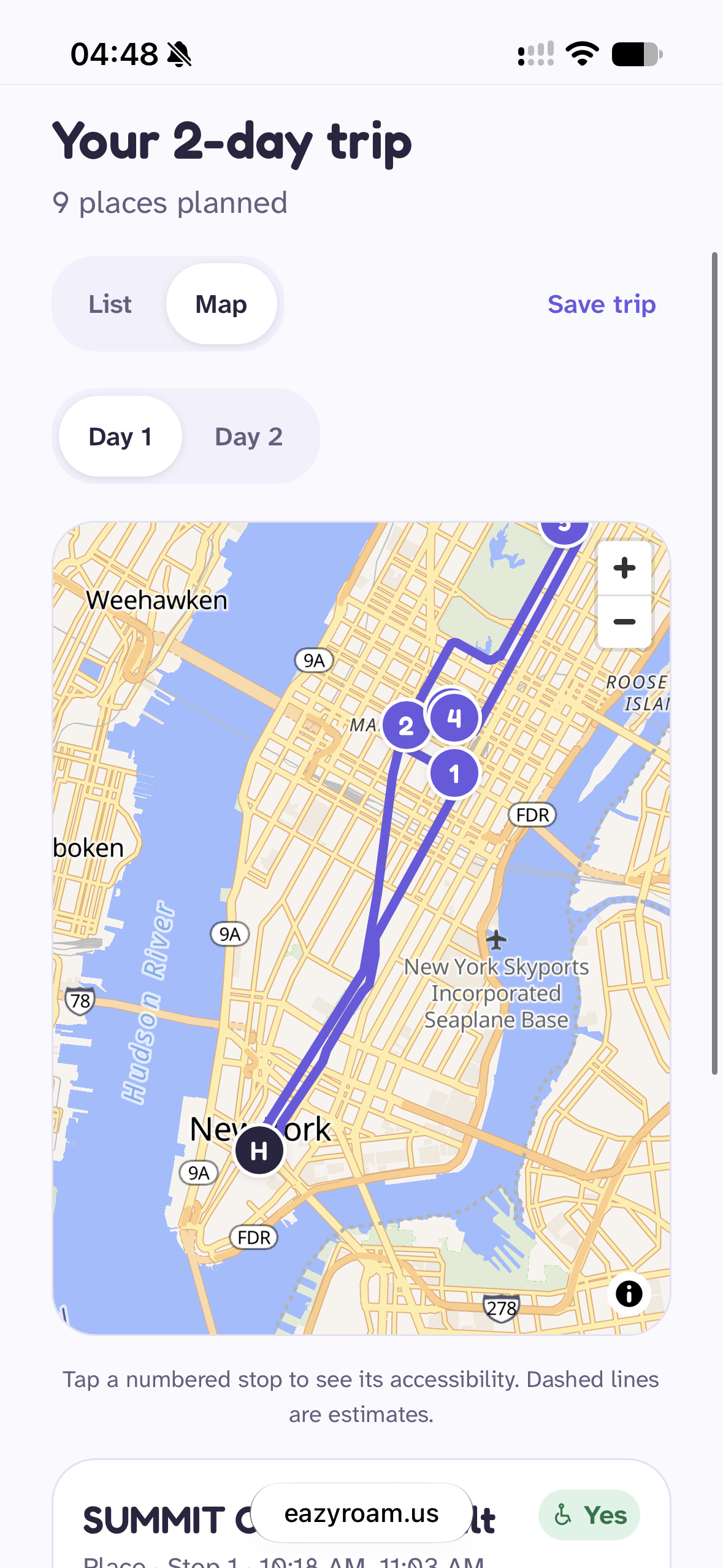
Tell EazyRoam what you want to do, and it builds a day plan around opening hours, transit, and your accessibility needs. If an elevator goes out or you’re running late, it can replan the rest of your day. You can also plan a multi-day trip when visiting a new city.
How we built it
We built the web app with Next.js, React, and TypeScript. Gemini turns a request into a list of stops, Google Places and Routes provide venue and transit information, and MapLibre displays the itinerary. The planner uses that data to put the stops in an order that fits your day.
Challenges we ran into
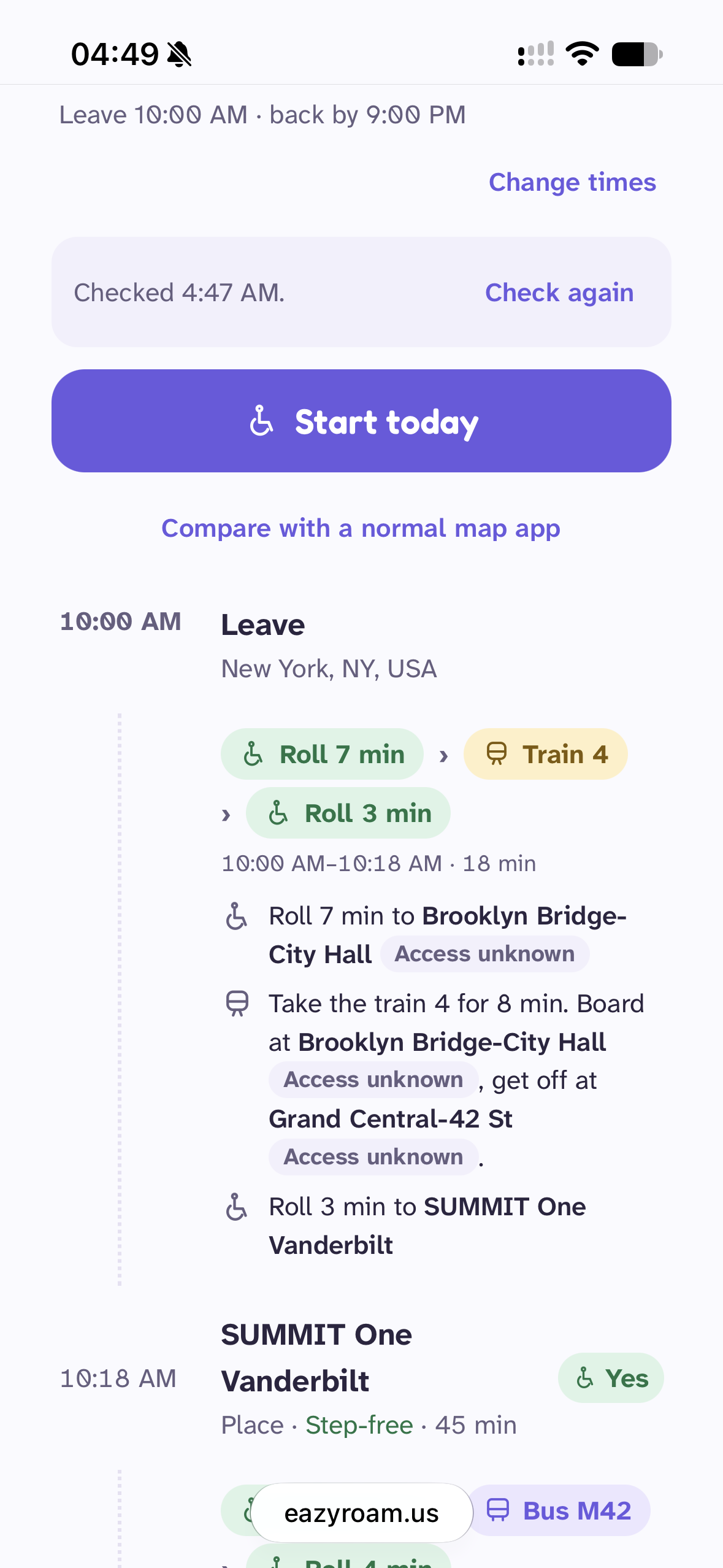
Accessibility information was often incomplete. A venue might list an accessible entrance, while the transit stop nearby has no accessibility information. We had to show exactly which part of the trip still needed checking.
Accomplishments that we're proud of
Getting the places, transit routes, and opening hours to work together took a lot of trial and error. Seeing it all come together in one itinerary was the part we were most proud of.
What we learned
Accessibility depends on the whole trip. A venue can have an accessible entrance, and a single elevator outage along the way can still change whether you can get there.
What's next for EazyRoam
We’d like to test it with wheelchair users, learn what information they wish they had before leaving home, and improve transit accessibility coverage in more cities.
Built With
- gemini
- google-places-and-routes
- maplibre/openfreemap
- mbta
- next.js
- openrouteservice
- openstreetmap
- react
- transitland
- typescript
