-
-
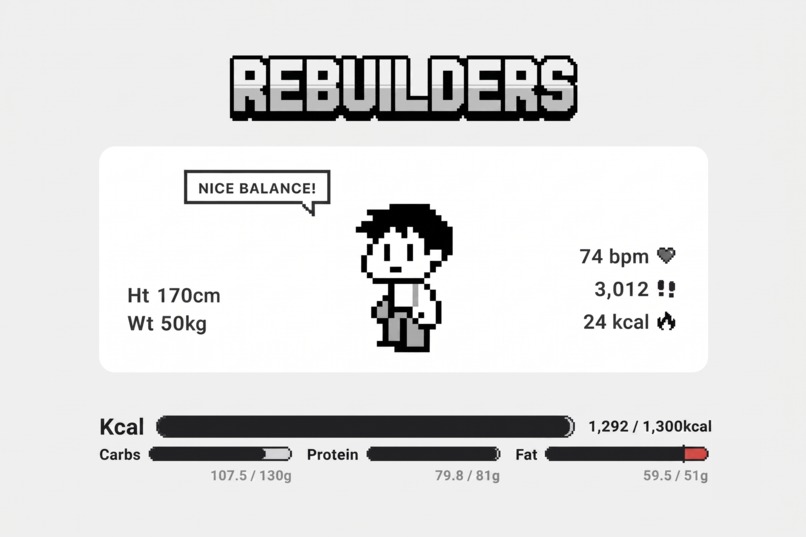
Gamification
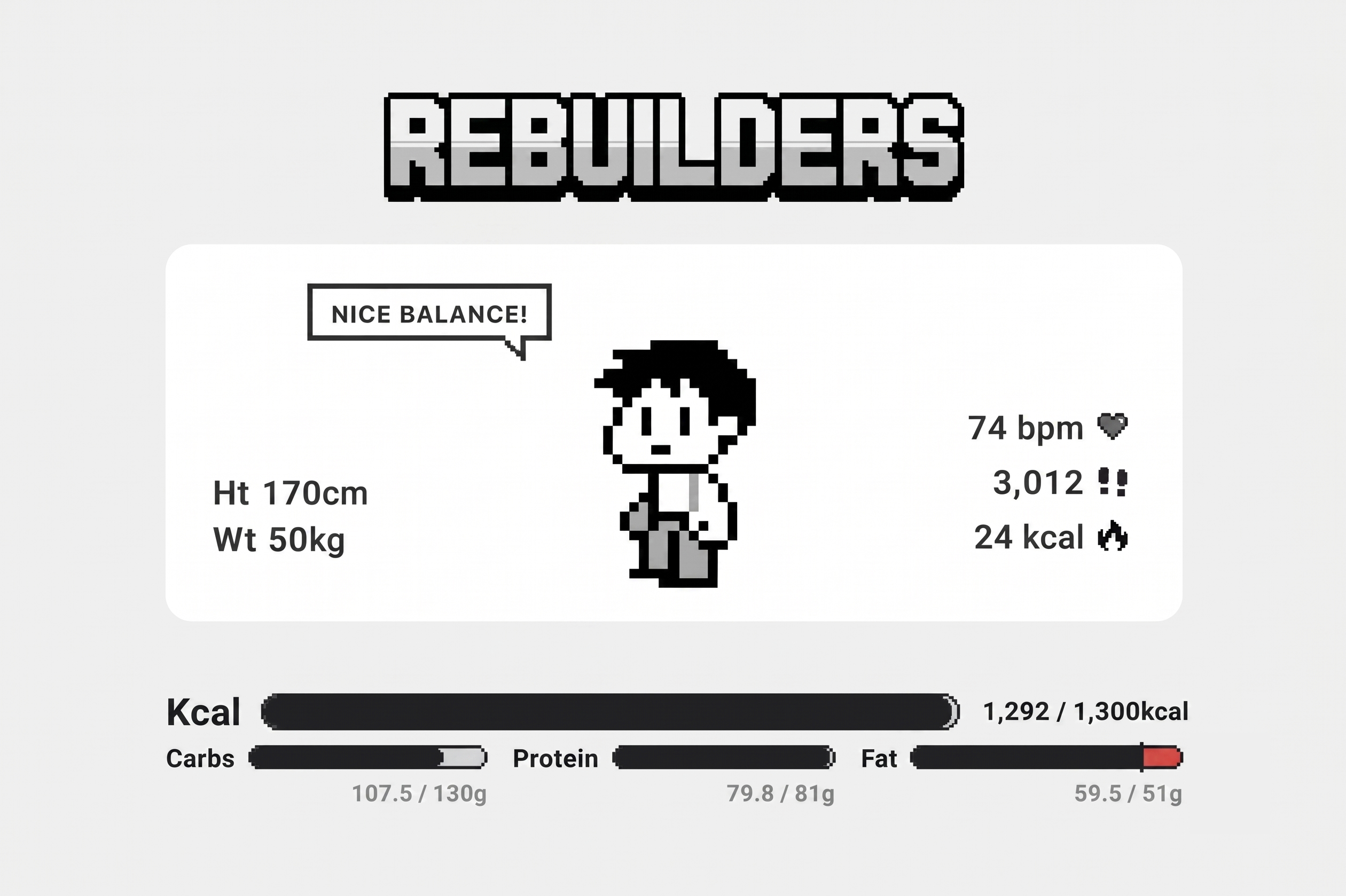
Inspiration
I started tracking meals as a beginner trying to build enough strength to exercise and feel better—not to follow a perfect diet. The frustrating part was recording. New products were often missing from food databases. I had to scroll through old entries, search another app, or weigh every ingredient in a homemade meal and ask AI to calculate it before entering the result manually. I wondered: if AI can search and calculate this information, why can’t it draft the meal entry for me?
What it does
Rebuilders lets me send a meal description to an AI agent through a mobile messaging app. The agent looks up relevant food information, calculates nutrition according to the amount eaten, and drafts the entry on my behalf. I can then review and correct it in the web interface. For homemade food, I can provide exact ingredients and quantities. For restaurant meals, I can still save a useful estimate instead of leaving the day blank. The goal is simple: remove enough repetitive work that food logging no longer feels easier to avoid.
How we built it
I first made a rough food-tracking prototype, then connected it to an AI agent to test whether automatic recording was actually possible. Once the full flow worked, I began improving the UI, interactions, content, and broader service concept. During Build Week, I used Codex with GPT-5.6 for the core product structure and essential implementation. Codex inspected the existing project, edited files, connected the agent and data flow, ran tests, identified possible security concerns, and explained unfamiliar technical decisions as we worked. I experimented with other AI tools as supplementary resources, but OpenAI tools were central to the product planning, technical foundation, and main development work. My role covered the original problem, service concept, feature priorities, references, UX structure, branding, and visual direction.
Challenges we ran into
My previous coding experience was mostly limited to newsletters, brand websites, and campaign pages. Agent integration, data storage, credentials, local and public environments, and information security were unfamiliar areas. The hardest part was often understanding what I did not know. Codex helped reduce that uncertainty, but I still chose to postpone features that required more knowledge, resources, or operational responsibility than I could confidently manage. The current prototype uses an external messaging app rather than embedding AI directly into a standalone mobile app. Turning it into a public product would require simpler onboarding, reliable deployment, API cost management, authentication, and stronger privacy safeguards.
Accomplishments that we're proud of
I proved that the core experience is possible: send a meal message, let an agent search and calculate the information, receive a draft, and manage it through a visual interface. As a designer without a professional software-development background, I was able to move from an idea to a functioning prototype that I can use in my own routine. Most importantly, a missing product or complicated homemade meal no longer has to become a reason not to record anything.
What we learned
Building directly helped me understand more than studying the technologies separately. Even when Codex handled much of the code, watching it inspect, implement, test, and revise the project helped me understand how the system worked. I learned that AI can make independent development possible, but it does not remove the need for product judgment. I still had to decide what was useful, check the results, reduce the scope, and recognize when I needed additional expertise.
What's next for Rebuilders
The first priority is making the core recording flow reliable and easy for someone other than me to use. After that, I want food records to become something worth returning to. Foodex explores this idea as a personal food collection inspired by a Pokédex: users could revisit ingredients, portions, nutrition, and recipes, share combinations, and gradually develop their collection. Future features may include grocery planning and recipe management, but only after the basic recording experience has been properly tested.
Built With
- adobe
- adobe-illustrator
- antigravity
- api
- codex
- css3
- figma
- github
- gpt-5.6
- hermes
- html5
- indexeddb
- javascript
- openclaw
- python
- telegram

Log in or sign up for Devpost to join the conversation.