Inspiration
This project was inspired by the issue of low voter turnout. Many potential voters lack convenient transportation to get to a polling place. In fact, one 2016 Harvard study found that 14% of nonvoters said transportation was a "major factor" in why they did not vote in that election. This issue is of particular significance for low-income Americans, who are disproportionately Black, Latinx, Indigenous, immigrants, or LGBTQ; those in rural and suburban areas; and those who are elderly or disabled. Paired with oppressive restrictions on mail-in voting and the strategic shuttering of polling places in certain neighborhoods, this problem of lack of transportation creates the perfect storm of keeping some of the most vulnerable members of society from the ballot box.
What it does
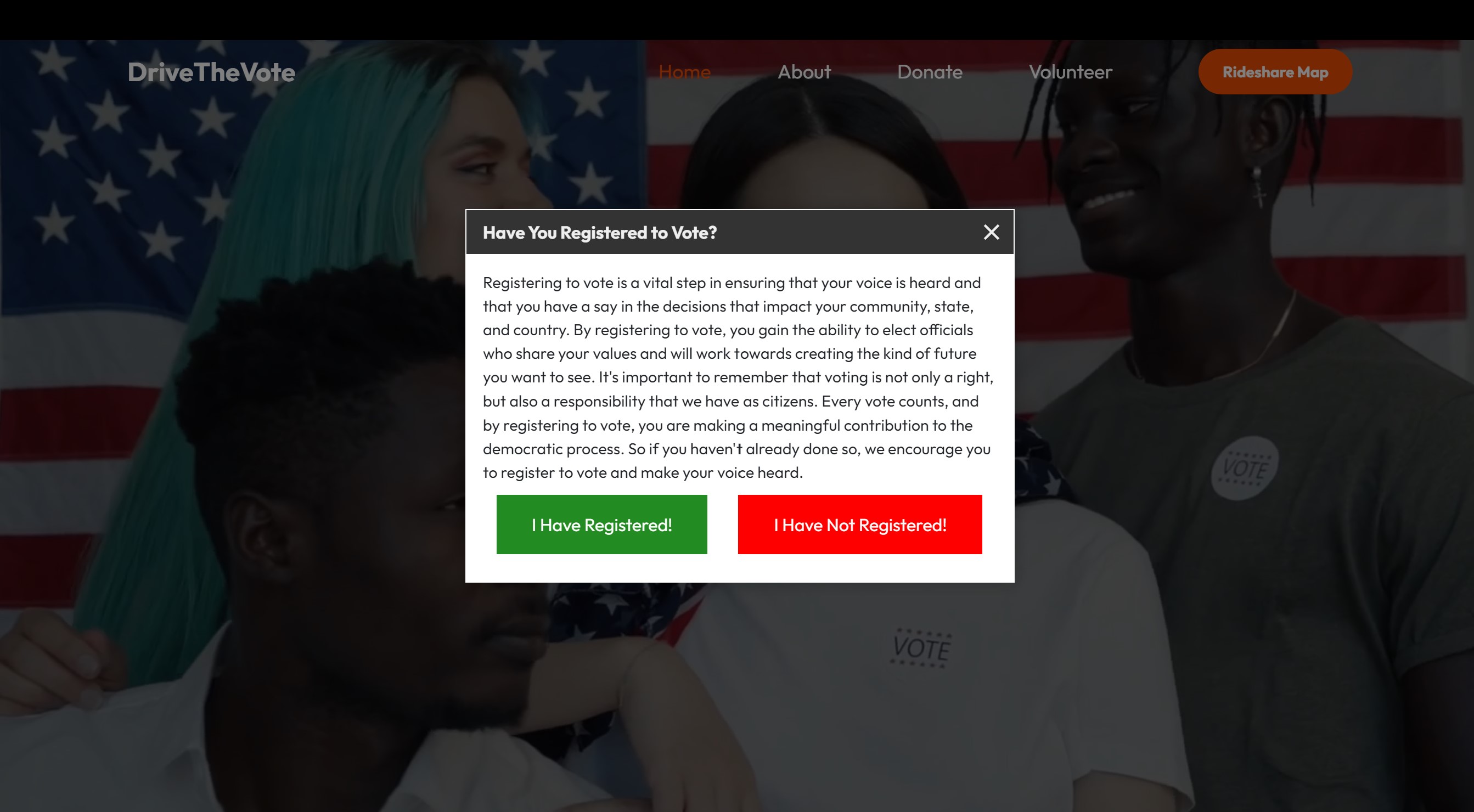
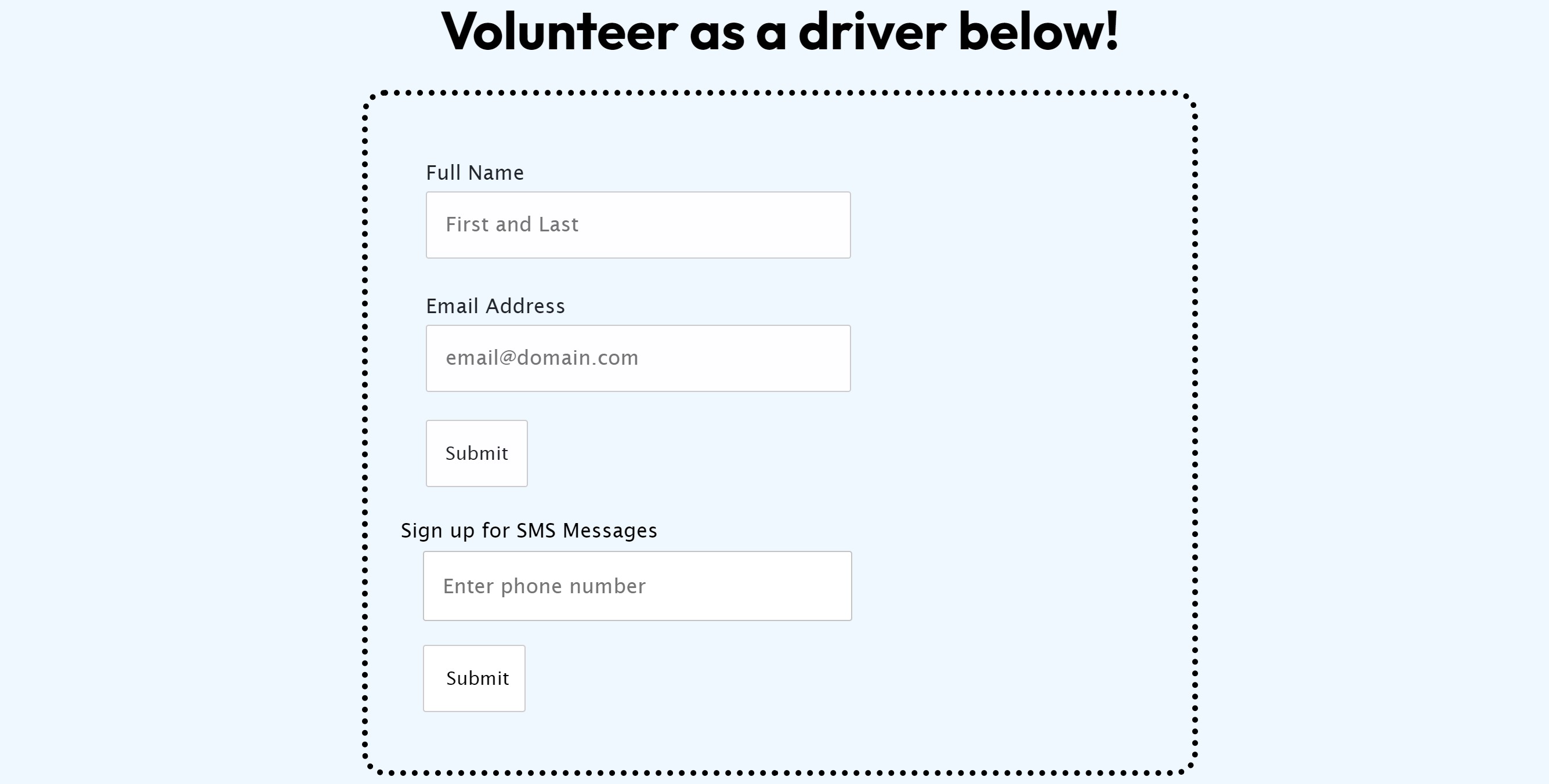
Our project connects a need to a solution. The need is transportation to the polls. Our solution is a web service that allows voters who need a ride to a polling place to view nearby volunteer drivers and request a ride completely free of charge. Additional functionality includes a form to allow volunteers to sign up to drive, an option to donate money, and a link to register to vote if the user had not done so previously.
How we built it
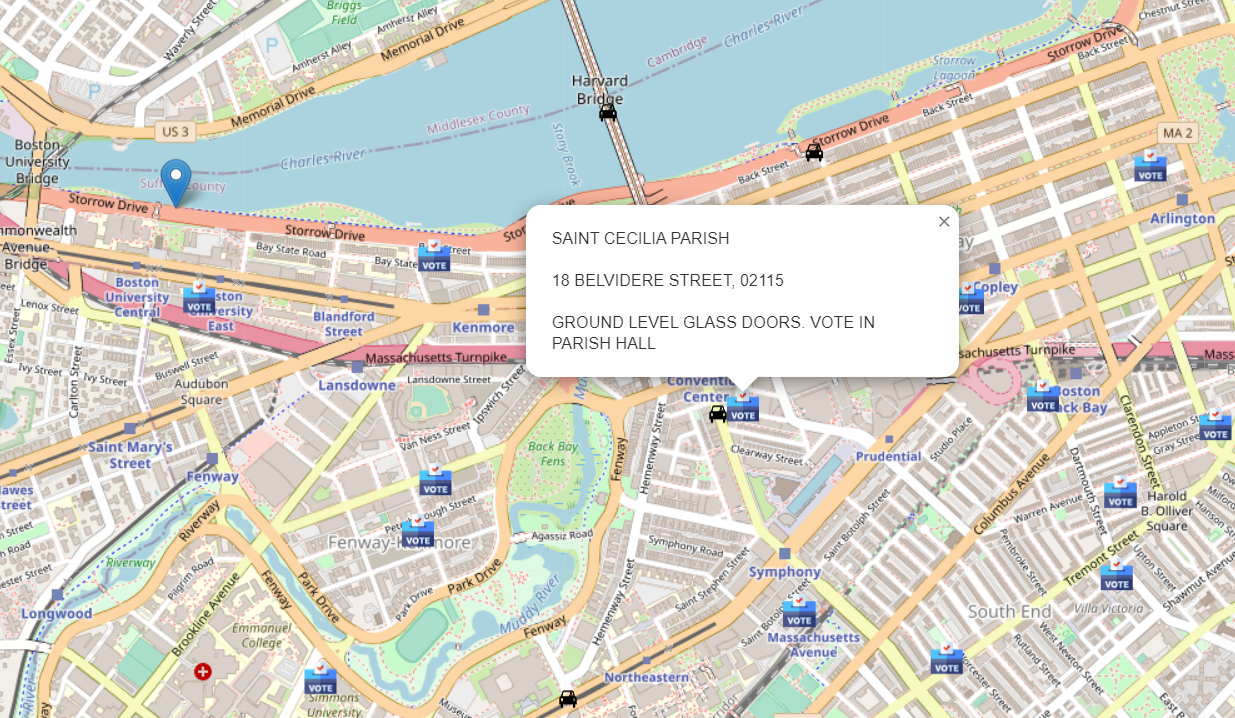
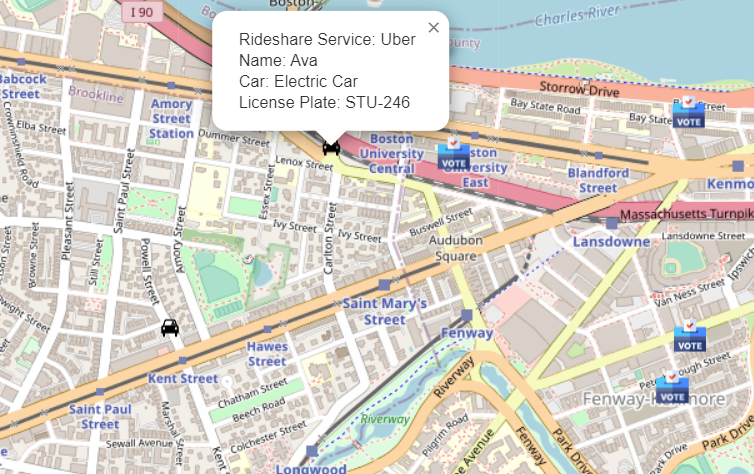
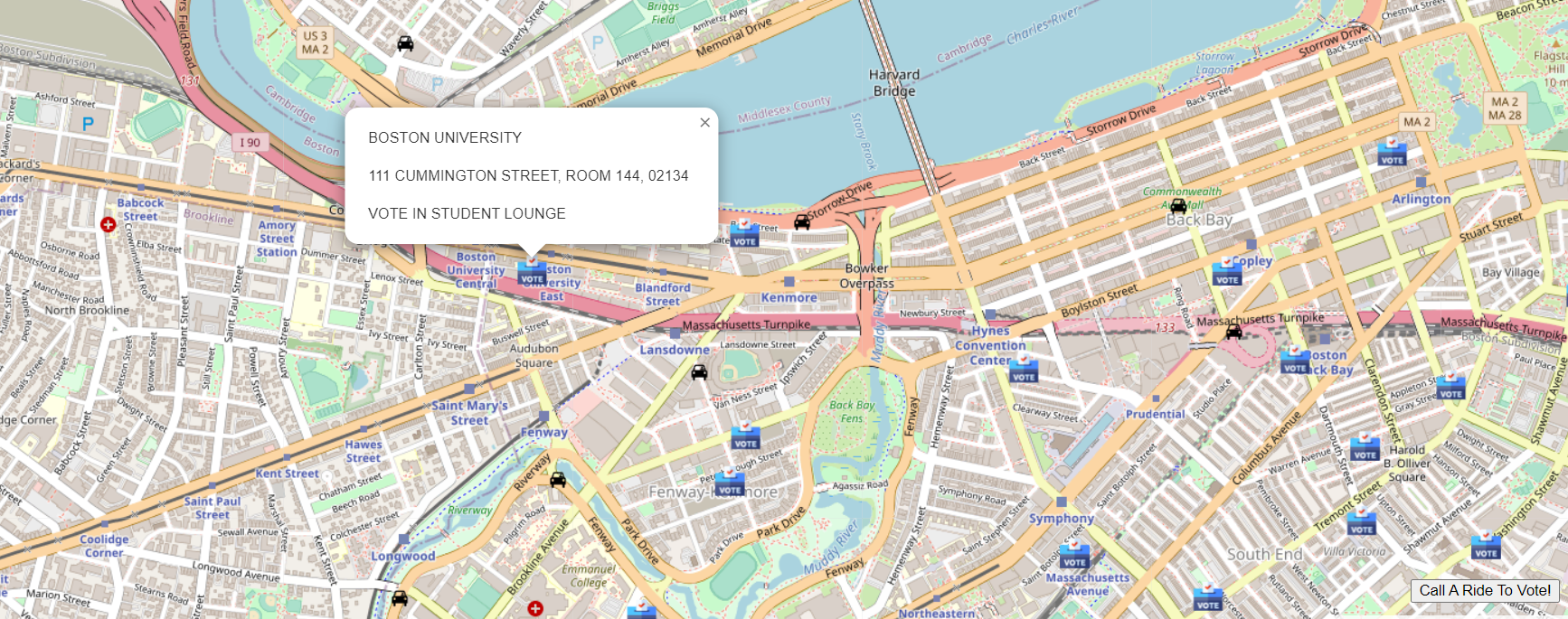
The Drive the Vote web service utilizes a user-friendly web interface using HTML, CSS, and Javascript that allows voters who need a ride to a polling place to view nearby volunteer drivers and request a ride. The interactive rideshare map is powered by Leaflet, an open-source JavaScript library for mobile-friendly interactive maps. Custom markers on the map indicate the location of volunteer drivers and polling places. The system also includes a form that allows volunteers to sign up to drive, an option to donate money, and a link to register to vote for those who have not done so. A backend to handle registration emails was developed in python.
Challenges we ran into
Our goal in the Civic Tech Hackathon was to stretch our learning by experimenting with new technologies. This was our first time working with the Twilio API with SMS messaging to notify individuals when they sign up to be volunteer drivers for polls. We ran into issues trying to link the Twilio API to our frontend where our Formspree API recognized that the sign-up was submitted, but Twilio did not. We later figured out that our submit button was not linked directly to the Twilio API, so the notification did not send. Also, it was some of our first times working with Leaflet to create our interactive driver and poll location map. At first, we struggled to link the live car tracker to the following endpoints: driver location and poll location. After some time, we figured out how to integrate the live car tracker and linked it between the two endpoints through Leaflet's geolocation features.
Accomplishments that we're proud of
We're especially proud of the fact that we were able to get all components of our project in a functional form before the deadline - after all the above challenges described, being able to have a website that incorporates the work of all the various new APIs, with each component functioning as intended is our best achievement. Having separated the tasks into different groups, we were able to combine our work effectively into this project.
What we learned
The Drive the Vote team learned several new skills and technologies during the development of their project. They deepened their understanding of HTML/CSS and JavaScript, and they also learned how to use new APIs such as Twilio for SMS messaging and Leaflet for interactive mapping. They also learned about pathfinding and ballot datasets from boston.gov.
What's next for Drive the Vote
The next step for Drive the Vote is expanding to other geographic regions beyond the Boston area. The need for transportation to vote is not a problem just confined to Boston so introducing service to as many areas as possible would increase the benefit to local communities.
Built With
- adobe-illustrator
- css3
- formspree
- html5
- javascript
- leaflet.js
- openai
- stripe
- twilio


Log in or sign up for Devpost to join the conversation.