-
-
-
Call
-
Summary
-
Professor view
doubleU
Tagline
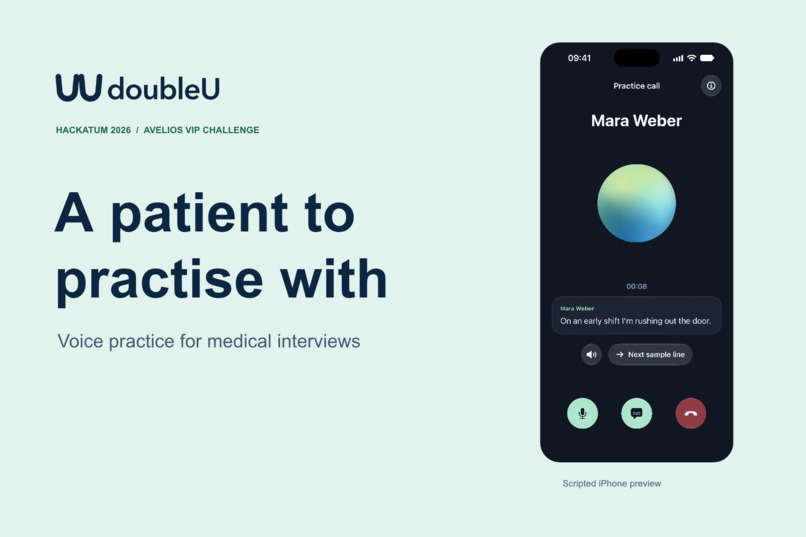
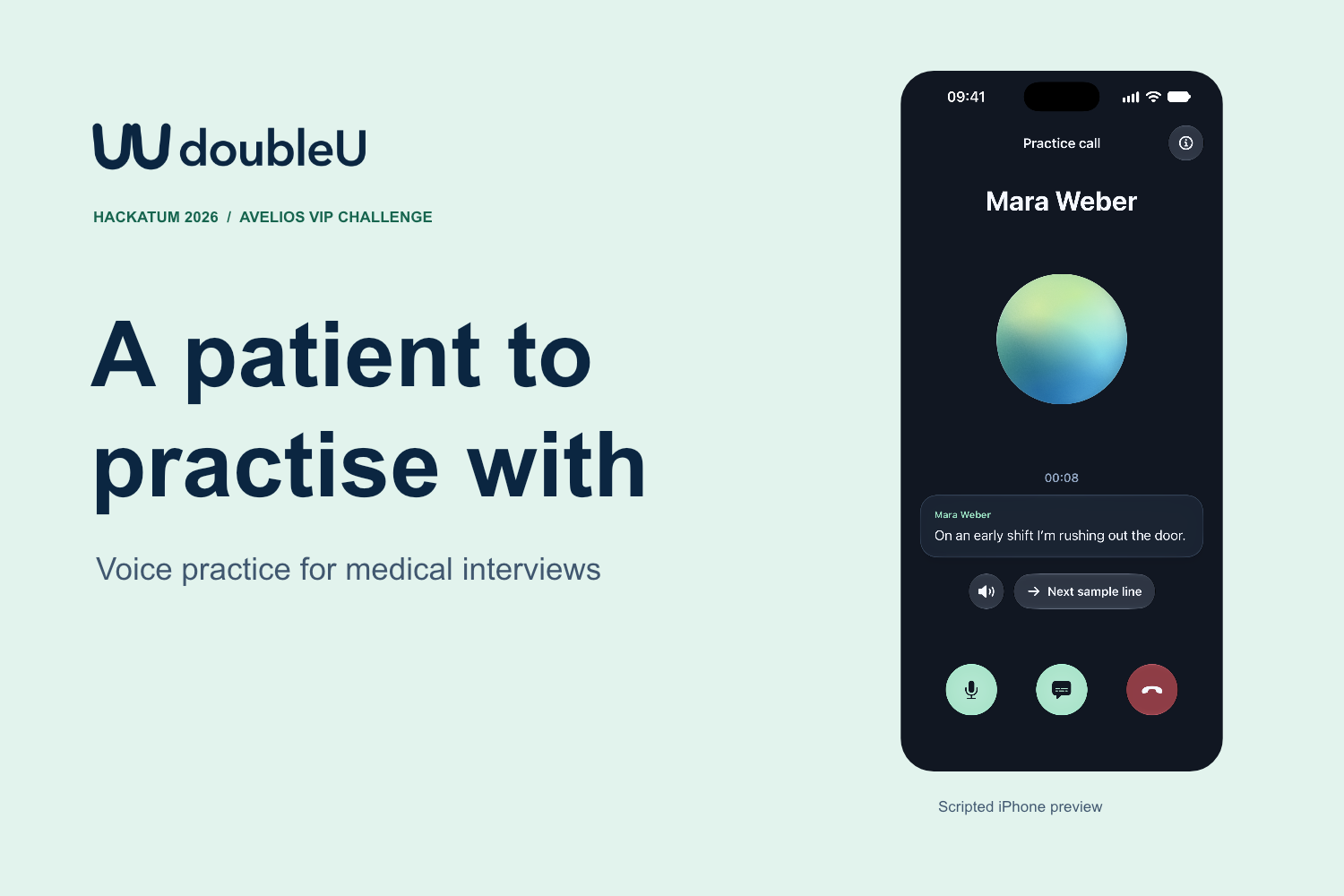
Practise patient interviews by voice, then see what your questions uncovered.
Try it out
- Case Studio opens the educator workspace. Live learner calls require an enrolled learner or a scoped course grant.
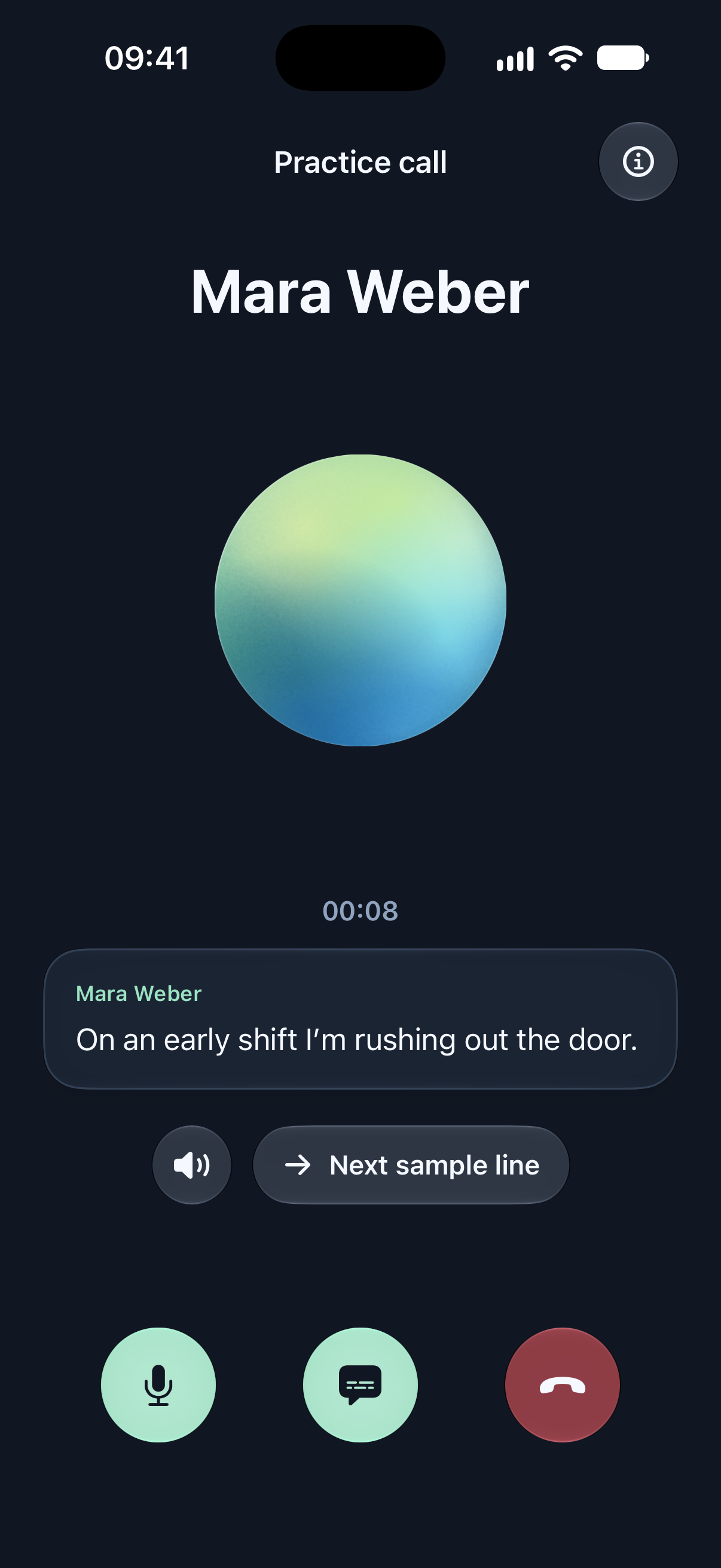
- The built-in iPhone sample offers a scripted interview and debrief. Open the Avelius project in Xcode and choose Try sample.
Project story
Inspiration
A student can know the questions on a history-taking checklist and still get stuck when a patient says, “Usually.” Usually what? What happens on the other days? A good follow-up is easier to learn in conversation. Trained patient actors provide that practice, but getting another session takes time and scheduling. The Avelios VIP challenge at hackaTUM 2026 gave us a chance to make another practice session available on demand.
What it does
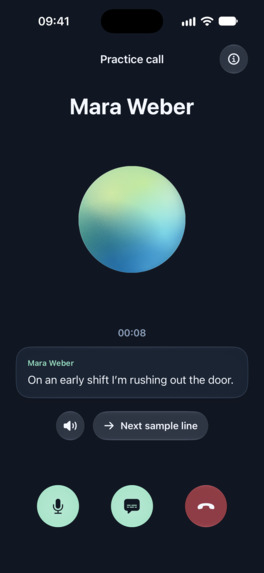
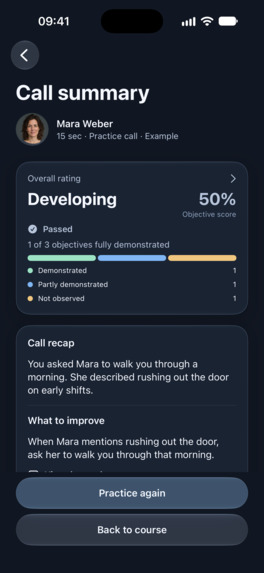
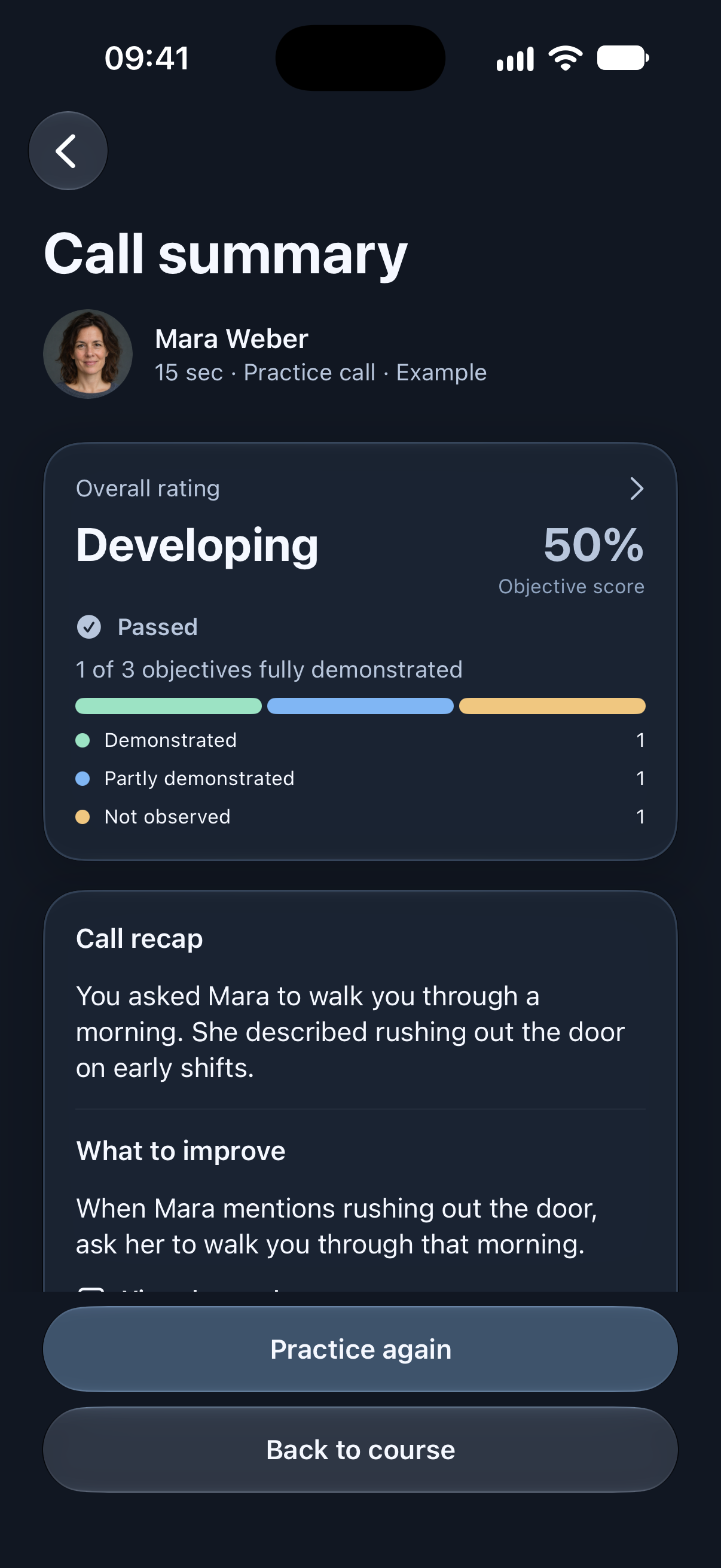
doubleU lets medical students call a fictional patient on iPhone and interview them aloud in English. Each patient has a background and a way of speaking. The patient waits for the learner to open, responds in everyday language, and shares details as the learner’s questions bring them up. After the call, the learner can read a recap, open the exchange behind a piece of feedback, and, in practice, pick an available moment to try again.
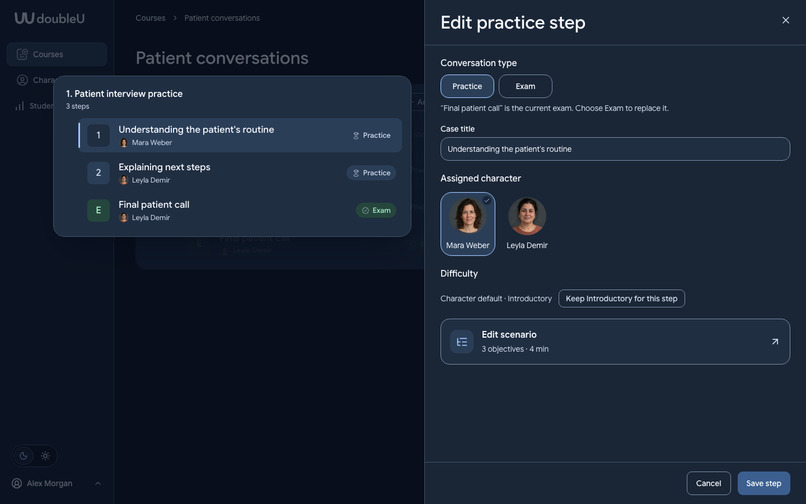
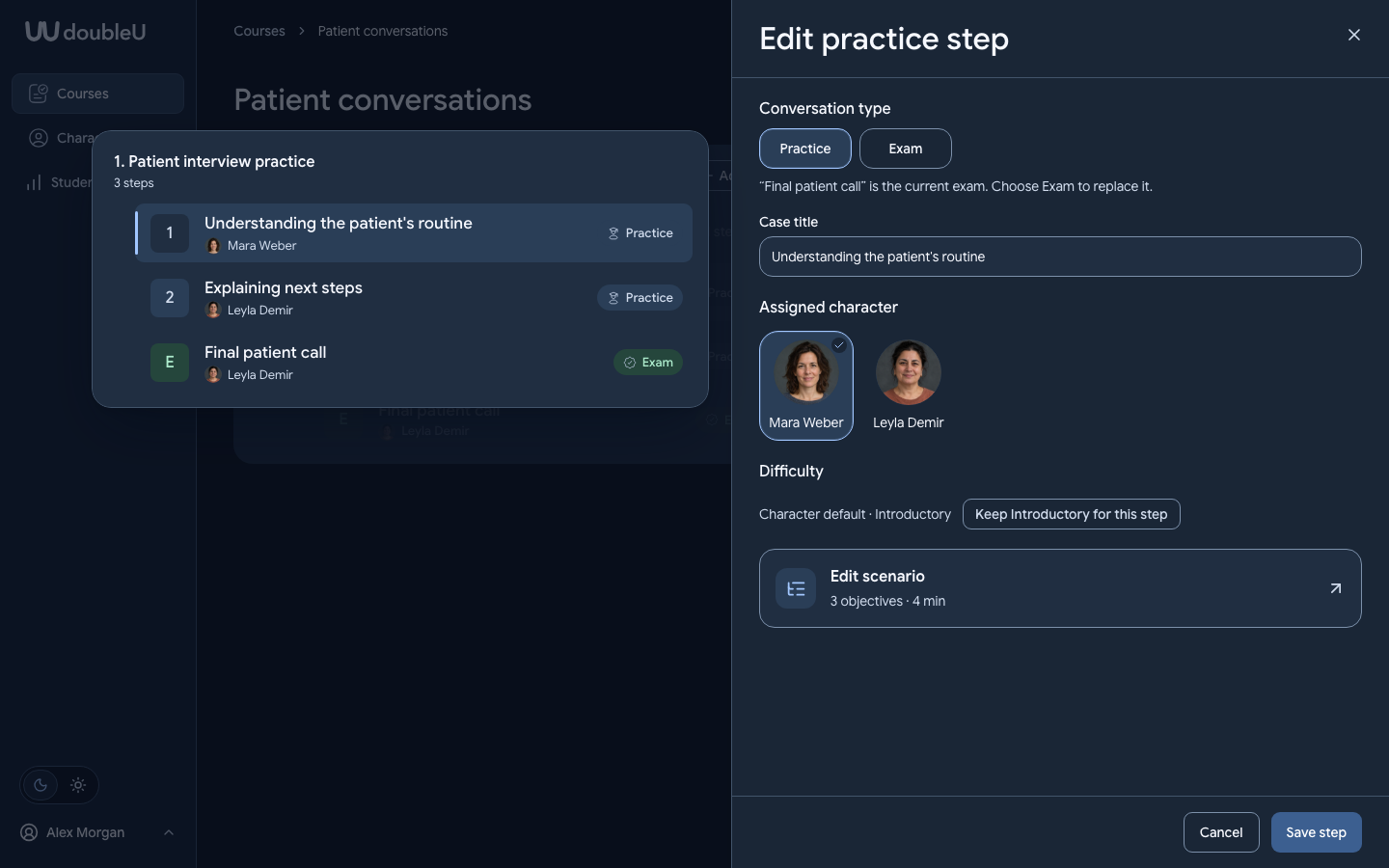
Educators use Case Studio to create courses, assign patients to ordered lesson steps, and define what they want students to demonstrate. Publishing ties the patient and rubric to a course version. The educator can then open the learner’s attempt and see the evidence behind its assessment. A final exam keeps the patient’s identity and criteria hidden until the call is over.
How we built it
The SwiftUI app streams microphone audio over a WebSocket to our Python backend, which manages an OpenAI GPT-Live session. The published patient role contains what the patient knows and when they should bring it up. The grading rubric stays with a separate review worker. The learner app confirms what patient audio it played, and the worker evaluates the authored objectives against that attempt’s transcript using the OpenAI Responses API. Case Studio uses Next.js and TypeScript, with PostgreSQL behind the two FastAPI services.
Challenges we ran into
An interruption changes what happened in the interview. If the model generated a sentence but the learner cut in before hearing it, that sentence can’t support feedback. We added playback receipts and stable transcript turn IDs so the reviewer can use delivered speech and refresh feedback when a transcript changes. Retrying a moment raised a related problem: the patient has to remember the exchange up to that point. A replay starts from a saved checkpoint and keeps the original attempt available for review.
What we’re proud of
One assignment connects all three views of the experience. An educator chooses the patient and writes the objectives. A learner has the conversation in their own words. Both can go back to the exchange behind the feedback, even after the educator edits the course.
What we learned
Voice realism and assessment meet at the interruption. The same event that makes a conversation feel natural determines which patient words count as evidence. Treating playback as part of the record made that boundary explicit.
What’s next
We want to run repeated interviews with medical students and educators, measure how quickly the patient responds and stops on interruption, and compare objective feedback with educator ratings. That would tell us where the conversation feels natural and where the review needs work before expanding the case library.
Built With
- api
- avfoundation
- fastapi
- next.js
- openai
- openai-gpt-live
- postgresql
- python
- responses
- swift
- swiftui
- typescript
- websockets
