-
Disaster Response as a Service
Inspiration
Disasters have been escalating in number and severity due to climate change. In Virginia, a snowstorm left the entire state vulnerable, with the population stuck on a major highway and Amtrak for hours, and thousands without power and no guidance on when this will be restored. On a global scale, 14 million people become homeless due to natural disasters. Despite this, there have been minimal articles on disaster response research in the literature, with very limited target the provision of temporary shelter during and post-disaster. The currently available mobile applications from FEMA and other providers don't provide enough information on how to behave or protect oneself during and after the disaster.
What it does
It is a one-stop platform that aims to provide Disaster Response as a Service, initially snowstorms. We provide a platform that would help disaster-affected victims towards safety, health, sociality, and comfort. Driven by deep Artificial Intelligence and powered by state-of-art distributed infrastructure, we strive to make the disaster response faster, safer and robust for disaster-affected people. The application will initially focus on those geographically located in the South and East of the United States. Disaster victims, emergency services, and government officials can use this application to gain the broadest possible insights around key aspects - temporary shelter. Future versions of the application would include search, and rescue, developmental plans, etc.
How we built it
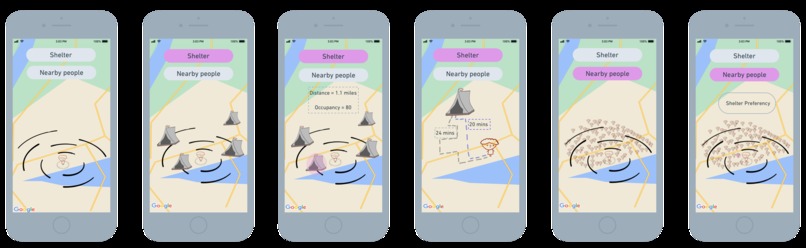
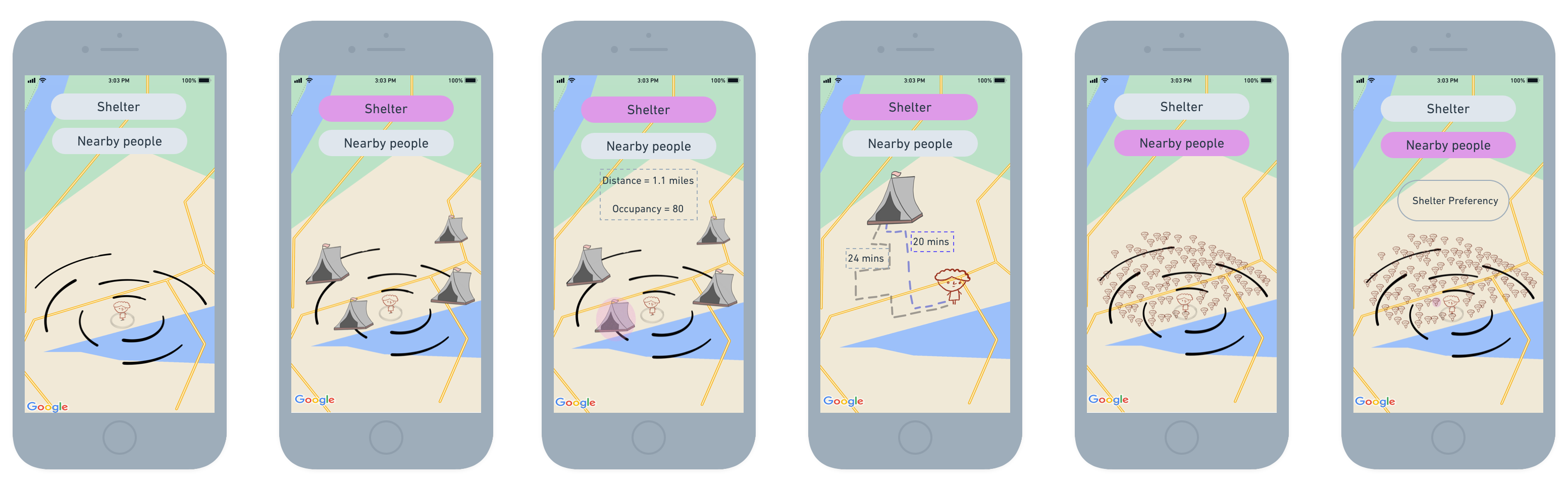
After conducting an extensive literature review, we realized there is a need for temporary shelter provision before, during, and after a disaster. We also evaluated the available emergency applications in the market, which targeted a certain disaster and emergency response item. Wireframes were generated and included limited features in the application.
Challenges we ran into
There were several challenges envisioning this idea. There is the question of equity and inclusion, as some shelters may be inaccessible to low-income individuals. Updating the status of shelters so the most accurate information is available in the application is also a challenge, especially at a time of crisis where every second counts. We also do not want to repeat other emergency applications such as FEMA. Additionally, once the app is ready we would ideally like to have it downloaded by all the people in that locality, which itself is challenging. Having the application work offline when there is no internet or cell service is a significant challenge.
Accomplishments that we're proud of
In the limited timeline, we were able to get the idea clear and on paper while thinking through the scope and challenges. Our defined value proposition is very different from the solutions available in the market which makes us stand out from our competitors.
What we learned
We learned around the heart of the problem and why we matter. The research around this topic gave a clear indication of the huge gap that needs to be filled for a more sustainable and safe future for victims, especially as these disasters become more frequent and more severe.
What's next for Disaster Help Finder
Building the app, collaborating with local governments to make their shelters available for those who require assistance before and while a disaster is in place. The overarching goal would be to include crowdsourced assistance from those in the area that can provide it.

Log in or sign up for Devpost to join the conversation.