-
-
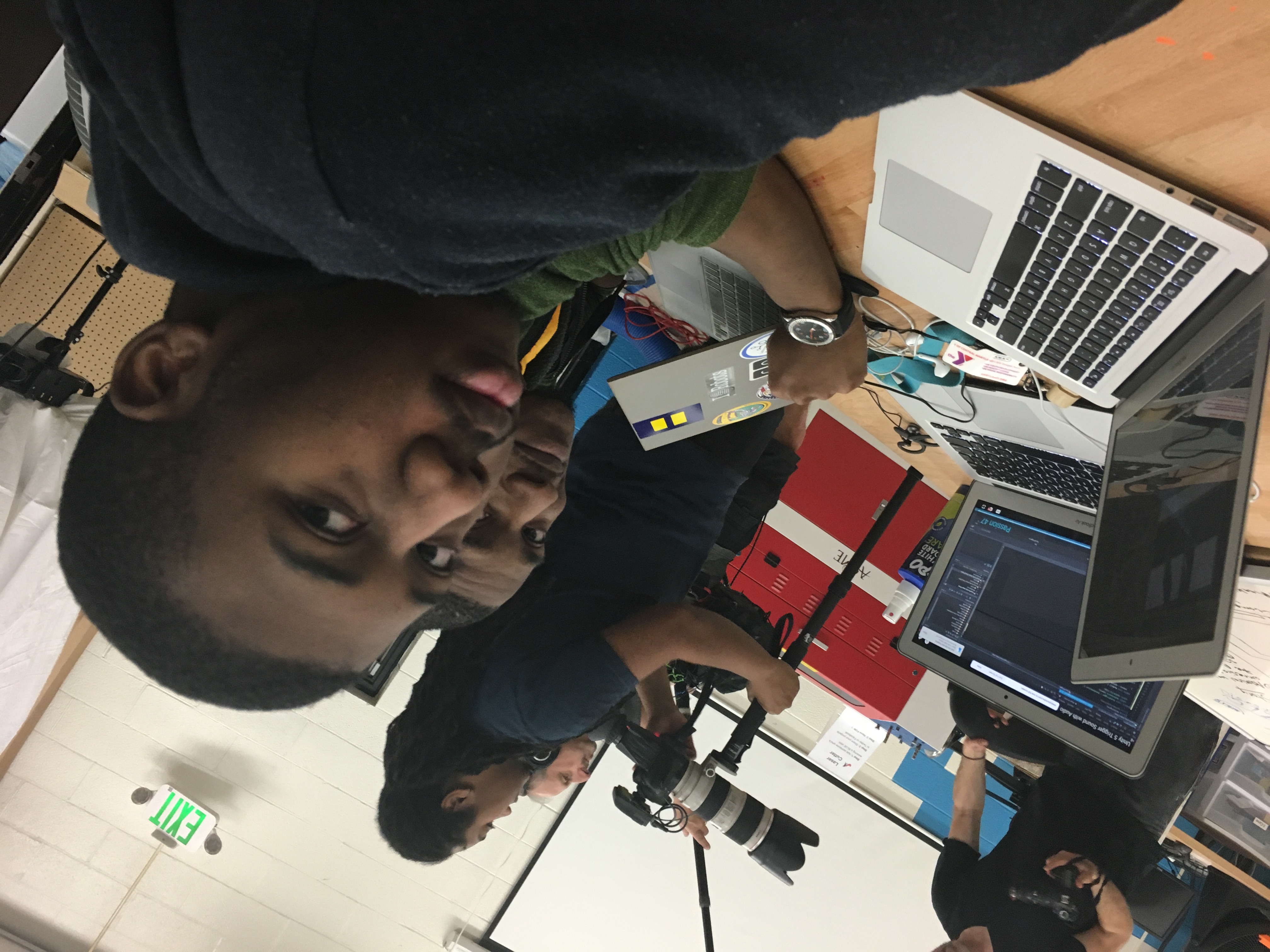
Bella
-
Amiri and Derek
-
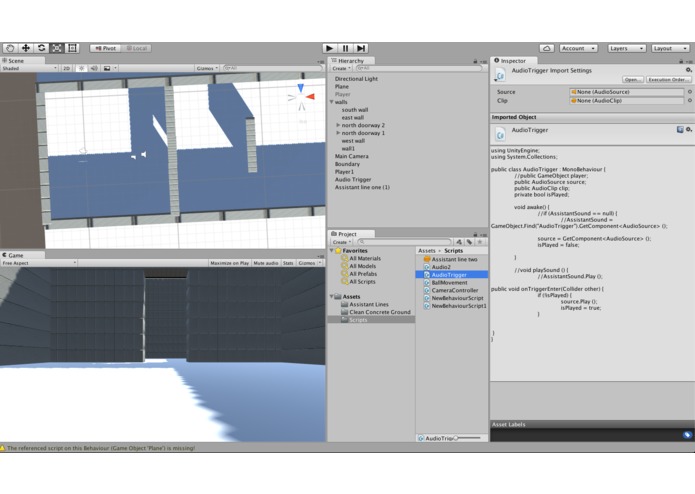
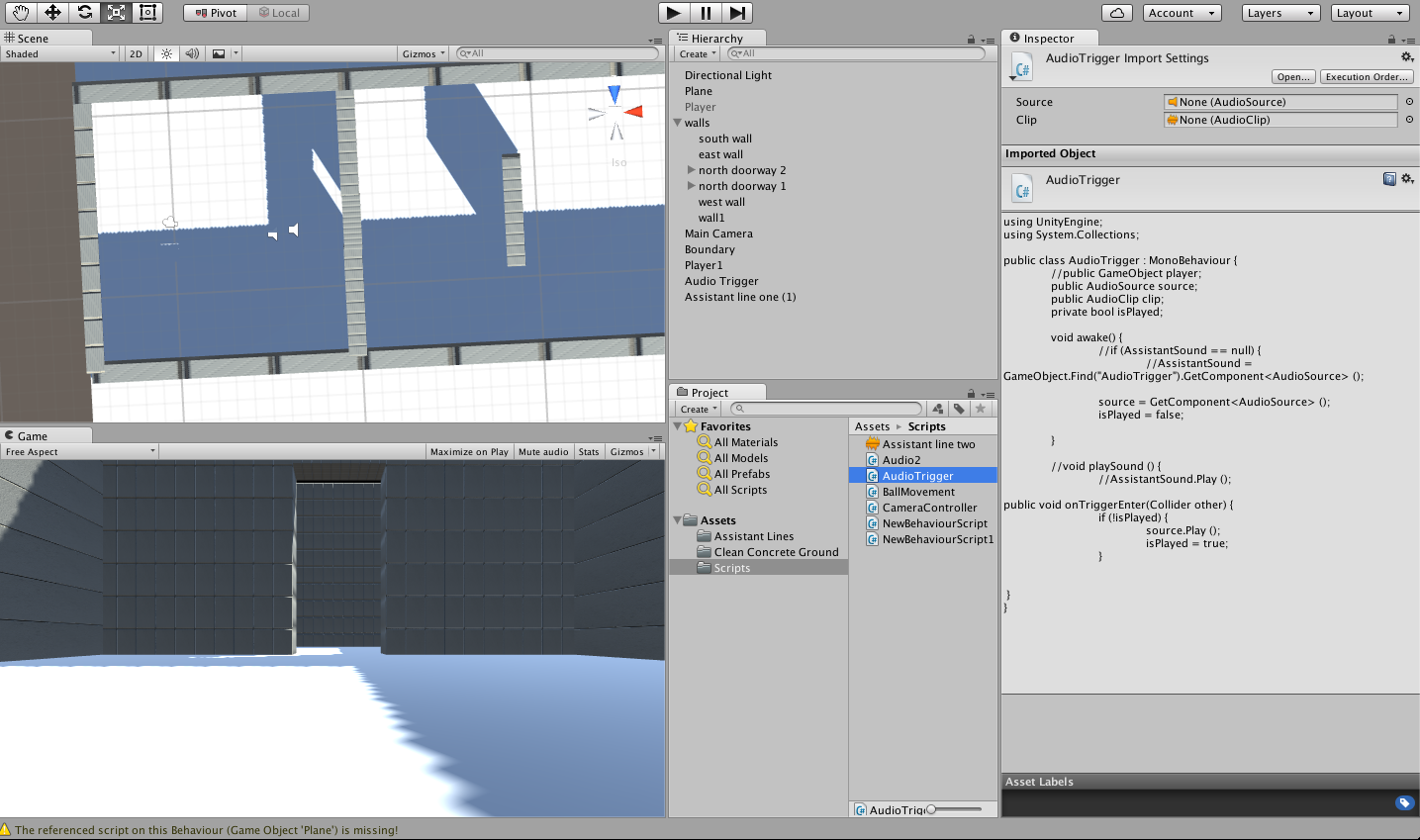
Unity screenshot
Inspiration
Derek came up to us with the idea and we decided to try it out. None of us knew how to make an app using the accelerometer on the phone, but we were up for the challenge.
What It Does
Disaster 512Z (pronounced five twelve z) is a game for the blind/visually impaired community, or anyone else who wants to play it.
Basically, you play as a space officer who has crash landed in the pressure chamber of an abandoned space facility. There is no power, so everything is dark. In fact, you don't even look at your phone screen throughout the entire game, because there is nothing to see.
You hold your phone in your hand and it acts as a device to control the space suit your character is wearing. Instead of walking, the character boosts along (with corresponding sound effects!) when you tilt your phone, as if the phone was a joystick. You can't see the character. Instead, you pretend that you are the character.
It's very important that our game is played with headphones or earbuds because the audio is the only way you know where your character is in the game. There are many rooms, dead ends, twists and turns in the abandoned facility, and your ears tell you where to go.
We use many sound effects. There is an artificial intelligence system, 512Z, speaking in your ear, like an assistant. It walks you through the game's tutorial and alerts you of anything new. 512Z also reads the crew logs, which you discover as you explore the facility. Slowly, you can piece together what terrible disaster must have occurred.
The main sound effects are things like doors opening, your suit scraping against walls, and other ambient sound effects.
How We Built It
Disaster 512Z is built in Unity 5. Unity is a game engine, and we used it to lay out the level designs and keep track of where the player is in the facility. Scripts are written in c#.
We used Audacity to record and edit our audio.
Originally, we were going to build the game for Android but then switched to iOS when we found out that most blind/visually impaired people use iPhones. iPhones are much more accessible because users have the option of having everything read out to them by Siri.
Challenges We Ran Into
We ran into many challenges, mostly regarding c# scripts. None of us had every used c#, so we had to refer to the documentation for everything. The incorporation of the accelerometer took the longest time to implement, definitely. The code on the Unity website wasn't working the way we wanted, so we took it upon ourselves to write our own c# accelerometer code. That was certainly a challenge. When we finally figured it out, the controls were backwards, so we had to fiddle with it some more.
Another challenge we had was implementing the audio. The object colliders were causing a lot of issues.
Accomplishments That We're Proud Of
We felt a great sense of accomplishment, when after probably eight hours of work, the accelerometer finally worked and controlled the player the way we wanted it to. That was an integral part of our game. Without the acelerometer functioning, we would have had a hard time incorporating audio and everythinf else.
What We Learned
All of us have learned a little c# that we can apply to future Unity projects. Unity it very powerful, and we are only scratching the surface with our project. We also realized that there was a lot to consider when making something for the visually impaired community.
What's Next For Disaster 512Z
We're just focusing on getting a working version by the end of the Hackathon. That's our goal. But if we were to add more features, we would add a menu system, most sound effects, more story, and more levels.


Log in or sign up for Devpost to join the conversation.