-
-
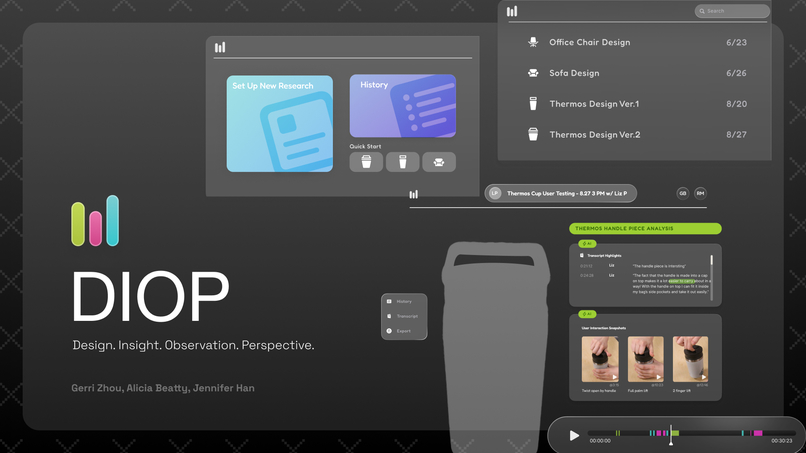
DIOP Design. Insight. Observation. Perspective.
-
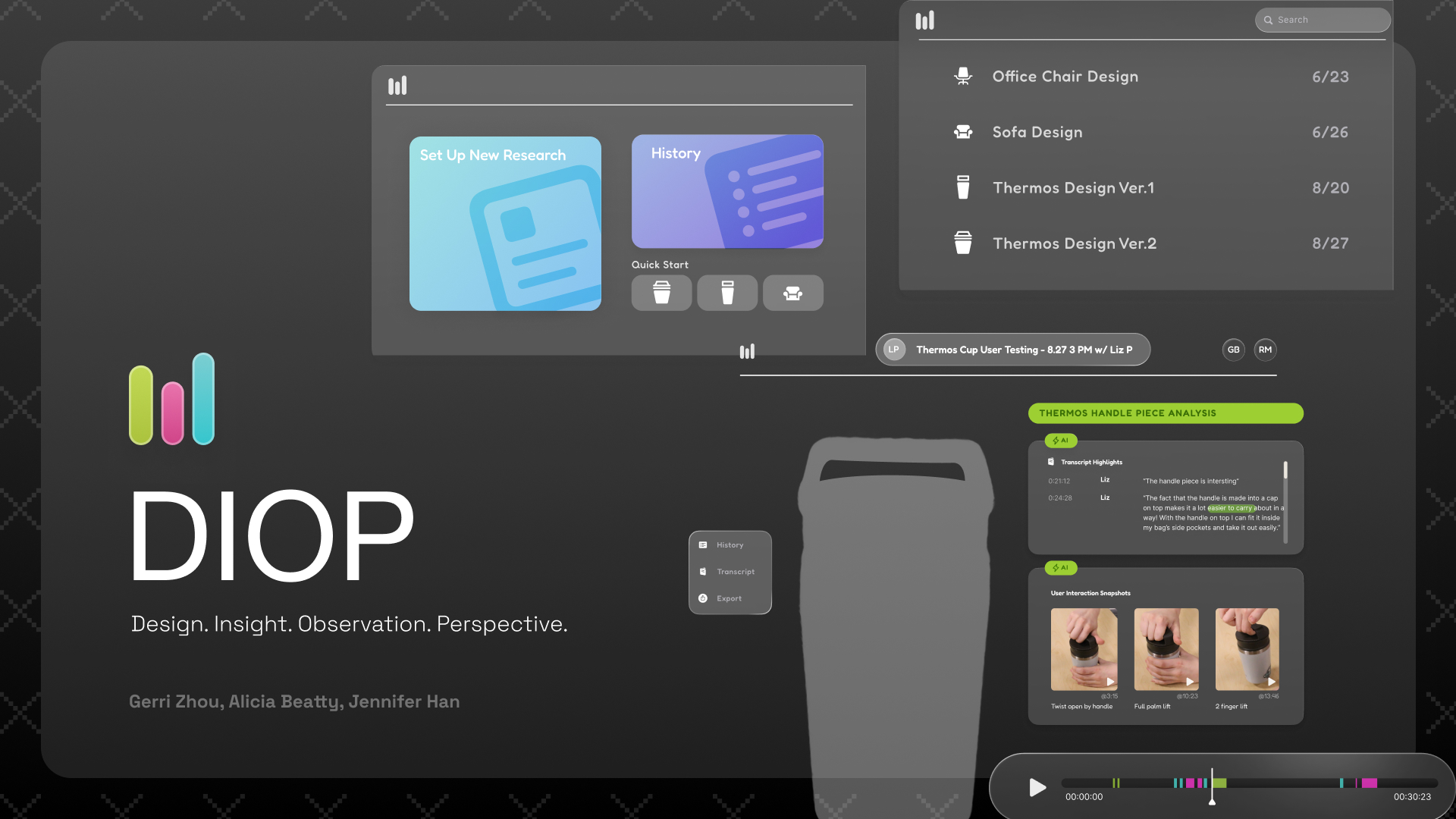
DIOP is a research tool powered by AI that utilizes mixed reality to streamline research in the design process.
Inspiration
We were inspired by own experiences with using AI for UXR and also secondary research we looked at that discussed the current applications of AI in the UXR process. Currently UXR is incapable of processing video, screen, and webcam footage, and thus cannot analyze usability tests; tools cannot do test analysis based on transcripts alone. Another issue is that AI lacks context of the study beforehand and will cause a collection of unnecessary data that hinders the overall design process.
What it does
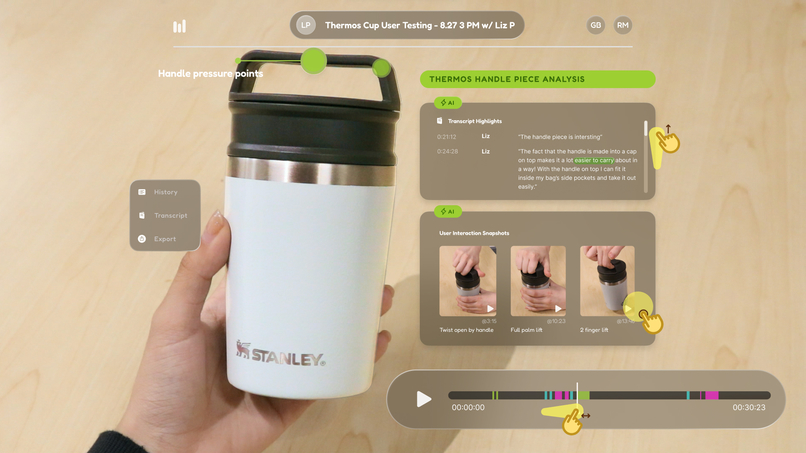
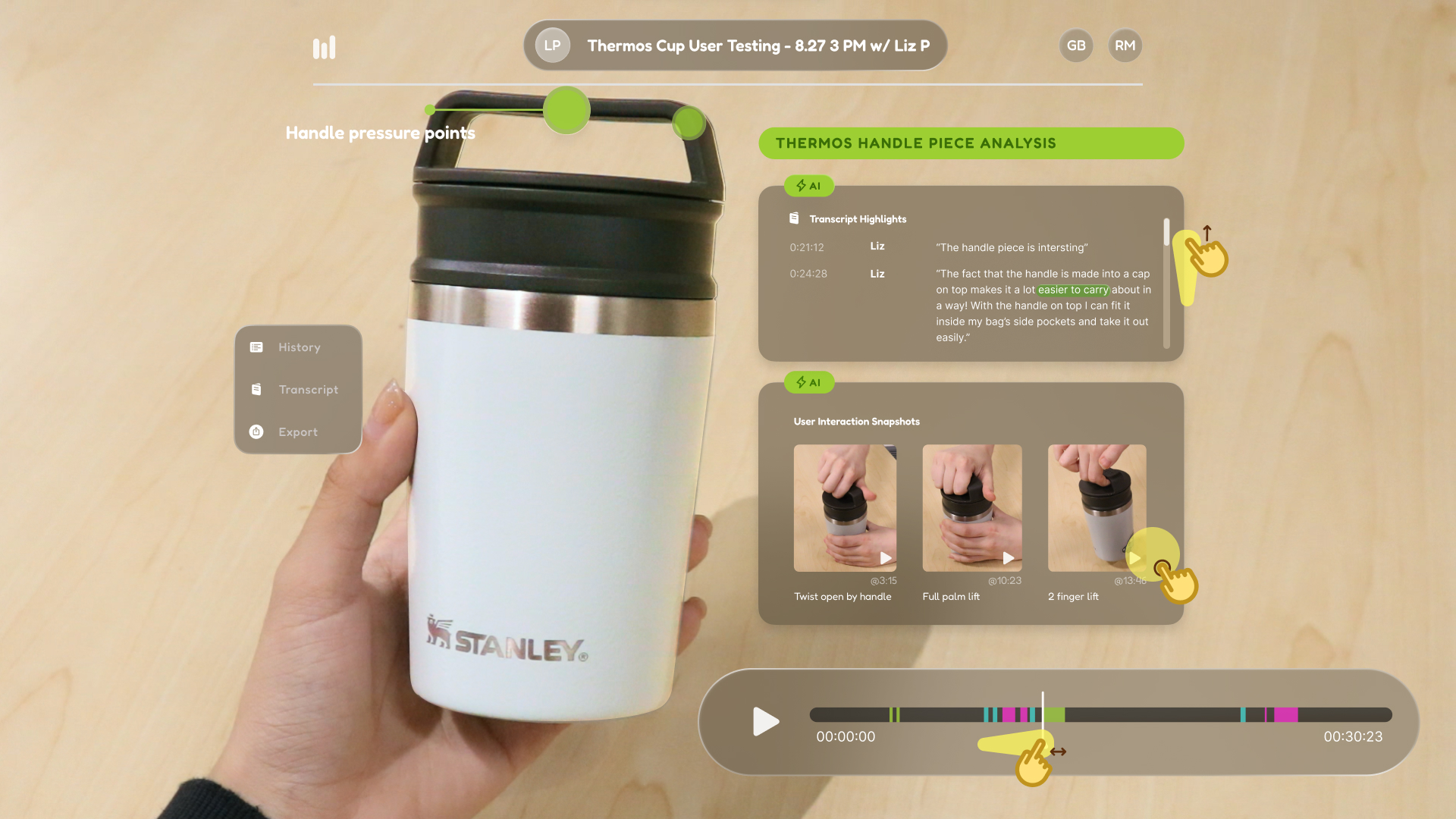
Our AI application, DIOP, addresses these issues discussed above. DIOP streamlines the research process by assisting with user testing. It asks the UX researcher / designer about the research so far so it has context of what data to collect. Then it analyzes verbal but also visual input using the technology of mixed reality to collect visual data for the physical product the designer is testing. After the testing, DIOP organizes this data it collected by sectioning it off into different areas of the product the designer can interact with. For example, if the designer tested a thermos they can tap the lid to open the transcript and see what the user said about the lid and what areas of the lid they most commonly touched.
How we built it
We built this product using Figma, Photoshop, Illustrator, and After Effects
Challenges we ran into
We ran into challenges of how DIOP would organize the data it collected after user testing. We wanted DIOP to be an immersive experience that utilized the medium of mixed reality such as touch.
Accomplishments that we're proud of
We are proud of the deep collaboration of our team and our insights that led us to building a product that solves a genuine issue in AI products currently.
What we learned
We learned a lot about the uses of AI in research and how to effectively prototype a mixed reality product.
What's next for DIOP
We would like to add customizable controls for DIOP as well as put DIOP in a virtual reality setting. Then the designer and the user would both wear headsets and the designer can test lower fidelity prototypes. With further research we may also want to add DIOP into the user testing session to assist the designer while they are testing the product.
Built With
- adobe-after-effects
- adobe-illustrator
- figma
- photoshop


Log in or sign up for Devpost to join the conversation.