-
-
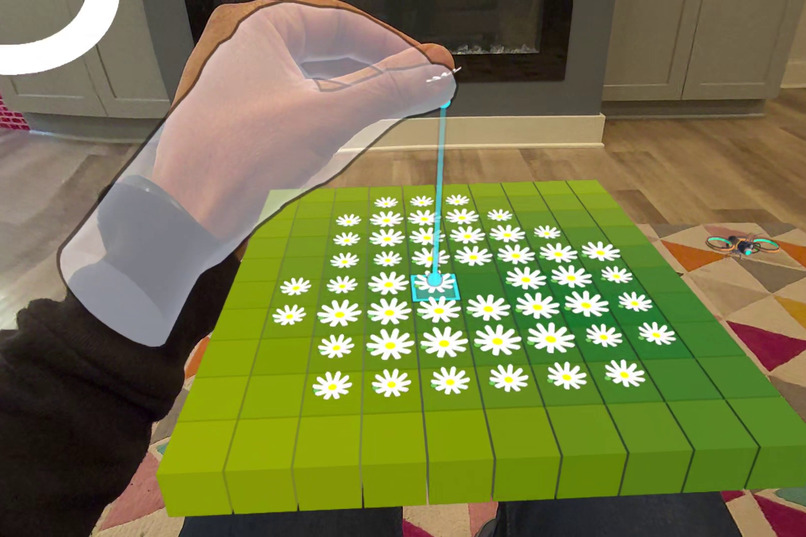
Pinch to pick up a flower with your drone.
-
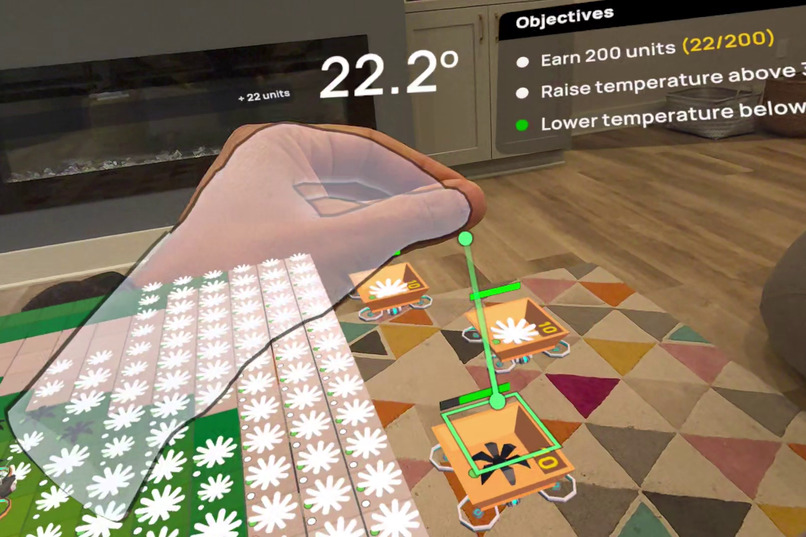
Pinch to deliver flowers.
-
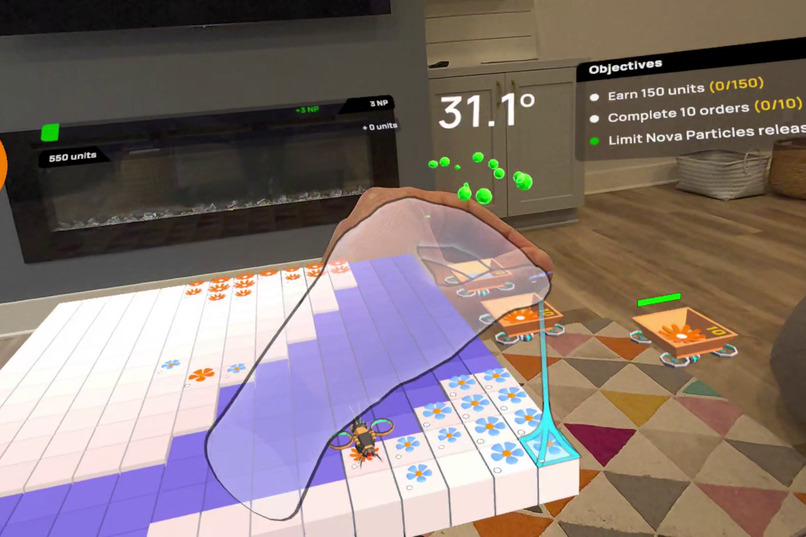
Pluck to remove a flower with your drone's laser.
-
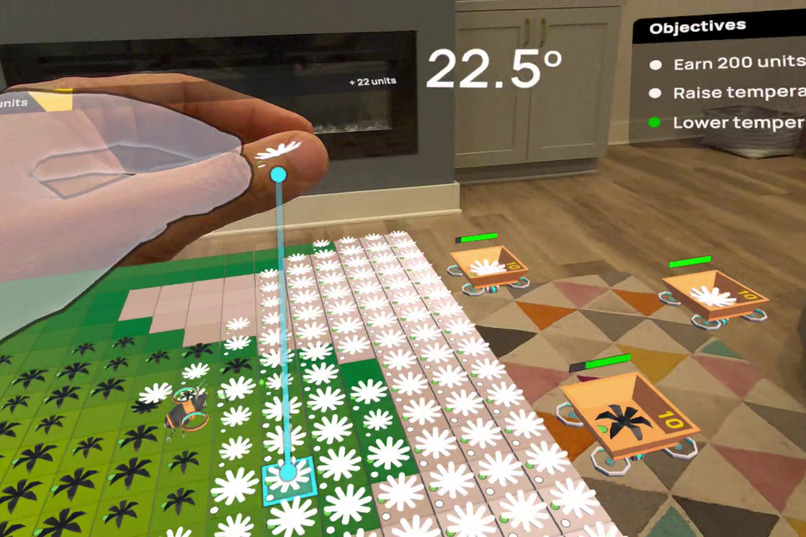
Manage multiple orders.
-
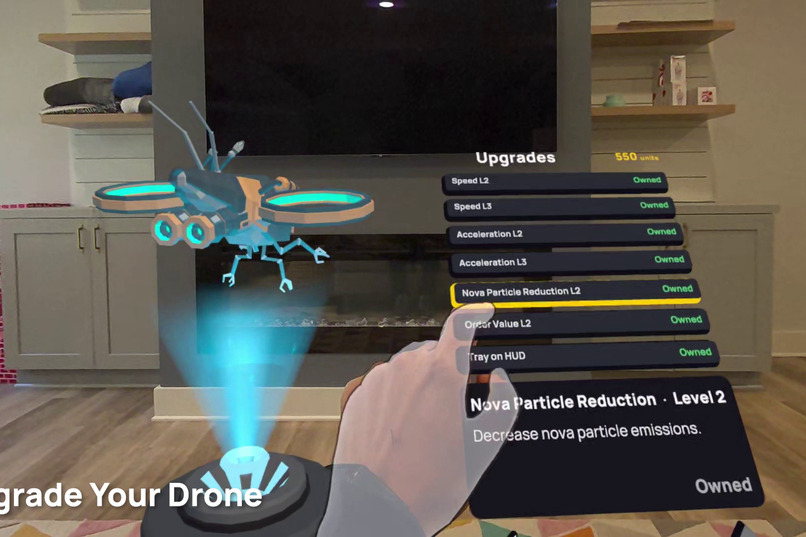
Upgrade your drone.
-
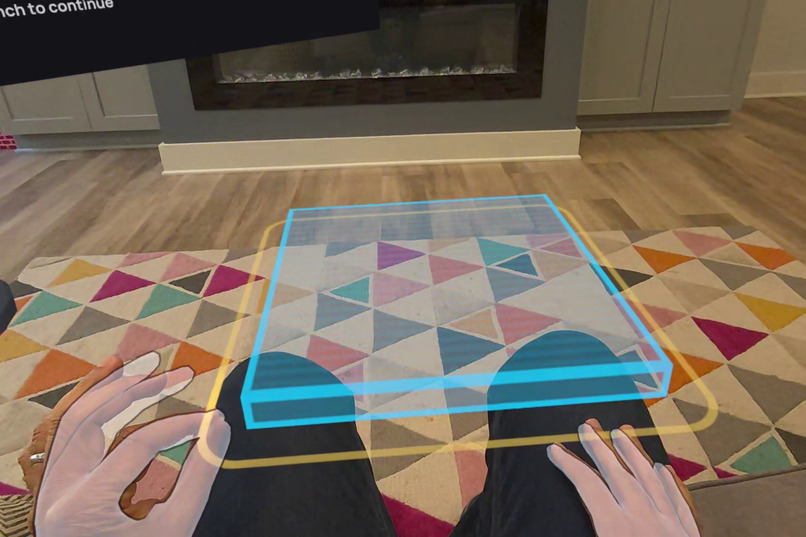
Find the perfect spot on your lap.
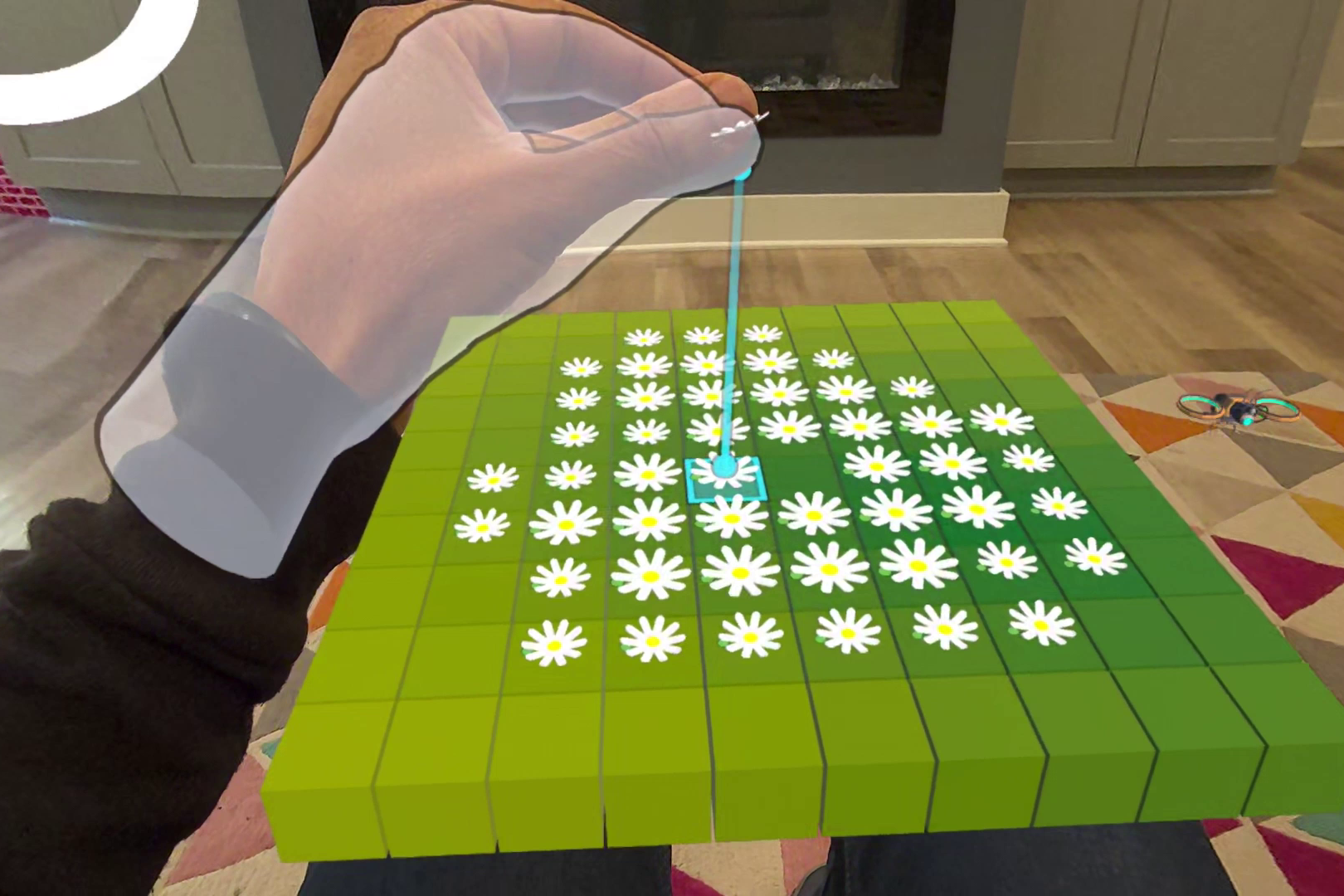
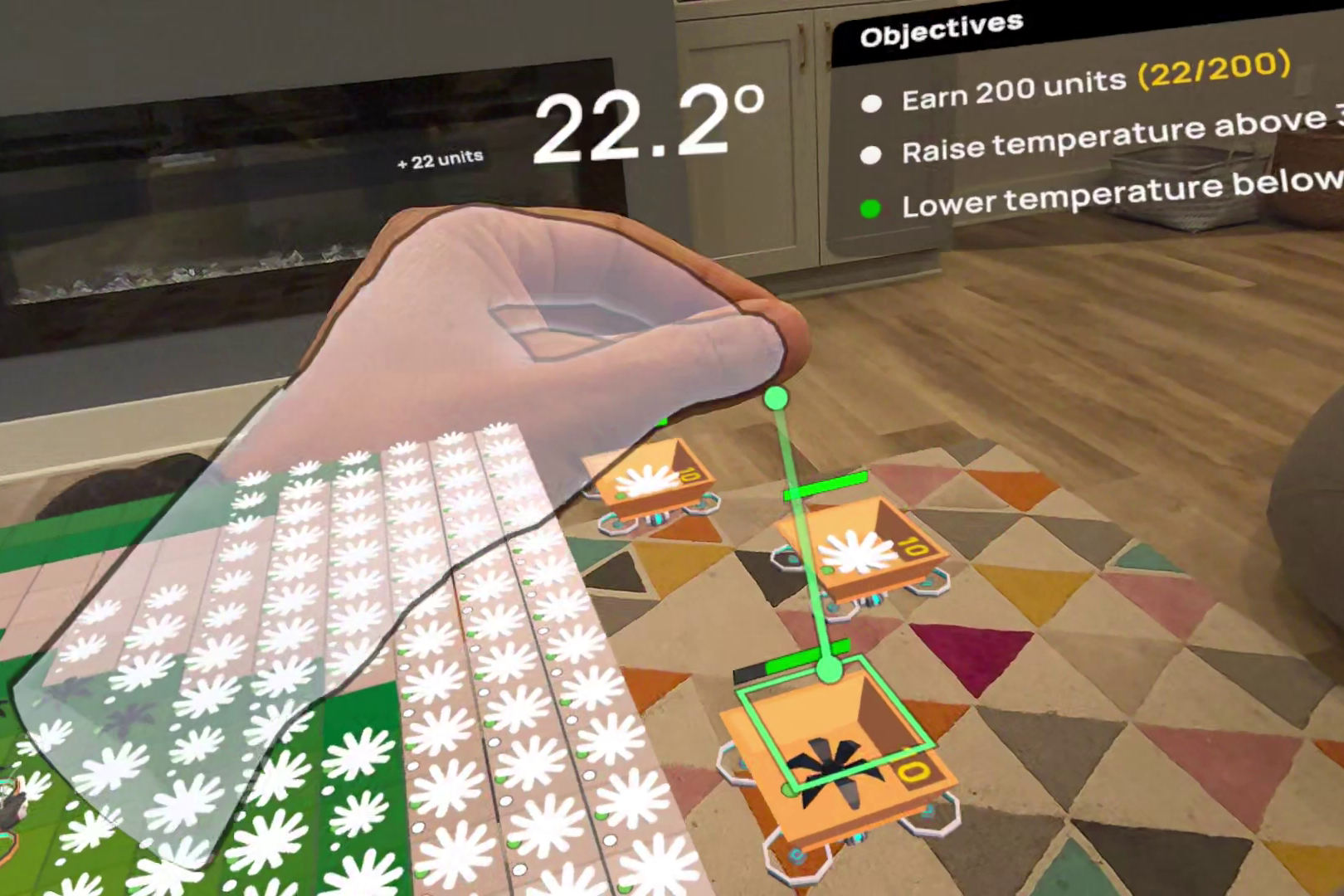
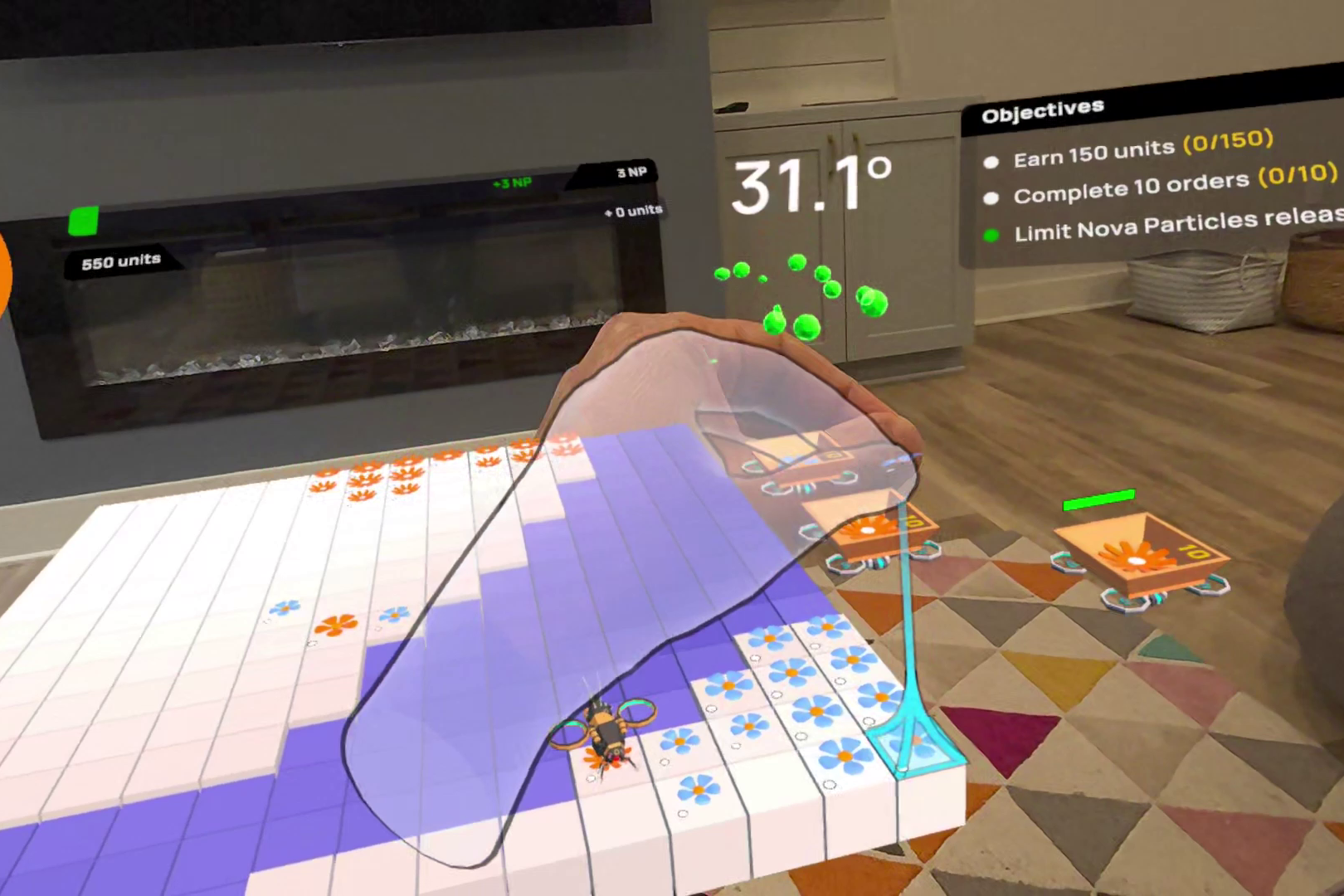
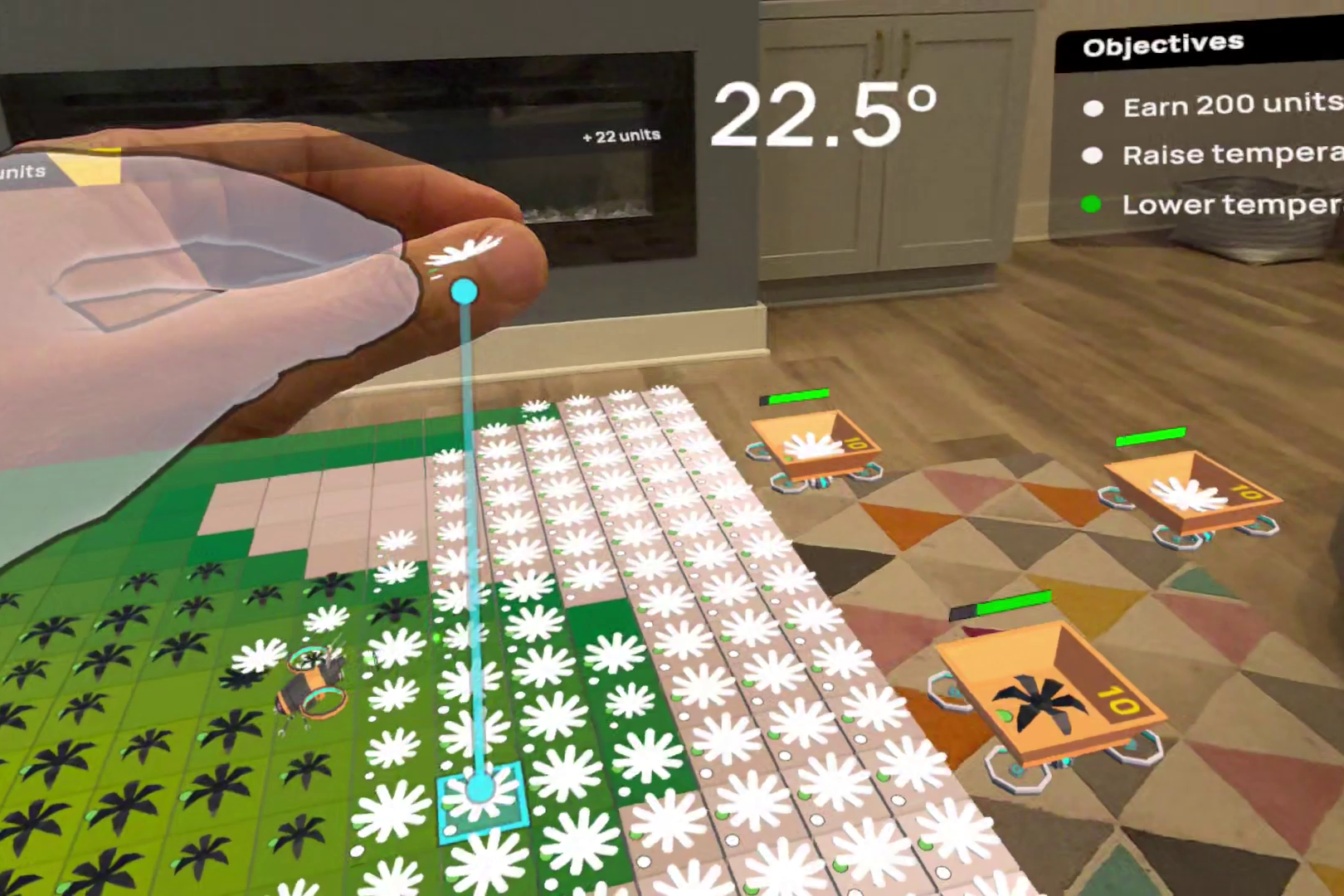
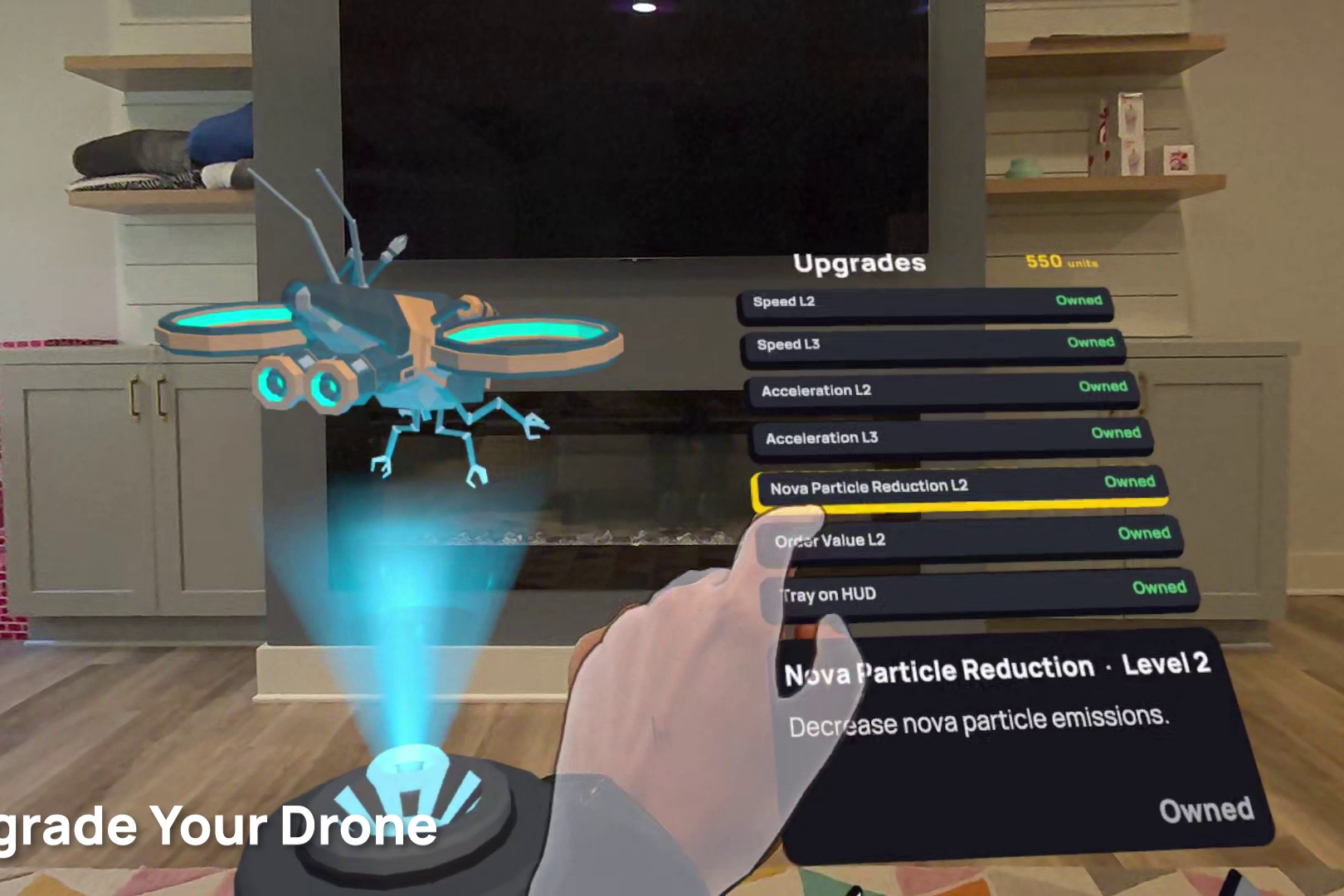
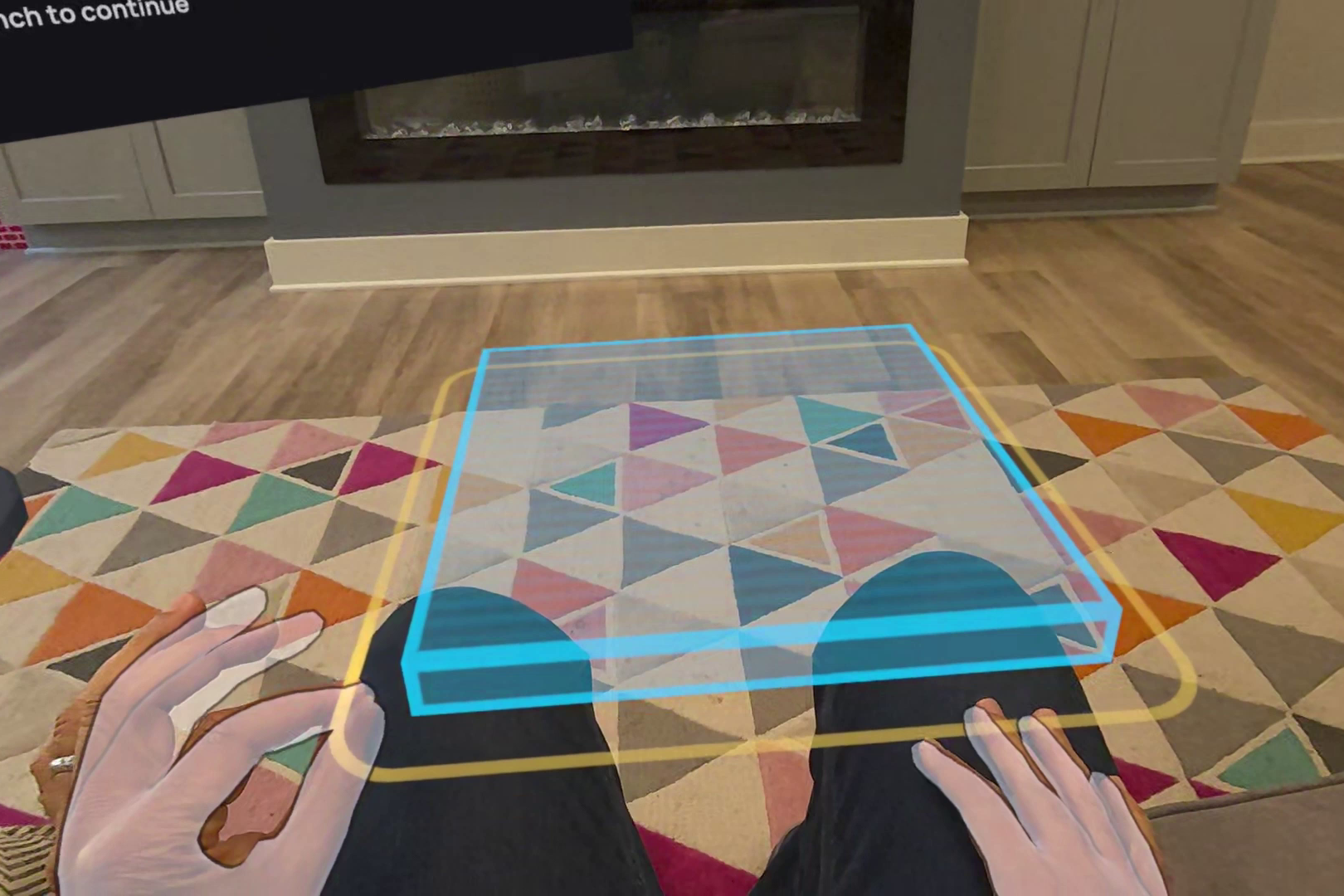
Daisyworld is a time management game in which players grow and breed flowers on a strange world, while delivering them to eager customers. Players learn that their actions have an unexpected impact on the planet.
Inspiration
Daisyworld takes inspiration from the casual Delicious series. Fans will recognize its frenetic plan, assemble, and deliver loop, and the compelling story beats linking its stages.
Though it appears to be a cozy farming sim at first, Daisyworld develops a surprising amount of complexity as each stage unfolds. It is built on a real climate model (Watson and Lovelock's 1983 "Daisyworld" paper), and by the end the player juggles many elements to reach their goal while protecting the planet.
What the player does
In Daisyworld, the player takes control of a drone that operates on an abstract planetary surface. It's played in passthrough on a lap-size board. Using hand gestures, the player directs the drone to collect, breed, and ultimately deliver the flowers that customers have requested. Money earned can be invested in drone upgrades and toward the story's goal: freeing Arin and Riel's mom. Tension shows up later in the game when the player learns that their drone produces a harmful carbon analog, warming the planet. The player must achieve their monetary goals without destroying the delicate ecosystem.
How I built it
The game is built in Unity 6.3 LTS. The original 2D game was developed as a milestone project during my graduate program in Computer Science at Georgia Tech. I had always imagined the game as an MR experience, and used the hackathon to make this dream a reality. I created and modified purchased 3D assets using Blender. Adobe Illustrator was useful for menu and icon development. Claude Code and the Unity CLI accelerated the work.
Challenges
Daisyworld was a 2D isometric experience that I converted to MR during this hackathon. I put a tremendous amount of time into nailing down the core user interactions and interface. Gesture-based interaction is fundamentally different than using a mouse and keyboard. Actions like "planting" or "plucking" a flower had to feel right or the game would not be fun. I tried a hand-based ray, a middle-finger pinch, and several two-handed schemes before arriving at the present solution.
The UI was completely overhauled. I carefully considered the scale of the game board, ultimately adhering to the small space on the player’s lap. The original story unfolded through 2D dialogue panels, but I converted these to 3D character projections. All menus were redesigned for easy and accessible poking.
Accomplishments
I am proud to have built a complete and satisfying MR experience. Specifically, I think players will viscerally experience the tension that makes our real-life battle against climate change so difficult.
What we learned
I learned a significant amount about MR and VR experience design, and rapid iteration using agentic coding tools.
What's next
I'd like to further polish the gameplay and story, then release Daisyworld on the Quest Store in early 2027.


