Inspiration
Guitar practice is usually inconsistent and unstructured. A lot of players know they should practice scales, timing, chord changes, and technique, but they often end up playing the same songs or exercises without knowing whether they are actually improving.
Daily Fret started from a simple idea: make guitar practice feel more interactive, measurable, and easier to stick with.
Instead of only showing tablature or giving users a timer, we wanted the app to actually listen while they play, react to their notes, and turn practice into a guided daily routine.
What it does
Daily Fret is an interactive guitar practice app that listens as you play.
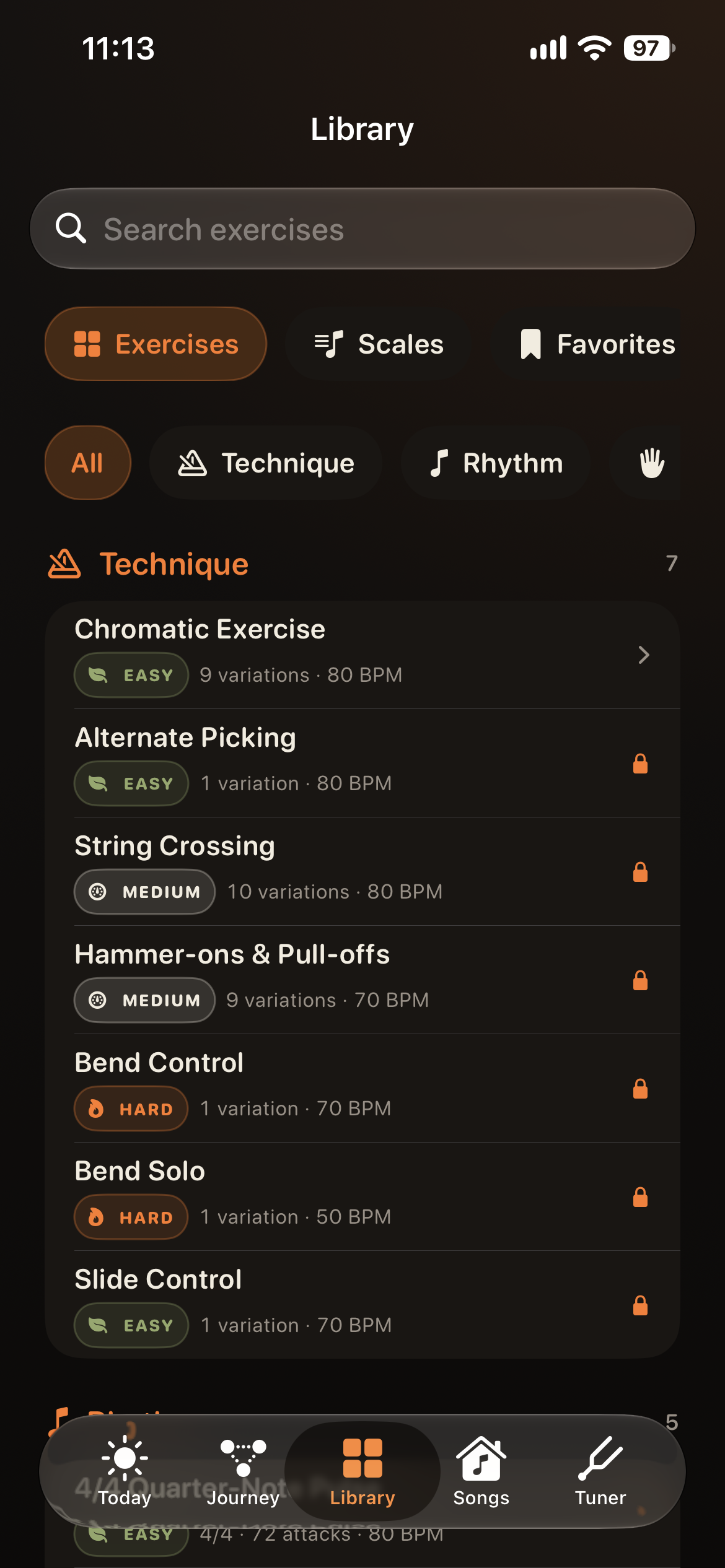
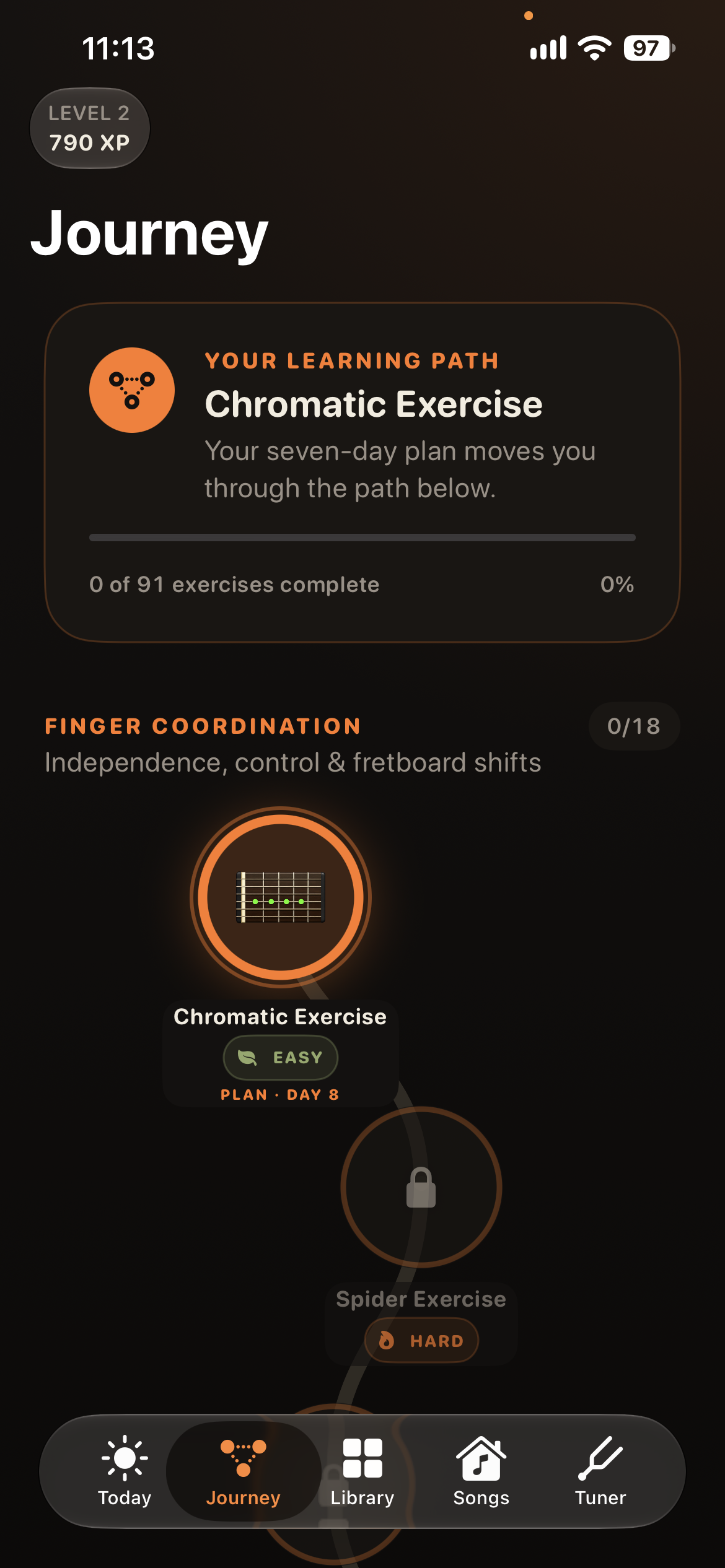
Users can follow guided exercises for scales, chromatic patterns, chords, slides, bends, timing, and other core guitar skills. The app uses the device microphone to detect notes and chords in real time and provides immediate feedback during practice.
Tablature can progress based on what the player actually performs, rather than simply scrolling at a fixed speed.
The app also includes:
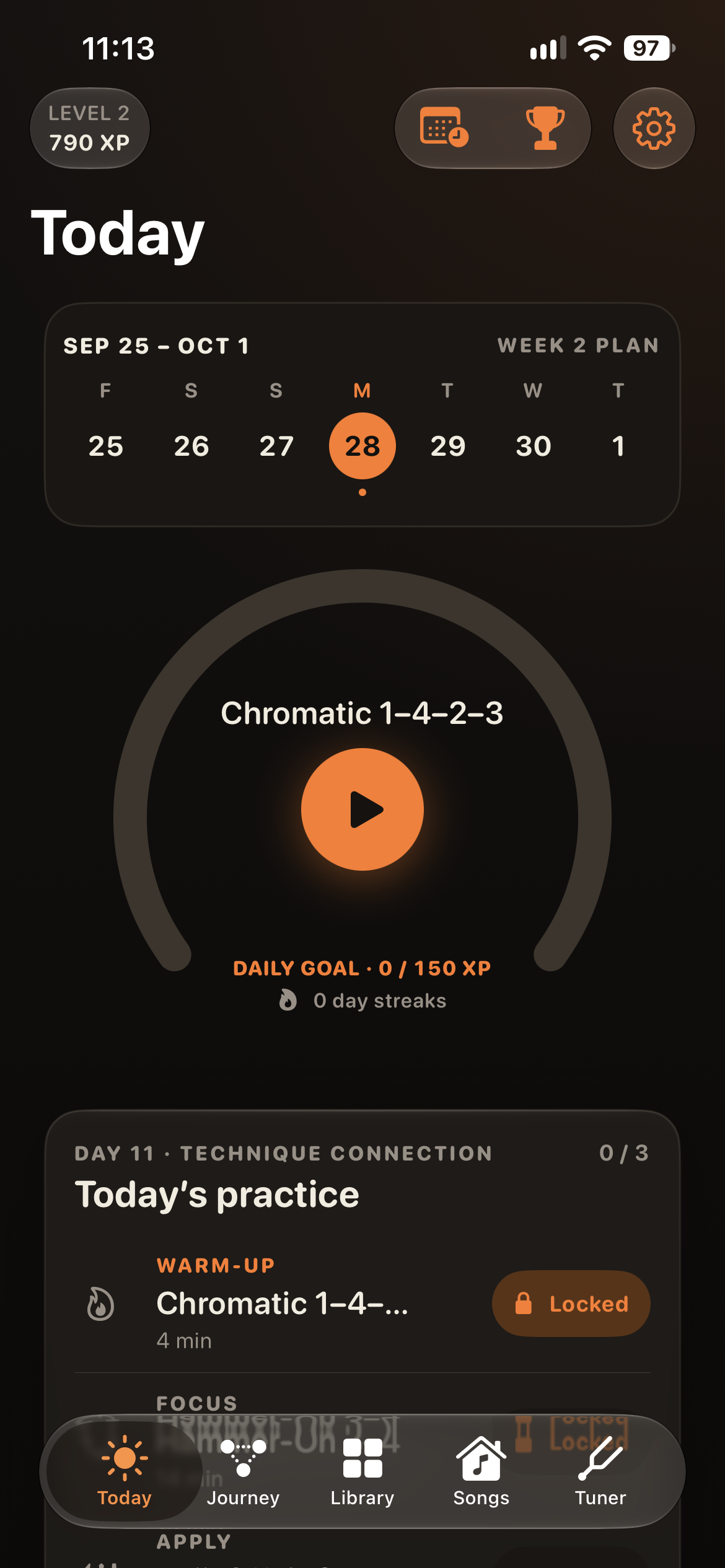
- Daily practice goals
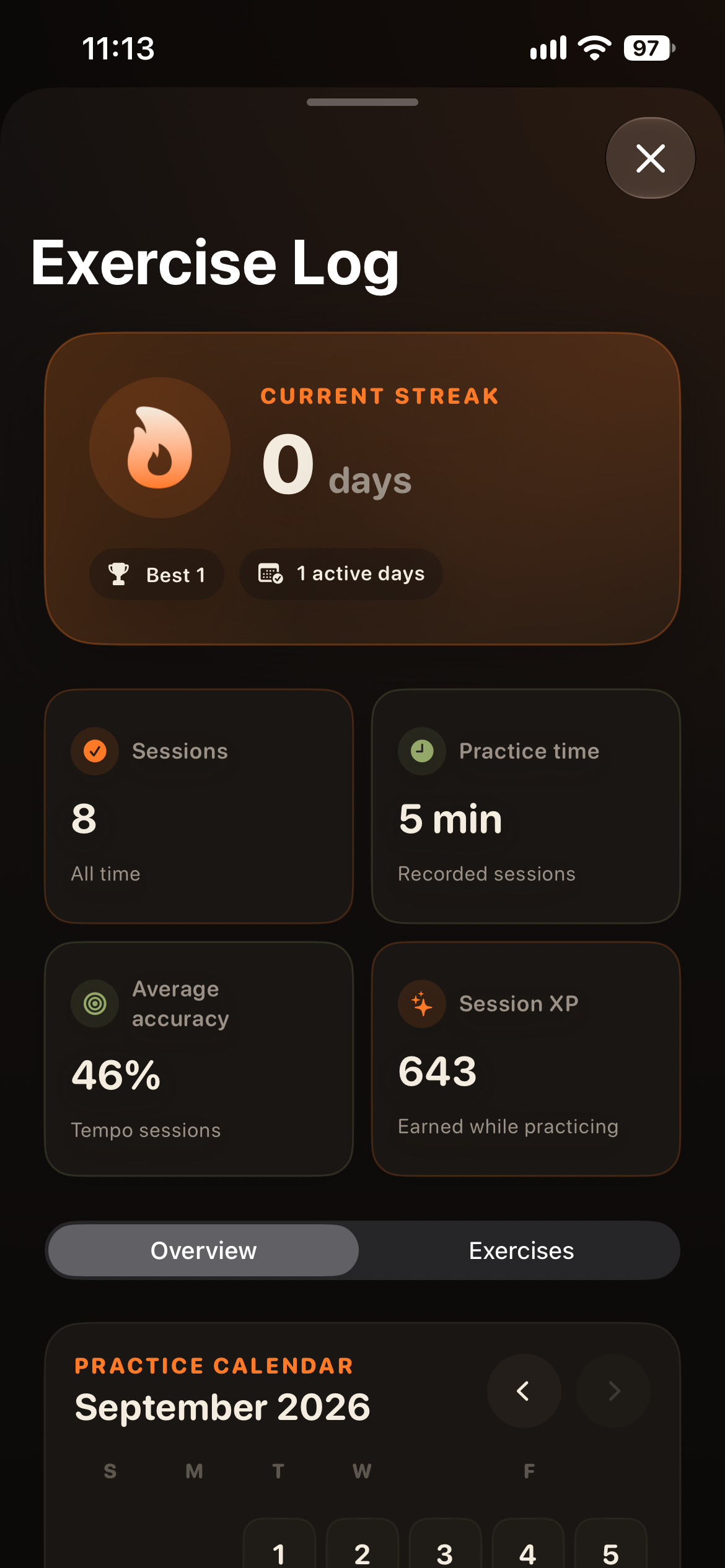
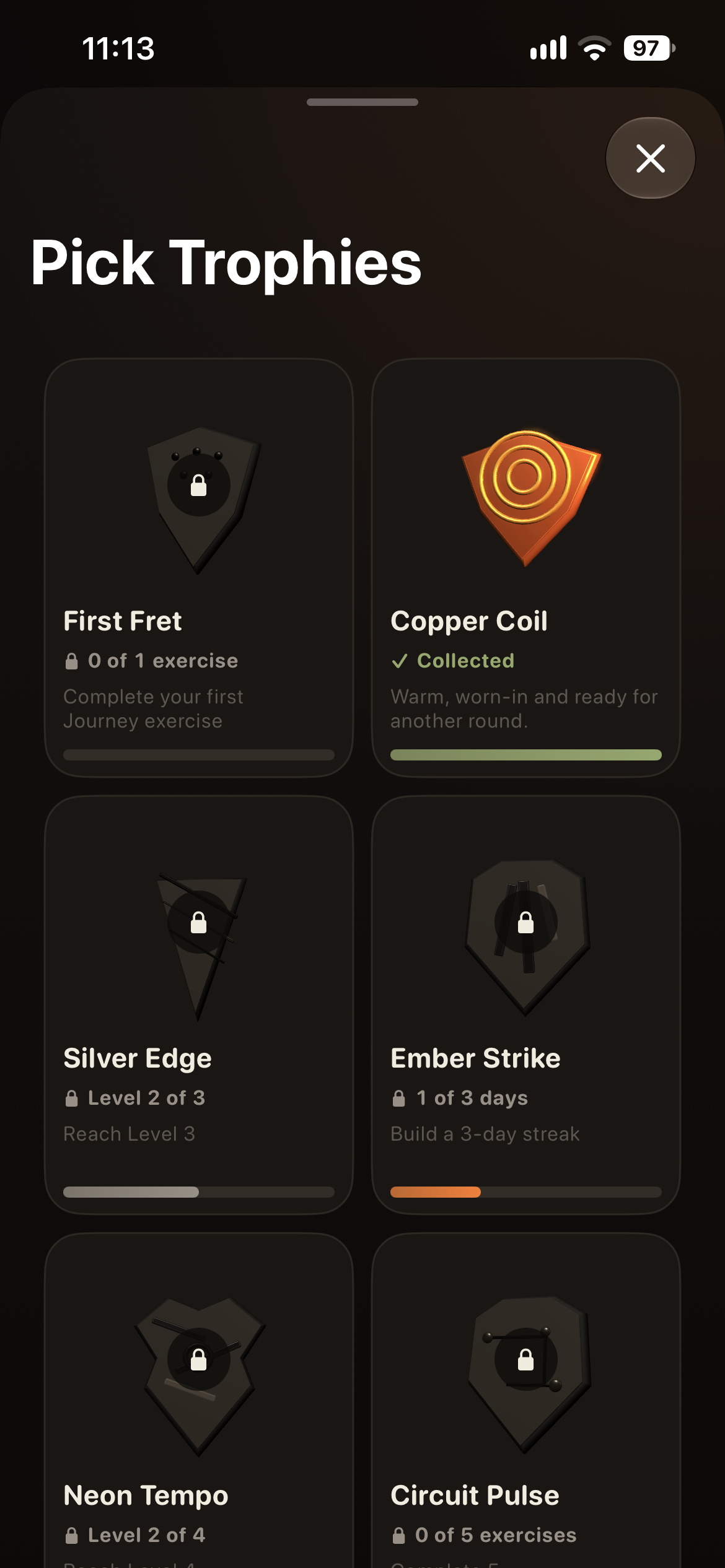
- XP and streaks
- Skill progression
- Practice statistics
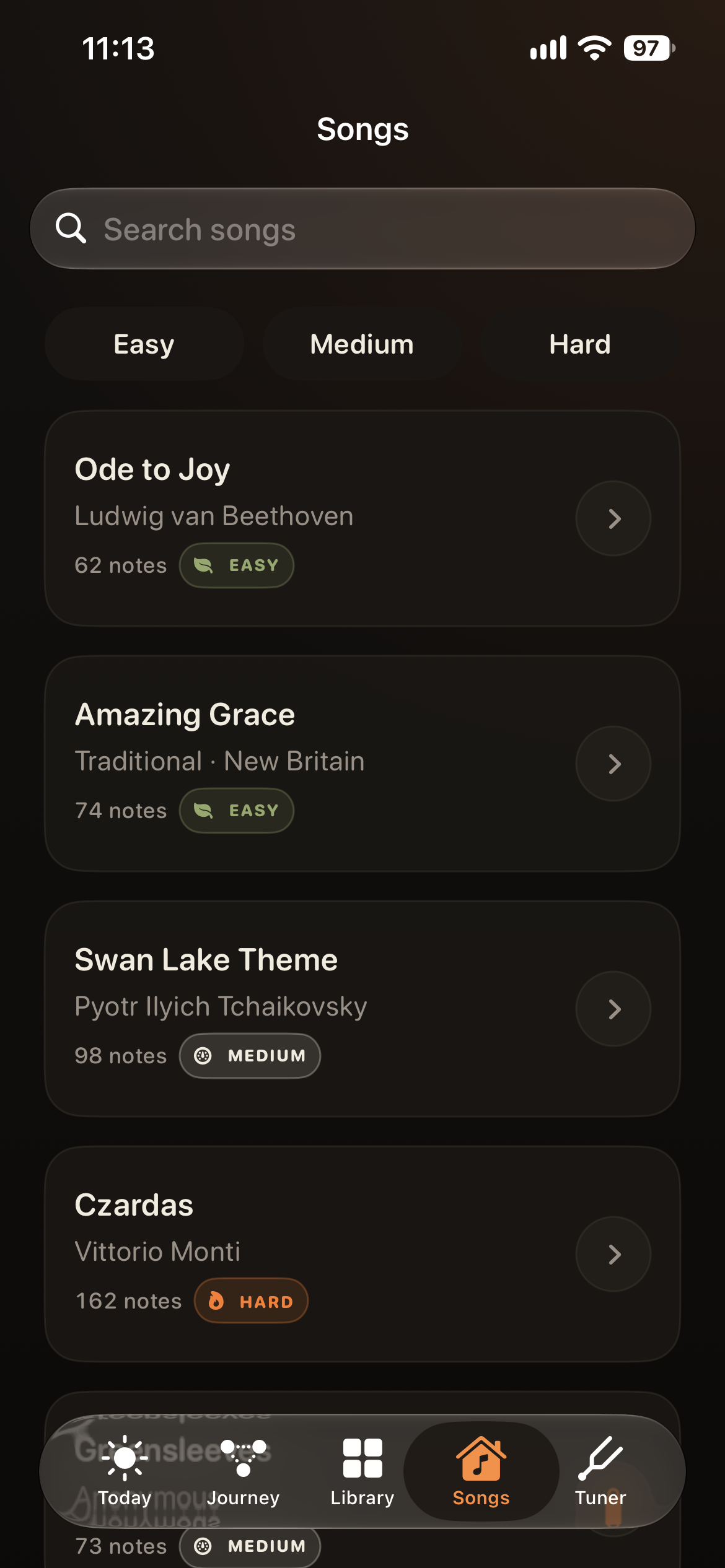
- Songs and playable exercises
- Real-time note and chord detection
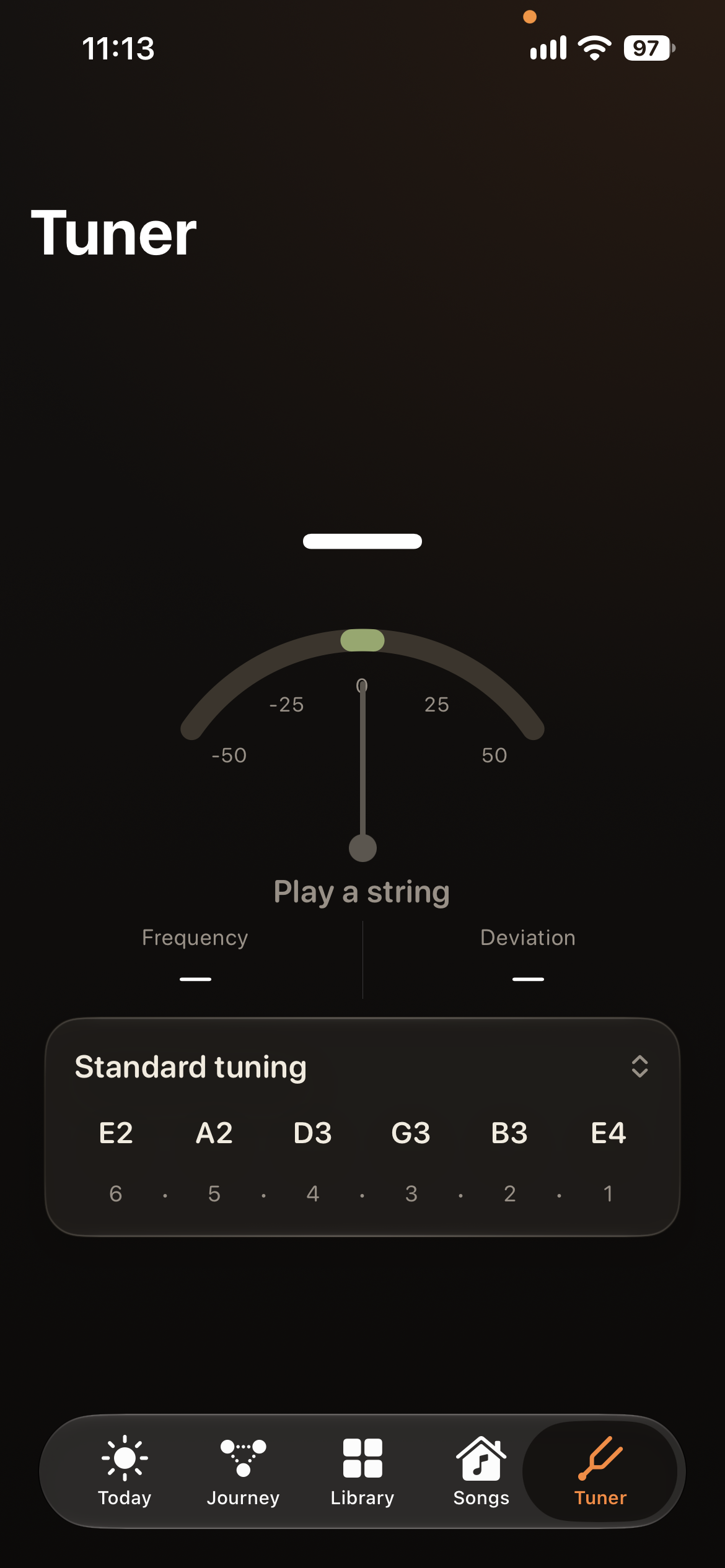
- Chromatic tuner
- Metronome
- Support for acoustic and electric guitar
- Custom fret-count configurations
- On-device audio analysis without requiring an account
The goal is to give guitar players a clear answer to a common question: "What should I practice today?"
How we built it
Daily Fret is built natively for iOS using Swift.
A major part of the app is the audio-processing system. The microphone input is analyzed in real time to estimate pitch and identify the note being played. That information is then compared against the expected note in the current exercise or song.
The practice engine coordinates several different systems at once:
- Audio input and pitch detection
- Guitar fretboard and note mapping
- Tablature rendering
- Exercise sequencing
- Timing and metronome logic
- Accuracy calculation
- Practice progression
- Gamification and streak tracking
We designed the system so that exercises are represented as structured data rather than hardcoded screens. This makes it possible to create different types of exercises while reusing the same playback, detection, scoring, and tablature systems.
Most of the processing happens directly on the device, which keeps latency low and avoids sending the user's audio to a server.
Challenges we ran into
The biggest challenge was real-time audio detection.
A guitar note is not a clean single frequency. It contains harmonics, string noise, pick attack, resonance from other strings, and environmental noise. Detecting the correct note quickly enough to make the interface feel responsive required a lot of experimentation.
There is also a difficult balance between sensitivity and accuracy. If the app waits too long before confirming a note, practice feels sluggish. If it reacts too quickly, harmonics or transient sounds can be interpreted as incorrect notes.
Another challenge was designing tablature that works interactively. Traditional tabs are static, while Daily Fret has to know what note the player is currently attempting, whether they played it correctly, when the exercise should advance, and how scoring should work.
We also had to make the system flexible enough to support different guitars, fret counts, tempos, exercise types, and techniques without creating completely separate logic for every exercise.
Finally, making practice feel motivating without turning it into a distracting game was an ongoing design challenge.
Accomplishments that we're proud of
One of the things we're most proud of is that Daily Fret can react to a real guitar using only the phone's microphone.
There is no special hardware, MIDI pickup, cable, or external audio interface required.
We also built a practice system where tablature, audio detection, scoring, exercises, and progression all work together rather than existing as separate features.
Another important accomplishment is keeping the core experience private and lightweight. Audio analysis happens on the device, and users can start practicing without creating an account or uploading recordings.
Daily Fret is also already available on the App Store and has been used by guitar players in multiple countries, which has given us real-world feedback on how people actually practice with the app.
What we learned
One of the biggest things we learned is that guitar practice is much less predictable than it looks on paper.
Two players can perform the same note very differently depending on the guitar, pickup, strings, playing technique, room, and microphone position.
We also learned that accuracy alone is not enough. Feedback needs to feel immediate and understandable. A technically correct detection system can still feel bad if the response is delayed or if the UI interrupts the player's flow.
Another lesson was that players need structure more than they need an enormous library of exercises. Giving someone hundreds of exercises is less useful than helping them understand what they should practice next and why.
Building Daily Fret also taught us how much interaction design matters in music software. During practice, the user is holding a guitar, looking away from the screen, and trying to maintain rhythm. Every interaction needs to require as little attention as possible.
What's next for Daily Fret: Guitar Practice
The next step is making the practice system much more adaptive.
Instead of selecting exercises mostly from a predefined pool, Daily Fret will use previous practice performance to decide what each player should work on next.
For example, if a player consistently struggles with certain fret transitions, strings, tempos, chords, or techniques, the app could automatically generate a practice session focused on those weaknesses.
We also want to expand technique detection beyond basic notes and chords, including better support for slides, bends, hammer-ons, pull-offs, and other guitar-specific techniques.
Another area we want to explore is deeper progress tracking: showing players which skills are improving, where they are struggling, and how their accuracy and tempo change over time.
Ultimately, we want Daily Fret to move from being a collection of interactive guitar exercises into a practice system that understands how someone plays and continuously adjusts their training around them.
Built With
- amplitude
- avfoundation
- firebase
- swift

Log in or sign up for Devpost to join the conversation.