DemandOS — Don't Discount and Hope. Know Who's Ready to Buy.
Inspiration
We've all experienced it: finding something we love, adding it to our cart, and leaving because it's just a little too expensive.
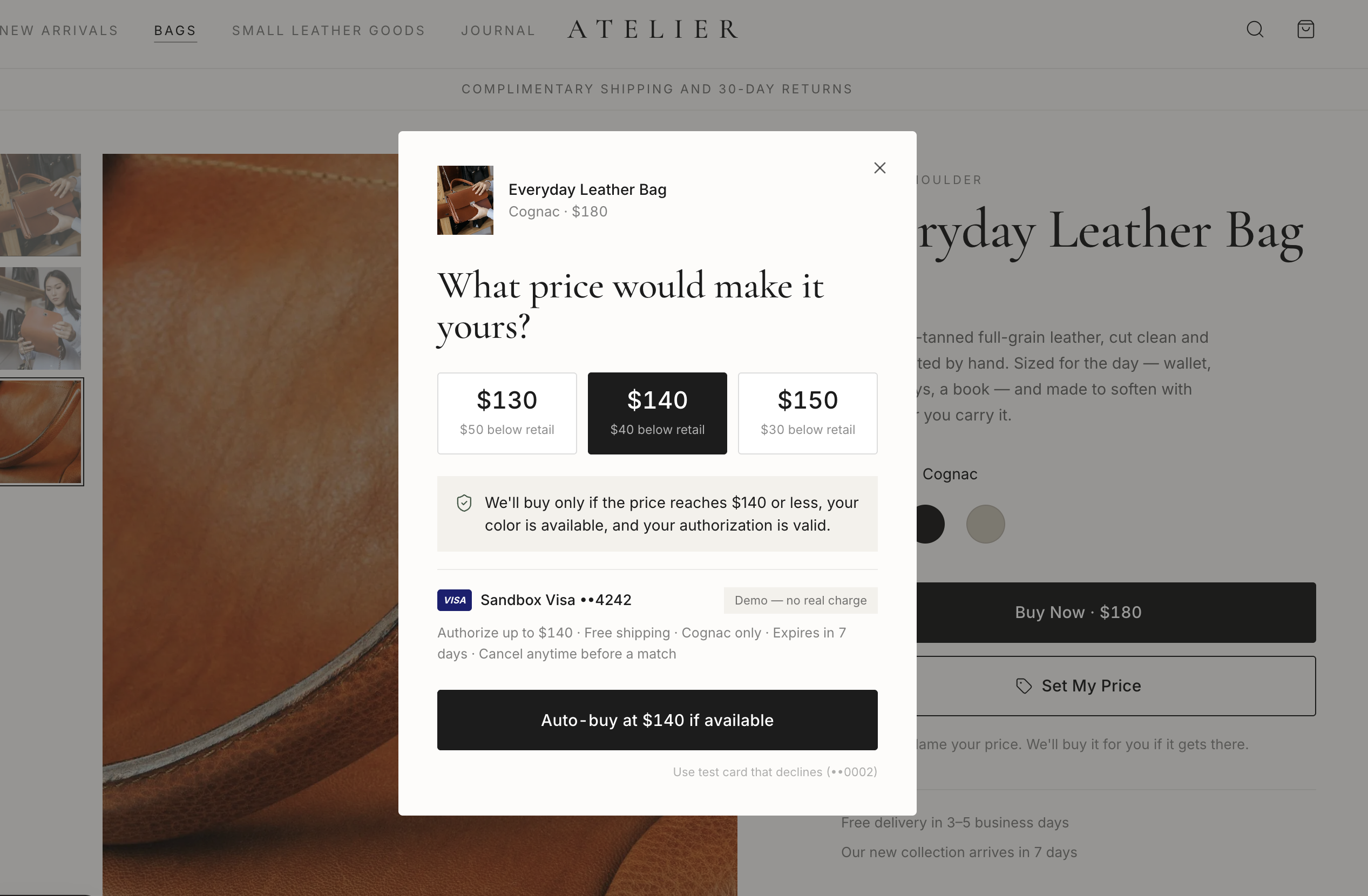
For shoppers, there's no easy way to say, "I'd buy this right now for $140 instead of $180."
For brands, the problem is even bigger. They have no clear way of knowing how many lost customers would actually purchase at a different price. Their traditional option is to launch a public sale, discounting products for everyone — including customers who might have paid full price.
What if brands could know who was ready to buy before deciding to discount?
What It Does
DemandOS introduces a new way for consumers and merchants to agree on a price.
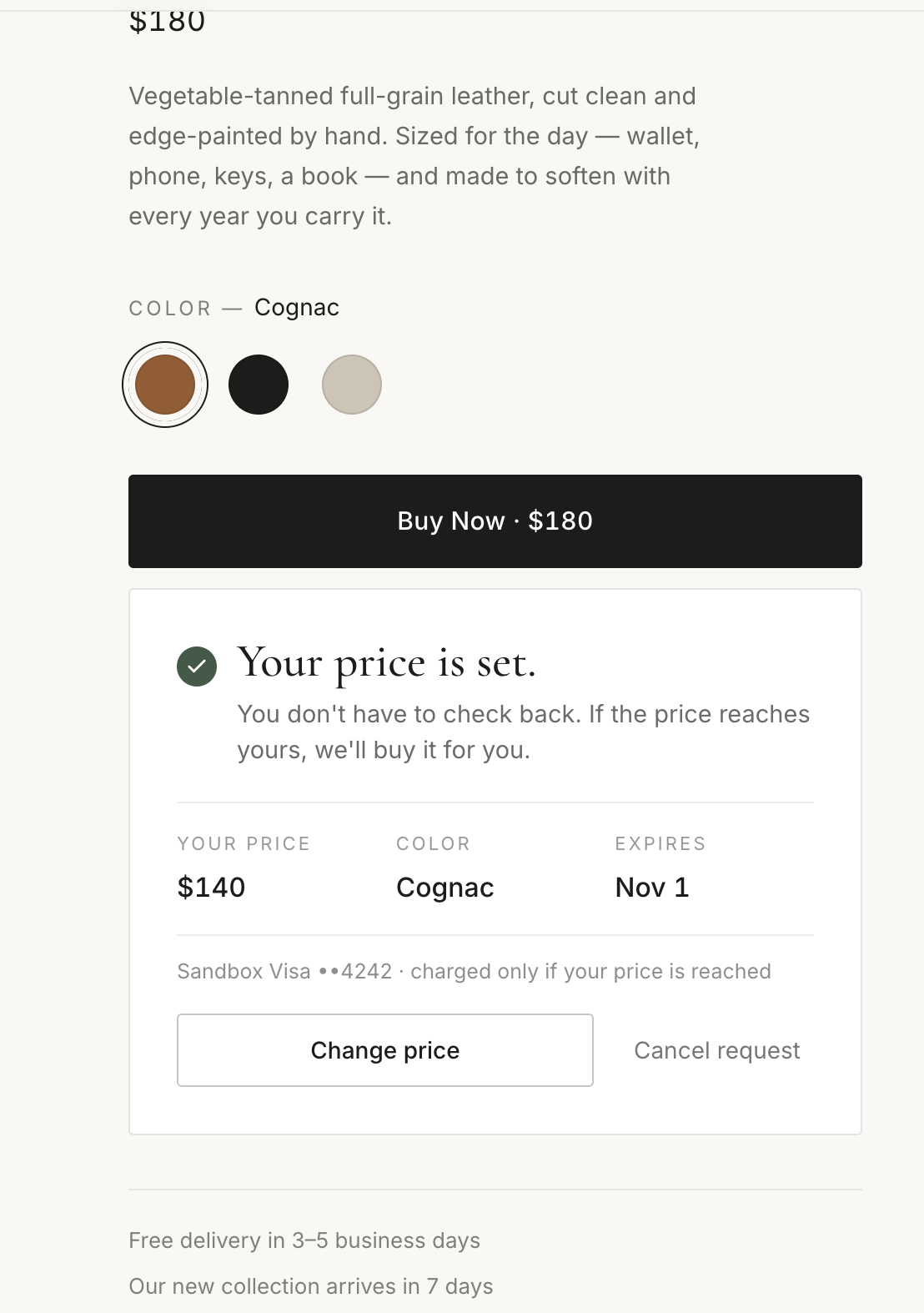
For shoppers: Name your price directly on an online store. Set the maximum you're willing to pay, authorize a conditional purchase, and let DemandOS complete the order automatically if the brand accepts.
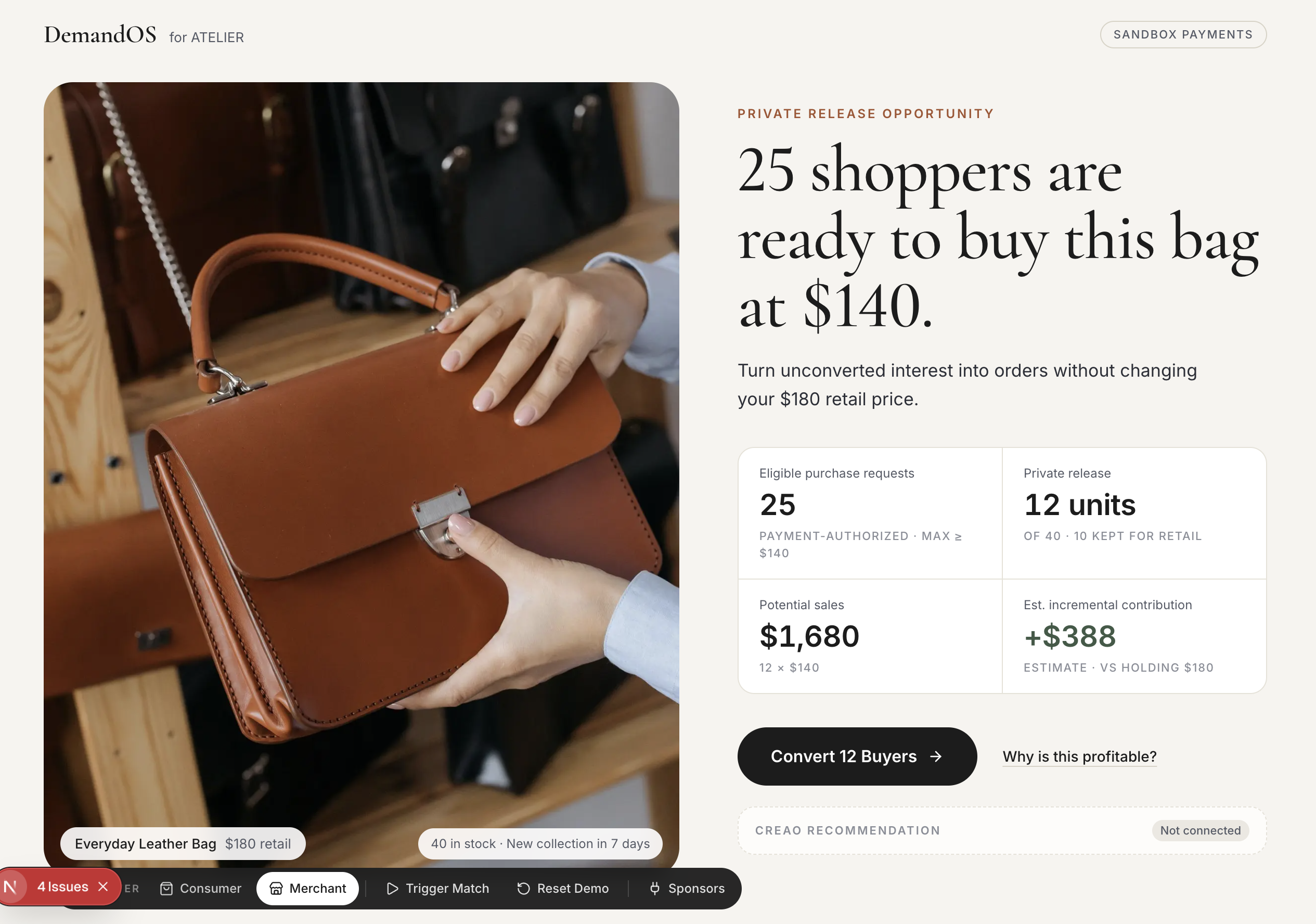
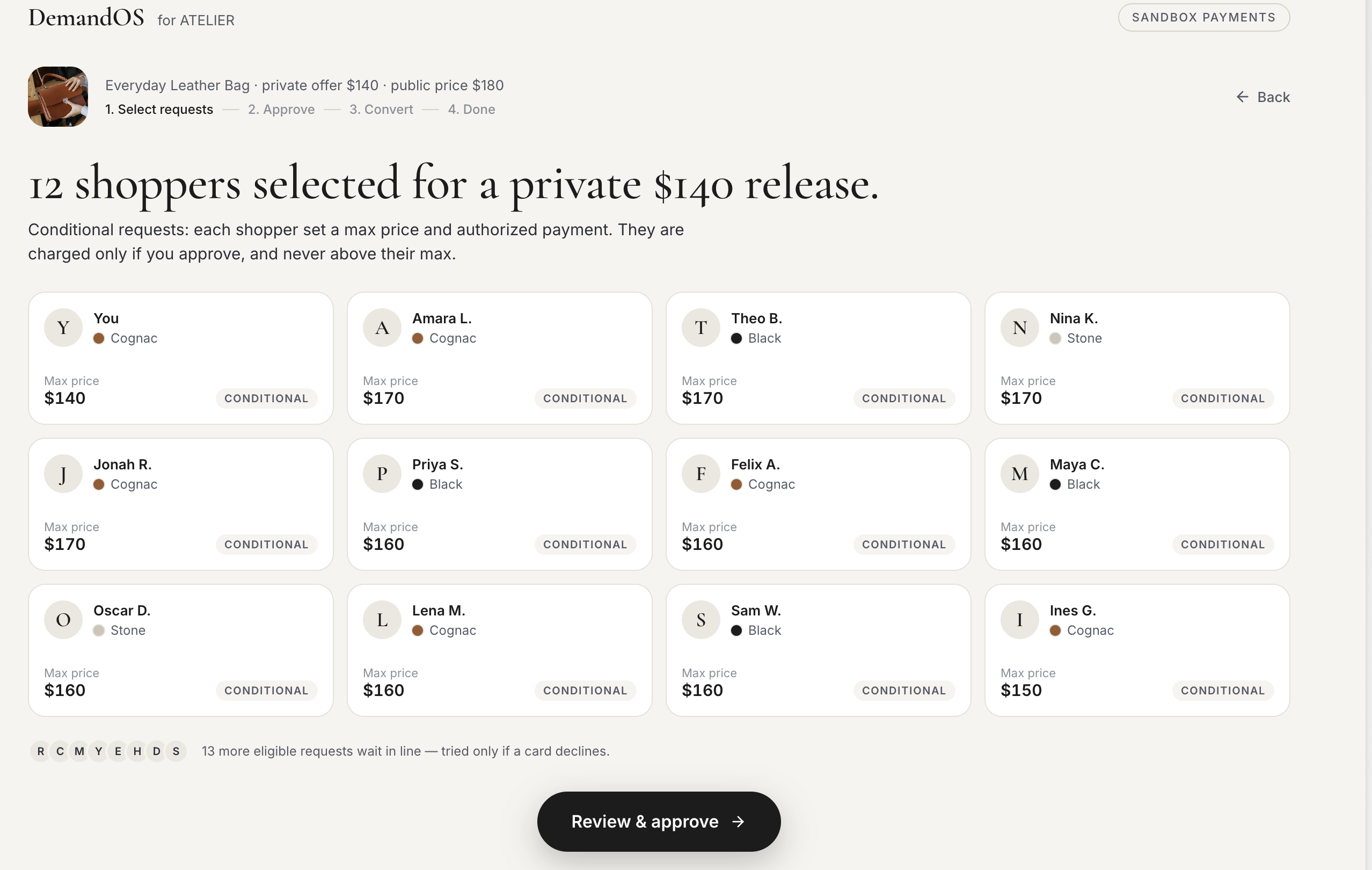
For merchants: See how many eligible shoppers are ready to purchase at different price points. Instead of launching a storewide sale, release a limited number of private offers and match those shoppers to available inventory.
One price from the buyer. One decision from the merchant. One completed transaction.
How It Works
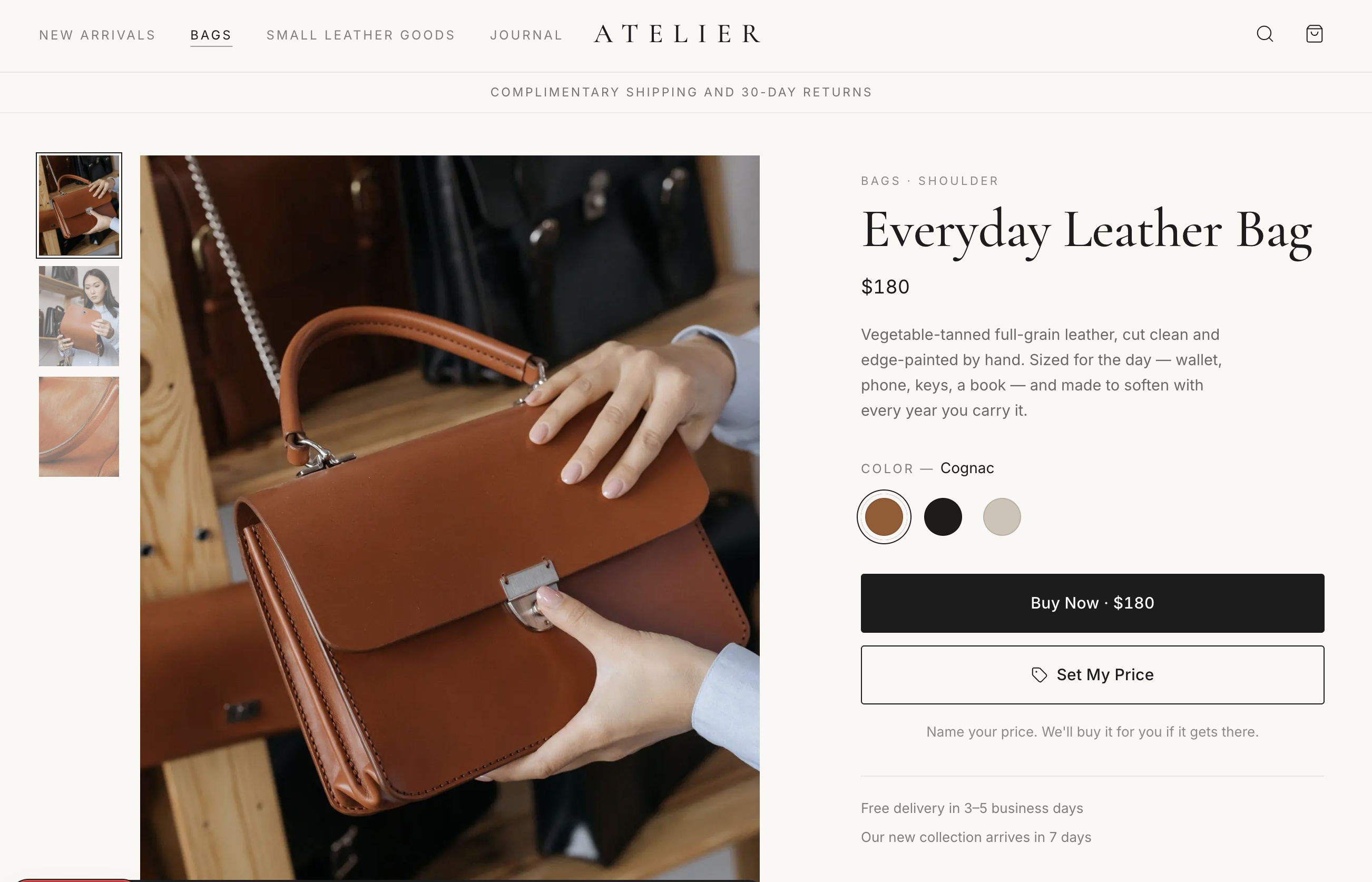
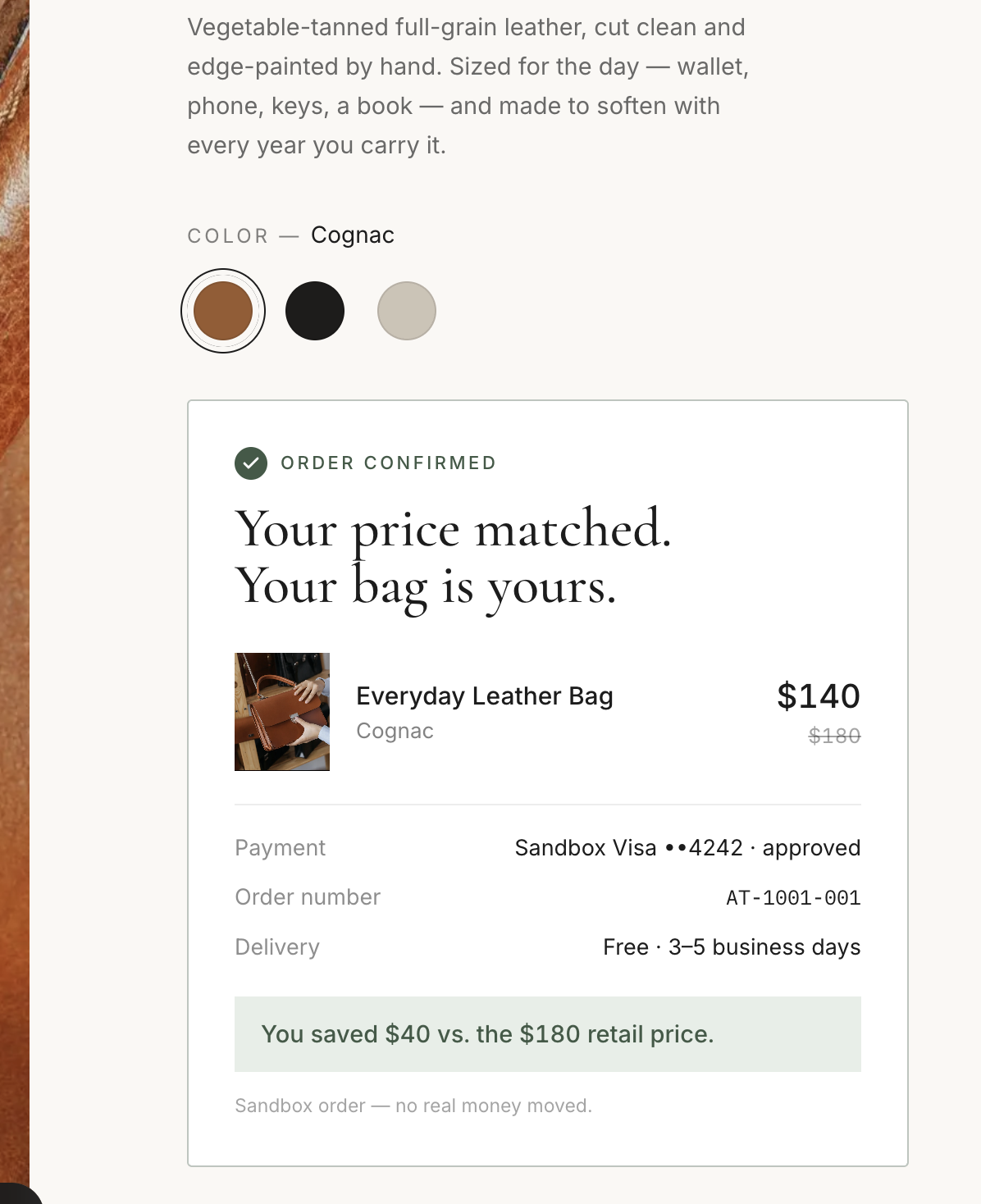
Imagine a premium leather bag priced at $180.
A customer loves it, but would only buy it for $140.
Instead of abandoning the purchase, they click Set My Price and authorize a conditional purchase at $140.
On the merchant side, DemandOS reveals 24 eligible purchase requests at that price.
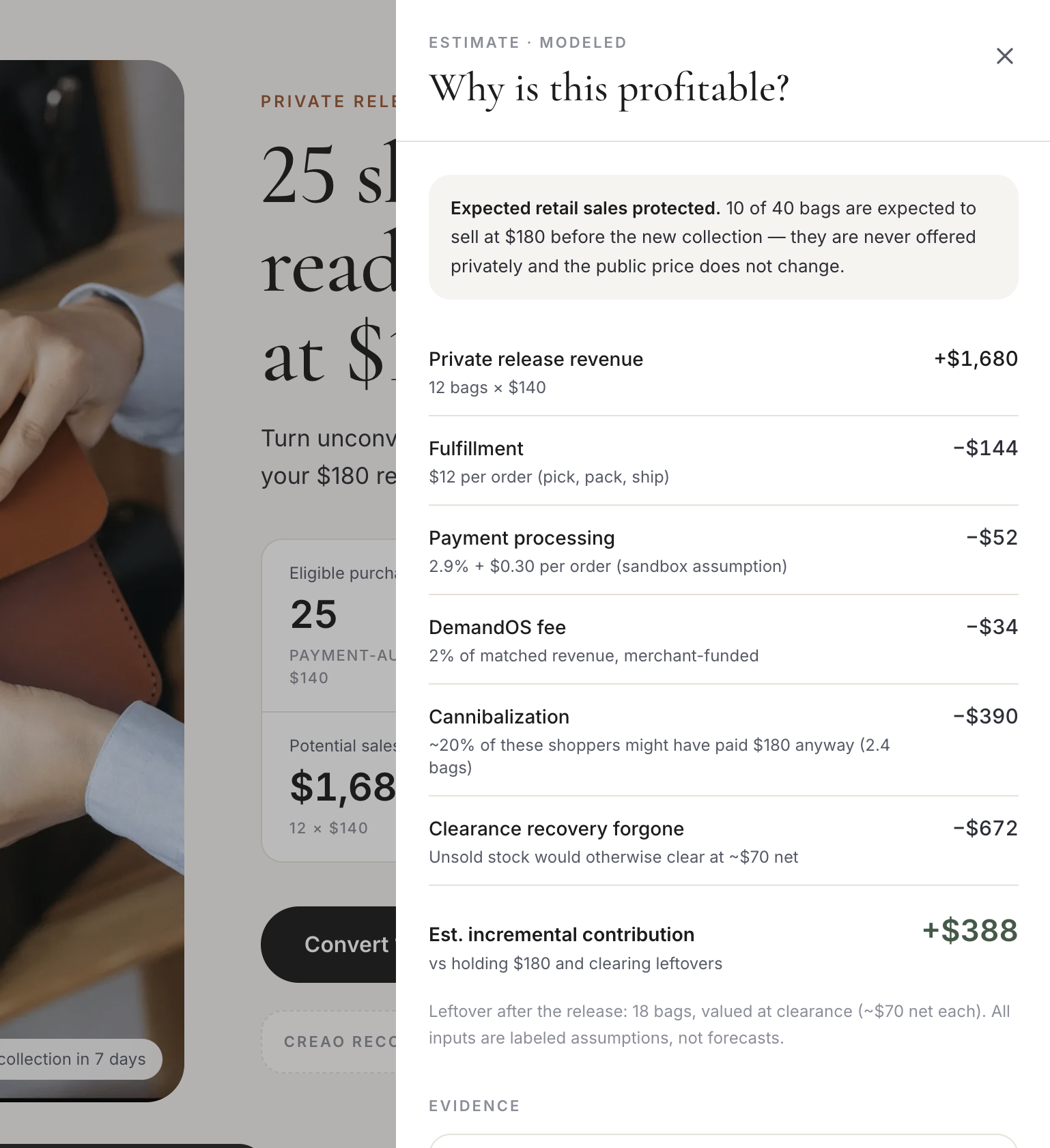
The brand can release 12 units privately without changing its public $180 price.
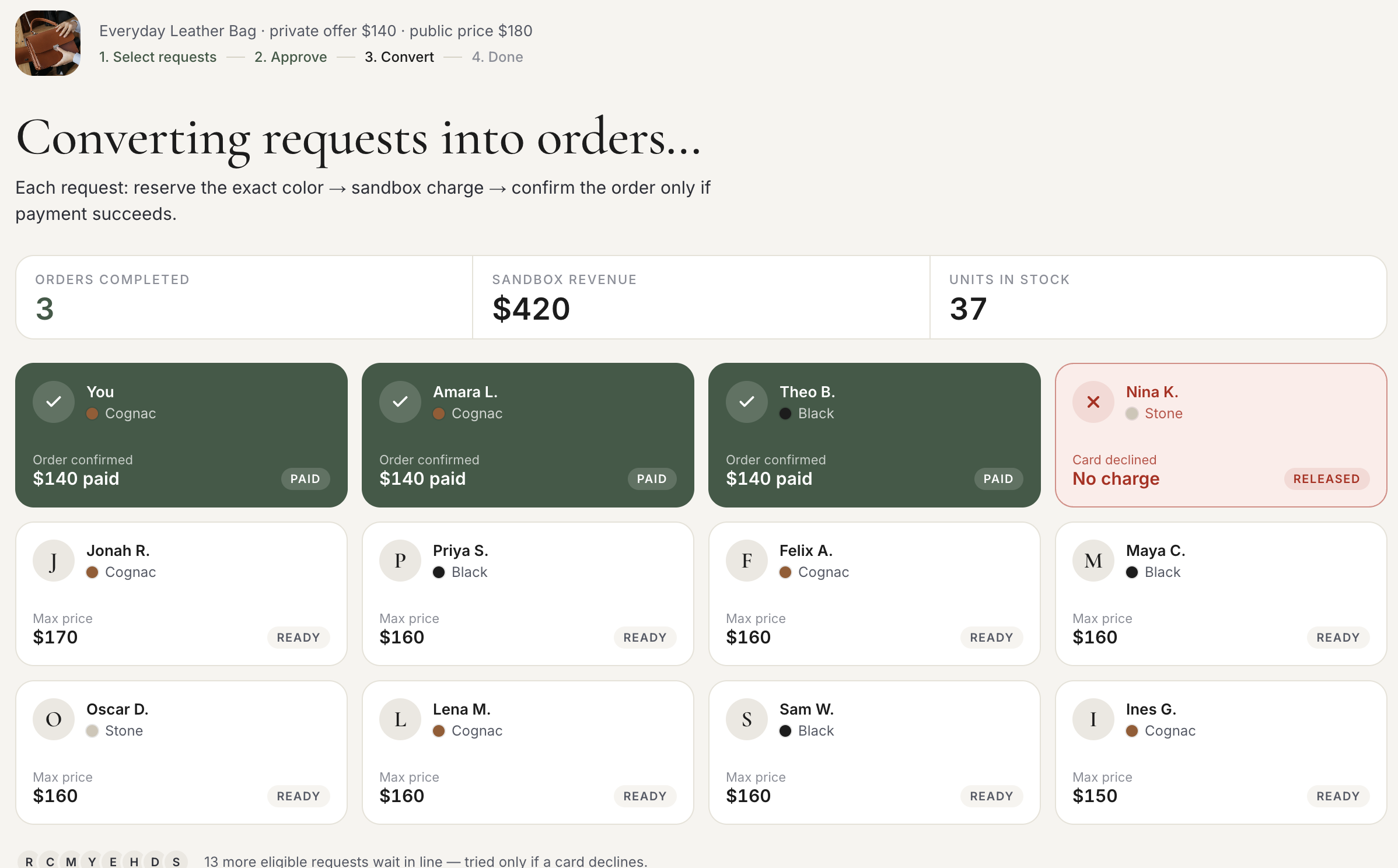
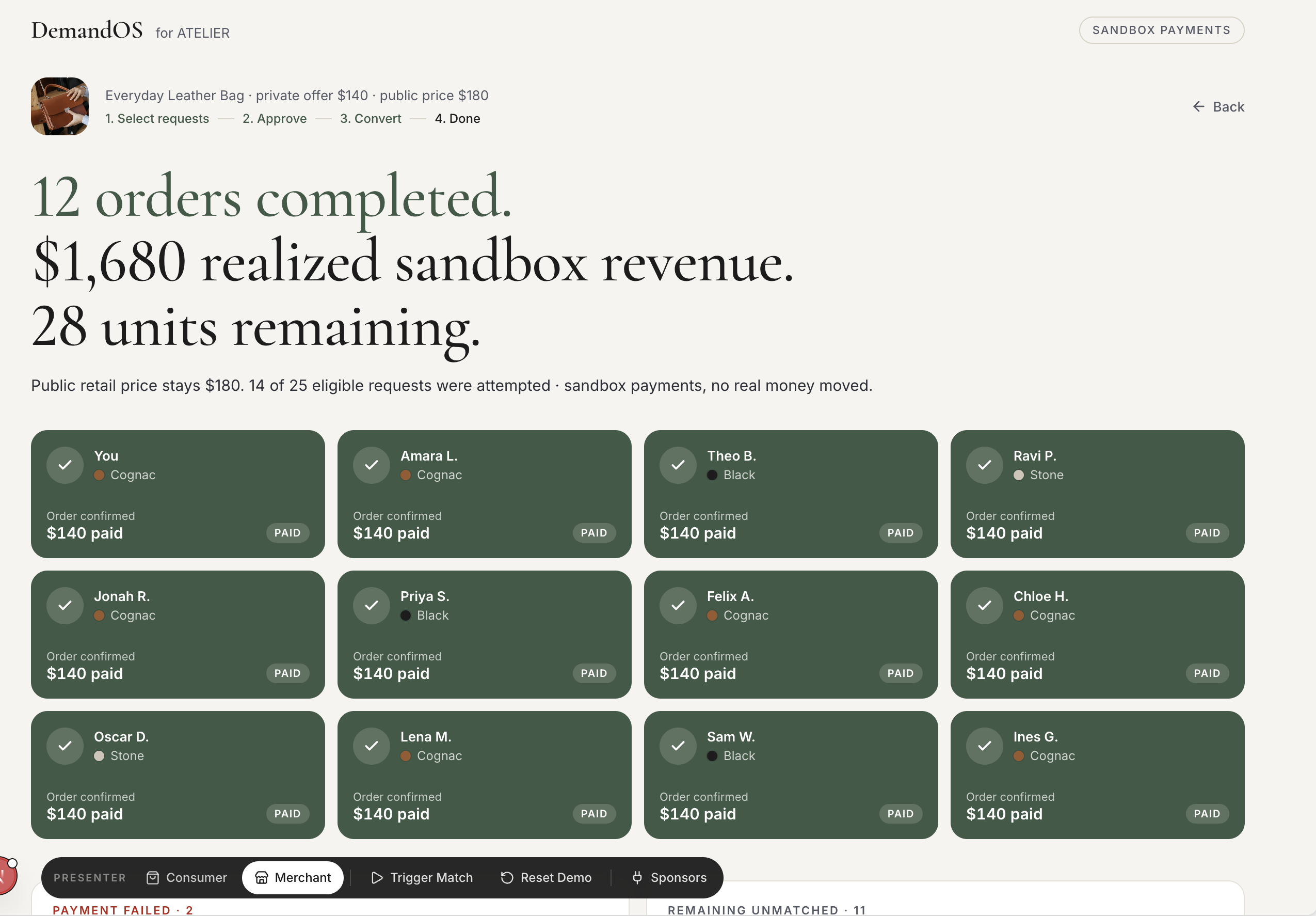
DemandOS then checks the purchase conditions, matches eligible shoppers, and processes supported sandbox transactions.
The result is a new opportunity to convert previously unfulfilled purchase intent into completed orders.
How We Built It
DemandOS combines three core systems:
1. Consumer Price Lock
A lightweight purchasing experience embedded into an existing storefront. Customers select their maximum price and define the conditions under which they authorize a purchase.
2. Merchant Decision Engine
Merchants see aggregated buyer demand and evaluate whether a limited private offer makes economic sense.
The decision model considers inventory, selling costs, price limits, expected full-price sales, and potential cannibalization.
3. Matching and Transaction Engine
When a merchant releases an offer, DemandOS checks customer eligibility, inventory availability, and payment authorization before executing the supported checkout flow.
The goal is to turn real purchase intent into transactions, rather than simply generating price alerts.
Market Intelligence and AI
DemandOS also incorporates market intelligence to support merchant pricing decisions.
Apify can collect public market signals, including competitor pricing and seasonal product trends.
A pricing agent can analyze these signals alongside actual buyer requests and inventory to propose a price and release quantity.
Merchant-defined rules and deterministic checks validate recommendations before any offer is executed.
The core insight: Instead of using AI only to predict demand, we use buyer-provided purchasing conditions to make demand actionable.
Challenges We Faced
The biggest challenge was finding the balance between simplicity for consumers and profitability for merchants.
Simply letting consumers bid on products wasn't enough. Brands need a compelling reason to accept a lower price rather than continue selling at full retail.
We therefore focused on three challenges:
- Protecting full-price sales: Private offers should target incremental opportunities rather than automatically discount all demand.
- Making intent actionable: A wishlist or abandoned cart isn't a confirmed purchase. We distinguish interest, conditional authorization, and completed transactions.
- Removing friction: The consumer should only need to name a price, while the merchant should only need to approve an economically justified release.
What We're Proud Of
We transformed a traditionally one-sided pricing model into a two-sided buying experience.
Instead of brands announcing prices and hoping shoppers purchase, consumers can express their purchasing conditions first.
Merchants gain visibility into that demand and can decide when fulfilling it creates value.
We designed DemandOS to work inside existing online storefronts rather than requiring shoppers to join another marketplace.
What's Next
We want to make DemandOS an embeddable commerce product for online retailers.
Next steps include:
- Integrating with production e-commerce platforms.
- Expanding supported payment authorization and automated checkout.
- Testing real conversion lift and full-price cannibalization with merchants.
- Improving merchant pricing recommendations with real transaction data.
- Developing a transaction-based business model aligned with completed sales.
Our vision: A world where customers don't have to wait for sales, and merchants don't have to discount blindly.
Don't discount and hope. Know who's ready to buy — and make the sale.


Log in or sign up for Devpost to join the conversation.