Inspiration
AI agents are culturally blind. Ask them where to open a café or which brand fits an artist, and they guess. We wanted an agent that answers business questions with real data about what people love.
What it does
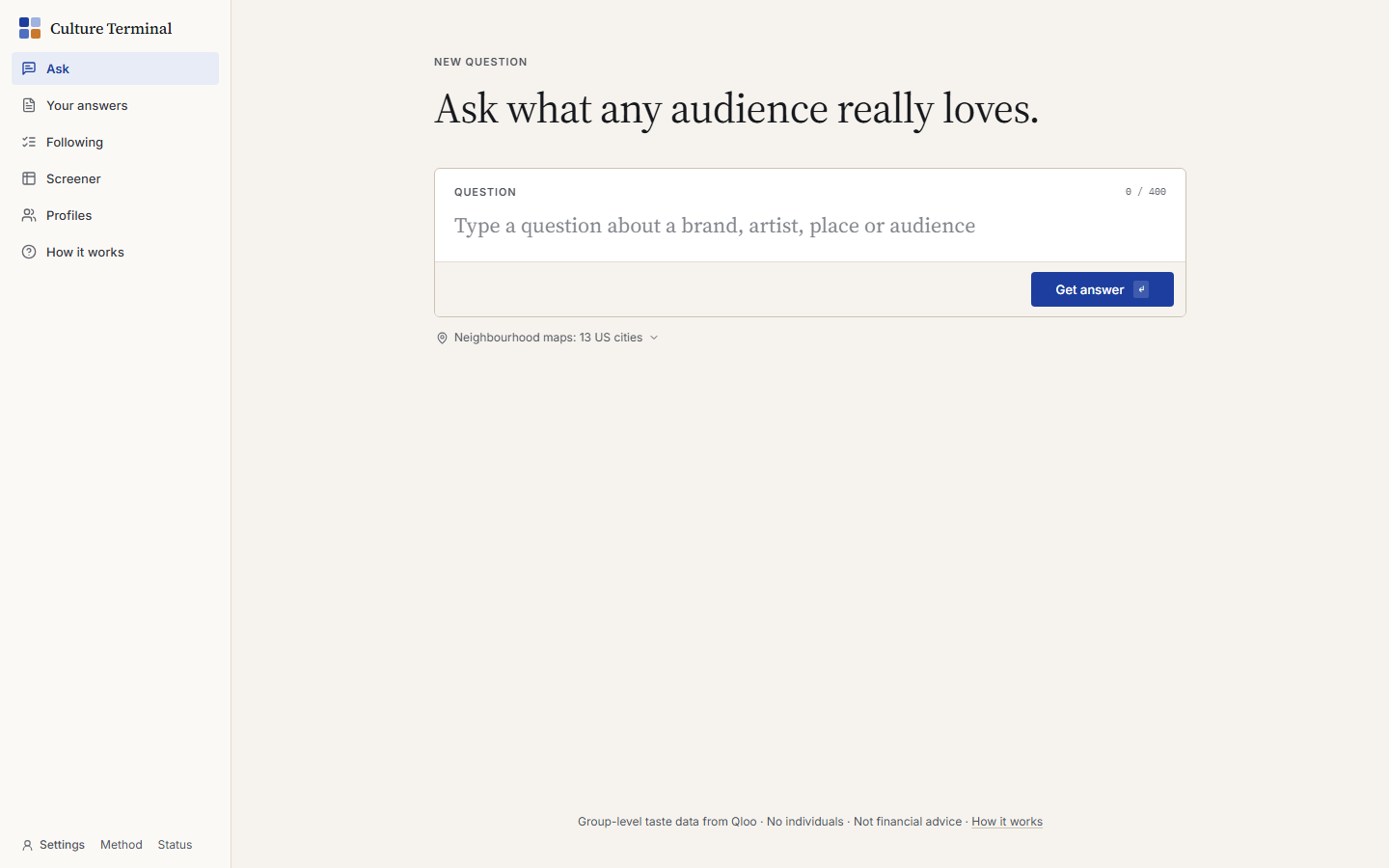
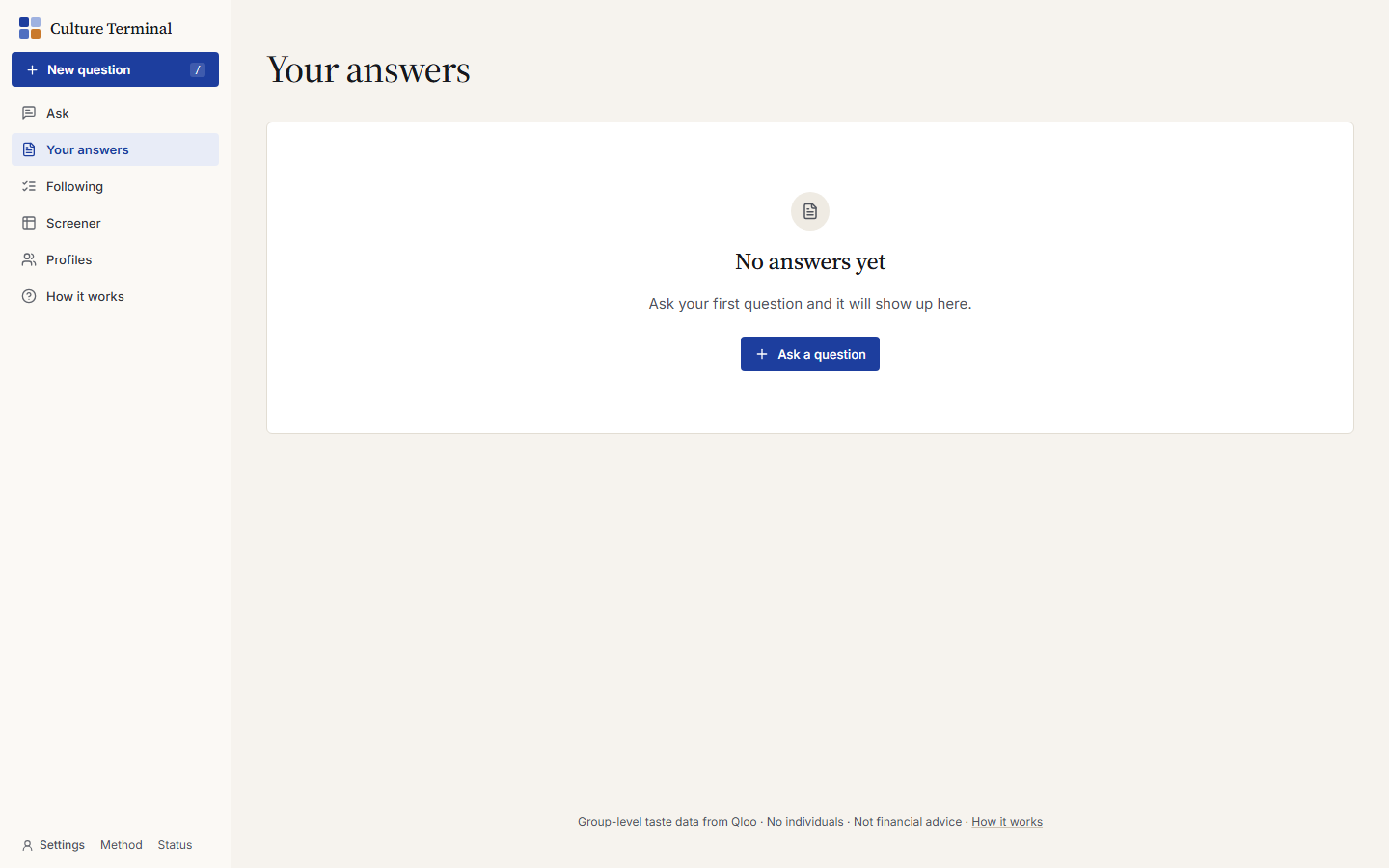
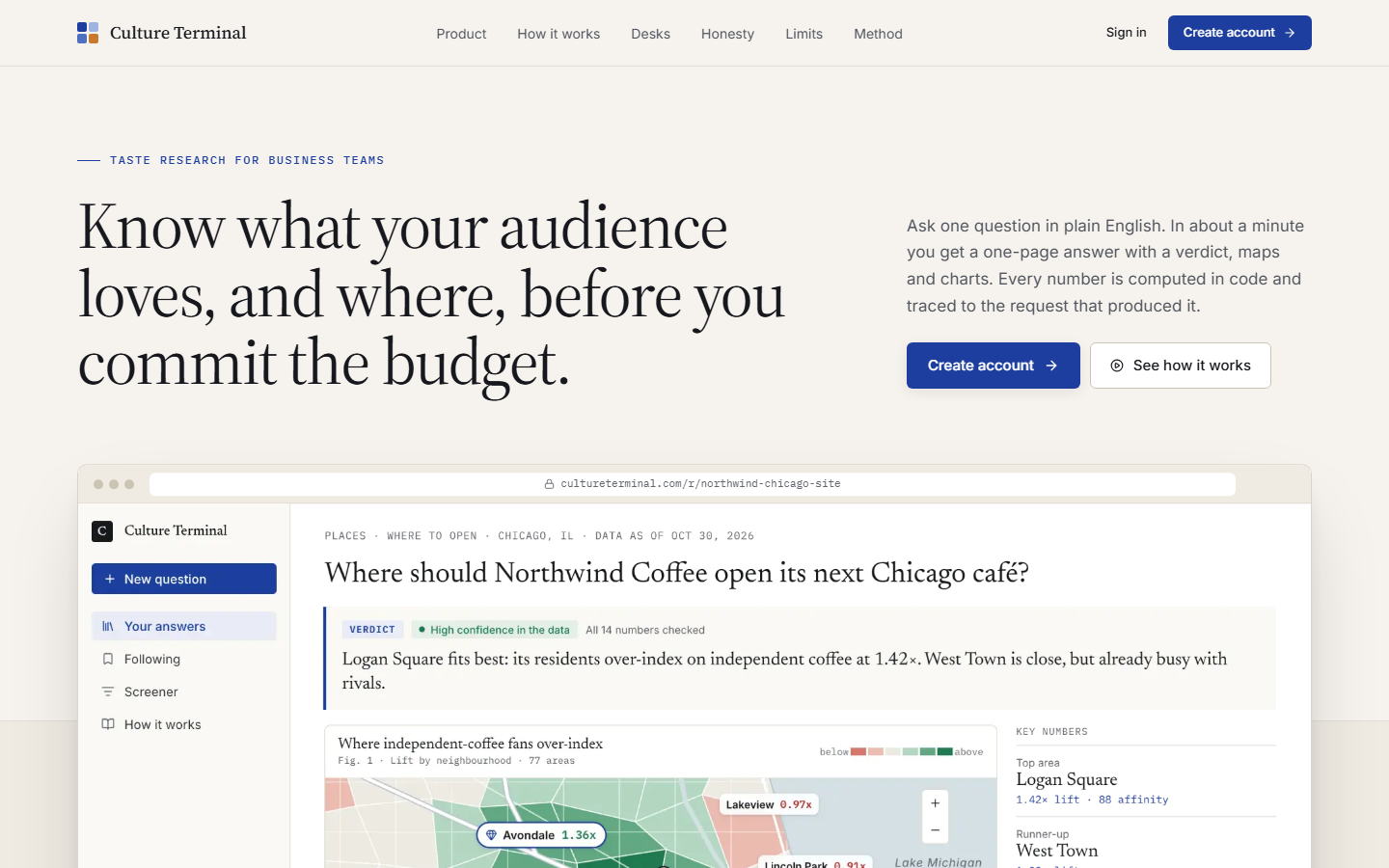
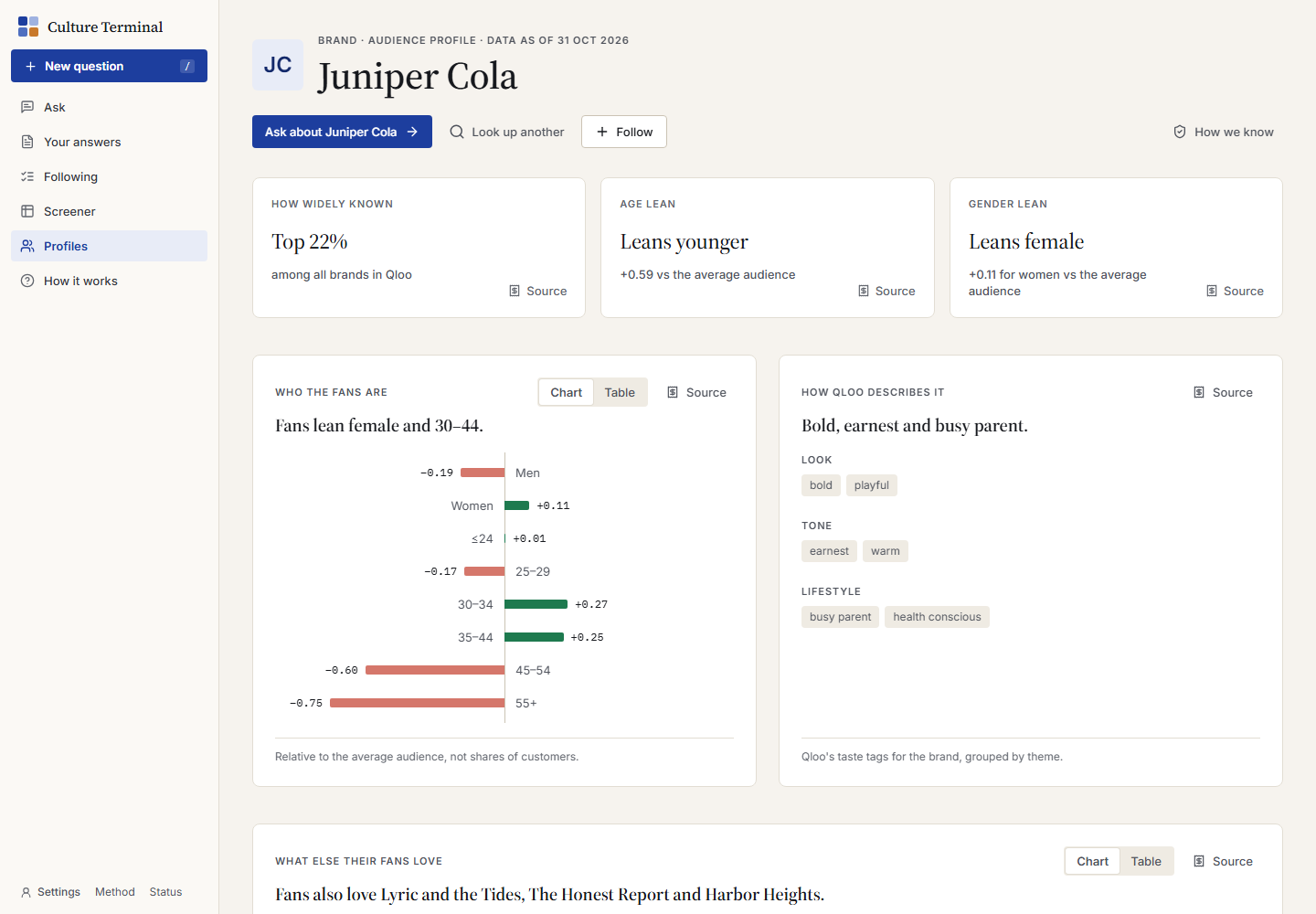
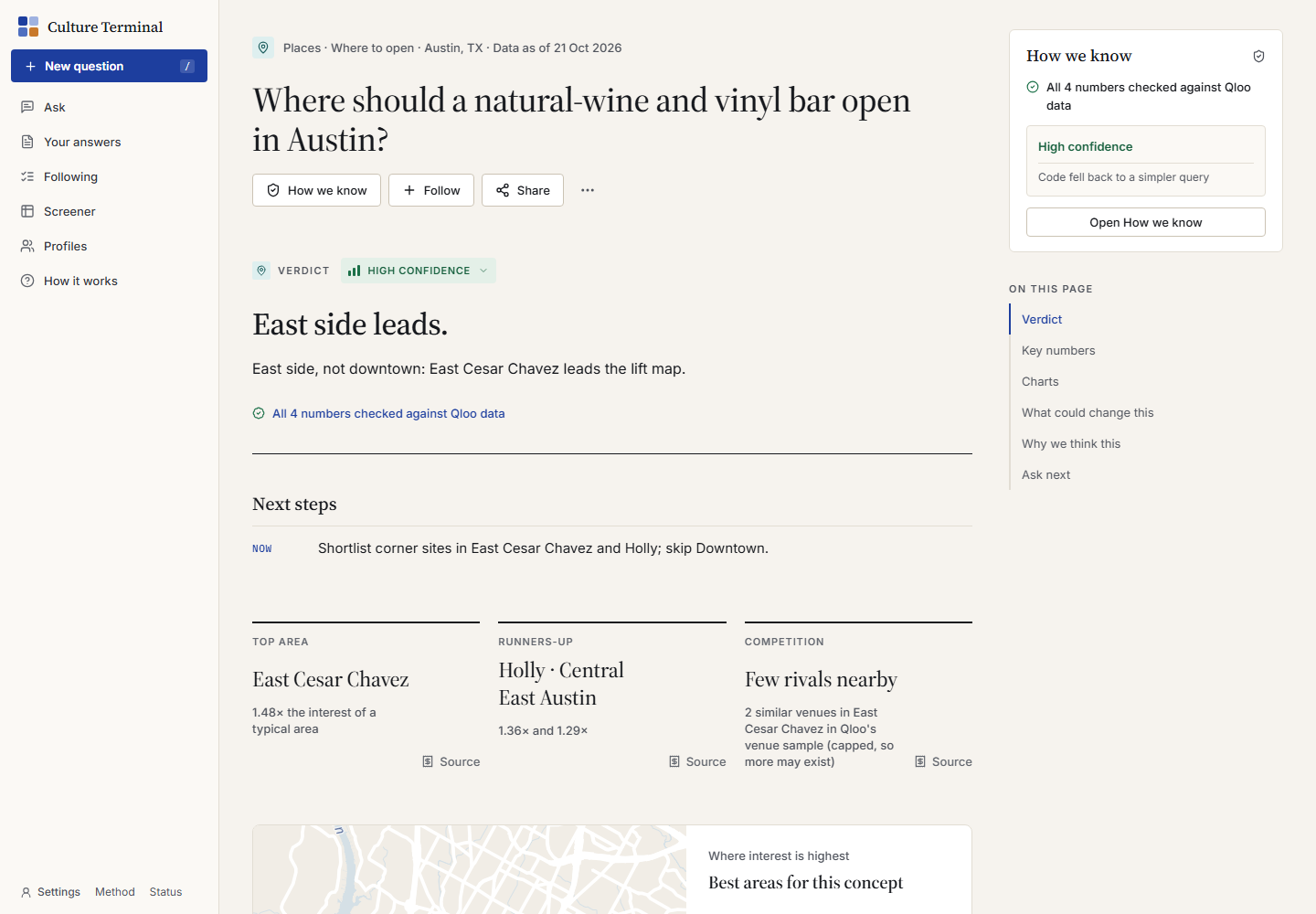
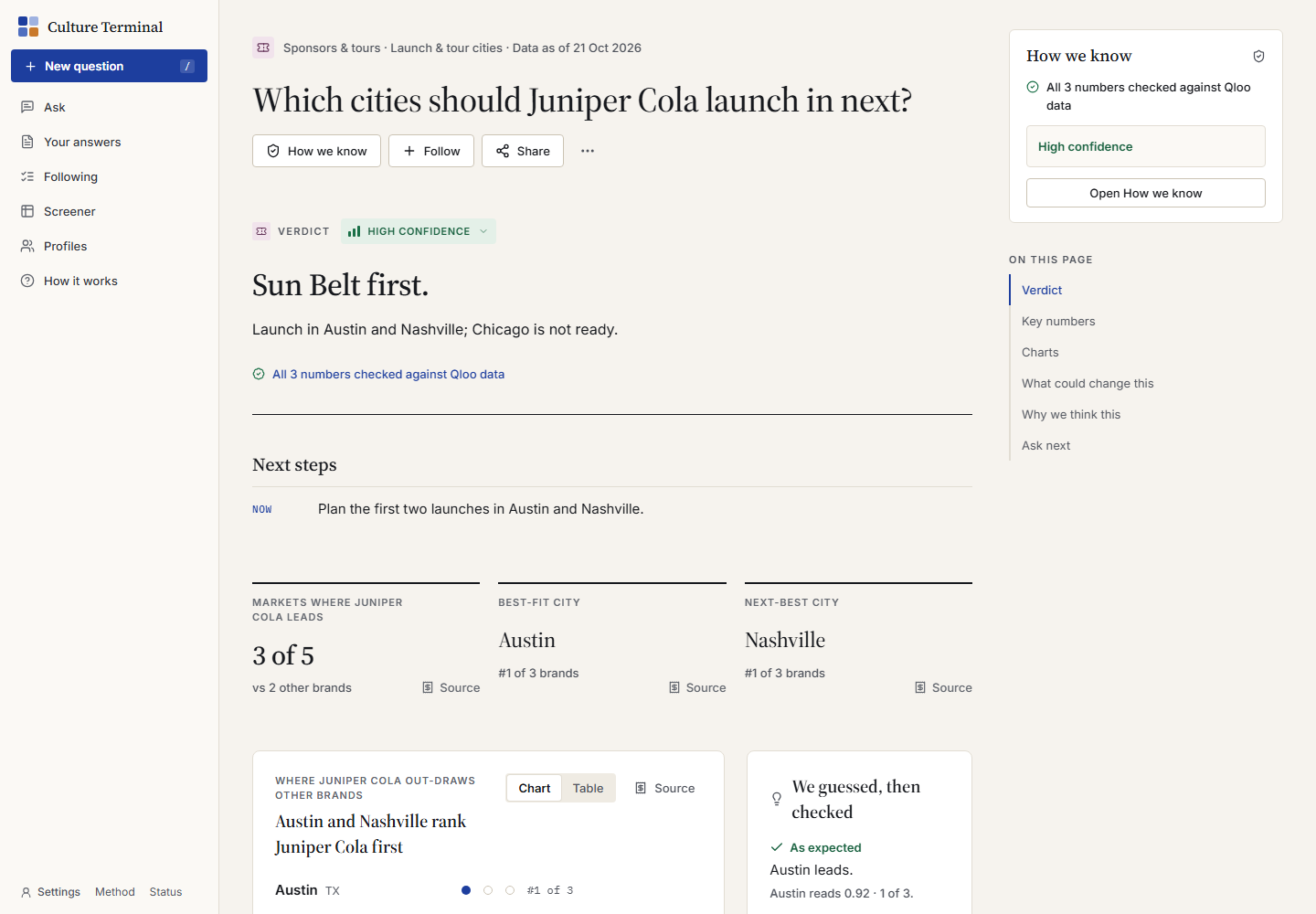
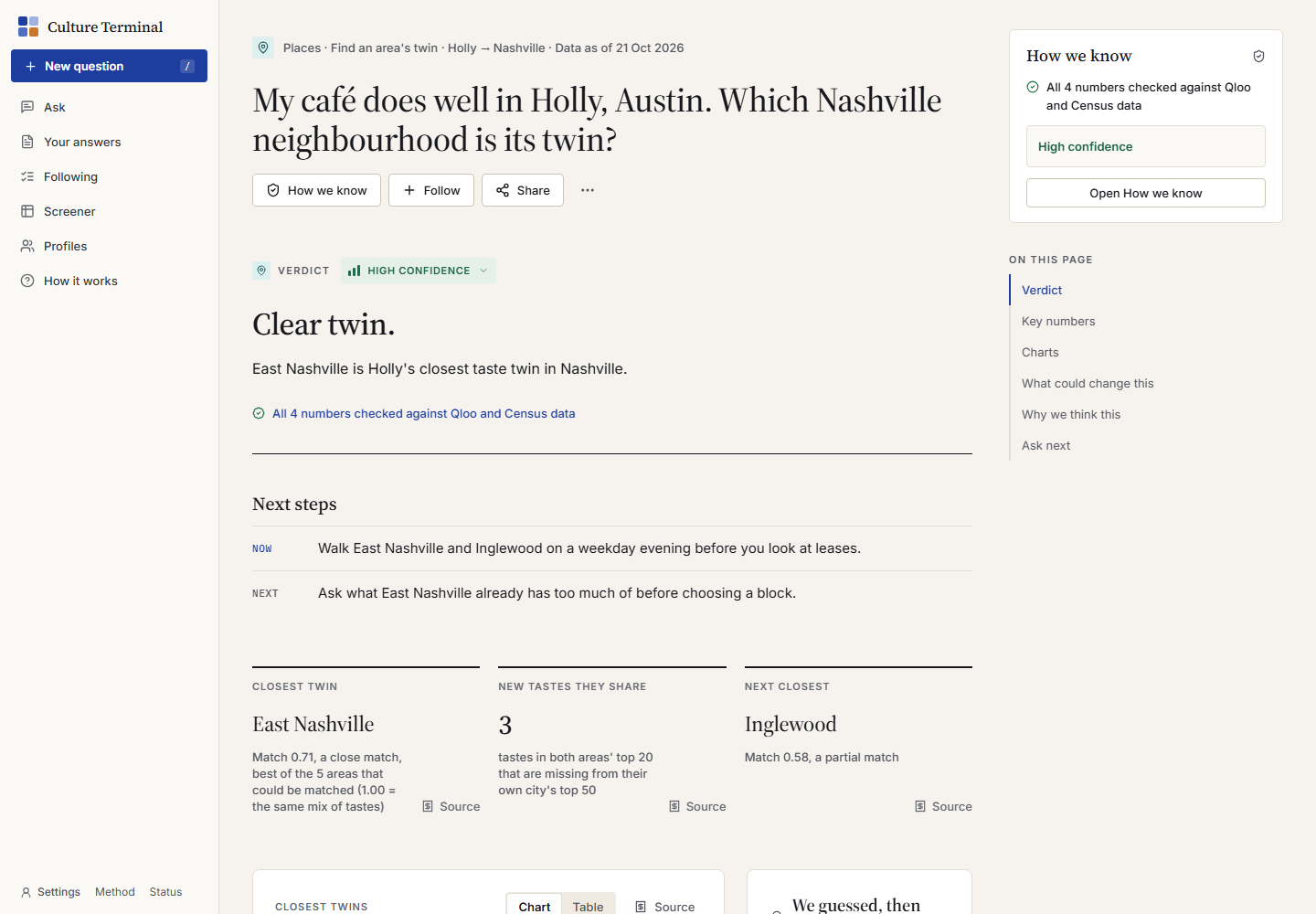
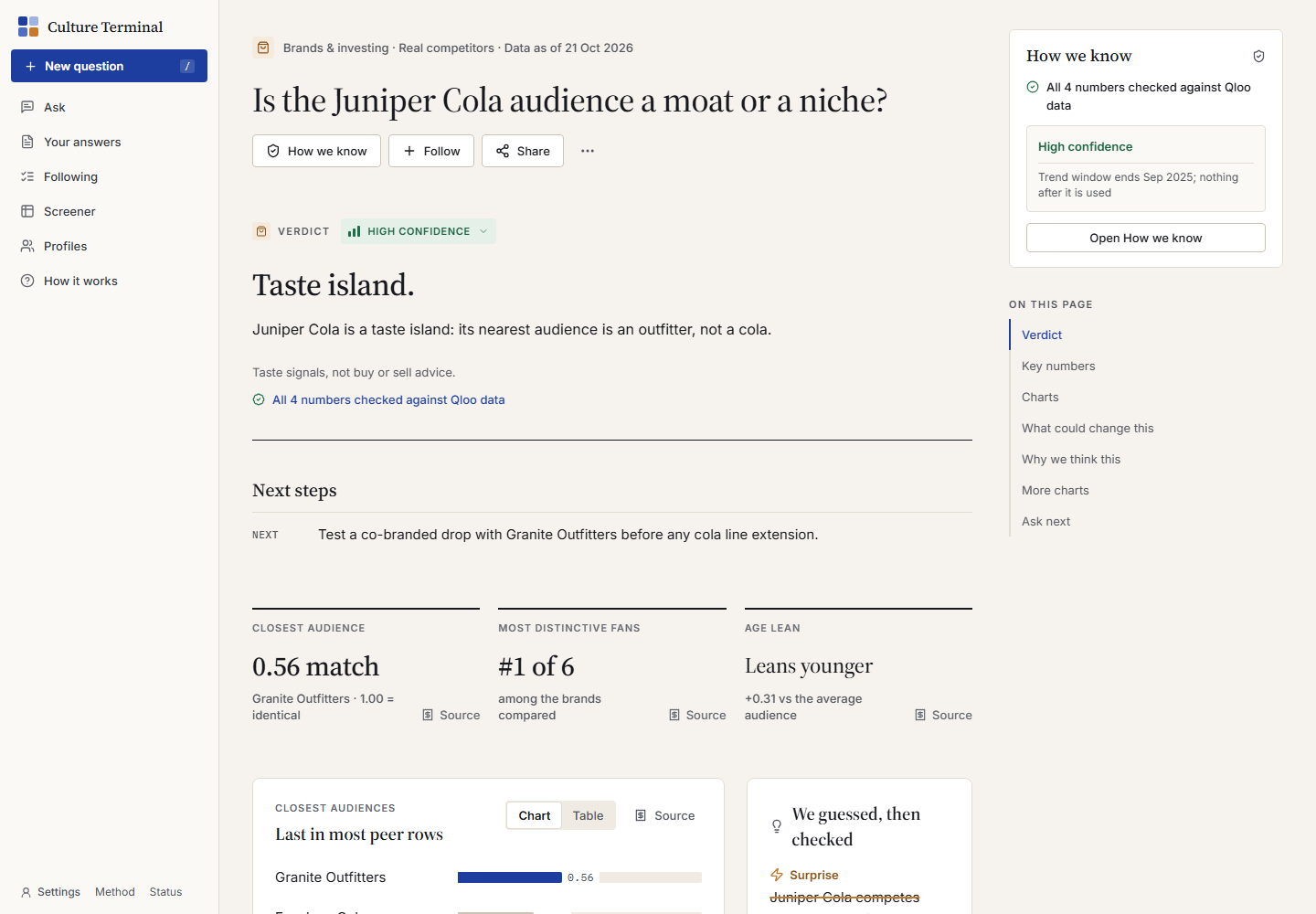
Culture Terminal is an AI research desk for taste-driven business decisions. You ask a question in plain English, and a team of AI analysts answers it with Qloo's taste graph:
- Investment: brand health, head-to-head, product launch tests
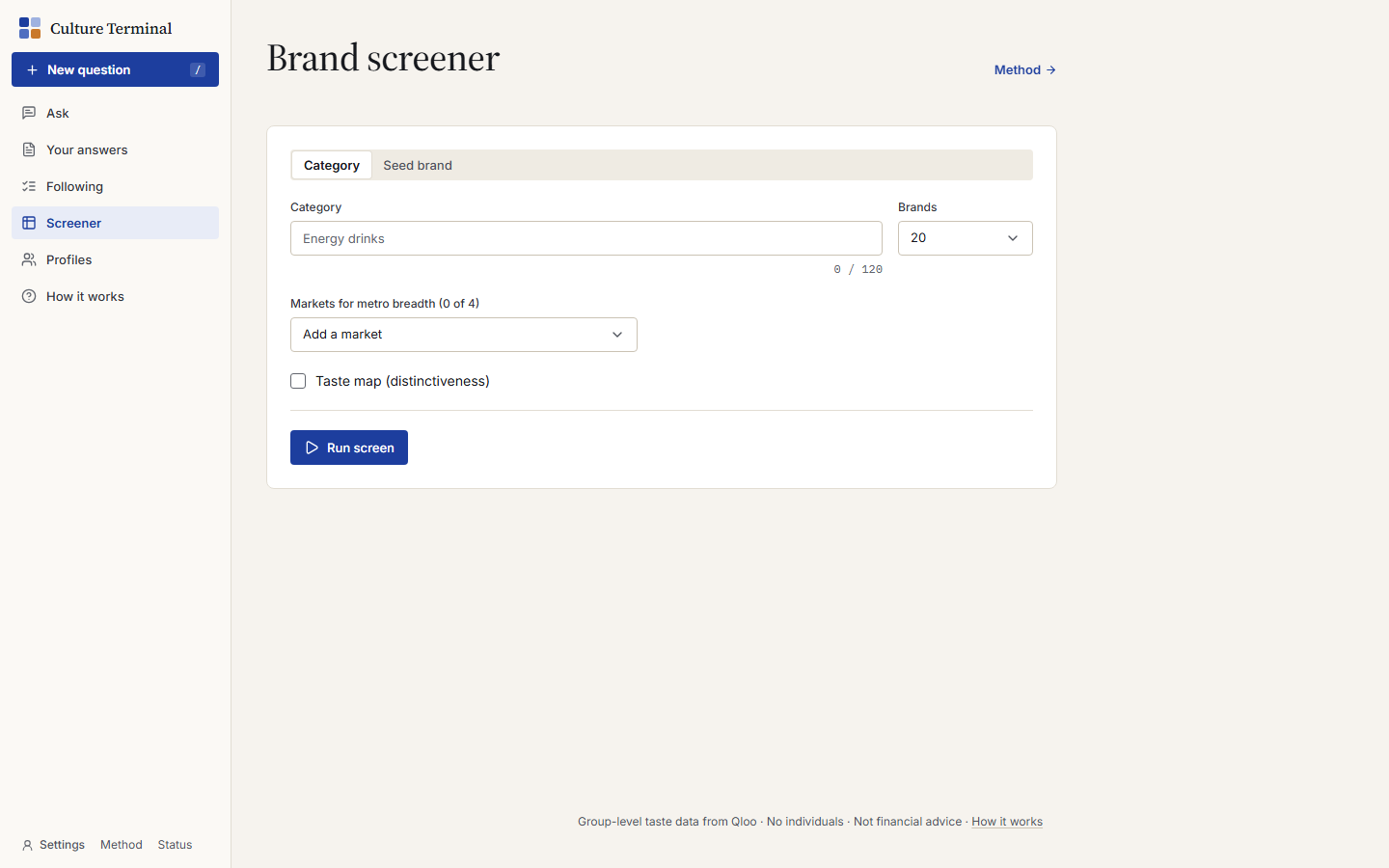
- Location: where to open, neighbourhood profile, best tenant, taste twins, city comparison
- Marketing: sponsor fit, tour and launch cities, brand collaborations, creator fit
- Audience: who the fans are and what else they love
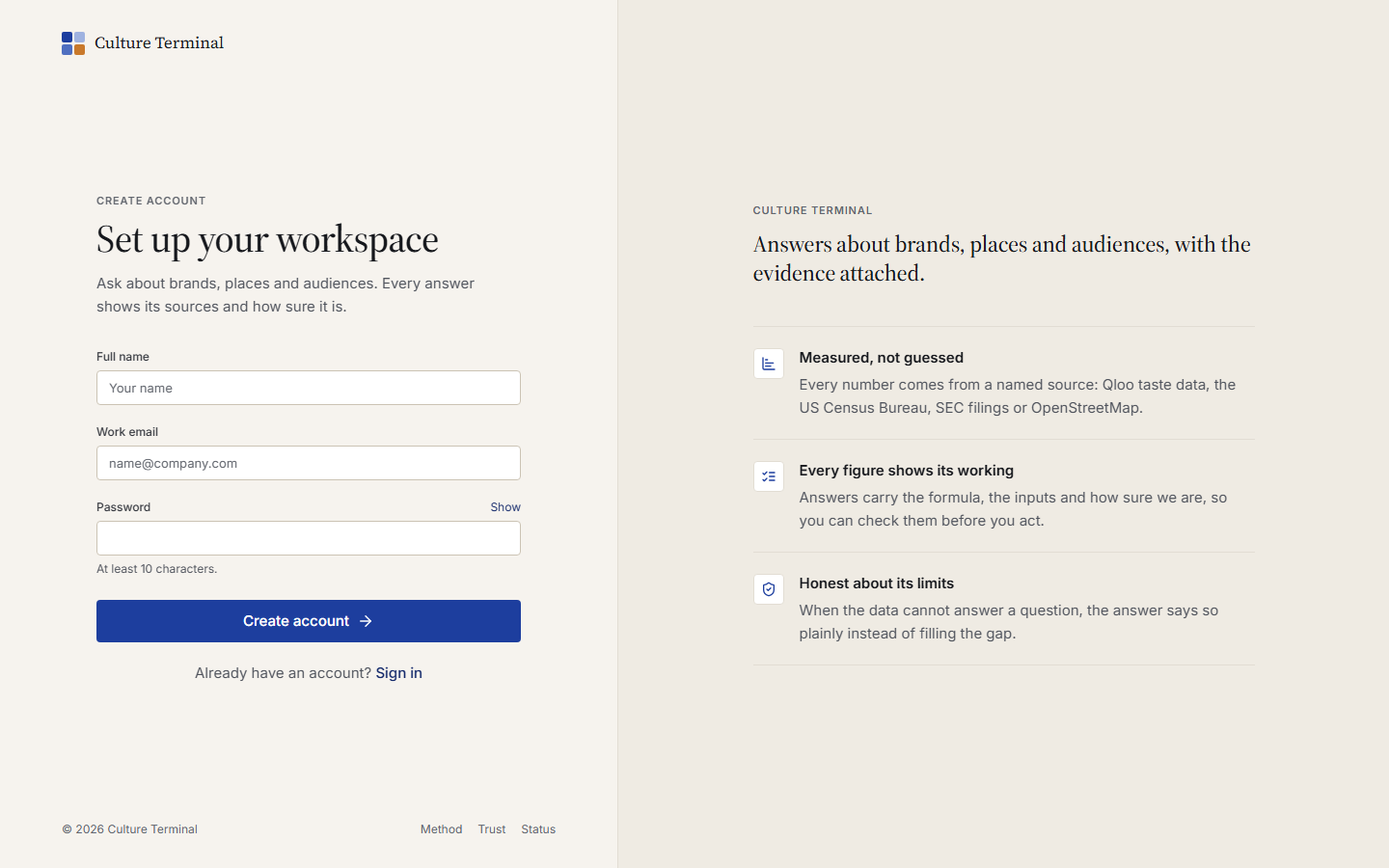
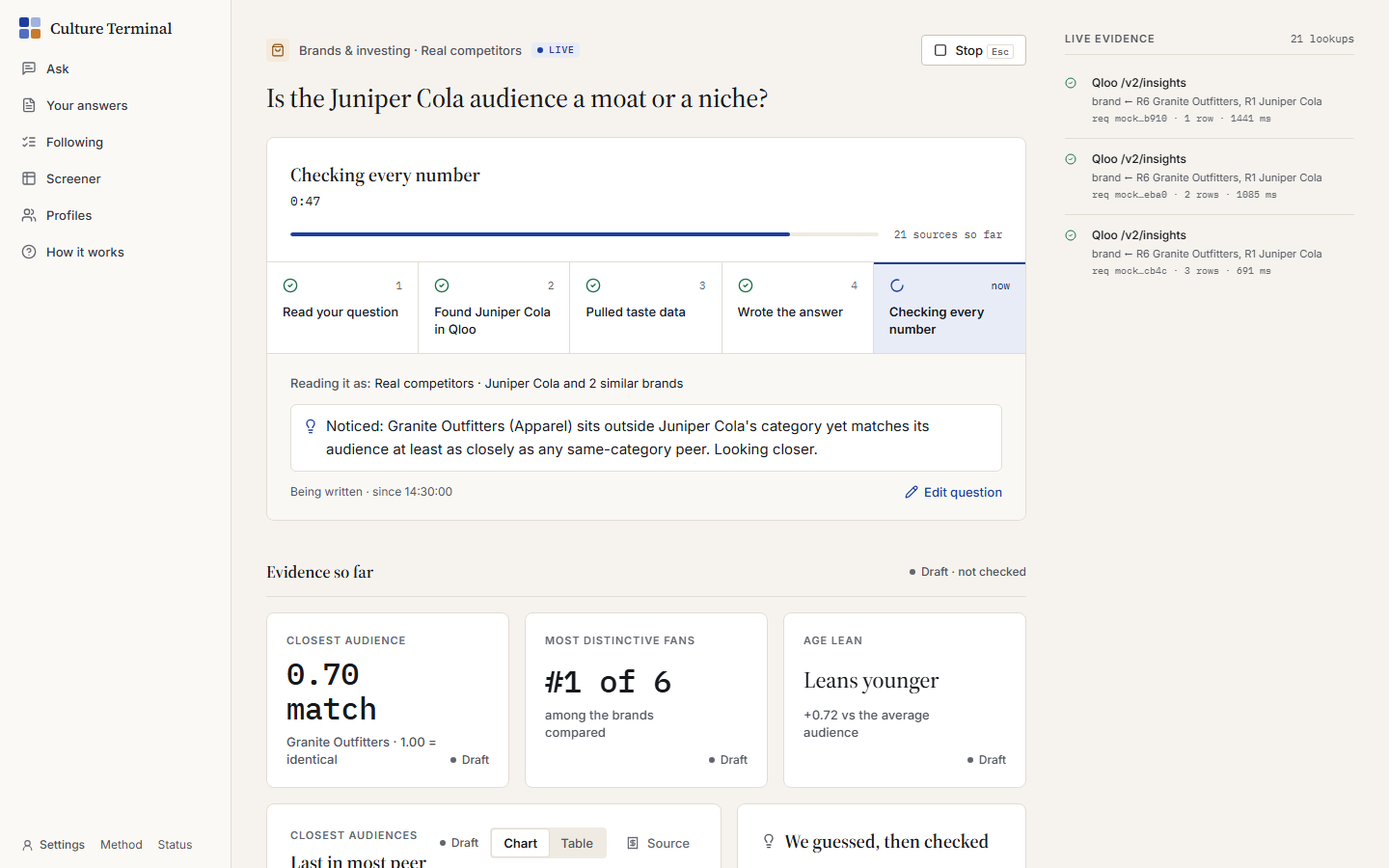
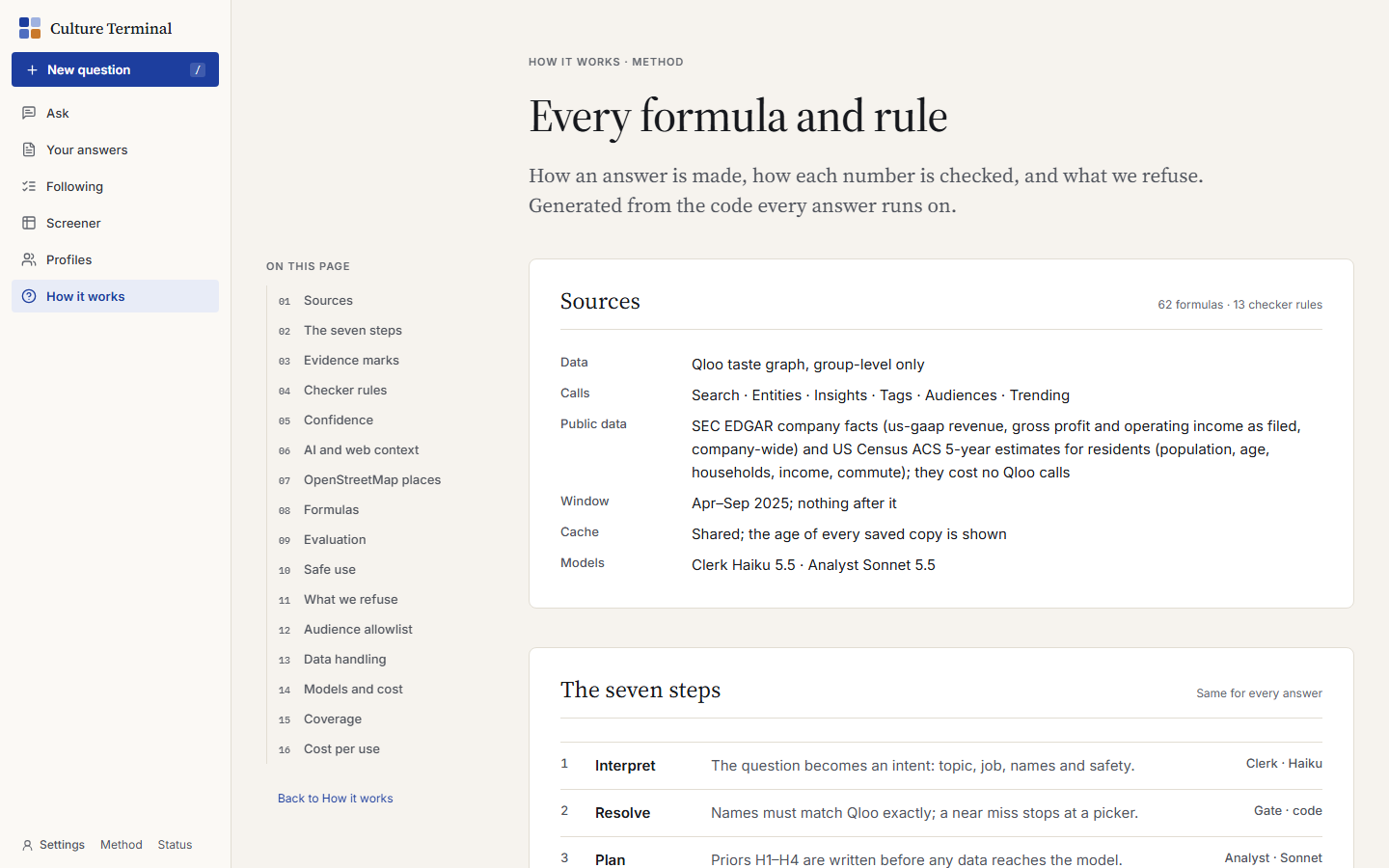
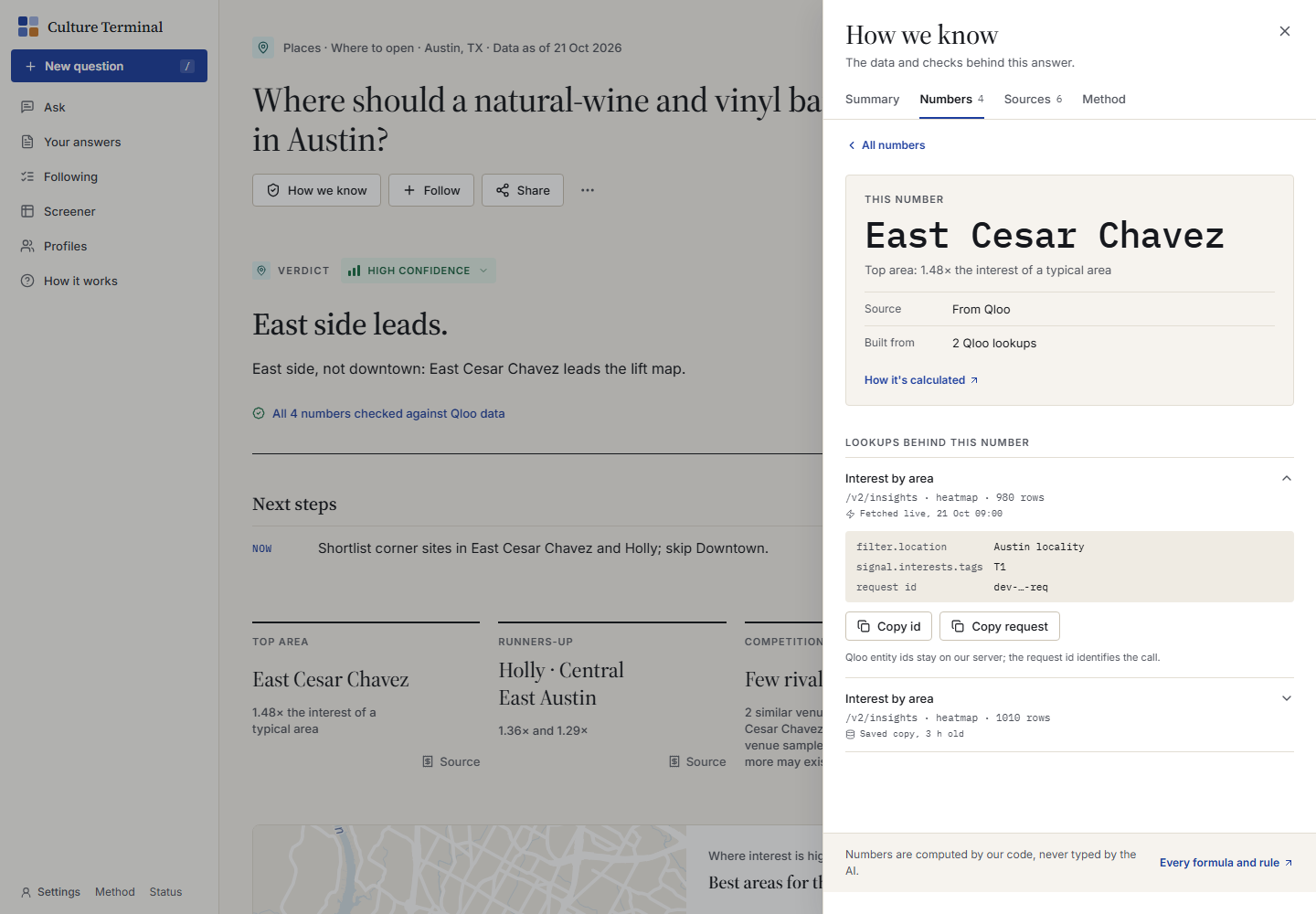
13 job types, 13 cities with neighbourhood maps, 51 US markets. Every number in an answer traces to the exact Qloo, SEC EDGAR or US Census request behind it. Separate, clearly labelled blocks add web context and model knowledge, never mixed with measured data.
How we built it
TypeScript, Next.js and Node on Render, with Postgres. A small model (Claude Haiku) reads the question; Claude Sonnet writes hypotheses before seeing any data, calls 18 tools on Qloo, SEC EDGAR, US Census and OpenStreetMap, and pivots when the data surprises it. A code-only checker rejects any number the AI typed itself, so every figure comes from a logged request. Built with Claude Code.
Why Qloo matters: LLM alone vs Culture Terminal
In a blind test on 27 business questions (LLM judges, both A/B orders), the same model with Qloo vs without:
- won 65% of head-to-head comparisons;
- average score 6.1 vs 4.5 out of 10;
- about 1 unsupported claim per answer vs 2.3;
- 100% of numbers sourced vs 0%. Even a stronger model without data got 29-36% of its checkable taste claims wrong according to Qloo data. Caveats: small sample, LLM judges, measured before the latest improvements.
Challenges
Affinity is normalised per query, so we only compare scores inside one request. Heatmaps track popularity, so we read them as lift against a baseline. Qloo's city boundaries don't work, so we built our own neighbourhood maps for 13 cities.
What's next
More cities, sales and foot-traffic data partners, saved watchlists for teams.
Built With
- claude
- docker
- maplibre
- next.js
- node.js
- openstreetmap
- postgresql
- qloo
- react
- render
- typescript

Log in or sign up for Devpost to join the conversation.