-
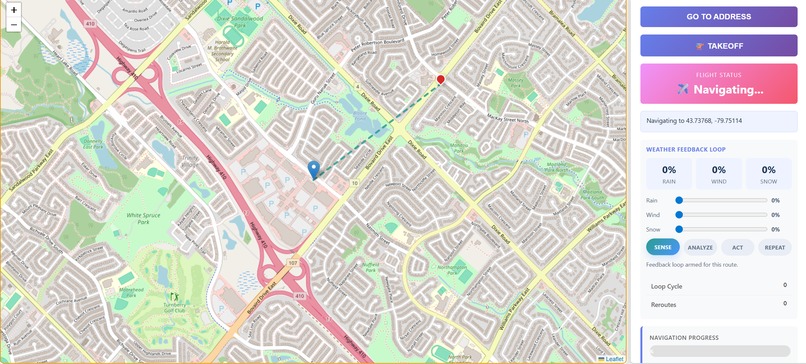
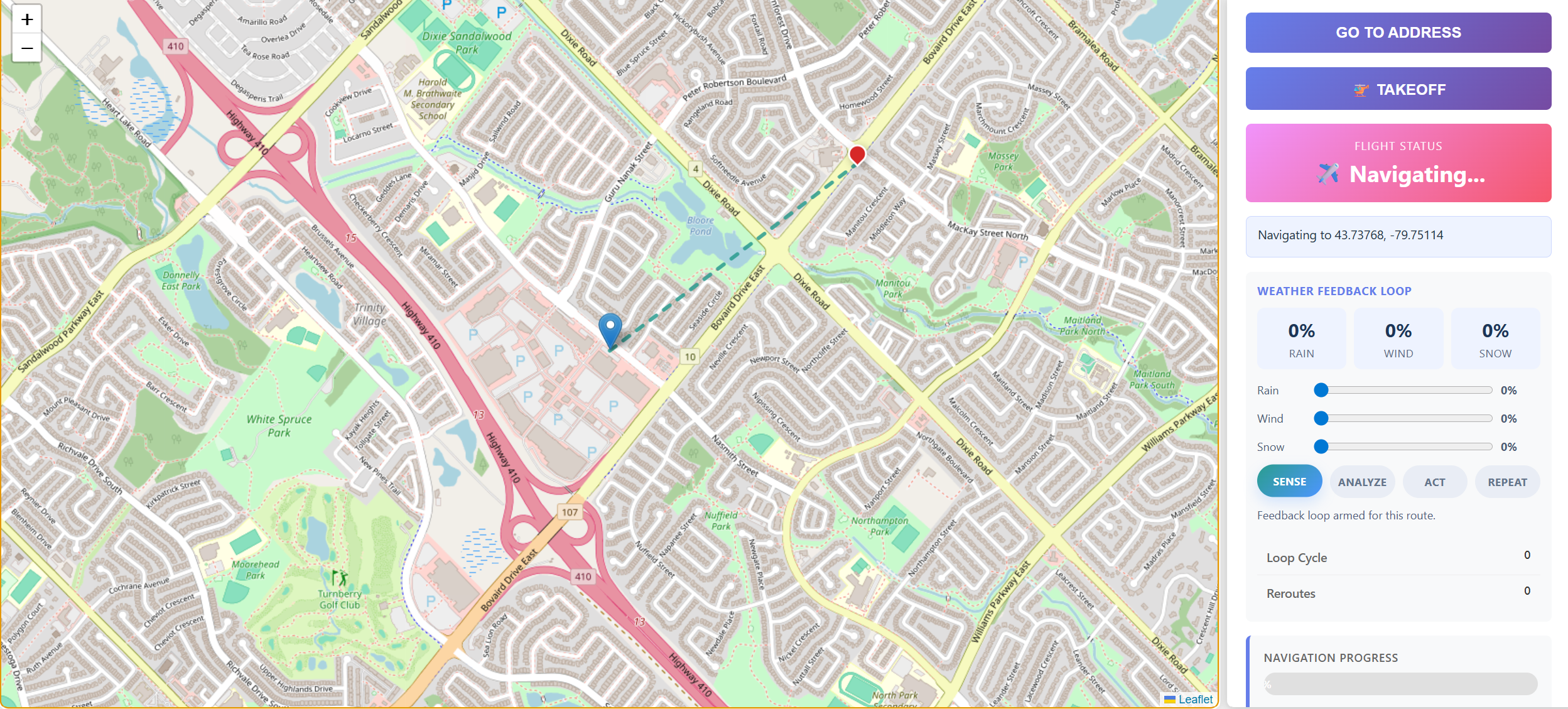
Drone sim overview
Inspiration
We wanted to tackle waste management as a complete system, not just build one machine. In our previous hackathons, we focused on individual components. This time, we wanted to connect the entire process from detecting missed pickups to collecting, separating, and sorting waste.
What it does
Ctrl-Alt-Waste connects five systems into one waste management ecosystem:
- 🚁 Autonomous drone - Detects missed pickups and overflowing bins.
- 🚛 Smart garbage truck - Uses drone information to determine where waste needs to be collected.
- 🗑️ Controlled intake funnel - Creates a consistent flow of incoming waste.
- ⚙️ Step separator - Separates and spaces waste so individual items can be sorted.
- 🤖 AI sorter - Uses Gemini AI and Edge Impulse to classify waste and automatically send it to the correct bin.
This creates a complete workflow: Detection → Collection → Intake → Separation → Sorting.
How we built it
We combined AI, robotics, mechanical design, and simulation. We used Unreal Engine, AirSim, OpenStreetMap, Python, SQLite, Arduino, ESP32, C++, OpenSCAD, Gemini AI, and Edge Impulse.
The drone was developed as a software-in-the-loop simulation, while the physical system uses motors, servos, cameras, Arduino boards, ESP32 controllers, and 3D-printed parts. Our AI sorter uses Gemini first and sends uncertain images to Edge Impulse for a second classification attempt.
Challenges we ran into
One major challenge was our ESP32-CAM, which had unstable connections and voltage drops while sending images for AI classification. We switched to a USB webcam for a more stable connection.
We also had issues with the drone simulator getting stuck on obstacles, an ESC short circuit that damaged a motor, and motors initializing unexpectedly. We solved these through testing, circuit isolation, replacing faulty components, and recalibrating the system.
Accomplishments that we're proud of
We are proud that we turned five separate components into one connected ecosystem. Instead of building a single prototype, we created a system that demonstrates the full waste management lifecycle.
We are also proud of our dual-AI approach, combining Gemini and Edge Impulse to improve waste classification when one model is uncertain.
What we learned
We learned that making individual components work is only part of engineering. The harder part is integrating everything into one system.
As a team, we also learned how important communication, responsibility, and iteration are. As team lead, I learned to divide tasks based on everyone's strengths and keep the team focused on the final goal. As a lead i always had a fall back plan for each of the module, learnt from our mistakes and also set procedures to ensure not to fall into these pitfalls again.
What's next for Ctrl-Alt-Waste
We want to make the system more autonomous and reliable. Our next steps includes improving the drone's map environment using google maps service, adding sensors for automatic bin alignment, and improving the mechanical design of the sorting system for a stable structure.
Ultimately, we want Ctrl-Alt-Waste to move from a hackathon prototype toward a more realistic, scalable smart waste management system.

Log in or sign up for Devpost to join the conversation.