-
-
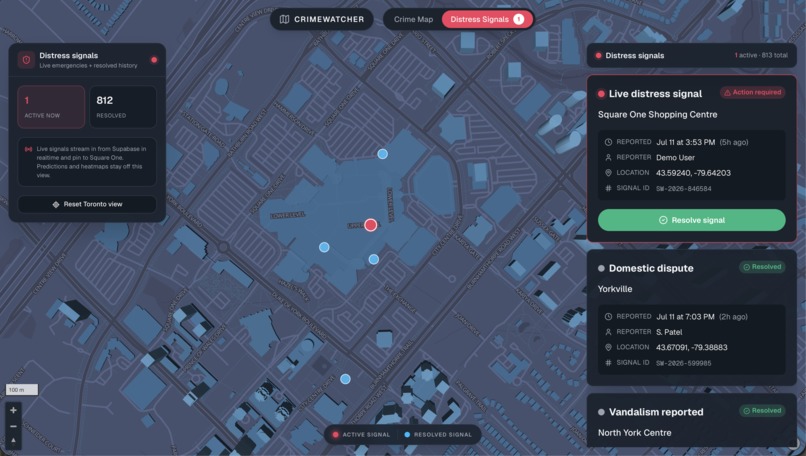
Distress Signals
-
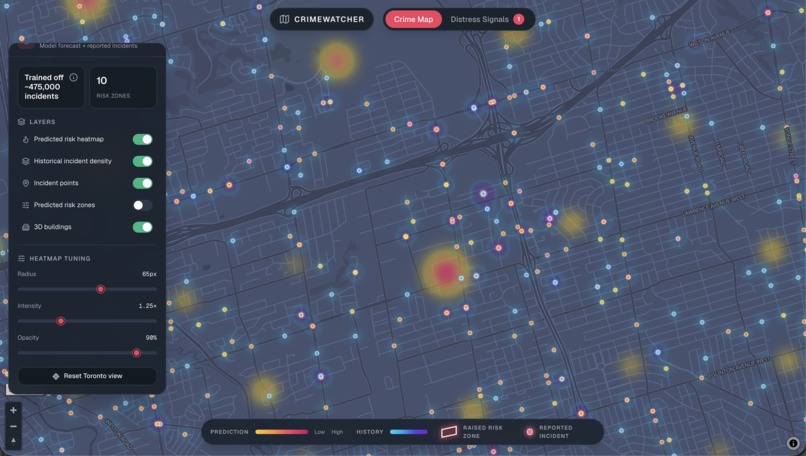
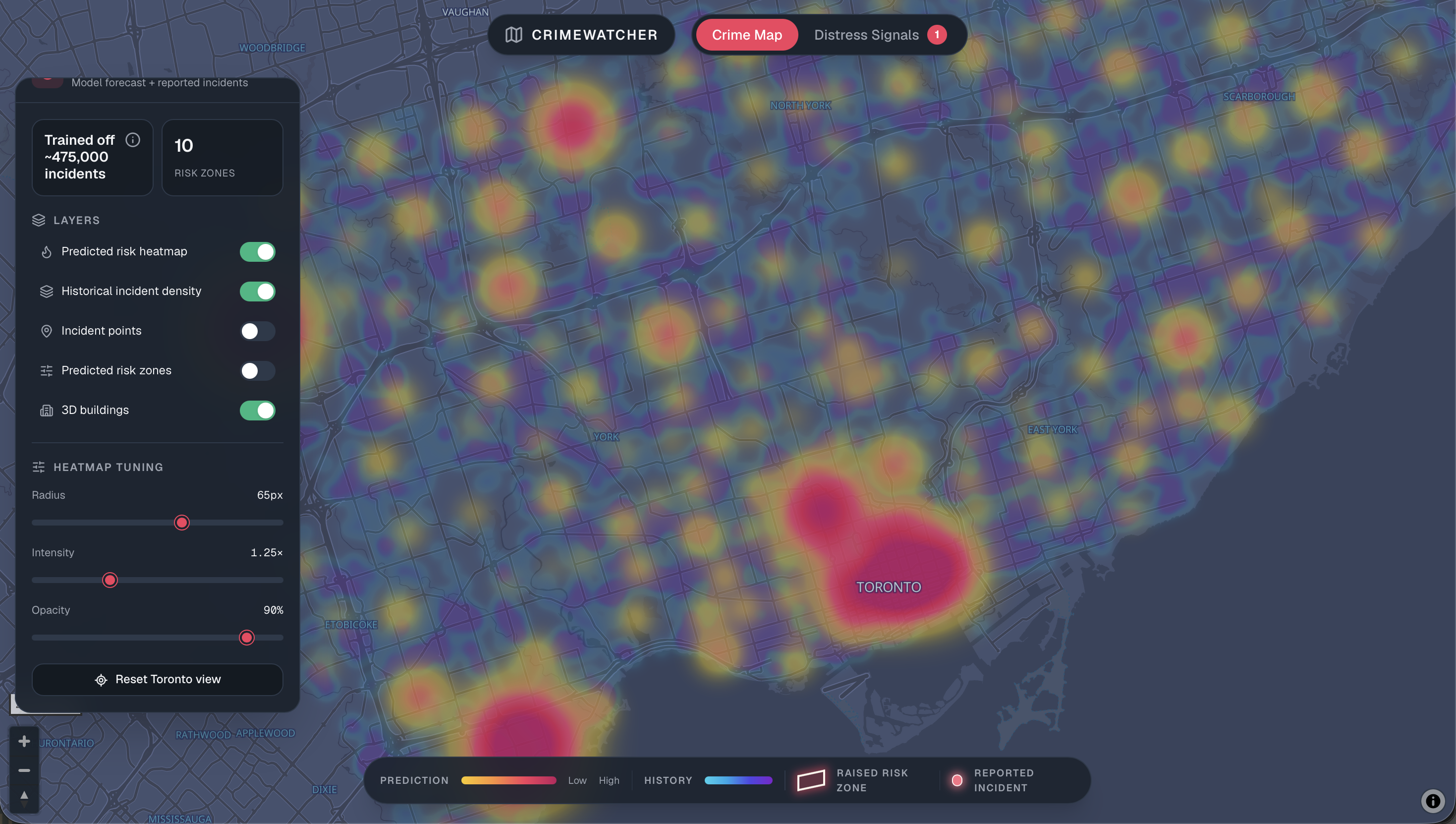
Incident points predicting heat maps
-
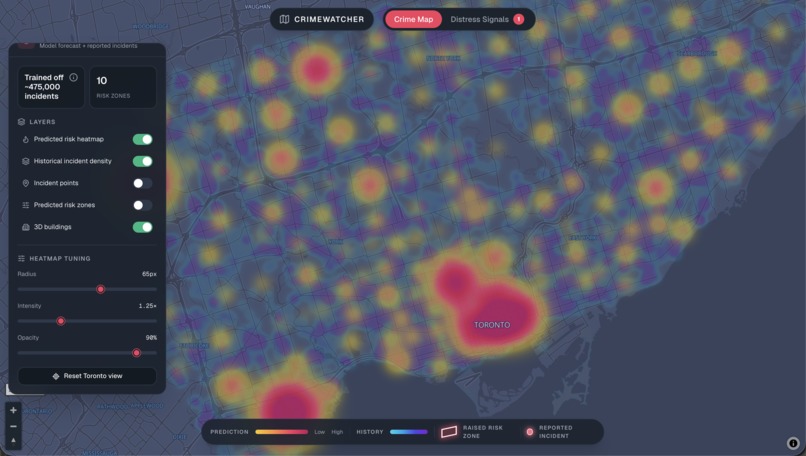
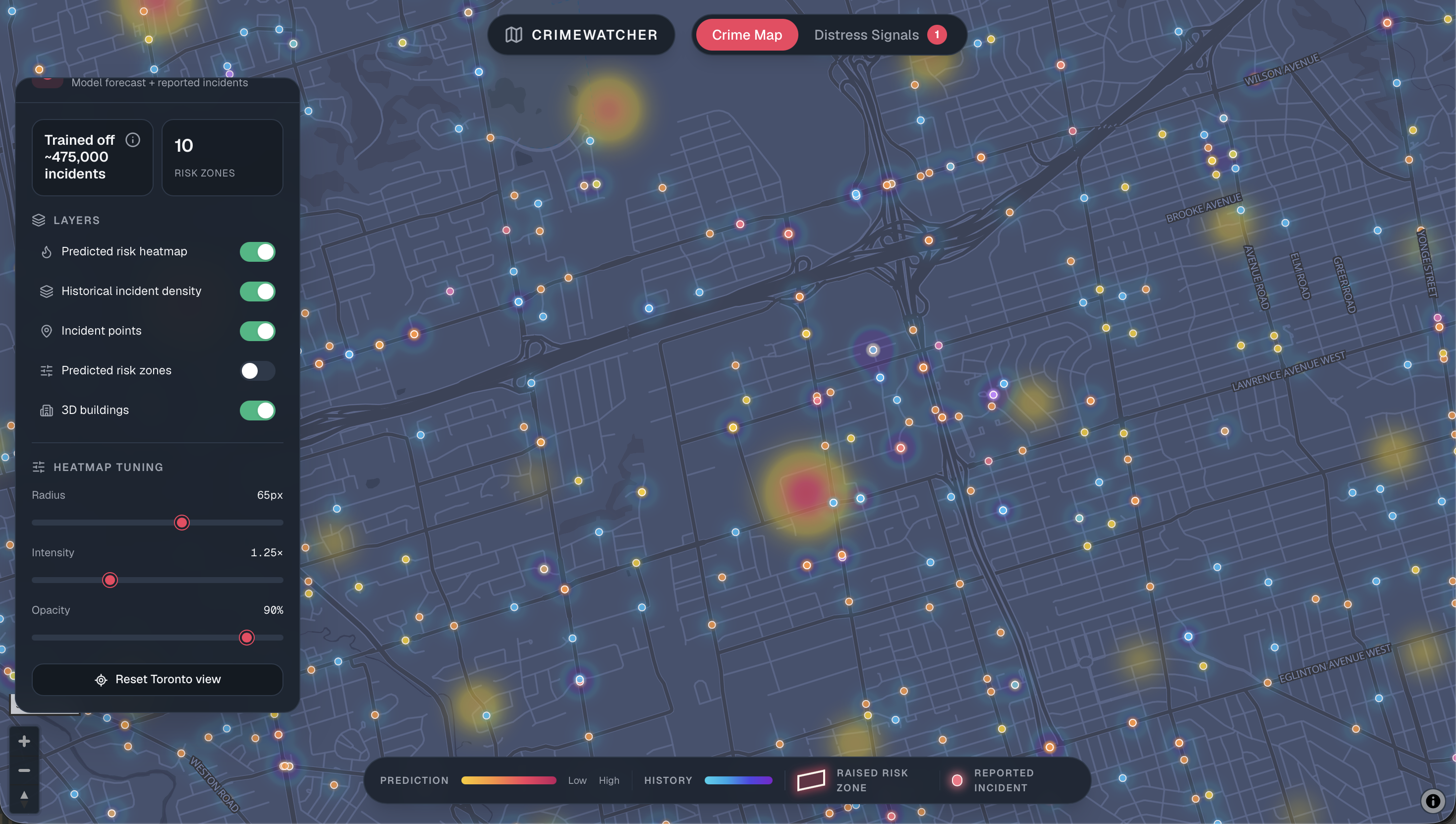
Overview of the Toronto heat maps
-
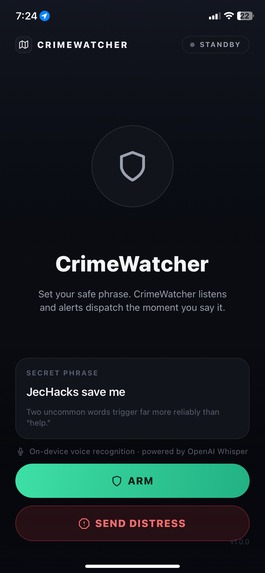
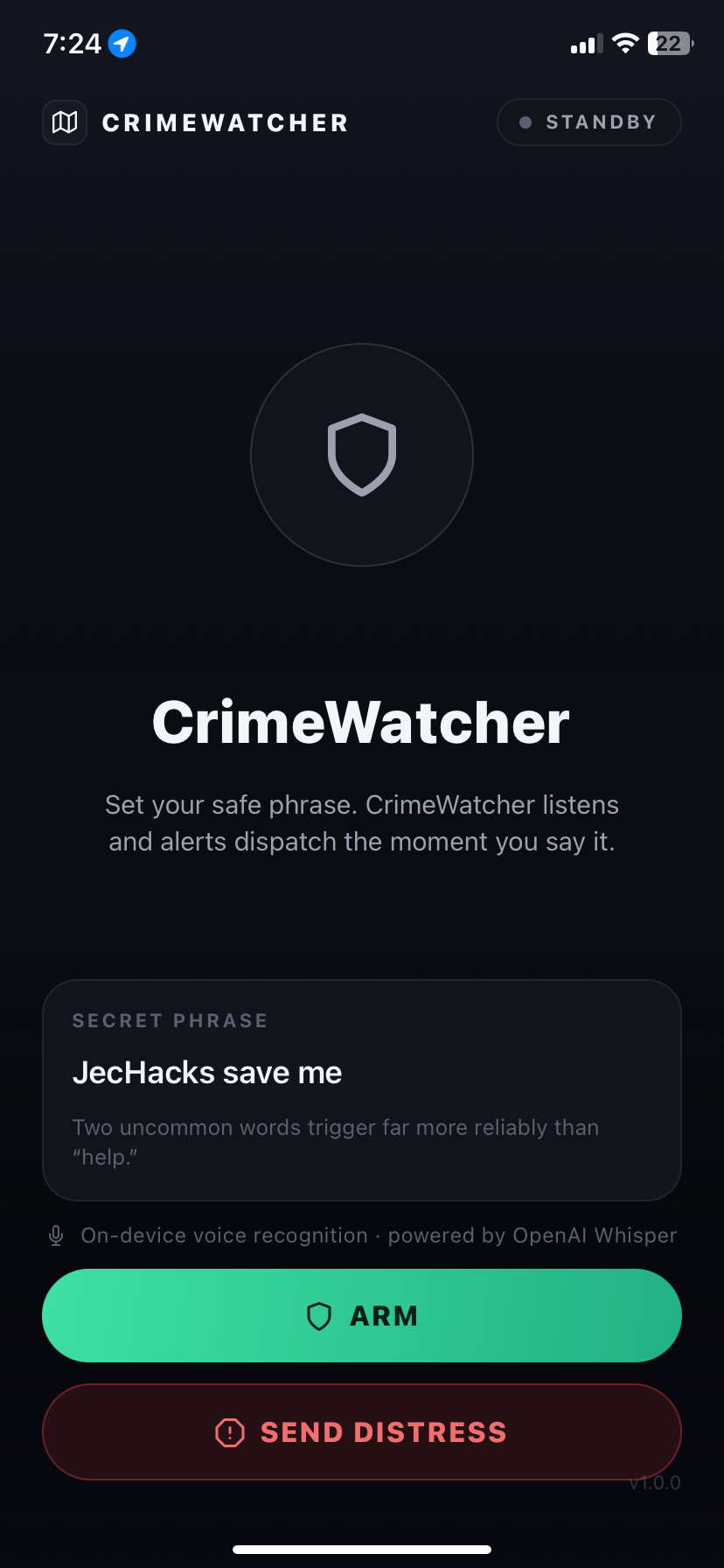
setting up phrase
-
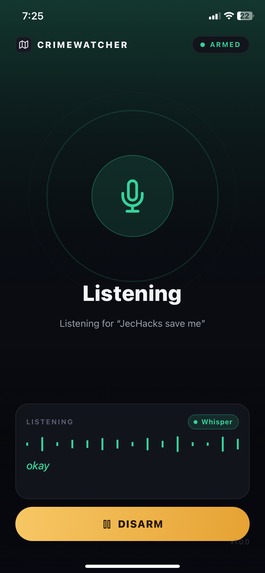
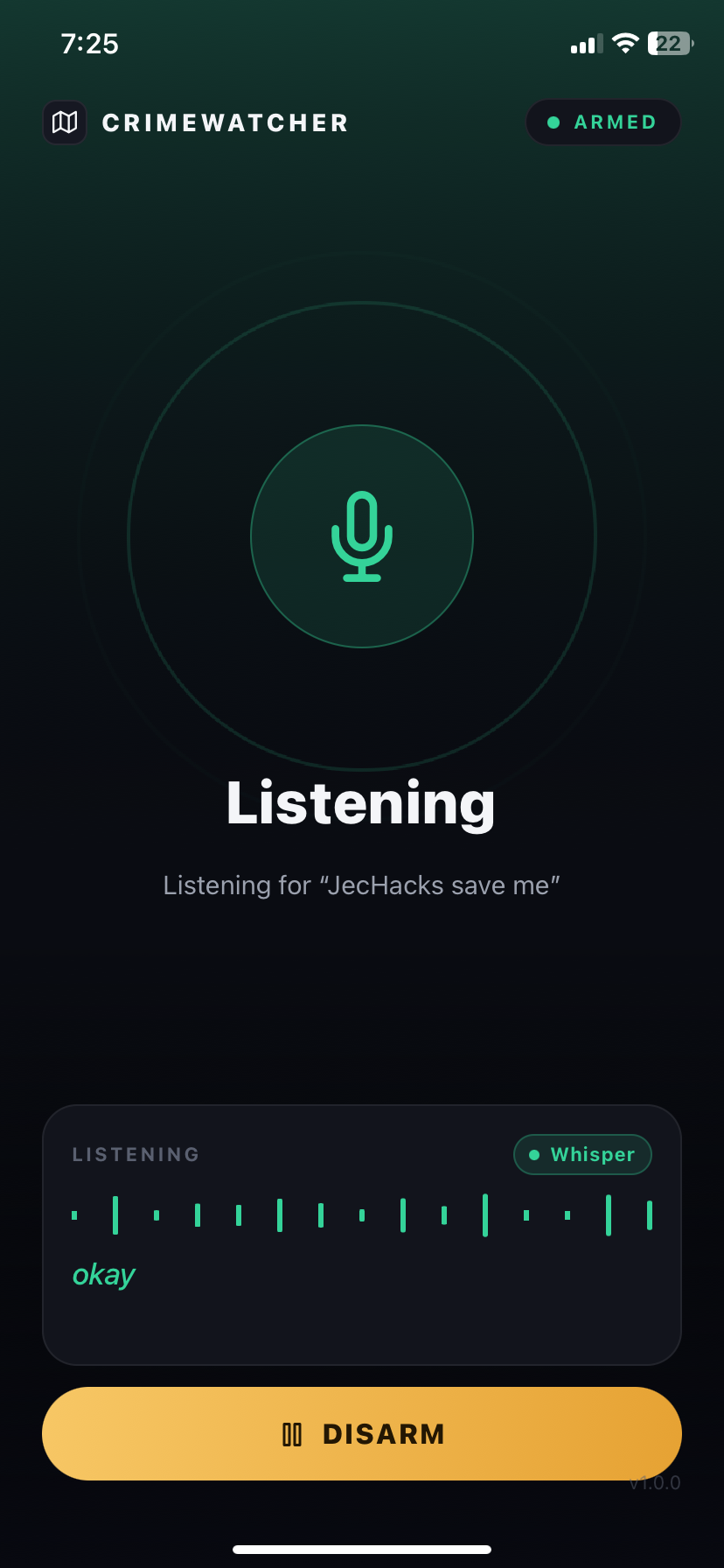
listening for phrase
-
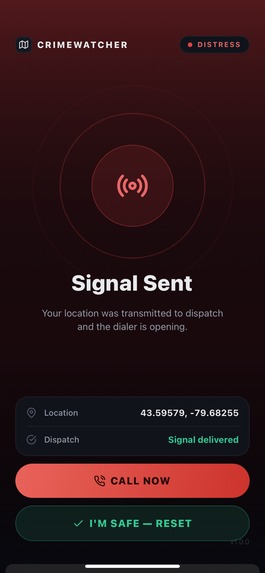
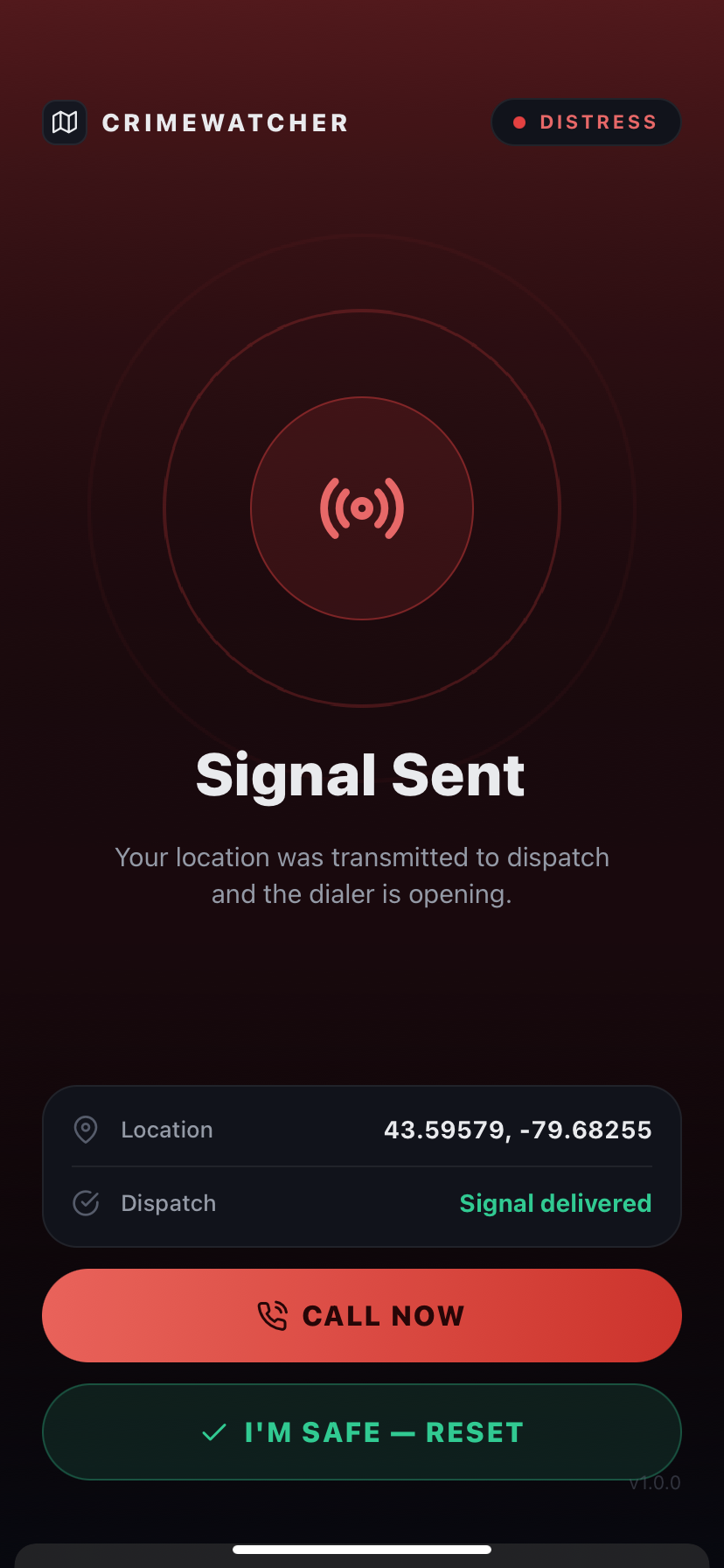
dispatch sent
What it does
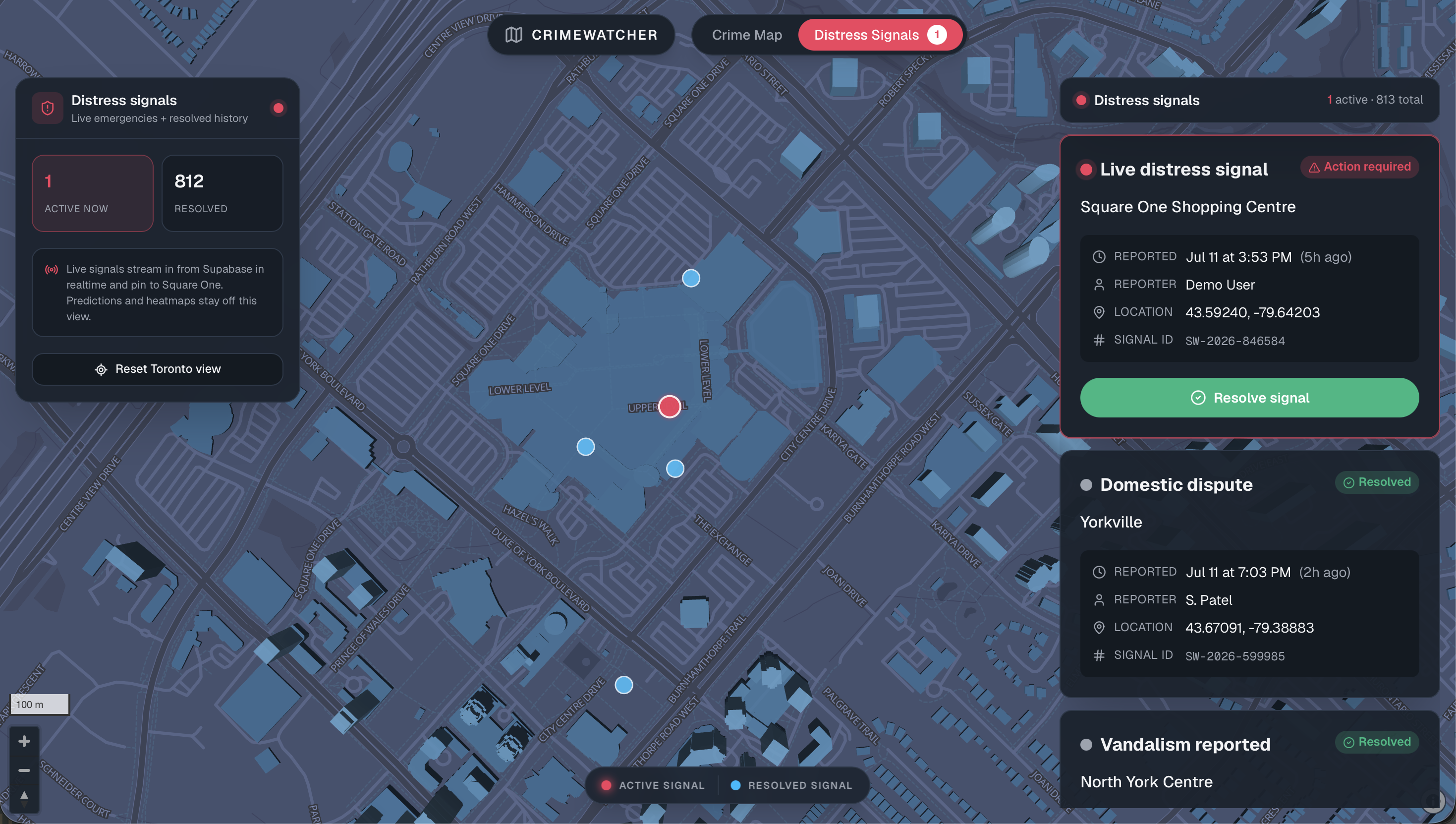
Navigating to the website, for police use only, displays an interactive map that shows heat-maps, reported incidents, and live distress signals. These live distress signals come from our CrimeWatcher app for public use, to help police and first responders visually locate anyone who needs urgent help. The CrimeWatcher app listens to a phrase entered by the user, and if spoken at any time, will call 911 and display the data through our database. An instant call for help without needing to take out your phone helps our users stay focused on reducing their risk, evaluating their situation, and helping themselves while first responders are on the way.
How we built it
We pulled about 475,000 crime incidents from Toronto Police's open data. That's ten years of history across 158 neighbourhoods. We trained a gradient-boosted regression model in Google Colab with scikit-learn. It takes each neighbourhood's recent trend and predicts next month's crime count. For the test set, we held back the last six months of data. The model was off by about only 6%.
Accomplishments that we're proud of
Our map was able to accurately map dangerous areas, seen through Mimico Queensway. Our model treated this neighbourhood as the most dangerous, at a risk of 98%, and online sources will also say that this neighbourhood is prone to higher crime than most of Toronto. This shows that we've built a viable product for use, and a successful foundation for our model training. The error rate of the model is 6%, a number we found from having it predict crime on our test set.
What's next for CrimeWatcher
It will be best to expand CrimeWatcher's crime analysis outside of Toronto, and more throughout other parts of Canada. We chose Toronto as our main focus for this project as it has the greatest amount of data so our model can be as accurate as possible. In the future, we intend that distress signals will be actively training our model similar to past crime data sets. This is in hopes that our project helps first responders with new information, rather than relying on only their own.
Built With
- css
- expo.io
- geojson
- google-colab
- html
- json
- maplibre
- next-js
- openai
- python
- react
- scikit-learn
- supabase
- typescript
- vercel


Log in or sign up for Devpost to join the conversation.