Inspiration
"Talk to someone in the industry" is good advice, but only if you actually know someone to talk to.
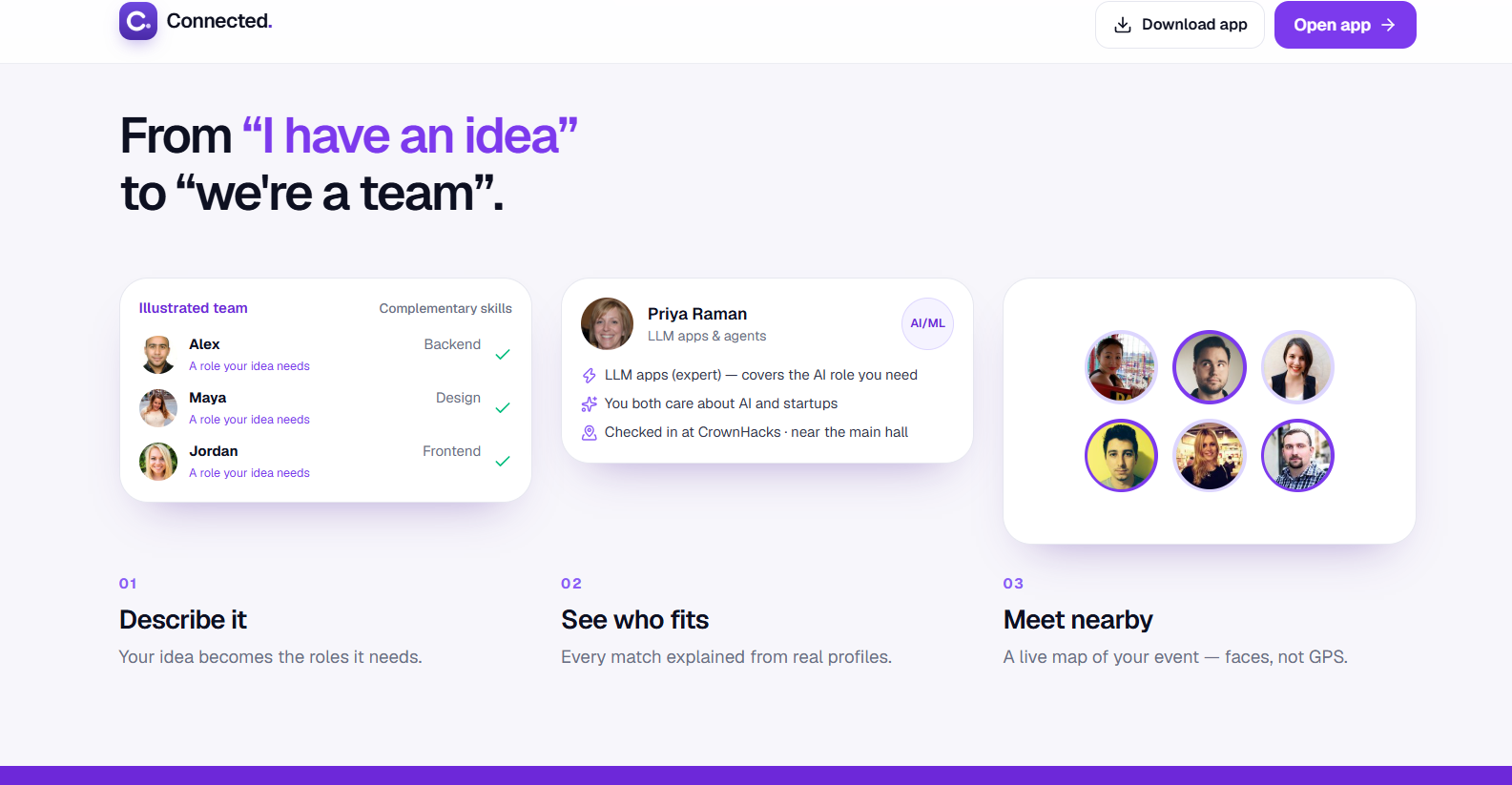
We built Connected for the student applying to their first internship without a family contact, an alumni intro, or a professional network. There are often people nearby who would happily answer their questions, but there's no way to tell who they are.
So we asked: what if you could see who is open to helping, and what they can help with, before reaching out?
What it does
Connected helps students figure out where to start when building their network.
During onboarding, users share their goals, interests, career stage, availability, and the advice they can offer. They can add a profile photo and links to LinkedIn, Instagram, and GitHub.
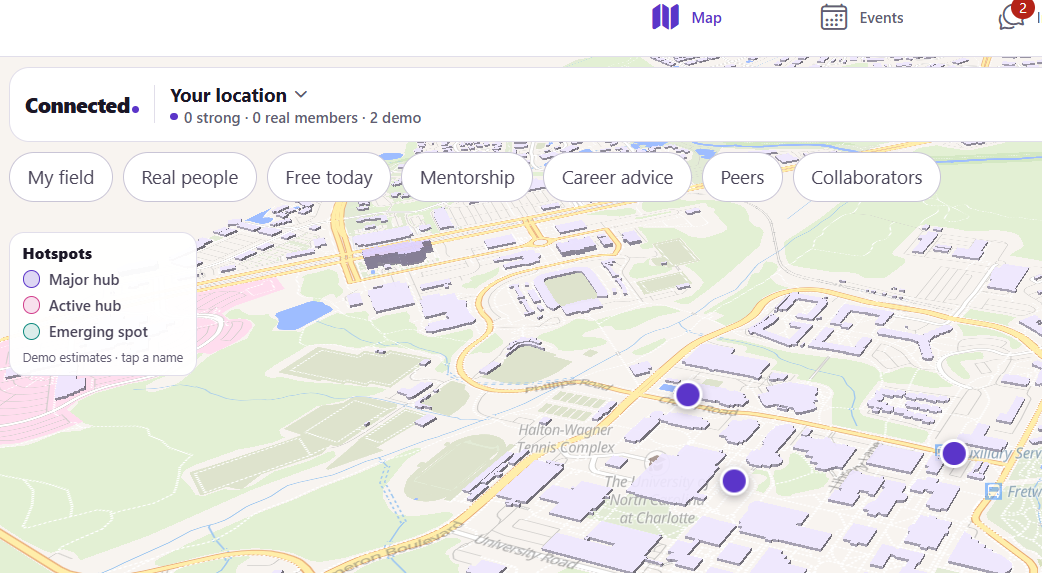
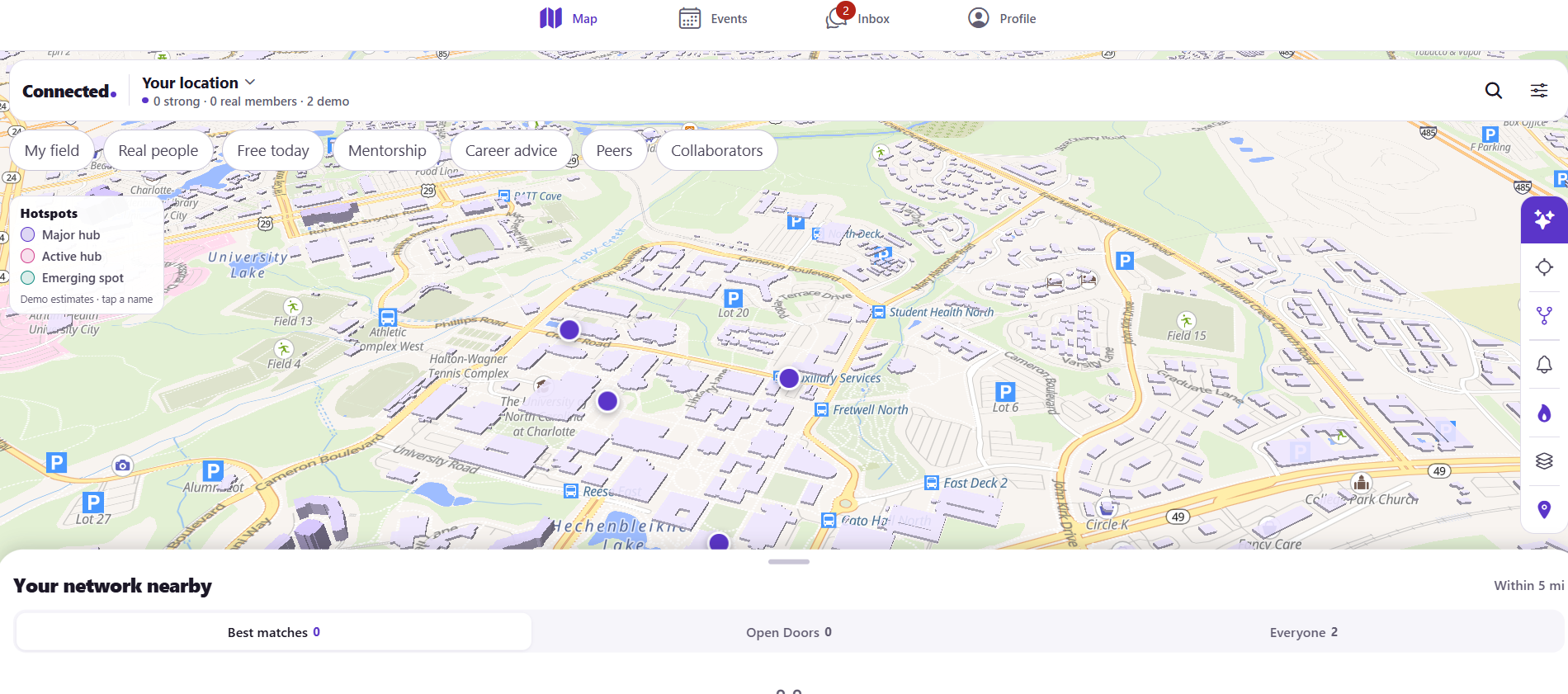
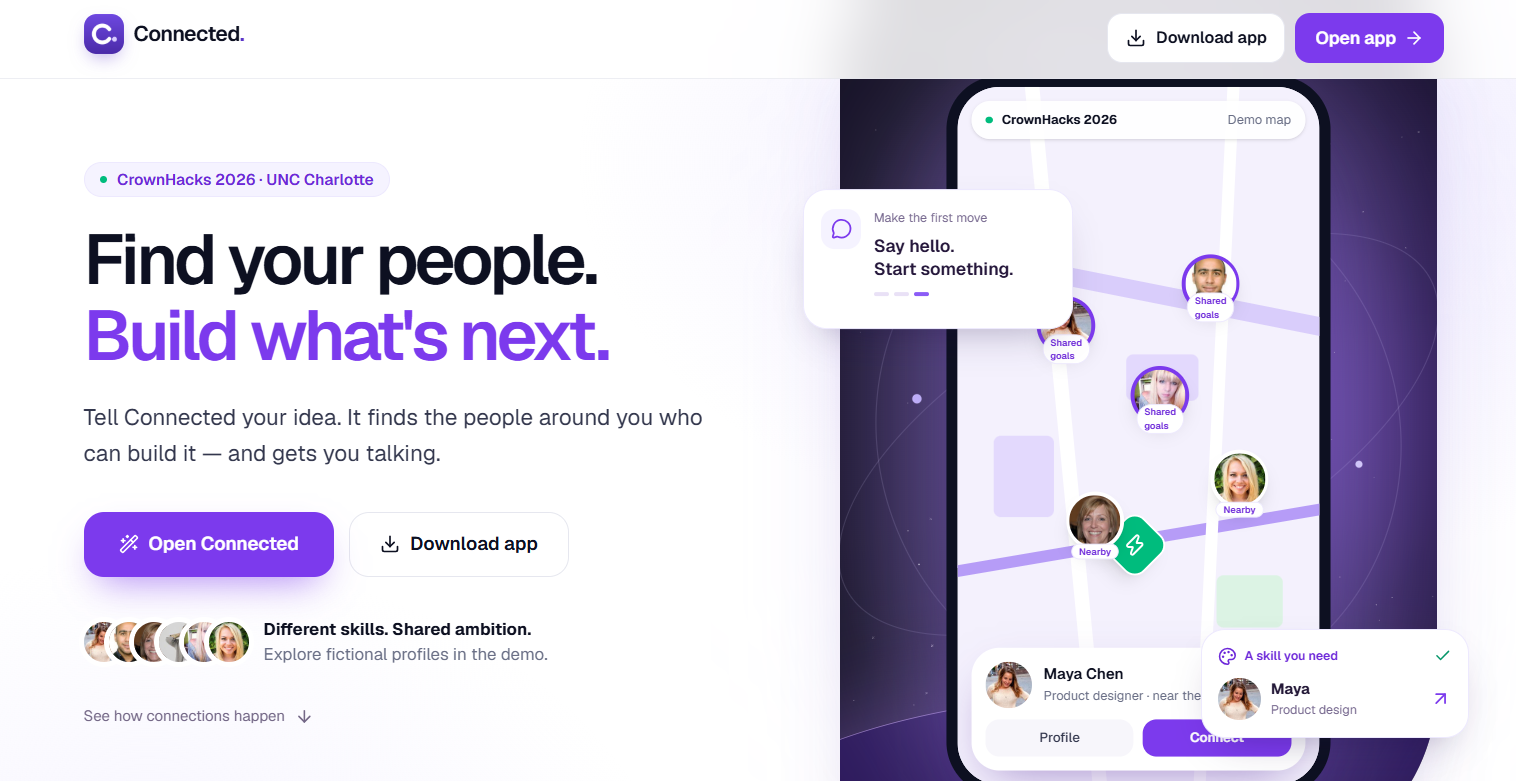
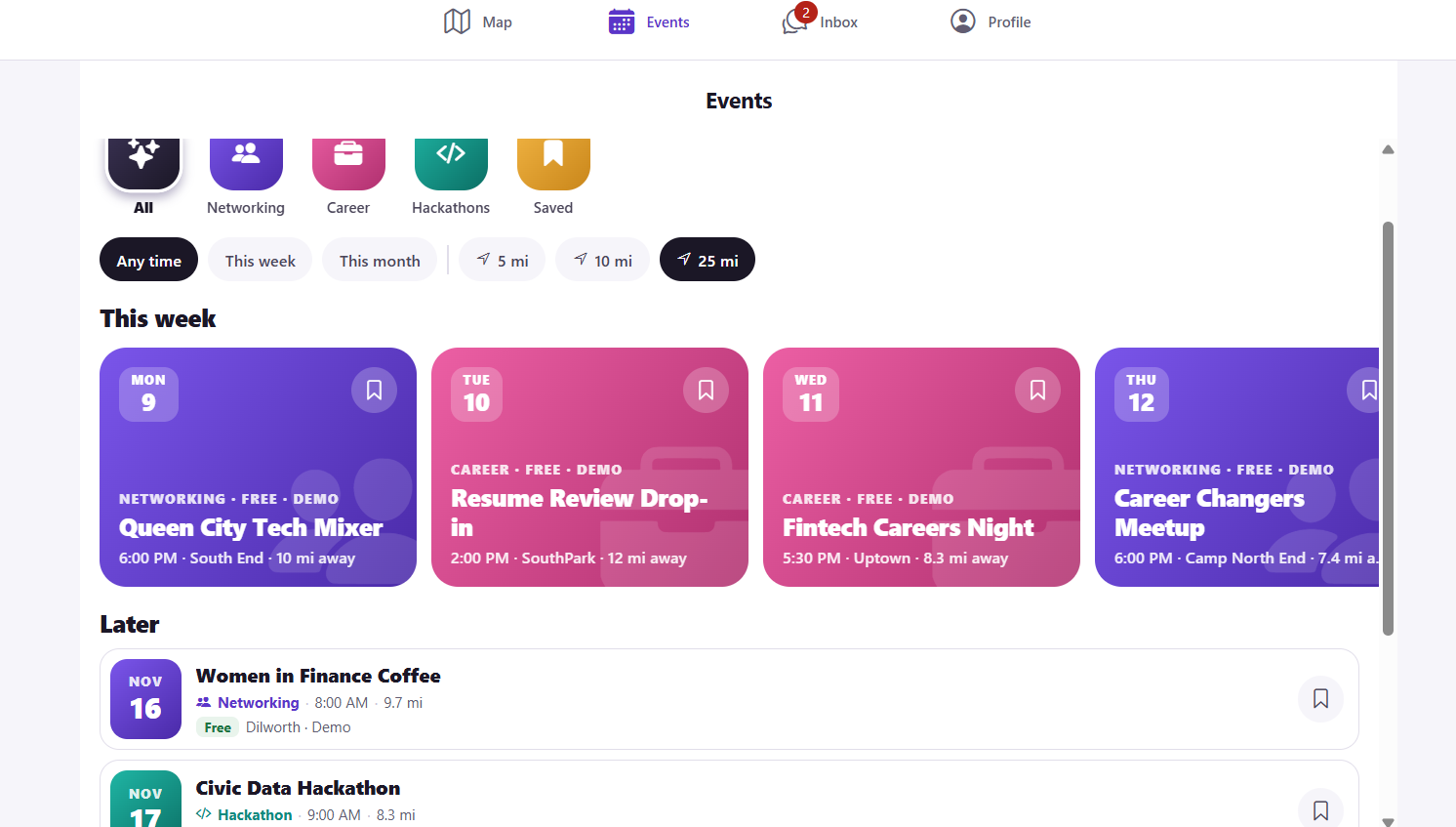
An interactive map shows nearby people, local events, and community hotspots. A student interested in finance, for example, can look for someone offering internship advice or find an event where they can meet people in person.
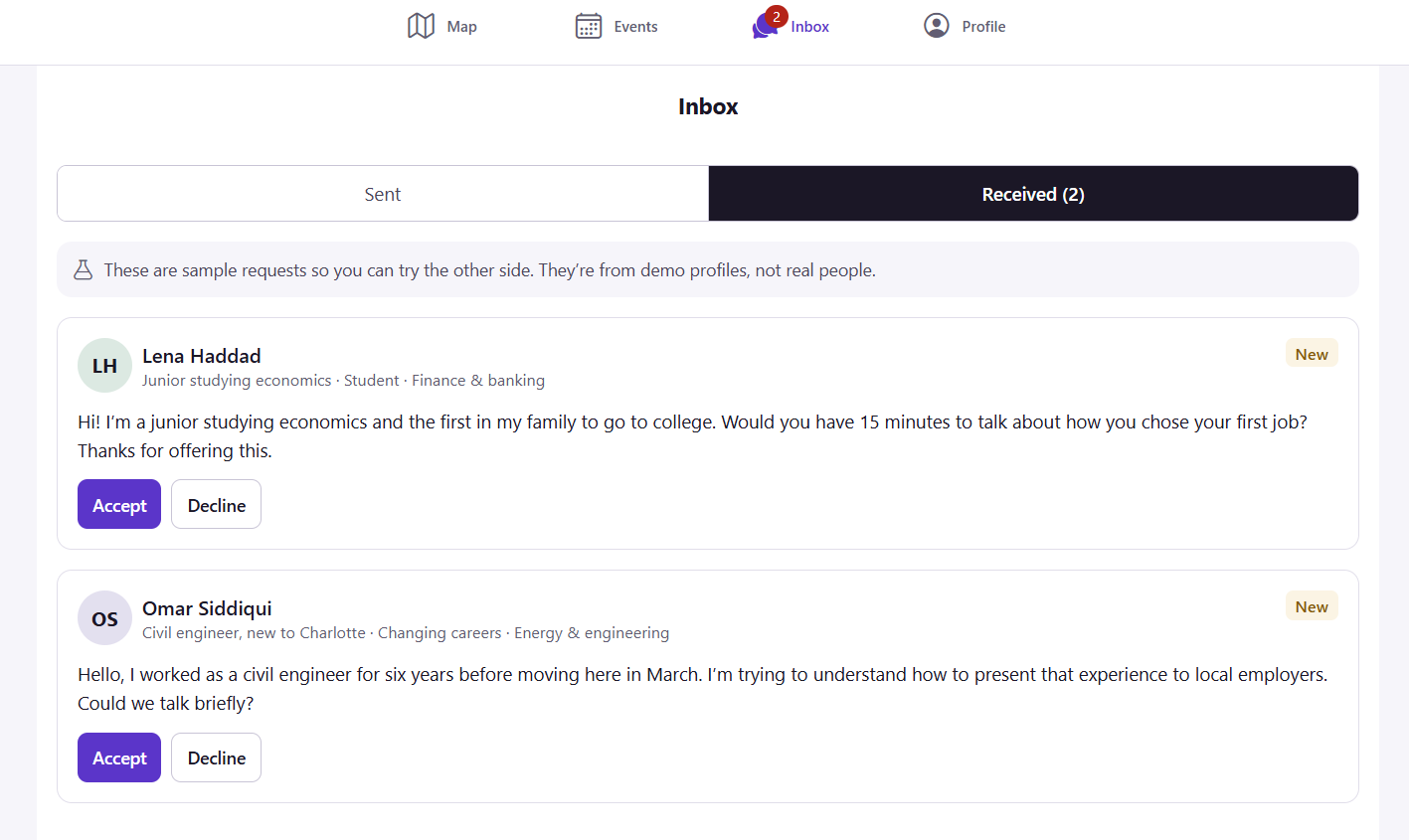
Each profile gives the student a reason to start a conversation. A Claude-powered coach helps them prepare questions, practice their approach, and draft an intro message they can review before sending.
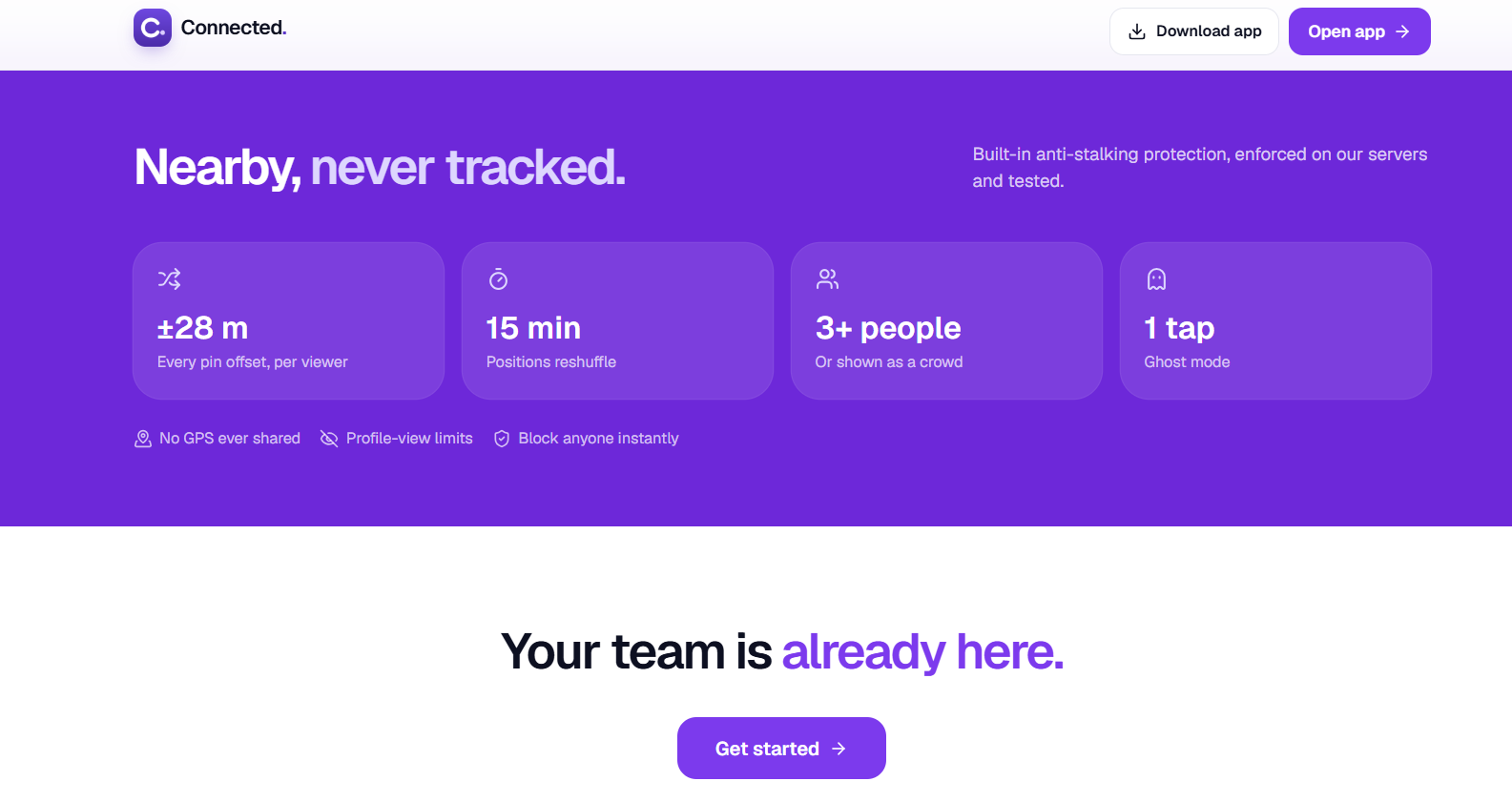
Discovery is optional. Members choose how far away they're visible, their location is approximate, and discovery turns off after one hour.
The prototype uses fictional professional profiles for the demo, along with real Charlotte events linked to their organizers.
How we built it
We built a mobile-friendly web app using React and TypeScript. MapLibre handles the map's rotation, tilt, and interactive markers. Cloudflare Workers handle server-side requests, and Cloudflare D1 with Drizzle stores profiles, connection requests, saved items, and events.
We connected Claude through a server-side API so the API key never reaches the browser. The coach gets the relevant profile info and chat history, but never sees profile photos, social links, or location coordinates.
We worked in VS Code and used GitHub to collaborate. Shared project notes and a task-and-review setup let Codex and Claude Code work on the code without editing the same files at the same time.
Challenges we ran into
Our biggest design challenge was making nearby discovery useful without making it feel invasive. We added opt-in only discovery, approximate locations, visibility distance controls, and automatic expiry.
Relevance was another challenge. Being nearby doesn't give two people a reason to talk, so we used each person's goals and offers of help to show why a conversation would be worth having.
We also had to keep the AI coach honest. It's not allowed to make up mutual connections, referrals, or job opportunities. When Claude isn't available, the app clearly labels the fallback template advice.
Accomplishments that we're proud of
We built a working path from "I need advice" to finding the right person and preparing an intro.
The prototype includes preference-based discovery, an interactive map, Charlotte event listings, saved connection requests, and a working Claude coach. Automated tests cover visibility rules, blocking, request permissions, profile validation, and what data gets sent to the AI.
We're also proud that every person on the map says what they're willing to help with. That makes the first message more specific and easier to reply to.
What we learned
We learned that networking is really three separate problems: knowing who is willing to help, having a reason to reach out, and feeling confident enough to do it.
The map solves the first one. Offers of help solve the second. The coach helps with the third.
We also learned that privacy has to be built into discovery from day one, and that an AI coach needs clear limits on what it knows and what it can say.
What's next for Connected
We want to test Connected with students and volunteer mentors around UNC Charlotte, starting with things like internship advice and portfolio feedback.
Next, we want to add affiliation verification, auto-updating event feeds from organizers, and better tools for setting up a conversation once a request is accepted.
We'll measure success by first conversations: did students get useful advice, did they feel comfortable reaching out, and would they come back to help someone else?
Built With
- anthropic
- api
- apple
- claude
- expo.io
- github
- maps
- native
- node.js
- nominatim
- openstreetmap
- postgresql
- react
- react-native-maps
- router
- sqlite
- supabase
- typescript
- vs
